SaaS Club
PodcastPlaybooksCoachingSponsorFree ToolsJoin Community
saasclub

Helping SaaS founders build and scale profitable businesses since 2014. Powered by real experience from 472+ founder conversations.

Content

  • The SaaS Podcast
  • Founder Playbooks
  • Blog
  • Newsletter
  • Free Tools

Programs

  • Plus
  • Launch
  • Mastermind
  • Accelerate

Company

  • Contact
  • Become a Sponsor
  • Suggest a Guest
  • Terms
  • Privacy

© 2026 SaaS Club. All rights reserved.

Built with ❤️ for SaaS founders

Positioning & Differentiation

SaaS Positioning & Differentiation

How SaaS founders positioned their product to stand out. Niching down, creating new categories, and the repositioning moves that changed everything.

Real founder strategies. Delivered weekly.

Free weekly newsletter · No spam

In a crowded market, having a better product isn't enough. You need people to understand why your product is different and who it's for. That's positioning. And most founders get it wrong for longer than they'd like to admit.

These episodes feature founders who figured out how to stand out. Some did it by niching down aggressively, picking a specific industry or use case and owning it completely. Others created entirely new categories, reframing the problem so competitors became irrelevant. A few repositioned multiple times before landing on messaging that actually resonated.

You'll hear how founders dealt with the fear of narrowing their market. Turns out, going narrower almost always leads to faster growth. You'll learn how to identify what makes your product genuinely different (not just what you think makes it different). And how to translate that difference into messaging that makes prospects lean in instead of tune out.

The conversations cover practical frameworks for positioning work. How to run customer interviews that reveal your real differentiators. How to write a homepage headline that does the heavy lifting. How to compete against well-funded incumbents by choosing a fight you can win.

There are founders here who competed against Salesforce, HubSpot, and other giants. They didn't win by outspending them. They won by being more specific about who they served and why.

If you're struggling to differentiate in a crowded space, these episodes will show you how other founders broke through.

Browse by topic:AllBootstrappingFirst CustomersProduct-Market FitEnterprise SalesProduct-Led GrowthPricing & MonetizationFounder-Led SalesPositioning & DifferentiationChurn & RetentionContent & Inbound MarketingExits & AcquisitionsFundraisingAI-Powered SaaS

Get weekly SaaS insights

Real founder strategies. Delivered to your inbox.

Free weekly newsletter · No spam

←All Episodes
How $6K in SEM Built a $300M Enterprise Sales Machine - Vineet Jain

Vineet Jain, Egnyte

How $6K in SEM Built a $300M Enterprise Sales Machine

Vineet Jain is the co-founder and CEO of Egnyte, a content collaboration and security platform for mid-market and enterprise businesses. Vineet arrived in the US with $100 and no connections. He spent four and a half years at KPMG learning to sell to everyone from line managers to CEOs. That convinced him he could build something of his own. In 2001, right after the dot-com bubble burst, he co-founded Valdero, a supply chain software company, and raised $7.5 million from Kleiner Perkins. Revenue grew quickly. Then Oracle and SAP moved in. Pricing pressure crushed them. They sold. Investors made money. The 70 employees didn't. That failure stuck with him. In 2007, Vineet and three co-founders rented a small office. No funding. Two did consulting while the other two wrote code. The idea: move the physical file server to the cloud. When they launched, analysts lumped Egnyte in with Box and Dropbox - hundreds of companies chasing the same market. Everyone told Vineet to do freemium. His board pushed back. Analysts questioned how they were different. Vineet Jain built Egnyte to over $300 million in enterprise sales revenue using three strategies: charge from day one, offer hybrid cloud when everyone said go cloud-only, and keep cost of acquisition low with inside sales offices in cities like Spokane and Raleigh instead of Silicon Valley. In 2016, Gartner named Egnyte a leader - a tiny company standing alongside competitors that had raised billions. Today, Egnyte has 23,000 customers, 1,400 employees, and has raised just $137.5 million with no additional funding since 2018.

How Livestorm Lost Product-Market Fit at $9M ARR - Gilles Bertaux

Gilles Bertaux, Livestorm

How Livestorm Lost Product-Market Fit at $9M ARR

Gilles Bertaux is the co-founder and CEO of Livestorm, a webinar platform for enterprise marketers. In 2016, Gilles and his three co-founders built Livestorm as a university project. They had two months to build a product, get some users, and present it to a panel. So they built a browser-based webinar tool. On presentation day, they livestreamed all the student presentations. Hundreds of people watched remotely. And they loved it. Even former bosses from internships told them to skip the job hunt and pursue this full-time. They were young with no real responsibilities. So they went for it. They spent weeks collecting leads and hosted a launch webinar to showcase the product. It was a disaster. Gilles tried to bring a marketing exec from a big e-commerce company on screen. Instead, his CTO popped up and said 'I think there is a bug.' Live. In front of everyone. Growth came slowly through SEO, Quora, and partnering with bigger companies to get in front of their audiences. No outbound. No sales team. Gilles wrote three to four articles a day and answered questions on Quora that nobody else was touching. For five years, Quora alone drove 10-15% of total organic traffic. Then COVID hit. In one year, Livestorm went from $2 million to $9 million in ARR. But it was chaos. Support tickets jumped from 200 to 20,000 per month. Servers crashed for an entire day. They had to throw money at AWS just to keep things running, and their margins got crushed. After COVID, things got even messier. They tried building a meeting product, then a sales demo product. Suddenly Livestorm looked like a smaller version of Zoom. Customers had no compelling reason to pick them instead. Livestorm had lost product-market fit. In 2022, they tried to raise a Series C. Investors said no. So Gilles had to flip the company to profitability. That meant going after bigger customers who would pay more and stick around longer. But his sales team only knew how to handle inbound leads. He had to replace almost the entire team. Gilles rebuilt Livestorm's product-market fit by narrowing to enterprise webinars for European marketers in banking and pharma - a niche that most founders would run from. There were moments where he wondered if the product could really make the leap. Part of him questioned whether Livestorm's best days were already behind them. Today, Livestorm generates nearly $20 million in ARR with 3,500 customers and has raised $35 million.

Finding Product-Market Fit After 2 Years of Almost Nothing - Tito Goldstein

Tito Goldstein, Teambridge

Finding Product-Market Fit After 2 Years of Almost Nothing

Tito Goldstein is the Co-Founder and CEO of TeamBridge, a composable workforce operating system for hourly workers that serves over 500,000 employees across 200+ enterprise customers. Tito Goldstein and his co-founder Arjun were two of the first principal product designers at Uber. After interviewing thousands of Uber drivers worldwide, they realized something powerful: drivers were choosing Uber despite lower pay because of the agency and self-service the app provided. They raised a $3 million seed round to bring that same experience to the 60% of the global workforce who are hourly employees stuck with legacy tools. But after building their initial scheduling product, they hit a wall - two years of near-zero revenue and no product-market fit. The problem wasn't the market. It was the product. Customers kept saying they needed to stand out, not use the same cookie-cutter software as their competitors. Their secret sauce lived in spreadsheets and manual processes, not in a fixed scheduling tool. So Tito and Arjun made a gutsy call: throw out the scheduling product and rebuild as composable Legos. Customers could start with a template but configure 20% to match their unique workflows and differentiators. The new product outsold the previous two years of efforts in the first month. Product-market fit had arrived. Then it 3x'd, and 3x'd again. Today, TeamBridge powers NFL stadiums like the 49ers' Levi's Stadium, medical staffing agencies scaling from zero admin staff to multimillion-dollar businesses, and enterprises managing thousands of hourly workers with self-service automation.

How Repositioning This AI SaaS Unlocked 7-Figure Growth - Flo Crivello

Flo Crivello, Lindy

How Repositioning This AI SaaS Unlocked 7-Figure Growth

Flo Crivello is the founder and CEO of Lindy, an AI SaaS platform that lets anyone build AI agents to automate workflows without code. In 2020, Flo Crivello was running TeamFlow, a virtual office startup that raised over $50 million. But when people returned to offices, growth flatlined. With no path forward, Flo pivoted to build Lindy, an AI SaaS platform for building AI agents. The idea came from his sales team asking if AI could automatically update Salesforce. Flo kept climbing the "ladder of abstraction" until he realized he was building an AI SaaS agent platform. In March 2023, he launched with a demo video that generated 70,000 waitlist signups. But the AI SaaS product was terrible. It would send emails that literally said "the user wants me to send an email to 50 software engineers." Users were surprisingly forgiving because they understood they were early adopters. Flo's breakthrough came from repositioning. His AI SaaS started as "AI employee" - too futuristic for the broken product. He repositioned as "Zapier of AI," making the AI SaaS accessible by positioning against something familiar. Within months, Lindy hit product-market fit and grew to high 7-figures. This episode covers the brutal reality of pivoting an AI SaaS, why familiar positioning beats visionary messaging for early adoption, and how to know when your AI SaaS has reached product-market fit.

Product-Market Fit in a SaaS Category Nobody Asked For - Sam Naficy

Sam Naficy, Prodoscore

Product-Market Fit in a SaaS Category Nobody Asked For

Sam Naficy is the CEO of Prodoscore, a SaaS platform that uses AI to show companies how work gets done by analyzing data from the cloud tools employees already use every day. Sam's startup journey began in the early 2000s when he built a tech business from scratch and scaled it to $55M in ARR over two decades. But after stepping away from that company, he wasn't planning to start over until a close friend pitched him an idea. Sam came on board as an investor. Then, just months before the pandemic hit, he stepped in as CEO. What he walked into wasn't pretty. The product was still in beta. There was no revenue. And most people thought it was just another employee surveillance tool. Convincing buyers and their teams that this was about helping people work smarter, not watching their every move, was an uphill battle. Finding product-market fit meant creating a new category that needed constant education. But Sam had seen this before. He knew how long it can take for people to accept a new category. So they leaned into customer feedback, kept evolving the product, and pushed through the noise. Prodoscore's product-market fit breakthrough came through three key shifts: 1. Making the product employee-centric with personal dashboards and AI-driven recommendations 2. Narrowing from a massive TAM to mid-market/enterprise companies with 100+ seats 3. Discovering staffing as their #1 ICP - a vertical nobody on the team expected Today, Prodoscore is a high 7-figure ARR business with roughly 150 logos, 135,000 employees on the platform, and customers who now see it as a valuable tool instead of something to fear.

18 Months of Zero Deals to $7M ARR - Egidijus Pilypas

Egidijus Pilypas, Exacaster

18 Months of Zero Deals to $7M ARR

Egidijus Pilypas is the co-founder of Exacaster, a SaaS company that helps subscription-based businesses grow revenue by turning customer data into actionable insights. As a statistics student, Egidijus worked part-time at a telecom company where he first saw the challenges of managing large customer bases. A university lecturer introduced him to cutting-edge machine learning research, and together they built trading algorithms for financial markets. When the trading experiment failed and Egidijus lost all his money, he pivoted. He called his former boss and pitched using machine learning to predict customer churn. The first company liked the idea but couldn't pay. The second said yes - and with no coding experience, Egidijus and his co-founder taught themselves to build a working platform in three months. What looked like early traction turned into years of painful enterprise sales lessons. Each new customer brought a flood of custom demands that buried their tiny team in delivery work. For nearly a decade, sales and marketing were neglected while they scrambled to stay afloat. When they finally hired an experienced salesperson and invested heavily in outbound enterprise sales, they spent 18 months burning cash and didn't close a single deal. Every RFP they entered, they lost - because by the time they received the request, they were already too late in the buying process. That failure was the turning point. Egidijus realized they weren't selling software - they were selling trust. Here is how Exacaster used three enterprise sales strategies to transform their pipeline: 1. Launched a niche podcast interviewing customer value managers (CVMs) at telcos - people who felt "lonely" in their roles and had nobody to share knowledge with 2. Published the CVM Body of Knowledge book with contributions from 30+ industry professionals across the world 3. Over-invested in enterprise sales pitches with 20-person teams responding to RFPs instead of sending 1-2 people Today, Exacaster is a $7M+ ARR bootstrapped SaaS business serving customers in nearly 20 countries, with close to 100 team members.

Why Excited Customers Still Said No - Rami Tamir

Rami Tamir, Salto

Why Excited Customers Still Said No

Rami Tamir is the co-founder and CEO of Salto, a platform that helps teams manage and automate the configuration of SaaS apps like Salesforce, NetSuite, and Okta. Rami had already built and sold three startups to Cisco, Red Hat, and Oracle. But building Salto brought a whole new set of challenges for him and his co-founders. The idea came from a problem he kept running into at his last company. Making changes in tools like Salesforce should have been simple, but instead it was slow, frustrating, and full of errors. At first he thought it was his team's fault. Later, he realized almost every company using modern SaaS tools was dealing with the same thing. He and his co-founders self-funded the early product and started showing mockups to potential customers. The feedback was enthusiastic - one prospect even said she wanted to hug him. But when they came back with a working product, the excitement disappeared. It was not what people thought they were going to get. That was a critical product-market fit lesson even for a serial entrepreneur: early feedback can send you in the wrong direction when you are pitching a vague idea. People fill in the gaps with their own imagination, and when the real product arrives, it does not match. Once they had a real product to sell, they hit a new problem. Even though the pain was real, most buyers were not looking for a solution - Salto was creating a new category. Every deal was a grind because there was no line item in the budget for what they were selling. Rami's approach to finding product-market fit was to target discretionary budgets - pricing the product so a director-level buyer could approve it without a lengthy procurement process. This let them land fast and then expand into more applications and teams. Just as they started to gain traction, the 2023 downturn hit. Budgets vanished. Deals stalled. Even happy customers churned. Salto made tough changes - they raised prices, focused on larger companies, and rebuilt their sales motion for a longer enterprise cycle. Eventually, that pivot paid off. Today, Salto is an 8-figure ARR SaaS business with hundreds of enterprise customers and $69 million in funding from Bessemer, Lightspeed, Excel, and Salesforce Ventures.

Bootstrapped SaaS to $82M Exit: No VC, No Sales Team - Callum Mckeefery

Callum Mckeefery, Reviews.io

Bootstrapped SaaS to $82M Exit: No VC, No Sales Team

Callum Mckeefery is the founder and CEO of Partner.io, a platform that helps companies run smoother partner programs and grow revenue faster. Back in 2012, Callum and his wife were broke. He had two startup ideas and pitched both to a major mobile phone company - neither one landed. As he walked out the door, he asked one last question: Who does your customer reviews? That short conversation sparked a new idea. Within a week, he returned with a rough MVP for Reviews.io. They still said no, but Callum had seen just enough interest to go all in. Callum hustled to get his first customers by cold-calling event organizers, showing up to expos with a foosball table, and running guerrilla marketing campaigns on a shoestring budget. He reinvested every dollar into the product and team. It took 18 months of relentless effort to hit $1M ARR - bootstrapped, profitable, and fighting for every deal against well-funded rivals like Trustpilot. Callum Mckeefery used these 3 strategies to build a bootstrapped SaaS to 8-figure ARR: 1. Positioned Reviews.io as the "friendly alternative" with fairer pricing and no annual contracts 2. Targeted underserved SMBs doing $5M in revenue who were overcharged by Trustpilot 3. Built a logo flywheel where each new customer's badge attracted their competitors Then, over the next decade, he scaled Reviews.io into a global bootstrapped SaaS business with 8-figure ARR - all without raising a cent of outside funding. But just as the business was thriving, his son was diagnosed with a rare genetic disease, and everything changed. Callum made the decision to sell the company for $82 million - not because he wanted to, but to secure his son's future and fund urgently needed medical research. Today, he's back with Partner.io, solving a problem he faced firsthand while scaling his last company - and once again, doing it on his own terms.

How to Find Your First Customers by Narrowing Focus - Tom Dunlop

Tom Dunlop, Summize

How to Find Your First Customers by Narrowing Focus

Tom Dunlop is co-founder and CEO of Summize, a contract lifecycle management (CLM) platform that helps companies create, review, and manage contracts. In 2019, Tom was working as an in-house lawyer for a tech company. During an acquisition, he had to manually review 500 contracts - a painful task that got worse when he had to repeat the entire process just to check one additional clause. This frustrating experience led him to partner with a software engineer to build a prototype that could automatically create contract summaries. After getting positive feedback from potential customers, they raised 250K to build the product. Then COVID hit right as they were launching. But what seemed like terrible timing became an opportunity. Companies scrambled to understand their contract obligations during the crisis, and Summize found its first customers among catering and events businesses that needed to understand cancellation clauses overnight. Still, the path to repeatable growth was unclear. Tom spent the next 18 months chasing any customer he could find - law firms, in-house legal teams, companies of all sizes. He fell into the "happy ears" trap, where positive feedback felt like validation but never turned into deals. The breakthrough came when Summize narrowed its focus to in-house legal teams at mid-market companies and built the product to work inside tools people already used daily - Teams, Slack, Outlook, Salesforce. Tom Dunlop grew Summize to late 7-figure ARR with 100%+ year-over-year growth by focusing on a narrow ICP and building outbound sales as the primary growth engine. The company has raised $10 million and serves customers like Revolut, Rothschild, and Miami Heat. Today, Summize is approaching 8-figure ARR with dual headquarters in Manchester and Boston.

Vista Social: Building a Million-Dollar SaaS in a Crowded Market - Vitaly Veksler

Vitaly Veksler, Vista Social

Vista Social: Building a Million-Dollar SaaS in a Crowded Market

Vitaly Veksler is the founder and CEO of Vista Social, a social media management platform for brands and agencies. In 2010, while working in corporate tech, Vitaly decided to build a social media management tool. It was his first entrepreneurial venture and over the next 9 years he learned some tough lessons about building a startup. The biggest lesson? He spent years building advanced analytics features when his customers really needed a complete social media management solution. It took him years to realize that and finally start getting some traction. Vitaly had to also learn everything – marketing, sales, customer support, you name it. His persistence eventually paid off when he sold the business in 2019. In 2020, he decided to take another shot with Vista Social, but this time in a much more competitive market. He and his small team faced a huge challenge – they had to build a product that could compete with the big players out there. Creating all the core features customers expected was a massive undertaking, but remarkably, they got it done in about 12 months. The bet paid off – Vista Social reached $1 million in ARR in less than 2 years. Today, the company has over 10,000 customers and a team of 15 people.

8 Months of Failed Cold Emails Before $10M ARR - Palash Soni

Palash Soni, Goldcast

8 Months of Failed Cold Emails Before $10M ARR

Palash Soni is the co-founder and CEO of Goldcast, an event marketing platform that helps B2B companies host engaging virtual and hybrid events. In 2020, Palash and his co-founders launched Goldcast to help B2B companies run better virtual events. They started by sending thousands of cold emails, but none of them worked. The team had built their product around a hypothesis about measurability—helping event marketers prove ROI to their CMOs. They sent 200 emails split between trade show organizers and field marketers. Field marketers responded; trade show organizers didn't. But even with interested prospects, nobody would buy. After months of struggling, they realized the problem wasn't their features—it was their UI. Palash had dismissed feedback about the interface as "personal preference," but the extreme pressure of zero traction forced them to listen. They rebuilt the entire UI in five weeks. The breakthrough came when Drift's founder David Cancel saw their platform during an event, liked what he saw, and responded to the third cold email Palash sent. Once Drift ran events on Goldcast, other marketers saw the platform and inbound leads started flowing. But landing first customers was just the beginning. At $5M ARR, they spotted a churn problem and made a bold pivot from events-only to a full video content platform. That bet doubled their win rates in enterprise segments. Today, Goldcast has grown beyond $10 million in ARR with 400 customers including Salesforce, Zuora, and Lattice—proof that persistence through failed outreach, willingness to rebuild, and courage to pivot can turn early struggles into enterprise success.

Tilled: How Firing Customers Helped Build a 7-Figure SaaS - Caleb Avery

Caleb Avery, Tilled

Tilled: How Firing Customers Helped Build a 7-Figure SaaS

Caleb Avery is the founder and CEO of Tilled, a PayFac-as-a-Service platform that helps B2B software vendors embed and manage payment processing for their customers. In 2019, after years of angel investing and consulting for vertical software platforms, Caleb spotted an opportunity to help them generate more revenue from payments. He started Tilled as a solo founder, spending 10 months exploring the viability of the business idea before bringing on a team. The initial product launch was far from perfect. It took 18 months and a complete rebuild to create a truly sellable solution that could even attempt to compete with established players like Stripe. When the pandemic hit, their outbound sales and trade show strategy was thrown into disarray. Caleb and his team were forced to pivot to content marketing. Caleb also invested in building his personal brand on LinkedIn, starting with less than 500 followers in 2020. He now has over 17,000 followers. But what's more interesting is that his personal brand on LinkedIn helped drive 95% of their lead flow in that first year and got them close to their first $1 million in ARR. But as the team started to gain traction, they faced new challenges. They struggled with product-market fit and onboarding customers that weren't ideal for their platform which created numerous headaches for the team. Eventually, they had to make the tough decision to fire some customers and refocus on their ideal customer profile, which led to a period of uncertainty. But after a few months, their bet paid off, and they started seeing significant growth. Today, Tilled generates multiple 7-figures in ARR and is approaching eight figures. The company serves around 100 customers and has raised $40 million in capital.

OnTheClock: Bootstrapping a $5M+ SaaS Without Talking to Customers - Dean Mathews

Dean Mathews, OnTheClock

OnTheClock: Bootstrapping a $5M+ SaaS Without Talking to Customers

Dean Mathews is the founder and CEO of OnTheClock, a time-tracking software that helps small businesses manage their employees' hours. In 2004, Dean was sitting at his kitchen table with his laptop one day, browsing through small business and accounting forums. As he scrolled, he noticed a trend: people were constantly complaining about not being able to find reliable, easy-to-use time-tracking systems for their companies. Dean, who was working as a software consultant at the time, had a lightbulb moment. He thought to himself, "You know, I can build that for them." Dean spent the next few months building the first version of OnTheClock. He launched it in June 2004, while still maintaining his consulting work. For the next decade, OnTheClock remained Dean's passion project. He'd dedicate about 20 hours a week to it, squeezing in time between client projects to improve the product and learn about marketing. Despite the limited attention, the business grew steadily through SEO and word-of-mouth referrals. By 2015, OnTheClock had hit a major milestone – $1 million in annual recurring revenue (ARR). The following year, Dean took the plunge. He handed off his consulting clients and brought his brother on board to develop a mobile app for OnTheClock. Focusing full-time on the business accelerated growth, but it also brought new challenges. Dean had to shift from being a hands-on developer to leading a team – something he was initially reluctant to do. Along the way, Dean faced other hurdles. Paid advertising didn't work well for them, and he had to learn how to be an effective leader. But he persevered. Today, OnTheClock serves about 18,000 customers. The company generates well beyond $5M in annual recurring revenue and has a team of 22 people. And Dean's business is fully bootstrapped he's never raised any external funding.

Prismatic: Unlocking PMF with  a Clear Value Proposition - Michael Zuercher

Michael Zuercher, Primastic

Prismatic: Unlocking PMF with a Clear Value Proposition

Michael Zuercher is the co-founder and CEO of Prismatic, an embedded integration platform that helps SaaS companies build faster integrations for their customers. In 2003, Michael founded his first software company, which he ran for 15 years. During that time, he faced significant challenges integrating with other software products. Over the years, his team built over 600 different integrations. In 2019, after selling his first company, Michael co-founded Prismatic with two former colleagues. Their goal was to create an embedded integration platform to help SaaS companies easily connect their products to other software their customers use. The team spent the first 8-9 months validating the idea and building a prototype. One of their biggest challenges in the early days was articulating how their product differed from existing integration platforms. It took the founders about a year to figure out their messaging and how to clearly communicate their unique value proposition to prospective customers. Building a production-ready version of their product also took over a year. During this time, they had to use an early prototype to sell their idea to prospects. Creating a new product category also proved to be a significant challenge. With no established market to tap into, they had to get creative with their growth strategies. Eventually, SEO and paid ads became their go-to growth channels, but getting traction was hard when prospects weren't even aware a solution like theirs existed. The team continually refined its product, messaging, and go-to-market strategies. Their persistence eventually paid off as they gained traction and found a product-market fit. Today, Prismatic is a SaaS business generating multiple seven-figure ARR, serving over 200 customers with a team of 60 people.

LeanData: Overcoming New Category Challenges to 8-Figures - Evan Liang

Evan Liang, LeanData

LeanData: Overcoming New Category Challenges to 8-Figures

Evan Liang is the co-founder and CEO of LeanData, a platform that helps revenue teams manage all go-to-market motions. In 2012, while at Caring.com, Evan faced significant challenges integrating their CRM and marketing automation systems. He built an internal solution to address the pain, which sparked the idea for LeanData. So Evan decided to launch his startup. He brought on a technical co-founder, Kelvin, and as a former VC, Evan was able to raise funding before they even had a product. While raising money was relatively easy, finding product-market fit proved much more challenging. As the solo salesperson, Evan signed LeanData's first 20 customers. But growth was painfully slow. LeanData struggled to educate prospects and close deals as a new category creator. Sales cycles often dragged on for up to three years. If that wasn't bad enough, trhttps://saasclub.io/wp-content/uploads/2025/01/tools-and-materials-used-for-fashion-designing-4XD3MX3.jpgional marketing channels didn't work either. The founders had to get scrappy and creative. Finally, they found some success by attending events and meetups to connect with early adopters. On top of that, Evan and Kelvin were under severe pressure from investors to grow faster. But Evan stuck to his guns. He had to balance the board's expectations with the harsh realities of creating a new category. It wasn't easy, but Evan and his team kept at it. Today, LeanData serves over 1,000 customers, generates 8-figures in ARR, and has raised $42 million in funding.

saas.group: Scaling Bootstrapped SaaS via Acquisitions - Tim Schumacher

Tim Schumacher, saas.group

saas.group: Scaling Bootstrapped SaaS via Acquisitions

Tim Schumacher is the co-founder of saas.group, a company that acquires and operates a portfolio of small and independent SaaS businesses. For bootstrapped SaaS founders who have built a solid product and customer base, selling to an acquirer like saas.group provides two attractive paths forward. Founders who are ready for their next adventure can take a well-deserved exit, while those who want to keep growing their business can tap into saas.group's resources and expertise to accelerate growth. With a current portfolio of 18 SaaS companies generating over $60 million in annual recurring revenue, Tim has a wealth of experience and insights to share.

Dreamdata: Scaling a SaaS to 7-Figures with Perseverance - Lars Grønnegaard

Lars Grønnegaard, Dreamdata

Dreamdata: Scaling a SaaS to 7-Figures with Perseverance

This is a machine-generated transcript.

RightMessage: From SaaS Founder Fatigue to Focused Growth - This Is Personal: The Art of Delivering the Right Email at the Right Time

This Is Personal: The Art of Delivering the Right Email at the Right Time, RightMessage

RightMessage: From SaaS Founder Fatigue to Focused Growth

Brennan Dunn is the founder of RightMessage, a SaaS product that helps increase conversions by showing website visitors the right message at the right time.

HYCU: Innovating and Standing Out in a Competitive Market - Simon Taylor

Simon Taylor, HYCU

HYCU: Innovating and Standing Out in a Competitive Market

Simon Taylor is the co-founder and CEO of HYCU, a Data Protection as a Service (DPaas) company for on-prem, cloud, and SaaS applications. In 2016, Simon was at a Las Vegas steakhouse when he bumped into Goran, an engineer from his past. They got talking about the state of outdated data protection solutions, an area Goran was working in. Initially, Simon was uninterested in data protection. He found it rather unexciting. But, by the end of the night, the idea of building a modern "Uber for data protection" had sparked his enthusiasm. The duo assembled a team of engineers to design a data protection platform for on-prem, cloud, and SaaS applications, which one engineer had told them was impossible. Eventually, the team overcame the big technical issues. But marketing and sales proved to be incredibly challenging. Early on, Simon had people doing cold calling to generate leads but soon realized this would undermine their brand's perception and trust. Convincing potential customers to take a chance on their fledgling startup instead of established competitors was an uphill battle. And getting their messaging right was also difficult. Simon had to rethink how they were compared to legacy data protection companies by focusing on simplicity instead of technical details. However, taking this totally different approach from the norm made getting traction really tough in those early days. Today, HYCU protects over 4,000 customers across 78 countries. They've grown to 300 employees, generating 8-figures in ARR, and have raised $140 million.

Command AI: Mastering Cold Emails to Grow a 7-Figure SaaS - James Evans

James Evans, Command AI

Command AI: Mastering Cold Emails to Grow a 7-Figure SaaS

James Evans is the co-founder and CEO of Command AI (acquired by Amplitude), a user assistance platform that makes your software product easier to use. In 2019, James and his co-founders were working on an EdTech product to help teachers give coding feedback to students. They got frustrated with their product's complexity, so they built a search bar tool to help users find features and complete tasks more easily. And then they realized, the search bar tool was a more interesting product. Despite having no customers, they got into YC. However, they struggled to get traction as they spent most of their time explaining what their product did. The breakthrough came when they made a Chrome extension that visually showed their product working in potential customers' own websites. James made Loom videos for each potential customer, showing Command AI integrated with their app and how it could help. His cold emails had a whopping 30% response rate and helped land their first 10 customers. But the team kept struggling to explain their unique product and its value. James realized they were spending over 80% of meetings with potential customers explaining how Command Bar was different from other options and what exact issues it solved. It made it incredibly difficult for them to grow the business more quickly. Today, Command AI is a 7-figure ARR SaaS business, with over 20 million end-users across hundreds of customers like Hashicorp, Freshworks, and Hubspot. They've grown to a team of 40 people and raised $24 million.

Boast.ai: The Tough Road to SaaS Success and Beyond - Lloyed Lobo

Lloyed Lobo, Boast.ai

Boast.ai: The Tough Road to SaaS Success and Beyond

Lloyed Lobo is the co-founder of Boast.ai, a fintech platform that helps companies streamline the process of claiming and financing R&D tax credits and government incentives. In 2012 Lloyed set out on his entrepreneurial journey, but for years he faced setbacks and disappointments, with multiple failed ventures. Lloyd's early efforts to get traction with Boast, especially cold-emailing, led to repeated rejections, which ultimately forced him to reevaluate his approach and pivot towards community building. This strategy proved vital for growth, helping him better understand his customers and expand through referrals and partnerships. But, reaching their first $1M in revenue was still full of challenges. However, after several years, Lloyed and his co-founder successfully transitioned Boast.ai from a services back to a product-based company. After nearly a decade of persistence through rejections and hardships, Lloyed's idea evolved into a thriving enterprise, surpassing the $10M ARR milestone. Selling the majority stake in Boast.ai was a moment of triumph for Lloyed, but it also ushered in new personal challenges and a reevaluation of his life priorities.

Airplane: The Importance of Founder-Market Fit in SaaS - Josh Ma

Josh Ma, Airplane

Airplane: The Importance of Founder-Market Fit in SaaS

Josh Ma is the co-founder and CEO of Airplane, a SaaS platform for engineers to build internal tools. In 2020, Josh and his co-founder Ravi began exploring new startup ideas. They were most excited about building internal tools for developers. However, after seeing how crowded that market was, the two of them began exploring other startup ideas. But they struggled to find another idea that resonated with them. Eventually, they realized that building internal tools was an area that both of them were most passionate about and where they had a strong founder-market fit. So, despite the idea not looking all that promising on paper and being a very competitive space, they decided that this was the idea that they were going to work on. The founders seemingly did everything right when they started out, including interviewing over 40 developers to better understand their frustrations and pains before writing any code. Armed with those insights, they shipped the MVP version of Airplane around 4 months later. But acquiring those initial customers wasn't easy. Their first attempts at targeting other tech startups fell flat. And their outbound sales efforts didn't get traction either. Through lots of persistence, experimentation, and customer conversations, they kept refining their messaging and positioning. And they began targeting and testing other markets. Today, Airplane is a 7-figure ARR SaaS startup with hundreds of paying customers. The company has raised over $40 million in funding.

Parabola: The Journey to Discovering Our Ideal SaaS Customer - Alex Yaseen

Alex Yaseen, Parabola

Parabola: The Journey to Discovering Our Ideal SaaS Customer

Alex Yaseen is the founder and CEO of Parabola, a collaborative data automation tool empowering non-technical teams to automate complex data processes. As a consultant, Alex noticed that many non-technical clients often hired analysts to tackle manual data tasks. He envisioned a tool that could help automate this work. In 2017, Alex launched Parabola, but he struggled for years to find product-market fit, even though he attracted initial customers who were enthusiastic about the product. During that time, the business generated little revenue. Alex eventually had a breakthrough years later when he added collaboration features to Parabola. This was when he realized he'd stumbled upon a much bigger opportunity. Focusing on collaboration sounds like a minor pivot. But when Alex repositioned Parabola as a collaborative data automation tool, the business finally got traction, and revenue started growing much faster. Today, Parabola is a 7-figure ARR SaaS business used by thousands of teams. The company has raised over $34 million to date.

Storyblok: Turning a CMS Prototype Into an 8-Figure SaaS - Dominik Angerer

Dominik Angerer, Storyblok

Storyblok: Turning a CMS Prototype Into an 8-Figure SaaS

Dominik Angerer is the co-founder and CEO of Storyblok, a headless content management system (CMS) that helps developers and marketers create better content experiences. In 2017, Dominik and Alexander discovered the limitations of trhttps://saasclub.io/wp-content/uploads/2025/01/tools-and-materials-used-for-fashion-designing-4XD3MX3.jpgional CMS platforms while working at an agency on various client projects. They wanted to find a CMS that could be customized to fit their client's needs. But there didn't seem to be a good solution out there. They developed a simple prototype of a headless CMS to use on client projects while they continued searching for a proper solution. But their prototype grew in popularity, and they started adding more features. Eventually, the duo quit their jobs and started their own company. But it wasn't all smooth sailing. They wasted a lot of time and energy by trying to pursue too many ideas at once instead of being focused on the problem that mattered the most. And they lost a big customer that was very interested in their product once they revealed they were a 2-person company. Today Storyblok is an 8-figure ARR business that serves thousands of customers and has raised $58 million in funding.

Almanac: Overcoming Horizontal Product Challenges - Adam Nathan

Adam Nathan, Almanac

Almanac: Overcoming Horizontal Product Challenges

Adam Nathan is the founder and CEO of Almanac, a collaboration platform for remote teams to write, approve, and organize docs. In 2018, after years of working in product roles and getting frustrated with inefficient work tools and endless meetings, Adam quit his job and set out to start his own company. He spent over a year validating different ideas before picking Almanac. But launching a horizontal product poses huge challenges. And it was no different for Adam. When your product can work for everyone, it's easy to dilute your messaging and end up grabbing no one's attention. So it's no surprise that Adam and his co-founders struggled to find their target customers. However, today Almanac is a 7-figure ARR SaaS with over 50 employees, tens of thousands of customers, and $45 million in VC funding.

Skyflow: Lessons on Launching a New SaaS Product Category - Anshu Sharma

Anshu Sharma, Skyflow

Skyflow: Lessons on Launching a New SaaS Product Category

Anshu Sharma is the co-founder and CEO of Skyflow, a privacy API for securing and managing sensitive customer data. Before starting Skyflow, Anshu was a product manager at Salesforce and Oracle, where he saw firsthand the need for better data privacy solutions. After a decade of watching the problem grow, Anshu finally decided to do something about it and launched Skyflow in early 2019. But creating a new product category is very challenging because you first have to educate potential customers on why they need a different solution. Anshu and his co-founder spent over a year building an MVP before they ever talked to any customers. In hindsight, it was the right approach. In just a few years, they've grown Skyflow to a 7-figure ARR business with over 100 employees and raised $70 million.

Signeasy: A Founder’s Journey from Aha Moment to 7-Figure SaaS - Sunil Patro

Sunil Patro, Signeasy

Signeasy: A Founder’s Journey from Aha Moment to 7-Figure SaaS

Sunil Patro is the founder and CEO of Signeasy, a user-friendly electronic signature and contract workflow platform to sign, send, and manage agreements. In 2009, Sunil was traveling in Mexico and waiting for a new job offer. Faced with the challenge of signing the offer without easy access to a printer, he wondered how much simpler it would be if he could sign the document on his smartphone. This lightbulb moment kicked off Sunil's journey to create Signeasy. With a background in software development, Sunil spent six months researching the idea before launching Signeasy as a mobile app. Within the first year, the app generated around $10K a month. This early success motivated Sunil to keep pushing forward with the product, ultimately hitting the milestone of $1 million in annual revenue. But after five years of concentrating on the mobile app market, Sunil recognized an opportunity for growth and decided to pivot Signeasy towards a B2B SaaS product. Despite facing fierce competition from well-funded competitors like DocuSign and Adobe Sign, Signeasy managed to carve out its niche by emphasizing simplicity, affordability, and great customer support. Today, Signeasy is a thriving SaaS company with millions in ARR, closing in on becoming an eight-figure business. With over 50,000 customers worldwide and a team of 80 employees, Sunil's initial vision has come a long way.

Scaling a SaaS: Lessons from LinkSquares’ $40M ARR Growth - Vishal Sunak

Vishal Sunak, LinkSquares

Scaling a SaaS: Lessons from LinkSquares’ $40M ARR Growth

Vishal Sunak is the co-founder and CEO of LinkSquares, a contract management solution that empowers in-house legal teams to draft, store, search, and analyze agreements. I originally interviewed Vishal on episode 281 in early 2021 where he shared how LinkSquares went from an idea to a thriving SaaS company doing $10 million in ARR, raising $21 million, and growing to a team of 70 people. Fast forward two years, LinkSquares has grown to around $40 million in ARR, raised $161 million – including a $100M Series C round in 2022 – and reached an $800M valuation. The company now employs over 400 people. So it seemed like the perfect time to invite Vishal back to the podcast to unpack what's happened in the last 2 years to drive that growth.

Grain: SaaS Lessons on Finding Your Ideal Customer Profile - Mike Adams

Mike Adams, Grain

Grain: SaaS Lessons on Finding Your Ideal Customer Profile

Mike Adams is the co-founder and CEO of Grain, a SaaS product that helps you capture and share insights from customer meetings. In 2018, Mike, together with his brother Jake, co-founded Grain. This was Mike's third startup venture after previously co-founding Degreed and MissionU (which was acquired by WeWork). But instead of starting with a problem, the brothers began with a solution in mind and set out to find a problem that it could solve. As you can imagine that approach didn't work out too well. Their first year proved challenging as they struggled to identify their ideal customer profile (ICP). Mike jokingly said that at the time, their ICP was anyone who would talk to them and liked the product.

Visme: Bootstrapping a SaaS to 18 Million Users - Payman Taei

Payman Taei, Visme

Visme: Bootstrapping a SaaS to 18 Million Users

Payman Taei is the founder and CEO of Visme, an all-in-one visual communication platform for non-design professionals. In 2010, Payman was running a web design agency where he had been building mostly Flash-based websites for his clients. After Apple dropped support for the Flash, Payman had the idea of building a similar tool for designers using HTML 5. Once the tool was built, he organized a local focus group for designers. But not a single designer turned up. But that turned out to be a blessing in disguise because it made him realize that he was building the wrong product for the wrong market. So he set his sights on building an all-in-one design tool for people who weren't designers. Although Visme grew slowly in its early years, Payman continued to focus on his agency business until 2018, when he finally went all-in with Visme. Today, Visme has grown into a successful 8-figure business with 18.5 million registered users and almost 100 employees.

Superhuman: The Power of Data-Driven Product Market Fit - Rahul Vohra

Rahul Vohra, Superhuman

Superhuman: The Power of Data-Driven Product Market Fit

Rahul Vohra is the founder and CEO of Superhuman, a blazingly fast email experience that helps you save 3 hours or more every week. In 2014, Rahul set out on a mission to create the fastest email experience. He had sold his previous company Rapportive, a Gmail plugin, to LinkedIn a couple of years earlier, and he'd watched as Gmail continued to become slower and more cluttered over the years. So Rahul decided it was time to change that. But he didn't start building a product right away. Instead, he spent the first year talking to potential customers, doing interviews, writing website copy, and talking to investors. A year later, he put together a team and started building the product. But progress was slow. After two years of coding, the product still wasn't ready. Rahul felt immense pressure to launch. But deep down, he believed the launch would go badly because they didn't have product market fit. Fast forward to today, Superhuman has raised over $125 million in VC funding and is now a team of around 120 people.

Outseta: Finding the Right Target Market for Your SaaS Startup - Geoff Roberts

Geoff Roberts, Outseta

Outseta: Finding the Right Target Market for Your SaaS Startup

Geoff Roberts is the co-founder of Outseta, all-in-one membership software that makes it easier to build SaaS products, membership sites, and online communities.

Whatfix: 7 Steps to Finding Our SaaS Go-To-Market Fit - Khadim Batti

Khadim Batti, Whatfix

Whatfix: 7 Steps to Finding Our SaaS Go-To-Market Fit

Khadim Batti is the co-founder and CEO of Whatfix, a Digital Adoption Platform (DAP) that helps businesses simplify training and support.

MoveitPro: How an Accidental Founder Built a $5M ARR SaaS - Jason Bergenske

Jason Bergenske, MoveitPro

MoveitPro: How an Accidental Founder Built a $5M ARR SaaS

Jason Bergenske is the founder and CEO of MovitPro, a SaaS product that helps moving and storage companies to manage all aspects of their operations. In 2011, Jason took over a moving and storage business in Orlando, Florida, which his grandparents had started in 1968. He quickly became frustrated that the business was still being run with pen and paper instead of modern software. So he started looking around for a solution. When he couldn't find any software to do what he needed, he decided to hire a developer who could build the software for him. It wasn't smooth sailing right away. Jason went through five different teams before he found developers he could rely on to build what he needed. But a couple of years later, he had spent over $75,000 on development and only built about 10% of the features that he thought his business needed. It was at that point he realized there was an opportunity to build a software product he could sell to other moving and storage companies. And so he made a really important decision at that point.

Seismic: From Struggling with Positioning to Hitting $300M ARR - Doug Winter

Doug Winter, Seismic

Seismic: From Struggling with Positioning to Hitting $300M ARR

Doug Winter is the co-founder and CEO of Seismic, a sales enablement platform that helps organizations better engage with customers and grow revenue. In 2010, Doug and his co-founders launched their bootstrap business out of a basement in San Diego with the vision of helping companies solve their content management problems. Initially, they decided to focus on a solution for sales and marketing teams, but at the time, sales enablement wasn't a product category, so they really struggle to position their product in the minds of their customers.

Data Talks: The Importance of Focusing on One Market - Stefan Laven

Stefan Laven, Data Talks

Data Talks: The Importance of Focusing on One Market

Stefan Laven is the founder and CEO of Data Talks, a customer data platform (CDP) that helps sports organizations create world-class supporter experiences based on their data. In 2018, Stefan was running a consultancy and helping clients turn their data into insights. But he realized that many clients struggled to figure out what to do with those insights. So he and his team decided to build a product to help their clients get more value from those insights. They built an MVP and started showing it to their clients. And it didn't take them long to signup their first 10 customers. Most founders would be delighted by that, and Stefan was too. But today, he looks back and wishes that they hadn't sold their MVP so quickly, and we talk about why and what he would have done differently. Also, when they launched, they hedged their bets and decided to go after three different vertical markets at the same time instead of picking one vertical. That approach didn't work, and they wasted a ton of time and money. Eventually, they decided to focus on just one vertical. And that's when everything clicked, and the business grew faster. We talk about why it's so difficult to commit to one market and how Stefan and his team got there. Currently, Data Talks has about 500 customers and is generating around $250K in monthly recurring revenue. I hope you enjoy it.

Content Marketing for SaaS: How to Scale Your Content Promotion - Farzad Rashidi

Farzad Rashidi, Respona

Content Marketing for SaaS: How to Scale Your Content Promotion

Farzad Rashidi is the co-founder of Respona, an all-in-one link-building outreach software that helps businesses increase their organic traffic from Google. In 2018, Farzad was leading the marketing team at Visme and trying to figure out how to grow their organic search traffic. The team spent a ton of time and effort creating content but after many months they had hardly moved the needle on their SEO and organic search traffic. Eventually, they realized that they were spending nearly all their time creating content and almost zero time promoting that content. So that's when they made a major shift. They allocated just 20% of their marketing resources to content creation and 80% of their effort went into content promotion. They also knew that getting links from authoritative websites was key to building organic traffic, but it was a slow and tedious process. So they built an internal tool to make their lives easier. That SEO and content strategy has paid off for Visme, which currently gets almost 3 million monthly organic website visitors, and the product has around 14 million active users. But despite the success they had with their internal tool in helping with link-building outreach, they struggled to get traction when they tried to sell it as a standalone SaaS product. It turns out a big part of the struggle was down to how they had positioned the SaaS product. When they figured that out and simplified their positioning, things finally started to click. It's a great interview with tons of actionable insights. So I hope you enjoy it.

Product Hunt: How to Launch Your SaaS Product - Vedran Rasic

Vedran Rasic, LeadDelta

Product Hunt: How to Launch Your SaaS Product

Vedran Rasic is the co-founder and CEO of LeadDelta, a product that helps you build better relationships with your LinkedIn connections. Ved is also the creator of "Product Hunt Masterclass", a course that teaches you how to run a successful Product Hunt launch and is based on his personal experience of having done several successful and not-so-successful launches.

Stravito: Lessons in Enterprise Sales for Early Stage SaaS Founders - Thor Olof Philogène

Thor Olof Philogène, Stravito

Stravito: Lessons in Enterprise Sales for Early Stage SaaS Founders

Thor Olof Philogène is the co-founder and CEO of Stravito, a knowledge management platform that gives organizations a secure and central hub for all their marketing knowledge and insights. Stravito is a Swedish-based startup that was founded in 2017. The company has raised $23M to date, and its customers include brands such as Comcast, Electrolux, and McDonald's.

Userflow: Bootstrapping a SaaS to  7-Figures in a Crowded Market - Esben Friis-Jensen

Esben Friis-Jensen, Userflow

Userflow: Bootstrapping a SaaS to 7-Figures in a Crowded Market

Esben Friis-Jensen is the co-founder of Userflow, a no-code platform for building onboarding guides and product tours. I originally interviewed Esben on episode 291 shortly after he'd exited his previous startup, Cobalt, an application security platform. Cobalt was a VC-backed company where Esben and his co-founders had raised $37 million and built a team of over 200 people. But with Userflow, Esben and his co-founder Sebastian decided to take a very different approach. They wanted to bootstrap the business and see how far they could get without fundraising or hiring a bunch of people.

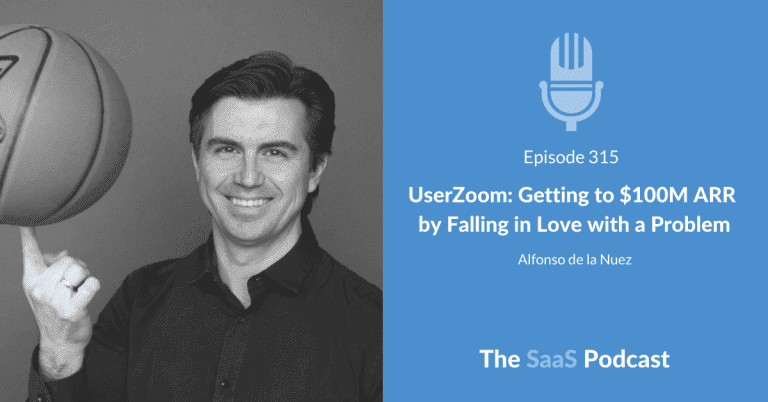
UserZoom: Getting to $100M ARR  by Falling in Love with a Problem - Alfonso de la Nuez

Alfonso de la Nuez, UserZoom

UserZoom: Getting to $100M ARR by Falling in Love with a Problem

Alfonso de la Nuez is the co-founder and co-CEO of UserZoom (now part of UserTesting), a SaaS product that delivers actionable UX insights to help businesses design and deliver better digital experiences. In 2001, Alfonso and his partners started a user experience research consultancy in Spain. But doing research in a physical lab was slow, manual, and expensive. After several years of doing user experience research that way, they decided that they'd build a tool to help them automate the process and become more efficient. And the tool, once it was built, helped them run the consultancy better. Only when a client asked if they could use the tool to conduct their own user research did Alfonso and his partners realize that there was an opportunity for them to become a product business. In this interview, we share how they transitioned from a consultancy to a SaaS company, some of the struggles they faced in finding customers, and how they have gone from a humble start as a consultancy in Spain to a SaaS business that is now doing almost $100M in annual recurring revenue and has raised $136M. I hope you enjoy it.

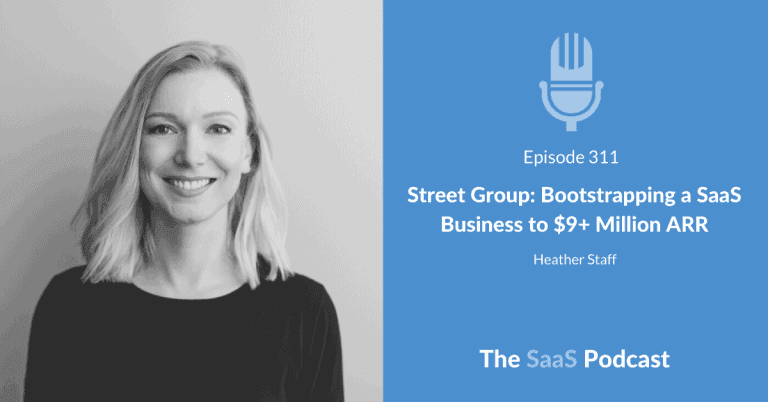
Street Group: Bootstrapping a SaaS Business to $9+ Million ARR - Heather Staff

Heather Staff, Street Group

Street Group: Bootstrapping a SaaS Business to $9+ Million ARR

Heather Staff is the co-founder of Street Group, a UK-based B2B SaaS company that's modernizing the real estate industry and the process of moving home. Heather and her co-founder (and brother) Tom founded the business in 2016. When Tom realized how much manual work his father was doing to run his real estate agency in the UK, he decided to build a software solution. The only problem was that Tom didn't know how to code. He bought a book to teach himself PHP and started figuring out how to build a solution. What Tom created for his dad was pretty basic. But it made a huge difference to the business and saved his father a lot of time. After seeing what Tom had built, Heather decided to join him and see if they could sell the product to other real estate agents in their area. Today, their business does over $9M in annual recurring revenue (ARR) and they have a team of 85 people. And the business is 100% bootstrapped. In this interview, you'll learn how Heather and Tom went from zero to over $800K in monthly recurring revenue, some big mistakes they made along the way, what Heather would do differently if they were starting over today and why they chose not to raise funding and bootstrap the business instead. I hope you enjoy it.

How Not To Raise Capital for Your SaaS Startup - Brian Parks

Brian Parks

How Not To Raise Capital for Your SaaS Startup

Brian Parks is the founder and managing partner of Bigfoot Capital, a company that specializes in lending growth capital to B2B software companies. Going out to raise money for your startup can be overwhelming, especially if it's the first time that you're doing it. As a founder, you have a business to run and if you're not careful, fundraising can easily consume all your time. Brian has an interesting background. He was an investment banker for several years. He's raised money as a startup founder himself. And now he's investing in early-stage SaaS companies and recently raised $30M for Bigfoot Capital. So he has a unique perspective on fundraising and I thought it would be helpful to have him share his insights on how founders of SaaS companies that are looking to raise money, can increase their chances of success.

The Dangers of Building a SaaS on Someone Else’s Platform - Jordan Gal

Jordan Gal, Rally:

The Dangers of Building a SaaS on Someone Else’s Platform

Jordan Gal is the co-founder of Rally, a headless checkout that gives e-commerce merchants more control over their checkout experience. In 2014, after running his own e-commerce business for years, Jordan launched a simple abandoned cart app which eventually became a customizable checkout for Shopify merchants. By 2020, Jordan and his co-founder had found product/market fit, built a product that people loved, and were generating about $6M in annual recurring revenue and were profitable. And then everything fell apart. They experienced what every founder fears when building a business on someone else's platform. Shopify suddenly decided that it wasn't going to allow them to offer their checkout to any more Shopify merchants. In this interview, you'll learn how they overcame numerous challenges to grow to over $6M in ARR, how they handled the realization that their dream was crushed, and what they're doing differently now with their new SaaS company. I hope you enjoy it.

A Guide to Content Promotion for B2B SaaS Companies - Alan Silvestri

Alan Silvestri, Growth Gorilla:

A Guide to Content Promotion for B2B SaaS Companies

Alan Silvestri is the founder of Growth Gorilla, an agency that provides in their words no BS content promotion for B2B SaaS companies. If your content promotion ends right after you click publish and share the content on your social media profiles, then you're not making the most of the content that you worked so hard to create. The truth is that content creation is just half the job. To be truly effective with your content marketing, you need to invest just as much time in promoting the content. Content promotion doesn't just help you reach new audiences, it also helps you to improve your SEO when you can get other sites to link to your content. But doing a content promotion right is hard. Even many SaaS companies that are investing time in content promotion, get it wrong. Their outreach and promotion are ignored and they end up wasting a lot of time and effort, without much to show for it.

Building an 8-Figure SaaS  by Focusing on One Market - Dave MacLeod

Dave MacLeod, ThoughtExchange:

Building an 8-Figure SaaS by Focusing on One Market

Dave MacLeod is the co-founder and CEO of ThoughtExchange, an enterprise tool that helps leaders quickly gain critical insights and make better decisions. In just over 10 years, Dave and his co-founder Jim have grown ThoughtExchange into a $20M annual business with 200 employees, and $45M in funding. But there was a time when no one was interested in buying their product. They built the product first and then tried to find people who had a problem that they could solve. It wasn't a smart way to go about building a business. So it was hardly surprising that they struggled to find customers. They kept hearing the same feedback i.e. it's an interesting idea, but it's not a product we'd ever use in our organization. But eventually, they did find a customer in an unlikely place. It turned out that a school superintendent had exactly the problem their product could solve. And at that point, the founders made a very smart decision – although they didn't fully realize it at the right. They decided to go all-in and focus on school districts. For almost 5 years, they focused almost exclusively on that one market instead of going out and trying to sell their product to everyone. Today, half their business comes from enterprise customers. But their success was originally built by focusing on one target market and one customer for years. Whether you're trying to find your first 10 customers or your first $100M in annual revenue, having focus is critical. And that's what we dig deeper into in this interview. I hope you enjoy it.

COR: Moving a SaaS Upmarket from SMB to Enterprise - Santi Bibiloni

Santi Bibiloni, COR:

COR: Moving a SaaS Upmarket from SMB to Enterprise

Santi Bibiloni is the co-founder and CEO of COR, a SaaS product for creative and professional teams that intelligently suggests how to run their projects, finances, and resources in order to improve profitability. In 2015, Santi was running a successful e-commerce agency in Argentina. As the business grew, it became increasingly difficult to track the profitability of client projects. At first, Santi and his partners assumed that larger agencies had already solved this problem. But when they did research, they learned that this was a very common problem and there wasn't a good solution out there. So the founders decided to build a solution. Once they had built an MVP, they managed to get two other agencies in Buenos Aires to try out their solution. But those early users hated the product. It had lots of bugs and a poorly designed user interface. But even then, they were willing to keep using the tool because it was helping to solve a real pain. That helped them validate the idea and raise an angel round. But they spent most of that money on paid media that didn't really work. They tried running ads on Google, Facebook, LinkedIn, etc. But at the time they didn't have a robust solution and selling via ads wasn't a good way to spend money. They got to about $2K in monthly recurring revenue but growth was slow. What helped them find traction was to move upmarket and focus on enterprise businesses i.e. some of the largest agencies in the world, instead of selling the product to small and medium-sized businesses (SMBs). That helped them to get their revenue to multiple 7-figures and recently raised a Series A round. In this interview we cover some great topics: I hope you enjoy it.

Oribi: How a B2B SaaS Startup is Competing Against Free - Iris Shoor

Iris Shoor, Oribi:

Oribi: How a B2B SaaS Startup is Competing Against Free

Iris Shoor is the founder and CEO of Oribi, an AI-based web analytics tool that gives you actionable insights to help you make better data-driven marketing decisions. In 2016, Iris had an idea for a new SaaS product. She'd already built two successful startups and was ready for a new challenge. As a marketer, she knew how hard it was to make good data-driven decisions and so she decided to solve that problem. She spent the next year talking to people and researching her idea. She had one big question: why is nobody doing something about this problem? During that year she also hired a developer and started building an MVP. She used Facebook ads to get her first customer for less than $50. In fact, you'll be shocked how quickly she got that first customer. The product was clearly solving a pain point because it didn't take long to find more customers. She had a great product, early customers, and was ready to raise money. But then Iris decided to kill the product. She shut it down and started looking for a different product idea. In the interview, you'll learn exactly what led to her making such a drastic decision. She talks about why the decision made sense at the time but is something she still regrets today. There's an interesting story behind that decision and a useful lesson for all founders. Eventually, Iris did build another product. This time her product was focused on web analytics. And in the last 4 years, she's grown her company to 60 employees and several thousand customers. And she's also raised $28 million in funding. It's a great interview with some interesting insights. As a serial entrepreneur, Iris already learned some tough lessons with her previous startups. In this interview, you'll learn about some counter-intuitive things she did this time. Those insights may help you to avoid making the same mistakes too. I hope you enjoy it.

SaaS Sales Outreach: Do Things That Don’t Scale to Stand Out - Zandra Moore

Zandra Moore

SaaS Sales Outreach: Do Things That Don’t Scale to Stand Out

Zandra Moore is the co-founder and CEO of Panintelligence, a white-labeled business intelligence and predictive analytics solution for SaaS companies. Zandra and her two co-founders acquired the product they were building at their old company and spun it into a new startup. They packed up and carried a server across a car park to their new office. To get started, they got a list of 500 companies from Dunn and Bradstreet and sent each one a handwritten letter in the mail. It wasn't scalable, but it helped them land customers. Since then, their startup has grown into a multiple 7-figure SaaS business with over 50 employees. They're disrupting the SaaS analytics sector and competing against giants like Power BI and Tableau. And they're doing all this from a city in the north of England. In this interview, we discuss: I hope you enjoy it.

How to Create SaaS Buyer Personas and Produce Better Content - Adrienne Barnes

Adrienne Barnes

How to Create SaaS Buyer Personas and Produce Better Content

Adrienne Barnes is a B2B SaaS Content Marketer and the founder of Best Buyer Persona. She helps SaaS and tech companies learn more about who their audience is and then turn those insights into useful buyer personas that help create better and more effective content. Buyer personas are a great way to understand your customers and use those insights to improve every aspect of the customer experience from marketing, sales, product, and more. Unfortunately, most companies do a terrible job creating buyer personas, or worse, don't have any. Those companies create buyer personas based on loose assumptions and anecdotal information. While these personas look nice, they often don't serve any useful purpose and are quickly forgotten about. If you create buyer personas this way, there's a huge risk that you're going to make the wrong investments in your product, marketing, and sales, and waste a lot of time and money doing the wrong things. The key reason companies lack or have useless personas is that they don't talk to their customers.

Hard Lessons on Finding SaaS Product/Market Fit - Rohith Salim

Rohith Salim

Hard Lessons on Finding SaaS Product/Market Fit

Rohith Salim is the co-founder and Chief Product Officer of SpotDraft, a product that helps companies create, manage and review legal contracts. In 2017, SpotDraft's three founders teamed up to launch their new startup. They saw an opportunity to streamline the end-to-end contract management process and believed they could solve that problem. Initially, they built a product for freelancers and solopreneurs. But they quickly realized that most people in that market weren't willing to pay for a solution. So they decided to move upmarket and target Fortune 500 companies. But they didn't have the experience or credibility to win customers. Eventually, they struck a deal with a large reseller through which they got their first couple of customers. On paper, things were looking pretty good for them, and they were able to project out several million dollars in revenue from this one channel. But working with a reseller also created several new issues for the founders. They found themselves doing custom development work for each customer, which led to a higher onboarding and support overhead. But worst of all, they didn't own any direct relationships with customers – they were effectively a sub-contractor. It took the founders a long time to understand a fundamental lesson – as a SaaS business, you can't channel partner' your way to product/market fit. Eventually, the founders had to go back to the drawing board, do a bunch of customer interviews and try to figure out a completely new plan. In this interview, we talk about how they went through that process, how they had to deal with losing some customers and revenue, and how they've been able to turn things around and start growing again with a more focused strategy.

Bootstrapping a SaaS in a Market with Well-Funded Competitors

Bootstrapping a SaaS in a Market with Well-Funded Competitors

Michael Cooney is the co-founder of WhatConverts, a product that lets you track phone calls, web forms, and web chats, back to specific marketing campaigns, so you know exactly where your best leads are coming from.

How to Craft a Sales Narrative for Your SaaS Product

How to Craft a Sales Narrative for Your SaaS Product

Omer Khan: [00:00:00] Welcome to another episode of the SaaS podcast. I'm your host Omer Khan. And this is the show where I interview proven founders and industry experts who share their stories, strategies, and insights to help you build, launch and grow your SaaS business. In this episode, I talk to Pete Kazanjy.  the co-founder of Atrium, a sales management tool that uses data and smart analytics to help sales leaders and managers improve team performance. Pete Kazanjy: [00:01:59] Hello. Hello. Omer Khan: [00:02:01] So for people who aren't familiar, can you just tell us a little bit about Atrium? What does the product do? Who is it for? What's the main problem you guys are helping to solve? Yeah, so Pete Kazanjy: [00:02:12] Atrium makes software that helps sales managers do what we like to call data-driven rep management, such a use these data and analytics to better manage their, their AEs, their SDRs, their AMs, and CSMs using metrics using continuously monitored analytics that is really super quick to set up out of the box. You know, it takes 90 seconds and then importantly, kind of monitors those KPIs for those managers sits as they don't have to stare at walls of charts in order to figure out what the hell is going on, but this operates just does it for them using, using math. Omer Khan: [00:03:01] Great. So today we're going to talk about your book, Founding Sales, the early-stage go-to-market handbook, startup sales for founders and others in first time sales roles. Pete Kazanjy: [00:03:34] Yeah, so, so the book is really focused on kind of two, two stages, but the way to kind of think about it is it's like the missing manual, if you will, for early-stage go to market. And really the reason why I wrote it was because when I at my last software company, TalentBin when I, when I started TalentBin, when my co-founder Jason. Omer Khan: [00:05:28] Great and then can you just explain why the book is relevant, not just for sales folks and why other people or disciplines in an organization can also get value from this? Pete Kazanjy: [00:05:40] Yeah so the way to think about it is it the primary user of the book is a person who does not have selling like early-stage selling experience. So who could that be? It's called founding sales cause like the primary user for it is a founder. But if you think about who founders, we're kind of like founders come from, if you will. Usually they're like former product managers, former engineers, former designers, what have you. Omer Khan: [00:07:53] Great. So today we're going to talk about building a narrative or a story, and this is kind of like the foundational product marketing stuff. And when you're you're nearly stages and you're going out and selling a product from what I've seen a lot of founders, especially if they don't have experience with sales, they sort of tend to. Pete Kazanjy: [00:09:47] Good goal, good goal. Omer Khan: [00:09:49] All right. So let's start from the top. Tell us about, from your perspective, why is this important? What does it really mean to build a narrative or a story? Pete Kazanjy: [00:09:58] Yeah. So I think this is a little bit of kind of like my product marketing background kind of like peeking out. Omer Khan: [00:12:29] Great. Okay. So the first step is really to identify what the problem is, and that might seem. Obvious it's like you think, well, yeah, the problem is the thing that my product solves. But it's, I think it's going deeper than that really understanding from, from the customer's perspective, what are their pain points? Pete Kazanjy: [00:13:15] Yeah. So the interesting thing, you, you totally nailed it and, you know, spoken like a true former product manager on your back. Cause I think that actually kind of starts even before you're formulating the narrative cause like you can't just like, pull it out of your ear and be like, here's this problem, right? Omer Khan: [00:16:28] Yeah a couple of points on, on that. Like you said, that the sort of like, you know, themes or patterns emerge, and that's a really important point because it's not like you had these interviews and you're like, ah, we've got the answer and this is the thing that if we just are going to go and talk to people and they're gonna be, yes, yes, yes. Where do I sign? But it's, it's more like you sort of start to get, okay. Here are sort of like five or six things that we keep hearing over and over again. Maybe there's going to be some of them that are important enough that. Pete Kazanjy: [00:17:36] Yeah. I mean, in this case, this was before this was pre-product right. We were doing just research. So that's fine. I guess, better to understand that there actually isn't a problem there and it's well solved. And then you solve your, you save yourself from, you saved yourself from spending a bunch of engineering resources, building something to solve a problem that doesn't exist for instance. But yes, you certainly certainly should not be talking about your product at that point, because ideally, ideally you're doing this research before the product, the product exists because it should inform the thing that you're gonna, you're going to end up building, but yes, for sure. Omer Khan: [00:20:09] Great. And then the second part of this is, so we've sort of defined what is the problem? The second part is like, Which you made the point in the book is just as important is like, who has the problem initially when we're thinking about this, it's like, we think of it, like the company has this problem, but then you need to sort of figure out who specifically who's your, you know, your ideal customer profile or your target persona. Pete Kazanjy: [00:20:44] Yeah. So, so oftentimes there's like multiple people who are responsible for solving a problem and in kind of a different, different ways. We've kind of just talked about that a little bit with the TalentBin, but really what it comes down to is like, who's the person that's measured on this, whose success is measured on this result. Omer Khan: [00:25:12] Now the target customer or the person who has the problem, isn't necessarily always the same person who's the decision-maker. Pete Kazanjy: [00:25:24] Yeah. Omer Khan: [00:25:24] And so you might be in a situation where you have identified somebody who is really struggling with the problem, and they would love to have a solution, but maybe, you know, based on the price point of your product, they're not the right person to make that decision, that buying decision that's somebody else, but that's somebody else may not be experiencing that problem or the pain from that problem as much. Pete Kazanjy: [00:26:13] Yeah. And so I think that that's just sometimes what you have is you have messages on a per persona basis, right or narratives on persona basis. You kind of heard me talking about that a little bit in the Atrium example where there's a couple of ways you can kind of skin that cat. One, one thing that you can potentially do is structure your product in such a way that it can be transacted at a lower price point, right? Omer Khan: [00:28:29] Yeah. Yeah. And that leads us onto the next point, which is understanding the costs associated with the problem. And ultimately, I think this is about understanding what sort of value they're getting or not getting today, what's the impact to the organization. Pete Kazanjy: [00:29:00] Yeah. So I think there's, there's kind of two ways of doing that. There's like hard ROI and then there's kind of like more soft ROI and really the, the reason why. Organizations invest in technologies in order to like, make their businesses more efficient and either reduce costs or make more money. Omer Khan: [00:33:21] Yeah. And, and I think to understand that you really need to, I think it leads onto the next point is you, you really need to understand, like how, how are they solving the problem today? And where is that current solution falling short? So one, well, as you dig into that, you're going to be able to understand, okay, what the, what is the cost associated with how they're trying to solve this today? Pete Kazanjy: [00:33:45] Exactly. Omer Khan: [00:33:46] Or if they're not, if they're not even bothering to try and solve it, do they really care that much about this problem and maybe this isn't the right thing to, to be focusing on with your product. Pete Kazanjy: [00:33:57] Yeah. Yeah. So the, the, how they currently solve it usually kind of buckets into a couple of different, like couple of different buckets. Omer Khan: [00:37:02] And you sort of also mentioned like if they're already using a product to solve the solution or some of the problems, sorry. Yeah. But I think you also said something about like, it's, it's also important to understand that that product might not actually be a competitor to you. There may still be an opportunity. Can you explain that a little bit more? Pete Kazanjy: [00:37:28] Yeah, for sure. I mean, yeah, the notion of competitor is kind of tough because things are like, things overlap if you will. Right. And, and so you use like Atrium as a, as an example, there, Atrium, you know, oftentimes organizations try to solve the problem of data-driven rep management via, you know Maybe by Salesforce reporting or business intelligence or what have you, these are like not actually direct competitors with, with us. Omer Khan: [00:39:08] Awesome. Okay, great. So we've, we've sort of covered the importance of doing customer interviews, how that helps you to really start to understand the different themes or get more clarity around exactly which problem matters most to your target customers, that, that you can, your product can solve zeroing in, on your target customers within the organization and understanding. Pete Kazanjy: [00:40:56] Yeah. Well, the one last thing that we didn't touch on just really quickly, of course we teed everything up and then the last thing is like, Hey, how does this new solution work and why is it, why is it better? Omer Khan: [00:43:57] Yeah. I mean, we can kind of go back and forth and wordsmith and, and, and kind of make the email shorter and all that stuff. But what I liked about the way you went through that was you described the pains that. They're most likely having based on the customer interviews that you've already done, you describe it in a way which really resonates with them. Pete Kazanjy: [00:45:04] Right. Exactly. And of course, all of this kind of cascades is you delineated at the beginning of this conversation, all of this cascades from a, like having gotten that narrative set up for success from the get go. Omer Khan: [00:45:27] All right. Cool, Pete, thank you so much for coming back to joining me today. Really great conversation. I think, as I said, we've just unpacked, just a tiny bit of, of what you cover in the book. Pete Kazanjy: [00:46:07] Focusing just find me on, on LinkedIn or Twitter. I'm pretty easy to find I'm the only Peter Kazanjy. On there. Omer Khan: [00:46:14] We'll include the links to those profiles just in case there's any Peter out there. All right. Great. Well, thank you so much. We really appreciate the time and you know, congratulations on getting that book out of your head. Pete Kazanjy: [00:46:59] Thanks so much for having me. It was really fun. Omer Khan: [00:47:02] Cheers.

Flow – How to Turnaround a Struggling SaaS Company - Daniel Scrivner

Daniel Scrivner

Flow – How to Turnaround a Struggling SaaS Company

Daniel Scrivner is the CEO of Flow, a task and project management product that's used by over 300,000 teams. In early 2019, Daniel was hired to help lead the turnaround at Flow. The company was about 10 years old and in trouble. It was losing customers and revenue at a worrying rate. The team had been spending about $100,000 a month on paid acquisition advertising but it wasn't moving the needle. In fact, revenue was still declining by about 5% month over month. When Daniel joined, continuing to spend any money on acquisition wasn't an option. So with a core team of 6 people, he had to figure out how to lead a turnaround – and do it fast. It was a huge challenge. But Daniel had to deal with one more – this was his first job as a CEO. In this interview, we talk about why an unlikely candidate like Daniel was hired as CEO and how he and his team went about diagnosing and fixing some major problems. We dig into why and how he rehauled the Flow product by improving the design, making it more modern and lightweight, and reducing friction for end-users. And we explore how the team went about fixing their marketing and sales funnel so they were able to improve how they acquired, activated, and retained customers. Today, Flow is growing again. And Daniel's role has evolved from a turnaround to growth CEO. Whether you're working on a SaaS business that's not growing fast enough or one where revenue is in decline, there are a lot of great lessons in this interview. We often look for silver bullets to solve seemingly insurmountable problems. But this story is a reminder about the importance of nailing the fundamentals, constantly improving small things, and eventually seeing them compound into meaningful results for your business. I hope you enjoy it.

DocSend: A Case Study in Product-Led Growth - Russ Heddleston

Russ Heddleston

DocSend: A Case Study in Product-Led Growth

Russ Heddleston is the co-founder and CEO of DocSend, a SaaS platform that lets you securely share your documents with real-time control and insights. When Russ was an intern at Dropbox, he found that many people still shared files as email attachments even though it wasn't secure or easy to track. He decided to change that. Being engineers, Russ and his co-founders wanted to build a product right away, but they resisted the temptation. Instead, they decided to meet with potential customers to get feedback on their product idea, which resonated with a lot of people. Once they'd had enough customer conversations, they built DocSend as quickly as possible, putting little effort into design or marketing. And to get the word out, they gave away free accounts in exchange for feedback. It didn't take long for DocSend to become a quick success. But they weren't charging anything for the product. As DocSends' growth continued, the founders realized they needed to change their model. It was hard to keep growing without any revenue, so they created a $10 a month plan and they kept growing. In 2016, the founders built a sales team to help generate more demand. While it felt like the right move, their sales efforts failed. Eventually, they gave up on doing outbound sales and instead went all-in with a self-serve model just two years later. The team increased its prices and reworked the product positioning but didn't actually make any changes to the product. Suddenly, their most expensive plan was the most popular. The more they charged, the better they seemed to do with free to paid conversions. Today, DocSends' growth is driven primarily by word of mouth and SEO, and the team continues to focus relentlessly on building a great product. To date, they've raised over $15 million dollars and have a team of around 55 people. This story is a great example of how to learn from your mistakes and why product-focused models can succeed. I think you'll find it interesting and insightful in many ways. In this interview we talk about:
Unstack: How to Spot a Gap in a Crowded SaaS Market - Grant Deken

Grant Deken

Unstack: How to Spot a Gap in a Crowded SaaS Market

Grant Deken is the co-founder and CEO of Unstack, a SaaS content marketing platform designed to help you rapidly build, measure, and scale your digital presence without writing code or hiring developers. In 2013, Grant co-founded an influencer marketing platform called Grapevine, which he eventually sold in 2019. During that time he worked with hundreds of advertisers and saw that a lot of them struggled when they had to quickly update their website or create a landing page. That got him thinking about what the ideal content management platform might look like. And he started having conversations with other founders about what they were doing to build out and manage their web presence. Eventually, he realized that there was a market for the type of product he'd been thinking about. So he basically pre-sold the idea to a few people and then spent the next few months building the first version of Unstack. He and his co-founder Steve charged for the product from the day they launched. And they were able to find their first 10 customers through their existing relationships. But getting to their first 100 customers was much more challenging. In this interview we talk about: We also talk about some of the mistakes that the co-founders made and what Grant wishes that they had done differently. I hope you enjoy it.
How to Build a SaaS Brand  Without Doing ‘Branding’ - Paul Campillo

Paul Campillo

How to Build a SaaS Brand Without Doing ‘Branding’

Paul Campillo is the director of brand and communications at Typeform, a SaaS platform that lets you create interactive forms, surveys, quizzes, and more. Paul was a social worker helping youth involved in the juvenile justice system and he was helping adults coming out of prison to find jobs. One day, the CEO of the non-profit where Paul worked told him that she'd heard about some software called Typeform which might be useful for them and asked if he could look into it. Paul went to the Typeform website and thought the product looked pretty cool. He came across a job application form that was created in Typeform. Filling out the form seemed like a good way to play around with the product so he answered the questions and submitted the form. About a week later, he got an email from the head of HR at Typeform asking him if we could chat with their CEO about his job application. And eventually, he became Typeform's first marketing hire. In this interview, we talk about his journey from joining a startup in its early stages and seeing it grow into an 8-figure SaaS company with over 300 employees and $52M in funding. Paul explains that whether you realize it or not, your startup is building a brand. And we dig into what exactly that means beyond how many people think of branding. We explore the importance of building a product people love, how to build deeper connections with customers and Paul shares a painful example of what happened at Typeform when they didn't pay enough attention to customers. We cover the fundamentals of storytelling, why it's so powerful, and how you can start using it to communicate with your customers in a more engaging way. And Paul shares a simple but powerful 5-part copywriting framework that you can use to market and sell your product. I really enjoyed doing this interview. Paul is a real down to earth, no BS kind of guy. He shares some great ideas and insights in this interview and I'm sure you'll get a ton of value from listening to Paul. So I hope you enjoy it.
Whooshkaa: Launch & Differentiate Your SaaS in a Crowded Market - Rob Loewenthal

Rob Loewenthal

Whooshkaa: Launch & Differentiate Your SaaS in a Crowded Market

Rob Loewenthal is the founder of Whooshkaa, a platform that helps creators and brands to produce, host, and monetize their podcasts. In 2014, Rob walked away from a job as the CEO of a radio network in Australia to launch a SaaS startup. His idea was to build an end-to-end technology platform to help podcasters. He was getting into a market that already had a lot of competitors. But Rob believed that there was an opportunity to do a lot more to help podcasters than just hosting and analytics. And in a relatively short time, he's been able to build a differentiated product that's now used by around 9,000 podcasts and enterprise SaaS companies like Cloudera and Atlassian.

SaaS Product-Led Growth and the New Customer Journey - Blake Bartlett

Blake Bartlett

SaaS Product-Led Growth and the New Customer Journey

Blake Bartlett is a partner at Openview, a venture capital firm that focuses on B2B companies in the expansion stage such as Highspot, Calendly, and Expensify. These days it seems like everyone in SaaS is talking about product-led growth (PLG). But for many critics, it's just a buzzword and for others, it's not even a new concept. So I decided to sit down with the guy who actually coined the term product-led growth and explore this topic in more depth with him. If you're not familiar with product-led growth, then I'd suggest you listen to episode 251 where I cover the fundamentals of PLG with Wes Bush (founder of Product-Led Institute). In this interview with Blake Bartlett, we build on that and answer questions like: We also explored how a fictional sales-led SaaS company might transition to a product-led growth model. And we examined some of the challenges the company would face trying to do that and how it might overcome them. I think it's a great conversation with someone who thinks deeply about product-led growth all the time and is involved in a number of PLG focused B2B SaaS companies. I hope you enjoy it.

Salesflare: Finding Your Niche in a Crowded SaaS Market - Jeroen Corthout

Jeroen Corthout

Salesflare: Finding Your Niche in a Crowded SaaS Market

Jeroen Corthout is the co-founder of Salesflare, a simple but powerful CRM that automates updating your data so you don't have to. Jeroen had to use a CRM system in his job and hated how much effort it took to keep everything up to date. And if you didn't, your CRM quickly became useless. He also realized that a lot of salespeople tracked deals outside of the CRM because they didn't want to be hassled by management until the deal was further along. He came up with the idea of a sales tool that could build off the data that was already there, make better use of automation and rely less on people having to manually update information. He built it not as a replacement but as an extension for a CRM application. But he had a really hard time selling it because his prospective customers couldn't see the value or benefit of having another tool alongside their CRM. And it took him some time to find the right market for his product. Eventually, he realized that smaller companies were using his product as a CRM system, not as an extension to it. For the first 18 months, he and his co-founder did a lot of things that didn't scale. He would do all the demos and personally onboard new customers. People couldn't even pay for the product online. They would send them invoices and wait to get paid. It was a lot of manual work to sell a product that was all about automation. But slowly, his efforts started to pay off. Today, Salesflare is used by over 2,000 companies and the founders have raised about $1M. We talk about how they acquired their initial customers, how they've scaled their marketing and sales, and the lessons they learned from selling their product on AppSumo. I hope you enjoy it.

Overcoming the Challenges of a Female-Founded SaaS Startup - Rachel Liaw

Rachel Liaw

Overcoming the Challenges of a Female-Founded SaaS Startup

Rachel Liaw is the co-founder and CEO of Fuse Inventory, a SaaS inventory planning solution that helps brands scale their supply chain. It was 2015, and Rachel had been working in the e-commerce space for a few years. She was continually struggling with inventory management. If you didn't manage inventory correctly, you either ended up with not enough product to fulfill customer demand or too much inventory that you couldn't sell. She realized that this wasn't a unique problem — it was an industry-wide issue. When she started researching software solutions, all she found were outdated software products not designed for modern e-commerce businesses. And even worse, she realized that many companies were managing hundreds of millions of dollars worth of inventory every year in a spreadsheet. So in 2016, she and her co-founder Bridget quit their jobs and set out to build a modern SaaS solution for inventory management. In this interview, we talk about: It's a great story about a SaaS startup. But I think it's an even more interesting story about a female founder who's faced a ton of challenges and how she's overcome them and learned to believe in herself. I hope you enjoy it.

5 Steps to Nailing Your SaaS Product Positioning - April Dunford

April Dunford

5 Steps to Nailing Your SaaS Product Positioning

April Dunford is the founder of Ambient Strategy and author of "Obviously Awesome: How to Nail Product Positioning, so Customers Get it, Buy it, Love it." How clear are you on where your SaaS product fits in the marketplace? When you tell potential customers about your product (whether that's on your website, or in-person) do they get it? Do they understand where your product fits? And more importantly, are they clear about what makes your SaaS product unique, and do they understand how it's better than the alternative solutions? Positioning is what helps you get that clarity. And it's not just about writing a positioning statement. Creating your positioning is a process that your company needs to go through to figure out the best way to explain where your SaaS product fits in the marketplace and why your potential customers should choose you.

Turning a Simple Slack Plugin into a Growing B2B SaaS Startup - Darren Chait

Darren Chait

Turning a Simple Slack Plugin into a Growing B2B SaaS Startup

Darren Chait is the co-founder and COO of Hugo, a SaaS product that provides connected meeting notes for teams. Darren used to work as a corporate lawyer in Australia. He became frustrated with how inefficient meetings were and had an idea for improving things. He partnered up with a close friend, and they built a mobile app that helped people prepare for meetings. It seemed like a great idea. And it didn't take the founders long to get a couple of thousand users. But they found it hard to monetize the product, and sales were slow. At the same time, their team was struggling with internal communication. Someone had the idea to build a simple Slack plugin that reminded everyone to share notes after every meeting. It was a simple solution, but within weeks they saw huge benefits and better team communication. So they kept improving their tool and adding new features. One day, during a customer meeting, Darren was using the tool to share notes with his team. His customer was intrigued and asked if their company could also try out the software. That's when the founders started to realize that their internal tool was far more valuable than the mobile app they were trying to sell. So they pivoted and focused instead on selling their tool. It was a simple idea but still hard for people to understand. The founders struggled with their messaging. When you're creating a new product category, people aren't looking for your product. And sometimes they don't even realize they have the problem that you're solving. There are some great lessons in this interview about figuring out your value prop and messaging, how the most straightforward solutions are often the best business opportunities and using product-led growth to drive user adoption and revenue. I hope you enjoy it.
Getting Your SaaS Product Messaging Right - Robin van Lieshout

Robin van Lieshout

Getting Your SaaS Product Messaging Right

Robin van Lieshout is the co-founder and CEO of Insided, a customer success community platform for SaaS companies. What do you do if you've built a great SaaS product, but no one seems to care about it? In 2010, Robin launched a SaaS company in the Netherlands. He was able to pre-sell the idea to T-Mobile for a six-figure annual contract. It seemed like the perfect way to start his business. And in the next couple of years, he grew the business to around 40 customers. But he started seeing a worrying trend. The majority of his customers weren't actually using the product. He knew that it was just a matter of time before those customers churned. So he made the decision to refocus his business on a new customer segment – high-growth SaaS companies. But when he started reaching out to his prospective customers – no one seemed interested in his product. His sales team couldn't even get people to reply to their emails. They wondered if maybe they were trying to solve a problem that his target market didn't care about. Robin had to figure out what was going on and he had to do it quickly. He spent a lot of time listening to recordings of sales calls, talked to a lot of prospective customers and eventually realized that they didn't have a product/market fit issue – they had a messaging issue. He and his team didn't understand their target customers well enough. And so their messaging was off and as a result, their sales efforts were failing miserably. Once they eventually got their messaging right, things started to click. They started making sales and growing the business again. Today, they're doing just under $10 million ARR. In this interview, we talk about how Robin figured out the right messaging, how he optimized his pricing to increase the average contract value and how he's now generating 100% of his leads through inbound marketing. I hope you enjoy it.

Sell More Faster: A Playbook for SaaS Startups - Amos Schwartzfarb

Amos Schwartzfarb

Sell More Faster: A Playbook for SaaS Startups

Amos Schwartzfarb is a serial entrepreneur, managing director of Techstars in Austin, Texas and the author of Sell More Faster: The Ultimate Sales Playbook for Startups. Sell More Faster is a guide for founders seeking product-market fit, building their sales team, developing a growth strategy, and chasing accelerated, sustained selling success. In this interview, Amos and I discuss some of the key ideas in his book, including: By the end of the interview, you'll have some practical tips you can use to sell more faster. I hope you enjoy it.

How a SaaS User Experience Can Help Grow Your Business - Suresh Sambandam

Suresh Sambandam

How a SaaS User Experience Can Help Grow Your Business

Suresh Sambandam is the CEO of Kissflow, the first unified digital workplace for organizations to manage all of their work on a single, unified platform. Kissflow is used by over 10,000 customers across 160 countries, including more than fifty Fortune 500 companies. Suresh was working as an engineer for a startup when he spotted an opportunity for a business idea. He eventually quit his job to launch his startup in 2003. Things looked promising at the start. Before he knew it, he had a team of 40 people. But the product just didn't get the traction he'd hoped for and he eventually had to pivot. With his new idea, he raised $1M from angel investors. But he was too early to market. And by the following year, he was running out of money and had to layoff most of his employees. And then in 2013, a customer helped him see the potential of his product… A UK based design company bought his product for $50K but then spent another $90K on building a great user interface for it. That was when Suresh had his aha moment. He realized that as an engineer, he'd been focusing too much on features and technology. Instead, he had to get his company building great user experiences. And that's when things started to click with his third pivot (which became KiSSFLOW). The more the team focused on creating a great user experience, the more their product resonated with customers. Today his company is doing close to $10M in ARR and has over 200 employees. We talk about his multiple pivots, the 10 years it took to find product/market fit, his strategic approach to search engine optimization and how that now drives over 50% of leads. And we talk about what Suresh calls "Desk Marketing & Selling" which his team based in Chennai, India is using to land B2B customers around the world. I hope you enjoy it.

Doing 300 SaaS Customer Interviews Before Writing a Line of Code - Alex Yakubovich

Alex Yakubovich

Doing 300 SaaS Customer Interviews Before Writing a Line of Code

Alex Yakubovich is the co-founder and CEO of Scout RFP, a SaaS product that helps companies with their strategic sourcing and procurement. Alex started a web development company when he was still in college. Initially, it was just a way for him and a few friends to make beer and pizza money. But over time, it evolved into an online ordering software product that the team sold to restaurant chains. By the time they graduated the business was making 6-figures in annual revenue. And over the next 5 years, as they all worked full-time on the business, revenue grew to several million dollars and eventually they sold the business. While working on this business, Alex had to deal with hundreds of requests for proposals (RFPs) and quickly became frustrated with how clunky and manual the RFP and procurement process was for most companies. So in 2014 he and his co-founders started working on their next startup. With a successful exit and money in the bank, it would have been easy for the team to feel confident that they could solve the problems and start building a product right away. Instead, they agreed that they wouldn't build anything until they'd talked to at least 200 people who worked in procurement. They actually end up talking to almost 300 people and those conversations helped them to build a much deeper understanding of the space. Although there were a lot of players in the market including some really big companies, the founders decided to focus initially on a really small problem. Their MVP was a one-page application and so minimal that prospective customers would often say is that it?. But once people used the product, they loved the simplicity and how this one feature saved them so much time. And from that simple, almost too minimal MVP, their company now has grown into a business with over 150 employees and they've raised $60M in funding. There are some great lessons in this interview about the importance of listening to your customers, not jumping into building a product straight away and being really focused with your MVP by solving a really small problem at the start. I hope you enjoy it.

From Software Engineer, to  Facebook CIO to SaaS Founder - Timothy Campos

Timothy Campos

From Software Engineer, to Facebook CIO to SaaS Founder

Timothy Campos is the co-founder and CEO of Woven, an intelligent calendar to manage your schedule and get the most out of your meetings. Tim started his career as a software engineer. In almost two decades, he climbed the ranks from engineer to CIO (Chief Information Officer). In 2010, Tim was hired as the CIO of Facebook. He'd only be on the job for 2 weeks when he was summoned to Mark Zuckerberg's office. Tim was excited that his CEO was so motivated to get into the details of IT, that just two weeks in, he was taking time to meet with Tim. But when Tim arrived, there was no sign of Zuck. Instead, he was met by a group of executive assistants who wanted to complain about the company's internal calendar app. They told him he had to get it fixed in the next week or he was done. From that moment, Tim set to work designing creative tools that would help Facebook employees easily find optimal times and places to meet. Tim's experience managing productivity for the entire Facebook workforce helped him realize that trhttps://saasclub.io/wp-content/uploads/2025/01/tools-and-materials-used-for-fashion-designing-4XD3MX3.jpgional calendars are broken. And in 2016, he left Facebook to co-found Woven, an intelligent calendar that helps busy professionals maximize their most valuable asset – their time. In this interview we talk about Tim's experience at Facebook, why he feels the world needs another calendar app, how he tested different marketing channels to acquire users and why we should trust Woven with our data. I hope you enjoy it.

SaaS Turnaround: From Near Failure to $10 Million ARR - Derek O'Carroll

Derek O'Carroll

SaaS Turnaround: From Near Failure to $10 Million ARR

Derek O'Carroll is the CEO of Brightpearl, a cloud-based enterprise resource planning (ERP) product for retailers and wholesalers. In 2016, a SaaS company founded in a small city in the UK was struggling with a business model that was unsustainable. After almost 10 years in business, the company was struggling to retain customers and was quickly running out of money. That same year, Derek O'Carroll was hired as the new CEO to help turnaround the company. He spent a lot of time talking to employees, partners, and customers to figure out the issues. He started building a list of things that needed to get fixed. And the more conversations he had, the longer his list got. He quickly realized that he wouldn't be able to fix everything. He needed to focus. So he eventually identified 3 key areas of improvement. And he decided to focus the majority of his time and his teams' time on solving those 3 things. It looked like a good plan. But it wasn't smooth sailing. In fact, when they started executing on the plan, they actually made the customer churn problem even worse for a while as they lost a lot more customers very quickly. But they stayed the course and kept executing the plan. And eventually, it paid off. In the last 3 years, revenue has more than doubled and is growing at almost 50% year over year. And they've significantly reduced their customer churn. The key lesson here is that if your business is struggling, or you feel like revenue has flatlined, or you have high churn, sometimes it can be overwhelming. Where do you start? What do you solve? You might have a super long list of things. But identify the top 2 or 3 things that you believe will make a difference and do a really great job to execute relentlessly in those areas. I hope you enjoy the interview.

Autoklose: Launch a SaaS in a Crowded B2B Market - Shawn Finder

Shawn Finder

Autoklose: Launch a SaaS in a Crowded B2B Market

Shawn Finder is the co-founder and CEO of Autoklose, an all-in-one outbound sales automation platform. Competing in a crowded market can be really tough. Having a great product and clear differentiation is super important, but sometimes that's not enough. You also need a great product launch that helps you stand out in the market and drive rapid product adoption. In 2016, Shawn had an idea for a new SaaS product. He already had an existing business and realized that many of his customers were struggling with the same issue. So he started thinking about how he could build a SaaS product to help them. After doing some research, he decided he was going to go all in' with this new SaaS business. But there was one big problem. Shawn was building a sales automation product and so he was about to enter an extremely crowded and competitive market. No matter how good his product was, he knew it was going to be a challenge to stand out in that market. So he knew that a successful launch was going to be critical for his new business. In this interview you'll learn: As a result, the business has gone from zero to over a million dollars a year in about 18 months. There are a lot of great lessons and insights in this interview. I hope you enjoy it.

How to Bootstrap a B2B SaaS Company with 4000 Customers - Cedric Savarese

Cedric Savarese

How to Bootstrap a B2B SaaS Company with 4000 Customers

Cedric Savarese is the founder and CEO of FormAssembly, a SaaS platform that helps businesses to create web forms and collect data. In 2002, Cedric moved from France to the USA. And he landed a job as a web developer at a higher education college in Indiana. He found himself spending a lot of time building web forms to capture data. It was tedious and boring work. But he realized how important these forms were from a business perspective. He started spending his evenings and weekends developing a form builder – an automated way for his end-users to create these web forms themselves. It was just a side-project. He shared the project on Hacker News and people started signing up. After a while, he added a paid plan and before he knew it, he was earning coffee money from his side-project. It was slow going, but Cedric kept working on his side-project. He listened to feedback he was getting and kept improving the product. The cost of living in Indiana was pretty low compared to places like San Francisco. And after 2 years, he was making enough money to quit his job and focus on his product full-time. But there was nothing unique about Cedric's product. There were already a number of similar form builders on the market and it seemed like new ones were being created every week. So how big could his little side-project get? And how could he stand out from the crowd? He kept listening to what his customers told him. And eventually, he found one simple thing that helped him differentiate his product. In this interview, you're going to learn what the one thing was. And you'll learn how he doubled down on that differentiator to bootstrap his little side-project into a profitable business with 65 employees. It didn't happen overnight, it's taken Cedric 13 years to get here. But it's an inspiring story on how you can turn a simple idea into a successful SaaS business. I hope you enjoy it.

SaaS Pricing Strategy: Top 5 Mistakes to Avoid - Kyle Poyar

Kyle Poyar

SaaS Pricing Strategy: Top 5 Mistakes to Avoid

Kyle Poyar is the of VP Market Strategy at OpenView, an expansion stage venture capital firm that helps build software companies into market leaders. Your SaaS pricing strategy can make or break your business. But getting your pricing right is really hard. And many companies struggle to understand what they're worth to their customers and how to clearly communicate that.

Successfully Pivoting a SaaS Business - Max Kolysh

Max Kolysh

Successfully Pivoting a SaaS Business

Max Kolysh is the co-founder of Zinc.io, an eCommerce lab that builds products to help Amazon and eBay sellers. Every SaaS founder knows that finding product-market fit is really tough. You might have to pivot your SaaS business multiple times before you find the right product for the right market. So what can we learn from SaaS founders who failed repeatedly before they found success? When Max and Doug were students at MIT, they talked about building a software product to help eBay sellers. And eventually, they both dropped out of college to start their business. They got accepted into YC but pretty soon realized that their idea wasn't that great after all. So they pivoted and built a product that saved people money when buying on Amazon. They got some good traction and it looked like they were on their way to finding product-market fit. But that all changed when they received a cease and desist letter from Amazon. So they were back to square one again. They needed another idea. One day they received an email out of the blue from an ex-customer who told them that he wanted to use an API but wasn't technical. He asked if they could help him out. That email led to Max and Doug pivoting again and creating a new product. But this time it wasn't just an idea they'd come up themselves — it was something a real customer needed. And the product resonated with the market and helped them get traction. Today, their company generates over $5 million in annual recurring revenue. It's a great story about persistence, flexibility, listening to your customers, and how to successfully pivot your SaaS business. I hope you enjoy it.

SaaS Growth: Unconventional Wisdom Leads to a $40 Million Startup - Tim Soulo

Tim Soulo

SaaS Growth: Unconventional Wisdom Leads to a $40 Million Startup

Tim Soulo is the Chief Marketing Officer (CMO) at Ahrefs.com, a SaaS startup that provides SEO tools to help grow your search traffic, research your competitors and monitor your market niche. In 2015, Tim joined a SaaS startup as head of marketing. The company had spent several years building their blog, but it still wasn't generating much traffic or leads. Tim decided that publishing higher-quality content regularly on their blog was going to be one of his top priorities. But after a year he still had little to show in terms of traffic and leads. Eventually, Tim figured out the problem. They were creating high-quality content, but they weren't optimizing it for SEO. They weren't doing keyword research or doing on-page optimization. Now that's not uncommon. A lot of companies make that mistake. But the startup that Tim worked for was in the business of SEO and their product helped their customers to grow search traffic! So it was pretty crazy that they weren't thinking about SEO on their own blog! Once he figured out the problem, Tim made a simple change – he started by doing keyword research to find out what people were searching for and then focused on creating the best content around those keywords. And in a couple of years, their blog traffic grew from 15,000 to over 250,000 monthly visitors and has become one of the biggest drivers of new customers and revenue growth. But the real story here is about a SaaS startup that's incredibly product-focused and breaks a lot of rules and conventional wisdom about marketing and growth. For example, they don't have a target customer or persona. They don't do growth hacks. They don't use analytics software or track conversion rates. They don't even do proper' SEO. They focus on building a great product and educating people on how to use that product through their blog. And that approach is working — they're bootstrapped and doing over $40M ARR. It's a great story. I hope it'll inspire you to think differently about your business and give you some insights to grow faster by ignoring conventional wisdom and trying something new. I hope you enjoy it.

How to Differentiate Your SaaS in a Crowded Market - John Stojka

John Stojka

How to Differentiate Your SaaS in a Crowded Market

John Stojka is the co-founder and co-CEO of Sertifi, a SaaS product that enables companies to electronically sign contracts and collect payments quickly and easily. You've got a great SaaS product, so why aren't more people buying it? Well, it might be because you're targeting a market that's too broad. Maybe you need to narrow your focus. But how exactly do you narrow down a market without going too small? In 2008, two brothers in Chicago (John and Nick) had the idea of building a SaaS product to let companies electronically sign contracts. They did some research, built a prototype and quickly landed their first customer. Things were looking good for their business, until one day when they turned up to work and were served papers for patent infringement. They were being sued by a big competitor. Many people would have given up at that point, but the brothers decided to fight the lawsuit. And they eventually won, but they had to work on it almost full time for 8 months and it cost them close to $150,000. It was a huge distraction and in those 8 months they did very little to improve the product. The market started slipping away from. Their product was quickly becoming obsolete while their competitors kept innovating and raising lots of money. They knew that something had to change. Eventually they decided to narrow down the market and focus on a really small segment. Instead of competing in a market with millions of prospects, they chose a market with about 300 potential customers. It helped them to get super-clear about their target customers and exactly what problems they had. And that bet paid off. Today, their company generates over $10 million in annual recurring revenue and has 60 employees. And their business is totally bootstrapped. It's a great story with a ton of ups and downs and great insights.

How to Build a SaaS Business You Can Sell - Thomas Smale

Thomas Smale

How to Build a SaaS Business You Can Sell

Thomas Smale is the founder of FE International, an M&A firm that helps business owners to sell their SaaS, e-commerce and content businesses. FE International offers comprehensive exit planning services, as well as direct access to an established network of pre-qualified international investors. And Thomas has consulted with hundreds of internet entrepreneurs on exit strategy, growth and business development. You're hoping to sell your SaaS business in the next year or two. But you're not sure where to begin and how to put yourself and your company in the best position for a sale.

How to Create a SaaS Offer Your Prospects Can’t Refuse [200] - This

This

How to Create a SaaS Offer Your Prospects Can’t Refuse [200]

This is a special episode and I have three guests on the show today! Jimmy Ellis and Chris Rizzo are the co-founders of Prospecting Hub, a performance-based marketing firm. They generate leads for companies but only get paid when the lead is closed. Charles Kelly is the founder and CEO of Logic54, a SaaS platform, and service that helps school districts to run more efficient bus routes and save money.

How to Differentiate Your SaaS vs the 800-lb Gorilla - Olof Mathe

Olof Mathe

How to Differentiate Your SaaS vs the 800-lb Gorilla

Olof Mathe is the co-founder and CEO of MixMax, a productivity tool for Gmail. MixMax lets you track emails, set up meetings, save time with email templates, and schedule emails to be sent later. In 2011, Chanpory Rith was a UX designer working at Google. His job was to make the Gmail iOS app better. He proposed adding features like scheduling and email tracking to make Gmail more useful for businesses. But those features just weren't a priority for Gmail's broader user base. Chanpory loved his job but hated the killer 2-hour commute. Eventually, he left Google and joined a local startup. That's where he met two guys who would later become his co-founders. Olof Mathe was a product manager and Brad Vogel was an engineer. All three considered themselves communication geeks'. They would often talk about how difficult some of their tools were and brainstormed how to make better communication tools. And that's when Chanpory told them about the idea he'd had years ago to make email for work' better. There was just one BIG problem. The email market was dominated by Gmail. And Google already had a consumer and a business version of Gmail. How could they possibly compete with Google? They realized that the answer wasn't to compete with Google but to build a product that would make Gmail better. And that's what they set out to do with MixMax. And their strategy paid off. In 5 years since they launched, they've grown MixMax to over 10,000 customers and generate around $5 million in annual recurring revenue (ARR).

Too Many SaaS Ideas? Discover How This Founder Found His Focus - Bart Lorang

Bart Lorang

Too Many SaaS Ideas? Discover How This Founder Found His Focus

Bart Lorang is the co-founder and CEO of FullContact, a SaaS product that helps you manage your contacts and relationships better. It transforms partial contact information into complete profiles and more useful customer data. Bart came up with the idea for his business when he looked at how well his wife organized her contacts in Outlook. And he started thinking how great it would be if he could build software to enrich his own contacts data. He and his co-founders developed a simple tool called Rainmaker that would automatically update your Google contacts with data from social networks. They launched it in Google's Marketplace and it didn't take too long to find a few customers. But then they did what many of us have done – they had another product idea that they were excited about, so they started working on that instead. And for many months, they pretty much ignored Rainmaker other than fixing a bug or two. After a few months of working on that second product, they had another idea for a third product. So they started working on that. Now they basically had 3 products and very little focus on what exactly they were trying to achieve. And then one day they had a conversation that changed everything. It was when they realized that with all 3 products they were trying to solve the same problem, but in different ways – they were taking partial contacts and turning them into full contacts. And that's when they finally committed to focusing on one product. Today their company generates 7-figures in monthly recurring revenue and has raised over $55 million in funding. It's a great story and I'm sure you'll get a ton of great insights from this interview.

The 1-Page SaaS Marketing Plan - Allan Dib

Allan Dib

The 1-Page SaaS Marketing Plan

Allan Dib is a serial entrepreneur, marketer, and author of the book The 1-Page Marketing Plan: Get New Customers, Make More Money and Stand Out from the Crowd. To build a successful SaaS business, you need to stop doing random marketing' and instead follow a reliable plan for rapid business growth. But creating a SaaS marketing plan can often be a difficult and time-consuming task for early-stage SaaS founders. Allan wrote the book with direct response marketing in mind. However, in this interview, I talk to him about how to take the best of his 1-page marketing plan concept and make it work for SaaS businesses.

SaaS, Blockchain & Your Personal Data - Nick Macario

Nick Macario

SaaS, Blockchain & Your Personal Data

Nick Macario is the co-founder and CEO of Dock.io, a service that lets you control your information across the web. Dock gives you ownership of your data and connects your online accounts using blockchain technology.

SaaS Marketing: A 6-Step Engineering Approach - Martin Gontovnikas

Martin Gontovnikas

SaaS Marketing: A 6-Step Engineering Approach

Martin Gontovnikas is the VP of marketing and growth at Auth0. Auth0 is a platform that makes it easier for developers to implement authentication and authorization for web and mobile products. Martin or Gonto' as he's more commonly known, started coding at the age of 12. He was a software engineer most of his career, but then a few years ago decided to move into a marketing role. At Auth0 he developed a 6-step engineering approach to marketing. Using that framework, Auth0 has grown from $200,000 a year in revenue to an 8-figure business in less than 5 years.

How to Bootstrap a SaaS Company with Over 4 Million Users - Aytekin Tank

Aytekin Tank

How to Bootstrap a SaaS Company with Over 4 Million Users

Aytekin Tank is the founder and CEO of JotForm, a SaaS product that helps people to create and publish online forms. Aytekin used to work as a developer for a media company. And he was continuously building online forms for the editors e.g. surveys, polls, quizzes etc. He didn't enjoy creating those forms. He thought the work was boring. So he decided to research and find a product that would help him do his job. The only thing he could find was SurveyMonkey. But he didn't just want to do surveys, he wanted to be able to do a bunch of things with online forms. So he thought to himself — if I ever quit my job and start my own business, this could a potential product that I build. And one day, he did quit his job and started building that product. That was 12 years ago. Today, JotForm has over 4 million users and generates 7-figure in annual revenue.

Drive SaaS B2B Growth by Building a Community - Sangram Vajre

Sangram Vajre

Drive SaaS B2B Growth by Building a Community

Sangram Vajre is the co-founder and CMO of Terminus, a SaaS platform that enables sales and marketing teams to run account-based marketing (ABM) at scale. Before co-founding Terminus, Sangram led the marketing team at Pardot through its acquisition by ExactTarget and then Salesforce. He's also the author of Account Based Marketing for Dummies' and the mastermind behind FlipMyFunnel.com, a community for B2B marketing, sales and customer success professionals. This is a story about 3 first time founders who set out to build an account based marketing platform. In those days, most people didn't even know what ABM was. They didn't have much money and realized how difficult it was going to be for them to get the attention of their target customers (B2B marketers). So they asked themselves a simple question — How can we stand out? They did that by building a community first and focusing on educating their prospective customers, not pitching their product.

Why Groove Shutdown a SaaS Blog That Helped it Reach $500K MRR - Andy Baldacci

Andy Baldacci

Why Groove Shutdown a SaaS Blog That Helped it Reach $500K MRR

Andy Baldacci is the host of The Early Stage Founder podcast and a marketer at Groove. Groove is a simple help desk SaaS product that's used by over 8000 companies. The business was founded in 2011 by Alex Turnbull. Alex bootstrapped the business and had grown it from zero to over $500,000 in monthly recurring revenue. For 2 years, Alex and his team tried to make content marketing work for them. But they were getting nowhere. And at one point, he seriously considering shutting down their blog for good. But after taking a step back, he decided to launch new blog. It was about a startup's journey and sharing everything they learned getting to $100,000 in monthly recurring revenue. At that point they were only making a few thousand dollars a month. It was a unique approach at the time. And it was a big audacious goal. But they worked hard to publish high-quality, in-depth, transparent content every week. And it started to pay off. And over the last 5 years, that blog has been the biggest driver of growth. It's helped them to go from a few thousand dollars a month to a $5 million business. But recently, Alex and his team decided to shutdown the blog — at least for a few months. Growth was slowing down and they realized that what got them here, wouldn't necessarily get them to their next big milestone of $10 million a year.

SaaS Fundraising 101 for Early Stage Startups - Elizabeth Yin

Elizabeth Yin

SaaS Fundraising 101 for Early Stage Startups

Elizabeth Yin is the co-founder and general partner at Hustle Fund – the seed fund for hilariously early hustlers. She's also the co-founder of Hustle Con, a conference for non technical startup entrepreneurs. Previously, Elizabeth founded LaunchBit, which was acquired in 2014. She was also a partner at 500 Startups where she led the accelerator program. In this interview we cover SaaS fundraising 101 for early stage startups. So if you are thinking of fundraising but don't know where to start, this episode will help you figure that out. We talk about the fundraising landscape in 2018 and the differences between pre-seed, seed and post-seed stages. Elizabeth shares some awesome advice on how to approach investors, how to set up meetings, the do's and don'ts of pitching to an investor, how to think about valuation of your startup and a lot more. It's an awesome episode, jam packed with actionable insights. I hope you enjoy it.

SaaS Growth Lessons: From $800 MRR in 18 Months to $4.5M a Year - Kyle Racki

Kyle Racki

SaaS Growth Lessons: From $800 MRR in 18 Months to $4.5M a Year

Kyle Racki is the co-founder and CEO of Proposify, a SaaS product that helps you create proposal documents, collaborate with your team and streamline your sales process so you can close deals faster. The company was founded in 2014 and is based in Halifax, Nova Scotia. Kyle and his co-founder Kevin came up with the idea for Proposify when they were running a design agency. But they didn't do anything with that idea for several years. Eventually they decided that they wanted to get out of the agency business and went back to their idea. They built a prototype and got a lot of positive feedback. But when they launched, the results were disappointing. They got to around $800 a month in MRR and flatlined there for almost a year and a half. Today, their business generates over $4.5 million in annual recurring revenue. We talk about what kept them going when they were only making $800 MRR. And we deep dive into specific things they did that led to their hockey stick growth. This is a great story and offers some valuable SaaS growth lessons.

How a SaaS CRM Startup Found Its Way Into Office 365 - Jon Ferrara

Jon Ferrara

How a SaaS CRM Startup Found Its Way Into Office 365

Jon Ferrara is the founder and CEO of Nimble CRM. Jon is a serial entrepreneur, who started his first company in 1989 with just $5000 and went on to sell it for $125 million. Around 2001, a year after selling this startup, he was diagnosed with a tumor in his head. Life and his priorities quickly changed for him. Thankfully he made a full recovery and went on to launch another startup in 2009. He set out to build a social sales and marketing CRM product in a very crowded market. He had the vision of creating a product that you would live in for your email, social media and other communication. But that plan didn't work out, so he had to pivot. He also built great integration with Twitter, Facebook, and LinkedIn. But after a while, LinkedIn cut off their API access and Facebook severely restricted theirs. So he had to do a mini-pivot again. In other words, even though he had a very successful exit with his first startup, it hasn't made it any easier for him to build his second company. And he's faced a lot of challenges, like any of us would face or are dealing with right now. But he's kept going. And recently after years of trying, he has built a partnership with Microsoft which could be massive for his business in the next couple of years. He was one of the very first guests on this show in 2014. And I'm delighted to have had him back and given me the chance to catch up on the ups/downs of his business over the last 3 years.

Using a SaaS Reseller Program to Scale Faster - Luke Swanek

Luke Swanek

Using a SaaS Reseller Program to Scale Faster

Luke Swanek is the co-founder of GrowSumo, a marketplace that connects B2B SaaS companies with resellers. The GrowSumo platform provides its customers with the tools they need to build and scale reseller programs. And it enables the resellers to earn revenue from selling those products. GrowSumo is a YC backed startup. But the founders had to apply three times before they were finally accepted into YC. So that alone is a great lesson in being persistent. One of the biggest challenges for building a marketplace is that you've got a chicken and egg' situation. You don't have buyers and you don't have sellers when you start. And it can be hard to get the flywheel spinning and build a marketplace that actually works. So we talk about how they built that marketplace and how they landed customers like Evernote. And we explore some of the tough lessons the founders have learned along the way such as what happens when your product is not ready for a big customer or how you can lose customers when you try to build a scalable product too soon. I hope you enjoy this interview.

SaaS Help Desk Software That Doesn’t Want Your Customers to Know It’s There - Nick Francis

Nick Francis, Brad Feld & David Cohen

SaaS Help Desk Software That Doesn’t Want Your Customers to Know It’s There

Nick Francis is the co-founder and CEO of Help Scout, a SaaS help desk software product designed for small and medium-sized businesses. Help Scout was founded in April 2011 and now powers over 8,000 support teams in over 140 countries. Its customers include companies such as Basecamp, Trello, and Grubhub. Help Scout has raised just under $13 million in funding. The company has offices in Boston & Boulder, but most of its employees work remotely in 40 cities across the world. This is a story about three guys who started a small consulting company in 2006. They were building websites for their clients. And on the side, they were building small products for fun. One of these products, a tool to manage your RSS feeds, got a little traction. It grew to over 200,000 users, but it was free and made no money. But it did generate a lot of support and feature requests. And the founders realized that trying to use a shared Gmail inbox for support didn't work too well. They needed a helpdesk solution. But they couldn't find exactly what they were looking for. And this wasn't an overnight thing. My guest spent about 2 years on this problem. He spent time thinking about the ideal solution. And he also tried out a number different support tools during that time. My guest realized that he wanted to create SaaS help desk software that didn't feel like help desk software. He wanted people to be able to send an email and get a reply, without the need for a support portal, ticket numbers etc. And that's how the idea for their business was born. Today, they have a multi-million dollar business. They have over 8000 business customers in 140 countries. And they've raised $13 million in VC funding to date. But for the first 4 years of their business, they survived on a seed round of a few hundred thousand dollars. They put a lot of focus into becoming self-funded and building an efficient business. And when they did raise money, it was the 'rocket fuel' they needed to help them grow faster. There are a lot of great lessons here. I hope you enjoy it.

ITProTV: From Brick & Mortar to $9M SaaS Training Company - Tim Broom

Tim Broom

ITProTV: From Brick & Mortar to $9M SaaS Training Company

Tim Broom is the co-founder and CEO of ITProTV, a subscription-based learning site for IT Professionals. The company provides an easy and entertaining approach to IT training. Content is broadcast live every day and available on-demand.

How to Build a SaaS Startup in the Uber & Airbnb Ecosystem (& Beyond) - Raj Bhaskar

Raj Bhaskar

How to Build a SaaS Startup in the Uber & Airbnb Ecosystem (& Beyond)

Raj Bhaskar is the co-founder and CEO of Hurdlr, a mobile app for independent workers, freelancers and solopreneurs to manage their business finances. It seamlessly tracks all of your income streams, expenses and tax deductions in real-time, on the go. Previously, Raj was the founder and CEO of VisualHOMES, a software company focused on property management and real estate solutions which he built and sold after 10 years. Hurdlr was founded in 2012 and is based in Washington DC. This episode is about a guy who came up with an idea for a startup after noticing that many freelancers were struggling with a specific problem. And then he realized that Airbnb hosts and Uber drivers were also dealing with the same problem. So he set out to build a product that would solve that problem. The product wasn't an overnight success, but the feedback from the market was positive enough to keep going. Today, his product has over 100,000 users and is continuing to grow. Most of the growth has been driven by content marketing. But he didn't just create content, he put just as much effort into distributing that content. So in this interview, we explore how he made content marketing work for his business. And we look at how he's built a business within the Uber and Airbnb ecosystems and beyond.

How to Grow a SaaS Company to $100M ARR - Clate Mask

Clate Mask

How to Grow a SaaS Company to $100M ARR

Clate Mask is the co-founder and CEO of Infusionsoft, which makes sales and marketing automation software exclusively for small businesses. Infusionsoft combines CRM, email automation and e-commerce capabilities into one product. It helps small businesses capture more leads, improve conversion rates and generate more sales. The company was founded in 2001 and has raised over $125 million to date. Infusionsoft has over 125,000 users and so far has processed $3.4 billion of payments for its customers. Clate is also the author of Conquer the Chaos: How to Grow a Successful Small Business Without Going Crazy', a New York Times bestseller which focuses on balancing personal and work life, will becoming successful as a budding entrepreneur. This episode is a story about a guy who always wanted to be an entrepreneur. But he decided to go to law school and got an MBA instead. Then, with $100,000 in debt, he finally decided that to take the leap and become an entrepreneur. He described the first 3 years of working on his business as a 'nightmare'. He was getting deeper into debt every month. But he was determined to make his business work, yet he also had his wife and 4 kids to think about. Eventually, his wife had enough and told him that he needed to find a job. But he had a surprising conversation the next day and decided (with his wife’s support) that he was going to continue working on his business for a little longer. And his determination paid off. Today, his company employs 675 people and does over $100 million in annual recurring revenue. He’s a great guy and very transparent. He shares his story and how he got through those first three ‘nightmare’ years. We explore how he got his first 1000 customers and started to get traction. And we discuss how he’s building a product-driven culture and how he thinks about competition.

How to Bootstrap a SaaS Company to $350K MRR - Laura Roeder

Laura Roeder

How to Bootstrap a SaaS Company to $350K MRR

Laura Roeder is the founder of Meet Edgar, a social media scheduling & automation SaaS product. She started her entrepreneurial journey at the age of 22 by launching a web design business and then a social media consulting and training business. And in 2014, she decided to launch Meet Edgar, her first SaaS business. Today, the company generates over $4 million in annual recurring revenue (ARR) and has been self-funded from day one. This week's interview is a story about a first-time SaaS entrepreneur. She didn't have any experience with software and didn't know the first thing about coding. But she was already building a following in the social media space and realized that the way that most people handle social media isn't sustainable for small businesses. She thought there was a better solution and decided to build a software product. And she's done a lot of things that many startup founders would consider counterintuitive. For example, her product's homepage is optimized for email list building and not getting people to immediately sign up for a trial. And her approach to Facebook advertising was deceptively simple. And it went against the advice that most Facebook experts would give you. But it worked. And she's kept her company laser-focused on small businesses. She could have easily started adding more features and higher-level plans for teams and agencies. But she has been very deliberate about not doing that. In fact, her product doesn't even offer multiple plans. There's one plan, one price if you pay monthly and one price if you have annually. That's it. And that approach has paid off her. The business is now doing over $4 million in annual recurring revenue and is continuing to grow quickly. There are some great lessons here and I hope you enjoy the interview.

Signs You’ve Got the Wrong SaaS Co-Founder (and What to Do About it) - Claudiu Murariu

Claudiu Murariu

Signs You’ve Got the Wrong SaaS Co-Founder (and What to Do About it)

Claudiu Murariu is the founder and CEO of InnerTrends, a growth analytics platform for SaaS and web products. InnerTrends uses data science technologies to help you understand every aspect of your user onboarding process and convert more first-time users into customers. The company was founded in 2015 and is based in Romania.

How to Find the Right SaaS Distribution Channel to Grow Your Startup Fast - Matthew Bellows

Matthew Bellows

How to Find the Right SaaS Distribution Channel to Grow Your Startup Fast

Matthew Bellows is the co-founder & CEO of Yesware, a platform that helps sales people connect with prospects, track engagement and close more deals. Yesware serves more than 750,000 salespeople at companies like Adroll, Groupon, Salesforce, Twilio and Yelp. The company was founded in 2011 and is based in Boston, Massachusetts. To date the company has raised over $35 million in funding.

How Storytelling Can Help Your Startup Get More Customers - Ian Harris

Ian Harris, IanHarris.com

How Storytelling Can Help Your Startup Get More Customers

Ian Harris is the author of the book 'Hooked on You – The Genius Way to Make Anybody Read Anything'. He's the associate director of Gatehouse, a UK-based communication agency. And regularly speaks about how to build an audience and use storytelling to capture people's attention. In his book, he explains why storytelling matters in the business world. And how you can use storytelling to get people's attention and eventually turn them into your customers. Whether you're writing emails, blog posts, or landing page copy, you'll discover how storytelling can help you be more effective at getting customers. It seems that we're all getting more and more overwhelmed with content these days. More blog posts are being published, more emails are being sent, there are more tweets, shares, and likes. And it's no different for our customers. They're overwhelmed with information and if you want to grab their attention, then storytelling is a perfect way to do that. We're going to talk about what exactly storytelling, how all of us have stories that we can tell, we'll share some hacks on how you can find stories, and we'll go through a step-by-step process for using those stories to grab people's attention and get more customers.

How This Entrepreneur Built an Agency for an Internet of Things World - Marcelino Alvarez

Marcelino Alvarez, Uncorked Studios

How This Entrepreneur Built an Agency for an Internet of Things World

Marcelino Alvarez is the co-founder and CEO of Uncorked Studios, a rapidly growing design and engineering firm that builds connected products for both the digital & physical world – ranging from an app/website to a wearable device or smart home technology. The company also has a history of developing social impact projects e.g. in 2011 my guest and his team developed an open data initiative to help residents of Japan report and understand the levels of radiation following the earthquake and nuclear disaster. The company was founded in 2010 and is based in Portland, Oregon. Its clients include companies such as Google, Adidas, Intel and Lego. Here are 3 reasons why you should listen to this episode:

How to Pitch Your Startup and Get Funding (Even if You’re an Introvert) - Judy Robinett

Judy Robinett, JudyRobinett.com

How to Pitch Your Startup and Get Funding (Even if You’re an Introvert)

Judy Robinett is the author of the book How to Be a Power Connector: The 5+50+100 Rule for Turning Your Business Network into Profits. In her 30 years of experience as an entrepreneur and corporate leader, she served as the CEO of both public and private companies. She's been on the advisory board of several venture capital firms and she was the managing director of Golden Seeds Angel Network (one of the largest angel investment groups in the US). She's been profiled in Fast Company, Forbes, Venture Beat, Huffington Post and Bloomberg Business Week as an example of a new breed of power connectors.

How This Female Startup Founder Raised $14 Million - Alexandra Keating

Alexandra Keating, DWNLD

How This Female Startup Founder Raised $14 Million

Alexandra Keating is the co-founder and CEO of DWNLD, a mobile app platform that enables media companies, brands, and influencers to easily and affordably create beautiful, native mobile apps. The platform can transform any website or web medium (social media channels, photos, GIFs, videos, etc.) into a fully-functional app in a matter of minutes. The company has raised $14M to date and is based in New York. Previously, Alexandra sold her first tech company, a charity platform that she started in Australia at the age of 19. And if that wasn't impressive enough, she's also the daughter of former Australian Prime Minister, Paul Keating.

How to Get PR for Your Startup in 5 Simple Steps - Conrad Egusa

Conrad Egusa, Publicize

How to Get PR for Your Startup in 5 Simple Steps

Conrad Egusa is the founder and CEO of Publicize, a startup that's aiming to change the way companies approach PR. As opposed to PR companies that charge $10,000 a month, Publicize provides a month-to-month solution starting from $399 a month. Conrad has been featured in publications such as The Financial Times, Bloomberg and TechCrunch. He's also a global mentor at 500 Startups and Founder Institute.

How a Failing 2-Year Old Startup Achieved Product-Market Fit in 1 Week - Tom Leung

Tom Leung, Anthology

How a Failing 2-Year Old Startup Achieved Product-Market Fit in 1 Week

Tom Leung is the co-founder and CEO of Anthology, a Seattle-based startup that was formerly known as Poachable. Anthology enables employed tech professionals to explore new career opportunities anonymously. Tom and his co-founder originally launched a startup called Yabbly, a consumer-to-consumer advice site. When that business didn't get traction, the team pivoted 8 times to launch Poachable which was later renamed to Anthology. The company has raised around $1.8 million to date and its investors include Vulcan Ventures. And companies recruiting through Anthology include Amazon, Microsoft, Netflix, Dropbox, Facebook and around 100 venture-backed startups.

Meet the Startup Founder Building a Marketplace for Algorithms - Diego Oppenheimer

Diego Oppenheimer, Algorithmia

Meet the Startup Founder Building a Marketplace for Algorithms

Diego Oppenheimer is the co-founder and CEO of Algorithmia, a Seattle-based startup that created an online marketplace that connects academics building powerful algorithms with app developers who can put them to use. The company was founded in 2013 and to date has raised almost $2.5 million in funding.

How to Find a Starving Crowd Hungry for Your SaaS Product - Robert Coorey

Robert Coorey, Feed a Starving Crowd

How to Find a Starving Crowd Hungry for Your SaaS Product

Robert Coorey is an author, marketer and reality TV pilot host. He's the author of the book Feed a Starving Crowd which features more than 200 marketing strategies to help you find hungry customers. The Huffington Post called him one of the most influential online marketers across the globe & Startup Australia named him as one of Australia's top 50 entrepreneurs.

How a Night Sleeping on an Air Mattress Changed Benji Rogers’s Life - Benji Rogers

Benji Rogers

How a Night Sleeping on an Air Mattress Changed Benji Rogers’s Life

Benji Rogers is the founder and president of PledgeMusic, an online music platform that allows artists to pre-sell, market and distribute recordings, music videos and concerts directly to their audience. He's an independent musician from London, who has been making his own records since 1999. He founded PledgeMusic in 2009 as a way to engage directly with music super fans who drive the bulk of spending in the music industry. He came up with the idea for PledgeMusic while lying on an air mattress in his mother's spare bedroom. Almost 6 years later, the company has over 50 employees and has offices strategically around the world to support artists and fans. In 2013, he was recognized on Billboards 40 Under 40 Power Players list and in 2014 at MUSEXPO International Music Awards he won Digital Executive of the Year.

How a British Couple are on Track to Build a Million Dollar SaaS Business - Bridget Harris

Bridget Harris, YouCanBookMe

How a British Couple are on Track to Build a Million Dollar SaaS Business

Bridget Harris is the co-founder and CEO of YouCanBookMe, a SaaS product that helps you schedule meetings. The product was launched in 2011 and today serves tens of thousands of users and handles almost half a million bookings each month. Bridget started her career in the film and television industry. She then moved into politics where she ended being an advisor to the UK Deputy Prime Minister. And then in 2012, she took on the role of CEO at YouCanBookMe. The company is based in the UK and has been bootstrapped from day one.

How to Use Influencer Marketing to Grow Your SaaS Business - Dave

Dave, Ninja Outreach

How to Use Influencer Marketing to Grow Your SaaS Business

Dave is the co-founder of Ninja Outreach, a SaaS prospecting & outreach tool which was created to streamline the process of connecting with influencers. Before founding Ninja Outreach, Dave ran a travel blog that did six figures a year. Today we're going to take everything that Dave's learned about influencer marketing and teach you how to apply it to your own business. You'll learn how you can find & work with influencers in your market and use those relationships to grow your brand and generate more leads and customers.

How Peter Shallard Teaches Entrepreneurs the Psychology of Success - Peter Shallard is known as The Shrink for Entrepreneurs. He

Peter Shallard is known as The Shrink for Entrepreneurs. He, Peter Shallard – The Shrink for Entrepreneurs

How Peter Shallard Teaches Entrepreneurs the Psychology of Success

Peter Shallard is known as The Shrink for Entrepreneurs. He is a renowned business psychology expert and therapist gone renegade. He works with all types of entrepreneurs around the world and helps them get measurable results. He is also the founder of CommitAction.com, a service that pairs accountability coaching with cutting-edge digital productivity tracking tools.

How this Entrepreneur Built & Launched a Udemy Competitor in 3 Days - Ankur Nagpal

Ankur Nagpal, Fedora

How this Entrepreneur Built & Launched a Udemy Competitor in 3 Days

Ankur Nagpal is the co-founder and CEO of Fedora, a platform that enables anyone to easily create and sell online courses.

How YC-Backed Startup Booktrope is Reinventing Book Publishing - Katherine Sears

Katherine Sears, Booktrope

How YC-Backed Startup Booktrope is Reinventing Book Publishing

Katherine Sears is the co-founder and chief marketing officer of Booktrope, a web platform that allows authors, editors, marketers and designers to form a team and work together to create and market a new book.

How to Build a Business When Everyone Says Your Idea is Impossible - Chris Barton

Chris Barton, Shazam

How to Build a Business When Everyone Says Your Idea is Impossible

Chris Barton is the co-founder of Shazam, a mobile music recognition service which started out as an idea that Chris had in 1999. All the experts told him that it was impossible. Today, Shazam has over 100 million active users each month. In 2004, Chris joined Google and currently he’s working at Dropbox, where he’s responsible for business development for mobile operators. He also continues to serve on the Shazam Entertainment board.

How to Bootstrap a Million Dollar SaaS Business Without Selling - Guillermo Sanchez

Guillermo Sanchez, Publitas

How to Bootstrap a Million Dollar SaaS Business Without Selling

Guillermo Sanchez is the co-founder and CEO of Publitas.com, the easiest way to turn your print catalogs and magazines into interactive, shoppable publications on all devices. Guillermo has bootstrapped the business since it was founded in 2006 and currently Publitas.com has over 600 customers including many leading retail companies.

How to Quit Your Job, Build a SaaS Product & Raise a Family in Japan - Patrick McKenzie

Patrick McKenzie, Kalzumeus Software

How to Quit Your Job, Build a SaaS Product & Raise a Family in Japan

Patrick McKenzie is the founder of Kalzumeus Software. He's best known for two software products – Bingo Card Creator and Appointment Reminder, both which he has bootstrapped. Patrick's also a well-known blogger who has been very transparent and open about his experience bootstrapping a software business. Patrick currently lives in Tokyo with his wife and newborn daughter.

5 Mistakes Startups Make with SEM & How You Can Avoid Them

5 Mistakes Startups Make with SEM & How You Can Avoid Them

Kevin Lee is the founder & CEO of We-Care.com, a service that allows online shoppers to donate a percentage of their online shopping (at no cost to them) to a non-profit, school, or association.

How a Startup Helped Consumers Raise $7.8 Million for Their Cause - Kevin Lee

Kevin Lee, We Care

How a Startup Helped Consumers Raise $7.8 Million for Their Cause

Kevin Lee is the founder & CEO of We-Care.com, a service that allows online shoppers to donate a percentage of their online shopping (at no cost to them) to a non-profit, school, or association. It has partnered with over 2,500 merchants from Travelocity to Sears, 1800Flowers and Apple. To date, We Care has raised over $7.8M. Kevin is also the co-founder & CEO of Didit, an award-winning full-service online advertising and marketing services agency that has been in business for almost 20 years.

How This Startup Pivoted Its Way to a 7-Figure Business

How This Startup Pivoted Its Way to a 7-Figure Business

Ryan Hamlin is the Founder & CEO of PlaceFull, an online marketplace that allows merchants to offer real-time booking of their spaces, services, camps & classes.

How to Get Startup Traction & Acquire More Customers

How to Get Startup Traction & Acquire More Customers

Gabriel Weinberg is the Founder & CEO of DuckDuckGo, the search engine that doesn’t track you, with over a billion searches in 2013.

How DuckDuckGo is Making Search Better Than Google - Gabriel Weinberg

Gabriel Weinberg, DuckDuckGo

How DuckDuckGo is Making Search Better Than Google

Gabriel Weinberg is the Founder & CEO of DuckDuckGo, the search engine that doesn't track you, with over a billion searches in 2013. He is also an angel investor and co-author of Traction: A Startup Guide to Getting Customers. Gabriel has been featured on CBS, FOX, the Guardian, the Washington Post and many more.

How a Simple Idea Turned Into a Product Loved By Millions of Users - Michael Pryor

Michael Pryor, Trello

How a Simple Idea Turned Into a Product Loved By Millions of Users

Michael Pryor is the CEO of Trello, a free app that makes working on group projects as easy as using sticky notes on a whiteboard. He is also the co-founder and President of Fog Creek Software, the makers of products such as FogBugz and Kiln. To date, Trello has raised over $10M in funding and is used by millions of people and companies of all kinds and sizes including Google, Adobe, and The New York Times.

How This Non-Technical Founder Launched Two Successful SaaS Startups - Hiten Shah

Hiten Shah, KISSmetrics

How This Non-Technical Founder Launched Two Successful SaaS Startups

Hiten Shah is the co-founder and president of analytics companies KISSmetrics & Crazy Egg. He founded KISSmetrics with Neil Patel in 2008. The company has raised over $10M in funding and is used by thousands of companies around the world. Hiten is also an advisor and investor who's actively involved in the software industry.

Why Stu McLaren Quit His Successful 7-Figure Software Business - Stu McLaren

Stu McLaren, Wishlist Member

Why Stu McLaren Quit His Successful 7-Figure Software Business

Stu McLaren is the founder of Wishlist Member, a powerful and easy to use a plugin  that can turn any WordPress site into a full-blown membership site. Wishlist Member powers over 54,000 online communities and membership sites worldwide. Stu is also the founder of Rhino Support, a helpdesk SaaS application.

How to Build Disruptive Multi-Million Dollar Marketplaces - Matt

Matt, SitePoint

How to Build Disruptive Multi-Million Dollar Marketplaces

Matt is the co-founder and CEO of Hired, a two-sided marketplace that matches high-quality technology talent with the right job opportunities. Previously, Matt co-founded 99Designs, the #1 marketplace for crowdsourced graphic designs. He also co-founded Flippa.com, an online marketplace for buying and selling websites, domains and apps. And if that wasn’t enough, Matt also co-founded SitePoint.com as a teenager and grew it into a profitable multi-million dollar company without any venture capital or outside funding. And in 2011, Forbes nominated Matt to the "30 under 30" list.

How Canva is Making Graphic Design Amazingly Simple for Everyone - Melanie Perkins

Melanie Perkins, Canva

How Canva is Making Graphic Design Amazingly Simple for Everyone

Melanie Perkins is the 27-year-old co-founder and CEO of Canva, an online design platform which makes graphic design amazingly simple for everyone, by bringing together a drag-and-drop design tool with a library of more than a million stock photographs, graphic elements and fonts. Melanie founded Canva in 2012 and to date has raised over $6M in VC funding.

How to Build a SaaS Product in a Weekend and Raise $8 Million - Sahil

Sahil, Gumroad

How to Build a SaaS Product in a Weekend and Raise $8 Million

Sahil is the founder and CEO of Gumroad, a startup which enables creatives (such as writers, designers and musicians) to sell their products directly to their audience. Sahil founded Gumroad in 2011 and to date has raised more $8 million in funding.

How a Design Agency Became a Successful SaaS Business - James Deer

James Deer, GatherContent

How a Design Agency Became a Successful SaaS Business

James Deer is the co-founder of GatherContent, a UK based content development platform that helps agencies plan and produce web content for their clients. James founded the company with his wife in 2010. GatherContent now has around 700 paying customers across 100 countries.