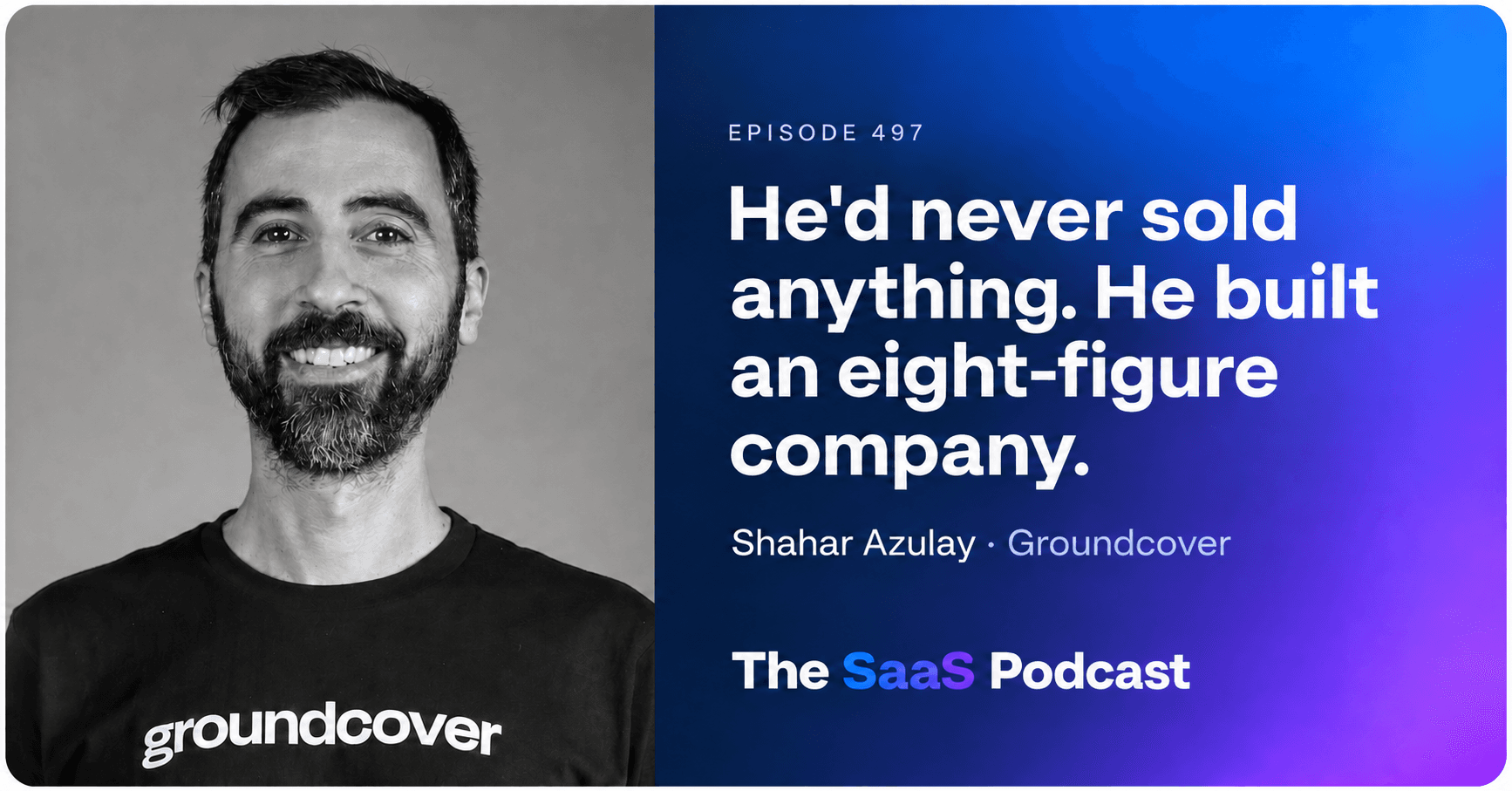
Shahar Azulay, groundcover
His First Deal Was $10K. Then He Learned to Sell.
Shahar Azulay is the co-founder and CEO of groundcover, an observability platform that helps engineering teams catch problems in production before their customers do. He has built it to eight-figure ARR with more than 250 customers, competing directly against Datadog and New Relic. He came to it as an engineer, not a seller. Shahar and his co-founder had spent their careers as engineering managers, living the same frustrating cycle: instrument your applications, emit the telemetry you need, then get told the bill is too high and start sampling and switching things off. They set out to solve that with technology rather than a different margin, and bet the company on eBPF, a kernel technology nobody in observability was using at the time. The selling was harder than the building. Three months in, groundcover closed its first customer through a connection to a head of DevOps. There was no user interface yet, just the sensor and some dashboards. Shahar went into the pricing call asking for $100,000 and came out with $10,000 a year, because neither he nor his co-founder knew what they were negotiating against. His conclusion from that is contrarian: close your first dozen customers at whatever price they will pay. The learning, the references, and the confidence are worth more than the contract value, and you cannot expect to grow those early accounts anyway. Shahar also covers how the first 50 to 100 customers came from his own network and a handful of LinkedIn messages a day, why he published list pricing and then discounted it by up to 70 percent, and the moment customers started ripping out Datadog before groundcover was ready for it.