Get Cited in AI Answers: The Lookalike Publisher Playbook
Getting your brand into AI answers is not about optimizing your own website. It's about getting other credible sites to mention you, because that's where the mo
How SaaS and AI founders who scaled got their first customers
One email every Thursday. Unsubscribe anytime.
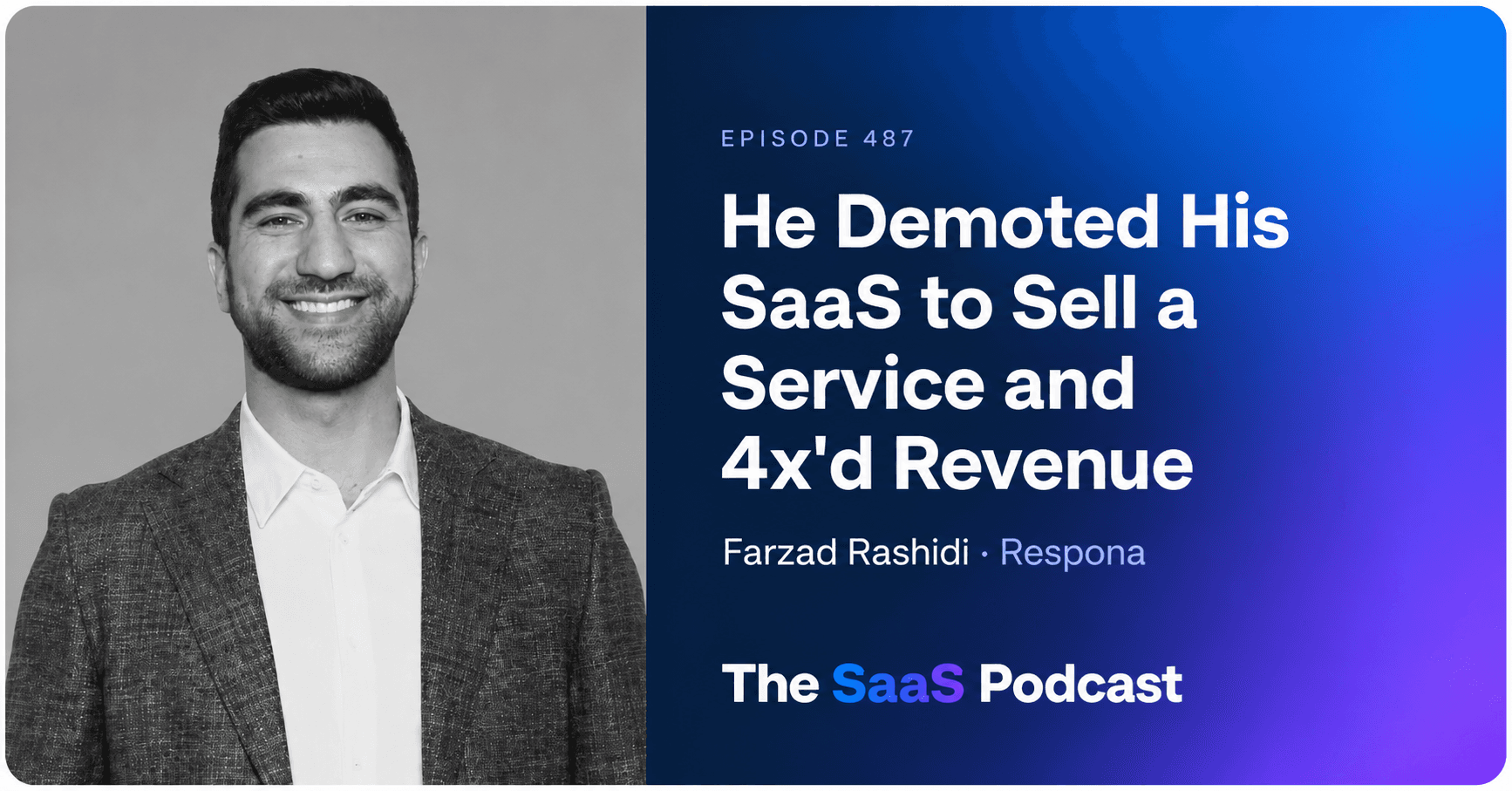
Farzad Rashidi spent six years bootstrapping Respona to a few hundred thousand in ARR, then watched churn quietly cap his growth: lose a customer, gain a customer, repeat. One phone call with an agency CEO pushed him toward a service-as-software model that 4x'd revenue in a single year.
In this episode, Farzad reveals the pricing conversation that flipped his thinking, why he demoted his own SaaS on the homepage to lead with a done-for-you service, and how he rebuilt a software layer on top of it so the business could scale.
Farzad Rashidi is the co-founder of Respona, a company that helps brands get cited in AI answers across ChatGPT, Perplexity, and Google AI Overviews.
He first came on the show back in episode 323, when Respona was a self-serve outreach tool doing a few hundred thousand in ARR. Then the classic bootstrapped trap set in. Churn caught up with new business, and every customer they won was offset by one they lost. For years Farzad tried to fix it the way most founders do, by adding more features to make the product stickier. Nothing moved. The real reason customers left was not missing features. It was that they never had the time to do the work the tool required.
The turning point came in early 2025. A marketing agency CEO haggled over an $800-a-month license, then offered to pay per result instead. That one conversation nudged Farzad toward a service-as-software model: do the work for the customer, charge for the outcome, and use the software in the back end. That first customer now spends around $65K to $70K a month, and in twelve months the company 4x'd the revenue it had spent six years building.
What makes this a service-as-software story rather than a slide back into agency work is what came next. Farzad demoted the self-serve SaaS on the homepage, productized the service into fixed tiers with no negotiation, and rebuilt a software layer (a client portal, a publisher network, and a brain in the middle) on top of the manual delivery. We also dig into the actual playbook for getting a brand cited in AI answers, from finding lookalike publishers to building a surround-sound presence around the models.
I hope you enjoy the conversation.
Respona co-founder Farzad Rashidi 4x'd revenue in 12 months by pivoting from a self-serve SaaS to a service-as-software model: doing the work for customers, pricing per outcome instead of subscription, then rebuilding a software layer on top of the delivered service.
Getting your brand into AI answers is not about optimizing your own website. It's about getting other credible sites to mention you, because that's where the mo
"Don't become an agency." Every SaaS founder hears it. Services don't scale, the margins are thin, and you'll get trapped on client calls forever.
The same buyer can reject your price and happily pay you more. It depends entirely on what you're charging for.
There's a version of "adding services" that saves your business and a version that quietly destroys it. The difference is whether the service is productized.
What is Respona and how does Farzad Rashidi help brands get cited in AI answers?
Respona is a done-for-you service that gets brands mentioned in the editorial articles LLMs cite, so a brand shows up in ChatGPT, Perplexity, and Google AI Overviews. Visibility tracking is only a small part of what it does.
Why did Respona hit a growth plateau after six years of bootstrapping?
Churn caught up with new business, so every customer Farzad won was offset by one he lost. Customers canceled because they lacked the time to use the tool, not because it was missing features.
What pivotal call convinced Farzad Rashidi to pivot Respona to a service-as-software model?
An agency CEO haggled an $800-a-month license down to $500, then offered to pay per result instead. Farzad countered by offering to do the work manually for $7K to $8K a month, and that customer scaled to about $65K to $70K a month.
How did Respona 4x its revenue in a single year?
By switching from a self-serve subscription to a done-for-you service priced on outcomes, then reselling that model to existing customers who overwhelmingly preferred it. Revenue grew 4x in 12 months versus what six years of pure SaaS had built.
Why did Farzad Rashidi demote Respona's self-serve SaaS on the homepage?
Because demand shifted entirely to the done-for-you offer. On demo calls almost no one wanted the self-serve tool anymore, so Respona led with the service and pushed the software into the back end.
How does the service-as-software model let Respona protect its margins?
AI handles much of the work that would otherwise need slow, expensive human labor, and buying power at scale (about 2,500 brand mentions a month) means better publisher pricing. Margins stay healthy even though they are lower than a zero-marginal-cost SaaS.
How did Respona productize its done-for-you service?
Farzad set five fixed price tiers with no negotiation, volume-based discounts, and paid add-ons for customization. Custom orders still move down an assembly line instead of triggering bespoke client calls.
What is Respona's process for getting a brand cited in ChatGPT and Google AI answers?
Run target prompts through the models to find the citation pool, find lookalike publishers with similar authority, land a placement, then publish fresher skyscraper content featuring the brand so the models repeatedly encounter it.
What does Farzad Rashidi say founders stuck on a plateau should do this week?
Talk to existing customers and offer to do the work for them. If they enthusiastically put down a credit card, there is a real signal, but productize the offer from day one so it stays scalable.
Farzad Rashidi [00:00:00]:
We had a CEO of a large marketing agency reach out to us and they wanted to purchase a license of our do it yourself tool, which costs like 800 bucks a month. And he was trying to negotiate down to $500 and he was like, we'll just pay you per result.
Farzad Rashidi [00:00:12]:
That same customer still with us today and their spend has ramped up to about 65, 70k a month. It was very interesting to see how that conversation switched, how that attitude towards pricing changed when we, instead of focusing on a subscription, he started focusing on outcome.
Omer Khan [00:00:30]:
Welcome to the SaaS podcast. I'm your host, Omer Khan. I've interviewed nearly 500 proven SaaS founders and every week I drop a new episode to help you build and grow your startup. My guest today is Farzad Rashidi, co founder of Respona. He bootstrapped for six years, hit a plateau he just couldn't grow out of.
Omer Khan [00:00:51]:
And, and then one decision, 4x revenue in a single year. That decision, he demoted his own SaaS on his homepage and led with a done for you service. Most SaaS founders would never do that. We also get into how Farzad gets brands cited in AI answers.
Omer Khan [00:01:09]:
It's the kind of playbook that if you're an early stage founder, you could start running this week. So I hope you enjoy it. Hey, Farzad, welcome to the show.
Farzad Rashidi [00:01:18]:
Thank you so much for having me back.
Omer Khan [00:01:20]:
My pleasure. So for people who don't know Respona, what does the product do, who's it for, and what's the main problem that you're helping to solve?
Farzad Rashidi [00:01:28]:
Yeah, Respana is basically to help your brand show up in AI answers. So in Google, AI overviews, ChatGPT, Claude, et cetera, I know what you're thinking, oh, it's another AI visibility tracking tool. So no, not quite. So, yes, we do track your visibility, but it's a very small part of what we do.
Farzad Rashidi [00:01:47]:
But main thing we do is that we have relationships with publishers that get cited by LLMs. So we feature your brand there, so they mention you in Listicles, product reviews, comparison guides, so that when the AI crawlers are looking for answers that the user's asking, then your brand is more likely to show up.
Farzad Rashidi [00:02:08]:
So we help improve that visibility score. Completely hands off.
Omer Khan [00:02:13]:
So some people would say we help brands show up in LLMs. And what they mean is we have a tool that shows you what you need to go and do do. And you're saying, no, we actually help actually get the outcome.
Farzad Rashidi [00:02:24]:
Absolutely, yes.
Omer Khan [00:02:26]:
Great. So when you were Last on The show, episode 323, which was a few years ago. We told the story the early days of Respona and how you built out that business. And it was a very different product back then as well. So can you just give us the.
Omer Khan [00:02:48]:
The short version of what we talked about in 3.2.3?
Farzad Rashidi [00:02:50]:
Sure thing. So Respona initially was incubated out of another SaaS company that I was hired at as a first marketing hire called Visme. Visme is a presentation asset, visual asset creation tool for businesses and it was a bootstrap company and obviously funding and cash was always scarce.
Farzad Rashidi [00:03:11]:
So we relied a ton on SEO to attract most of our customers. So my job was to build up that SEO engine and we grew that to millions in traffic. Company grew to eight figures in ARR and actually was recently or about a year ago was exited to a PE firm. So that was a huge success.
Farzad Rashidi [00:03:31]:
And during my job at Visme, we built a solution in house that was helping us basically find relevant publications, other websites in our space that we could reach out to in order to collaborate with them to get these backlinks and brand mentions. And it worked really well.
Farzad Rashidi [00:03:49]:
So we decided to release it as a standalone product and that was back in 2019 and the rest was history. So when we chatted was a few years after launch we had our do it yourself email outreach software that was doing a few hundred K in ARR. And yeah, and then these are losses happened since.
Farzad Rashidi [00:04:12]:
So I'm excited to tell you about them.
Omer Khan [00:04:13]:
Great. So from our conversation it sounds like you spun off Respona as a separate product and business got some early traction. Things were looking good, like you were on the path to getting to the first million in ARR and then things didn't go quite according to plan. What happened?
Farzad Rashidi [00:04:41]:
Yeah, so what happened was what a lot of SaaS founders experience is that our churn caught up with our new business. So what was happening was we would gain a new business and we would lose one. And essentially what we were trying to do to fix that churn problem was to just develop more features.
Farzad Rashidi [00:04:59]:
We're like, okay, if we just build up more things, that product will get more sticky and people use it more. And the main churn reason that we would see when customers would come and cancel the subscription wasn't because, oh, the product isn't good or the product didn't have enough features.
Farzad Rashidi [00:05:16]:
It wasn't doing what I needed it to do. The main reason was hey, we're just not using it enough. We don't have the resources in house or the time to actually day in and day out to outreach to publishers and negotiate, figure out a deal with them, incentivize them in different ways, write content, submit them.
Farzad Rashidi [00:05:36]:
It's a lot of work. And we have a business to run, so we would not lose out usually to other software companies. We lose out to a lot of other agencies or people, freelancers that they would hire in order to do the work for them.
Farzad Rashidi [00:05:50]:
And so for years though, we were told as a founder that, hey, you're a SaaS company, don't become an agency, don't go into services, it's not scalable, the profit margins are low and you're gonna ruin the business. Don't shift your focus and keep building the product.
Farzad Rashidi [00:06:08]:
And that's why for years we kind of stuck in this plateau state where we were just trying to feature, slap the product and try to kind of brute force. It's kind of like basically pushing a rock up a hill.
Omer Khan [00:06:20]:
I think a lot of founders get stuck in that position and that plateau. And regardless of what you hear from customers, like you were hearing, we're not using it enough.
Omer Khan [00:06:30]:
And you interpreted that as the product isn't sticky enough, the product doesn't have enough features, and if we add those, people will be more likely to use it and use it more frequently.
Omer Khan [00:06:45]:
So tell me about how long this plateau period lasted and a few examples of the kinds of things you tried during that time to get growth going again.
Farzad Rashidi [00:07:00]:
So I would say the first few years as you're building the product, the product isn't naturally good. So you're, you know, when you lose customers, you don't think much of it. You're like, okay, you know, I'm not proud of the product anyway. I would have canceled it too.
Farzad Rashidi [00:07:12]:
So, you know, you, you keep convincing yourself that, okay, I'm just gonna, you know, keep improving the product, keep working on it until it grows. And what we were doing and around the time we, we spoke, the product was pretty mature, it was working pretty damn well.
Farzad Rashidi [00:07:25]:
And what happened after though was basically we were trying everything you can name under the sun. You know, we were based, obviously didn't have a large budget, so we were building up our SEO and inbound channels.
Farzad Rashidi [00:07:37]:
And that's always been our bread and butter that was bringing a healthy flow of new customers point that would land on our website and come and sign up and try the tool. But again, and we would get decent conversions, but we would lose them after a few months.
Farzad Rashidi [00:07:53]:
And so that cycle, we couldn't really find a way out of it until we had a really pivotal conversation with a customer last year or a little.
Omer Khan [00:08:07]:
Over a year ago that was like in early 2025.
Farzad Rashidi [00:08:11]:
Early 2025, that's right, yeah.
Omer Khan [00:08:13]:
So let's talk about that. Because that conversation was so pivotal to. That was a pivotal moment, Right?
Farzad Rashidi [00:08:22]:
Exactly. So, yeah. So we had a CEO of a large marketing agency reach out to us, and they wanted to purchase a license of a do it yourself tool which costs like 800 bucks a month. And he was trying to negotiate down to $500. And we're like, okay, that's interesting.
Farzad Rashidi [00:08:38]:
It's like a CEO of a large company taking time out of his day to come. Nickel and diamonds over a few hundred dollars. And then we were. I shared some case studies. Look how these other agencies are so successful with the tool.
Farzad Rashidi [00:08:50]:
And he was like, well, if they're so successful, we'll just pay you per result and whatever results we generate, we pay you an X amount. And so you end up getting paid more than 800. So that clicked something in my mind. I was like, okay, that's interesting.
Farzad Rashidi [00:09:07]:
The only issue is that we're at the mercy of their team's usage. And I knew that if the team was using the tool day in and day out, spend the time, which would rarely happen, it would work, but they weren't gonna. So we're like, okay, let's throw a Hail Mary. Because at that point, mind you, it's been.
Farzad Rashidi [00:09:23]:
Had been five years of building the tool and a little over that, actually five or six years.
Omer Khan [00:09:28]:
And.
Farzad Rashidi [00:09:31]:
I was not in a good mental state, to be fair, because I was like, I'm a disappointment. Why is this business not growing? And we even tried to sell a few months prior, and I was just not very motivated in the business anymore because we had given it our all and it was just not working.
Farzad Rashidi [00:09:52]:
So I was like, okay, Hail Mary. I'm going to just do it for you. What if we just do the work for you and you pay us per deliverable, so you don't need to have your team involved.
Farzad Rashidi [00:10:03]:
You just tell us what you need and we'll just do it for you and we'll use our own tool in the back end. We'll make a process. And he was like, okay, let's start with seven or $8,000 a month and then we'll go from there.
Farzad Rashidi [00:10:16]:
And I was like, wait a minute, you were just nickel and diming us over $300 and then now you're throwing seven or 800 or excuse me, seven or eight grand. And that same customer still with us today. And their spend has ramped up to about 65, 70k a month.
Farzad Rashidi [00:10:35]:
So they've grown also 10x over the course of the past 12 months. Obviously, I didn't know this at the time, but it was very interesting to see how that conversation switched, how that attitude towards pricing changed when we, instead of focusing on the subscription fee, started focusing on outcomes.
Omer Khan [00:10:52]:
Okay, so you said I wasn't in a very good state because the history and I guess just frustration, exhaustion of just trying things and being stuck in this plateau and. But even then, most founders are going to be super resistant to doing anything that looks like services. Many founders come from a services background.
Omer Khan [00:11:15]:
Many fail trying to build a product business. And here you are, you've got the product business and now you're kind of getting dragged back into services, which is, you know, for SaaS has always been like the cardinal sin. And you're also throwing away the subscription model and saying, pay us for the results we give you. So.
Omer Khan [00:11:45]:
Did you get off that call and say, what the hell have I done? Why am I exactly.
Farzad Rashidi [00:11:50]:
I was like, this could go very badly because especially my co founder, he actually came from the agency world. So before launching Visme, he actually ran a marketing agency. It's like a web development agency that would make websites for businesses.
Farzad Rashidi [00:12:04]:
And he would always complain to me that, oh, services businesses are so terrible, we could never scale the business. The margins were so low. And until they switched to a product vis me and that took off. So I'd seen that play out.
Farzad Rashidi [00:12:18]:
Not going backwards was very counterintuitive, but one thing that was in the back of my mind was that they didn't have AI back then. So developments in LLMs, basically, not our computers can think and act like a human. So if we build the assembly line properly, we can then automate essentially a lot of the work.
Farzad Rashidi [00:12:46]:
So a lot of the issues and bottlenecks with an agency or service is the human element. You need to hire humans. Humans are exp. Expensive, humans are slow.
Farzad Rashidi [00:12:58]:
But if you could figure out a way on how to create a process that these LLMs could actually work together in order to deliver the outcome, then it will get rid of that bottleneck.
Farzad Rashidi [00:13:09]:
And now you're creating a much better experience for the customer because they don't have to do the work themselves because they got a business to run. And you also have now increased your average contract value significantly while protecting your margin. So you still have decent margin. Obviously not as good as a zero marginal cost SaaS.
Farzad Rashidi [00:13:34]:
But nowadays those are in danger because obviously the rise of vibe coding and whatnot. Now, full transparency. I didn't think it through entirely at the time, so it was sort of a. I would say subconscious thought, I would say. So I wasn't some sort of genius. I was just figuring things out and predicting the future.
Farzad Rashidi [00:13:57]:
But I had a feeling that, okay, we can probably automate a lot of the work. Well, we still need humans in the work, so let's start getting it working and let's bring that revenue in and let's go see if other customers are interested and then kind of test the waters because obviously what we're doing is not working.
Farzad Rashidi [00:14:14]:
So let's change things up. And it turns out it was the correct decision in retrospect.
Omer Khan [00:14:20]:
Did you have to deliver the service to that first customer completely manually?
Farzad Rashidi [00:14:24]:
Completely manually. We literally spun up a Google sheet, sent it to the customer, like, hey, just tell us what you need us to do on this sheet. And then we had one internal team member that was building mentions and Mac links for Respawana in house.
Farzad Rashidi [00:14:38]:
So we had that person go and do the work for them and work on it. And we delivered the deliverable on time, and they liked it, but we had nothing. We literally had a Google sheet. So we had to start building up those processes from the ground up.
Omer Khan [00:14:54]:
Okay, and so how long did this initial engagement with this agency, how long did you work on that before you decided, let's go and see if other customers want to do this too?
Farzad Rashidi [00:15:11]:
I would say once we delivered our first deliverable and they liked it because we were nervous, right? Our hands were shaking. We'd never had done this before. So we're like, okay, we've never done the service that maybe we'll show it to them, they'll laugh at us.
Farzad Rashidi [00:15:24]:
And they were like, oh, no, great, here's our second order is over 10k. Like, okay, so we've done something, right? We found something because obviously we've been in the space for a while, so we know what a good quality link look like.
Farzad Rashidi [00:15:37]:
We had some publisher relationships, so we had a lot of, I would say, moat around that service. But what we lacked was confidence because obviously it was new and we hadn't done it before.
Farzad Rashidi [00:15:48]:
And that first customer gave us the confidence to know that we are able to deliver really good quality work, that they're willing to not only stick around, but keep increasing that contract size and keep trusting us with more and more of their business.
Farzad Rashidi [00:16:02]:
And so we were like, okay, maybe someone hit wonder so before we make any pivotal decisions, let's try reaching out to a few other customers. So we started reaching out to some existing customers that were using the do yourself product. And I was like, hey, what if we do it for you?
Farzad Rashidi [00:16:21]:
And almost every single one said, yes, let's get on a call. So we started getting just interest from our existing customers, but the issue was that we didn't have any processes in the back end, so we started hiring more team members. So we grew that team so we could handle things manually.
Farzad Rashidi [00:16:42]:
But we had this bottleneck of demand where I started just bringing it up on demo calls that I was doing with our do it yourself customers. And nobody was any or any or nobody was interested in the do it yourself product anymore.
Farzad Rashidi [00:16:58]:
They were like, oh, tell me more about your pricing on the service side and the done for you side. And we hit a point where we couldn't basically meet the demand because we were fully booked and we were behind on orders because, mind you, we didn't have any processes, workflows.
Farzad Rashidi [00:17:14]:
We literally had a team of humans working off a spreadsheet. And so we held off actually even reaching out to more and more of our customers because that gave us the signal to know that this is the right path to go.
Farzad Rashidi [00:17:26]:
So we took some time while we were still onboarding a few new customers, I would say every month, but building up that foundation that now it's built on top of.
Omer Khan [00:17:38]:
A lot of times, new or early, very early stage founders will ask, how do I know when I have product market fit? And I think the best answer that I can't remember who said this, but they were like, you'll know when you have it.
Omer Khan [00:17:54]:
And I think that's what I'm hearing here because suddenly it was like, everyone is interested in talking to you. You almost have to say, no, we can't take on any more customers right now. Which is a very different thing to how do we get people to log in and use our product?
Farzad Rashidi [00:18:11]:
Exactly.
Omer Khan [00:18:12]:
So I'm curious, like, why weren't you able to use Respona? Why did you have to use Google Sheets? Because wasn't Respona designed to do this type of work?
Farzad Rashidi [00:18:21]:
So Google Sheets was to take in the orders. So they needed a way to tell us where to point the links to because they had a large customer base. So we had to know exactly where to point the links, what would be the anchor text, et cetera.
Farzad Rashidi [00:18:33]:
And then we would use respondent product on the backend to power the outreach and, and reach out to those publications. Do the work, and then when we needed to deliver the work and we would put those on the sheet again. And now it's broken up to, obviously we have a client portal.
Farzad Rashidi [00:18:48]:
So when you go sign up on our website, you can go tell us everything you need on that client portal. There's a whole fancy onboarding flow now and then for publisher relationships.
Farzad Rashidi [00:18:57]:
We have another portal that manages our publisher network, and then we have a brain on the back end that connects the two that our team sits on top of and. And basically does the work. So it's very different the way it works now.
Farzad Rashidi [00:19:10]:
But at the time, we just needed a way to get things going and get that, I would say, signal from our customer base whether or not that's the right direction.
Omer Khan [00:19:18]:
So you went From a Pure SaaS to Pure Services for these customers. And you mentioned that you kind of had the inkling of an idea early on that, you know, there's probably ways I can automate this. The strategy wasn't really thought out. It just probably evolved as, you know, over days and weeks. What was the.
Omer Khan [00:19:44]:
What was the point where you had that clarity, where you could see this is not about throwing away the SaaS and going into services. This is about doing the done for you, but building a product layer back on top of that. So we're running this far more efficiently.
Omer Khan [00:20:07]:
We're going back to our roots as a SaaS business as providing a service. How did that come about?
Farzad Rashidi [00:20:13]:
I would say it was sort of a natural progression because when we started getting more and more customers, the issues started surfacing. Okay, we're now dealing with hundreds of publishers. You know, at the time, we were dealing with a dozen now, and now it's tens of thousands. So obviously, you know, we could see it becoming a problem.
Farzad Rashidi [00:20:35]:
We're like, okay, well, we need a way on. We need to build up a network. And we already had a lot of proprietary data of publishers. We knew who was the right person, what motivated them. So we put that together in a product and we shipped it. And then we had to essentially build a client portal.
Farzad Rashidi [00:20:55]:
Like, well, we can't deal with spreadsheets and wire transfers anymore because we were saying no to customers that didn't have at least a few thousand dollars a month budget because it wouldn't make sense for us to spin up a sheet and have an account manager send the wire and invoice it every month, et cetera.
Farzad Rashidi [00:21:11]:
So we're like, okay, well, we need a client, I would say, facing portal where they can come and place orders as they go. So, you know, there's no limitations in terms of the order size. And then we're like, well, we have these two separate products, we need to have a brain in the back end.
Farzad Rashidi [00:21:28]:
So it sort of created this. I would say we have a problem, we got to solve it. And the way we would solve is with software, because at our core we're still a software company and obviously our team stepped up our engineering team and they spun up a lot of these tools.
Farzad Rashidi [00:21:44]:
Nowadays, obviously it's a lot faster to build product because of AI. But what was the real moat for us at the time that we were very confident in going down this path was that relationships with those publishers, with those websites, because they knew us in the space for a long time, had a lot of data about them.
Farzad Rashidi [00:22:03]:
And so we basically built that product on top of that, which essentially was the birth of our new sort of model.
Omer Khan [00:22:13]:
And so it sounds like while you were delivering the service, you're figuring out what are the bottlenecks, the choke points that we're having a hard time delivering manually. Let's build software to help solve that. And then you're just continuing to iterate on that.
Omer Khan [00:22:34]:
And the goal being how do we get better and more efficient at delivering the service and the outcome. So we're still providing a service, but software and AI is helping us do that far more efficiently than any pure services business could.
Farzad Rashidi [00:22:53]:
Exactly. And the numbers support it too, because in the past 12 months we 5x'd that revenue that we worked so hard to build over six years. So there was a clear market signal that hey, people don't want to do this work themselves, they want you to do it for them.
Farzad Rashidi [00:23:14]:
And also there are some other aspects of it too, because there's an element of economics of scale. So when you go to a publisher and you try to negotiate as a in house team or even as an agency, you have very limited volume.
Farzad Rashidi [00:23:29]:
So a lot of them don't respond to you, they don't care about you because you know it's not worth their time or they give you ridiculously high prices. So when we now go and negotiate, because last month we built 2,500 of these brand mentions to build about 100 a day, then the negotiations are very different.
Farzad Rashidi [00:23:48]:
So we're able to get really high quality work done and charge very reasonable prices because we, when we go to a publisher, we're like, hey, we're going to give you recurring revenue, we're going to give you hundreds of business every month. And so, and we then pass on those things. On to our clients.
Farzad Rashidi [00:24:05]:
So even with that large agency, they, you know, needed hundreds of these mentions a month. It's still more economical to use a vendor like us because we had that economics of scale. So now we're essentially, we have that buying power to go in the market and be able to throw our weight around.
Farzad Rashidi [00:24:22]:
And so that was also another indication that, okay, this is a business model we can protect and scale because it's not just you can spin up another product, software. You know, the software is just to facilitate the work. What really matters is that network effect and that those relationships.
Omer Khan [00:24:38]:
You know, what strikes me as really interesting is like it's 2026, YC has shifted from looking for pure SaaS startups to either what they call like AI native services companies or service as SaaS becomes service as software. And I think a lot of people, they talk about things like don't deliver the tool, deliver the outcome.
Omer Khan [00:25:13]:
And I think many people are still trying to figure out what that means. The simplistic view is, oh, I built an AI agent and it does all the work and you don't need humans. Right? But the reality is a lot more nuanced than that. It seems like you figured that out organically yourself.
Omer Khan [00:25:33]:
Forced by the pressure of the plateau driven by this pivotal call with this customer, dealing with the pains of delivering the service, you sort of have ended up in a very similar space to the types of companies that YC is looking for now.
Omer Khan [00:25:50]:
Did you ever look at that and say that's, you know, when you hear about them talking about stuff like that,.
Farzad Rashidi [00:25:56]:
It was like, yeah, that's us, that's me. I'm a genius,.
Omer Khan [00:26:02]:
Right?
Farzad Rashidi [00:26:02]:
I wouldn't say it was as calculated before because, you know, Sequoia also came out with an article this March talking about that. It's like the next trillion dollar company is a services company masquerading as a software firm. Excuse me, It's a software firm masquerading as a services company, which is exactly what we are.
Farzad Rashidi [00:26:21]:
We're a software company masquerading as a services firm. And I would say the thought process at the time was that, hey, what we're doing is not working, let's change course, let's do something different.
Farzad Rashidi [00:26:35]:
And obviously I would say some sheer luck that we ran into that customer and that customer is still with us to this date and even introduced us to other customers that they brought in.
Farzad Rashidi [00:26:45]:
So I would say it wasn't entirely us, it was a matter of circumstance, but I would say we stuck around long enough to come across the opportunity too, right. You know, we had been eating dirt and for years, for six years prior to that.
Farzad Rashidi [00:27:02]:
And so a lot of people see us and like oh, 5x growth in 12 months, great job. I'm like, yeah, but you know, it was about time because we were putting our all of our, we were running at 110% effort for all of these years and so we came across the opportunity.
Farzad Rashidi [00:27:18]:
Obviously it was fortunate that it now aligns with a lot of other companies are seeing which has put us in a really good position because we're no longer pure play SaaS. So it's not something you can easily replicate. So it's made the firm a lot more valuable I would say than a pure SaaS company even.
Farzad Rashidi [00:27:36]:
But it wasn't necessarily by design. I think it kind of evolved over time. But you know, it's not too late. It's still very beginning for a lot of software founders to make the change and obviously it's not the best fit for everyone.
Farzad Rashidi [00:27:51]:
But if you are in a similar situation, my advice would be not to be scared of including or moving towards the services route.
Omer Khan [00:27:59]:
So if there's a founder listening to this today who's in a similar situation to where you were before you had that call with that agency and trying to figure out how to get out of this plateau, what action would you tell them to take this week I.
Farzad Rashidi [00:28:20]:
Would go talk to existing customers and be like hey, you've been using our tool for a while now. What if we just do the work for you and see what they say and if you getting overwhelmingly positive responses and they're willing to come in actually put down the credit card and pay for it, then you got something.
Farzad Rashidi [00:28:39]:
One thing to be careful about though is when we say services and we were very thoughtful of this from the get go is that we want to become a. So customizability was also productized. So from our pricing, so the way we would go about it, so we were like okay, we're going to price per outcome.
Farzad Rashidi [00:28:58]:
There is five different tiers, you can go select it. There is no pricing negotiations or discounts. Even our discounts are volume based. So as you increase your volume you have a set discount percentage. If you want customizability of the content, there is an add on.
Farzad Rashidi [00:29:15]:
If you want view the domains before to go live, there's an add on. So customer requests that come through that hey, can you do this, do that?
Farzad Rashidi [00:29:23]:
We're like yes we can, but we productize the whole thing in a way that now you can go and Log into our portal and you get very custom orders made for you, but it moves still on an assembly line. So that's one thing to keep in mind is that you don't want to.
Farzad Rashidi [00:29:38]:
Just for example, my co founder's previous agency was like custom web development. So you need to have customer calls and sit down and figure out, okay, what style do you like, et cetera.
Farzad Rashidi [00:29:49]:
We were very careful at the beginning to make sure that the product and the service that we offer is something that we could then automate and we could see a path of essentially productizing, which is where we are now. So something to be careful about is not to say, oh, just go off start offering services to everyone.
Farzad Rashidi [00:30:08]:
Because at the end of the day there is that peril of falling into an agency world and dealing with client calls, et cetera. So still important to keep that in hindsight, but it is possible to make it scalable.
Omer Khan [00:30:20]:
I love that. So I mean, what I'm hearing is you went from providing a complete service manually to then thinking of it or restructuring it as a productized service. And to me, if people, I mean, hopefully people are familiar with that.
Omer Khan [00:30:44]:
But to me, I think the difference between a custom service and a productized service is people can go to a pricing page, pick something and you deliver the service, as opposed to, I have to have a conversation with you, I have to have a meeting with you, you have to come up with a proposal.
Omer Khan [00:31:02]:
It's a little different to what you did for the last client compared to what you'll do for the next client. And that's where you get into difficulty because it becomes really hard to scale that type of service.
Omer Khan [00:31:11]:
But if you just say we just do X and Y and this is the price we charge for it, which one do you want? Right. And then I think from the productized service you move to what we now call service as software.
Farzad Rashidi [00:31:27]:
Exactly, yeah, 100%. And that was by design. So I do take credit for that. But that's something that also enabled us to do a lot of cool things because with AI visibility in particular, the way it works is a little different than just traditional link building. So I'm happy to get into the technical side of it.
Omer Khan [00:31:52]:
Yeah, let's talk about that. Because that on its own is a super interesting topic and it would be helpful for you to tell people listening here, like, yeah, sure, they can use Respona and maybe some people will choose to do that, but if they don't, what, what does the manual path look like?
Omer Khan [00:32:15]:
How would they get their brand showing up in AI answers.
Farzad Rashidi [00:32:22]:
Absolutely. And we're very transparent about that, that we don't do magic and lots of folks can do it in house. Whether or not you should do it, that's a different question. But you could certainly do it and I'm happy to lay out the process.
Farzad Rashidi [00:32:37]:
I guess maybe we could just go through an example that would probably make more sense. So let's pick a SaaS company. So give me any SaaS company, Omer that I could use as an example.
Omer Khan [00:32:44]:
I know, let's say Notion.
Farzad Rashidi [00:32:47]:
Okay, Notion. So what is their business that they're in? So let's consider, obviously they do a bunch of different things. Let's say project management is like the angle they want to push.
Omer Khan [00:32:58]:
Okay.
Farzad Rashidi [00:32:59]:
So as a business, you know, I'm, I'm, I'm as I'm chatting with Claude or ChatGPT or even going on Google asking, hey, I'm looking for like project management tools for my startup. What are the best ones I should look into? What does the model do? They have a set end date for their training.
Farzad Rashidi [00:33:17]:
So obviously that training may have ended six months ago or a few months ago. That knowledge is inherently outdated. What the models do now is that they basically conduct web search. So when you ask it, hey, what are some of the best project management software?
Farzad Rashidi [00:33:33]:
What it does is that it goes in search engine like Google for example, and then it searches for keywords like best project management tools and then it reads some high authority publications articles and what are some of the brands that are frequently mentioned in those articles?
Farzad Rashidi [00:33:52]:
So for example, you see Sauna ClickUp, Notion, it's frequently mentioned on a dozen of different search results that it retrieves, right? And then in that chain of thought it goes a little deeper. It's like, okay, well how are they different from each other? How is Notion versus Asana?
Farzad Rashidi [00:34:12]:
Okay, what do people say about Notion or Notion Reviews or Asana Reviews?
Farzad Rashidi [00:34:18]:
And then so there are certain kind of steps that the model takes in order to come up with a list of recommendations and then it generates an answer says, okay, hey, if you're a small startup and you don't have a lot of funding and you already use Google Workspaces, you can just use Google Docs or Google Sheets for project management.
Farzad Rashidi [00:34:38]:
If you wanted something a little bit more that has more integrations, you can use Notion. If you want something a little simpler, you can use Asana. So it will give you multiple recommendations based on the research that it has done. Now if you're notion, you want to make sure that you get Included in the answers.
Farzad Rashidi [00:34:56]:
So what do we do? We take a step back, like, okay, let's run these prompts through all the models that we want to optimize for. So we'll run it through Claude, we run it through Google AI overviews, Google AI mode, Gemini, ChatGPT, and then figure out that chain of thought and this sources cites along the way.
Farzad Rashidi [00:35:15]:
So we're like, okay, it goes through and it's citing like 5 list of goals on best project management tools of this authority tier. Right? So there are high authority sites usually. And then it's looking for a few comparison guides, and it's looking for a few, for example, product reviews. So let's replicate them, right?
Farzad Rashidi [00:35:33]:
So natural thought, that's what everyone does. They go and extract these citations and then drop in an average campaign. So what happens in practice is that you get very low hit rates. Like you get less than 1% success rate out of that.
Omer Khan [00:35:50]:
Okay, wait, just hold up there because I just want to, I just want to make sure I understand this. So with traditional SEO, people would be looking at figuring out what their keywords are that they want to target.
Omer Khan [00:36:03]:
And then whether they were using a keyword research tool, ahrefs, or Google's tool, they're basically trying to figure out, okay, what are the 10 blue links that show up for this keyword? Why are they ranking? What type of content do they have? What type of links are they getting? And then how can I build my plan?
Omer Khan [00:36:26]:
And then the outreach piece would be emailing those sites, making a pitch for why your product should also be mentioned there. And for someone who receives a lot of those emails anyway and ignores 99% of them, that's the hit rate you're talking about that it's not a very effective thing.
Omer Khan [00:36:47]:
And it sounds like what you're saying with the LLMs and the AI answers is, hey, it's kind of like the same thing, but instead of looking at the 10 blue links, you're looking at what these answers are showing you for particular keywords, what sources they're citing. And then you're reverse engineering that.
Omer Khan [00:37:05]:
But by the way, if you then do outreach, you're going to get the same crappy results. So there has to be a better way. And so what is it that you do exactly?
Farzad Rashidi [00:37:14]:
You nailed it, Omer. And so, yeah, so traditional SEO, now you write content, build backlinks. That's all there is to it.
Farzad Rashidi [00:37:20]:
And you're trying to get your blog posts and your landing pages up in the search results, because that's how people Used to read results, you know, they would go and actually read a few articles, read a few reviews. Right now the AI is doing it for them.
Farzad Rashidi [00:37:32]:
So the optimization strategies are fundamentally the same and when you optimize for one, you inevitably optimize for the other. But obviously the North Star metric changes a little. But anyway, so going back to where I left off, you're 100% correct. So once you have a citation pool, you know where the model is looking to generate those answers.
Farzad Rashidi [00:37:52]:
Now if you just drop into an average campaign, try and reach out to them, success rates are low because as you said, people are getting blasted with these emails. So what we do, which is somewhat unique, I don't know, other people are doing the same thing they should if they aren't, is finding lookalike publishers.
Farzad Rashidi [00:38:09]:
So for each one of the citations, if you take the domain, there are hundreds if not thousands of other websites that have a similar level of authority in terms of SEO metrics and that are ranking for similar semantically relevant keywords. So from search engines perspective, those domains are lookalikes.
Farzad Rashidi [00:38:30]:
And then what you can do is you can create a spin up strategy where you can now find lookalike publishers. So even though that one publisher that you found in the citation may not be interested in, there are hundreds if not thousands of them. And out of those, maybe one or two are interested.
Omer Khan [00:38:46]:
Is there a process or a tool that people can use to figure out who those other publishers are?
Farzad Rashidi [00:38:53]:
So that's something we kind of have to build in house. I'm sure you can vibe code one. So you could find the metrics of a website through tools like Ahrefs or Semrush, and then figure out what keywords they're ranking for and then create a semantic task profile for each website and then compare them together.
Farzad Rashidi [00:39:11]:
That's a pretty hard thing to build though because it requires a ton of data. And so that's one of the things that we've kind of done. But you may be able to just Google as well. So we used to have some search operators that would help.
Farzad Rashidi [00:39:26]:
But if you just google for that term, see who's like betting on their keywords. You know, for example, if you're notion, it doesn't take a genius to figure out, okay, maybe asana, click, ClickUp, stuff like that are probably lookalikes. So you could use your intuition or do some googling if you're doing this manually.
Farzad Rashidi [00:39:43]:
But if you want to do it programmatically, it's a little bit more complicated.
Omer Khan [00:39:46]:
So if I was doing it Manually, it would probably be more crude, but it might be like, okay, here's a site that was cited. If I think about this keyword and I think about semantically related keywords, there might be like a list that I can use.
Omer Khan [00:40:05]:
Here are some alternative products and then I can spend a bunch of time like going in and researching those different keywords to see what's coming up and building a list. It might not be the most efficient way to do it and I might not get the best list. But that's kind of what you're saying,.
Farzad Rashidi [00:40:22]:
But you get close enough. Yeah, absolutely. I mean as long as like they're ranking for similar keywords, you can drop them also in ahrefs and kind of see what they're metrics look like and figure out the top pages report to figure out what sort of keywords are ranking for.
Farzad Rashidi [00:40:34]:
As long as they're similar again, they don't have to be identical, but as long as there's some relevancy. For example, if it's like a SEO agencies that's getting cited, okay, find another SEO agency that's around the same size and around the same, that gets the same level of traffic. So doesn't take. It's not that difficult.
Farzad Rashidi [00:40:51]:
But obviously doing this at a large scale, it's a little bit more tough.
Omer Khan [00:40:54]:
But yeah, you don't want to be doing it manually at scale.
Farzad Rashidi [00:40:57]:
Yeah, yeah, exactly. Right, yeah. Anyway, so then we reach out to those and then we have still a 1% success rate, but for each one of these citations we get one hit. And so now what we do is the next step is content creation phase.
Farzad Rashidi [00:41:13]:
So once we have landed a deal with a publisher that matches our criteria, now we create a skyscraper content SEO, yet another SEO term. So basically what that means, you just create a slightly better piece of content that's more fresh. Right. More to date, but still follows the same structure.
Farzad Rashidi [00:41:29]:
So still follows the same title path, still covers similar content outlines, making sure it hits all the points, but with two differences. One, your brand's featured right at the top and two, it's published on a or it's a new fresh content piece.
Omer Khan [00:41:49]:
So this is basically a better version of the page that was cited by the LLM.
Farzad Rashidi [00:41:59]:
Exactly. And obviously better is somewhat subjective. So what we say is a more fresh piece of content that's objective. Objectively, we're newer and published on a similar quality publisher. Now, LLMs are hungry for new content because that's the whole point of doing rags is because you want to keep your training data up to date.
Farzad Rashidi [00:42:20]:
So what happens is, what we see is that once these articles now go live and get indexed, then what happens is when LLMs come across or they're looking for oh, best project management tools and they're like oh, this fresh new content piece has been created, what's that?
Farzad Rashidi [00:42:35]:
So you end up working way into the citations and so once you do this now consistently over time, you end up controlling the narrative, you create a surround sound strategy around the model so your mention everywhere is looking.
Farzad Rashidi [00:42:50]:
So inevitably you end up in the pool of cited resource or I would say you end up in the pool citations, your brand name. Obviously it's going to be different publishers, different external publications. It's not necessarily your website. And that's what a lot of AEO SGEO experts try to do, which often doesn't yield many much result.
Farzad Rashidi [00:43:12]:
Probably going to get a lot of hate for this. But trying to get your website in the citations is a lost cost because if you're lucky you get less than 1% citation share. Because models don't like to keep citing from the same resource. Especially if you're writing these content pieces that vouch for you.
Farzad Rashidi [00:43:27]:
Like if I write a piece on best link building software and obviously responders at the top, those don't work because this is a self promoted post. And so the whole point of this is you want to get external validation so other people also agree with you.
Farzad Rashidi [00:43:43]:
And so anyway, going back to my workload and then you can see the results easily. Right? So you can see that visibility score tick up over time. You can see the articles that we've written, published on other publications are now ending up in the citation pool and then that's how you see the results.
Farzad Rashidi [00:44:01]:
And we actually just did a case study with a company called Opus Clip, have you heard of them? Yeah. So they climbed to rank number one in their niche.
Farzad Rashidi [00:44:10]:
They have some competitors that are well, better funded and they beat them all in terms of AI visibility score and it's been validated by other visibility trackers like Profound and basically they also here's the interesting part, they added about 100k to their monthly organic traffic as well.
Farzad Rashidi [00:44:29]:
So all of these brand mentions you're getting, they're still do follow backlinks pointed to your website because best project management tools and notions at the top and then notion SEO is still linked back to their website. So still a do follow backlink.
Farzad Rashidi [00:44:44]:
Pointing to your website still helps with your traditional SEO, your landing pages start getting more rankings and that inevitably again is a cycle. It helps maybe some of those Landing pages also end up in the citations. So you get that added benefit of increasing that traditional organic search.
Farzad Rashidi [00:45:00]:
But the core focus now is on AI visibility, making sure that you are included in the answers.
Omer Khan [00:45:06]:
So we often hear like SEO is dead. I don't think that's true. It's true that how much organic traffic you get from Google is declining, there's no doubt about that.
Omer Khan [00:45:22]:
But what you're saying is sounds like the source of the traffic might be changing, but the principles that apply to good, whether you call it SEO, aeo, geo, still apply about authoritative content, quality links, all of that stuff.
Farzad Rashidi [00:45:48]:
Absolutely. I think SEO, it's not that SEO has changed.
Farzad Rashidi [00:45:53]:
So what would happen is when you would want to find the best project management tool, like going back to our original example, you would go Google that, you would go read those reviews and listicles and then you come up, okay, here the products that are getting listed often, right? Let's read more about them.
Farzad Rashidi [00:46:07]:
Then you pop into Google. So the only difference now is that LLM is doing that. So you're still optimizing now instead of for the human doing that research is that you want to make sure that LLM Crawler is coming across the same, I would say level of frequency of your brand getting mentioned.
Farzad Rashidi [00:46:25]:
So that way you can increase the likelihood that you will be recommended because humans now trust their answer. And so the process of optimizing your website and stuff is very much similar. But I would say off page SEO. Again, I might be biased saying this, but it's making a comeback.
Farzad Rashidi [00:46:43]:
A lot of SEOs also agree with me because it's no longer enough to get your own website up in the search results, which is what we used to optimize for. It's now more important than ever to make sure other sources are also recommending you because the models are citing few dozen different sources when they're generating that response.
Farzad Rashidi [00:47:03]:
So you want to make sure you're vouched by a bunch of different publishers.
Omer Khan [00:47:07]:
I've heard some people say that the LLMs lean heavily on Reddit for citations and if you're not on Reddit, you're not going to show up. What's your answer to that?
Farzad Rashidi [00:47:22]:
There's truth to that, but I would say it's a little misguided. If you're not on Reddit, you're not going to show up. So if you go analyze a citation. So Reddit is the number one cited source, but what percentage of citations do you think are Reddit?
Omer Khan [00:47:36]:
No idea.
Farzad Rashidi [00:47:37]:
Less than 5%. Wow, 95%. Of sources cited are actually still editorial other websites. So yes, Reddit's number one in terms of the number of times it's getting cited, but still less than 5% of the total citations. And you can see it go ask ChatGPT. Hey, what about the best project management tools?
Farzad Rashidi [00:47:56]:
But there is probably one Reddit thread that's getting cited. There's no doubt that, you know, Reddit's good. But out of 12, one of them is Reddit, right? So we're out of 11. There are editorial links from other websites and they're the hard ones to get because yes, it's cheap and obviously free to post on Reddit.
Farzad Rashidi [00:48:18]:
So why not do it? I'm not advocating against it. Definitely try to post and engage with relevant Reddit threads, be active in that community. That's great, but I would argue that's not nearly enough. That's just one thing you could do. Personally, I'm getting some flashbacks from early 2000s SEOs where obviously I was a child back then.
Farzad Rashidi [00:48:41]:
I don't remember it myself, but I've been told those early days of SEO where user generated content was helpful, but it's sooner or later where it's going to get spammed if it's free to post.
Farzad Rashidi [00:48:53]:
And so obviously Reddit has some mechanisms in place where there's karma and upvotes and stuff that battle a lot of that, which is great, but it's not a strategy I would bet the entire company's visibility on. I would do it probably on the side because it's working now, so why not optimize for it?
Farzad Rashidi [00:49:09]:
And it doesn't cost a lot to do it anyway. But I wouldn't look at it as the core of our AI visibility. So if all you're doing for AI visibility is posting on Reddit, you are far behind your competitors.
Omer Khan [00:49:23]:
Yeah. And I think you're right, that is Reddit being cited the number one source because it's absolutely the best place. Maybe today.
Omer Khan [00:49:38]:
But when everybody starts trying to get mention on Reddit and things mature and the LLMs get more sophisticated, you know, is, is it going to be similar to what you described with like user generated content and a shift towards more, more of these authoritative sites that are harder to to get cited on?
Farzad Rashidi [00:50:08]:
Yeah, absolutely. I mean, it's not even that. I mean, posting on Reddit's good for a number of reasons. Like you get customers if they're actual humans reading those threads, great, you know, you want to be there. You should also. I mean, I would just put it under the category of social media marketing.
Farzad Rashidi [00:50:23]:
I wouldn't necessarily put it under SEO as a. As a channel. So it's not to say you shouldn't post on Facebook or Twitter or Reddit. I think you should do all of that. Just it's just another marketing channel. But I wouldn't necessarily rely on that as the way to improve your visibility entirely.
Farzad Rashidi [00:50:43]:
I would definitely focus on more higher leverage things you could do because those are more difficult and therefore are a competitive advantage in the long term.
Omer Khan [00:50:54]:
Great. Well, I'd love to keep talking, but we should wrap up. So let's get onto the lightning round. I've got five quick fire questions for you. What's a piece of startup advice you disagree with? I mean, maybe that's an easy one because that's what we've talked about through this whole episode.
Farzad Rashidi [00:51:14]:
I would say, yeah, don't be scared of services. I think that's the message from this whole episode. I'm sure I've made plenty more mistakes that I can talk about, but if I had to pick one, this would be it for this episode.
Omer Khan [00:51:29]:
What's the great book that you have read recently?
Farzad Rashidi [00:51:32]:
Recently I've been enjoying Sapiens. It's very traditional tech bro y of me, but I'm enjoying it quite a while. I'm actually almost done.
Omer Khan [00:51:40]:
I definitely recommend somebody lent me that book and just been intimidated by just how thick it is to even get started.
Farzad Rashidi [00:51:48]:
I'm not proud of how long it's taken me to finish it, but yes, I do. It is worth it.
Omer Khan [00:51:55]:
What is something that you had to learn the hard way?
Farzad Rashidi [00:51:59]:
I think before I started the company I was very cocky. Really easy to see software companies from the outside and say, oh, why aren't they doing this? Why aren't they doing that? And judge. That's what I did.
Farzad Rashidi [00:52:09]:
Even at Visme, I was like, oh, it took you guys so long to get here and I could do it in two months what you guys did and took us six years. So I would say the good things take time.
Farzad Rashidi [00:52:21]:
And that's one thing I would say that's one of those lessons learned the hard way is it humbles you quite a bit. Building a business is very difficult.
Omer Khan [00:52:32]:
What is a tool or habit that saves you the most time these days?
Farzad Rashidi [00:52:38]:
I would say recently I'm in love with granola. It's actually transcribing this meeting right now. What I like about it, I mean, I'm not affiliated with them whatsoever, but it does transcribe all the audio but from your computer's audio instead of meeting bots.
Farzad Rashidi [00:52:52]:
And it's been really helpful for me to see meeting notes and also go back and it helps me prepare for calls and meetings. It's one of those tools I recommend.
Omer Khan [00:53:02]:
Yeah, granola's kind of got this weird thing for me because you don't know you're being recorded. Right. And I don't know if there are some legal implications of that down the road, but what I love about it is not having to get on a zoom call with a bunch of bots.
Omer Khan [00:53:24]:
It wasn't that long ago I was on a zoom call with four meeting recorders and me. Right. It was like, there's something wrong here.
Farzad Rashidi [00:53:32]:
That's fair. I mean, I keep my notes private. To me, it's not something that is shared externally. So it's just basically a copy of my brain in a way. So if you're saying something to me and I keep a note or take notes of it, I personally wouldn't mind if someone does it to me.
Farzad Rashidi [00:53:47]:
So that's why I don't mind using it. But you're right. I mean, that might be some legal implications down the line. So, disclaimer, don't come sue me. Go after granola.
Omer Khan [00:53:58]:
And finally, what do you do for fun when you're not working?
Farzad Rashidi [00:54:01]:
I play tennis. I picked it up a couple years ago and I'm halfway good at it now, so it has also been one of those humbling experiences. It's not a very easy sport, but I enjoy it quite a bit.
Omer Khan [00:54:15]:
Nice. Well, I'm down in Florida now and I'm getting older, so obviously I have to start learning pickleball because that's the thing you have to do around here.
Farzad Rashidi [00:54:23]:
Haven't played pickleball yet, but I've seen it. It looks fun, but, yeah, it's just, you know, I'd be disgraced by the tennis community if I play pickleball, so.
Omer Khan [00:54:32]:
Awesome. Farzad, thank you so much for joining me. It's been a pleasure. Great to have you back. If people want to check out Respona, they can go to Respona.com and if folks want to get in touch with you, what's the best way for them to do that?
Farzad Rashidi [00:54:48]:
Sure thing. My name is Farzad Rashidi. I think there's only one on LinkedIn, so that's my only social media. So feel free to reach out and.
Omer Khan [00:54:55]:
Say, hi, yeah, find him on ChatGPT.
Farzad Rashidi [00:55:00]:
Hopefully it shows up there. Otherwise it'd be embarrassing.
Omer Khan [00:55:02]:
Awesome. Thanks, man. Wish you all the best.
Farzad Rashidi [00:55:04]:
Thank you so much. Omer. It's a pleasure. Take care.
Omer Khan [00:55:07]:
Cheers.
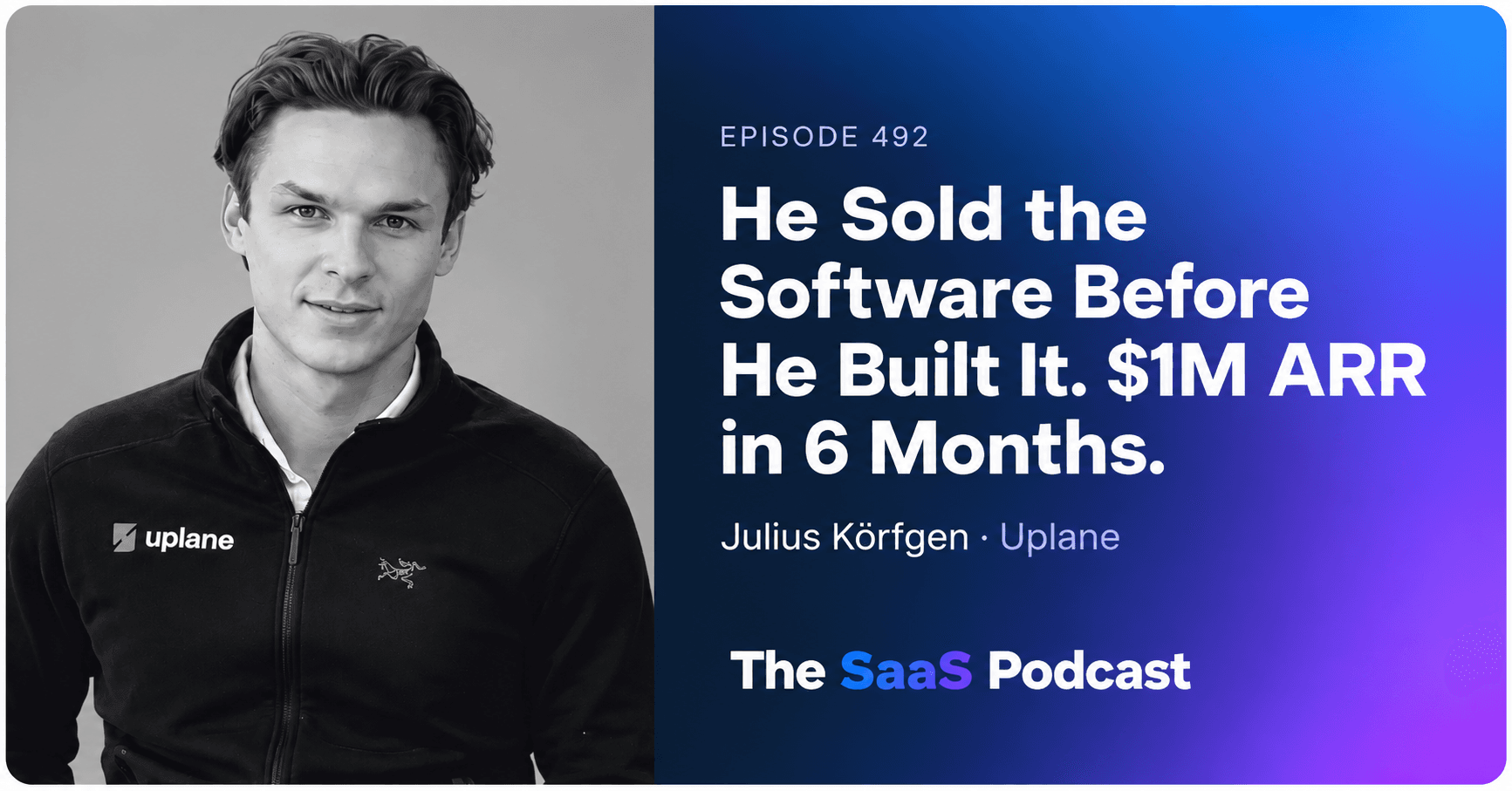
Julius Körfgen, Uplane
Julius Körfgen spent years running marketing at a European startup, where he personally built around ten thousand ads. Writing headlines, testing image variants, checking which call-to-action buttons converted. He estimates that roughly ten percent of ads are ever profitable, and that companies keep running the other ninety percent because the process of finding out is slow and manual. So he left with two co-founders to automate it. What he did not do was build first. He ran cold LinkedIn outreach to strangers, framed every message as a request to learn rather than a pitch, and used the discovery calls to find out what marketing teams actually struggled with. At the end of each call he would say the same thing: give us a week and we will come back with a solution. Then the three of them would grind out whatever they had just promised. He also refused to run free pilots. His argument is that without a dollar attached, you cannot tell the difference between a real business case and a polite conversation. Uplane reached a million dollars in ARR in about six months and now runs around twenty people across San Francisco and Berlin. AG1 is a customer, and a project with Deutsche Bahn is underway after roughly nine months of conversations. In this interview, Julius breaks down the outreach that got strangers to take his calls, the one-week sprint, why he threw out per-seat pricing in favour of a fixed fee that only covers costs plus a variable share of ad spend, and the guardrails that stop an AI from putting bad ads in front of an enterprise brand's audience.

Eugene Cheah, Featherless AI
Eugene Cheah's team had built something genuinely novel: an open source foundation model under the Linux Foundation, trained across more than 200 languages, with an architecture that made AI inference dramatically cheaper. Their seven billion parameter model beat Llama's equivalent. The problem was that almost nobody was asking for it. Along the way they solved a constraint of their own making. Customers were fine-tuning thousands of models on their platform, the industry norm was one GPU per model, and they could not afford a thousand GPUs. So they built a system that swaps models on and off GPUs on demand, bringing a cold model online in about five seconds. Most inference providers keep a fixed list of under a hundred models standing by, because loading one can take thirty minutes on hardware costing eighty dollars an hour. Then someone on the team asked whether the same technology would work for Llama and Mistral. They shipped it as an experiment. Over the launch weekend it earned more than the platform they had spent two years on. Eugene renamed the company and went all in. In this interview, Eugene explains why he priced a flat monthly rate while the rest of the AI industry charged per token, how stripping the technical explanation off the homepage kept improving conversion until they removed their own research from the top of the page, and why competing for the long tail of open source AI models beats fighting a hundred providers over the top hundred.
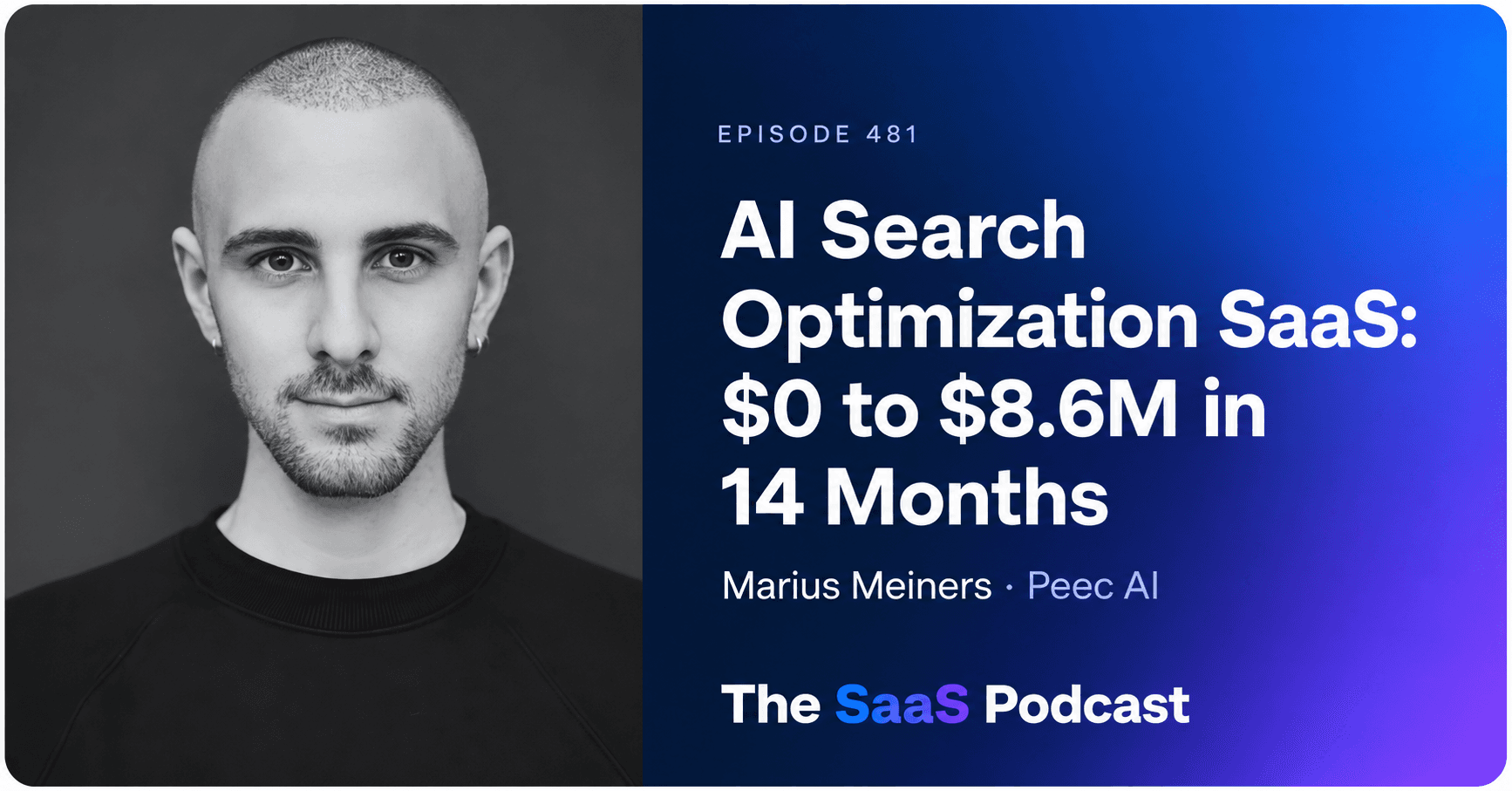
Marius Meiners, Peec AI
Marius Meiners is the co-founder and CEO of Peec AI, a platform that helps marketing teams track how their brands appear on AI search tools like ChatGPT, Perplexity, and Gemini. After studying economics, working in venture capital and M&A at PwC, and joining Antler's Berlin cohort, Marius found himself with no team, no idea, and four years removed from writing any code. Then in late October 2024, ChatGPT launched search. Marius saw it and decided this was going to change everything. The smartest SEO experts in the world were already obsessed with it. The signal was loud. So he turned to AI search optimization as the wedge - a category that would explode as marketers scrambled to figure out how to get cited by AI assistants. He vibe coded the first prototype with V0 in a day and a half. Eight customers signed letters of intent based on it. Antler wrote a 100K check. His CTO joined and built the real product in six weeks. Peec launched in February 2025. Then came the bet. Their biggest competitor had raised five times more money and was chasing the world's biggest brands. Marius made the opposite call. Peec priced at 85 euros while competitors charged over 500. For six months, Marius and the team ate two-euro canned food every day, wondering if the mid-market AI search optimization play would ever pay off. Today Peec has over 2,000 customers, $8.6 million in ARR, and a team of 55. All in 14 months. AI search optimization went from speculation to a live revenue channel - 20% of Peec's own conversions now come through AI search itself.