Why an unlimited free trial beats a metered one for AI products
Meter your AI usage in the free trial. Otherwise the LLM costs will eat you alive.
How SaaS and AI founders who scaled got their first customers
One email every Thursday. Unsubscribe anytime.
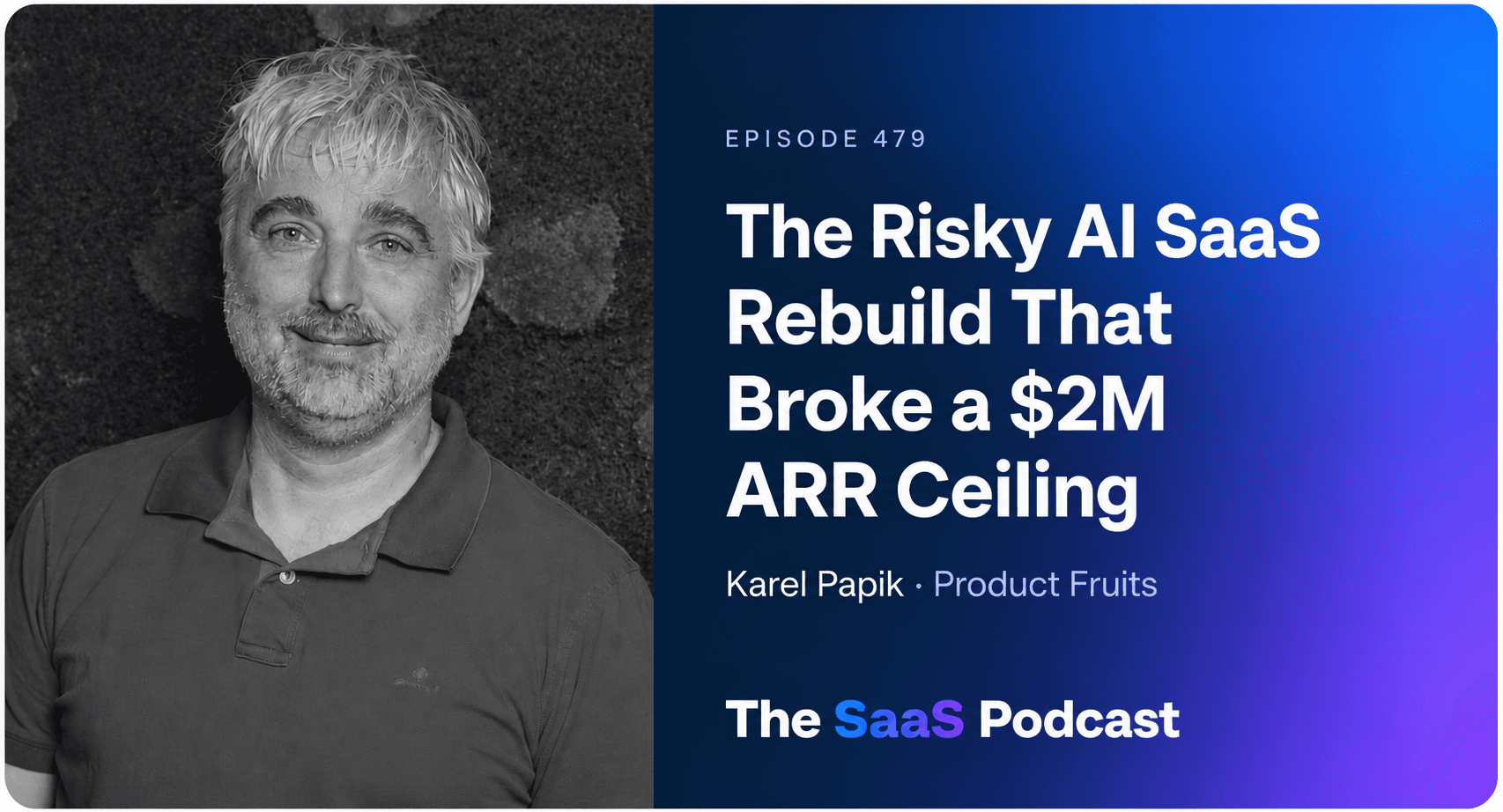
Karel Papik spent 15 years designing video games before he looked at SaaS onboarding and thought - this is terrible. He co-founded Product Fruits, a digital adoption platform that now serves over 1,300 paying customers across 60+ countries, with the US as its biggest market.
But when AI startups started racing up behind them, Karel and his co-founder made a bold call. They told their investors they were stopping work on the existing product to rebuild the entire platform from scratch around AI. That bet paid off - 80% of customer support tickets now get resolved without human intervention, and the company has broken through the $2M ARR ceiling that stalls most SaaS startups.
Karel Papik is the co-founder of Product Fruits, a digital adoption platform based in Prague, Czech Republic. Before SaaS, Karel spent 15 years building video games - shipping 16 titles, many of them for women - where he mastered the art of SaaS onboarding and user engagement through psychology rather than tutorials.
When Karel met his co-founder Ladislav Salom, Product Fruits had just six customers. Within 12 months of their first investment from Lighthouse Ventures, they grew to $50K MRR using paid search as their primary acquisition channel. They achieved a 24-25% free trial conversion rate by applying product-led growth principles and gaming psychology to their own SaaS onboarding experience.
But around $2M ARR, growth hit a wall. The product had become too complex for self-serve SaaS onboarding, and PLG stopped being effective. Meanwhile, AI-powered competitors were emerging fast. Karel describes this as the moment they stopped "riding the horse" and started "riding the tiger."
In a gutsy move, Karel emailed investors to say they were pausing feature development on the existing platform to rebuild it from scratch around AI. The investors responded by asking how much more money they needed. The result is an AI copilot that handles discovery calls, tailors onboarding flows, prevents churn, and resolves 80% of support tickets automatically.
Today Product Fruits has over 1,300 paying customers - including KPMG, universities, and stock exchanges - with a 25-person team generating millions in ARR. Karel shares lessons on why PPC worked when most founders say it doesn't, how gaming psychology applies to SaaS onboarding, and why he believes talking to customers too much can hold you back.
Product Fruits co-founder Karel Papik grew the digital adoption platform to 1,300 customers and millions in ARR by applying video game psychology to SaaS onboarding - then rebuilt the entire platform around AI when competitors emerged, resulting in 80% of support tickets being resolved without human intervention.
Meter your AI usage in the free trial. Otherwise the LLM costs will eat you alive.
Most founders pick a growth channel based on what they want to work on. Karel Papik picked his based on what his one marketer actually had time for.
Most founders who hit a wall with PLG around $2M ARR assume it's an optimization problem. Better onboarding.
Karel Papik co-founded Product Fruits in 2020. By early 2024 they had 1,300+ paying customers, a 25-person team across Prague and Pilsen, and ARR in the lower m
How did Product Fruits grow from 6 customers to $50K MRR in 12 months?
Karel Papik focused exclusively on PPC advertising, targeting the US market from day one. With a small team that could only dedicate about one hour per day to marketing, PPC was the fastest path because it required money rather than manpower. They achieved 24-25% free trial conversion and got payback within 8-9 months.
What gaming psychology principles does Karel Papik apply to SaaS onboarding at Product Fruits?
Rather than asking users to pay upfront, Karel uses the "diamond axe" technique from games - give users the premium experience for free first, let them see the value, then ask them to pay to keep it. This creates emotional investment before the purchase decision rather than requiring commitment upfront.
Why did product-led growth stop working for Product Fruits after $2M ARR?
The platform became too complex for self-serve SaaS onboarding. Customers could not discover the full range of capabilities on their own. Account executives needed to sit with customers to put together use cases, and customers were consistently surprised by what the product could do - proving PLG was leaving value on the table.
How did Product Fruits make PPC advertising work when most SaaS founders say it fails?
They hired Dan Musiali, an expert in PPC, who ran targeted campaigns with optimized landing pages. With $100 average tickets and 24% conversion to free trial, the unit economics worked - payback in 8-9 months. They scaled PPC spend to $1-1.5M per year before hitting a natural ceiling.
What SaaS onboarding strategy did Karel Papik use to handle AI pricing uncertainty at Product Fruits?
When usage-based pricing for AI features confused procurement teams who needed fixed numbers, Product Fruits shifted to giving customers massive free token allocations instead. Karel's logic was that if customers tried the AI copilot, they would convert because the value was clear - a risky but deliberate bet on the product's quality.
How did Product Fruits convince investors to support rebuilding the platform from scratch?
Karel emailed investors saying they were stopping work on the existing product to rebuild around AI, warning of a potential MRR decline. Within 20 minutes, investor Ondrej from Reflex Capital called and asked "how much money do you need?" The investors saw the move as a sign of winners, not survivors.
What makes Product Fruits different from competitors like Pendo in the SaaS onboarding space?
Product Fruits built AI capabilities natively rather than bolting them on or acquiring companies. Their AI copilot can conduct discovery calls, tailor onboarding, answer questions via voice with memory, and even push back on bad design choices. Larger competitors are too big to change direction quickly and rely on acquisitions instead.
How does Product Fruits use its own SaaS onboarding platform to improve its product?
Karel uses the Product Fruits AI daily inside their own admin interface. He asks it questions like "what is preventing better conversion in the newsfeed feature" and the AI analyzes customer conversations to identify problems and recommend fixes. This creates a feedback loop where the product improves itself.
What contrarian advice does Karel Papik give about talking to customers for SaaS onboarding?
Karel believes founders should avoid talking to customers in certain phases - especially when dreaming about the future. He argues that customers are not experts in what is possible and that over-reliance on customer feedback produces incremental improvements but prevents breakthrough innovation.
Omer Khan [00:00:03]:
Welcome to the SaaS Podcast. I'm your host, Omer Khan. AI has changed the playbook for building and growing SaaS. Every week I talk to founders who are writing the new one. My guest today is Karel Papik who built Product Fruits to over 1300 customers while competing against companies that had raised hundreds of millions.
Omer Khan [00:00:22]:
His total funding, three and a half million dollars. But when AI competitors turned up, Karel panicked. Two weeks of what he calls dark times. Then he emailed his investors and told them we're going to stop working on the product and we're going to rebuild it around AI from scratch. Expect revenue to decline.
Omer Khan [00:00:41]:
Meanwhile, their product led growth had already stalled and their PPC had hit a ceiling. In this interview, Karel breaks down how a marketer spending just one hour a day turned PPC into one of their biggest growth engines.
Omer Khan [00:00:54]:
And how he's solving the AI pricing problem when his costs are usage based but his customers won't pay anything but a flat monthly fee. All right, Karel, welcome to the show.
Karel Papik [00:01:07]:
Hi, thank you for inviting me, Omer.
Omer Khan [00:01:10]:
My pleasure. So are your target customers SaaS, AI startups? Manybody.
Karel Papik [00:01:18]:
I think we have more than 1,300 paying customers now and a lot of them are SaaS companies. Also lot of startups, but we have universities, insurance companies, companies which are building ships, TV stations, stock exchange. So it's really much wider area than I actually expected at the start.
Karel Papik [00:01:38]:
At the start I expected the use case will be improving conversion in free trial. But I think we actually have now minority of customers which, which need this use case.
Omer Khan [00:01:49]:
Great. And give us a sense of the size of the business. Where are you in terms of revenue, size of team? You already mentioned customers.
Karel Papik [00:01:56]:
Yeah, so yeah, 25, 25 people mostly in Prague, Czech Republic and also in Pilsen, Czech Republic. And 1300 customers. Biggest market US VR. In regards of ARR in lower millions I would say and growing quite nice. I think at least in this particular moment we are the most innovative AI platform in the world.
Karel Papik [00:02:29]:
DAP platform in the world.
Omer Khan [00:02:31]:
Okay, great, we'll get into that. And you're wearing the Product Fruits T shirt. What does it say below that?
Karel Papik [00:02:37]:
Riding the tiger.
Omer Khan [00:02:39]:
What does that mean?
Karel Papik [00:02:40]:
Well, it's a saying in Asia. I spent some time in Asia, I used to live in Vietnam several years. And other countries, well, they have some, some saying that in some moment you can, you, you, you can ride a horse, right? And horse is slow and sometimes it's actually dying and you don't see it.
Karel Papik [00:02:58]:
And I think it was kind of product for two Three years ago, we were riding the horse. Everything seems like peachy. It's fine, you know, competitors here and there, everybody fine. And then you are thinking, wow, there are some new guys behind us with, on motorbikes, AI powered. They will take everything from us.
Karel Papik [00:03:17]:
You know, we have to regroup and start to think very differently. And that's what we did. And now we are not riding horse, we are riding a tiger. And when you are riding the tiger, the tiger will eat and destroy anything and everything in front of you. But you can't stop.
Karel Papik [00:03:32]:
If you stop, the tiger will eat you. So the only way is to aggressively continue.
Omer Khan [00:03:38]:
I love that. Love that. All right, so let's get into the story. Like, where did the idea for Product Fruits came from? You founded the business in 2020. What were you doing at the time? Where did the idea come from?
Karel Papik [00:03:54]:
Well, my background is in video games, right? I did video games all my life. So I also learned a lot about onboarding and adoption in games, which are still, I would say, light years ahead of B2B applications. And when I returned from, from Asia, I acted like. Act like some advisors for some startups.
Karel Papik [00:04:16]:
And one day I. I met Ladya. And Ladya is the brain of the company. I'm just talking head, right? I have no idea about anything. But he is really brainiac. And I, you know, honestly, I don't respect people much. That's my personal problem, you know, But I respect so much. It's. It's very uncommon for me.
Karel Papik [00:04:43]:
You know, sometimes you meet somebody and you. You see and feel he's special. And he was alone doing Product Fruits, and he had, I think, six customers or something. And I was talking to him like 10 minutes, and I, I almost said, will you marry me? Like, okay, let's do this together, right?
Karel Papik [00:05:07]:
So we started to do it together about one year. We tried to bootstrap it at the start, and then we got some investment and the ball started rolling. So the idea is, Laja's idea is to shy, to go to the, to the podcast. Me too, but he's even more shy than I am.
Omer Khan [00:05:27]:
So I'm curious when you had that moment where you were like, I'm in. I want to do this. What was it? Was it him as a potential founder you could work with? Was it the idea of the product?
Karel Papik [00:05:43]:
I strongly believe in the product because I'm using all kind of software every day. Vast area of software. I'm doing also some. Some art. So I'm using, you know, animation software and graphic software, you name it. And I, I always struggle how to use it right. And I always needed some help.
Karel Papik [00:06:04]:
And I said, this is it, this is it. This is, this is what I always wanted. And he's so calm and he's, he's gifted because he always, you know, a lot of founders, because we are, you know, grinding every day, some here and there, it's just fighting fires.
Karel Papik [00:06:21]:
But he always is able to see the future, like one year from now, two years from now. And he's always right. Big respect. So this is it. He's winner.
Omer Khan [00:06:33]:
So I'm curious with your background in gaming. You know, I work with somebody on my team when I was at Microsoft who had spent as much time as you have, you know, 15 years or something working in Xbox. And he brought a completely different mindset to building B2B products or web products.
Omer Khan [00:07:02]:
And so I'm curious, when you, with your background and all the things you talked about, when you looked at Product Fruits or you just generally started looking at other SaaS products, what did you think?
Karel Papik [00:07:15]:
They suck in adoption, in onboarding. They are hopeless. They are rigid. They are too shy to talk to the customers. And they are sometimes even afraid to try to feel what customer is feeling. And this is something that you learn in games. I shipped I think 16 games and a lot of them are actually for women. Surprise.
Karel Papik [00:07:41]:
I had a chance to work on TV franchise, I don't know American Castle, if you know, or Criminal Mind. So I made games based on this. And we always had the first hour for free. So in first hour you had to convince the player that she want to buy the game, right? In the first hour.
Karel Papik [00:07:59]:
So you had to explain everything enough during the first hour, but not like, not to be too pushy. So it was big learning. I will give you example, like in SaaS, okay? So you have some, some tool set and you are trying to upsell the customer.
Karel Papik [00:08:14]:
So customer is hanging around, maybe he will upsell because he needs, I don't know, automatic translation, whatever in games, how it works. You are playing game and you are, I don't know, killing zombies, right? And in one moment I will give you Diamond X and you have the ax and you are killing zombies like crazy.
Karel Papik [00:08:34]:
And it's so much fun and you enjoy. And after 10 minutes I will say, okay, Omer, give me back the ax. You can't it unless you will pay me. If you will pay me, you can keep it. It was great. It was great fun, right? You enjoy it, but now you have to or you pay.
Karel Papik [00:08:51]:
So it's a different approach. Than when you will ask for the money up front and some dedication. So some, some game principles are even forbidden, like complete gotcha. It's a gaming principle which is forbidden in Japan because it's. It works so great that people are pouring money to the game.
Karel Papik [00:09:10]:
So yeah, there are some techniques which you might want to implement in games.
Omer Khan [00:09:17]:
So I know people talk about gamification is sort of one thing, but what you're talking about there is a lot of psychology.
Karel Papik [00:09:25]:
Yeah, it's a lot of psychology because game is asset, which you don't need, right? You don't need it. So the onboarding must be really very well thinking through it because it's about emotions and stuff. So this is it in a lot of B2B software, you just need it. I need it. I need something.
Karel Papik [00:09:49]:
I can choose this, this, this. Right? But in games, give me an example.
Omer Khan [00:09:54]:
Of the axe example you gave with the game. Give me an example of how that translates to something that you're doing in Product Fruits.
Karel Papik [00:10:02]:
Well, one of the features is a copilot, right? I would like to avoid to say chatbot because our chatbot is much more than a regular chatbot, but he's answering some questions, right? But he's also able to point on the screen, tell you you want to try this, try that.
Karel Papik [00:10:24]:
You can talk to him via voice and he has memory and stuff. So it's really, it's really great and it's. But it's kind of expensive. It's not that cheap because it's really delivers. And this is what you need. You need top quality in answers, nothing less.
Karel Papik [00:10:40]:
And we gave our customers just few, I would say tokens or we call that resolutions, you know, to, to try. And it was barrier. And then I said, okay, so it, you know, we will, we will give them zillions, zillions. Do anything you want to. We will cover the expenses. Because you want to try.
Karel Papik [00:11:01]:
Because we know that if they will try, they will become customers because the value is there.
Omer Khan [00:11:07]:
Sounds great. Also sounds like a recipe for running out of money really quickly.
Karel Papik [00:11:13]:
It's risky. And we had some calls also for example with Gartner and they said this is the way you should do. That's the only way. Because, well, as I told you, we are, and that's a fact, the most innovative AI platform in the world, right? And we are selling quite well.
Karel Papik [00:11:30]:
But there are still a lot of barriers, A lot of barriers. We are rather small company, right? And when we announced some new features four months ago, we had webinars and I was attending 400 companies, which is quite a lot for us. You know, big companies, KPMG and stuff and everybody interested.
Karel Papik [00:11:52]:
But still there are some barriers for, for better adoption of, of AI and it's mostly about the human mindset. I think the word we are look, looking for is uncertainty. Uncertainty, right. They expect computer software to be very deterministic. One plus one is two always. That's it. But this AI is not like it's stochastic.
Karel Papik [00:12:22]:
You know, there are probabilities, it's a bit random. So some of our customers are saying, oh, they are calling him Elvin. When he's on a chat he can do many things. Discovery calls, outcomes, many agent identities, I would say. But when he's responding on the, on the chat, he's giving you some answers.
Karel Papik [00:12:45]:
But the answer doesn't have to be always the same based on the context and stuff. And some of our customers are saying, but I want him to, to say exactly this. Theoretically we can't, we can do this for particular client, but we never did because that's not the way to do it.
Karel Papik [00:13:03]:
If you want to scale, that's what I'm saying to our customers, you have to accept the uncertainty. You will never have it fully under control. So of course we have some processes.
Karel Papik [00:13:15]:
Like I can go through the, or our clients, let's say we are selling Product Fruits to some client and client uses our chatbot and he can go through the conversation say this is good answer, this is wrong. Next time you should say something different. You have to tune it up.
Karel Papik [00:13:31]:
Same for pricing because pricing is very tricky with AI. Right. We are paying shitloads of money to different providers which orchestrates all this thing. And when we are selling the company to some decline in there. Okay, so how much will we pay? And our answer used to be we have no idea.
Karel Papik [00:13:57]:
We have no idea because I don't know how many users do you have? How many of them will, will interact this Product Fruits? How many, how many questions will they have every day? Two questions, 20 questions? I don't know. Right. So I will, we will give you some. We will.
Karel Papik [00:14:16]:
The original idea was that we will charge you based on some resolutions, right? Then we will provide the right answer. And it didn't work because you know, these people always said, but I need some number. I will take this number. I will go to procurement and they will approve the purchase.
Karel Papik [00:14:35]:
So they want static price, setup price monthly or yearly while we are paying per conversation to the LLM models and else.
Omer Khan [00:14:47]:
Yeah, I know that's a big issue. Right now that we're hearing that when it comes to SaaS, per seat pricing is, is dead. It's a problem and for many it is.
Omer Khan [00:15:02]:
Although I still believe that many customers don't care what the pricing model is as long as they feel like they're getting value for what they're paying for and some level of predictability, which is the other issue.
Omer Khan [00:15:15]:
If you go completely towards usage based pricing and say hey, this month it could be $5, next month it could be $500,000, right? It's like I don't think anybody wants that level of uncertainty as, as well. Let's talk a little bit about how the days when you were riding the horse, not the tiger, right?
Omer Khan [00:15:36]:
So when you joined there were like six customers. Walk me through how you got to the first 20 or 30 customers. Where did they come from? How did you acquire them?
Karel Papik [00:15:49]:
Well, I often, often read that there is certain paths from 0 to 20, 20 to 100. And this is something what I am trying to avoid. I think it's a bit wrong. Let me explain, what do I mean? Like especially we are from Europe, right? So Czech Republic. So a lot of, a lot of startup here.
Karel Papik [00:16:15]:
They are starting on Czech market. They will ask for some pre seed money and then they are trying to expand to Slovakia, Poland, step by step. And it's usually failing, right? It's failing. You want to know in my opinion from the day one that you are able to succeed on the big market. The big market is us.
Karel Papik [00:16:37]:
If you are starting in US very early, you see that your product is able to compete with the best companies in the world. And it's not just about the product but about the whole sales engine, marketing engine. You know, I met some founders which were super great selling personally and even huge tickets, right.
Karel Papik [00:17:02]:
But then they couldn't expand because they were not able to teach their sales department how to, how to really sell their enterprise software. Because it was so complicated. So from the day one we were looking for some, some path. You know, we asked for the first investment from Lighthouse Ventures. It's just great Czech Farm.
Karel Papik [00:17:27]:
And they told us, okay, so you have certain time, maybe year to show some numbers. You need to grow like it's from zero, but you really need aggressively grow. You have 12 months to see the result and then we can ask for more money on the market. With 12 months, how, how you will you do it?
Karel Papik [00:17:51]:
That was the times like three, four years ago. Everybody was obsessed about content. Content, content, CEO content. And I would like to have content agency know these people that okay, we will help you with the content. But it will work after nine months it never did. So they will go to another, another.
Karel Papik [00:18:14]:
So he said okay, so no, no content. We will Simply go with PPCs small team and this will be the. And from the first day we will try to sell in US or at least UK and Germany and so on. Still today we have just, I don't know, 10, 10 companies in Czech Republic.
Karel Papik [00:18:34]:
Sales department doesn't speak Czech at all, right? No they don't. So that was the past. We tried to scale from 0 to 10 to 50 to 100 in the same way. It should be the same momentum. And this worked I think until 2,000,000 ARR.
Karel Papik [00:18:57]:
2,000,000 ARR is common friction point when a lot of us starts to struggle because they are unable to break into the mid market.
Omer Khan [00:19:09]:
So before we get to that, I want to just talk a little bit about that 12 month period. Where were you at the start on day one and where did you hope to be at the end of the 12 months?
Karel Papik [00:19:26]:
At the start we had this, I think seven, 10 customers and within the. So the MRR was I don't know how much next to, next to zero. And I think within the year we had like 50,000 MRR or something.
Omer Khan [00:19:46]:
So by the end of the year you were doing about 50k in MRR on day one, when you started this 12 month journey, where did you hope.
Karel Papik [00:19:56]:
You would be approximately at this number?
Omer Khan [00:19:59]:
Okay, so walk me through how you got there. You mentioned ppc, was that the number one thing that.
Karel Papik [00:20:08]:
Yeah, because we couldn't afford a big team. Right. It was very, very small team. Five people, four people. And we couldn't build a team which would create the content and more sophisticated lead channels. Actually we had like first hire was Dan, Dan Musial. He's a great guy and we hired him as chief marketing officer which was sly.
Karel Papik [00:20:38]:
Right? It was complete lie. He's not marketing officer, he's plumber. He's plumber. He's fixing everything here and there without even telling us. That was a leak. So I fix it. That was a leak, fix it. And he could work on the marketing like 20 of his time. So like one hour per day max.
Karel Papik [00:20:58]:
So that was his marketing. So also that was the reason why we started this ppc. Because for PPC you just need money with some level of simplicity. Right.
Karel Papik [00:21:08]:
He was hired like a marketing officer, but he could afford or we could let him work on the marketing only like one hour per day because he had so many other stuff to fix in the company, you know, many, many others because we're very small teams.
Karel Papik [00:21:24]:
So he said, okay, then you can, you can only focus on marketing, I don't know, one hour per day. So PPC is the way to go because you don't need that much manpower because you have so many other stuff to do.
Omer Khan [00:21:40]:
Now when it comes to PPC, was this AdWords or something else?
Karel Papik [00:21:44]:
Yeah, mostly AdWords. And that's another, like I would say problem because at the start it worked quite well. We had conversion in free trial, I think 25%, 24%, which is quite good. And based on the calculation and size of the ticket, at that time the ticket cost, the average ticket was $100.
Karel Papik [00:22:11]:
So with the conversion, 24% to the free trial, we had our money back in nine months. Eight, nine months, which is good. Right. And so we scale the PPCs until I think $1 million yearly, a bit more, maybe 1.5. And that's a ceiling. You can't have more.
Karel Papik [00:22:31]:
It has limits because only certain people are searching for the solutions. So you have to. But at the start it worked great.
Omer Khan [00:22:40]:
So 99% of founders I'll talk to will tell me. We tried paid ads, PPC and it didn't work. So we did something else.
Karel Papik [00:22:49]:
I can tell you why it worked.
Omer Khan [00:22:51]:
Yeah, I want to know that. And I think there's one other thing that I wonder about, that not only getting it to work, you're getting it, you're trying to do it in the US market, which probably the clicks are going to be more expensive than if you were trying to do it in the Czech Republic.
Omer Khan [00:23:06]:
And also you've got some very well funded competitors who could probably who charge a lot more than you do. We'll talk about pricing in a while so they could afford to spend a lot more on acquiring trials. So with all of those factors going on, why do you think you were able to make this work?
Karel Papik [00:23:26]:
So one of the main reason was Dan, because Dan was really expert in PPCs. But when we hired him, he was the PPC guy. Right. So he knew how to orchestrate it. And still we still do. We are running lots of landing pages and stuff.
Karel Papik [00:23:45]:
So he knew this game, he was very good in this and he was able to place us among the customers. And actually that's what I was mentioning before that we wanted to know as soon as possible that we are able to compete.
Karel Papik [00:24:01]:
And to be able to compete, it does mean that you have to have the good product, but you also have to have some marketing which works. We wanted to Know as soon as possible. Like if we are able to pay for the PPCs in some meaningful way. Right. If it would be too expensive.
Karel Papik [00:24:21]:
So we didn't want to start on Czech market in Slovakia and then try to go to the world and say, oh, it's so expensive, we can't afford it, we can't afford it. We wanted to fail as soon as possible.
Karel Papik [00:24:33]:
We wanted to see if we are able to survive and if not, we wanted to fail as soon as possible.
Omer Khan [00:24:39]:
So do you think it would still work today? I mean every year I hear people say, oh, PPC bidding for this stuff is like so expensive now. But I'm sure back in 20, 20, 21, whatever it was, people were saying the same thing. Oh, PPC is too expensive, clicks are too expensive.
Karel Papik [00:25:04]:
Right. You know, we are also using some software which is tracking how we are doing in when people are looking for some solution using AI, you know, in AI browsers or in GPT. So we are trying to tune our content now to reflect that. But what's cheaper than PPC's content? It is not.
Karel Papik [00:25:26]:
You need to have bunch of people working on the content or direct sales. So you need to have BDRs, SDRs. So nothing is really cheap.
Omer Khan [00:25:36]:
Yeah, I saw an interesting tweet today. Somebody was talking about this AI tool that could basically help you create thousands of content articles in seconds. And somebody kind of responded to that and said okay, great, but now when everybody can generate thousands and thousands of articles or content, why are they going to pick yours?
Omer Khan [00:26:11]:
You still have the same problem. You still got to figure out how you stand out. Right. And so I think that that's the thing about content. It does, you know, an SEO and inbound, it takes time to get that to work.
Omer Khan [00:26:26]:
And now I think it's probably even more difficult because there's so much AI slop and so much noise out there.
Karel Papik [00:26:34]:
True? Absolutely true.
Omer Khan [00:26:36]:
Okay, great. So let's talk a little bit about pricing you charge from. I think someone can start using Product Fruits for about $100 a month and then you have higher tier plans, but you've got competitors, competitors who charge a lot more than that.
Omer Khan [00:27:01]:
Tell me about like why you price the product the way you did and are you ever in a situation where people complain that the product is too cheap?
Karel Papik [00:27:13]:
Yes, exactly. We talked with some recently to some Israeli company and they said that there must be some. There is something what you are not telling us. It's this is not possible. We tried our software, it's amazing. Why? It's why it's so cheap, it's significantly cheaper than the pendant. What's the problem? There is some hook.
Karel Papik [00:27:34]:
You know me historically we started like a company for small SMBs companies and the price was very important, right? And then actually we saw some. I told you that at the start we had conversion like 24, 25% and we used a lot of PLG principles in the application because we are digital adoption platform.
Karel Papik [00:27:59]:
So we try to benefit from having product fluids in our Product Fruits, if you know what I mean. It made a lot of sense and it worked. But we saw steady small decline in the conversion. You know, the leads started to converting worse and worse all the time.
Karel Papik [00:28:20]:
Now we are around I think 15% which is still not bad. And the reason for that is that the platform, our platform fundamentally changed. At the start it was quite simple platform you can operate now. Today it's so complex. Five years ago we had the product tours and hints feedback.
Karel Papik [00:28:42]:
Maybe now our AI is able to have discovery call with you and ask you what you are looking for. And then based on this it will tailor the onboarding.
Karel Papik [00:28:52]:
You can ask AI like what I did today, 10 o' clock in the morning I wrote to our AI, our administration which we are using in our product which is kind of confusing. So what is preventing us to see better conversion in newsfeed feature.
Karel Papik [00:29:10]:
And our AI went through all this conversation and told me this is the problem and this is how you should fix it. And this is also what we are selling, right? If. If you do the survey with our competitors they also sometimes they are offering survey. You have to set up the survey question. This is with us.
Karel Papik [00:29:28]:
You will just ask Elvin. Hey Alvin, please put together some churn survey. And by the way, last time I did that and I said okay, please change the color to red. And he said Karel, I don't recommend it. It's a scary color. Okay, so let's go with green.
Karel Papik [00:29:47]:
So yeah, so now a lot of things in the product fraud, it's very complicated. And PLG stopped working practically you are not able to sell through the plg. So we had to start to build some sales departments still quite tiny 15 persons including implementation engineers.
Karel Papik [00:30:11]:
And we grow not because we are acquiring more and more companies, but the tickets are bigger. So that's what we want to change. When you are hitting around 2 million ARR, you can't grow by still adding more and more customers as you used to because you would need too much people in CSM and tech support and stuff.
Karel Papik [00:30:35]:
So you need to start to sell Bigger accounts. And for that you need to have more complex, more complex enterprise ready product. So that was the change in our journey. It worked quite well. Powered by PLG and PPCS until I would say 1.7 million, 2 million ARR something. And then it started, you know, to decline.
Karel Papik [00:31:02]:
But we had that scary discussion with Sladia about a year ago. I remember what we will do for the future.
Omer Khan [00:31:11]:
So. Okay, so one thing I just want to understand is why do you feel PLG stopped working? Was it just because the complexity of the product?
Karel Papik [00:31:20]:
Exactly. PLG works for simple products or work the best for the simple products. But if you have more complex product, it's not.
Karel Papik [00:31:32]:
It worked only to some extent because for example when we have a call with a client, it can be a big client and they have some woke idea what they would like to see in the product adoption. Because we are doing much more than onboarding. We are taking care about the customer in the whole life cycle.
Karel Papik [00:31:50]:
You can publish announcements inviting people to the webinars and people are sending you videos when they have a problems churn survey, you name it. So, so sales guys are account executive. They. They need to sit with the customer and put together the use case, you know.
Karel Papik [00:32:08]:
And almost always the customer is like wow, what is even possible to do now? It's amazing. So they don't know that they can't expect it. So PLG doesn't work that well.
Omer Khan [00:32:21]:
Got it. Okay, now at the beginning we talked about. You explained about riding the tiger and what that means to you and the business and that before you were riding the horse until you realized these motorcyclists were speeding and chasing you, these AI guys.
Omer Khan [00:32:39]:
Tell me about that moment where you guys realized that they were behind you and that this was a problem.
Karel Papik [00:32:47]:
We were scared. We were really, really scared. Like depressed and disappointed. Like I said, we did what we could and we did right? And now world changed and changed so fast and there is AI and we are not AI platform and. And it was dark, dark times. But it didn't take too long. It was like two weeks.
Karel Papik [00:33:13]:
But I remember every single day on this. And then we said, you know what Ladya, let's think about the platform which we always wanted to build and we couldn't because of some technical barriers. Maybe these barriers are not here anymore. So let's start dream, just dream.
Karel Papik [00:33:38]:
What would be the best adoption platform not just to have AI because investors wants it, but something what is really amazing what will help people working with the software? Because the end game in my opinion is not having Some adoption platform which help you on board to some platform.
Karel Papik [00:34:01]:
Like I will give you example, Photoshop, you know, this graphical program for graphic, right. So you can have some onboarding to this platform. And it will say, okay, you have this tool, that tool, this, this, this, it's so, so many things.
Karel Papik [00:34:15]:
But what we, what we are building now is the invisible body which is sitting next to you. And when you will be working with Photoshop or anything, you will ask him, hey, how to, how to paint the sky? How should I paint the clouds? And he will tell you, oh, for clouds you can do.
Karel Papik [00:34:31]:
You can use this tool, that tool, this tool. Or maybe I can try paying the clothes for you. So the buddy is always here, always helpful, right? And this is what we wanted. And I remember I wrote some email to our investors, which are great.
Karel Papik [00:34:47]:
You know, we have Lighthouse vf, Reflex Capital leverage and I, I send them, guys, we are stopping work on Product Fruits. We will mostly rebuild the platform from the scratch. So I expect you will see decline in MRR because we will not update the tools we have anymore because this is not the future.
Karel Papik [00:35:12]:
We could grow in next six months, nine months, maybe year, but then we will be dead. And we see this point. So we will now pour all our resources to the new generation of the platform. And I hit the sand and said, okay, so now let's wait for the shitstorm. And they called me in 20 minutes.
Karel Papik [00:35:36]:
I remember Onze from Reflex Capital and he told me, how much money do you need? We are betting on you. This is what we want. We want winners. We don't want survivors. Tell me how much you need. And it was great. So this is what we did.
Karel Papik [00:35:54]:
We actually didn't see any decline because the products still work very well. But from September last year, July, we started to introduce the new level of tools, which are AI powered, not just AI spies here and there. And it's amazing. It's almost scary.
Omer Khan [00:36:20]:
Yeah. And I think once you made that pivot to everything being AI first, you saw some significant growth as a result of that. But I'm curious because these days everybody is adding some type of AI to their product right now. And I would say a lot of those things are not very useful. Right.
Omer Khan [00:36:50]:
They just kind of slapped on as an afterthought. And with you guys. Yeah, I mean, you have access to Codex or Claude code or whatever to be able to build more stuff if you want to for the AI, but you don't have a huge team. You, you don't have, you know, a huge amount of money.
Omer Khan [00:37:10]:
In the bank that you can just, you know, endlessly build stuff with. So what do you think you did differently to be able to be successful with this? And you've already described a lot of the AI features in the product. So I think people have got a sense of what you're doing.
Omer Khan [00:37:31]:
But to back that up, you know, I think you had told me that once you rolled this out, 80% of your customer support tickets were now getting resolved without any human intervention. So it's actually working and the business is growing. But what do you think you did differently to what everybody else is doing?
Karel Papik [00:37:51]:
Well, with some level of simplicity, I can say that there are two types of AI applications on the market. One are AI which are trying to add AI because the investors wants it or they believe the customers wants to have it. And for bigger companies, this is, this is a big problem.
Karel Papik [00:38:11]:
You know, you mentioned Pendo and some others. They are trying to add some stuff, but mostly they are trying to acquire some other companies because they are too big to change the direction of the ship. Right. They are scared. They are really scared. They can be gone in two years.
Karel Papik [00:38:28]:
I don't, I don't think Pando but you know, the address you, you read about the Monday, you know, recently and stuff. So the world is changing on the other way. If you, if you read the link LinkedIn everybody is now bragging about oh, I've lead gen AI engine.
Karel Papik [00:38:43]:
It will book 20, 20 meetings in one second and it doesn't work at all. I had a hobby that in each of this conversation I ask can you hook me up with 3 customers which are happy using your product at least 6 months cricket never ever.
Karel Papik [00:39:00]:
But you know, the people like that, you know, obviously it's like comment lead and you will get the playbook. So it's very nice. So we want to be somewhere in the middle. We want to have AI which is delivering.
Karel Papik [00:39:13]:
We are Czech people, you know, very I would say almost pessimistic or realistic and so be always to care about some meaning in AI. Why to have AI? What problems are we solving? Never have just AI for AI. Just dream about what's possible. Why to put together churn survey manual when you can ask and prompt it.
Karel Papik [00:39:44]:
Why to have zillions of people which are doing some discovery calls when you can have it in the application? Of course you can have some AI application which does discovery calls but we have it in our application like part of the application and the rest of the application is reacting on these discovery calls. Right.
Karel Papik [00:40:04]:
Like today I was working with Product Fruits. And I asked Alvin about, about or I called it something about integration. And after a few seconds he pop up and said, ah, you mentioned integration. Are you still interested? They are there and we have new integration here and here. But unfortunately you would need to to use different tariffs.
Karel Papik [00:40:28]:
So you need to. So it was about upsell. So it was amazing how these things are starting together. So I don't think there was something like special or magical. But we always wanted to build AI which we are able to sell because if you are not selling it today, you are disappointing the customers.
Karel Papik [00:40:49]:
And I feel very sorry about, you know, their application, I don't know, lovable address. They are still growing and it's a great app. But the churn is massive, you know, because, you know, a lot of people are disappointed and we can't afford it. We can't have disappointed customers. We can't.
Omer Khan [00:41:08]:
So it sounds like you were a lot more thoughtful about what type of AI features to build and it was less about what can we do with AI and it was more about what do we wish we could have done with this product all those years that we want to do now.
Omer Khan [00:41:29]:
What was one feature that you decided not to build with AI that would have been one of those kind of, I don't know, an AI slop feature that somebody might have added on. Because I'm sure when you probably started you had some of the kind of the obvious things, let's do this, let's do that.
Omer Khan [00:41:48]:
Right before you really, you figured out what was worthwhile building.
Karel Papik [00:41:52]:
The initial idea was. One of the initial ideas was to have some AI churn prevention, churn analytics try to. Because everybody's excited, you know, and it didn't work. So it's one of the things he didn't say, okay, so let's go back to the basic.
Karel Papik [00:42:07]:
Let's do the stuff which we, which we have experience with, you know, and our experience is in communication with the user. Communication, you know, everybody is now and I think it's right. They are betting on this. Agentic systems, independent agenting systems. But they are not really independent. You want to have interaction with them, right?
Karel Papik [00:42:34]:
You want to check what they are doing and stuff, how to communicating with them. This is what we are owning, what we want to own. The communication with application, with AI application. I expect there will be fluid dashboard, fluid application, which will change based on what you are doing.
Karel Papik [00:42:55]:
But still you will need, you know, some visualization, like the narrative that there will be no dashboards, nothing. It's just wrong. It's Just wrong. You have eyes, and eyes are the, you know, the contact you, you want to have. The vision is contact you you want to have.
Karel Papik [00:43:15]:
If you go to the restaurant, you want to see the pictures of. Of meal, if it's possible, you want to call them and just talk about the food. So the visualization is one of the very important facts, even in the times of AI.
Omer Khan [00:43:30]:
Yeah, I think it's super interesting what's happening right now, and I think it sounds like you guys have done a really good job making that shift to using AI in a meaningful way with your product.
Omer Khan [00:43:46]:
And in many ways, the other advantage that you have is that you're using your product to improve your product, which is a great place to be.
Karel Papik [00:43:57]:
Yes, we are kind of lucky everybody is trying to have AI. I saw toothbrush with AI and real stuff.
Karel Papik [00:44:10]:
But we are lucky that we are operating in the area where AI makes a lot of sense and we are not afraid anymore about this new application which are trying to do the AI onboarding and adoption because they don't have the experience we have. We built over the years talking to thousands of customers.
Karel Papik [00:44:31]:
So you need to have some real fundament and build on this fundament, maybe this AI, but you need to have this fundamental.
Omer Khan [00:44:39]:
I have to complain about the toothbrush example you just gave because maybe I'm just a really unlucky guy, but I buy these Sonicare toothbrushes and they always seem to break after one or two years and I have to buy a replacement and a replacement and a replacement.
Omer Khan [00:45:03]:
And so when I see them talking about smart features or anything like that, it really makes my blood boil because it's like, I just want you to build a toothbrush that doesn't break.
Karel Papik [00:45:19]:
Right.
Omer Khan [00:45:19]:
That's the big problem. Right. I don't need it to be a chatgpt inside my toothbrush, looking at my teeth and telling me all kinds of shit.
Karel Papik [00:45:27]:
Exactly. I hear you.
Omer Khan [00:45:29]:
All right, let's wrap up. Let's get onto the lightning round. I've got seven quick fire questions for you. So ready to go?
Karel Papik [00:45:35]:
Yeah.
Omer Khan [00:45:36]:
What's one piece of startup advice commonly given that you think is wrong?
Karel Papik [00:45:42]:
Talk to customers.
Omer Khan [00:45:44]:
Why?
Karel Papik [00:45:45]:
Because I don't want to use the metaphor with horses and cars, but to large extent it's true. To some extent. You also actually want to avoid talking to customers in certain areas when you are in certain flows. And you want to just dream about the future, what will work look like, because this is your domain.
Karel Papik [00:46:08]:
Our domain is adoption and onboarding. When I will talk to the people from universities or car building companies. They are not expert. They don't know what they can expect. So working too much with customers will give you just some small improvements, but not necessarily. You will see the longer vision.
Omer Khan [00:46:36]:
What's a book you read recently that stuck with you?
Karel Papik [00:46:40]:
It wasn't recently, but I remember the book from the guy from HAP HubSpot Sales Acceleration Formula. I think it was from CRO of HubSpot. It's still great book. How to build a sales department. I remember we were struggling with. I wanted to see more yearly deals, right? Not just monthly deals.
Karel Papik [00:47:07]:
And our sales guy, they told me it's not possible. We can't sell yearly deals. And then I read the book and Mark said, you can really steer the company just by bonus structure in sales team. So we decided, okay, so from now you have bonus only from yearly deals. And now we have a lot of yearly deals.
Karel Papik [00:47:30]:
I don't know how it's happening. It's a mystery.
Omer Khan [00:47:33]:
That's great. What's something you're good at now that you were terrible at in the first year?
Karel Papik [00:47:40]:
Confidence. I didn't have the confidence. I know because I am very, I wouldn't say pessimistic, but you know, I know that we are just like people. Just swarm of confused ants hurtling through the cosmic darkness on a chunk of rock that is actually burning inside.
Karel Papik [00:48:06]:
So it's crazy what we are trying to do and we are trying to entertain ourselves. And I wasn't sure that we can really succeed because statistically we were doomed to fail. And I knew it because I'm very realistic guy. I knew it. I was scared. And you don't see the results.
Karel Papik [00:48:33]:
It's hard to tell people you have to do this because I know, I do know now when we have something, what we proven, it's easier to convince somebody to do something than it used to be.
Omer Khan [00:48:48]:
What's something you do that most founders might think is a waste of time?
Karel Papik [00:48:52]:
I don't know. The best ideas are coming to me when I am offline and not. I really don't think about the work at all, which is uneasy for me. It's really uneasy because I'm obsessed with the ideas all the time.
Karel Papik [00:49:08]:
But if I am able not to think about the about the work for two days after these two days, the best ideas are coming to my mind. But probably that's not that unique.
Omer Khan [00:49:24]:
You'd be surprised if you had the time. What's business that you would start?
Karel Papik [00:49:30]:
I am 54. I don't have. I don't Think I have that, that many like things in front of, you know, see pessimistic guy, swarm of confused ants on piece of rock. But I have an idea which I am playing with because I am also trying to be painter, like oil, oil painting and stuff.
Karel Papik [00:49:53]:
And I had idea it's not business idea, but when you see the paintings of old masters 200 years old and stuff, you know, in the museums, they look very different from what they how they looked when the painting was done. Right? It's very different.
Karel Papik [00:50:13]:
And I would like to create some twins of these old masters paintings in the way how they looked when these paintings were made because with some time and research I know which kind of colors age and how much and how the colors transition from green to blue and stuff. So that's what I would like to do.
Omer Khan [00:50:38]:
Cool idea. What's something about you that most people.
Karel Papik [00:50:41]:
Don't know that most of my life I spend making games for women.
Omer Khan [00:50:47]:
And finally, what's something that you're obsessed with that has nothing to do with startups?
Karel Papik [00:50:53]:
Oil painting. That's what I like. I learned, I tried to learn oil painting when I was like 45. Everybody told me it's not possible. And I think this is what I would like to do after Product Fruits.
Omer Khan [00:51:09]:
Love it. Well, Karel, thank you so much for joining me. It's been an absolute pleasure.
Karel Papik [00:51:13]:
Thank you.
Omer Khan [00:51:14]:
If people want to check out Product Fruits, they can go to productfruits.com and if they want to get in touch with you, what's the best way for them to do that?
Karel Papik [00:51:22]:
Email probably. I'm still email guy. I have a LinkedIn of course, so they can find me on the LinkedIn. I'm trying not to post there because whenever I post something, investor are calling. You can't say this, you can't say this. Delete it. So LinkedIn.
Omer Khan [00:51:37]:
All right, we'll include a link in the show notes. Thank you so much. Been a pleasure and I wish you and the team the best of success.
Karel Papik [00:51:44]:
Thank you. Bye bye, bye.
Omer Khan [00:51:46]:
Cheers.
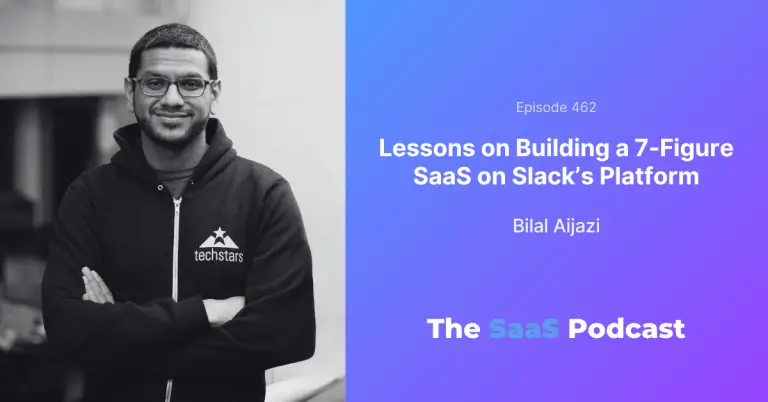
Bilal Aijazi, Polly
Bilal Aijazi is the co-founder of Polly, an engagement platform that brings polls, surveys, and feedback workflows into the tools teams already use like Slack, Teams, and Zoom. In 2015, Bilal was working at a consumer messaging company, watching apps like WeChat evolve from simple chat tools into full-blown platforms. He figured the same shift would happen at work. So he and his co-founder Samir started experimenting with simple solutions to collect feedback. Their first attempt was an email-based tool, but engagement was terrible. People just treated it like another survey to avoid. Then Slack opened their API. And Bilal noticed people on Twitter asking for Slack polls. So the founders quickly ported their product over, becoming one of the very first Slack apps ever built. But the installation process was clunky. Five manual steps that required copying and pasting tokens between different screens. Yet 80% of people still completed the setup. So they were clearly providing something people wanted. Then one day someone posted Polly on Product Hunt and they went viral overnight. They were getting thousands of new signups every month and struggling to keep the servers running. Yet they had zero revenue. Their first paying customer spent $8 a month for a fantasy football league. Then came the real challenge of building a freemium SaaS - figuring out who would actually pay. Most freemium SaaS users just wanted to do something casual with polls like pick lunch spots. But through hundreds of conversations, they found where the real money was. They focused on company all-hands, sales kickoffs, and other high-stakes meetings where feedback actually mattered. Just when things clicked, Slack threw a spanner in the works. Polly had built a workflow feature for automating feedback. They were signing five-figure deals. Six months later, Slack launched their own solution. The founders had to make a choice. Stay on Slack and hope for the best, or take a massive risk and rebuild everything for multiple platforms. They expanded to Teams, Zoom, Google Meet, and embedded directly into presentations. Rebuilding their entire infrastructure was a huge undertaking, but they had no choice. Today, Polly is one of the most successful freemium SaaS products in the collaboration space, serving millions of monthly active users and generating multiple seven figures in ARR with just 20 people.
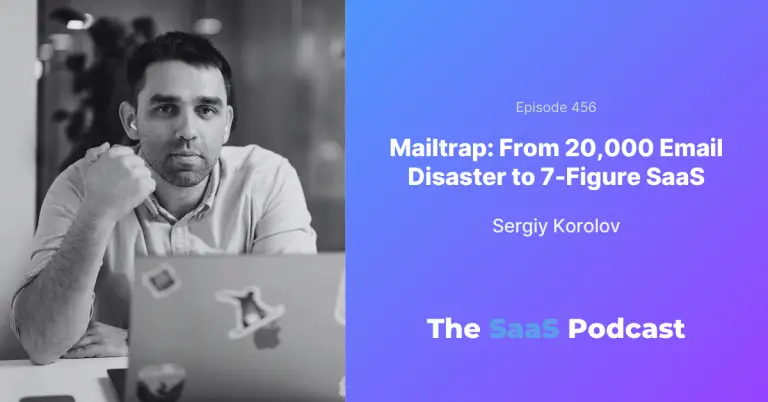
Sergiy Korolov, Mailtrap
Sergiy Korolov is the co-CEO of Railsware, a product studio that helps companies design, build, and scale successful software products, and the co-founder of Mailtrap, an email testing and delivery platform trusted by developers worldwide. Back in 2011, Sergiy's team made a massive mistake. They accidentally sent 20,000 test billing emails from their staging environment straight to real customers. The chaos was immediate. Customers were confused and upset, wondering if they'd actually been charged or not. To make sure it never happened again, they built a small internal tool to stop test emails from reaching real inboxes. When they shared it with the Ruby on Rails community, something unexpected happened. Developers loved it, and Mailtrap spread purely through word of mouth, eventually attracting more than 200,000 users. For the next five years, Mailtrap stayed free. It was a side project until 2016, when Sergiy finally decided to turn it into a real business. Instead of guessing, his team ran over 100 customer interviews and dug into usage data to guide pricing and product decisions. It took another four years to reach $1 million in ARR. Growth was slow and steady, not the overnight success story people imagine. And just as things started to pick up, a new challenge appeared. Customers wanted Mailtrap to handle production email sending too. That meant turning a product built to avoid sending emails into one that had to deliver them flawlessly. It was a risky move. The shift created a whole new set of problems, from dealing with spam attacks and deliverability issues to fighting brand confusion about what Mailtrap actually did. Suddenly, a product known for blocking emails had to prove it could deliver them reliably. Sergiy and his team spent months rebuilding their infrastructure, tightening security, and designing tools that gave developers more visibility and control. It wasn't glamorous work, but it paid off. Mailtrap evolved into a trusted, full-stack email platform used by teams around the world. Today, Mailtrap generates seven-figure ARR with a 40-person team and more than 100,000 monthly active users.
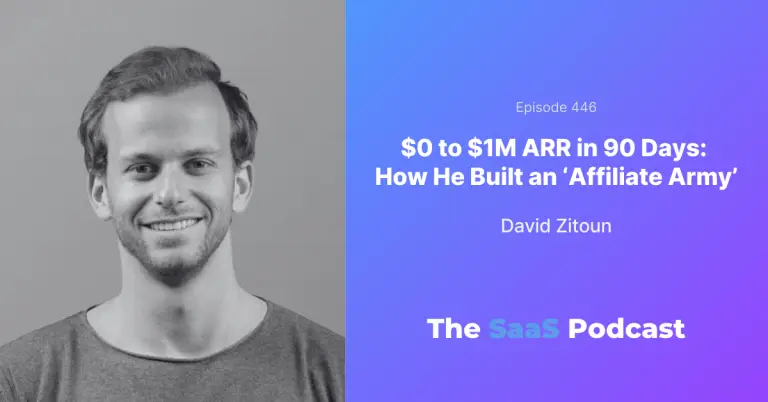
David Zitoun, Submagic
David Zitoun is the co-founder and CEO of Submagic, an AI SaaS that helps creators and small businesses turn their videos into viral-ready shorts in just a few clicks. David had a problem. As a longtime video creator, he wanted captions that looked like Alex Hormozi's viral style - but creating them in Premiere Pro was painful and time-consuming. So he built a tool to solve his own problem. He found his co-founder through Y Combinator's Co-Founder Match platform, and they made a pact: build an MVP in 15 days, try to sell it in 15 days. If nothing worked after 12 months of monthly experiments, they'd move on. Submagic was the first product they tried. With no money for paid ads, David started posting TikTok videos promoting Submagic from a brand new account with zero followers. Ten days later, one video went viral with 100,000 views, bringing in the first 40-50 paying customers. Then he scaled the playbook: he recruited 50-70 young creators as affiliates, paying them 30% lifetime commissions to post daily TikTok videos promoting this AI SaaS. The affiliate army worked. Within 90 days, Submagic hit $1M ARR. But at $5M ARR, growth stalled for seven months. David's team tried everything - more features, more acquisition channels - nothing moved the needle. The breakthrough came when they lowered prices instead of raising them, and launched Magic Clips to help podcasters and YouTubers turn long-form content into shorts. Today, Submagic is an AI SaaS at $8M ARR with a 14-person remote team across 10 time zones. SEO now drives 25% of revenue, word of mouth is the top acquisition channel, and David still spends 50% of his time talking to customers - the same thing he did on day one.