How Product Fruits rebuilt from scratch when AI competitors showed up
The Journey
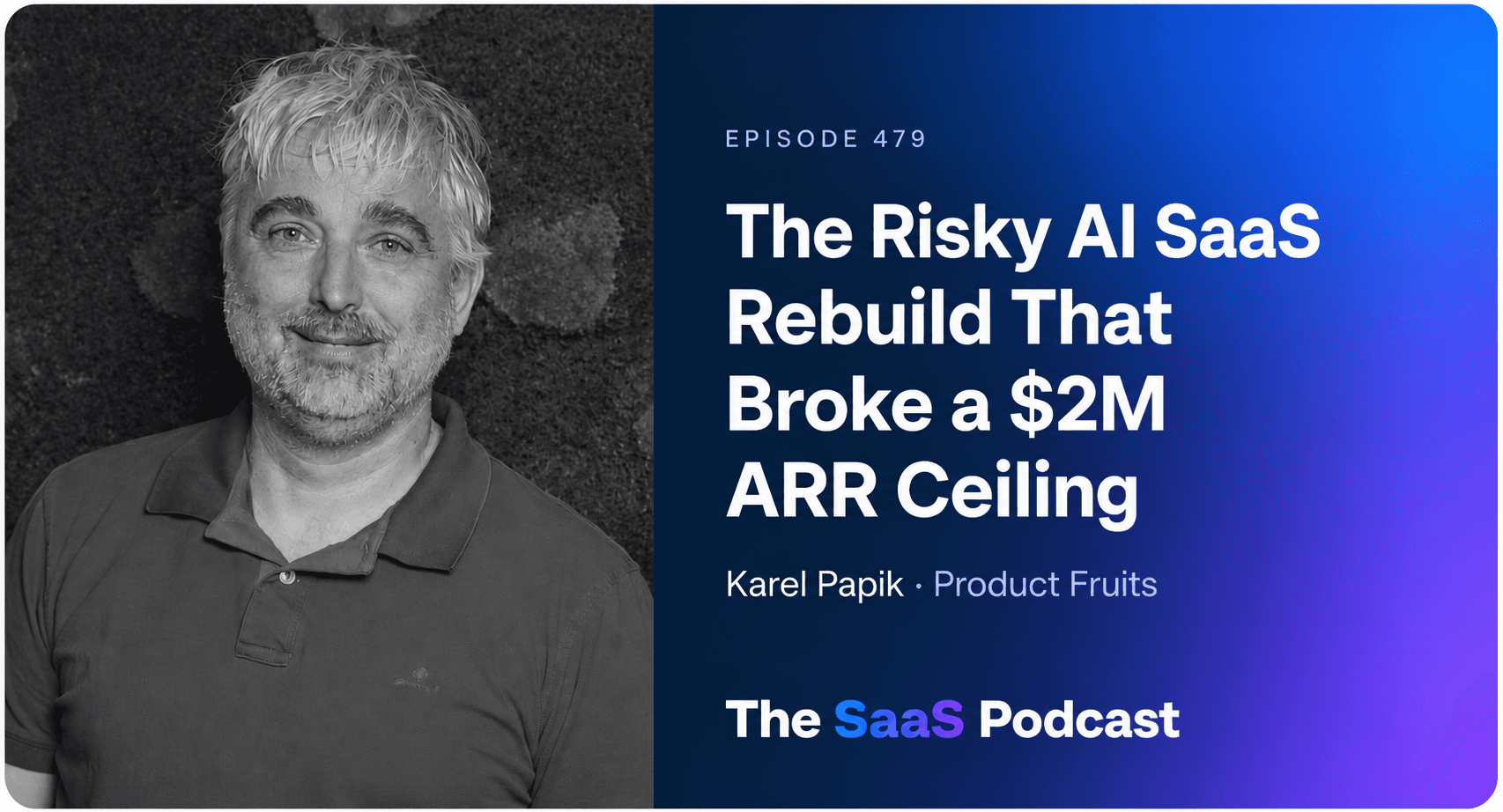
Karel Papik co-founded Product Fruits in 2020. By early 2024 they had 1,300+ paying customers, a 25-person team across Prague and Pilsen, and ARR in the lower millions. On paper, things looked great.
Then a new wave of AI-native onboarding startups showed up in his space.
Karel has this line about it. A couple of years ago they were "riding the horse." Everything felt peachy. Competitors were slow and predictable. Now he says they're riding a tiger.
So he did something most founders won't do. He paused all product work. He emailed his investors. He told them MRR was about to drop. And he rebuilt the whole platform around AI from scratch.
This is how that decision actually played out.
The Two-Week Panic
For the first few years, Product Fruits grew the boring way. Product tours. Hints. Feedback widgets. A classic digital adoption platform.
PLG and PPC carried them from zero to around $1.7M ARR. Free trial conversion sat at 24-25%. They had a lean team, a small PPC engine, and a product that kind of sold itself.
Then AI happened.
Karel is honest about what it felt like. "We were scared. Really, really scared. Like depressed and disappointed." He calls that stretch "dark, dark times." It lasted exactly two weeks.
The instinct most founders would have is to bolt some AI features onto the existing product and keep shipping. Karel and his co-founder Ladya didn't do that. Instead, they asked a different question. If we were starting today with no technical baggage, what would we actually build?
Turns out the answer was something they'd always wanted to build but couldn't. An invisible buddy sitting next to the user, helping them get through any piece of software. Not AI tacked onto onboarding. AI as the whole thing.
The Email to Investors
Then Karel wrote the email nobody wants to write.
He told his investors at Lighthouse VF, Reflex Capital, and Leverage VC that Product Fruits was stopping all work on the current platform. That they were rebuilding from scratch. That MRR was going to decline. That the existing product could probably limp along for six to nine months, maybe a year, but then they'd be dead.
Then he waited for the blowback.
Reflex Capital called him back in 20 minutes. Their message wasn't "explain yourself." It was "how much do you need? We're betting on you. We want winners. We don't want survivors."
They shipped the first AI-powered tools in July and then again in September 2024. And the strange part? MRR never actually declined. The old product kept paying the bills while the new one got built.
The Pivot
Karel's point is sharp. When your category shifts under you, incremental improvement stops working. You either rebuild or you get eaten.
Bigger players like Pendo have the opposite problem. "They're too big to change the direction of the ship. They're scared. They can be gone in two years."
And the bigger win wasn't just the new product. It was that Karel's investors got to choose to back him again instead of finding out later. Most founders hide bad news until it's too late to help. Karel did the opposite and it earned him a fresh runway.
What You Should Steal
- When a platform shift hits your space, don't ask what features to add. Ask what you'd build if you were starting fresh today.
- Tell your investors the ugly truth first. Scared founders hide bad news. Winning founders let their backers choose to bet again.
- Give yourself a two-week window to panic. Then make the call and move.
Ready to build your SaaS with founders who get it?
Join thousands of SaaS founders getting weekly insights and proven strategies from real founder conversations.
Free weekly newsletter · No spam