Build the channel before you build the code
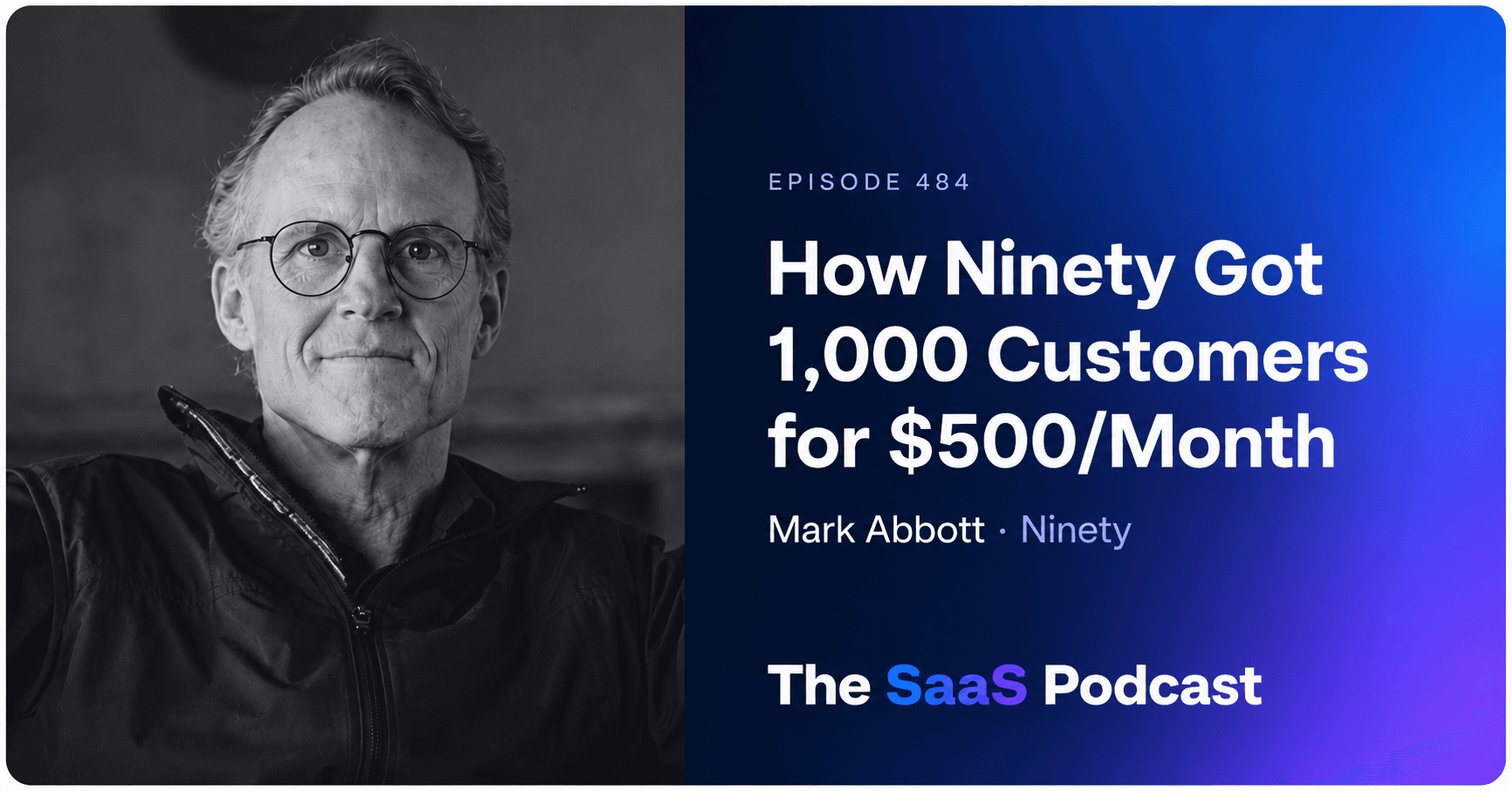
The Insight
Most founders write code first and look for customers later. Mark Abbott did the opposite. He had the idea for what became Ninety back in 2005. He did not write a line of code until 2017. In between, he spent years becoming an EOS implementer (he was number 33 or 35 in a community that now has close to 900) so that the coaches who would later sell his software actually knew him as a peer.
The principle: if your product needs a channel that does not yet trust you, go earn the trust before you build the thing. A cold launch into a community that does not know you is a marketing problem you cannot outspend.
The decision rule: if there is one obvious channel for your product, become a credible member of that channel before you ship.
How They Did It
- Identify the one channel that actually moves the product. For Mark, that was the EOS implementer community. He saw early that coaches could sell the software for him if they trusted him.
- Earn standing inside the channel, do not pitch into it. Mark joined the community as an implementer. He went to the quarterly collaboration exchanges (QCEs). He built relationships with coaches who would later become investors.
- Get the IP holder on side. Before any of the community work, Mark met the founder of EOS, Gino Wickman, and pitched him on the software directly. Gino had already tried it and said, "we tried it, it is not in our DNA."
- Start small with paid, and only after you have the channel. Once he launched, Mark spent $500 a month on Facebook ads targeting EOS-aware entrepreneurs. That, plus the coaching channel, got Ninety to roughly its first 1,000 customers.
What Trips Up Founders
- Treating the channel as a launch tactic. Founders try to court a community two weeks before they ship. The community can tell. By the time Mark started selling, he had been a member for years.
- Confusing product credibility with founder credibility. A better product does not unlock a closed community. Mark says his product was "brighter" than the incumbent, but he was let in because coaches knew him personally, not because of the UI.
- Skipping the IP conversation. Mark sat with Gino face to face in 2012 and asked permission. Most founders try to build around the IP holder and discover the restrictions only after they have customers.
When This Doesn't Work
This approach fails when the channel does not exist yet, or when speed to market is the entire moat. Mark spent four years inside the community before writing code. A competitor, Traction Tools, launched first in 2016 anyway. If a fast follower can outrun you on distribution alone, the patient channel build is the wrong move. Use it when the channel is small, defined, and trust-gated.
The Question
Before you write the next sprint of code, ask: who is the one group of people whose endorsement would unlock my first 1,000 customers? If you can name them and you are not already a known, useful member of that group, you are building in the wrong order. Go earn standing in the channel first. You will know within a few months whether the channel actually opens for you.
Ready to build your SaaS with founders who get it?
Join thousands of SaaS founders getting weekly insights and proven strategies from real founder conversations.
Free weekly newsletter · No spam