The "Best Practice" Legal Documents Your Lawyer Hands You Are Designed to Make You Easy to Take Over
What Everyone Says
When you incorporate, take investment, or prep for an IPO, the path of least resistance is to use the standard templates. Your lawyer says they are best practice. Your bankers agree. Your VCs use the same docs at every company they fund. The whole ecosystem agrees these documents are battle-tested and safe.
The implicit promise is that boring legal paperwork keeps you focused on the business. Everyone else uses these documents. You will be the exception who keeps control because you are talented and your investors believe in you.
Why That's Wrong
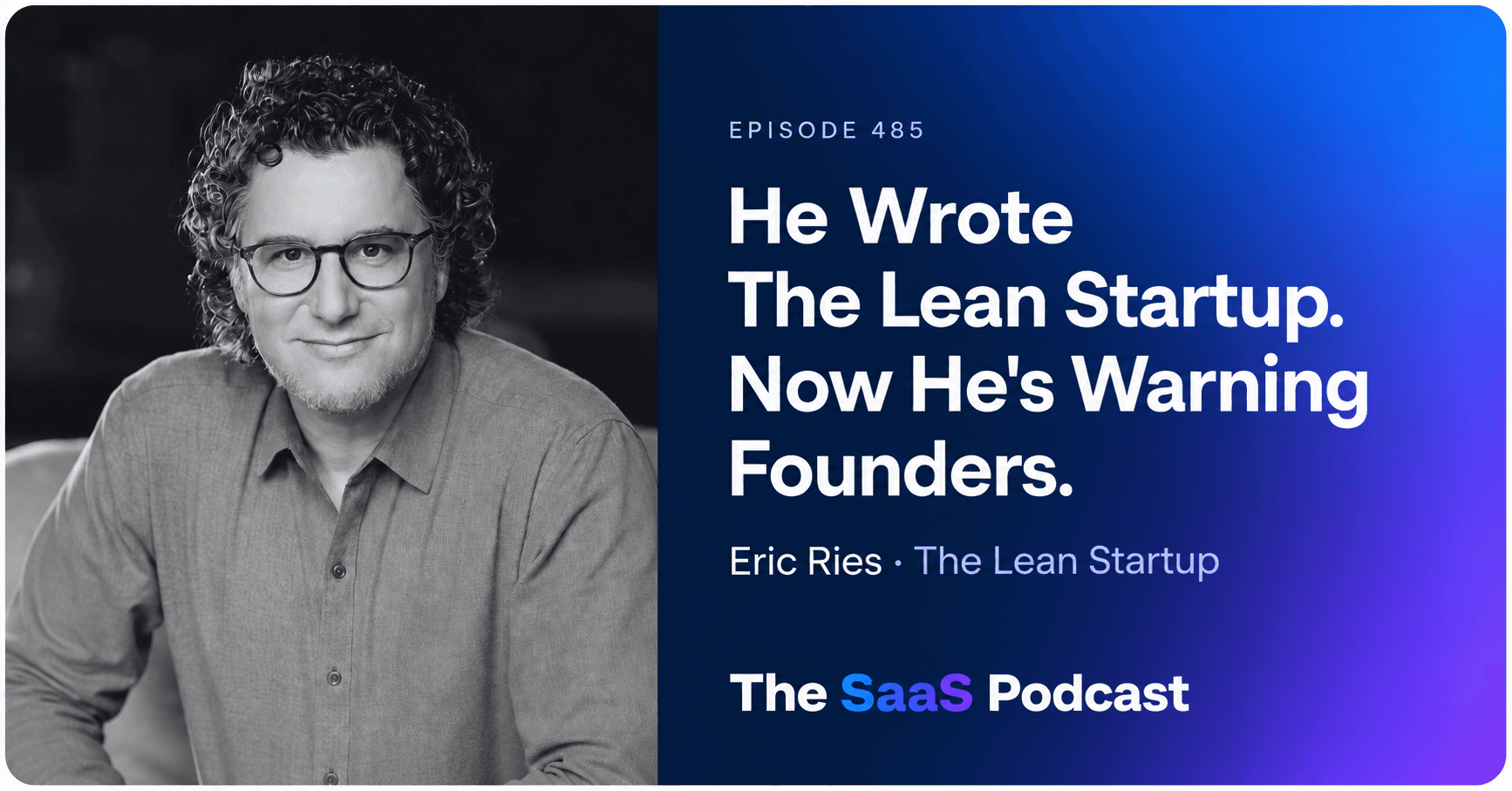
Eric Ries, author of The Lean Startup and Incorruptible, has watched the data. Best-practice governance documents are not neutral. They are designed to make organizations easy to take over, easy to redirect, easy to control.
The Harvard Law School number is the one that should haunt every founder considering venture financing: only 20% of venture-backed founder CEOs are still CEO three years after going public. Everyone Eric tells this to says the same thing. "I'm in the 20%." Most are not.
Eric: "We have the evidence now that these so-called best practices destroy value. And time to replace them with a new set of best practices that do not."
What Eric Saw Happen
Jeff Lawson built Twilio into a public company doing real work. When he listed, he agreed to a seven-year sunset on his dual-class shares. Reasonable. Conventional. Best practice. Activist investors ousted him 199 days after that sunset expired. Not one year. 199 days. They could not even wait.
Eric tells another story of a founder who came to him before an IPO. Eric warned him about exactly the governance traps in his draft documents. The founder went back to his lawyers, bankers, and CFO. They all said the same thing: Eric is a downer, you are the exception. The founder was fired within five months of going public.
Then there is the Vectura case, the one Eric uses to prove he is not exaggerating. Vectura was a spun-out asthma and COPD therapeutics company from the University of Bath, listed on the London Stock Exchange, profitable, with no need to sell. Philip Morris International, the cigarette company, made a bid. A private equity firm offered 155 pence per share. Philip Morris offered 165 pence per share, ten pence more. About 15 cents.
The British Thoracic Society begged the board not to do it. The public was furious that a tobacco company would buy a respiratory medicine company. The board voted unanimously to sell to Philip Morris, citing fiduciary duty to shareholders.
The pattern: standard charter, "any lawful purpose" language, Revlon doctrine kicks in during a change of control, board members switch from guardians to auctioneers. Eric quotes the court directly: in a sale, the board's job switches "from guardians of the company to auctioneers designed to get the best price."
The Principle Underneath
Shareholder primacy was never democratically passed. There is no statute that established it. Eric: "It's a mass delusion. A bunch of people just decided this is how it's going to be starting in the 1970s."
But board members treat it as natural law. Why? Because if they buck it and get sued, their careers are over. Career equity is more powerful than statute. This is why standard documents win by default. Not because they are correct, but because no individual board member has incentive to be the one who deviates.
The opposite move is to bake protections in before anyone has incentive to remove them. PBC conversion. Mission language in the charter. Dual-class with no sunset, or a sunset that does not expire on a date hedge funds can calendar. Nonprofit oversight where it fits.
Should You Do This?
Do this if you are mission-driven, plan to take outside money, and would consider any specific outcome (selling to the wrong acquirer, getting fired, watching your roadmap warp toward investor preferences) to be a failure even if the financial outcome is fine.
Skip this if you are running a flip-as-fast-as-possible playbook and the price at exit is the only variable that matters.
One question to decide: if your largest investor disagreed with the most important decision of the next five years, who would win? If you cannot answer with certainty, your standard documents have already decided for you.
Ready to build your SaaS with founders who get it?
Join thousands of SaaS founders getting weekly insights and proven strategies from real founder conversations.
Free weekly newsletter · No spam