SaaS Club
PodcastPlaybooksCoachingSponsorFree ToolsJoin Community
saasclub

Helping SaaS founders build and scale profitable businesses since 2014. Powered by real experience from 472+ founder conversations.

Content

  • The SaaS Podcast
  • Founder Playbooks
  • Blog
  • Newsletter
  • Free Tools

Programs

  • Plus
  • Launch
  • Mastermind
  • Accelerate

Company

  • Contact
  • Become a Sponsor
  • Suggest a Guest
  • Terms
  • Privacy

© 2026 SaaS Club. All rights reserved.

Built with ❤️ for SaaS founders

Content & Inbound Marketing

Content & Inbound Marketing for SaaS

How SaaS founders used content to drive growth. SEO, blogging, community building, and the inbound strategies that generated leads without ad spend.

Real founder strategies. Delivered weekly.

Free weekly newsletter · No spam

Paid ads get expensive fast. Content marketing takes longer to pay off, but the founders who invest in it consistently end up with a growth engine that compounds over time.

These episodes feature founders who built real businesses on the back of content. Some grew to millions in ARR with SEO as their primary channel. Others built communities that became their main source of qualified leads. A few created educational content so good that it became a moat competitors couldn't replicate.

You'll hear about the strategies that actually work for SaaS. Not generic content marketing advice, but specific approaches from founders who've done it. How they picked topics that attracted buyers, not just browsers. How they turned blog posts into demo requests. How they built email lists that converted at rates paid channels couldn't touch.

The conversations also cover the mistakes founders made along the way. Producing content nobody searched for. Building an audience on the wrong platform. Investing months in a content strategy before realizing it attracted the wrong type of customer.

There are founders here who rank for thousands of keywords and generate hundreds of inbound leads per month, all without spending on ads. Others built thriving communities that drive word-of-mouth growth. You'll also hear from founders who combined content with product-led growth to create powerful acquisition loops.

If you're looking for a scalable, sustainable way to generate demand, these episodes will show you how other SaaS founders did it.

Browse by topic:AllBootstrappingFirst CustomersProduct-Market FitEnterprise SalesProduct-Led GrowthPricing & MonetizationFounder-Led SalesPositioning & DifferentiationChurn & RetentionContent & Inbound MarketingExits & AcquisitionsFundraisingAI-Powered SaaS

Get weekly SaaS insights

Real founder strategies. Delivered to your inbox.

Free weekly newsletter · No spam

←All Episodes
How 200 Free Websites Won Spectora's First Customers - Kevin Wagstaff

Kevin Wagstaff, Spectora

How 200 Free Websites Won Spectora's First Customers

Kevin Wagstaff is the co-founder of Spectora, a modern all-in-one platform for home inspectors that he and his brother Michael bootstrapped from $0 to $10M ARR before raising any funding. In 2016, Kevin was a realtor with a knack for marketing and SEO. His brother was a self-taught developer. When a friend mentioned how outdated home inspection software was, they spotted a niche no one was serving and went all in with $5,000 and a lot of grit. Getting their first customers meant winning trust in an industry deeply skeptical of technology vendors. Many inspectors were in their 50s or 60s, hated monthly subscriptions, and distrusted anyone trying to sell them something. So Kevin took a different approach - he started a separate blog called SmartHomeInspector.com 12 months before Spectora launched, writing content on how to market your business as a home inspector. He offered free SEO audits and even built websites for early customers - over 200 of them manually - just to get them talking about the software. Five or six of the first 10 customers were agency clients who came in through website projects and then asked about the software. Kevin and his brother also spent 10-12 hours a day in home inspector Facebook groups, answering questions genuinely without pitching. It took years of showing up before the skeptics softened. One pivotal moment came when a member of an exclusive mastermind group tested Kevin by requesting a 6am Sunday demo. Kevin said yes without hesitation, blew him away, and gained 50-75 referrals from that single relationship. Within two years, Spectora hit $1M ARR. They kept building from there - conferences, SEO, and word of mouth became the three pillars driving growth. By 2024, the company had grown to $27M ARR, serving over 12,000 first customers with a 100-person team.

How Free Reddit Demos Built a 7-Figure SaaS - Joseph Lee

Joseph Lee, Supademo

How Free Reddit Demos Built a 7-Figure SaaS

Joseph Lee is the co-founder and CEO of Supademo, an AI-powered platform that helps you create interactive demos for onboarding, sales, and product education. In 2020, Joseph was running Freshline, a B2B seafood marketplace he'd grown to $3M in revenue with a 13-person team. But when the pandemic hit, the business lost 95% of its revenue almost overnight. He and his team tried several new approaches and eventually pivoted to a white-labeled platform for food distributors that helped keep the company alive. In 2023, Joseph started exploring new ideas. He kept coming back to a problem he'd struggled with for years: product videos didn't work, and most customers didn't watch them or understand their value. But when he could get someone on a live screen-sharing session and walk them through the product, they instantly got it. The problem was, he couldn't scale that. That insight sparked the idea for Supademo. But getting his first customers to pay was tough. His first target market - early-stage founders - liked the concept, but few became paying customers. Cold outreach went nowhere. Product-led growth stalled. And for a while, nothing really worked. So Joseph went back to basics. He created free demos for strangers on Reddit, replied to product update emails with personalized Supademos, and embedded interactive demos in helpful how-to content. Joseph Lee used three core strategies to land Supademo's first customers and reach $1M ARR: 1. Created free interactive demos for other founders on Reddit, generating thousands of signups without spending on ads 2. Responded to product update emails from SaaS companies with personalized Supademos of their new features 3. Built ungated free tools that drive 50%+ of traffic by letting users experience the product before signing up
TeamGantt: Bootstrapping a 7-Figure SaaS with Focus and SEO - Nathan Gilmore

Nathan Gilmore, TeamGantt

TeamGantt: Bootstrapping a 7-Figure SaaS with Focus and SEO

Nathan Gilmore is the co-founder of TeamGantt, a software platform that helps teams visualize and manage projects using Gantt charts. In 2009, while working as software developers at a commercial roofing company, Nathan and John needed a better way to share project timelines with their team. Frustrated by having to export PDFs every time they made changes, and finding no good web-based solutions, they decided to build their own solution. With full-time jobs and families to support, they could only dedicate 4 hours every Saturday morning to their side project. But they made each hour and week count. Within six months, they had built a basic version ready for testing. They created a simple landing page and used a $100 Google Ads coupon to test interest. It didn't take long for people around the world to start signing up. A year later, they launched paid plans. Their first customer was a video company in California that signed up for their $29 monthly plan. Growth was slow but steady as their SEO efforts started to kick in. A new customer every few days became one every day. When they were making almost $3K in monthly recurring revenue, the co-founders made the leap to working full-time on their business and kept grinding away. Their patience paid off. By 2012, they hit $10K in MRR and two years later reached their first million in annual recurring revenue. Today, TeamGantt serves 6,000 customers across 180 countries, including Fortune 500 companies. They've grown to 21 people and generated seven figures in ARR – all while remaining completely bootstrapped.

Jobs-to-be-Done: Customer Interviews That Drive Growth - Bob Moesta

Bob Moesta, The Re-Wired Group

Jobs-to-be-Done: Customer Interviews That Drive Growth

Bob Moesta is the founder, president, and CEO of The Re-Wired Group and co-creator of the Jobs-to-be-Done (JTBD) framework with Clayton Christensen. In his 40 years working with products, he's helped over 3,500 companies bring their ideas to market and launched eight startups himself. As a dyslexic teenager, Bob couldn't make sense of trhttps://saasclub.io/wp-content/uploads/2025/01/tools-and-materials-used-for-fashion-designing-4XD3MX3.jpgional market research reports. Despite being told to stick to manual jobs, he refused to let his dyslexia hold him back. Everything changed when Bob noticed something surprising many customers weren't just giving incomplete answers in interviews, they were actually lying to themselves about why they bought products. This led him to study intelligence interrogation techniques to uncover what really drives people to buy products. Those insights helped companies like Basecamp, Facebook Marketplace, and Casper solve their growth challenges. Today, The Re-Wired Group helps both startups and big companies build better products and bring them to market successfully.

Customer.io: 18 Months to $10K MRR, 10 Years to $70M ARR - Colin Nederkoorn

Colin Nederkoorn, Customer.io

Customer.io: 18 Months to $10K MRR, 10 Years to $70M ARR

Colin Nederkoorn is the co-founder and CEO of Customer.io, a platform that helps businesses send personalized messages to customers based on their behavior and actions. In 2012, Colin and his co-founder John, while working at a startup, decided to build their own product. Their goal was simple: get 5 customers paying $10 a month before quitting their jobs. With limited technical expertise and little knowledge of email marketing, they faced significant challenges. Their first version was basic and required manual effort to setup each customer's campaign. The early days were tough. Growth was painfully slow, and they struggled to gain traction. To make ends meet, Colin and John lived off savings and credit cards for years, constantly worrying about finances. Finding product-market fit was another major hurdle. They struggled with positioning and messaging, making it difficult to attract and retain customers. But they persevered, focusing on educating potential customers through content while continuously improving their product. A pivotal moment came during a meeting with Ramit Sethi, a personal finance expert. When Sethi asked what they were doing with their launch email list, they embarrassingly admitted they weren't doing anything. This realization hit hard. Spurred by this wake-up call, Colin immersed himself in learning conversion copywriting and began sharing valuable insights with their growing email list. By focusing on educating their audience, they built credibility in the email marketing space even before officially launching Customer.io. Despite their efforts, it took about 18 months to reach $10K in monthly recurring revenue – a significant milestone for the struggling founders. But this was just the beginning of their remarkable growth story. Today, Customer.io serves over 7,000 companies, generates $70 million in annual recurring revenue, and has a team of 250 people across 30 countries. They've raised over $30 million in funding to date.

Tilled: How Firing Customers Helped Build a 7-Figure SaaS - Caleb Avery

Caleb Avery, Tilled

Tilled: How Firing Customers Helped Build a 7-Figure SaaS

Caleb Avery is the founder and CEO of Tilled, a PayFac-as-a-Service platform that helps B2B software vendors embed and manage payment processing for their customers. In 2019, after years of angel investing and consulting for vertical software platforms, Caleb spotted an opportunity to help them generate more revenue from payments. He started Tilled as a solo founder, spending 10 months exploring the viability of the business idea before bringing on a team. The initial product launch was far from perfect. It took 18 months and a complete rebuild to create a truly sellable solution that could even attempt to compete with established players like Stripe. When the pandemic hit, their outbound sales and trade show strategy was thrown into disarray. Caleb and his team were forced to pivot to content marketing. Caleb also invested in building his personal brand on LinkedIn, starting with less than 500 followers in 2020. He now has over 17,000 followers. But what's more interesting is that his personal brand on LinkedIn helped drive 95% of their lead flow in that first year and got them close to their first $1 million in ARR. But as the team started to gain traction, they faced new challenges. They struggled with product-market fit and onboarding customers that weren't ideal for their platform which created numerous headaches for the team. Eventually, they had to make the tough decision to fire some customers and refocus on their ideal customer profile, which led to a period of uncertainty. But after a few months, their bet paid off, and they started seeing significant growth. Today, Tilled generates multiple 7-figures in ARR and is approaching eight figures. The company serves around 100 customers and has raised $40 million in capital.

Prismatic: Unlocking PMF with  a Clear Value Proposition - Michael Zuercher

Michael Zuercher, Primastic

Prismatic: Unlocking PMF with a Clear Value Proposition

Michael Zuercher is the co-founder and CEO of Prismatic, an embedded integration platform that helps SaaS companies build faster integrations for their customers. In 2003, Michael founded his first software company, which he ran for 15 years. During that time, he faced significant challenges integrating with other software products. Over the years, his team built over 600 different integrations. In 2019, after selling his first company, Michael co-founded Prismatic with two former colleagues. Their goal was to create an embedded integration platform to help SaaS companies easily connect their products to other software their customers use. The team spent the first 8-9 months validating the idea and building a prototype. One of their biggest challenges in the early days was articulating how their product differed from existing integration platforms. It took the founders about a year to figure out their messaging and how to clearly communicate their unique value proposition to prospective customers. Building a production-ready version of their product also took over a year. During this time, they had to use an early prototype to sell their idea to prospects. Creating a new product category also proved to be a significant challenge. With no established market to tap into, they had to get creative with their growth strategies. Eventually, SEO and paid ads became their go-to growth channels, but getting traction was hard when prospects weren't even aware a solution like theirs existed. The team continually refined its product, messaging, and go-to-market strategies. Their persistence eventually paid off as they gained traction and found a product-market fit. Today, Prismatic is a SaaS business generating multiple seven-figure ARR, serving over 200 customers with a team of 60 people.

Thinkific: From $29 Online Course to $60M ARR SaaS Company - Greg Smith

Greg Smith, Thinkific

Thinkific: From $29 Online Course to $60M ARR SaaS Company

Greg Smith is the co-founder and CEO of Thinkific, a platform for entrepreneurs and businesses to create, market, and sell online courses and other digital products. In 2005, Greg, a law student, began teaching LSAT prep courses in-person, later converting it into a $29 online course that eventually earned him $10k per month. Seeing growing demand for online courses, Greg and his brother Matt launched a basic product in 2012 to simplify creating and selling digital courses. In the first 3 years, they experienced numerous pivots and setbacks, struggling to validate their product and business model and acquire customers. After failing to validate their early product concepts, the brothers shifted their strategy. They started manually building online courses for each new customer. This hands-on, time-intensive approach generated early revenue and gave the founders vital customer insights they needed to develop their software platform. In 2015, after launching their new software, they had a breakthrough moment when a webinar resulted in 20 customers immediately paying $1,000 each. After 5 years of persistence and hard work, the founders hit $10 million ARR, fueled by customer referrals, content marketing, and strategic partnerships. Today, Thinkific, with a 280-person team, generates about $60 million in ARR and has raised over $200 million primarily through its IPO in 2021.

Wireframing 101 for SaaS Startups - Leon Barnard

Leon Barnard, Balsamiq

Wireframing 101 for SaaS Startups

Leon Barnard is the Education Team Lead at Balsamiq and co-author of the book' Wireframing for Everyone' alongside Michael Angeles and Billy Carlson. Wireframes are fast and easy to make, can be created and understood by anyone, and can be used for both creative ideation and practical UX design. But many teams still struggle to work effectively with wireframes. Others assume that wireframes are something that only product designers should create. Today, we're going to give you a 'Wireframing 101 for SaaS Startups' masterclass. Our goal is to give you the knowledge and tools needed to craft effective wireframes, dodge common pitfalls, and navigate the wireframing process successfully so that you can design great SaaS products.

Wingman: From CRM  Frustrations to 7-Figure SaaS - Shruti Kapoor

Shruti Kapoor, Wingman

Wingman: From CRM Frustrations to 7-Figure SaaS

In this episode, I talked to Shruti Kapoor, the co-founder and CEO of Wingman, a SaaS product that helped sales teams get better results by providing them with real-time insights from every sales interaction. In 2017, Sruthi was working for a FinTech company in India and ended up running a sales team, but she constantly struggled to get the CRM to work the way their team needed. And she couldn't find a good alternative solution, so she and two friends got talking and decided to start their own startup. The following year they launched the first version of their product, but getting customers was a struggle when they started out. Their first 40 meetings with prospective customers resulted in zero sales. Despite the rocky start, they've grown their SaaS company to multiple seven figures in ARR and in 2022, sold the business. In this episode, we talk about the struggles and challenges the co-founders faced while starting and building their SaaS business. What they did after failing to close even a single sale after 40 meetings with prospective customers, how they've used online groups and communities to find customers by getting their existing customers to post and talk. And we talk about how they've used SEO, content marketing and social media to create an inbound marketing engine that drives over 90% of their revenue today. I hope you enjoy it. All right, Shruti, welcome to the show. And I think that's an important lesson in life overall you know, not just for founders. One, get sales folks better coaching feedback to enable them in real time. So as they're going through a call, if you could get the feedback versus, you know, waiting for the manager to review the call a week later and then, you know, maybe have a coaching session two weeks and three, it enables people to get a full picture of what their pipeline looks like, where their deals are so that they can go and, you know, make sure that they're doing everything that they need to win. Decided I wanted to get my hands dirty with startup. Joined a FinTech company called Payoneer and, you know, figured that I would be best suited to figure out their go-to-market strategy right knowing absolutely nothing about go-to-market strategies. And at that point, you know, what that meant was working with the product and the marketing teams and of course creating the sales team, going out and selling myself and trying to get those early customers for Payoneer in India. And through that process I kind of realized some of the challenges you know that I'm trying to solve with Wingman. One of them was definitely not knowing why certain sales reps in my team were doing so well, and some reps who were putting in a lot of effort but still not getting the numbers. So, I think that's kind of where I got curious and said, listen, I want to join your calls, but then it becomes too onerous. You know, one out of every two or three calls will get canceled. You waste so much time. And so, I was like, you know what? If they could just record their calls and then I could go back and review it. But the other challenge was that because we were a distributed team, we have product and marketing sitting in Israel and then, you know, sales sitting in every country that they were selling to. And so, the other challenge that I was frustrated by is getting the voice of customer over to product. So, I think both of those as I thought more and more about it, I was like, you know, if we could only have these calls recorded, archived, searchable that would be a gold mine. And that's where the journey started. Like, how do I get value out of this data? Because we understood that this was valuable data, but you know, this is such a large volume of data. The last thing we wanted was that you have all of these call recordings and then you know, nobody is listening to it. So, I think we spent some time in just understanding what the real challenges were, validating that it wasn't just a problem for me. And then, you know, trying to kind build our own MVP. What would an MVP look like? And so that's the context with which we got together. And you're right, it, it took some time for things to come together. So, you know, we met almost a year and a half before we started up. And so, through that period, you know, we were just hanging out, getting to know each other. Brainstorming on a bunch of ideas, trying to validate, invalidated a bunch of ideas. And Muralid and Srikar have known each other since their first jobs out of college, and they were also at Google together. And so, Muralid was very clear that he would want Srikar to also be part of the team when we started off. And he managed to convince Srikar to also quit his job and moved from the Bay Area to India to start this up, Right? So, what we felt was, one, nobody had a clear thesis or understanding of how to use this data. And we felt that, you know, the winner wasn't just because somebody decides to record calls and transcribe them because, you know, recording of calls has existed for at least, you know, a few decades. Right? We felt that the real innovation or you know, where the business needed to be built was. Identifying the right use case for the data and being able to make sure that you're able to deliver that value quickly. And we felt that was not answered when we started building this out, and you know, when we were trying to validate whether or not that was answered, we went and also spoke to some of the customers who were using the computer competitor's products because we wanted to understand like, Hey, if you're using this today, does it solve everything for you or are there still gaps? Through that process, we identified that there were definitely things people were struggling with. And I think that was also an important learning in just knowing that, you know, what people say they will do in an ideal world versus what people do is dramatically different, right? Like I, I know we are all familiar with New Year resolutions and how they land up. And that was exactly the case with sales coaching where, you know, I think the products were built on a promise of saying that, hey, Sales managers are motivated to do sales coaching, and I will build a tool to help them do sales coaching better. But the fundamental problem was that sales coaching doesn't happen as often as people would like. How long did it take to build that 1.0 version of, or the mvp, I guess, of Wingman? Five months. Yeah, I mean, that sounds great. You know, you ship the product, you already got one customer and you get excited and you're like, wow, we're gonna be closing more and more of these deals. But from what I said, it wasn't that straightforward. When you talk to a lot of potential customers and you didn't close any sales. So, so tell us about that . You know, from our network, right? So, these were not customers who we did not know, and therefore you know, these were really useful customers for, you know, as co building partners and, you know, for giving us early product feedback, et cetera. But what we wanted to do was to, of course, and you know, you need to do that. Is make sure that you actually also reach out to customers who are buying the product for the sake of the product and don't necessarily know you. I think the first challenge that we hit was even with these friendly customers that we had early on, they were not using the product the way we would expect them to. Right. So, we were hitting the same roadblocks in terms of product usage. And you know, that was baffling, but I think that was also our own lesson in understanding that, you know what people say they would do, and what they actually do is different. And so we had to kind of go and really sit down, understand what their workflows look like, tweak you know, the product, understand what is the first, you know, wow moment we could deliver them and you know, how do you make that repeatable, et cetera. So there was some work required there. The second thing we did was, like I said we kind of went and spoke to people who were using the competitor's products and understood, you know, what were the challenges they were facing? Was it a product issue or was it just setting the right expectations? And then what we did was once we felt we were ready to kind of scale up, we you know, at that point we launched. Dramatically new feature for the product, which was this whole idea of being able to give real time feedback to salespeople while they were on sales calls. And we felt that was, you know, going to hit the nail on the head. That was allow going to allow people to actually coach without being there. And we were you know, ready to kind of take it to the market. So we got a sales consultant to help us you know, accelerate that process of reaching out to new customers. And that person set up you know, great meetings for us. He set up 40 meetings with our ICP companies and, you know, we, we sold exactly zero to those 40 customers and we were like, you know, something's not right. And that was really tough because we felt at that point, you know, we had a good product, we had a real differentiation and we were talking to the people that we wanted to be selling to. And so that was the point where we were like, you know, there's something that we need to go back and think about. And I think what we realized at that point is you know what the product does right and what the promise is. Sometimes as founders, we tend to oversell the promise as well. But what we don't account for is, you know, how the customer is thinking about it in terms of. Their implementation costs or effort required to get value out of it. So that was the challenge that we were facing in getting people to, you know, adopt this new real-time feedback mechanism. And so, you know, once that became clear to us we were able to kind of go and make changes to say, how do we make this easier and quicker to get value out of? Give me one example of that. Like what was it that was, that you realized they were seeing as difficult to implement and get started with? Like, what did they have to do that they didn't want to do? Right. So if somebody says you know, talks about discount, then we want like, these three talking points to show up for the salesperson. And that was what we needed sales enablement to do but this wasn't something that they were used to doing because they're used to, you know, creating content either for trainings which is typically long form or, you know, self-service content, which is, you know, these detailed documents. They're not used to writing like three bullet point pieces of content. But the other struggle that they had was they did not, they were also not kind of sure whether they knew what content they. All right. So, so to them it seemed like they needed to invest in something without fully understanding, like, you know, how that would work or how that would get them results. And I think it was also a case of, you know, the stakeholder who was going to be the decision maker versus the person who needed to actually implement the product and get value were different people and, you know, we didn't kind of know how to navigate that well. And I think that was, a reflection of you know, us as founders because none of us had actually worked in SaaS. Right? None of us had actually also worked in a situation of understanding how a multi-stakeholder, you know, product adoption cycle looks like. And you know, how do you kind of navigate that from a sales and post sales point of view. So that's kind of a difficult leap to make. So, so how did you solve that? I mean, that's, I think this is something that a lot of SaaS founders go through that the perceived work, even though the customers might not say it, and it sounds like the 40, or at least the 39 people you spoke to, weren't that explicit about it. But it's, I think it's a common problem. So how did you go about solving it? So in our case, like with the real time feedback and you know, just having a real time note taker there we identified that, you know, giving feedback on behavior did not require any setup. So I could have something that tells them that, Hey, you've been on a long monologue and we didn't need the manager or anybody else to do anymore. Similarly we could, you know, use, get them to bookmark parts of the call in real time without, you know, managers or setup needing to do work. So one was identifying pockets that required minimal setup, and using those as the hero examples in those sales conversations versus, you know, using all these complex things that required a ton of setup as the hero example. So it was easy for somebody to say, oh, I can instantly get value. Without putting in a lot of effort. And then if I wanted to put in effort, you know, this is what I could do. Right? So essentially constantly being very diligent about saying, how do I create a wow moment with minimal effort so that then the person, once they see the value, then they will put in the effort. I think the second thing we did was you know just taking away a blank canvas approach and saying, we will give you enough in the canvas so that you only need to fill in the blanks. So, you know, basically creating all sorts of templates that made it much easier for people to say, oh, okay, I only need to write these three bullet points. I know what the use case is. And in some cases we would even use you know, like different methodologies, different sales information that existed to create you know, that set of templates and initial things for them. So again, trying to get, give them value before we ask them to invest effort. So we are still trying to figure, trying to figure out the positioning value, et cetera. And so at that point we did like a bunch of more you know, larger scale launches. And through that feedback cycle we realized that there were some people who were buying the product and not using it for this specific use case. So we were like, you know, the first thing we did was. Became open to saying that we could have different packages of the product for people who might have different levels of tech readiness. So that allowed us to at least start getting some customers who did not necessarily want this complicated feature and who did not care that there was, you know, maybe not a big differentiation story, et cetera. Right? And in the meantime , thankfully the changes that I talked about weren't so much product changes. They were more positioning and conflict changes that, you know, we didn't need longer cycles for. So we were able to quickly iterate on that and like we spent you know, the next four, five months just saying that, we'll just, you know, customers who are interested in buying, we'll just try to listen to them, understand what they're buying for, what they're using the product for, versus trying to get people to adopt everything that we are trying to build on day one. And I think that really helped in you know, getting to the juicier parts of the product. I think the second point was that we were very clear about what our differentiation was. Yeah. Right? And that was around saying, can we actually help people scale coaching? The third thing was that I think we had also spent time and energy in understanding how we might be able to use our geographic advantage and distribution. To actually deliver better value for the customer. So in our case so, so there were basically things around saying how do we make sure that we are going to continue to be competitive? And it's not just about, you know, one feature versus another. And I think those were things that YC really cares about. Like what is your long-term you know, chances of success and why? All right, so we kind of went from, I said, you know, close to zero to six digits in revenue very quickly at that point. And that was, you know, within the matter of those three months or so. From there on you know, we kind of felt that what was working for us was having you know, some sort of inbound funnel or customers because what had worked in getting some of these was you know, we did like a product hunt launch and some you know, some early P R that happened around Visim. And so, what we realized was that we then wanted to start building on that inbound engine. Because, you know, maybe we were not ready for some larger customers. We needed to still build more trust in the market, but we could still be selling to you know, the smaller end of the customers to start with and then you know, work our way up. Which we then very often you know, even for our inbound funnel and marketing overall. We did also get some customers through the outbound engine early on. But what we realized was that inbound seemed like, what could be much more scalable. Of course, early on it was, you know, me as the only person doing sales and marketing and SDR and, you know, all of those fancy things that we have teams for today. And I think, therefore, my approach was to say how do I spread the message across based on what I understand about the sales leader’s buying behavior. And I think that's something that people miss on sometimes, you know, you kind of reach out to multiple people for advice on, hey, how did you get your first 10 customers or your first 20 customers? And people forget that, you know, if you're selling to a salesperson versus to a developer you know, the way they buy a product, the way they evaluate a product, the way they think about the product is very different. And so what we realized was that salespeople one, are very social right? And they like to talk to each other, and they like to get you know, inputs from each other. And a lot of what happens in sales is through word of mouth. And so we kind of just doubled down on that and we said, Where are people giving each other advice and sharing this, right? And so, this was already you know, by now we are already in the times of the pandemic, and we are beginning to see that, you know, there are all these online communities that are popping up. And I think that landed up being very fictitious for us because we were then able to get you know, spread that word of mouth using those communities, those online selected platforms versus just trying to do Google ads or, you know, G2 ads, et cetera. Yeah, so this was, you know, like lots of revenue leaders, slack communities that existed. You know, there are lots of forums were revenue leaders exchange advice. You know, there were Reddit threads that our customers saw where, you know, people are asking questions around, say, price of a competitor, and they were like, hey, you know, we use this tool and this is why. And so, you know, it was very niche targeted communities through which we then built the word of mouth. One thing that a lot of people do, which isn't particularly well taken, is going into a new community that you just joined and just start pitching your product. So, what was the approach that you took if you were telling people about Wingman, how did you get to that point where you were doing it in a way that you know, people were more receptive to it. And I think when you and I were talking, you were saying that you were also getting customers as well to help with, you know, amplifying this word of mouth. So just tell me a little bit about that because there's a right way and a wrong way to do this, and I want to kind of figure out what you did. Like, they don't even have to say anything else. Even if they say, you know, if there's a thread around, hey, what do you use for doing this task? And somebody says, oh, I'm using this, you're much more likely to go check it out versus saying, hey, I'm the founder of and you know, we also do this. So, I think through that right, what we were really looking to do was just amplify the word of mouth from the customers, right? Like, you know, in the real-life situation, we would've expected this to happen through events and through casual networking, you know, social settings. And you know, what we were thinking of was just, you know, today, nobody can step out because of the pandemic. How do we leverage what exists in terms of still spreading the word of mouth? And so, it literally started out that way. Some of our customers initially found like some threats saying, hey, you know, I saw this discussion you know, would you want me to say something on this? And we were like, oh, that's fantastic. And so, it was not us posting about ourselves, I think, which definitely helps. And I think our role in that was really. Identifying where those discussions were happening at some point, and then nudging our customers if needed to say, hey, you know, do you mind just, you know, sharing what your experience has been? Yeah, and I think that worked. One of the lessons that we, that I overall learned in that journey of getting, you know, the first five customers to try to scale that up through inbound was what you really need throughout that journey. One thing that is common, how do you build trust and as you try to scale, how do you amplify that trust through various ways? And I think that was a big learning also from saying that, hey, we hired the sales consultant early on. You know that person was able to set up meetings for us, but we are not able to close. Partially also because that trust doesn't translate. And especially if you're hiring somebody part-time. I think that was that was a big lesson and therefore as we went through this journey, we were always very conscious about, hey, how do we build trust? And how do we continue to scale the ways for building trust? So, so people listening to this can understand like how much volume and sales you're actually driving through your inbound engine now? You know, today of course, we do invest a ton in content. , our approach to content has been can we do something that people actually laugh at or relate to, versus, you know, some more corporate jargon. And I think that has landed well. So, you know, we do partnerships on Instagram around, you know, fun memes on sales, things like that. Just a bunch of educational and thought-provoking posts on social media. So, I think social media is one channel that helps us build brand and be present in conversations. And I think the other piece has definite, so, you know, the other piece has definitely been SEO as well. As you know, things have scaled up and I think today we have a pretty strong game there. And I think the third piece has definitely been you know, continuing to focus on personal brand you know, for the leaders and for other folks in the marketing team because I think that's super important. And so, we make sure that you know, folks are visible and yeah, I think personally I've probably you know, interacted with a lot more people being on several social campaigns, podcasts, et cetera. And that I think again, helps you know, create that recall and brand. It seemed like sales tech was on a consolidation spree. We were definitely getting that feedback from the investors we were talking to as well. And, you know, within a matter of couple of weeks, we happen to get inbound interest from three different buyers. And you know, we haven't started thinking about it, but you know, I was like, hey, maybe there is something here. Let me just go and dig a little bit deeper. And so that's kind of how that conversation started. And I think you know, as a founder, that was something that I was open to at that point just in terms of you know, the fundraise cycles you know, it always makes sense to consider an acquisition. You know, before you do a fundraise work, you know, you can't really get acquired immediately after a fundraise because your investors won't be very happy about that. So, I think in that sense, the timing was good. And so I decided to take a pause and just, explore that a bit. Fundraising can be pretty distracting. We did you know, try to fundraise. , you know, in 2020 mid of 2020 or so. And then I think what we realized was with the pandemic and, you know, sales teams getting laid off we were seeing like, you know, ups and downs in our own business and in the revenue numbers. And what that eventually meant was it wasn't the greatest time to try and fundraise. And then I think, you know, later a lot of times investor sentiment impacts these things. Right. And then as it happened, and the second time that we tried to fundraise was in the middle of the and you know, when we started things were stable, but then suddenly, you know, the whole Delta variant came about. And like, especially in India, it was pretty bad. And investors were just focused on like, you know, helping people actually survive, and it wasn't, again, the greatest time to fundraise. So what you realize is that, you know, sometimes you can't really control the timing on these things, you know. In hindsight, if it works out, then it's great. Right. Like if you're able to fundraise at the top of a you know, valuation cycle but very often you know, as many things in business, it lands up being a little bit of luck.
How to Build a Better SaaS Product (and Business) with User Stories - Matt Genovese

Matt Genovese, Planorama Design

How to Build a Better SaaS Product (and Business) with User Stories

Matt Genovese is the founder and president of Planorama Design, a UX and UI design firm that helps to get complex software projects to market faster.

Content Marketing for SaaS: How to Scale Your Content Promotion - Farzad Rashidi

Farzad Rashidi, Respona

Content Marketing for SaaS: How to Scale Your Content Promotion

Farzad Rashidi is the co-founder of Respona, an all-in-one link-building outreach software that helps businesses increase their organic traffic from Google. In 2018, Farzad was leading the marketing team at Visme and trying to figure out how to grow their organic search traffic. The team spent a ton of time and effort creating content but after many months they had hardly moved the needle on their SEO and organic search traffic. Eventually, they realized that they were spending nearly all their time creating content and almost zero time promoting that content. So that's when they made a major shift. They allocated just 20% of their marketing resources to content creation and 80% of their effort went into content promotion. They also knew that getting links from authoritative websites was key to building organic traffic, but it was a slow and tedious process. So they built an internal tool to make their lives easier. That SEO and content strategy has paid off for Visme, which currently gets almost 3 million monthly organic website visitors, and the product has around 14 million active users. But despite the success they had with their internal tool in helping with link-building outreach, they struggled to get traction when they tried to sell it as a standalone SaaS product. It turns out a big part of the struggle was down to how they had positioned the SaaS product. When they figured that out and simplified their positioning, things finally started to click. It's a great interview with tons of actionable insights. So I hope you enjoy it.
A Practical Guide to Interviewing SaaS Customers - Michele Hansen

Michele Hansen, Geocodio

A Practical Guide to Interviewing SaaS Customers

Michele Hansen is the co-founder of Geocodio, a SaaS product that provides straightforward and easy-to-use geocoding and data matching for addresses. She's also the author of "Deploy Empathy: A Practical Guide to Interviewing Customers". Whether you're trying to find product/market fit or are figuring out how to scale your SaaS product, you know that doing customer interviews is super-important and can provide tons of valuable insights. But there's a big difference between knowing you should do customer interviews and knowing how to do customer interviews well. "Deploy Empathy" is a book that helps you learn the skills of talking to your customers and learning to truly listen to them so you can pull out their hidden needs, desires, and processes. In this interview, Michele and I have a great conversation and share tons of practical advice and tips that can help you to interview customers and potential customers with more confidence. I hope you enjoy it.

How Raj Sheth Went from Growing to Buying SaaS Companies - Raj Sheth

Raj Sheth, Decalab:

How Raj Sheth Went from Growing to Buying SaaS Companies

Raj Sheth is the founder and CEO of Decalab, a SaaS factory' that buys SaaS businesses that are doing between $1M and $3M ARR and helps them to grow faster and more efficiently. In 2020, Raj acquired a SaaS data migration company called FlyData. He turned that business around and sold it just over a year later for a 3X return on his investment. But it took a long time for Raj to have that kind of success. In 2006 he launched his first B2C software company which failed. A couple of years later he launched another B2C software company which also failed. In 2011, Raj co-founded RecruiterBox, a recruiting SaaS product which he and his co-founders grew to over $4M ARR with around 3,000 customers. They went on to sell that business to a private equity firm, but it took them 7 years to get there. So it was by no means an overnight success story. In this interview, we deep-dive into how the co-founders built RecruiterBox. We talk about how they used SEO, paid media, directory listings, and all kinds of other things to grow the business and the lessons they learned along the way. I hope you enjoy it.

A Guide to Content Promotion for B2B SaaS Companies - Alan Silvestri

Alan Silvestri, Growth Gorilla:

A Guide to Content Promotion for B2B SaaS Companies

Alan Silvestri is the founder of Growth Gorilla, an agency that provides in their words no BS content promotion for B2B SaaS companies. If your content promotion ends right after you click publish and share the content on your social media profiles, then you're not making the most of the content that you worked so hard to create. The truth is that content creation is just half the job. To be truly effective with your content marketing, you need to invest just as much time in promoting the content. Content promotion doesn't just help you reach new audiences, it also helps you to improve your SEO when you can get other sites to link to your content. But doing a content promotion right is hard. Even many SaaS companies that are investing time in content promotion, get it wrong. Their outreach and promotion are ignored and they end up wasting a lot of time and effort, without much to show for it.

How to Create SaaS Buyer Personas and Produce Better Content - Adrienne Barnes

Adrienne Barnes

How to Create SaaS Buyer Personas and Produce Better Content

Adrienne Barnes is a B2B SaaS Content Marketer and the founder of Best Buyer Persona. She helps SaaS and tech companies learn more about who their audience is and then turn those insights into useful buyer personas that help create better and more effective content. Buyer personas are a great way to understand your customers and use those insights to improve every aspect of the customer experience from marketing, sales, product, and more. Unfortunately, most companies do a terrible job creating buyer personas, or worse, don't have any. Those companies create buyer personas based on loose assumptions and anecdotal information. While these personas look nice, they often don't serve any useful purpose and are quickly forgotten about. If you create buyer personas this way, there's a huge risk that you're going to make the wrong investments in your product, marketing, and sales, and waste a lot of time and money doing the wrong things. The key reason companies lack or have useless personas is that they don't talk to their customers.

How to Build a SaaS Brand  Without Doing ‘Branding’ - Paul Campillo

Paul Campillo

How to Build a SaaS Brand Without Doing ‘Branding’

Paul Campillo is the director of brand and communications at Typeform, a SaaS platform that lets you create interactive forms, surveys, quizzes, and more. Paul was a social worker helping youth involved in the juvenile justice system and he was helping adults coming out of prison to find jobs. One day, the CEO of the non-profit where Paul worked told him that she'd heard about some software called Typeform which might be useful for them and asked if he could look into it. Paul went to the Typeform website and thought the product looked pretty cool. He came across a job application form that was created in Typeform. Filling out the form seemed like a good way to play around with the product so he answered the questions and submitted the form. About a week later, he got an email from the head of HR at Typeform asking him if we could chat with their CEO about his job application. And eventually, he became Typeform's first marketing hire. In this interview, we talk about his journey from joining a startup in its early stages and seeing it grow into an 8-figure SaaS company with over 300 employees and $52M in funding. Paul explains that whether you realize it or not, your startup is building a brand. And we dig into what exactly that means beyond how many people think of branding. We explore the importance of building a product people love, how to build deeper connections with customers and Paul shares a painful example of what happened at Typeform when they didn't pay enough attention to customers. We cover the fundamentals of storytelling, why it's so powerful, and how you can start using it to communicate with your customers in a more engaging way. And Paul shares a simple but powerful 5-part copywriting framework that you can use to market and sell your product. I really enjoyed doing this interview. Paul is a real down to earth, no BS kind of guy. He shares some great ideas and insights in this interview and I'm sure you'll get a ton of value from listening to Paul. So I hope you enjoy it.

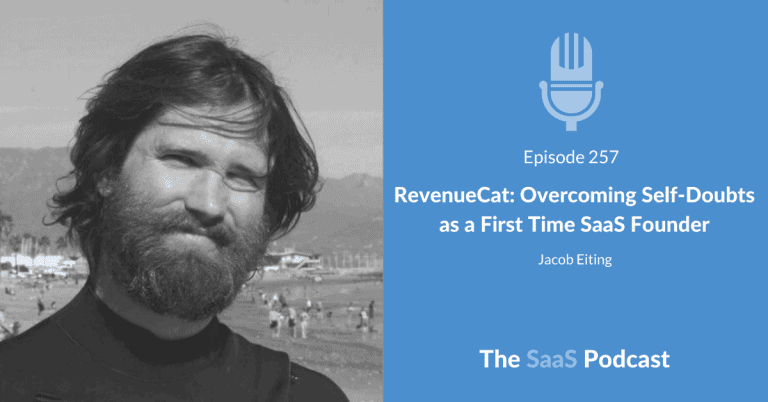
RevenueCat: Overcoming Self-Doubts as a First Time SaaS Founder - Jacob Eiting

Jacob Eiting

RevenueCat: Overcoming Self-Doubts as a First Time SaaS Founder

Jacob Eiting is the founder and CEO of RevenueCat, a SaaS platform that helps mobile apps to power in-app subscriptions. Jacob was working as a CTO for a mobile app company… It was a real pain for him and his team to enable in-app purchases and subscriptions. He thought it would be a great idea if someone could make it easier. But he did nothing with the idea for 2 years. Eventually, he left his job to build a solution himself. He started with a simple SDK and posted about it on Reddit. And he was torn apart by people who thought that he was trying to become an unnecessary middleman. But there were a few people who understood the pains and were interested in his solution. He focused on them. He improved his product and did a beta launch. He only had 5 people signup and created an account. It seemed like his idea was going nowhere. He wasn't generating any revenue and relying on his wife's job. He had a few months of runway left. But he didn't want to spend a lot of time improving the product if he didn't have customers guiding him. So he started writing content. He spent 6-12 hours a week writing and publishing a blog post. And he did this for a couple of months. He kept doubting himself. He didn't think he had what it took to turn this idea into a real business. Slowly, he started to see some SEO traffic trickle in. He finally got customers and was making $400 MRR. That gave me the encouragement to get more serious. By the end of that year, he'd grown his business to $7K MRR. He started thinking that maybe we could grow it to a 6-figure a year business. But the last couple of years have been huge. Jacob has grown his business to over $160K MRR ($2M ARR). In this interview, you'll learn how he's gone from struggling to find customers to building a multi-million dollar SaaS that's still growing fast every month. I hope you enjoy the interview.

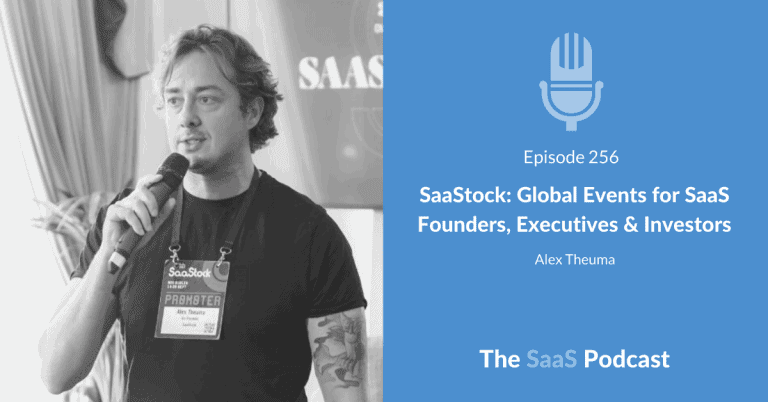
SaaStock: Global Events for SaaS Founders, Executives & Investors - Alex Theuma

Alex Theuma

SaaStock: Global Events for SaaS Founders, Executives & Investors

Alex Theuma is the founder of SaaStock, global conferences that bring together SaaS founders, executives, and investors. Alex had been working in sales for many years, but he longed to start his own business and work for himself. But he didn't have any 'great' business ideas. He was interested in what was happening in the SaaS space. So he started writing a blog about what he was learning. And he also launched a podcast. As he started to build a following, he realized that there was an opportunity to connect people. So he organized meetups in London for people interested in SaaS. He really enjoyed bringing people together, but he wasn't making any money. Several people told Alex that he should do a SaaS conference in Europe to bring together more people. But he'd heard many horror stories about people who had done conferences and large events. So initially he was reluctant but then decided to jump in and do what people were asking for. In 2016, his first event in Dublin attracted 700 attendees and launched his business. He had finally found a great idea for his own business. In the next 4 years, he ran SaaStock events around the world every year. And now thousands were attending. But then the global pandemic hit and the event business he'd worked so hard to build came to a standstill. He had a simple choice – go out of business or find a way to pivot. He had to do some hard thinking and make tough decisions. In this interview, you'll learn how Alex has re-invented his business, what he's doing to rebuild, and why he's optimistic about future in-person events. Now I've tried to make this podcast a virus-free place. There are plenty of other places you hear about all that stuff. But it's hard to tell this story without talking about the pandemic. So I hope you'll forgive me. Enjoy the show!

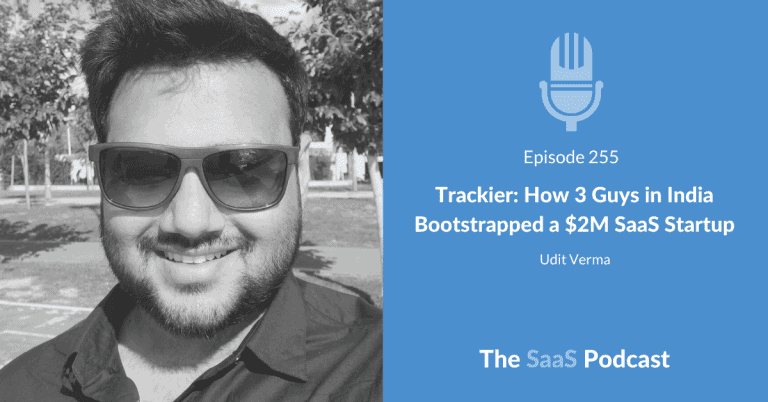
Trackier: How 3 Guys in India Bootstrapped a $2M SaaS Startup - Udit Verma

Udit Verma

Trackier: How 3 Guys in India Bootstrapped a $2M SaaS Startup

Udit Verma is the co-founder, and CMO of Trackier, a SaaS performance marketing, and affiliate marketing platform. This is a story about 3 guys in India who were about to graduate from university. They'd started a web development company and they were building websites for clients as a side-project. They started talking about what they were going to do next and decided that instead of getting jobs, they were going to build their own software product. So after they graduated, they started their new company. Their first product idea didn't go anywhere. But as they talked to potential customers, they got an idea for a different product. They spent 9 months building that product and landed a handful of customers. But they didn't have a strategy or plan for growth. They didn't know how to find and acquire customers. They tried a few things like spending $150 on Adwords but got zero leads. Eventually, they decided to focus on inbound marketing. And they did something really simple – they wrote help docs which showed how to use particular features. And then they republished those same help docs as blogs. And they started reaching out to other websites and get them to also publish their content. Each blog post had a simple call to action – try our product. That simple idea and approach helped them to go from zero to $2M in annual recurring revenue in about 4 years. And on top of that, their business is 100% bootstrapped. In this interview, we dig into exactly what they did and how they've been able to bootstrap a multi-million dollar SaaS company. I hope you enjoy it.

Treehouse: How a Developer Bootstrapped an 8-Figure SaaS Company - Ryan Carson

Ryan Carson

Treehouse: How a Developer Bootstrapped an 8-Figure SaaS Company

Ryan Carson is the founder and CEO of Treehouse, an online school that teaches beginners how to code and do UX design. In 2004, Ryan organized and sold tickets for a one-day workshop in London, where he taught people how to code. The event went so well that he decided to run more workshops. Eventually, his idea for doing a one-day workshop turned into a full-time in-person training company. And he ran that business for around six years. During that time, he created a blog to help web designers and developers. And as he built an audience, the blog became a marketing channel for his in-person training workshops. In 2010, Ryan started looking for a better way to create training that was affordable, scalable, and accessible. His wife gave him the idea to start teaching people online. So he took some money from the events business to hire a freelance web developer and recruited his best friend, who was a web designer, to bootstrap his new company for as little money as possible. The blog that he'd been working on for years helped him find his first online customers. Today, Treehouse does tens of millions of dollars in revenue. And despite an extremely competitive and crowded market, their business growth is continuing to skyrocket. This is a great story about a former developer who's bootstrapped an 8-figure business. But what's even more impressive is how he's done that. Instead of creating lots of content, he's focused on a smaller number of courses and been maniacal about the quality of each course. And he's grown the business by doing the right thing for his customers, even if that meant losing short-term revenue. There's a great example of that in the interview. I hope you enjoy listening to it.

How to Use LinkedIn Social Selling to Grow Your SaaS Business - Brynne Tillman

Brynne Tillman

How to Use LinkedIn Social Selling to Grow Your SaaS Business

Brynne Tillman is the CEO of Social Sales Link and the author of The LinkedIn Sales Playbook, a Tactical Guide to Social Selling. Brynne has been teaching entrepreneurs, sales teams and business leaders how to leverage LinkedIn for social selling for over a decade. As a former sales trainer, Brynne adopted all of the trhttps://saasclub.io/wp-content/uploads/2025/01/tools-and-materials-used-for-fashion-designing-4XD3MX3.jpgional sales techniques and adapted them to LinkedIn. She guides professionals on how to become thought leaders and subject matter experts, find and engage the right targeted market and leverage clients and networking partners for warm introductions into qualified buyers.

How a Founder Successfully Pivoted His SaaS Business - Geoff Atkinson

Geoff Atkinson

How a Founder Successfully Pivoted His SaaS Business

Geoff Atkinson is the founder and CEO of Huckabuy, a SaaS platform that takes SEO to the next level by automating the creation of structured data to help search engines better understand your website. In 2015 Geoff started an affiliate website. It was a simple business model — promote other companies' products and get commissions from the sales. So his priority was to do a great job with search engine optimization and drive plenty of traffic to his website. And in order to do that, he needed to create lots of content. So he built a software tool to help him generate content. He struggled with that business for the next two years and he got nowhere. He knew that he had to either shutdown the business or pivot quickly. And he had two interesting insights at this point: So based on those two factors, Geoff decided to pivot into a SaaS business. This was something that he knew nothing about. And it became even more challenging when he had to try and sell his new product. Initially, there was no user-interface, so he was going to sales meetings and trying to explain to prospects what his product would do for them but he had nothing to show them. It was too much of a leap of faith for many prospects, but a few decided to give him a shot. And finally, after three and a half years of working on his business, he started to get sales. Today is business is almost $1.5 million in annual recurring revenue (ARR). So in this interview, you're going to hear Geoff's story and how he went through three and a half years of lean times for his business, how he pivoted into a SaaS business, what he learned about sales and the importance of structured data and how it could help you with SEO. I hope you enjoy it.

How to Grow Your SaaS Startup with Facebook Ads - Aaron Zakowski

Aaron Zakowski

How to Grow Your SaaS Startup with Facebook Ads

Aaron Zakowski is the founder of Zammo Digital, a marketing agency that specializes in using Facebook ads to help SaaS companies grow and scale their businesses. His clients include companies such as InVision, Digital Ocean and Treehouse. Have you struggled to make Facebook ads work for your SaaS business? Maybe you read every blog post you could about Facebook ads. You identified your target audience and put together great copy and images for your ads. And then when everything looked good, you put the campaign live. Facebook quickly started eating up your advertising budget, but your investment didn't turn into many leads or sales. If that's happened to you, then you're not alone. A lot of SaaS companies struggle to make Facebook ads work. And many B2B companies dismiss Facebook ads because it's a B2C platform. But with the right knowledge, mindset and approach you can use Facebook ads to generate leads and sales for your SaaS business.

SaaS Growth Marketing: Zero to $2M ARR in 18 Months - Chris Ronzio

Chris Ronzio

SaaS Growth Marketing: Zero to $2M ARR in 18 Months

Chris Ronzio is the founder and CEO of Trainual, a SaaS product that helps companies to onboard employees, automate training, systemize processes, and put everything about your business in one place. Paid advertising doesn't work. That's what I often hear from the founders of SaaS companies. They tell me that they tried Facebook and Google ads, but it was too expensive to acquire customers and so they focused on other growth strategies like content marketing instead. And when we hear things like that, it's easy to dismiss a growth channel and do what everyone else is doing. But sometimes, we find success by doing what everyone else is not doing. Chris Ronzio was running a consulting business in Arizona. He realized that many of his clients were struggling with the same issue. So one day he hired a developer to build a simple tool for him. And he started using that tool to help his clients run their businesses better. Some years later, Chris decided that he'd had enough of consulting. He really wanted to build a product business. And he realized that the simple in-house tool he'd been using with his clients all those years could actually be turned into a SaaS product. He decided to go all in with this new business. And he quickly got to a few thousand dollars in monthly recurring revenue by selling his product to his consulting clients. But finding more customers beyond his consulting clients wasn't so easy. He tried a bunch of things that either didn't work or had disappointing results. But he kept looking and trying different things and eventually he found a way to get customers – by using Facebook ads. Initially, it was expensive to acquire customers using Facebook ads. But Chris kept at it and eventually he figured out how to get customers profitably. He knew how much a customer was worth and how much he could spend to acquire a new customer. And once he had that working, he took a calculated risk. He started spending as much as he could on Facebook ads. At one point, he had over $300,000 worth of credit card debt. But it enabled him to grow the business much faster. He went from zero to over $2 million in annual recurring revenue in less than 18 months. In this interview, we talk about the ups and downs that Chris experienced. We explore some of the mistakes he made and what he learned from those mistakes. And we dig into exactly what he did with this Facebook advertising campaign to acquire those customers. I hope you enjoy it.

SaaS Growth: Unconventional Wisdom Leads to a $40 Million Startup - Tim Soulo

Tim Soulo

SaaS Growth: Unconventional Wisdom Leads to a $40 Million Startup

Tim Soulo is the Chief Marketing Officer (CMO) at Ahrefs.com, a SaaS startup that provides SEO tools to help grow your search traffic, research your competitors and monitor your market niche. In 2015, Tim joined a SaaS startup as head of marketing. The company had spent several years building their blog, but it still wasn't generating much traffic or leads. Tim decided that publishing higher-quality content regularly on their blog was going to be one of his top priorities. But after a year he still had little to show in terms of traffic and leads. Eventually, Tim figured out the problem. They were creating high-quality content, but they weren't optimizing it for SEO. They weren't doing keyword research or doing on-page optimization. Now that's not uncommon. A lot of companies make that mistake. But the startup that Tim worked for was in the business of SEO and their product helped their customers to grow search traffic! So it was pretty crazy that they weren't thinking about SEO on their own blog! Once he figured out the problem, Tim made a simple change – he started by doing keyword research to find out what people were searching for and then focused on creating the best content around those keywords. And in a couple of years, their blog traffic grew from 15,000 to over 250,000 monthly visitors and has become one of the biggest drivers of new customers and revenue growth. But the real story here is about a SaaS startup that's incredibly product-focused and breaks a lot of rules and conventional wisdom about marketing and growth. For example, they don't have a target customer or persona. They don't do growth hacks. They don't use analytics software or track conversion rates. They don't even do proper' SEO. They focus on building a great product and educating people on how to use that product through their blog. And that approach is working — they're bootstrapped and doing over $40M ARR. It's a great story. I hope it'll inspire you to think differently about your business and give you some insights to grow faster by ignoring conventional wisdom and trying something new. I hope you enjoy it.

The 1-Page SaaS Marketing Plan - Allan Dib

Allan Dib

The 1-Page SaaS Marketing Plan

Allan Dib is a serial entrepreneur, marketer, and author of the book The 1-Page Marketing Plan: Get New Customers, Make More Money and Stand Out from the Crowd. To build a successful SaaS business, you need to stop doing random marketing' and instead follow a reliable plan for rapid business growth. But creating a SaaS marketing plan can often be a difficult and time-consuming task for early-stage SaaS founders. Allan wrote the book with direct response marketing in mind. However, in this interview, I talk to him about how to take the best of his 1-page marketing plan concept and make it work for SaaS businesses.

How to Use Email to Generate More SaaS Leads

How to Use Email to Generate More SaaS Leads

Delamon Rego is, the COO of TOMIS Tech, the first AI-powered marketing intelligence platform for tour operators. He's also the founder of SaaS Ops Factory and the creator of The Win Rates Bible, an online resource that helps SaaS companies to improve their sales win rates. When Delamon was working as director of sales for a previous company, he was having a hard time figuring out how to close more sales. So he decided to take a step back, identify all the reasons why they weren't closing more sales and then come up with a comprehensive list of things they could do to improve sales win rate. And then he started testing all those ideas. And it worked — in the space of a year, his close rate increased from 20% to 45%. He took everything he learned about improving rates and created The Win Rates Bible.

SaaS Marketing: A 6-Step Engineering Approach - Martin Gontovnikas

Martin Gontovnikas

SaaS Marketing: A 6-Step Engineering Approach

Martin Gontovnikas is the VP of marketing and growth at Auth0. Auth0 is a platform that makes it easier for developers to implement authentication and authorization for web and mobile products. Martin or Gonto' as he's more commonly known, started coding at the age of 12. He was a software engineer most of his career, but then a few years ago decided to move into a marketing role. At Auth0 he developed a 6-step engineering approach to marketing. Using that framework, Auth0 has grown from $200,000 a year in revenue to an 8-figure business in less than 5 years.

The Power of Purpose in Building a SaaS Business - Calvin Correli

Calvin Correli

The Power of Purpose in Building a SaaS Business

Calvin Correli is the founder and CEO of Simplero. Simplero is a SaaS platform that makes it easy for topic matter experts to market, sell and deliver their information online. It combines email marketing, invoicing and billing, and digital delivery into one complete package to help you run your entire business. This is the story of a freelance developer who always wanted to build a product business. He tried and failed several times. So he kept working as a freelancer. One day, a major client that generated the majority of his income told him that they'd decided to outsource the work he was doing to a company in India. He and his wife had just bought a new house and had their second child. To say that this was bad timing would be an understatement. He had a new sense of urgency to make money. But everything he did fell flat. Out of frustration, he sat down one night and did something that changed the course of his life. It sounds a bit dramatic, but it really was a pivotal moment for him. And that's when things seemed to start going his way. He built a SaaS product for himself and as word spread, he started letting other people use his product for free. Eventually he started charging for his product. He spent a lot of money on marketing, but nothing seemed to work. So he focused on building a great product and hoped that the marketing would work itself out through word of mouth. And that bet paid off. Today his company generates over $2 million a year in recurring revenue. It's a great story and there are a ton of useful lessons to learn. I hope you enjoy it.

SaaS Content Marketing Strategy: Going from Zero to $45K MRR - Christopher Gimmer

Christopher Gimmer

SaaS Content Marketing Strategy: Going from Zero to $45K MRR

Christopher Gimmer is the co-founder and CEO of Snappa, a SaaS product that makes it easy to create online graphics in your browser. Before launching Snappa, Christopher and his co-founder Marc built a student-only dating website. Although they got some early traction, the business quickly failed. Later they built a website to help people find royalty free images online. They started blogging which helped them get traffic and slowly build an email list. But it was a pain for them to create images for their blog posts. They sucked at using Photoshop and weren't designers. They wanted a simple tool for the job. So one day, they emailed their list to find out if they had the same problem. It turns out that a lot of people did. And so they decided to build a tool to solve that problem. And that's how Snappa was born.

Drive SaaS B2B Growth by Building a Community - Sangram Vajre

Sangram Vajre

Drive SaaS B2B Growth by Building a Community

Sangram Vajre is the co-founder and CMO of Terminus, a SaaS platform that enables sales and marketing teams to run account-based marketing (ABM) at scale. Before co-founding Terminus, Sangram led the marketing team at Pardot through its acquisition by ExactTarget and then Salesforce. He's also the author of Account Based Marketing for Dummies' and the mastermind behind FlipMyFunnel.com, a community for B2B marketing, sales and customer success professionals. This is a story about 3 first time founders who set out to build an account based marketing platform. In those days, most people didn't even know what ABM was. They didn't have much money and realized how difficult it was going to be for them to get the attention of their target customers (B2B marketers). So they asked themselves a simple question — How can we stand out? They did that by building a community first and focusing on educating their prospective customers, not pitching their product.

Why Groove Shutdown a SaaS Blog That Helped it Reach $500K MRR - Andy Baldacci

Andy Baldacci

Why Groove Shutdown a SaaS Blog That Helped it Reach $500K MRR

Andy Baldacci is the host of The Early Stage Founder podcast and a marketer at Groove. Groove is a simple help desk SaaS product that's used by over 8000 companies. The business was founded in 2011 by Alex Turnbull. Alex bootstrapped the business and had grown it from zero to over $500,000 in monthly recurring revenue. For 2 years, Alex and his team tried to make content marketing work for them. But they were getting nowhere. And at one point, he seriously considering shutting down their blog for good. But after taking a step back, he decided to launch new blog. It was about a startup's journey and sharing everything they learned getting to $100,000 in monthly recurring revenue. At that point they were only making a few thousand dollars a month. It was a unique approach at the time. And it was a big audacious goal. But they worked hard to publish high-quality, in-depth, transparent content every week. And it started to pay off. And over the last 5 years, that blog has been the biggest driver of growth. It's helped them to go from a few thousand dollars a month to a $5 million business. But recently, Alex and his team decided to shutdown the blog — at least for a few months. Growth was slowing down and they realized that what got them here, wouldn't necessarily get them to their next big milestone of $10 million a year.

Business & Productivity Lessons from a SaaS Serial Entrepreneur - Nathan Kontny

Nathan Kontny

Business & Productivity Lessons from a SaaS Serial Entrepreneur

Nathan Kontny is the CEO of Highrise, the SaaS CRM app that was originally developed by the 37Signals team, the makers of Basecamp. Nathan is the co-founder of two YC companies – Inkling and Cityposh. One of them is still in business. The other one failed and had to be shut down. We talk about the lessons he learned from both those experiences and what he'd do differently now. Nathan is also the creator of the online writing app Draft. He built that product and business as a solo founder. And he used blogging as a way to build an audience and get customers. That's a lot to do for any founder. And we have a great discussion on how he managed to keep so many plates spinning and get things done without going crazy. A few years ago, Nathan became the CEO of Highrise. We talk about how he met Jason Fried, the co-founder, and CEO of Basecamp and how that led to a job offer. And we discuss the big challenges he's facing in turning things around at Highrise. Nathan is an experienced serial entrepreneur. He's very transparent and shares a ton of valuable insights and advice with me. And is a great guy who I've really enjoyed getting to know better. I think you'll enjoy this interview and get a ton of value from it.

When Your SaaS Content Marketing Isn’t Working - Josh Haynam

Josh Haynam

When Your SaaS Content Marketing Isn’t Working

Josh Haynam is the co-founder of Interact, a SaaS platform that makes it easier for businesses to create online quizzes. You can create a quiz to engage with your online audience or generate new sales leads. I originally interviewed Josh a couple of years ago, where we discussed how he and his co-founders bootstrapped their company from zero to $15,000 in monthly recurring revenue in under 10 months. And they did that with zero outbound sales. It was all through content marketing. You can listen to the original interview on episodes 57 & 58. Since then, the co-founders have grown the business to over $40,000 in monthly recurring revenue. That's almost half a million dollars a year. So it seemed like a great time to invite him back and find out what they've been doing to keep growing. And the interesting thing is that the content marketing that worked so well for them when I interviewed Josh last time, dried up. And they had to find another way to generate traffic because content marketing just wasn't working for them anymore. I hope you enjoy this interview.

SaaS Recurring Revenue: Lessons from a Former MMA Fighter - Dan Faggella

Dan Faggella

SaaS Recurring Revenue: Lessons from a Former MMA Fighter

Dan Faggella is the founder and CEO of TechEmergence, an artificial intelligence market research firm. TechEmergence helps companies to gain insights on the application and implications of AI and machine learning technologies. Prior to launching TechEmergence, Dan founded Science of Skill, an eCommerce business which he grew from zero to over $2 million in annual revenue in 4 years. He went on to sell that business for 7-figures. Dan is a very interesting guy. He's actually a former martial artist and MMA fighter who has been training other fighters. And Science of Skill initially started as a blog where he could teach more people. So what does this have to do with SaaS? Firstly, there are some valuable lessons that Dan shares on how he built a recurring revenue business. Those lessons will be useful for anyone focused on SaaS recurring revenue. Secondly, he talks about how he generated traffic for Science of Skill and a systematic approach he took to convert as many leads as possible into customers. So if you're struggling to find customers, you might get some useful tips. And thirdly, I think it's crucial that he thinks outside of the box and learn from people in different industries and types of businesses. I think that's how we can find more creative solutions to problems in our own space. So I hope you enjoy the interview.

Lessons on Marketing a SaaS App with Zero Marketing Budget - Erik Christiansen

Erik Christiansen

Lessons on Marketing a SaaS App with Zero Marketing Budget

Erik Christiansen is the co-founder and CEO of Justuno, a SaaS conversion optimization platform which helps businesses to build their email list, drive more sales and reduce shopping cart abandonment. The company was founded in 2010, has been self-funded since its launch and is profitable. Justuno is based in San Francisco and Austin, Texas. Prior to launching Justuno, Erik worked at SierraSnowboard.com where he managed the growth of sales from $0 at launch to $24 million. In 2010, Erik and his co-founder Travis built a widget to make it easier for e-commerce businesses to use coupons on their sites. It was a simple widget that took less than a month to build. And they were able to get some e-commerce sites to be early adopters. But it wasn't all smooth sailing from there. The co-founders were actually working on 3 companies at the same time. They didn't know which business idea would work, so they were trying to hedge their bets. We'll talk about how Erik and Travis had their aha' moment, which led to them finally going all in' with Justuno. And you'll learn how they've built a profitable SaaS business doing over 2 million dollars a year. And you'll learn how they went about marketing a SaaS app with a zero marketing budget.

How a SaaS Startup Used Engineering As Marketing to Drive Growth - Randy Rayess

Randy Rayess

How a SaaS Startup Used Engineering As Marketing to Drive Growth

Randy Rayess is the co-founder of Outgrow, a platform that lets marketers build and launch interactive calculators and viral quizzes that help engage your website visitors and generate more leads. Outgrow was founded in May 2016 and is based in New York. The company has over 3000 paying customers and has been bootstrapped from day one. Previously, Randy worked in venture capital, private equity and at startups in financial services, transaction processing and machine learning. How do you market and sell a product that your prospective customers don't even know they need? These customers aren't searching for your product or any product like it. But if they knew that your product existed, they'd buy it. This week's episode is a story about two guys who were in that situation. They were running a services business and helping their clients with software projects. And they kept hearing the same question from their prospective customers i.e. "how much does it cost to build an app?"  It was taking their sales team a lot of time to answer this question. So they built an interactive tool and put it on their website. Then they started customizing the tool, so their clients could use it on their websites. And that's how a new SaaS business was born. But marketing the SaaS product beyond their clients proved to be challenging. No one was looking for a solution like this.  So they had to figure out how to reach new customers and help them understand that they needed this product. There are some great lessons here on customer development. And we explore how to market a product that no one is looking for.

How to Build a SaaS Startup in the Uber & Airbnb Ecosystem (& Beyond) - Raj Bhaskar

Raj Bhaskar

How to Build a SaaS Startup in the Uber & Airbnb Ecosystem (& Beyond)

Raj Bhaskar is the co-founder and CEO of Hurdlr, a mobile app for independent workers, freelancers and solopreneurs to manage their business finances. It seamlessly tracks all of your income streams, expenses and tax deductions in real-time, on the go. Previously, Raj was the founder and CEO of VisualHOMES, a software company focused on property management and real estate solutions which he built and sold after 10 years. Hurdlr was founded in 2012 and is based in Washington DC. This episode is about a guy who came up with an idea for a startup after noticing that many freelancers were struggling with a specific problem. And then he realized that Airbnb hosts and Uber drivers were also dealing with the same problem. So he set out to build a product that would solve that problem. The product wasn't an overnight success, but the feedback from the market was positive enough to keep going. Today, his product has over 100,000 users and is continuing to grow. Most of the growth has been driven by content marketing. But he didn't just create content, he put just as much effort into distributing that content. So in this interview, we explore how he made content marketing work for his business. And we look at how he's built a business within the Uber and Airbnb ecosystems and beyond.

3 Growth Lessons to Get Your First 5000 SaaS Customers - Stuart McKeown

Stuart McKeown

3 Growth Lessons to Get Your First 5000 SaaS Customers

Stuart McKeown is the co-founder of Gleam, a growth platform that helps businesses to drive more engagement with customers. Gleam provides a suite of marketing apps focused on giveaways, rewards, and user feedback. Stuart's background is in search engine marketing. He's originally from the UK and moved to Melbourne, Australia in 2005. Gleam was founded in 2013 and has over 400,000 users and 5000 customers including companies such as Hubspot and Shopify. The company generates over a million dollars in annual recurring revenue.

How to Boost Your SaaS Growth with Content Marketing - Garrett Moon

Garrett Moon

How to Boost Your SaaS Growth with Content Marketing

Garrett Moon is the CEO and Co-Founder of CoSchedule, a content marketing, and social media publishing calendar for small businesses and marketing teams. CoSchedule helps over 7,000 customers organize their content marketing and social media publishing in more than 100 countries around the world. CoSchedule was founded in 2013 and to date has raised around $500K in funding. This episode is the story of two guys who ran a web design and marketing consulting business. One day, they hatched a plan for a new SaaS product on the plane ride between North Dakota and Atlanta. By the time they landed, they were fully committed to the idea and had decided what they were going to do next. Now, this wasn’t the first time these two had launched a product. They had already tried 4 times without much success. But this time felt different because their idea would solve a problem their consulting clients would often complain about. And perhaps this time, their 5th attempt to build a product might be successful. They started by writing a blog post about the problem and how their new product would solve that problem. And they mocked up some screenshots in Photoshop of their product, which didn’t exist at this point. They found a few potential customers and got feedback from them each step of the way as they built their product. And they started publishing detailed and actionable blog posts every week. In fact, they published 3 times every week. And over the last 3.5 years, they’ve published over 500 high-quality blog posts. And they’re content marketing efforts have paid off for them. Today, they have over 100,000 blog subscribers, 7000 paying customers and a 7-figure SaaS business.

7 Mental Hacks to Help You Stop Feeling Overwhelmed

7 Mental Hacks to Help You Stop Feeling Overwhelmed

Do you ever feel like there's not enough time in the day to get everything done? Do you start feeling overwhelmed as soon as you think about everything on your plate? If you're an entrepreneur, you probably know this feeling well. You're running on all cylinders trying to build your business. You have a long to-do list that seems to grow longer every day. You just don't have enough hours in the day. Which makes you start to feel seriously overwhelmed. Feeling overwhelmed can result in negative emotions such as anxiety, worry or irritability. And it can increase your stress levels, which could lead to even more serious issues with your mental or physical health. While you can't add more hours to your day, there are a number of strategies you can use to help you stop feeling overwhelmed and get yourself in the right physical and mental state. And I'm going to share 7 of those mental hacks today, which are relatively easy to implement and could potentially make a huge difference to your health as well as your ability to get things done.

How to Turn Frustration Into a Million Dollar Software Business (Part 3)

How to Turn Frustration Into a Million Dollar Software Business (Part 3)

"I was the opposite of a 'model student'" "Even if you know nothing about entrepreneurship, you are more qualified now than I was." "How do I get hired? I had no idea." "It made me realize how I'd gone from zero to an authority in the niche by being totally obsessed with something." "That business turned out to be the worst decision I ever made." "Eventually, it dawned on me that I need to learn about marketing." "I have a better life now than pretty much anyone I meet – thanks to the hard work I've done over many years." 1. What's the best business advice you ever received? 2. What book would you recommend? 3. What's one attribute or characteristic of a successful entrepreneur? 4. What's your favorite productivity tool or habit? 5. What new business idea would love to pursue one day? 6. What's an interesting or fun fact most people don't know about you? 7. What's one of your most important passions outside of your work?

How to Turn Frustration Into a Million Dollar Software Business (Part 2)

How to Turn Frustration Into a Million Dollar Software Business (Part 2)

"We never hire anyone unless they've gone through a trial and shown us what they can do." "A social network for finding a co-founder is a potential recipe for disaster." "Ask yourself — would I want to work with me?" "Don't build a mailing list, build an audience." "The reason launching Thrive Themes was 'easy' is because we first spent 5 years doing the ground work." "I still want to be here in 5 years and that success will come from long-term value not short term revenue opportunities."

How Storytelling Can Help Your Startup Get More Customers - Ian Harris

Ian Harris, IanHarris.com

How Storytelling Can Help Your Startup Get More Customers

Ian Harris is the author of the book 'Hooked on You – The Genius Way to Make Anybody Read Anything'. He's the associate director of Gatehouse, a UK-based communication agency. And regularly speaks about how to build an audience and use storytelling to capture people's attention. In his book, he explains why storytelling matters in the business world. And how you can use storytelling to get people's attention and eventually turn them into your customers. Whether you're writing emails, blog posts, or landing page copy, you'll discover how storytelling can help you be more effective at getting customers. It seems that we're all getting more and more overwhelmed with content these days. More blog posts are being published, more emails are being sent, there are more tweets, shares, and likes. And it's no different for our customers. They're overwhelmed with information and if you want to grab their attention, then storytelling is a perfect way to do that. We're going to talk about what exactly storytelling, how all of us have stories that we can tell, we'll share some hacks on how you can find stories, and we'll go through a step-by-step process for using those stories to grab people's attention and get more customers.

A Step-by-Step Guide to Generating Business Leads on LinkedIn - Jerrod Bailey

Jerrod Bailey, Tallwave

A Step-by-Step Guide to Generating Business Leads on LinkedIn

Jerrod Bailey is a Partner and VP of Business Development at Tallwave, an Arizona-based business design and innovation agency focused on helping companies build great products and take them to market successfully. Jerrod is a revenue growth specialist focused on getting to that first dollar of revenue and beyond. He helps startups and growth companies to develop their business model, their go-to-market, and launch plans and then structure their company to reach a lot of customers very efficiently, whether they have a hundred sales reps or none. For 12 years prior to Tallwave, Jerrod served as an operator in three venture-backed startups, all having exits between $77M and $2 billion.

What We Learned From Sending a Million Cold Emails - Alex Berman

Alex Berman, InspireBeats

What We Learned From Sending a Million Cold Emails

Alex Berman is the head of growth for InspireBeats, a company that does fully manage sales and lead generation for startups and agencies. One of the most common challenges I hear from SaaS entrepreneurs is that they're struggling to generate leads. And many of you may have tried sending cold emails and wished that you hadn't even wasted your time.

10 Software Entrepreneurs Share Their Best Business Advice

10 Software Entrepreneurs Share Their Best Business Advice

Dan Norris is co-founder of WP Curve, one of the world’s fastest-growing WordPress support companies. He’s an entrepreneur with an obsession for content marketing and was voted Australia’s top small business blogger by ‘Smarter Business Ideas’, Australia’s largest business magazine. He’s also the author of ‘The 7 Day Startup: You Don’t Learn Until You Launch’. Trevor Owens is an author and entrepreneur. He’s the co-founder and CEO of Javelin.com – the makers of QuickMVP and Lean Startup Machine. QuickMVP is a service that lets you quickly and easily test business ideas. And the Lean Startup Machine is workshop that teaches you how to build something customers want and run the right experiments to steer your business in the right direction. Trevor is also the author of the book, The Lean Enterprise, which details how corporations can apply more innovation and Lean Startup to launching new products. Paul Graham is a programmer, writer, and investor. In 1995, he and Robert Morris started Viaweb, the first software as a service company. Viaweb was acquired by Yahoo in 1998, where it became Yahoo Store. In 2001 he started publishing essays on paulgraham.com, which in 2014 got 12 million page views. In 2005 he and Jessica Livingston, Robert Morris, and Trevor Blackwell started Y Combinator, the first of a new type of startup incubator. Since 2005 Y Combinator has funded over 800 startups, including Dropbox, Airbnb, Stripe, and Reddit. Rob Walling is the founder of email marketing tool Drip and the owner of SEO keyword tool HitTail. He’s also the author of the book “Start Small, Stay Small: A Developer’s Guide to Launching a Startup”. And his blog “Software by Rob” is a top 20 startup blog and is read by about 20,000 web entrepreneurs each month. Wade Foster is the CEO and co-founder of Y-Combinator startup Zapier. Zapier lets SaaS users create integrations that push data between hundreds of best-in-breed web apps without having to write any code or deal with APIs. Peter Coppinger is the Co-Founder & CEO of Teamwork, an online collaboration tool that allows teams to work together more efficiently. Peter and his co-founder Daniel Mackey founded the Irish based company in 2007. Peter and Daniel have bootstrapped the company and to date Teamwork has almost 1.5 million users and $14M in annual revenue. Andrew Wilkinson is the founder of MetaLab and Flow. Metalab is a design agency that Andrew founded when he was just 20 years old and has grown it into a business with over 60 employees. MetaLab is the design team behind Slack which is now valued at $2.8 billion. And Flow is a task management SaaS application for teams which is used by companies like Etsy, Tesla, Adobe, and TED. Tom Leung is the co-founder and CEO of Anthology, a Seattle-based startup that was formerly known as Poachable. Anthology enables employed tech professionals to explore new career opportunities anonymously. The company has raised around $1.8 million to date and its investors include Vulcan Ventures. And companies recruiting through Anthology include Amazon, Microsoft, Netflix, Dropbox, Facebook and around 100 venture-backed startups. Steli Efti is the co-founder and CEO of Close.io, a Y Combinator startup that helps to improve communication and customer management for salespeople. Omer Khan is the founder of SaaS Club and host of The SaaS Podcast.  SaaS Club is an online community for early stage SaaS founders and software entrepreneurs. The SaaS Podcast helps founders to build, launch and grow successful SaaS products. Previously, Omer was director of product management at Microsoft working on the Bing search engine.

How to Get PR for Your Startup in 5 Simple Steps - Conrad Egusa

Conrad Egusa, Publicize

How to Get PR for Your Startup in 5 Simple Steps

Conrad Egusa is the founder and CEO of Publicize, a startup that's aiming to change the way companies approach PR. As opposed to PR companies that charge $10,000 a month, Publicize provides a month-to-month solution starting from $399 a month. Conrad has been featured in publications such as The Financial Times, Bloomberg and TechCrunch. He's also a global mentor at 500 Startups and Founder Institute.

3 Surprisingly Simple Growth Hacks That Could Double Your Leads - Vincent Cassar

Vincent Cassar, Keeping

3 Surprisingly Simple Growth Hacks That Could Double Your Leads

Vincent Cassar is the founder of Keeping.com, a Gmail extension that adds helpdesk functionality into any Gmail or Google Apps account. It allows you and your team to manage your customer support right from your mailbox instead of using an external helpdesk app. Now Vincent first came on my radar, when I came across a free online resource that he'd created called The Growth Hacking Experiment. Basically, he took all the growth hacks that they've tried with their startup and documented both the process and results they achieved with each growth hack.

How to Find a Starving Crowd Hungry for Your SaaS Product - Robert Coorey

Robert Coorey, Feed a Starving Crowd

How to Find a Starving Crowd Hungry for Your SaaS Product

Robert Coorey is an author, marketer and reality TV pilot host. He's the author of the book Feed a Starving Crowd which features more than 200 marketing strategies to help you find hungry customers. The Huffington Post called him one of the most influential online marketers across the globe & Startup Australia named him as one of Australia's top 50 entrepreneurs.

What You Need to Know About SEO in 2015 to Generate Leads

What You Need to Know About SEO in 2015 to Generate Leads

Adam Dicker is a serial entrepreneur and former VP of GoDaddy. He’s a prolific domainer with a portfolio of over 30,000 domains.

Part 2 – How to Use Content Marketing to Get SaaS Customers & Consulting Clients - Maria Dykstra

Maria Dykstra, TreDigital

Part 2 – How to Use Content Marketing to Get SaaS Customers & Consulting Clients

Maria Dykstra is an entrepreneur, startup mentor & digital marketing strategist. After a 14 year career at Microsoft, she founded her own company, and in 3 years grew it from a 2 and person consulting firm to a digital agency with offices in 3 countries. She also runs the Seattle chapter of the Founder Institute, the world's largest startup accelerator program. And she's also on the board of Women in Wireless, a non-profit that empowers and develops female leaders in mobile and digital media.

Part 1 – How to Use Twitter to Get SaaS Customers & Consulting Clients - Maria Dykstra

Maria Dykstra, TreDigital

Part 1 – How to Use Twitter to Get SaaS Customers & Consulting Clients

Maria Dykstra is an entrepreneur, startup mentor & digital marketing strategist. After a 14 year career at Microsoft, she founded her own company, and in 3 years grew it from a 2-person consulting firm to a digital agency with offices in 3 countries. She also runs the Seattle chapter of the Founder Institute, the world's largest startup accelerator program. And she's also on the board of Women in Wireless, a non-profit that empowers and develops female leaders in mobile and digital media.

How to Use Influencer Marketing to Grow Your SaaS Business - Dave

Dave, Ninja Outreach

How to Use Influencer Marketing to Grow Your SaaS Business

Dave is the co-founder of Ninja Outreach, a SaaS prospecting & outreach tool which was created to streamline the process of connecting with influencers. Before founding Ninja Outreach, Dave ran a travel blog that did six figures a year. Today we're going to take everything that Dave's learned about influencer marketing and teach you how to apply it to your own business. You'll learn how you can find & work with influencers in your market and use those relationships to grow your brand and generate more leads and customers.

How a Developer Created  & Sold a $15,000 Training Course with no Sales Pitch - Douglas Calhoun

Douglas Calhoun, Hack Reactor

How a Developer Created & Sold a $15,000 Training Course with no Sales Pitch

Douglas Calhoun is the co-founder of Hack Reactor, a San Francisco-based startup whose vision is to create a CS degree for the 21st century. Hack Reactor runs 12-week intensive coding boot camps (which you can do in-person or online) designed to accelerate your software career. According to Hack Reactor, 99% of its graduates receive at least 1 full-time job offer within 3 months graduating and earn an average salary in the six figures.

A Marketer Shares Ninja Tactics to Acquire Customers for Your Startup - Rob Rawson

Rob Rawson, Time Doctor

A Marketer Shares Ninja Tactics to Acquire Customers for Your Startup

Rob Rawson is the co-founder and CEO of Time Doctor and Staff.com. Time Doctor is an app that helps you manage your time (and your team's time) more effectively. And Staff.com is a global recruitment platform that helps companies hire talented people from anywhere in the world and track their hours worked with Time Doctor. Rob originally trained as a Medical Doctor and worked in hospitals in Australia for 3 years.

How Peter Shallard Teaches Entrepreneurs the Psychology of Success - Peter Shallard is known as The Shrink for Entrepreneurs. He

Peter Shallard is known as The Shrink for Entrepreneurs. He, Peter Shallard – The Shrink for Entrepreneurs

How Peter Shallard Teaches Entrepreneurs the Psychology of Success

Peter Shallard is known as The Shrink for Entrepreneurs. He is a renowned business psychology expert and therapist gone renegade. He works with all types of entrepreneurs around the world and helps them get measurable results. He is also the founder of CommitAction.com, a service that pairs accountability coaching with cutting-edge digital productivity tracking tools.

How a Blog Post Led to Zappos’s CEO Investing in This Startup - Walter Chen

Walter Chen, iDoneThis

How a Blog Post Led to Zappos’s CEO Investing in This Startup

Walter Chen is the co-founder and CEO of IDoneThis, an email-based productivity tool that allows people to track their productivity with a daily email reminder. You reply to an evening email reminder with what you did that day. The next day, you get a digest with what everyone on the team got done. The company was founded in 2011 and its investors include folks such as the CEOs of Zappos, Shopify & Wistia. Walter is a software engineer and former big law firm lawyer.

How a Bootstrapped Startup Made Content Marketing Work After Months of Failure

How a Bootstrapped Startup Made Content Marketing Work After Months of Failure

Josh Haynam is the co-founder of Interact – a SaaS product that makes it easier to create shareable quizzes for your website.

How 3 College Friends Bootstrapped their Startup from $0 to $15k a Month in 10 Months - Josh Haynam

Josh Haynam, Interact

How 3 College Friends Bootstrapped their Startup from $0 to $15k a Month in 10 Months

Josh Haynam is the co-founder of Interact – a SaaS product that makes it easier to create shareable quizzes for your website. You can create a quiz to engage with your audience or generate new sales leads. Josh and his two co-founders bootstrapped the company since its launch just over a year ago. In 10 months, they went from $0 to $15,000 in monthly recurring revenue. And they landed clients like Disney, NBC, and the American Red Cross. And they did that with zero outbound sales calls and all through content marketing.

How a Startup Grew Its Blog from 9K to 500K Monthly Unique Visitors - Joshua Parkinson

Joshua Parkinson, Post Planner

How a Startup Grew Its Blog from 9K to 500K Monthly Unique Visitors

Joshua Parkinson is the Founder & CEO of PostPlanner, a Facebook tool that makes it easy for people to find and post amazing content to increase their social media engagement. Joshua founded the company in 2011 and to date Post Planner has over 25,000 monthly active users.

How to Generate $30,000 a Month in Revenue from Content Marketing - Josh Pigford

Josh Pigford, Baremetrics

How to Generate $30,000 a Month in Revenue from Content Marketing

Josh Pigford is the founder of Baremetrics, a product that provides SaaS analytics for Stripe.

How to Use Marketing Automation to Put Your Growth on Auto-Drive

How to Use Marketing Automation to Put Your Growth on Auto-Drive

In this 'Mini Crash Course for Startups', we explain what marketing automation is, why you should care about it, and we share a step by step plan to help you implement your first marketing automation campaign which puts your customer acquisition efforts on auto-drive.

How Rob Walling Grew Drip Revenue by Over 300% in 6 Months - Rob Walling

Rob Walling, Drip

How Rob Walling Grew Drip Revenue by Over 300% in 6 Months

Rob Walling is the founder of email marketing tool Drip and the owner of SEO keyword tool HitTail. He's also the author of the book "Start Small, Stay Small: A Developer's Guide to Launching a Startup". And his blog "Software by Rob" is a top 20 startup blog and is read by about 20,000 web entrepreneurs each month.

Rand Fishkin: Inbound Marketing Lessons for Startups

Rand Fishkin: Inbound Marketing Lessons for Startups

Rand Fishkin is the Co-Founder of Moz, a Seattle-based SaaS company that sells inbound marketing & marketing analytics software.

How Rand Fishkin Built an 8-Figure SaaS Business - Rand Fishkin

Rand Fishkin, Moz

How Rand Fishkin Built an 8-Figure SaaS Business

Rand Fishkin is the Co-Founder of Moz, a Seattle-based SaaS company that sells inbound marketing & marketing analytics software. The company was founded in 2004 as a consulting firm and shifted to software development in 2008. The Moz website has an online community of more than one million digital marketers. To date, the company has raised just under $20M in funding.

How to Launch a 6-Figure Startup in 7 Days - Dan Norris

Dan Norris, WP Curve

How to Launch a 6-Figure Startup in 7 Days

Dan Norris is co-founder of WP Curve, one of the world's fastest-growing WordPress support companies. He's an entrepreneur with an obsession for content marketing and was voted Australia's top small business blogger by 'Smarter Business Ideas', Australia's largest business magazine. He's also the author of 'The 7 Day Startup: You Don't Learn Until You Launch'.

How to Get Startup Traction & Acquire More Customers

How to Get Startup Traction & Acquire More Customers

Gabriel Weinberg is the Founder & CEO of DuckDuckGo, the search engine that doesn’t track you, with over a billion searches in 2013.

How to Launch 2 Successful SaaS Products & Build a $1M Blog - Neil Patel

Neil Patel, KISSmetrics

How to Launch 2 Successful SaaS Products & Build a $1M Blog

Neil Patel is a Seattle-based entrepreneur, angel investor and analytics expert. He is best known for his work in digital marketing and as the co-founder of the analytics companies KISSmetrics and CrazyEgg. And his current blog, QuickSprout generates over $1 million in annual revenue. Neil shares with me how they took a couple of simple ideas and turned them into highly successful SaaS products.