SaaS Club
PodcastPlaybooksCoachingSponsorFree ToolsJoin Community
saasclub

Helping SaaS founders build and scale profitable businesses since 2014. Powered by real experience from 472+ founder conversations.

Content

  • The SaaS Podcast
  • Founder Playbooks
  • Blog
  • Newsletter
  • Free Tools

Programs

  • Plus
  • Launch
  • Mastermind
  • Accelerate

Company

  • Contact
  • Become a Sponsor
  • Suggest a Guest
  • Terms
  • Privacy

© 2026 SaaS Club. All rights reserved.

Built with ❤️ for SaaS founders

Product-Led Growth

Product-Led Growth for SaaS

How SaaS companies use product-led growth to scale. Freemium models, self-serve onboarding, and the growth loops that compound over time.

Real founder strategies. Delivered weekly.

Free weekly newsletter · No spam

Product-led growth sounds simple: build a product so good it sells itself. In practice, it's anything but simple. Getting the freemium model right, designing onboarding that converts, and building the loops that compound over time requires a very specific set of decisions.

These episodes feature founders who built PLG engines that actually work. Some offer generous free tiers that bring in thousands of signups a month. Others use free trials with carefully designed activation sequences. You'll hear how they figured out which features to gate, when to introduce pricing, and how to nudge free users toward paid plans without being pushy.

The conversations go deep on the mechanics. Founders share their activation metrics, the onboarding experiments that moved the needle, and the viral loops they built into their products. You'll learn how they reduced time-to-value, designed self-serve experiences that replaced sales calls, and tracked the signals that predicted conversion.

But PLG isn't just a growth strategy. Several founders talk about the cultural shift it requires, from how you build product to how you think about support and pricing. You'll also hear from founders who started with sales-led motions and layered PLG on top, and others who went product-led from the start.

If you're exploring whether PLG is right for your product, or trying to improve a self-serve funnel that isn't converting, these episodes will give you a practical framework.

Browse by topic:AllBootstrappingFirst CustomersProduct-Market FitEnterprise SalesProduct-Led GrowthPricing & MonetizationFounder-Led SalesPositioning & DifferentiationChurn & RetentionContent & Inbound MarketingExits & AcquisitionsFundraisingAI-Powered SaaS

Get weekly SaaS insights

Real founder strategies. Delivered to your inbox.

Free weekly newsletter · No spam

←All Episodes
How Freemium SaaS Grew to Millions of Users With 20 People - Bilal Aijazi

Bilal Aijazi, Polly

How Freemium SaaS Grew to Millions of Users With 20 People

Bilal Aijazi is the co-founder of Polly, an engagement platform that brings polls, surveys, and feedback workflows into the tools teams already use like Slack, Teams, and Zoom. In 2015, Bilal was working at a consumer messaging company, watching apps like WeChat evolve from simple chat tools into full-blown platforms. He figured the same shift would happen at work. So he and his co-founder Samir started experimenting with simple solutions to collect feedback. Their first attempt was an email-based tool, but engagement was terrible. People just treated it like another survey to avoid. Then Slack opened their API. And Bilal noticed people on Twitter asking for Slack polls. So the founders quickly ported their product over, becoming one of the very first Slack apps ever built. But the installation process was clunky. Five manual steps that required copying and pasting tokens between different screens. Yet 80% of people still completed the setup. So they were clearly providing something people wanted. Then one day someone posted Polly on Product Hunt and they went viral overnight. They were getting thousands of new signups every month and struggling to keep the servers running. Yet they had zero revenue. Their first paying customer spent $8 a month for a fantasy football league. Then came the real challenge of building a freemium SaaS - figuring out who would actually pay. Most freemium SaaS users just wanted to do something casual with polls like pick lunch spots. But through hundreds of conversations, they found where the real money was. They focused on company all-hands, sales kickoffs, and other high-stakes meetings where feedback actually mattered. Just when things clicked, Slack threw a spanner in the works. Polly had built a workflow feature for automating feedback. They were signing five-figure deals. Six months later, Slack launched their own solution. The founders had to make a choice. Stay on Slack and hope for the best, or take a massive risk and rebuild everything for multiple platforms. They expanded to Teams, Zoom, Google Meet, and embedded directly into presentations. Rebuilding their entire infrastructure was a huge undertaking, but they had no choice. Today, Polly is one of the most successful freemium SaaS products in the collaboration space, serving millions of monthly active users and generating multiple seven figures in ARR with just 20 people.


5% Retention Exposed a Product-Market Fit Problem - David Shim

David Shim, Read AI

5% Retention Exposed a Product-Market Fit Problem

David Shim is the co-founder and CEO of Read AI, a meeting intelligence platform that helps teams capture, analyze, and act on insights from their meetings. David Shim had already built and sold a company for $200 million to Snapchat when he spotted his next opportunity: a reflection in someone's glasses during a Zoom call. During the pandemic, David noticed a fellow meeting participant's glasses reflecting ESPN.com - they were both distracted on the same call. That moment sparked a question: could AI measure meeting engagement in real-time? After cold-emailing Zoom founder Eric Yuan to validate the idea (Eric confirmed Zoom wasn't building it), David raised $10 million and launched Read AI on the Zoom App Store. The initial product showed engagement analytics - sentiment scores, attention metrics, who was distracted. Users thought it was cool. But cool doesn't pay the bills. Monthly retention sat at just 5%. Users would try the product, see their meeting scores, and never come back. David had built a dashboard when he should have built a decision-making tool. Product-market fit was nowhere in sight. The breakthrough came when OpenAI released ChatGPT. David's team combined their proprietary engagement analytics with LLM-powered summaries, creating what they call the "narration layer" - capturing not just what was said, but how people reacted. Tone, emotions, head nods, who looked away. The transcript tells you the words; the narration layer tells you the truth. Retention climbed: 5% to 10%, then 30%, 40%, 50%, and finally 81%. Product-market fit was proven when 81% of users were still active 30 days after signup. Today Read AI adds 12 million accounts per year with zero ad spend. Every meeting report shared is a viral loop - all participants receive the notes, non-users see the value, and accounts multiply.

How Mailtrap Found Product-Market Fit With Zero Marketing - Sergiy Korolov

Sergiy Korolov, Mailtrap

How Mailtrap Found Product-Market Fit With Zero Marketing

Sergiy Korolov is the co-CEO of Railsware, a product studio that helps companies design, build, and scale successful software products, and the co-founder of Mailtrap, an email testing and delivery platform trusted by developers worldwide. Back in 2011, Sergiy's team made a massive mistake. They accidentally sent 20,000 test billing emails from their staging environment straight to real customers. The chaos was immediate. Customers were confused and upset, wondering if they'd actually been charged or not. To make sure it never happened again, they built a small internal tool to stop test emails from reaching real inboxes. When they shared it with the Ruby on Rails community, something unexpected happened. Developers loved it, and Mailtrap spread purely through word of mouth, eventually attracting more than 200,000 users. For the next five years, Mailtrap stayed free. It was a side project until 2016, when Sergiy finally decided to turn it into a real business. Instead of guessing, his team ran over 100 customer interviews and dug into usage data to guide pricing and product decisions. It took another four years to reach $1 million in ARR. Growth was slow and steady, not the overnight success story people imagine. And just as things started to pick up, a new challenge appeared. Customers wanted Mailtrap to handle production email sending too. That meant turning a product built to avoid sending emails into one that had to deliver them flawlessly. It was a risky move. The shift created a whole new set of problems, from dealing with spam attacks and deliverability issues to fighting brand confusion about what Mailtrap actually did. Suddenly, a product known for blocking emails had to prove it could deliver them reliably. Sergiy and his team spent months rebuilding their infrastructure, tightening security, and designing tools that gave developers more visibility and control. It wasn't glamorous work, but it paid off. Mailtrap evolved into a trusted, full-stack email platform used by teams around the world. Today, Mailtrap generates seven-figure ARR with a 40-person team and more than 100,000 monthly active users.

How 6 Years of Service Data Built an $18M AI SaaS - Richard Hollingsworth

Richard Hollingsworth, Fyxer

How 6 Years of Service Data Built an $18M AI SaaS

Richard Hollingsworth is the Co-founder and CEO of Fyxer, an AI-powered email assistant that predicts and drafts emails for busy professionals. Richard and his brother Archie grew up on a farm, but they knew the slow pace of agricultural life wasn't for them. They saw tech as the opposite environment - fast feedback loops, results within your control. They started by building the UK's largest executive assistant agency, bootstrapping it to $5M in revenue. But from day one, they had a bigger vision: turning the service into an AI SaaS product. For years, they tried to build "tech-enabled" solutions, but nothing worked to pull the price down enough for the mass market. Then GPT-3 launched. It was the breakthrough they'd been waiting for. Unlike other AI SaaS startups starting from scratch, Fyxer had a secret weapon: six years of detailed logs from human assistants. They knew exactly how an EA organizes an inbox because they had thousands of hours of data on it. They used this proprietary data to train their AI models, ensuring their product was more accurate than a generic LLM wrapper. The AI SaaS growth was explosive. They started the year with $1M ARR and a team of four. Within 9 months, they hit $18M ARR. They moved to San Francisco, joined an AI residency, and shifted their focus from "Tech Bros" to "Professional Services" - real estate brokers, consultants, recruiters - people who actually drown in email. One of their biggest wins came from a single signup via a Facebook ad. That user turned out to be the CEO of a massive real estate brokerage. Within 7 days, Richard's brother Archie flew to Seattle, met the CEO at his lake house, and closed a $1.2M deal to roll Fyxer out to 5,000 employees.

Bootstrapped SaaS to $5M ARR With Zero Sales Team - Jared Siegal

Jared Siegal, Aditude

Bootstrapped SaaS to $5M ARR With Zero Sales Team

Jared Siegal is the founder and CEO of Aditude, a monetization platform that helps digital publishers maximize their ad revenue. He got his first customers by converting 30 consulting clients into SaaS subscribers with a 100% conversion rate. Jared Siegal built two companies that sold for massive valuations - and walked away with almost nothing. Determined to control his own destiny, he quit his job and started a one-person consulting business helping publishers fix their broken ad tech. For two years, Jared wrote JavaScript in text files, emailed code snippets to clients, and billed by the hour. It was unscalable, but profitable - he grew to 30 clients and $2 million in revenue. When three companies offered to acquire his consulting practice in the same month, Jared had a decision to make. A former professor turned VC gave him blunt advice: you can keep consulting and make good money forever, or you can pivot to a bootstrapped SaaS and try to sell for real money. To build the MVP without spending a dollar, Jared convinced a client to lend him an engineer for six weeks - for free. Then he gave the SaaS product away to all 30 consulting clients for six months, making them completely dependent on his technology. When he finally flipped the switch from free to paid, every single client converted - 100% became paying subscribers. Four months later, Aditude hit $1M ARR. Jared bootstrapped the SaaS to $5M ARR before raising a $15M Series A from a position of strength, with no sales team, no marketing, and no outbound - just referrals from clients who trusted him enough to write him into their wills.

Bootstrapped to $1M ARR in 90 Days: The TikTok Affiliate Strategy - David Zitoun

David Zitoun, Submagic

Bootstrapped to $1M ARR in 90 Days: The TikTok Affiliate Strategy

David Zitoun is the co-founder and CEO of Submagic, a tool that helps creators and small businesses turn their videos into viral-ready shorts in just a few clicks. David Zitoun had a problem. As a longtime video creator, he wanted captions that looked like Alex Hormozi's viral style - but creating them in Premiere Pro was painful and time-consuming. So he built a tool to solve his own problem. He found his co-founder through Y Combinator's Co-Founder Match platform, and they made a pact: build an MVP in 15 days, try to sell it in 15 days. If nothing worked after 12 months of monthly experiments, they'd move on. Submagic was the first product they tried. With no money for paid ads, David started posting TikTok videos promoting Submagic from a brand new account with zero followers. Ten days later, one video went viral with 100,000 views, bringing in the first 40-50 paying customers. Then he scaled the playbook: he recruited 50-70 young creators as affiliates, paying them 30% lifetime commissions to post daily TikTok videos promoting Submagic. The affiliate army worked. Within 90 days, this bootstrapped SaaS hit $1M ARR. But at $5M ARR, growth stalled for seven months. David's team tried everything - more features, more acquisition channels - nothing moved the needle. The breakthrough came when they lowered prices instead of raising them, and launched Magic Clips to help podcasters and YouTubers turn long-form content into shorts. Today, Submagic is a bootstrapped SaaS at $8M ARR with a 14-person remote team across 10 time zones. SEO now drives 25% of revenue, word of mouth is the top acquisition channel, and David still spends 50% of his time talking to customers - the same thing he did on day one.

How Free Reddit Demos Built a 7-Figure SaaS - Joseph Lee

Joseph Lee, Supademo

How Free Reddit Demos Built a 7-Figure SaaS

Joseph Lee is the co-founder and CEO of Supademo, an AI-powered platform that helps you create interactive demos for onboarding, sales, and product education. In 2020, Joseph was running Freshline, a B2B seafood marketplace he'd grown to $3M in revenue with a 13-person team. But when the pandemic hit, the business lost 95% of its revenue almost overnight. He and his team tried several new approaches and eventually pivoted to a white-labeled platform for food distributors that helped keep the company alive. In 2023, Joseph started exploring new ideas. He kept coming back to a problem he'd struggled with for years: product videos didn't work, and most customers didn't watch them or understand their value. But when he could get someone on a live screen-sharing session and walk them through the product, they instantly got it. The problem was, he couldn't scale that. That insight sparked the idea for Supademo. But getting his first customers to pay was tough. His first target market - early-stage founders - liked the concept, but few became paying customers. Cold outreach went nowhere. Product-led growth stalled. And for a while, nothing really worked. So Joseph went back to basics. He created free demos for strangers on Reddit, replied to product update emails with personalized Supademos, and embedded interactive demos in helpful how-to content. Joseph Lee used three core strategies to land Supademo's first customers and reach $1M ARR: 1. Created free interactive demos for other founders on Reddit, generating thousands of signups without spending on ads 2. Responded to product update emails from SaaS companies with personalized Supademos of their new features 3. Built ungated free tools that drive 50%+ of traffic by letting users experience the product before signing up

Why Expert Advice Nearly Killed This SaaS - Sameer Al-Sakran

Sameer Al-Sakran, Metabase

Why Expert Advice Nearly Killed This SaaS

Sameer Al-Sakran is the founder and CEO of Metabase, an open-source BI tool that helps teams quickly turn raw data into charts and dashboards. In 2014, Sameer started building Metabase as a side project - just a simpler way to answer basic questions from a database without needing a complex data stack. It wasn't supposed to be a company. But once he realized others shared his frustration with bloated, over-engineered tools, he spun it out and raised a $2M seed round. Then he did something most SaaS founders wouldn't dare - he waited four years before charging a single dollar. Even when customers tried to pay, Sameer said no. One wanted to embed Metabase in their product, but the deal came with heavy demands. Another required a 50-page legal contract. He turned both down, choosing to focus on building the right product before chasing revenue. When they finally monetized, it wasn't through a polished sales motion. It was a buried CTA deep in the admin panel. No salespeople. No support. Just a credit card form. Strangers started paying $300/month to remove the Metabase logo from charts. That scrappy self-serve flow pulled in close to six figures in ARR without a single sales call. But instead of doubling down on this product-market fit signal, Sameer followed conventional wisdom. He built an enterprise edition, ran sales calls, and hired AEs. The business grew, but the momentum shifted. When they finally added a cloud self-service option, it took off and dwarfed the directly sold portion of the business. The detour through enterprise sales cost years. The product-market fit had been hiding in the self-serve motion all along. Sameer Al-Sakran built Metabase to 8-figure ARR and 70,000+ companies by returning to three core principles: 1. Win the taste test - if users try Metabase alongside Tableau and Looker, make sure Metabase wins 2. Let the product sell itself - put CTAs where users already are, not behind sales calls 3. Accept how customers want to pay - after two years fighting per-user pricing, adopting it simplified everything Today, Metabase has a team of over 100 people and serves companies worldwide with an open-source BI tool that proves product-market fit often looks simpler than experts expect.

Bootstrapped SaaS to 7-Figure ARR With Zero Sales Calls - Onur Alp Soner

Onur Alp Soner, Countly

Bootstrapped SaaS to 7-Figure ARR With Zero Sales Calls

Onur was working as a C++ developer at Huawei in 2013 when he noticed there was no good open-source alternative for mobile analytics. He started building Countly as a side project, hosting the code on SourceForge before GitHub was the default. There was no validation phase. No customer interviews. No landing page test. Onur just started building and put the code out there. The bootstrapped SaaS didn't start with a business plan - it started with curiosity and a gap in the market. Then something unexpected happened. Intel found Countly's open-source code and reached out asking for an enterprise version - before one even existed. That pattern repeated. Large companies would evaluate the free version, realize they needed support and compliance features, and ask to buy something that didn't exist yet. The bootstrapped SaaS was being pulled into the enterprise market by its own users. A blog post about leaving his comfort zone as a C++ developer and learning Node.js hit the front page of Hacker News. That single piece of content drove a wave of attention that brought more enterprise buyers to their door. All without a single outbound sales call. But the journey wasn't smooth. Countly's first attempt at a SaaS product - Countly Cloud - failed. It looked identical to Mixpanel and Google Analytics with no clear differentiator. It hit a revenue ceiling and couldn't grow. Instead of pushing harder, Onur killed it and refocused on the enterprise model that was actually working. When they tried SaaS again with Countly Flex, they built it differently. Each customer gets a dedicated server in their chosen region, turning privacy from a marketing claim into technical architecture. That differentiation gave the bootstrapped SaaS a reason to exist alongside much larger competitors. The hardest chapter came when a co-founder dispute that had been building silently for four years finally erupted. The breakup took eight months and nearly destroyed the company. Neither founder fully controlled the business during that period, and the tension paralyzed the entire team. Twelve years in, Countly is profitable, growing, and still bootstrapped. Onur believes the patience that comes from not having VC pressure is what allowed them to survive the failed product, the co-founder split, and the slow grind of enterprise sales.

Dux-Soup: From Side Project to Bootstrapped 7-Figure SaaS - Will Van Der Sanden

Will Van Der Sanden, Will van der Sanden

Dux-Soup: From Side Project to Bootstrapped 7-Figure SaaS

Will Van Der Sanden is the founder and CEO of Dux-Soup, a product that helps B2B sales professionals find and connect with potential customers on LinkedIn. Back in 2014, Will was a software developer trying to get various startup ideas off the ground. He was getting frustrated because nothing seemed to stick. Around the time, he also built a simple tool to help his wife find customers for her book-selling business he had no idea this side project would change everything. Will saw an opportunity to adapt the tool for LinkedIn. He built it as a Chrome extension, put it on the Chrome Web Store, and people started downloading it. The tool gained steady traction, and within six months, Dux-Soup was generating enough revenue for Will to quit his other work and focus on it full-time. But the first few years were tough. Will did everything himself writing code, doing customer support, and trying to get the word out. He worked long days and weekends, and even when he took his family on vacation, he always had to bring his laptop along. Eventually, all that hard work started paying off. The Chrome Store helped the tool spread quickly, and Will teamed up with influencers to reach even more people. By keeping the product simple to use and affordable, Dux-Soup hit $1 million in annual recurring revenue (ARR) just two years after launching. But success came with its own problems. LinkedIn eventually found out what Will was doing and threatened legal action, shutting down his personal profile. But Will stood firm, and to this day runs his LinkedIn automation company without having a presence on the platform himself. Now, almost 10 years later, Dux-Soup brings in seven figures in revenue, has more than 80,000 customers, and a team of over 20 people. And they're bootstrapped.
ClickFunnels: Bootstrapping a SaaS to $140M ARR with Webinars - Todd Dickerson

Todd Dickerson, Clickfunnels

ClickFunnels: Bootstrapping a SaaS to $140M ARR with Webinars

Todd Dickerson is the co-founder of ClickFunnels, a SaaS platform that helps businesses build and optimize sales funnels to sell products and services online. In 2011, Todd replied to a mass email from internet marketer Russell Brunson looking for help with a Ruby on Rails app. That email reply changed the course of his life. After helping Russell and his team with the app, Todd and Russell collaborated on various projects over the next few years. Eventually, they decided to launch ClickFunnels in 2014, with a mission to simplify the process of building sales funnels for online businesses. With Russell's large audience, built over many years, they expected ClickFunnels to attract 10,000 customers quickly. But their initial launch only brought in about 1,000 signups, falling well short of their expectations. Their breakthrough came when Russell created and sold a Funnel Hacks masterclass for $997 at an event and bundled ClickFunnels for free. This strategy became their primary growth engine. Over the next few years, they ran weekly webinars, driving traffic from Facebook ads to live sessions where Russell would teach and then sell the training and software. One of their biggest challenges came when they faced a critical database outage that lasted eight hours. It was a major crisis that threatened both their revenue and reputation, with some customers even sending death threats. Another major challenge was scaling their infrastructure. With only five engineers supporting 10,000 customers, the team struggled to keep the platform stable while adding new features. Today, ClickFunnels generates over $140 million in ARR, serves over 100,000 customers and is still fully bootstrapped.

7 Key User Flows to Unlock Your SaaS Growth - Peter Loving

Peter Loving, UserActivee

7 Key User Flows to Unlock Your SaaS Growth

Peter Loving is the founder of UserActive, a UX/UI design agency that helps SaaS companies optimize their user experiences to drive growth. Whether you're struggling with onboarding, activation, or retention, Peter breaks down these essential flows and offers actionable insights to help you optimize each step of your user journey. You'll learn how to improve critical flows like signup, onboarding, and activation, as well as how to reduce churn and increase upgrades by enhancing core workflows and integration experiences.

PSPDFKit: Bootstrapping a SaaS $20K to $1M ARR in 8 Months - Jonathan Rhyne

Jonathan Rhyne, PSPDFKit

PSPDFKit: Bootstrapping a SaaS $20K to $1M ARR in 8 Months

Jonathan Rhyne is the co-founder and CEO of PSPDFKit, a software development kit that enables developers to integrate advanced PDF functionalities into their apps. In 2014, Jonathan was working as an attorney, living with his in-laws, and about to start a family when he took a huge risk to join PSPDFKit as a co-founder. The startup was making just $20K in monthly recurring revenue (MRR). Jonathan and his co-founder faced the challenge of growing their business in a market where even Adobe hadn't yet solved the problem. They immediately got to work. Jonathan overhauled their pricing, introduced a new subscription model, and focused on creating valuable content to attract developers. The hard work paid off. In just 8 months, they grew from $20K to $1 million in annual recurring revenue (ARR) a huge win for any startup. But their rapid growth also brought unexpected challenges. They struggled to balance customer demands with their long-term vision, often resorting to quick fixes that risked creating technical debt and future problems Despite their initial success, the next few years were challenging. Their attempts to launch new products didn't work out, leaving them unsure of their direction. Growth slowed down. Market uncertainties and tight finances tested their resolve. But they persevered, steadily growing the business year after year. Today, after overcoming numerous obstacles, their business generates multiple eight figures in revenue, with a team of 150 people across 27 countries.

lempire: From $1K Launch to $26M ARR Profitable SaaS - Guillaume Moubeche

Guillaume Moubeche, lempire

lempire: From $1K Launch to $26M ARR Profitable SaaS

Guillaume Moubeche is the founder and CEO of lempire, a suite of products that help B2B businesses grow, including lemlist, lemwarm, Taplio, Tweet Hunter, and lemcal. Guillaume's entrepreneurial journey began with a painful failure. A t-shirt business he started with his father sold only six shirts, straining their relationship for nearly a year. Undeterred, Guillaume joined a B2B lead generation agency, where he learned about cold email prospecting. This experience sparked the idea for lemlist. In 2018, with just $1,000, Guillaume and two technical co-founders launched lemlist. The early days were grueling. They worked tirelessly, with Guillaume often surviving on pasta and isolating himself from doubtful friends and family. To acquire customers, Guillaume provided free services and traded lemlist accounts for essential tools. He personally helped set up campaigns for early users, going above and beyond to ensure their success. His persistence and "build in public" strategy paid off. lemlist's revenue grew 30% month-over-month, hitting $1 million ARR in less than two years after launch. The growth continued at a breakneck pace. By 2021, just three years after launch, lemlist had skyrocketed to $10 million in annual recurring revenue. This rapid success attracted investor interest, leading to a $30 million cash-out at a $150 million valuation. But the celebration was short-lived. Shortly after the cash-out, Guillaume's co-founders unexpectedly left. Suddenly, he was alone, managing all aspects of the business, including unfamiliar technical areas. Despite this setback, Guillaume made a bold move to expand lempire's product suite, acquiring Taplio and Tweet Hunter. Critics called the acquisitions senseless, but Guillaume pushed forward, convinced these tools would create a powerful B2B growth ecosystem. Today, lempire serves tens of thousands of customers in over 100 countries, generating $26 million in annual recurring revenue with a team of 90 people and they're profitable.

OnTheClock: Bootstrapping a $5M+ SaaS Without Talking to Customers - Dean Mathews

Dean Mathews, OnTheClock

OnTheClock: Bootstrapping a $5M+ SaaS Without Talking to Customers

Dean Mathews is the founder and CEO of OnTheClock, a time-tracking software that helps small businesses manage their employees' hours. In 2004, Dean was sitting at his kitchen table with his laptop one day, browsing through small business and accounting forums. As he scrolled, he noticed a trend: people were constantly complaining about not being able to find reliable, easy-to-use time-tracking systems for their companies. Dean, who was working as a software consultant at the time, had a lightbulb moment. He thought to himself, "You know, I can build that for them." Dean spent the next few months building the first version of OnTheClock. He launched it in June 2004, while still maintaining his consulting work. For the next decade, OnTheClock remained Dean's passion project. He'd dedicate about 20 hours a week to it, squeezing in time between client projects to improve the product and learn about marketing. Despite the limited attention, the business grew steadily through SEO and word-of-mouth referrals. By 2015, OnTheClock had hit a major milestone – $1 million in annual recurring revenue (ARR). The following year, Dean took the plunge. He handed off his consulting clients and brought his brother on board to develop a mobile app for OnTheClock. Focusing full-time on the business accelerated growth, but it also brought new challenges. Dean had to shift from being a hands-on developer to leading a team – something he was initially reluctant to do. Along the way, Dean faced other hurdles. Paid advertising didn't work well for them, and he had to learn how to be an effective leader. But he persevered. Today, OnTheClock serves about 18,000 customers. The company generates well beyond $5M in annual recurring revenue and has a team of 22 people. And Dean's business is fully bootstrapped he's never raised any external funding.

RightMessage: From SaaS Founder Fatigue to Focused Growth - This Is Personal: The Art of Delivering the Right Email at the Right Time

This Is Personal: The Art of Delivering the Right Email at the Right Time, RightMessage

RightMessage: From SaaS Founder Fatigue to Focused Growth

Brennan Dunn is the founder of RightMessage, a SaaS product that helps increase conversions by showing website visitors the right message at the right time.

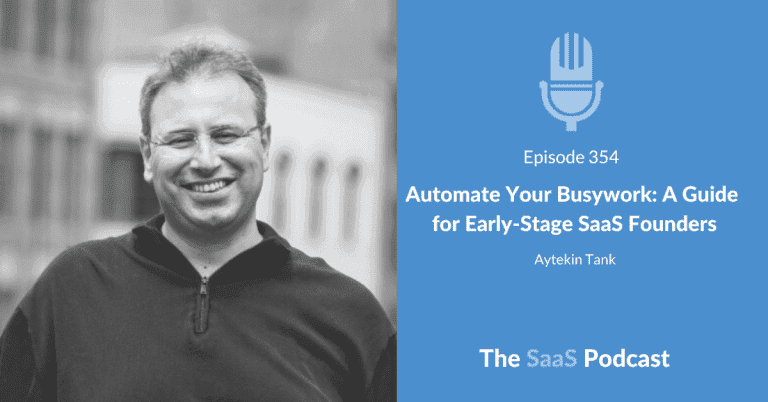
Automate Your Busywork: A Guide for Early-Stage SaaS Founders - Aytekin Tank

Aytekin Tank, Automate Your Busywork

Automate Your Busywork: A Guide for Early-Stage SaaS Founders

Aytekin Tank is the founder and CEO of JotForm and author of the new book, "Automate Your Busywork: Do Less, Achieve More, and Save Your Brain for the Big Stuff". Aytekin has almost two decades of experience in the SaaS industry, and JotForm has helped millions of users worldwide eliminate paperwork and automate their workflows. During our conversation, Aytekin shares his personal journey as a SaaS founder and how he discovered the power of automation to scale his business. He explains how his "Automation Flywheel" can help SaaS founders and teams reclaim their time, increase their productivity, and shares some practical tips and strategies for getting started with automation. We'll dive deep into the 6 steps of the Automation Flywheel and explore real-world examples of how Aytekin and his team have used automation to simplify their workflows and free up their time.

Contentstack: Scaling From Services to Enterprise SaaS - Neha Sampat

Neha Sampat, Contentstack

Contentstack: Scaling From Services to Enterprise SaaS

Neha Sampat is the founder and CEO of Contentstack, a headless CMS that empowers businesses to manage and deliver digital content across various channels and devices. In 2018, Neha seized an opportunity to transform a services-focused business into an enterprise SaaS company. Contentstack began as a simple form for editing mobile content without requiring developer involvement. Today, the business has raised $169 million, grown to a team of over 200 people, and is trusted by many of the world's top brands.

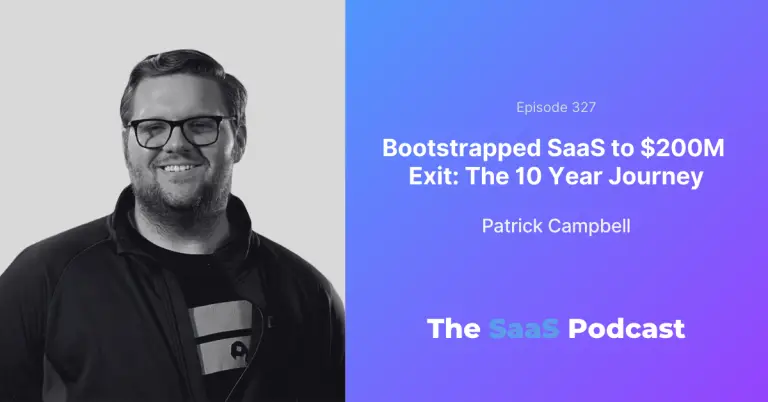
ProfitWell: How Patrick Campbell Bootstrapped to a $200M Exit - Patrick Campbell

Patrick Campbell, Profitwell

ProfitWell: How Patrick Campbell Bootstrapped to a $200M Exit

Patrick Campbell is the founder and CEO of ProfitWell, a suite of subscription revenue products that help to reduce cancellations, optimize pricing and get accurate revenue reporting. Patrick Campbell originally started ProfitWell (then called Price Intelligently) with just nine months of personal runway after cashing out his 401k. He had no co-founders, no investors, and no safety net. Over the next ten years, Patrick bootstrapped ProfitWell to eight figures in ARR and a team of nearly 90 people. In 2022, Paddle acquired the company in a deal worth $200 million—making it one of the largest bootstrapped SaaS exits in recent years. But the journey wasn't smooth. Patrick made the controversial decision to make his analytics product completely free while competitors like Baremetrics and ChartMogul raised venture capital. He discovered that accuracy mattered more than sexy graphs, and that freemium only works when the free product is better than paid alternatives. Patrick also opens up about one of his biggest mistakes: bringing on part-time co-founders who never fully committed. This decision created four years of conflict, distrust, and what Patrick calls "emotional terribleness"—a cautionary tale for any founder considering similar arrangements. The episode covers Patrick's three key growth strategies: building a media network of eight podcast shows, making the free product reach parity with paid competitors, and creating "automatic" products that require zero configuration. These insights helped ProfitWell compete against better-funded rivals and ultimately led to the Paddle acquisition.
Product Hunt: How to Launch Your SaaS Product - Vedran Rasic

Vedran Rasic, LeadDelta

Product Hunt: How to Launch Your SaaS Product

Vedran Rasic is the co-founder and CEO of LeadDelta, a product that helps you build better relationships with your LinkedIn connections. Ved is also the creator of "Product Hunt Masterclass", a course that teaches you how to run a successful Product Hunt launch and is based on his personal experience of having done several successful and not-so-successful launches.

Userflow: Bootstrapping a SaaS to  7-Figures in a Crowded Market - Esben Friis-Jensen

Esben Friis-Jensen, Userflow

Userflow: Bootstrapping a SaaS to 7-Figures in a Crowded Market

Esben Friis-Jensen is the co-founder of Userflow, a no-code platform for building onboarding guides and product tours. I originally interviewed Esben on episode 291 shortly after he'd exited his previous startup, Cobalt, an application security platform. Cobalt was a VC-backed company where Esben and his co-founders had raised $37 million and built a team of over 200 people. But with Userflow, Esben and his co-founder Sebastian decided to take a very different approach. They wanted to bootstrap the business and see how far they could get without fundraising or hiring a bunch of people.
ProsperStack: The Challenges of Building a Self-Serve SaaS - Tony Sternberg

Tony Sternberg, ProsperStack

ProsperStack: The Challenges of Building a Self-Serve SaaS

Tony Sternberg is the co-founder and CEO of ProsperStack, a SaaS product that helps companies reduce churn by using a better cancellation flow. After spending 10 years working for a B2B SaaS company, Tony and his two co-founders decided to start their own SaaS business. They launched with a basic MVP but quickly realized that it was too basic and didn't work as they expected. So they went back to the drawing board to try and build a better product. When they finally released their new and improved product, they hit another roadblock. They weren't able to get enough people to signup for the product and the ones that did were often the wrong customers. So despite charging $29 per month, they decided that a self-serve SaaS wasn't going to work for them and switched to providing demos and then manually onboarding new customers. The company is still in its early stages and has from zero to 6-figures in ARR over the last 18 months.

How Carrd Hit $1M ARR with Just 2 People - AJ

AJ, Carrd

How Carrd Hit $1M ARR with Just 2 People

AJ is the founder of Carrd, a SaaS platform for building simple and fully responsive one-page websites. After years of building and selling website templates, AJ created Carrd as a side project—a simple one-page website builder that he hoped would pay for his coffee habit. He launched with a freemium model and $19/year pricing, expecting modest results. By 2020, he had bootstrapped to $30K in monthly recurring revenue without any marketing spend beyond building in public on Twitter. Then 2020 happened. COVID drove people online. Political activists discovered Carrd. Kim Kardashian tweeted a Carrd site. Growth exploded. Suddenly, AJ's side project was hosting millions of websites and facing infrastructure that would collapse within months. He had two choices: keep treating it like a side project, or get serious about building a real company. He chose the latter. But there was a problem: AJ had never run a company at this scale. He didn't know how to hire, how to manage infrastructure for millions of users, or how to handle the legal complexity of a platform used by activists. That's when he made the unconventional decision to raise $2M—not because Carrd needed the money (it was profitable), but because he needed a network of advisors who had been there before. In this interview, AJ shares how he scaled from $30K to over $100K in monthly recurring revenue while keeping the team at just 2 people, why he finally decided to hire his first developer, and the lessons he learned about staying lean while growing a bootstrapped SaaS business.

IPinfo: Bootstrapping a Side-Project to a 7-Figure SaaS - Ben Dowling

Ben Dowling

IPinfo: Bootstrapping a Side-Project to a 7-Figure SaaS

Ben Dowling is the founder of IPinfo, a web service that provides IP address data for thousands of businesses and developers. In 2014, Ben was writing code for a project at work and found himself wasting a lot of time looking up information about IP addresses. So he built a simple API to help make his life easier. He posted about it on Stack Overflow so other developers might also save some time. His API turned out to be quite popular, so a year later, he added a paid plan. And he was blown away when someone signed up for $50 a month. Ben continued working his day job and slowly started adding new customers to his API side-project. Two years later, his API was generating over $100K a year. And that's when he finally quit his job and started working on his business full-time. He figured that without any distractions, his company could grow even faster. But instead of growing faster, his business stopped growing for some time. It didn't make much sense, and Ben struggled to grow his business for some time. He also made some fundamental mistakes along the way. For example, he allowed people to use his API without ever signing up. While that made it easy for people to use the product, he couldn't even market to those people or even contact them about outages. Today, his API project has grown into a multi-million SaaS company with a team of 15 people. The API handles 40 billion requests a month, and its customers include companies like T-Mobile, Datadog, and Demandbase. In this interview, we explore how Ben grew his business, why it stopped growing when he went full-time, and how he overcame some of the critical mistakes he made. I hope you enjoy it.
Paperform: How a Developer Bootstrapped a SaaS to $1.5M+ ARR - Dean McPherson

Dean McPherson, Paperform:

Paperform: How a Developer Bootstrapped a SaaS to $1.5M+ ARR

Dean McPherson is the co-founder of Paperform, a SaaS product that enables anyone to create beautiful online forms, payment, or product pages, quickly and intuitively, without any technical knowledge. It was 2016 and Dean was working as a developer in Sydney, Australia. After doing some work building online forms, he believed there was a gap in the market for a different type of form building product. As a developer, turning his idea into a minimum viable product (MVP) wasn't hard. But getting the word out about his product and finding customers was a whole different ballgame. He promoted his product on Betalist without much success But it did help to his product on AppSumo teams' radar, and he was invited to do a launch with them. After scrambling to get his MVP ready for the launch, he managed to land 3000 customers. But every AppSumo customer paid a one-time lifetime price – so he still had zero recurring revenue. But it did give him enough money to quit his job and work on the product full-time with this wife. They basically operated as a lifestyle business for a couple of years. Eventually, Dean realized that if he wanted the business to grow, he needed to think about it differently, start hiring a team, and getting a lot more serious about marketing – something neither he nor his wife knew much about. Today his company does over $1.5 million annual recurring revenue (ARR) and is still bootstrapped. In this interview, we talk about he's grown his idea into a 7-figure business, how he figured out how to differentiate his product in a crowded market, and how hiring his first employees was a scary decision but turned to be one of the best things he's done for his business. I hope you enjoy it.

Bootstrapping a SaaS in a Market with Well-Funded Competitors

Bootstrapping a SaaS in a Market with Well-Funded Competitors

Michael Cooney is the co-founder of WhatConverts, a product that lets you track phone calls, web forms, and web chats, back to specific marketing campaigns, so you know exactly where your best leads are coming from.

Veed.io – Lessons on Bootstrapping a SaaS to $2M ARR - Sabba Keynejad

Sabba Keynejad

Veed.io – Lessons on Bootstrapping a SaaS to $2M ARR

Sabba Keynejad is the co-founder of Veed.io, a UK based SaaS startup that provides a simple online video editing platform. I originally interviewed Sabba about 9 months ago on episode 241 where we talked about how he and his co-founder Tim had struggled to get their SaaS business off the ground. They weren't able to raise funding so had to work contract jobs during the day and on their startup in the evenings and weekends. They made it to the final YC interviews, flew out to the US but were rejected because they weren't making any money. And a few months later they were on the brink of shutting down with just about one month's runway left. In episode 241 we talked about how Sabba and Tim dealt with each failure and kept going. And at the time the founders had managed to start generating about $10K in MRR. Recently I was in touch with Sabba and discovered in the last 9 months, they've grown their SaaS business from just over $100K to over $2 million in ARR. So obviously I wanted Sabba to come back on the show and talk about how they've been able to grow their bootstrapped business so fast in less than a year. We talk about the importance of building a great product, how to decide on the right features to build, creating a frictionless experience, the specific growth tactics that helped them grow faster, and one critical ingredient that you must have to make everything else work. I hope you enjoy it.

DocSend: A Case Study in Product-Led Growth - Russ Heddleston

Russ Heddleston

DocSend: A Case Study in Product-Led Growth

Russ Heddleston is the co-founder and CEO of DocSend, a SaaS platform that lets you securely share your documents with real-time control and insights. When Russ was an intern at Dropbox, he found that many people still shared files as email attachments even though it wasn't secure or easy to track. He decided to change that. Being engineers, Russ and his co-founders wanted to build a product right away, but they resisted the temptation. Instead, they decided to meet with potential customers to get feedback on their product idea, which resonated with a lot of people. Once they'd had enough customer conversations, they built DocSend as quickly as possible, putting little effort into design or marketing. And to get the word out, they gave away free accounts in exchange for feedback. It didn't take long for DocSend to become a quick success. But they weren't charging anything for the product. As DocSends' growth continued, the founders realized they needed to change their model. It was hard to keep growing without any revenue, so they created a $10 a month plan and they kept growing. In 2016, the founders built a sales team to help generate more demand. While it felt like the right move, their sales efforts failed. Eventually, they gave up on doing outbound sales and instead went all-in with a self-serve model just two years later. The team increased its prices and reworked the product positioning but didn't actually make any changes to the product. Suddenly, their most expensive plan was the most popular. The more they charged, the better they seemed to do with free to paid conversions. Today, DocSends' growth is driven primarily by word of mouth and SEO, and the team continues to focus relentlessly on building a great product. To date, they've raised over $15 million dollars and have a team of around 55 people. This story is a great example of how to learn from your mistakes and why product-focused models can succeed. I think you'll find it interesting and insightful in many ways. In this interview we talk about:
A Guide to SaaS Customer Success: Reduce Churn & Grow Revenue - Nick Mehta

Nick Mehta

A Guide to SaaS Customer Success: Reduce Churn & Grow Revenue

Nick Mehta is the CEO of Gainsight, a customer success technology that helps businesses retain customers and drive growth. Nick joined Gainsight in 2013 and has led the company through multiple funding rounds, raising a total of $156 million. And he's grown the company from a handful of employees to over 700 people around the world. He's also the co-author of Customer Success: How Innovative Companies Are Reducing Churn and Growing Recurring Revenue'.

SaaS Product-Led Growth and the New Customer Journey - Blake Bartlett

Blake Bartlett

SaaS Product-Led Growth and the New Customer Journey

Blake Bartlett is a partner at Openview, a venture capital firm that focuses on B2B companies in the expansion stage such as Highspot, Calendly, and Expensify. These days it seems like everyone in SaaS is talking about product-led growth (PLG). But for many critics, it's just a buzzword and for others, it's not even a new concept. So I decided to sit down with the guy who actually coined the term product-led growth and explore this topic in more depth with him. If you're not familiar with product-led growth, then I'd suggest you listen to episode 251 where I cover the fundamentals of PLG with Wes Bush (founder of Product-Led Institute). In this interview with Blake Bartlett, we build on that and answer questions like: We also explored how a fictional sales-led SaaS company might transition to a product-led growth model. And we examined some of the challenges the company would face trying to do that and how it might overcome them. I think it's a great conversation with someone who thinks deeply about product-led growth all the time and is involved in a number of PLG focused B2B SaaS companies. I hope you enjoy it.

Qwilr: SaaS Freemium Pitfalls and How to Avoid Them - Mark Tanner

Mark Tanner

Qwilr: SaaS Freemium Pitfalls and How to Avoid Them

Mark Tanner is the co-founder and COO of Qwilr, a SaaS product that helps you create design-perfect proposals, quotes, client updates, and more. This story starts in 2013 with a designer/developer named Dylan. He was running a micro-agency and found himself wasting a lot of time creating proposals. Like any self-respecting designer, he wanted to create beautiful proposals. But that meant a lot of work and back-and-forth using Word, Excel, and Adobe InDesign. One day, out of frustration, he created a website as his proposal doc. Not only did he get hired, but the client loved the website proposal and was impressed by how quickly he'd built a website for them. And that's how the idea for Qwilr was born. Dylan and Mark teamed up and decided to give this business idea a try for a couple of months. They wanted to learn if they could find their first 10 customers. In this interview, you'll learn how they turned that 2-month experiment into a business with 45 employees, $7.5M in funding, and around 3,000 customers. We also talk in-depth about the pros and cons of a freemium business model. And you'll learn about the mistakes, failures, and successes that Qwilr had with their freemium plans. We also identify some important considerations you have to make before choosing a freemium model and how you can avoid making some of the same mistakes Dylan and Mark did. I hope you enjoy it.

A Guide to Product Led Growth for SaaS Founders - Wes Bush

Wes Bush

A Guide to Product Led Growth for SaaS Founders

Wes Bush is the founder of Product Led Institute and author of the book Product Led Growth: How to Build a Product That Sells Itself'. Product-Led Growth (PLG) is a term coined by the VC firm Openview Venture Partners and is a growth-model that relies on the product as the main vehicle to acquire, activate, and retain customers. In this interview, you'll learn about the 3 tidal waves or trends that are forcing more and more SaaS companies to focus on product-led growth as the main growth driver. You'll learn the differences between a sales-led' approach and a product-led' approach and we'll help you understand which one is right for your SaaS company. We talk about the pros and cons of using free trials versus a freemium model, and you'll learn how to pick the right one for your go-to-market strategy. And we'll teach you the MOAT framework, which will help you figure out the right marketing strategy, understand if you're in a red or blue ocean business, determine if a top-down or bottom acquisition strategy is right for you and how you can help showcase value to new users and customers as fast as possible. You'll also learn about the Bowling Alley framework and how it can help you improve your onboarding process.
6 PPC Mistakes SaaS Companies Make (and How to Avoid Them) - Todd Chambers

Todd Chambers

6 PPC Mistakes SaaS Companies Make (and How to Avoid Them)

Todd Chambers is the director and founder of Upraw Media, an Amsterdam based agency that helps SaaS companies to grow and scale using paid media.

Freemium Model for SaaS: Lessons from a Startup Founder - Sam Dolbel

Sam Dolbel

Freemium Model for SaaS: Lessons from a Startup Founder

Sam Dolbel is the co-founder and CEO of SINC, a SaaS product, and a mobile app that helps companies manage their mobile workforce by taking care of timesheets, location tracking, staff scheduling, and job tracking. In 2017, Sam was running a small business in New Zealand. He had 10 employees and found himself spending several hours every week managing payroll. He reached out to a friend and asked him if he could help him create a spreadsheet that might help him save some time and make dealing with payroll easier. Sam's friend suggested that they build an app. It sounded like a great idea. The only trouble was that his friend (who was a mechanical engineer) didn't know how to code either. And at the time, his friend was filming a documentary in Africa. But he had some time, so he started learning how to code while living in a tent in Tanzania. A couple of months later, the app was ready and Sam was using it in his business. Once they realized the value of the app, they decided to join forces and launch it as a product. In this interview, we talk about: Today, SINC has over 1,000 paying customers and the founder's journey is a really interesting story. I hope you enjoy it.

Typeform: A Case Study in Product-Led SaaS Growth - David Okuniev

David Okuniev

Typeform: A Case Study in Product-Led SaaS Growth

David Okuniev is the co-founder of TypeForm, a Barcelona-based SaaS company that specializes in online form building and online surveys. David and Robert were running a small design agency in Barcelona. A client asked them to create a form that could be used to collect information about people attending an exhibition. Instead of building a regular old form, they wanted to do something different. And inspired by the 1980s movie War Games, they created something a form that was more conversational. After that project was over, they talked about turning that idea into a product. But they weren't in a particular rush. And they spent the next 2 years trying to build the right product. When they were almost ready to launch the beta, they put up a landing page and promoted it on Betalist. In a few weeks, they had collected around 5000 email addresses. When they launched the beta, people started creating and sharing forms. And when they shared a form, new people discovered the product, signed up and created their own forms. The product that they'd spent years trying to get right was quickly going viral. In fact, when they introduced a paid plan, it took them about a year to get to a million dollars ARR. The interesting thing about Typeform is that the founders didn't start with a niche market. They built a product for everyone — which is counter-intuitive to what the majority of startups do. Today, their business does around $30M in ARR and employs around 200 people. In this interview, we talk about why the founders focused so much on building a great product, why design and user experience were more important to them than customer development or marketing and how they have grown Typeform into an 8-figure business. We also talk about a new product they've recently launched called VideoAsk and they're once again building a unique online form and survey experience with a different product. I hope you enjoy it.
SaaS Growth: Unconventional Wisdom Leads to a $40 Million Startup - Tim Soulo

Tim Soulo

SaaS Growth: Unconventional Wisdom Leads to a $40 Million Startup

Tim Soulo is the Chief Marketing Officer (CMO) at Ahrefs.com, a SaaS startup that provides SEO tools to help grow your search traffic, research your competitors and monitor your market niche. In 2015, Tim joined a SaaS startup as head of marketing. The company had spent several years building their blog, but it still wasn't generating much traffic or leads. Tim decided that publishing higher-quality content regularly on their blog was going to be one of his top priorities. But after a year he still had little to show in terms of traffic and leads. Eventually, Tim figured out the problem. They were creating high-quality content, but they weren't optimizing it for SEO. They weren't doing keyword research or doing on-page optimization. Now that's not uncommon. A lot of companies make that mistake. But the startup that Tim worked for was in the business of SEO and their product helped their customers to grow search traffic! So it was pretty crazy that they weren't thinking about SEO on their own blog! Once he figured out the problem, Tim made a simple change – he started by doing keyword research to find out what people were searching for and then focused on creating the best content around those keywords. And in a couple of years, their blog traffic grew from 15,000 to over 250,000 monthly visitors and has become one of the biggest drivers of new customers and revenue growth. But the real story here is about a SaaS startup that's incredibly product-focused and breaks a lot of rules and conventional wisdom about marketing and growth. For example, they don't have a target customer or persona. They don't do growth hacks. They don't use analytics software or track conversion rates. They don't even do proper' SEO. They focus on building a great product and educating people on how to use that product through their blog. And that approach is working — they're bootstrapped and doing over $40M ARR. It's a great story. I hope it'll inspire you to think differently about your business and give you some insights to grow faster by ignoring conventional wisdom and trying something new. I hope you enjoy it.

How a Founder Went From a Failed SaaS Business to $250K MRR - Dave Rogenmoser

Dave Rogenmoser

How a Founder Went From a Failed SaaS Business to $250K MRR

Dave Rogenmoser is the co-founder and CEO of Proof, a SaaS product that helps build social proof and increase conversion rates by displaying recent customer activity on your website. Dave started as an entrepreneur about 5 years ago. He paid a developer on Upwork $10,000 to build a software product, but he didn't know how to get customers and so the business quickly failed. He started learning as much as he could about marketing. And as he developed those skills, he was able help local businesses get more customers. So he started an agency. But he quickly realized how much he hated the agency life. Next he and his co-founders launched an information publishing business and sold courses and coaching. But deep down, he still longed to have a software business with recurring revenue. One weekend, Dave and his co-founders built a widget for their website to help them sell more courses. The widget showed you names of people who had just purchased the course. It was social proof and it doubled their sales almost overnight. Dave started testing this widget on his friends websites. And they all reported back positive results and improved sales conversion rates. And that's how Proof was born.

SaaS, Blockchain & Your Personal Data - Nick Macario

Nick Macario

SaaS, Blockchain & Your Personal Data

Nick Macario is the co-founder and CEO of Dock.io, a service that lets you control your information across the web. Dock gives you ownership of your data and connects your online accounts using blockchain technology.

SaaS Marketing: A 6-Step Engineering Approach - Martin Gontovnikas

Martin Gontovnikas

SaaS Marketing: A 6-Step Engineering Approach

Martin Gontovnikas is the VP of marketing and growth at Auth0. Auth0 is a platform that makes it easier for developers to implement authentication and authorization for web and mobile products. Martin or Gonto' as he's more commonly known, started coding at the age of 12. He was a software engineer most of his career, but then a few years ago decided to move into a marketing role. At Auth0 he developed a 6-step engineering approach to marketing. Using that framework, Auth0 has grown from $200,000 a year in revenue to an 8-figure business in less than 5 years.

How a SaaS Chatbot is Turning Conversations into $100K MRR - Max Armbruster

Max Armbruster

How a SaaS Chatbot is Turning Conversations into $100K MRR

Max Armbruster is the founder and CEO of TalkPush, a SaaS recruitment platform that leverages the power of messaging and social media to help businesses that need to hire large numbers of employees. Max used to interview hundreds of candidates on the phone every year. It took up a lot of his time and at the end of each day he felt drained. He desperately wanted to use technology to make hiring more productive, but he couldn't find anything that didn't create unnecessary barriers between him and the candidate. So he kept calling. In 2014, he released the first prototype of TalkPush and sold it to a small call center. The product would call candidates and use an interactive voice response service to ask them screening questions. One day during lunch with his team, someone mentioned that Facebook had launched a platform that enabled you to build and integrate chatbots with Facebook Messenger. Max hadn't heard about this before, but immediately he knew that this was what they needed. So before they finished lunch, Max had already told his team that they needed to stop what they were doing and start focusing on building a chatbot. From its humble beginnings in 2014, TalkPush has used its SaaS chatbot technology to develop a business that's doing over $100,000 in monthly recurring revenue. We talk about how he took a pain that he was personally experiencing and turned it into a business. And we have a great discussion on the ups and downs of building a million dollar SaaS business and the lessons he's learned along the way. I hope you enjoy the interview.

Using a SaaS Reseller Program to Scale Faster - Luke Swanek

Luke Swanek

Using a SaaS Reseller Program to Scale Faster

Luke Swanek is the co-founder of GrowSumo, a marketplace that connects B2B SaaS companies with resellers. The GrowSumo platform provides its customers with the tools they need to build and scale reseller programs. And it enables the resellers to earn revenue from selling those products. GrowSumo is a YC backed startup. But the founders had to apply three times before they were finally accepted into YC. So that alone is a great lesson in being persistent. One of the biggest challenges for building a marketplace is that you've got a chicken and egg' situation. You don't have buyers and you don't have sellers when you start. And it can be hard to get the flywheel spinning and build a marketplace that actually works. So we talk about how they built that marketplace and how they landed customers like Evernote. And we explore some of the tough lessons the founders have learned along the way such as what happens when your product is not ready for a big customer or how you can lose customers when you try to build a scalable product too soon. I hope you enjoy this interview.

Lessons on Building a SaaS Sales Mapping App - Steve Benson

Steve Benson

Lessons on Building a SaaS Sales Mapping App

Steve Benson is the co-founder and CEO of Badger Maps, a SaaS sales mapping app that helps salespeople be more successful. The product enables sales reps to map their CRM customer data, integrate with their calendar, plan routes and find nearby leads. Badger Maps is a SaaS product and mobile app. Badger Maps was founded in 2012. The company is based in San Francisco and to date has raised just about $1M in funding. Prior to founding Badger Maps, Steve worked in sales for companies like IBM, Autonomy, and Google. In 2009, he was named Google Enterprise's Top Performing Salesperson in the World. This episode is a story about a sales guy who had an idea for a SaaS startup. He realized that there was a lot of time being wasted as salespeople drive from one customer's location to another. And he figured he could make them more efficient. So he started with a really simple idea — take all those customers that a salesperson has to see each day and map them as points on Google Maps. That simple idea has grown into a SaaS sales mapping app and business with over 6000 customers today.

How a SaaS Startup Used Engineering As Marketing to Drive Growth - Randy Rayess

Randy Rayess

How a SaaS Startup Used Engineering As Marketing to Drive Growth

Randy Rayess is the co-founder of Outgrow, a platform that lets marketers build and launch interactive calculators and viral quizzes that help engage your website visitors and generate more leads. Outgrow was founded in May 2016 and is based in New York. The company has over 3000 paying customers and has been bootstrapped from day one. Previously, Randy worked in venture capital, private equity and at startups in financial services, transaction processing and machine learning. How do you market and sell a product that your prospective customers don't even know they need? These customers aren't searching for your product or any product like it. But if they knew that your product existed, they'd buy it. This week's episode is a story about two guys who were in that situation. They were running a services business and helping their clients with software projects. And they kept hearing the same question from their prospective customers i.e. "how much does it cost to build an app?"  It was taking their sales team a lot of time to answer this question. So they built an interactive tool and put it on their website. Then they started customizing the tool, so their clients could use it on their websites. And that's how a new SaaS business was born. But marketing the SaaS product beyond their clients proved to be challenging. No one was looking for a solution like this.  So they had to figure out how to reach new customers and help them understand that they needed this product. There are some great lessons here on customer development. And we explore how to market a product that no one is looking for.

ITProTV: From Brick & Mortar to $9M SaaS Training Company - Tim Broom

Tim Broom

ITProTV: From Brick & Mortar to $9M SaaS Training Company

Tim Broom is the co-founder and CEO of ITProTV, a subscription-based learning site for IT Professionals. The company provides an easy and entertaining approach to IT training. Content is broadcast live every day and available on-demand.

How a High-School Teacher Earned $5 Million With Online Coding Courses - Rob Percival

Rob Percival

How a High-School Teacher Earned $5 Million With Online Coding Courses

Rob Percival is a former high school math teacher from England who started teaching people to code. He posted his first online web development course for $199 in June 2014 and only made 1 sale in the first 24 hours. Since then he's gone on to launch several coding courses with well over 500,000 students and has generated over $5 million in revenue. You can find his online courses at Udemy.com. The topics range from web and mobile development courses to Ruby on Rails & Python programming and database development. He's also the founder and managing director of Eco Web Hosting, a company that focused on environmentally friendly web hosting and packages that are 100% carbon neutral.

How to Grow Your SaaS Recurring Revenue Without Marketing - JD Graffam

JD Graffam

How to Grow Your SaaS Recurring Revenue Without Marketing

JD Graffam is the founder of SimpleFocus, a design agency that helps create user interfaces and digital products. The company's clients include Starbucks, Oracle, and the U.S. Air Force. But this agency is a little different because it also has its own portfolio of software products. This includes Pulse (a cash flow management software for small businesses), Sifter (a bug and issue tracking app for nimble teams), and BallPark (an invoicing and time tracking app) that JD acquired from Metalab's founder Andrew Wilkinson (who was my guest on episode 76). And JD just acquired another app called Curated (a product that helps you grow your audience by collecting and sharing engaging content). This episode is about a design agency owner who wanted to get into the SaaS business. He didn't have any success building his own SaaS product, so he acquired one instead. The SaaS product that he acquired, already had customers and some recurring revenue. He and his team improved the product and over time, more than doubled the monthly recurring revenue. So he acquired another SaaS product and did the same again. And in the last few years, my guest has built a portfolio of 6 SaaS products, all through acquisitions, and he's still looking for more. The remarkable thing is that he's grown recurring revenue for his products without any marketing. He just focused on serving the existing customers better and improving the products.

How to Bootstrap a SaaS Company to $350K MRR - Laura Roeder

Laura Roeder

How to Bootstrap a SaaS Company to $350K MRR

Laura Roeder is the founder of Meet Edgar, a social media scheduling & automation SaaS product. She started her entrepreneurial journey at the age of 22 by launching a web design business and then a social media consulting and training business. And in 2014, she decided to launch Meet Edgar, her first SaaS business. Today, the company generates over $4 million in annual recurring revenue (ARR) and has been self-funded from day one. This week's interview is a story about a first-time SaaS entrepreneur. She didn't have any experience with software and didn't know the first thing about coding. But she was already building a following in the social media space and realized that the way that most people handle social media isn't sustainable for small businesses. She thought there was a better solution and decided to build a software product. And she's done a lot of things that many startup founders would consider counterintuitive. For example, her product's homepage is optimized for email list building and not getting people to immediately sign up for a trial. And her approach to Facebook advertising was deceptively simple. And it went against the advice that most Facebook experts would give you. But it worked. And she's kept her company laser-focused on small businesses. She could have easily started adding more features and higher-level plans for teams and agencies. But she has been very deliberate about not doing that. In fact, her product doesn't even offer multiple plans. There's one plan, one price if you pay monthly and one price if you have annually. That's it. And that approach has paid off her. The business is now doing over $4 million in annual recurring revenue and is continuing to grow quickly. There are some great lessons here and I hope you enjoy the interview.

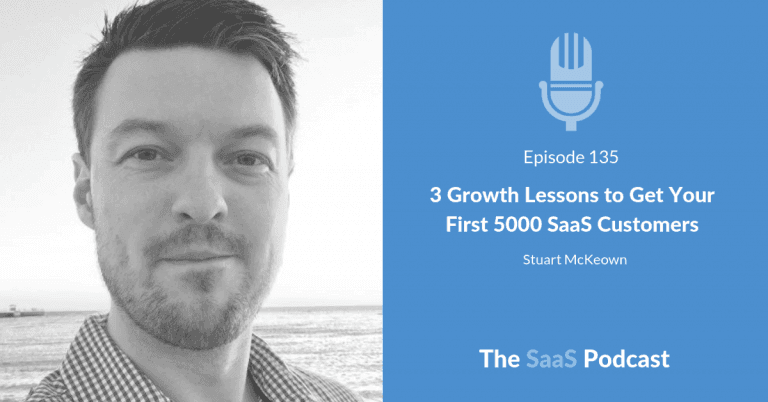
3 Growth Lessons to Get Your First 5000 SaaS Customers - Stuart McKeown

Stuart McKeown

3 Growth Lessons to Get Your First 5000 SaaS Customers

Stuart McKeown is the co-founder of Gleam, a growth platform that helps businesses to drive more engagement with customers. Gleam provides a suite of marketing apps focused on giveaways, rewards, and user feedback. Stuart's background is in search engine marketing. He's originally from the UK and moved to Melbourne, Australia in 2005. Gleam was founded in 2013 and has over 400,000 users and 5000 customers including companies such as Hubspot and Shopify. The company generates over a million dollars in annual recurring revenue.

How a Solo SaaS Founder Built and Sold His Startup for $36 Million - Gregg Pollack

Gregg Pollack

How a Solo SaaS Founder Built and Sold His Startup for $36 Million

Gregg Pollack is a software developer and serial entrepreneur. In 2011, he founded Code School, an online learning platform that teaches you programming and web design skills. And 5 years later, he sold that business for $36 million. He's also the founder of Envy Labs (a web consultancy) which he launched in 2009 and he's also the founder of Starter Studio, a business accelerator that combines mentorship with educational events to help startups in Orlando, Florida. I first came across him, years ago when I watched his Rails for Zombies tutorial to learn Ruby on Rails. And I'm glad to finally have him as a guest on this show.

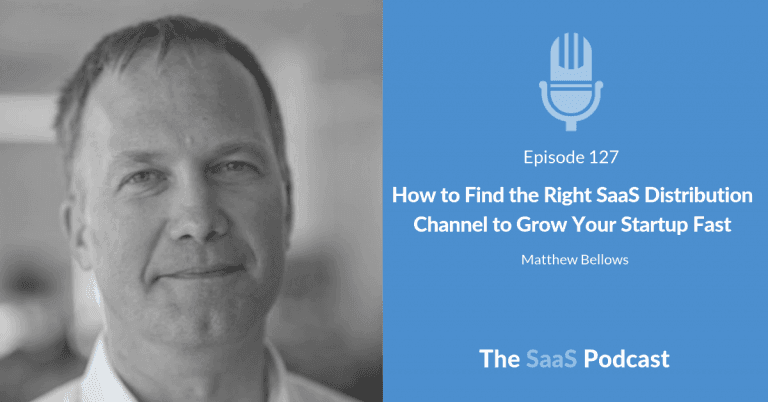
How to Find the Right SaaS Distribution Channel to Grow Your Startup Fast - Matthew Bellows

Matthew Bellows

How to Find the Right SaaS Distribution Channel to Grow Your Startup Fast

Matthew Bellows is the co-founder & CEO of Yesware, a platform that helps sales people connect with prospects, track engagement and close more deals. Yesware serves more than 750,000 salespeople at companies like Adroll, Groupon, Salesforce, Twilio and Yelp. The company was founded in 2011 and is based in Boston, Massachusetts. To date the company has raised over $35 million in funding.

(Part 3) Improving User Onboarding for Your SaaS Product

(Part 3) Improving User Onboarding for Your SaaS Product

It's not just about better design. There's a framework for success to user onboarding.

(Part 2) Improving User Onboarding for Your SaaS Product

(Part 2) Improving User Onboarding for Your SaaS Product

There's no point selling until somebody has the pain and needs the solution. We only needed a few customers to come into the private beta and start using the product. Our biggest competitor is the "we don't have enough time to do onboarding" customer objection.

(Part 1) Improving User Onboarding for Your SaaS Product

(Part 1) Improving User Onboarding for Your SaaS Product

"When we are conscious of the choices we make in each moment, the future takes care of itself" – Gotham Chopra User Onboarding is the process of increasing the likelihood that new users become successful when adopting your product. – UserOnboard.com

5 Steps to Crafting Your Startup’s Online Sales Funnel - Jeremy Reeves

Jeremy Reeves, lempire: From $1K Launch to $26M ARR Profitable SaaS - with Guillaume Moubeche [405]

5 Steps to Crafting Your Startup’s Online Sales Funnel

Jeremy Reeves is a sales funnel expert. He specializes in building strategic and automated online sales funnels that help his clients generate more revenue. He created millions of dollars in additional profits for his clients.

How This Bootstrapped Startup Went from Zero to $55K a Month

How This Bootstrapped Startup Went from Zero to $55K a Month

Mogens Møller is the co-founder and CEO of Sleeknote. A SaaS product that helps eCommerce sites get more email opt-ins, without affecting bounce rate and sales. The company was founded in 2013 and is based in Aarhus, Denmark. Sleeknote currently has around 700 customers and generates $55,000 in monthly recurring revenue. And the business has been bootstrapped from day one.

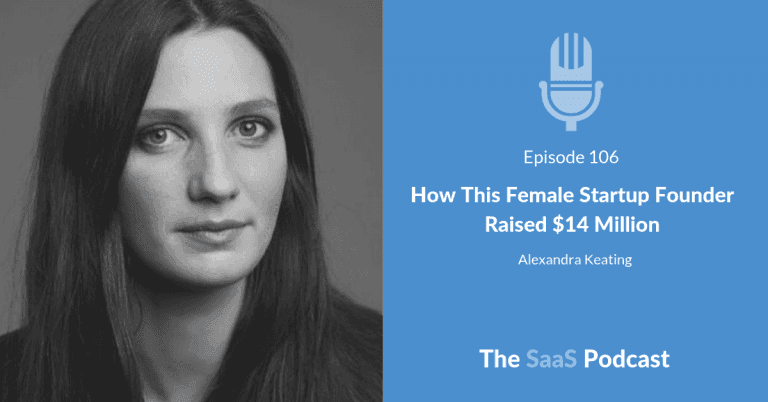
How This Female Startup Founder Raised $14 Million - Alexandra Keating

Alexandra Keating, DWNLD

How This Female Startup Founder Raised $14 Million

Alexandra Keating is the co-founder and CEO of DWNLD, a mobile app platform that enables media companies, brands, and influencers to easily and affordably create beautiful, native mobile apps. The platform can transform any website or web medium (social media channels, photos, GIFs, videos, etc.) into a fully-functional app in a matter of minutes. The company has raised $14M to date and is based in New York. Previously, Alexandra sold her first tech company, a charity platform that she started in Australia at the age of 19. And if that wasn't impressive enough, she's also the daughter of former Australian Prime Minister, Paul Keating.

How We Bootstrapped Our SaaS Business from Zero to 8-Figures - Aaron Fulkerson

Aaron Fulkerson, MindTouch

How We Bootstrapped Our SaaS Business from Zero to 8-Figures

Aaron Fulkerson is the co-founder and CEO of MindTouch, a social knowledge base product that powers help centers to improve customer engagement and success. Its clients include companies such as Zenefits, Docker & Paypal – Accenture, Charles Schwab. Mindtouch was founded in 2004, is a multi-million dollar business, profitable and has been bootstrapped from day one. Aaron previously worked at Microsoft in the Advanced Strategies & Policies group. He has helped informed national education policy at the White. And he's been a contributing writer at CNN, Fortune and Forbes Magazine.

How to Get PR for Your Startup in 5 Simple Steps - Conrad Egusa

Conrad Egusa, Publicize

How to Get PR for Your Startup in 5 Simple Steps

Conrad Egusa is the founder and CEO of Publicize, a startup that's aiming to change the way companies approach PR. As opposed to PR companies that charge $10,000 a month, Publicize provides a month-to-month solution starting from $399 a month. Conrad has been featured in publications such as The Financial Times, Bloomberg and TechCrunch. He's also a global mentor at 500 Startups and Founder Institute.

3 Surprisingly Simple Growth Hacks That Could Double Your Leads - Vincent Cassar

Vincent Cassar, Keeping

3 Surprisingly Simple Growth Hacks That Could Double Your Leads

Vincent Cassar is the founder of Keeping.com, a Gmail extension that adds helpdesk functionality into any Gmail or Google Apps account. It allows you and your team to manage your customer support right from your mailbox instead of using an external helpdesk app. Now Vincent first came on my radar, when I came across a free online resource that he'd created called The Growth Hacking Experiment. Basically, he took all the growth hacks that they've tried with their startup and documented both the process and results they achieved with each growth hack.

Part 2 – How StatusPage Went from Zero to a Million Dollars in 18 Months - Scott Klein

Scott Klein, StatusPage.io

Part 2 – How StatusPage Went from Zero to a Million Dollars in 18 Months

Scott Klein is the co-founder of StatusPage, a Y-Combinator backed startup that lets you create a hosted status page for your app or website. You can use the status page to display downtime notifications, performance metrics, or any other information that your customers might need to know. StatusPage launched in 2013 and has raised about $250,000 to date. Its customers include companies such as KISSmetrics, Vimeo, and Kickstarter.

Part 1 – How StatusPage Went from Zero to a Million Dollars in 18 Months - Scott Klein

Scott Klein, StatusPage.io

Part 1 – How StatusPage Went from Zero to a Million Dollars in 18 Months

Scott Klein is the co-founder of StatusPage, a Y-Combinator-backed startup that lets you create a hosted status page for your app or website. You can use the status page to display downtime notifications, performance metrics, or any other information that your customers might need to know. StatusPage launched in 2013 and has raised about $250,000 to date. Its customers include companies such as KISSmetrics, Vimeo, and Kickstarter.

Lessons from a 24 Year Old Who’s Built Several 7-Figure Online Businesses - Syed Balkhi

Syed Balkhi, OptinMonster

Lessons from a 24 Year Old Who’s Built Several 7-Figure Online Businesses

Syed Balkhi is an award-winning 24-year-old entrepreneur with several 7-figure online businesses. He was recognized as one of the top 100 entrepreneurs under the age of 30 by the United Nations. His businesses include WPBeginner, which is the largest free WordPress resource on the planet and OptinMonster a popular lead generation SaaS product that you see on so many sites around the web.

How a British Couple are on Track to Build a Million Dollar SaaS Business - Bridget Harris

Bridget Harris, YouCanBookMe

How a British Couple are on Track to Build a Million Dollar SaaS Business

Bridget Harris is the co-founder and CEO of YouCanBookMe, a SaaS product that helps you schedule meetings. The product was launched in 2011 and today serves tens of thousands of users and handles almost half a million bookings each month. Bridget started her career in the film and television industry. She then moved into politics where she ended being an advisor to the UK Deputy Prime Minister. And then in 2012, she took on the role of CEO at YouCanBookMe. The company is based in the UK and has been bootstrapped from day one.

How a Developer Created  & Sold a $15,000 Training Course with no Sales Pitch - Douglas Calhoun

Douglas Calhoun, Hack Reactor

How a Developer Created & Sold a $15,000 Training Course with no Sales Pitch

Douglas Calhoun is the co-founder of Hack Reactor, a San Francisco-based startup whose vision is to create a CS degree for the 21st century. Hack Reactor runs 12-week intensive coding boot camps (which you can do in-person or online) designed to accelerate your software career. According to Hack Reactor, 99% of its graduates receive at least 1 full-time job offer within 3 months graduating and earn an average salary in the six figures.

Part 1 – How Andrew Wilkinson Bootstrapped a Multi-Million Dollar Design Agency - Andrew Wilkinson

Andrew Wilkinson, Metalab

Part 1 – How Andrew Wilkinson Bootstrapped a Multi-Million Dollar Design Agency

Andrew Wilkinson is the founder of MetaLab and Flow. Metalab is a design agency that Andrew founded when he was just 20 years old and has grown it into a business with over 60 employees. MetaLab is the design team behind Slack which is now valued at $2.8 billion. And Flow is a task management SaaS application for teams which is used by companies like Etsy, Tesla, Adobe, and TED.

How a Medical Doctor Quit His Job to Build a Million Dollar SaaS Business - Rob Rawson

Rob Rawson, Time Doctor

How a Medical Doctor Quit His Job to Build a Million Dollar SaaS Business

Rob Rawson is the co-founder and CEO of Time Doctor and Staff.com. Time Doctor is an app that helps you manage your time (and your team's time) more effectively. And Staff.com is a global recruitment platform that helps companies hire talented people from anywhere in the world and track their hours worked with Time Doctor. Rob, originally trained as a Medical Doctor and worked in hospitals in Australia for 3 years.

How to Find the Courage to Execute on Your Big Bold Plans

How to Find the Courage to Execute on Your Big Bold Plans

Peter Shallard is known as The Shrink for Entrepreneurs. He's a renowned business psychology expert and therapist gone renegade. He works with all types of entrepreneurs around the world and helps them get measurable results. He's also the founder of CommitAction.com, a service that pairs accountability coaching with cutting-edge digital productivity tracking tools.

How 2 Guys Learned to Code and Then Made $2M Teaching Others - Ankur Nagpal

Ankur Nagpal, Fedora

How 2 Guys Learned to Code and Then Made $2M Teaching Others

Ankur Nagpal is the co-founder and CEO of Fedora, a platform that enables anyone to easily create and sell online courses. The company was founded in 2013 and to date has raised $2M in funding. Prior to launching Fedora, Ankur launched a business while at college building social widgets between classes which generated over a $1M. Bloomberg Business called him a widget mogul.

How this Entrepreneur Built & Launched a Udemy Competitor in 3 Days - Ankur Nagpal

Ankur Nagpal, Fedora

How this Entrepreneur Built & Launched a Udemy Competitor in 3 Days

Ankur Nagpal is the co-founder and CEO of Fedora, a platform that enables anyone to easily create and sell online courses.

How a Frustrated Lawyer Quit His Job & Launched a Successful SaaS Startup [065] - Walter Chen

Walter Chen, iDoneThis

How a Frustrated Lawyer Quit His Job & Launched a Successful SaaS Startup [065]

Walter Chen is the co-founder and CEO of IDoneThis, an email-based productivity tool that allows people to track their productivity with a daily email reminder. You reply to an evening email reminder with what you did that day. The next day, you get a digest with what everyone on the team got done. The company was founded in 2011 and its investors include folks such as the CEOs of Zappos, Shopify & Wistia. Walter is a software engineer and former big law firm, lawyer.

How a Bootstrapped Startup Made Content Marketing Work After Months of Failure

How a Bootstrapped Startup Made Content Marketing Work After Months of Failure

Josh Haynam is the co-founder of Interact – a SaaS product that makes it easier to create shareable quizzes for your website.

How This Startup Went from Zero to $400K a Month in 2 Years - Tim Sae Koo

Tim Sae Koo, Tint

How This Startup Went from Zero to $400K a Month in 2 Years

Tim Sae Koo is the co-founder & CEO of Tint, a platform that enables brands to aggregate, curate and display social media feeds anywhere – including desktop, mobile, retail TV displays, event walls or jumbotrons at big events. Tint was founded in 2013 and was profitable within 3 months or launch. Today, their platform is used by over 45,000 brands around the world.

How a Startup Grew Its Blog from 9K to 500K Monthly Unique Visitors - Joshua Parkinson

Joshua Parkinson, Post Planner

How a Startup Grew Its Blog from 9K to 500K Monthly Unique Visitors

Joshua Parkinson is the Founder & CEO of PostPlanner, a Facebook tool that makes it easy for people to find and post amazing content to increase their social media engagement. Joshua founded the company in 2011 and to date Post Planner has over 25,000 monthly active users.

How a Philosophy Teacher Built a 7-Figure SaaS Business - Joshua Parkinson

Joshua Parkinson, Post Planner

How a Philosophy Teacher Built a 7-Figure SaaS Business

Joshua Parkinson is the Founder & CEO of PostPlanner, a Facebook tool that makes it easy for people to find and post amazing content to increase their social media engagement. Joshua founded the company in 2011 and to date Post Planner has over 25,000 monthly active users.

How to Bootstrap a Million Dollar SaaS Business Without Selling - Guillermo Sanchez

Guillermo Sanchez, Publitas

How to Bootstrap a Million Dollar SaaS Business Without Selling

Guillermo Sanchez is the co-founder and CEO of Publitas.com, the easiest way to turn your print catalogs and magazines into interactive, shoppable publications on all devices. Guillermo has bootstrapped the business since it was founded in 2006 and currently Publitas.com has over 600 customers including many leading retail companies.

How to Use Marketing Automation to Put Your Growth on Auto-Drive

How to Use Marketing Automation to Put Your Growth on Auto-Drive

In this 'Mini Crash Course for Startups', we explain what marketing automation is, why you should care about it, and we share a step by step plan to help you implement your first marketing automation campaign which puts your customer acquisition efforts on auto-drive.

How 2 Guys in Ireland Bootstrapped a $14 Million SaaS Business - Peter Coppinger

Peter Coppinger, Teamwork

How 2 Guys in Ireland Bootstrapped a $14 Million SaaS Business

Peter Coppinger is the Co-Founder & CEO of Teamwork, an online collaboration tool that allows teams to work together more efficiently. Peter and his co-founder Daniel Mackey founded the Irish based company in 2007. Peter and Daniel have bootstrapped the company and to date, Teamwork has almost 1.5 million users and $14M in annual revenue.

How a Startup’s Using Open Source to Make Its First Million Dollars - Maciej Zawadzinski

Maciej Zawadzinski, Piwik Pro

How a Startup’s Using Open Source to Make Its First Million Dollars

Maciej Zawadzinski is the co-Founder & CEO of Piwik Pro, the business arm of Piwik.org. Piwik is an open-source alternative to Google Analytics, which puts users in control of their data, never shares data with other servers, and never sells data for ad targeting. Piwik Pro focuses on providing Piwik cloud hosting and extra paid services for enterprise-level customers.

5 Mistakes Startups Make with SEM & How You Can Avoid Them

5 Mistakes Startups Make with SEM & How You Can Avoid Them

Kevin Lee is the founder & CEO of We-Care.com, a service that allows online shoppers to donate a percentage of their online shopping (at no cost to them) to a non-profit, school, or association.

How a Startup Helped Consumers Raise $7.8 Million for Their Cause - Kevin Lee

Kevin Lee, We Care

How a Startup Helped Consumers Raise $7.8 Million for Their Cause

Kevin Lee is the founder & CEO of We-Care.com, a service that allows online shoppers to donate a percentage of their online shopping (at no cost to them) to a non-profit, school, or association. It has partnered with over 2,500 merchants from Travelocity to Sears, 1800Flowers and Apple. To date, We Care has raised over $7.8M. Kevin is also the co-founder & CEO of Didit, an award-winning full-service online advertising and marketing services agency that has been in business for almost 20 years.

How Rand Fishkin Built an 8-Figure SaaS Business - Rand Fishkin

Rand Fishkin, Moz

How Rand Fishkin Built an 8-Figure SaaS Business

Rand Fishkin is the Co-Founder of Moz, a Seattle-based SaaS company that sells inbound marketing & marketing analytics software. The company was founded in 2004 as a consulting firm and shifted to software development in 2008. The Moz website has an online community of more than one million digital marketers. To date, the company has raised just under $20M in funding.

How DuckDuckGo is Making Search Better Than Google - Gabriel Weinberg

Gabriel Weinberg, DuckDuckGo

How DuckDuckGo is Making Search Better Than Google

Gabriel Weinberg is the Founder & CEO of DuckDuckGo, the search engine that doesn't track you, with over a billion searches in 2013. He is also an angel investor and co-author of Traction: A Startup Guide to Getting Customers. Gabriel has been featured on CBS, FOX, the Guardian, the Washington Post and many more.

How a Simple Idea Turned Into a Product Loved By Millions of Users - Michael Pryor

Michael Pryor, Trello

How a Simple Idea Turned Into a Product Loved By Millions of Users

Michael Pryor is the CEO of Trello, a free app that makes working on group projects as easy as using sticky notes on a whiteboard. He is also the co-founder and President of Fog Creek Software, the makers of products such as FogBugz and Kiln. To date, Trello has raised over $10M in funding and is used by millions of people and companies of all kinds and sizes including Google, Adobe, and The New York Times.

How a Gmail Plugin Built a Profitable 7-Figure SaaS Business - Aye Moah

Aye Moah, Baydin

How a Gmail Plugin Built a Profitable 7-Figure SaaS Business

Aye Moah is the co-founder and chief of product of Baydin, the maker of email productivity tools such as Boomerang for Gmail, a plugin which lets you schedule emails to send later, get email reminders and track the emails that you send. Baydin was founded in Jan 2010.

Why Stu McLaren Quit His Successful 7-Figure Software Business - Stu McLaren

Stu McLaren, Wishlist Member

Why Stu McLaren Quit His Successful 7-Figure Software Business

Stu McLaren is the founder of Wishlist Member, a powerful and easy to use a plugin  that can turn any WordPress site into a full-blown membership site. Wishlist Member powers over 54,000 online communities and membership sites worldwide. Stu is also the founder of Rhino Support, a helpdesk SaaS application.

How to Build a 7-Figure Software Business from a WordPress Plugin - Stu McLaren

Stu McLaren, Wishlist Member

How to Build a 7-Figure Software Business from a WordPress Plugin

Stu McLaren is the founder of Wishlist Member, a powerful and easy-to-use plugin that can turn any WordPress site into a full-blown membership site. Wishlist Member powers over 54,000 online communities and membership sites worldwide. Stu is also the founder of Rhino Support, a helpdesk SaaS application.

How an Online Marketer Built a 6-Figure Software Business - Spencer Haws

Spencer Haws, Long Tail Pro

How an Online Marketer Built a 6-Figure Software Business

Spencer Haws is the founder of Longtail Pro, a keyword research software. Long Tail Pro allows you to generate hundreds or thousands of “long tail” keywords in minutes. Spencer launched Long Tail Pro in 2011 and successfully grew it into a 6-figure software business.

How to Build a SaaS Product in a Weekend and Raise $8 Million - Sahil

Sahil, Gumroad

How to Build a SaaS Product in a Weekend and Raise $8 Million

Sahil is the founder and CEO of Gumroad, a startup which enables creatives (such as writers, designers and musicians) to sell their products directly to their audience. Sahil founded Gumroad in 2011 and to date has raised more $8 million in funding.

How a SaaS Product Helped Its Customers Earn Over $261 Million - Ruben

Ruben, Bidsketch

How a SaaS Product Helped Its Customers Earn Over $261 Million

Ruben is the founder of BidSketch, a web app which helps freelancers, consultants, and agencies to create professional-looking proposals in minutes. Ruben launched Bidsketch as a one-person company in 2009. Since then, it’s grown to help over 1000 paying customers earn over $261M in revenue.

Creating a Multi-Million Dollar Business from a WordPress Theme - Brian Gardner

Brian Gardner, StudioPress

Creating a Multi-Million Dollar Business from a WordPress Theme

Brian Gardner is the founder of StudioPress, which makes WordPress themes based on their Genesis framework. Brian grew StudioPress from nothing into a multi-million dollar business. In 2010, Brian merged StudioPress and several other companies with Copyblogger to create Copyblogger Media. Brian is a founding partner of Copyblogger Media and also its Chief Product Officer.

How a 24-Year Old Built a Highly Successful 8-Figure Business - Nathan Latka

Nathan Latka, Heyo

How a 24-Year Old Built a Highly Successful 8-Figure Business

Nathan Latka is the founder and CEO of Heyo. Heyo helps businesses easily create Facebook contests, sweepstakes and mobile-optimized landing pages to help get more fans, leads and sales. Heyo achieved over 6-figures in revenue in its first year and is currently an 8-figure business. Nathan and his team are currently on a mission to get to 500,000 paying customers by 2017.

How Jon Ferrara Sold His Company for $125M and Went Nimble - Jon Ferrara

Jon Ferrara, Nimble

How Jon Ferrara Sold His Company for $125M and Went Nimble

Jon Ferrara is the founder and CEO of Nimble, a social CRM service for small businesses. He's a serial entrepreneur and a pioneer in the customer relationship management (CRM) industry. He co-founded GoldMine, one of the first contact management apps in 1989, which grew into a very successful venture that he eventually sold for $125 million. John shares with me how he started GoldMine with just $5000 and how they never took a dime of venture capital money or loans. He tells us about a big personal challenge he faced after selling GoldMine that changed his life forever. And he explains how Nimble is more than just another CRM solution.

How a Design Agency Became a Successful SaaS Business - James Deer

James Deer, GatherContent

How a Design Agency Became a Successful SaaS Business

James Deer is the co-founder of GatherContent, a UK based content development platform that helps agencies plan and produce web content for their clients. James founded the company with his wife in 2010. GatherContent now has around 700 paying customers across 100 countries.

How to Connect the Web, One App at a Time with Zapier - Wade Foster

Wade Foster, Zapier

How to Connect the Web, One App at a Time with Zapier

Wade Foster is the CEO and co-founder of Y-Combinator startup Zapier. Zapier lets SaaS users create integrations that push data between hundreds of best-in-breed web apps without having to write any code or deal with APIs. Wade shares with me, how he and a couple of college buddies, took an idea that solved a problem that they were having themselves and turned it into a successful software product with over 300,000 users in less than 3 years. Today, Zapier is helping solve integration problems for over 350 SaaS applications such as SalesForce, DropBox and InfusionSoft.