SaaS Club
PodcastPlaybooksCoachingSponsorFree ToolsJoin Community
saasclub

Helping SaaS founders build and scale profitable businesses since 2014. Powered by real experience from 472+ founder conversations.

Content

  • The SaaS Podcast
  • Founder Playbooks
  • Blog
  • Newsletter
  • Free Tools

Programs

  • Plus
  • Launch
  • Mastermind
  • Accelerate

Company

  • Contact
  • Become a Sponsor
  • Suggest a Guest
  • Terms
  • Privacy

© 2026 SaaS Club. All rights reserved.

Built with ❤️ for SaaS founders

Churn & Retention

Reducing Churn & Improving SaaS Retention

How SaaS founders reduced churn and kept customers longer. Onboarding fixes, activation strategies, and the changes that turned retention around.

Real founder strategies. Delivered weekly.

Free weekly newsletter · No spam

You can't grow a SaaS business if customers keep leaving. Churn is the silent killer that undermines everything: your marketing, your revenue, your morale. And most founders don't take it seriously enough until the numbers force them to.

These episodes feature founders who faced serious churn problems and fixed them. Some were losing 8-10% of customers every month before they figured out what was going wrong. Others had healthy retention but found ways to make it even better, turning good customers into long-term advocates.

You'll learn what actually causes churn (it's rarely what you think). Founders share how they dug into the data, talked to churned customers, and discovered the real reasons people were leaving. Sometimes it was onboarding. Sometimes it was a missing feature. Often it was a gap between what the product promised and what new users experienced in their first week.

The tactical lessons are specific. How to design onboarding sequences that drive activation. How to identify at-risk customers before they cancel. How to build a customer success function without hiring a big team. And how to think about net revenue retention as the metric that matters most.

There are founders here running products with 95%+ annual retention and negative net churn. They didn't get there by accident. They got there by treating retention as a product problem, not a support problem.

If churn is holding your growth back, these conversations will show you where to focus.

Browse by topic:AllBootstrappingFirst CustomersProduct-Market FitEnterprise SalesProduct-Led GrowthPricing & MonetizationFounder-Led SalesPositioning & DifferentiationChurn & RetentionContent & Inbound MarketingExits & AcquisitionsFundraisingAI-Powered SaaS
How a Bootstrapped SaaS Hit $10M After Losing Everything - Jonathan Kazarian

Jonathan Kazarian, Accelevents

How a Bootstrapped SaaS Hit $10M After Losing Everything

Jonathan Kazarian is the founder and CEO of Accelevents, an event management platform that helps organizations run everything from conferences to virtual events. Back in 2014, while working at a hedge fund, Jonathan's 17-year-old cousin got sick. He organized a fundraiser but couldn't find affordable event software with decent support. So he built a solution with someone he knew. It worked so well that other organizations started asking for it. As demand grew, Jonathan started using Upwork contractors to build out the platform while he managed the product side. But Jonathan didn't quit his day job. For five years, he worked 60-hour weeks nights and weekends building this bootstrapped SaaS. He and his co-founder even scheduled date nights on different days so one was always on call. By 2020, after five years of this grind, he hit $1 million ARR and finally went full-time. Perfect timing, right? COVID hit and wiped out every event worldwide. Revenue dropped to zero, and cashflow went negative as they refunded all their transaction fees. A month later, Jonathan borrowed $75,000 from his father's retirement to keep the company alive. But instead of waiting it out, they pivoted hard to virtual events. Jonathan and his team started pre-selling features they hadn't built yet using Figma mockups. Within three months, they hit a million-dollar run rate. By year's end, they'd 10X'd revenue and grown from 10 to over 100 people. But in 2022, the tech bubble burst. Revenue got cut in half. Jonathan had to lay off more than half his team while the company bled customers for 12 straight months. Today, Accelevents serves over 1,000 customers and generates $10 million ARR with 60 people - proof that a bootstrapped SaaS can survive multiple near-death experiences.
SaaS Retention: Why 99% of Signups Failed (And How He Fixed It) - Richard White

Richard White, Fathom

SaaS Retention: Why 99% of Signups Failed (And How He Fixed It)

Richard White is the founder and CEO of Fathom, the #1 rated AI note-taking app that automatically captures and summarizes meetings. In 2019, after running UserVoice for over a decade, Richard decided it was time for a change. Like many people, he struggled to take notes while talking in meetings. When the pandemic hit, he saw his opportunity. He recruited four of his best engineers from UserVoice and raised funding on day one. But growth was painfully slow. After nearly a year, they only had 50 stable users. The problem was trust. People wouldn't bring an unknown bot into real meetings. They wanted to test it first, but testing on their own didn't work because the bot would mute itself. So his team built a clever fix - a bot that played pre-recorded video, giving users a "fake" meeting to help them build confidence. Then Zoom launched its app marketplace and included Fathom. They exploded to 100,000 signups in the first month. But only 100 people were actually using it daily. Turns out 99% of signups had zero meetings on their calendars. Zoom had sent them tons of free users who weren't using the platform for business. Richard's SaaS retention numbers looked catastrophic. Instead of giving up, Richard saw opportunity. The thousands of low-quality signups were actually the perfect testing ground to fix their broken onboarding and solve their SaaS retention problem. Just as growth took off in 2022, the funding market crashed. VCs started demanding revenue over user growth. Richard gave his team 60 days to monetize. They started selling a team plan before it was built - just two features ready and a slide deck showing what was coming. It worked - they hit $100K ARR in the first month and reached $1M ARR in a year. Today, Fathom generates eight figures in ARR with 80 employees and serves around 175,000 companies.

Getting First Customers When Nobody Understands Your Product - Markus Stahlberg

Markus Stahlberg, N.Rich

Getting First Customers When Nobody Understands Your Product

Markus Stahlberg is the co-founder and CEO of N.Rich, an ABM platform helping B2B companies target and win high-value customers more efficiently. In 2015, Markus and his co-founder spotted an opportunity while running their B2B publishing business and started building a new marketing platform. But finding their first customers was far from easy. It took nearly a year to get the first 10 customers, and they struggled with massive churn as buyers expected instant leads rather than understanding that ABM requires 6-18 months of relationship building. After years of bootstrapping and slowly building their product, they hit their first million in ARR and raised a Series A round of $4 million in 2020. But a series of missteps toward rapid growth created major challenges. They hired 150 SDRs in the Philippines with no management structure, burning through most of their funding in months. Then tragedy struck. Markus's co-founder was diagnosed with cancer and passed away a year later, leaving Markus to run the company alone with little runway left. Rather than give up, Markus rebuilt the company from scratch. He focused on three things: building a proper in-house team, getting serious about cash flow management, and refining their ICP using "dark attributes" - proxy signals like LinkedIn ad library data that reveal which companies are high ad spenders and therefore ideal first customers for an ABM platform. Markus Stahlberg grew N.Rich from churning first customers to a profitable business generating $5-10M ARR with a team of 55 people across 25 countries. His approach to finding the right first customers through quarterly ICP iterations and warm outbound with 220% sales commissions turned a struggling startup into a Gartner-recognized challenger.

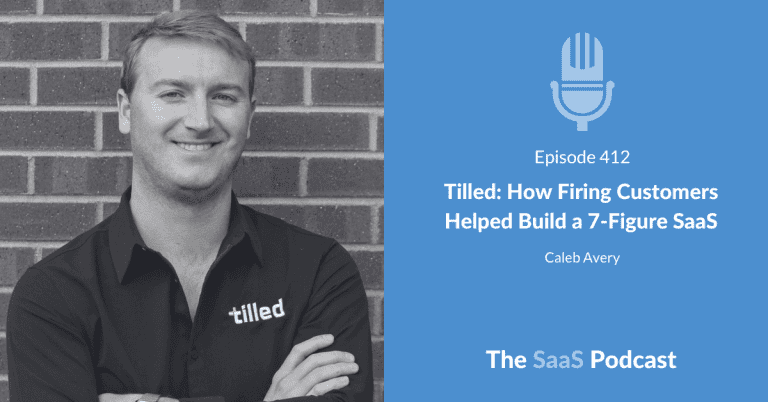
Tilled: How Firing Customers Helped Build a 7-Figure SaaS - Caleb Avery

Caleb Avery, Tilled

Tilled: How Firing Customers Helped Build a 7-Figure SaaS

Caleb Avery is the founder and CEO of Tilled, a PayFac-as-a-Service platform that helps B2B software vendors embed and manage payment processing for their customers. In 2019, after years of angel investing and consulting for vertical software platforms, Caleb spotted an opportunity to help them generate more revenue from payments. He started Tilled as a solo founder, spending 10 months exploring the viability of the business idea before bringing on a team. The initial product launch was far from perfect. It took 18 months and a complete rebuild to create a truly sellable solution that could even attempt to compete with established players like Stripe. When the pandemic hit, their outbound sales and trade show strategy was thrown into disarray. Caleb and his team were forced to pivot to content marketing. Caleb also invested in building his personal brand on LinkedIn, starting with less than 500 followers in 2020. He now has over 17,000 followers. But what's more interesting is that his personal brand on LinkedIn helped drive 95% of their lead flow in that first year and got them close to their first $1 million in ARR. But as the team started to gain traction, they faced new challenges. They struggled with product-market fit and onboarding customers that weren't ideal for their platform which created numerous headaches for the team. Eventually, they had to make the tough decision to fire some customers and refocus on their ideal customer profile, which led to a period of uncertainty. But after a few months, their bet paid off, and they started seeing significant growth. Today, Tilled generates multiple 7-figures in ARR and is approaching eight figures. The company serves around 100 customers and has raised $40 million in capital.

Lessons on Bootstrapping Three SaaS Startups to $1M+ ARR - Adam Robinson

Adam Robinson, Retention

Lessons on Bootstrapping Three SaaS Startups to $1M+ ARR

Adam Robinson is the co-founder and CEO of Retention.com, a platform that helps e-commerce brands identify and engage with website visitors, and RB2B, a tool that matches anonymous website visitors to LinkedIn profiles for SaaS businesses. In 2014, Adam and his co-founders started their first SaaS company, Robly, an email marketing platform. They bootstrapped the company to $1 million in annual recurring revenue (ARR) in 17 months by using a call center to target a list of Constant Contact customers. But the success didn't last long. The product wasn't competitive outside their niche target list, and growth stalled around $3 million ARR. In 2019, Adam co-founded Get Emails (later renamed Retention.com). This time, they reached $1 million ARR in just 27 weeks using provocative Facebook ads and cold email outreach. But the rapid growth brought new challenges. High churn rates and market saturation meant the team had to constantly find new ways to keep the business growing. As cold email became less effective, Adam turned to building his personal brand on LinkedIn in 2022. After some initial struggles, he found his voice by sharing vulnerable, authentic content about his business experiences. He grew from zero to over 92,000 followers in less than two years. This LinkedIn presence became the launchpad for Adam's latest venture, RB2B, which he launched in March 2023. The product hit $1 million ARR in just 16 weeks. Today, Retention.com generates over $21 million in ARR, while RB2B recently crossed the $2 million ARR mark.
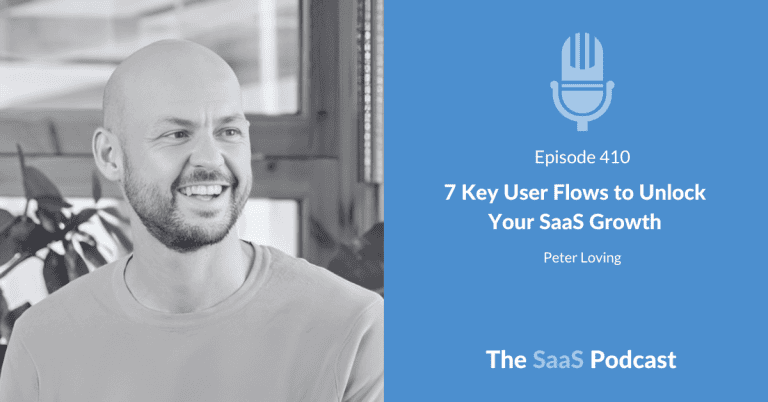
7 Key User Flows to Unlock Your SaaS Growth - Peter Loving

Peter Loving, UserActivee

7 Key User Flows to Unlock Your SaaS Growth

Peter Loving is the founder of UserActive, a UX/UI design agency that helps SaaS companies optimize their user experiences to drive growth. Whether you're struggling with onboarding, activation, or retention, Peter breaks down these essential flows and offers actionable insights to help you optimize each step of your user journey. You'll learn how to improve critical flows like signup, onboarding, and activation, as well as how to reduce churn and increase upgrades by enhancing core workflows and integration experiences.
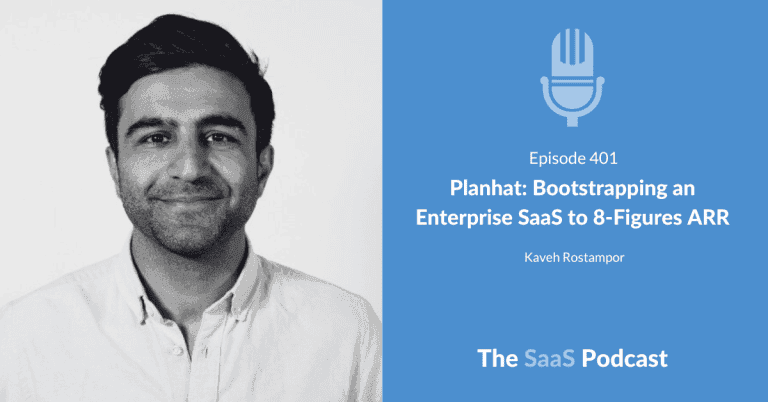
Planhat: Bootstrapping an Enterprise SaaS to 8-Figures ARR - Kaveh Rostampor

Kaveh Rostampor, Planhat

Planhat: Bootstrapping an Enterprise SaaS to 8-Figures ARR

Kaveh Rostampor is the co-founder and CEO of Planhat, a customer success platform that helps businesses keep customers and grow revenue. In 2014 Kaveh was working at a SaaS company, dealing with a bunch of challenges around reducing churn. At the same time, his future co-founder Niklas was trying to solve churn and retention issues using technology. The two teamed up and started Planhat. For the first six years, the founders bootstrapped the business. They had to be really careful with their cash, focusing on building a product that delivered real value. Getting initial customers was also tough. It required building a deep understanding of potential customers' problems and relentless cold calling. As Planhat started to grow, the founders faced a new challenge: trying to make both small companies and enterprise customers happy. They had to make tough decisions about which features to build to ensure their platform was powerful yet easy to use. Despite these challenges, they kept pushing forward. There were moments of doubt and financial strain, but Kaveh and Niklas stayed committed to their vision. They constantly improved their product based on feedback and steadily gained traction. Today, Planhat serves hundreds of customers with tens of thousands of daily users, generating over 8-figures in ARR. Despite raising over $50 million, they haven't spent that money yet and continue to operate with a frugal, bootstrapping culture.

Dreamdata: Scaling a SaaS to 7-Figures with Perseverance - Lars Grønnegaard

Lars Grønnegaard, Dreamdata

Dreamdata: Scaling a SaaS to 7-Figures with Perseverance

This is a machine-generated transcript.

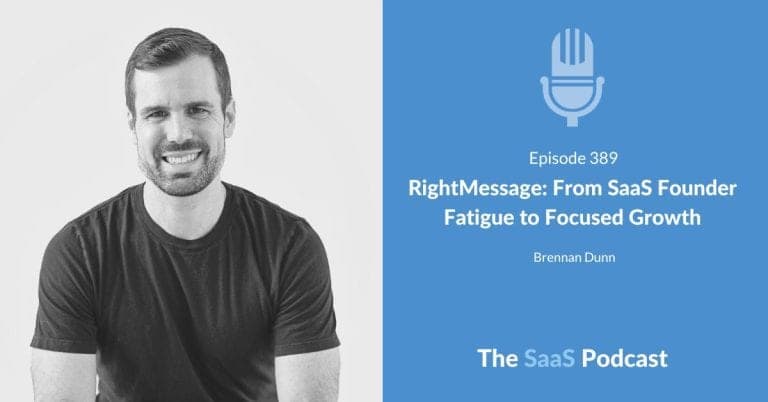
RightMessage: From SaaS Founder Fatigue to Focused Growth - This Is Personal: The Art of Delivering the Right Email at the Right Time

This Is Personal: The Art of Delivering the Right Email at the Right Time, RightMessage

RightMessage: From SaaS Founder Fatigue to Focused Growth

Brennan Dunn is the founder of RightMessage, a SaaS product that helps increase conversions by showing website visitors the right message at the right time.

Kumospace: From $1M ARR to a Pivot Driven by Churn - Brett Martin

Brett Martin, Kumospace

Kumospace: From $1M ARR to a Pivot Driven by Churn

Brett Martin is the co-founder and president of Kumospace, a virtual office platform that helps remote teams to collaborate in real time. In 2020, Brett was running a venture capital fund and hosting monthly in-person networking events. When the pandemic hit, he was forced to use Zoom for these events, which he felt wasn't a great experience and kept thinking to himself that they're had to be a better way. So when long-time friend and former co-founder Yang said he wanted to launch a startup, Brett suggested solving this video meeting problem and initially advised on the concept. After seeing early traction, Brett soon joined as co-founder. They launched in the middle of the pandemic and quickly attracted hundreds of thousands of users. When they started charging money the following year, their revenue skyrocketed to over $1 million ARR in just 2.5 months. But their celebrations were short-lived. Churn spiked to 40% in a month as customers used the product more for one-off events than daily work and so had little reason to renew their subscription. This crisis forced the founders to make the tough call. They scrapped their initial model, losing much of their revenue, and pivoted to a virtual office platform. But growing revenue was much slower and challenging this time around. However, fast forward to today, Kumospace serves millions of users, generates 7-figures in ARR with a team of just 16 people, and has raised $25 million in funding.

Text Request: Bootstrapping a $15 Million ARR SaaS Company - Brian Elrod

Brian Elrod, Text Request

Text Request: Bootstrapping a $15 Million ARR SaaS Company

Brian Elrod is the co-founder and CEO of Text Request, a B2B SaaS startup that helps businesses manage text messaging at scale. In 2012, Brian and his wife came up with the idea for Text Request after a frustrating experience at a restaurant where they wished they could text their server. They realized text messaging was becoming the preferred communication channel for many consumers and started exploring building software. However, their first attempt failed because they targeted the wrong customers and didn't have enough technical expertise. In 2014, they tried again, this time bringing on a technical co-founder, and finally launched a product that helped them get initial customers. After five long years of bootstrapping, they eventually reached their first $1 million ARR milestone. Although it hasn't been easy building the business through the ups and downs, Text Request has since rapidly grown to $15 million in ARR. And even today, the business is entirely bootstrapped and has never raised any external funding.

Howwe: Navigating the Tough Road from Services to SaaS - Ulf Arnetz

Ulf Arnetz, Howwe Technologies

Howwe: Navigating the Tough Road from Services to SaaS

Ulf Arnetz is the co-founder and chairman of Howwe, a SaaS product that helps enterprises to accelerate strategy execution and financial results. In 2019, after running a successful services company for several years, Ulf made the decision to transition it into a SaaS business model. He and his team had been working on a SaaS product for a while. They believed there as a huge growth opportunity and felt ready to make the switch to SaaS. But the path to becoming a fully-fledged SaaS business was far more easy. Their annual revenue dropped considerably, going from $5 million to just around $2 million. While Ulf had prepared for a short-term drop in earnings, this turned out to be more substantially than he had expected. Selling their SaaS product to CEOs was also another big challenge. Although they eventually found a solution, they also realized that they were often losing deals because they hadn't figured out how to deal with other key execs who were resistant to using the product. And probably one of their biggest challenges was grappling with a jaw-dropping 60% churn rate. Their SaaS product just wasn't up to par and triggered widespread employee dissatisfaction. Despite those struggles, Ulf and his team persisted and eventually found product/market fit.

Renewtrak: From Struggling SaaS Startup to 29x ARR Growth - Mathew Cagney

Mathew Cagney, Renewtrak

Renewtrak: From Struggling SaaS Startup to 29x ARR Growth

Mathew Cagney is the CEO of Renewtrak, a platform that manages the renewal process for global tech companies like VMware and Lenovo. Mathew became CEO of Renewtrak in 2020, taking over a startup that had been founded 6 years earlier in 2014 but had failed to get any real traction. The original founders had built a beta solution, secured initial funding, and managed to get two small customers. But things had stalled there. Although Mathew isn't technically one of the founders, he still had to think and act like one and figure out how to find product market fit fast. The company had a high churn rate, no new customers, and was quickly burning through the money it had raised. So it was a tough situation. In fact, Mathew told me that the first 2 years at Renewtrak were the most difficult and stressful years of his career. But things eventually paid off. Today, Renewtrak is doing around $6 million in ARR.

Interact: Lessons on Overcoming a SaaS Revenue Plateau - Josh Haynam

Josh Haynam, Interact

Interact: Lessons on Overcoming a SaaS Revenue Plateau

Josh Haynam is the co-founder and CEO of Interact, a platform for creating quizzes, assessments, and giveaways that help build your email list or qualify leads. I originally interviewed Josh in 2015 (episode 57) when he and his college friends at bootstrapped Interact and were doing around $15K in MRR. Today, they're doing around $2.5M in annual recurring revenue (ARR). But there's a lot more to this story than you may think. It took them about 5 years to hit $1M ARR and then they experienced rapid growth during the pandemic. It was looking like the start of the hockey stick growth curve. But then growth came to a standstill and revenue was flat for about a year.

SaaS Growth Metrics 101: CAC, LTV, Retention and Churn - Paul Orlando

Paul Orlando, Startups Unplugged

SaaS Growth Metrics 101: CAC, LTV, Retention and Churn

Paul Orlando is the founder of Startups Unplugged where he's building an internal incubator and accelerator programs around the world. He's a Professor of Entrepreneurship at the University of Southern California (USC), and he's the author of Growth Units: Learn to Calculate Customer Acquisition Cost, Lifetime Value, and Why Businesses Behave the Way They Do. This episode is a crash course to help you understand and calculate your customer acquisition cost, lifetime value, retention, and churn (including negative churn and why that's a great goal for your SaaS business). We cover the common mistakes that founders make when working with these metrics and share some best practices to help you be more successful. By the end of this episode, you should have more confidence in understanding those metrics and how to use them to help you drive business growth. I hope you enjoy it.

ProsperStack: The Challenges of Building a Self-Serve SaaS - Tony Sternberg

Tony Sternberg, ProsperStack

ProsperStack: The Challenges of Building a Self-Serve SaaS

Tony Sternberg is the co-founder and CEO of ProsperStack, a SaaS product that helps companies reduce churn by using a better cancellation flow. After spending 10 years working for a B2B SaaS company, Tony and his two co-founders decided to start their own SaaS business. They launched with a basic MVP but quickly realized that it was too basic and didn't work as they expected. So they went back to the drawing board to try and build a better product. When they finally released their new and improved product, they hit another roadblock. They weren't able to get enough people to signup for the product and the ones that did were often the wrong customers. So despite charging $29 per month, they decided that a self-serve SaaS wasn't going to work for them and switched to providing demos and then manually onboarding new customers. The company is still in its early stages and has from zero to 6-figures in ARR over the last 18 months.

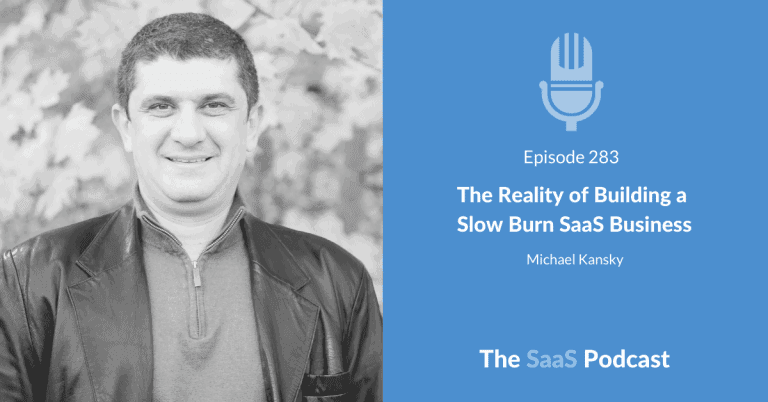
The Reality of Building a  Slow Burn SaaS Business - Michael Kansky

Michael Kansky

The Reality of Building a Slow Burn SaaS Business

Michael Kansky is the founder of LiveHelpNow, a customer support platform that provides small businesses with help desk, live chat, and more. In 1997 Michael immigrated to the United States from Ukraine as a refugee. To help himself get a job, he signed up for a computer programming course. As a final project, he built a dating website. And people started using the site. At one point, he had around 1,000 users. When a user asked for an easier way to communicate with other users, Michael built a basic chat feature, which he also started using to support end-users. In 2005, he realized there was a growing opportunity with live chat, so he took what he'd learned and launched a new product. But it was a complete hobby. Michael had no business plan or customers. But he loved building the product and seeing people use it. Eventually, in 2009 in started charging for his live chat product. About a third of his customers switched to a paid plan – which generated around $10K MRR. Today, Michael has bootstrapped his business to over $3 million ARR, but it took him 12 years to get there. And for the last 4 years, revenue has been flat. We often hear stories of entrepreneurs who launch a product, spend no money on marketing, and hit their first million dollars almost overnight. But that's not the experience for the majority of SaaS founders. Michael's story is about the reality and the long hard slog that most founders have to go through to find success. In this interview, we talk about the realities of building a SaaS business, the big lessons Michael's learned, and what he's doing to start growing again. I hope you enjoy it.

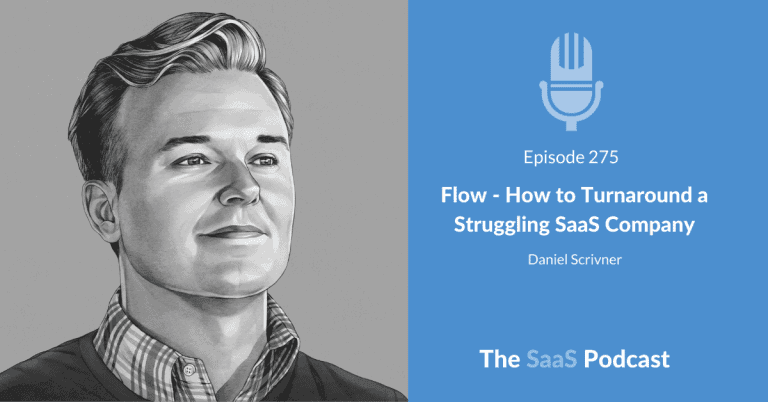
Flow – How to Turnaround a Struggling SaaS Company - Daniel Scrivner

Daniel Scrivner

Flow – How to Turnaround a Struggling SaaS Company

Daniel Scrivner is the CEO of Flow, a task and project management product that's used by over 300,000 teams. In early 2019, Daniel was hired to help lead the turnaround at Flow. The company was about 10 years old and in trouble. It was losing customers and revenue at a worrying rate. The team had been spending about $100,000 a month on paid acquisition advertising but it wasn't moving the needle. In fact, revenue was still declining by about 5% month over month. When Daniel joined, continuing to spend any money on acquisition wasn't an option. So with a core team of 6 people, he had to figure out how to lead a turnaround – and do it fast. It was a huge challenge. But Daniel had to deal with one more – this was his first job as a CEO. In this interview, we talk about why an unlikely candidate like Daniel was hired as CEO and how he and his team went about diagnosing and fixing some major problems. We dig into why and how he rehauled the Flow product by improving the design, making it more modern and lightweight, and reducing friction for end-users. And we explore how the team went about fixing their marketing and sales funnel so they were able to improve how they acquired, activated, and retained customers. Today, Flow is growing again. And Daniel's role has evolved from a turnaround to growth CEO. Whether you're working on a SaaS business that's not growing fast enough or one where revenue is in decline, there are a lot of great lessons in this interview. We often look for silver bullets to solve seemingly insurmountable problems. But this story is a reminder about the importance of nailing the fundamentals, constantly improving small things, and eventually seeing them compound into meaningful results for your business. I hope you enjoy it.

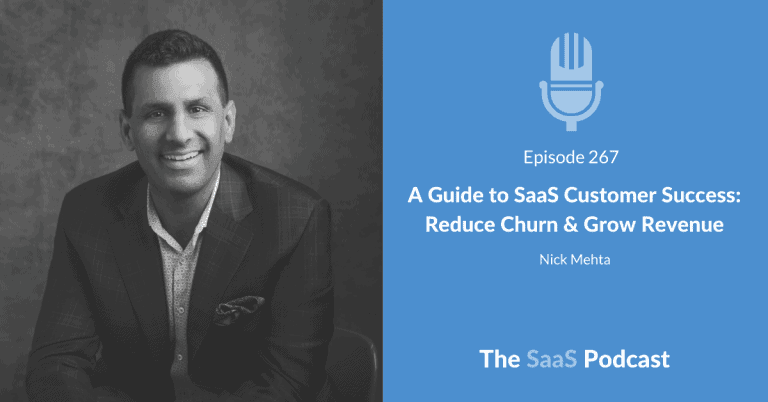
A Guide to SaaS Customer Success: Reduce Churn & Grow Revenue - Nick Mehta

Nick Mehta

A Guide to SaaS Customer Success: Reduce Churn & Grow Revenue

Nick Mehta is the CEO of Gainsight, a customer success technology that helps businesses retain customers and drive growth. Nick joined Gainsight in 2013 and has led the company through multiple funding rounds, raising a total of $156 million. And he's grown the company from a handful of employees to over 700 people around the world. He's also the co-author of Customer Success: How Innovative Companies Are Reducing Churn and Growing Recurring Revenue'.

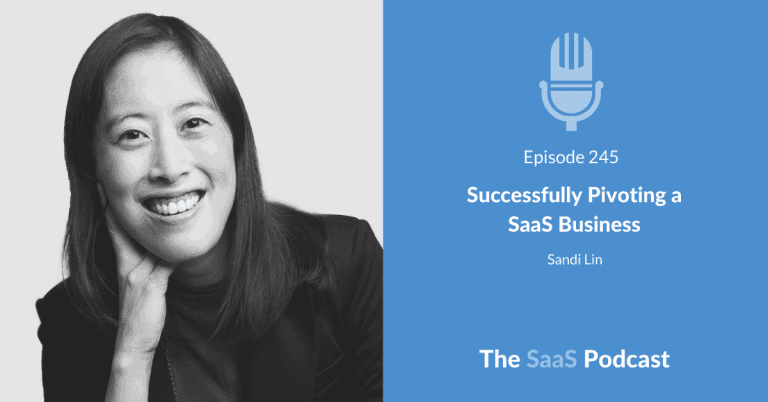
Successfully Pivoting a SaaS Business

Successfully Pivoting a SaaS Business

Sandi Lin is the co-founder and CEO of Skilljar, a customer training platform that helps enterprises improve product adoption and customer retention.

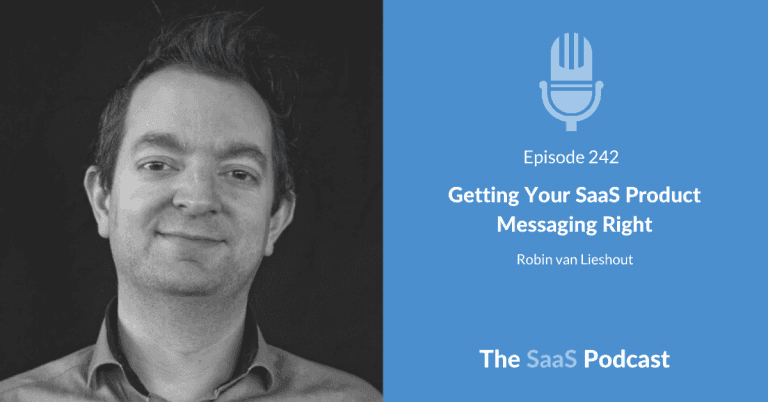
Getting Your SaaS Product Messaging Right - Robin van Lieshout

Robin van Lieshout

Getting Your SaaS Product Messaging Right

Robin van Lieshout is the co-founder and CEO of Insided, a customer success community platform for SaaS companies. What do you do if you've built a great SaaS product, but no one seems to care about it? In 2010, Robin launched a SaaS company in the Netherlands. He was able to pre-sell the idea to T-Mobile for a six-figure annual contract. It seemed like the perfect way to start his business. And in the next couple of years, he grew the business to around 40 customers. But he started seeing a worrying trend. The majority of his customers weren't actually using the product. He knew that it was just a matter of time before those customers churned. So he made the decision to refocus his business on a new customer segment – high-growth SaaS companies. But when he started reaching out to his prospective customers – no one seemed interested in his product. His sales team couldn't even get people to reply to their emails. They wondered if maybe they were trying to solve a problem that his target market didn't care about. Robin had to figure out what was going on and he had to do it quickly. He spent a lot of time listening to recordings of sales calls, talked to a lot of prospective customers and eventually realized that they didn't have a product/market fit issue – they had a messaging issue. He and his team didn't understand their target customers well enough. And so their messaging was off and as a result, their sales efforts were failing miserably. Once they eventually got their messaging right, things started to click. They started making sales and growing the business again. Today, they're doing just under $10 million ARR. In this interview, we talk about how Robin figured out the right messaging, how he optimized his pricing to increase the average contract value and how he's now generating 100% of his leads through inbound marketing. I hope you enjoy it.

How a SaaS User Experience Can Help Grow Your Business - Suresh Sambandam

Suresh Sambandam

How a SaaS User Experience Can Help Grow Your Business

Suresh Sambandam is the CEO of Kissflow, the first unified digital workplace for organizations to manage all of their work on a single, unified platform. Kissflow is used by over 10,000 customers across 160 countries, including more than fifty Fortune 500 companies. Suresh was working as an engineer for a startup when he spotted an opportunity for a business idea. He eventually quit his job to launch his startup in 2003. Things looked promising at the start. Before he knew it, he had a team of 40 people. But the product just didn't get the traction he'd hoped for and he eventually had to pivot. With his new idea, he raised $1M from angel investors. But he was too early to market. And by the following year, he was running out of money and had to layoff most of his employees. And then in 2013, a customer helped him see the potential of his product… A UK based design company bought his product for $50K but then spent another $90K on building a great user interface for it. That was when Suresh had his aha moment. He realized that as an engineer, he'd been focusing too much on features and technology. Instead, he had to get his company building great user experiences. And that's when things started to click with his third pivot (which became KiSSFLOW). The more the team focused on creating a great user experience, the more their product resonated with customers. Today his company is doing close to $10M in ARR and has over 200 employees. We talk about his multiple pivots, the 10 years it took to find product/market fit, his strategic approach to search engine optimization and how that now drives over 50% of leads. And we talk about what Suresh calls "Desk Marketing & Selling" which his team based in Chennai, India is using to land B2B customers around the world. I hope you enjoy it.
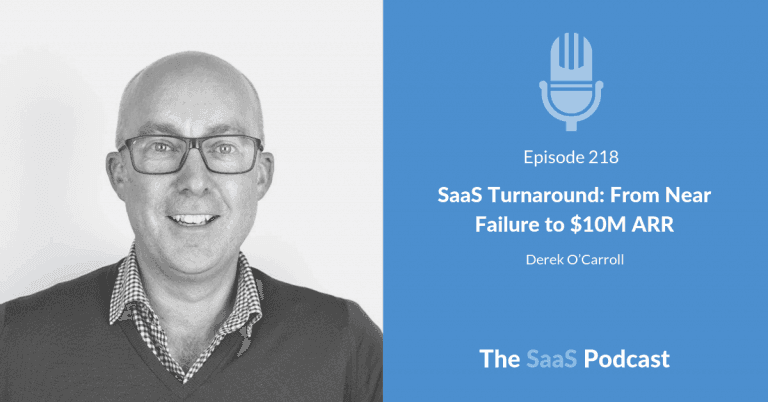
SaaS Turnaround: From Near Failure to $10 Million ARR - Derek O'Carroll

Derek O'Carroll

SaaS Turnaround: From Near Failure to $10 Million ARR

Derek O'Carroll is the CEO of Brightpearl, a cloud-based enterprise resource planning (ERP) product for retailers and wholesalers. In 2016, a SaaS company founded in a small city in the UK was struggling with a business model that was unsustainable. After almost 10 years in business, the company was struggling to retain customers and was quickly running out of money. That same year, Derek O'Carroll was hired as the new CEO to help turnaround the company. He spent a lot of time talking to employees, partners, and customers to figure out the issues. He started building a list of things that needed to get fixed. And the more conversations he had, the longer his list got. He quickly realized that he wouldn't be able to fix everything. He needed to focus. So he eventually identified 3 key areas of improvement. And he decided to focus the majority of his time and his teams' time on solving those 3 things. It looked like a good plan. But it wasn't smooth sailing. In fact, when they started executing on the plan, they actually made the customer churn problem even worse for a while as they lost a lot more customers very quickly. But they stayed the course and kept executing the plan. And eventually, it paid off. In the last 3 years, revenue has more than doubled and is growing at almost 50% year over year. And they've significantly reduced their customer churn. The key lesson here is that if your business is struggling, or you feel like revenue has flatlined, or you have high churn, sometimes it can be overwhelming. Where do you start? What do you solve? You might have a super long list of things. But identify the top 2 or 3 things that you believe will make a difference and do a really great job to execute relentlessly in those areas. I hope you enjoy the interview.

Challenges of Scaling a SaaS Business to $20 Million - Rick Perreault

Rick Perreault

Challenges of Scaling a SaaS Business to $20 Million

Rick Perreault is the co-founder and CEO of Unbounce, a SaaS product that makes it easier to build custom landing pages, improve conversion rates and drive more leads & sales. The company was founded in 2009 and went from zero to over $7 million dollars in annual revenue within 5 years. Rick was an early guest on this podcast (on episode 25 back in 2014) where he shared what happened in those 5 years. Since then, Unbounce has continued to grow and is now a $20 million dollar business. So I invited Rick back to talk about the challenges of scaling a SaaS business.

SaaS Growth Lessons: From $800 MRR in 18 Months to $4.5M a Year - Kyle Racki

Kyle Racki

SaaS Growth Lessons: From $800 MRR in 18 Months to $4.5M a Year

Kyle Racki is the co-founder and CEO of Proposify, a SaaS product that helps you create proposal documents, collaborate with your team and streamline your sales process so you can close deals faster. The company was founded in 2014 and is based in Halifax, Nova Scotia. Kyle and his co-founder Kevin came up with the idea for Proposify when they were running a design agency. But they didn't do anything with that idea for several years. Eventually they decided that they wanted to get out of the agency business and went back to their idea. They built a prototype and got a lot of positive feedback. But when they launched, the results were disappointing. They got to around $800 a month in MRR and flatlined there for almost a year and a half. Today, their business generates over $4.5 million in annual recurring revenue. We talk about what kept them going when they were only making $800 MRR. And we deep dive into specific things they did that led to their hockey stick growth. This is a great story and offers some valuable SaaS growth lessons.

The One Person, Million Dollar SaaS Business - Mike Carson

Mike Carson

The One Person, Million Dollar SaaS Business

Mike Carson is the founder of Park.io, a service that helps you to backorder expiring domain names. Mike is a developer who for many years struggled to find business success. He was working hard on multiple projects. But none of them were working out. And it was a painful time for him. He couldn't understand why he kept failing. And he'd often wonder if he wasn't working hard enough or just doing thing the wrong way. One day he just decided to let go of all that frustration and work on a project that he was curious and passionate about. He wasn't even thinking of it as a business. And ironically, that project turned into Park.io. Mike has built a million-dollar SaaS business. He's currently doing over $150,000 in monthly revenue. And he's a one-person company. He has no employees and continues to run the business by himself. Mike says that he just got lucky with Park.io. And there's some truth to that. We all need some luck from time to time with our business. But I don't think it was all just down to luck. And in this interview, I deep-dive into what exactly he did to build that business, how he's dealt with major problems and competitors and how exactly he's able to run a one-person million dollar company. It's a great interview with a ton of valuable insights and lessons. So I hope you enjoy it.

Scaling Your SaaS Subscriptions and Billing

Scaling Your SaaS Subscriptions and Billing

Krish Subramanian the co-founder and CEO of Chargebee, a platform that automates subscription management and billing for SaaS and e-commerce businesses. Chargebee was founded in 2011 and is based in Chennai, India. To date, the founders have raised $6 million in funding but bootstrapped the business for the first year and a half. We talk about the challenges faced by businesses in managing their SaaS subscriptions and recurring billing scenarios. And we explore how Chargebee is solving those problems and helping SaaS businesses to reduce customer churn. The founders knew that they wanted to work together, but it took them 10 years to save enough money and have the courage to finally take the leap and quit their jobs. And then it took them over a year to launch their MVP because they tried to build too many features. We talk about the lessons they learned from this experience and how they'd do things differently now. We also explore what it's like to build a SaaS business in India. You don't have the benefits of being in Silicon Valley and you're trying to convince SaaS and e-commerce businesses around the world to manage their revenue with your platform. And they faced a lot of resistance and challenges along the way. We talk about how they overcame those challenges and what they've done to get over 6000 companies around using their platform.

When Your SaaS Content Marketing Isn’t Working - Josh Haynam

Josh Haynam

When Your SaaS Content Marketing Isn’t Working

Josh Haynam is the co-founder of Interact, a SaaS platform that makes it easier for businesses to create online quizzes. You can create a quiz to engage with your online audience or generate new sales leads. I originally interviewed Josh a couple of years ago, where we discussed how he and his co-founders bootstrapped their company from zero to $15,000 in monthly recurring revenue in under 10 months. And they did that with zero outbound sales. It was all through content marketing. You can listen to the original interview on episodes 57 & 58. Since then, the co-founders have grown the business to over $40,000 in monthly recurring revenue. That's almost half a million dollars a year. So it seemed like a great time to invite him back and find out what they've been doing to keep growing. And the interesting thing is that the content marketing that worked so well for them when I interviewed Josh last time, dried up. And they had to find another way to generate traffic because content marketing just wasn't working for them anymore. I hope you enjoy this interview.

How to Grow Your SaaS Recurring Revenue Without Marketing - JD Graffam

JD Graffam

How to Grow Your SaaS Recurring Revenue Without Marketing

JD Graffam is the founder of SimpleFocus, a design agency that helps create user interfaces and digital products. The company's clients include Starbucks, Oracle, and the U.S. Air Force. But this agency is a little different because it also has its own portfolio of software products. This includes Pulse (a cash flow management software for small businesses), Sifter (a bug and issue tracking app for nimble teams), and BallPark (an invoicing and time tracking app) that JD acquired from Metalab's founder Andrew Wilkinson (who was my guest on episode 76). And JD just acquired another app called Curated (a product that helps you grow your audience by collecting and sharing engaging content). This episode is about a design agency owner who wanted to get into the SaaS business. He didn't have any success building his own SaaS product, so he acquired one instead. The SaaS product that he acquired, already had customers and some recurring revenue. He and his team improved the product and over time, more than doubled the monthly recurring revenue. So he acquired another SaaS product and did the same again. And in the last few years, my guest has built a portfolio of 6 SaaS products, all through acquisitions, and he's still looking for more. The remarkable thing is that he's grown recurring revenue for his products without any marketing. He just focused on serving the existing customers better and improving the products.

How Wildbit Became a Multi-Million Dollar SaaS Company on 40 Hours a Week - Natalie Nagele

Natalie Nagele

How Wildbit Became a Multi-Million Dollar SaaS Company on 40 Hours a Week

Natalie Nagele is the co-founder and CEO of Wildbit, a bootstrapped software company that builds web apps to help software developers collaborate better. The company was founded in 1999 as a web development consultancy and it launched its first web app in 2005. Since then the company has launched and grown a number of products such as Beanstalk, Deploybot and Postmark which are used by over 100,000 companies. Half of the Wildbit team works out of Philadelphia, with the rest spread out around the world. And the company's culture, communication, and process are specifically tailored around a remote team. This week's interview is a story about a bootstrapped SaaS company that generates multi-million dollars in revenue, is profitable and most of the time, its employees work no more than 40 hours a week. The company was founded by a husband and wife team, who started out with a consulting business and eventually turned it into a product business that now has 3 successful software products and a team of 26 people across the world. The founders do a lot of things that go against the conventional wisdom that we so often hear these days. From private offices for every employee to a standard 40-hour work week, they've shown that you can build a profitable and successful SaaS company. A big part of their company culture was inspired by 37Signals (the makers of Basecamp) and the book Getting Real. My guest is a wonderful woman, who has an inspiring story to share and I love how both she and her husband, have built a people-first company culture. It's easy to talk about something like that, it's much harder to actually do it. I'm sure you'll walk away with at least one great idea from this interview and maybe you'll be inspired to think a little differently about your business.

Maximizing Your SaaS Customer Lifetime Value - Aseem Badshah

Aseem Badshah

Maximizing Your SaaS Customer Lifetime Value

Aseem Badshah is the co-founder and CEO of Socedo, a platform for sales teams that helps them generate relevant leads based on social media data. The company was founded in 2012 and has raised $1.5 million to date. Before launching Socedo, my guest founded and ran Uptown Treehouse, a digital marketing agency for Fortune 500 brands that focused on social media. Aseem shares how learned to maximize customer lifetime value (CLV) by asking his customers.

(Part 3) Improving User Onboarding for Your SaaS Product

(Part 3) Improving User Onboarding for Your SaaS Product

It's not just about better design. There's a framework for success to user onboarding.

(Part 2) Improving User Onboarding for Your SaaS Product

(Part 2) Improving User Onboarding for Your SaaS Product

There's no point selling until somebody has the pain and needs the solution. We only needed a few customers to come into the private beta and start using the product. Our biggest competitor is the "we don't have enough time to do onboarding" customer objection.

(Part 1) Improving User Onboarding for Your SaaS Product

(Part 1) Improving User Onboarding for Your SaaS Product

"When we are conscious of the choices we make in each moment, the future takes care of itself" – Gotham Chopra User Onboarding is the process of increasing the likelihood that new users become successful when adopting your product. – UserOnboard.com

How We Bootstrapped Our SaaS Business from Zero to 8-Figures - Aaron Fulkerson

Aaron Fulkerson, MindTouch

How We Bootstrapped Our SaaS Business from Zero to 8-Figures

Aaron Fulkerson is the co-founder and CEO of MindTouch, a social knowledge base product that powers help centers to improve customer engagement and success. Its clients include companies such as Zenefits, Docker & Paypal – Accenture, Charles Schwab. Mindtouch was founded in 2004, is a multi-million dollar business, profitable and has been bootstrapped from day one. Aaron previously worked at Microsoft in the Advanced Strategies & Policies group. He has helped informed national education policy at the White. And he's been a contributing writer at CNN, Fortune and Forbes Magazine.

How 2 Guys in Ireland Bootstrapped a $14 Million SaaS Business - Peter Coppinger

Peter Coppinger, Teamwork

How 2 Guys in Ireland Bootstrapped a $14 Million SaaS Business

Peter Coppinger is the Co-Founder & CEO of Teamwork, an online collaboration tool that allows teams to work together more efficiently. Peter and his co-founder Daniel Mackey founded the Irish based company in 2007. Peter and Daniel have bootstrapped the company and to date, Teamwork has almost 1.5 million users and $14M in annual revenue.

How Wistia Turned Video Hosting Into a Profitable SaaS Business - Chris Savage

Chris Savage, Wistia

How Wistia Turned Video Hosting Into a Profitable SaaS Business

Chris Savage is the co-founder and CEO of Wistia, an internet video hosting and analytics company that enables marketers to track and analyze web video viewers. Chris and his co-founder Brendan founded Wistia in 2006. In 2009 they were finalists in BusinessWeek’s 25 Most Promising US entrepreneurs under the age of 25. Today, over 100,000 companies use Wistia for their video hosting and analytics.

How a SaaS Product Helped Its Customers Earn Over $261 Million - Ruben

Ruben, Bidsketch

How a SaaS Product Helped Its Customers Earn Over $261 Million

Ruben is the founder of BidSketch, a web app which helps freelancers, consultants, and agencies to create professional-looking proposals in minutes. Ruben launched Bidsketch as a one-person company in 2009. Since then, it’s grown to help over 1000 paying customers earn over $261M in revenue.

Get weekly SaaS insights

Real founder strategies. Delivered to your inbox.

Free weekly newsletter · No spam

←All Episodes