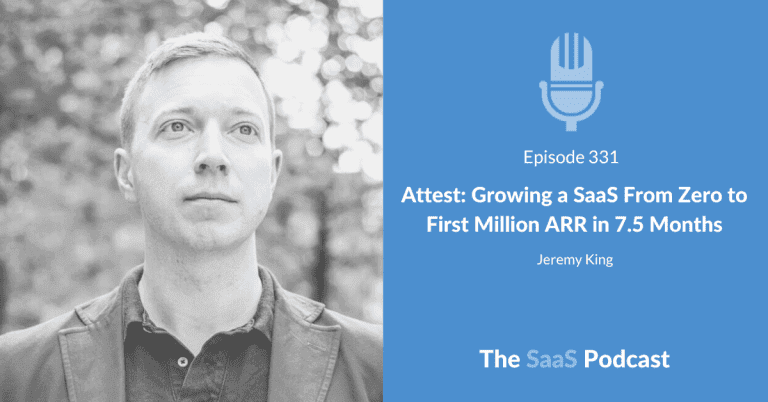
Jeremy King, Attest
How a SaaS Got Customers to Call VCs and Raise Funding
Jeremy King spent nine years as a McKinsey consultant watching companies guess what consumers wanted instead of using data. In 2015, he decided to fix that problem by building Attest, a consumer research platform that lets B2C companies survey over 125 million people in 58 countries starting in 90 seconds. But his wife gave him just six months to get the business going. So Jeremy had to compress what normally takes two years of startup grinding into a fraction of that time. His SaaS fundraising approach was unconventional. He split 15 potential customers into three groups - five he knew well, five he had loose connections to, and five he cold-contacted, including American Express and Expedia. He asked them all one question: what data do you wish you had about your customers that you don't have today? Then he got those companies to call seed VCs and say "please invest in this company so I can buy their product." But Jeremy's SaaS fundraising playbook went further. He deliberately pitched Series B and C investors, knowing they couldn't write a seed check. They gave him feedback on his long-term pitch, told him the milestones they'd want to see, and then referred him to their favorite seed VCs. Those seed funds then received two calls - one from a Series B investor and one from a customer - both saying "fund this company." After raising 650,000 pounds in September 2015, Jeremy and his co-founder Tony Hunter built the product with internationalization baked in from day one. In November 2017, they flipped every user from pay-as-you-go to annual subscriptions. Most converted, and through referrals and vision-aligned selling, Attest hit $1M ARR in 7.5 months. Today, Attest generates eight figures in ARR, employs around 170 people, and has raised $104 million in total SaaS fundraising. Jeremy also shares why their freemium experiment bombed, how they compete against guesswork instead of incumbents, and why he'd never heard the term "SDR" until 18 months after first revenue.