Why CMO Validation Calls Don't Predict Actual Conversion
The Mistake
Most founders treat customer validation calls as a buying signal. The prospect says "this looks great, we'd buy it." Founders mark it down as demand confirmed, raise the round, build the roadmap.
Then nobody buys.
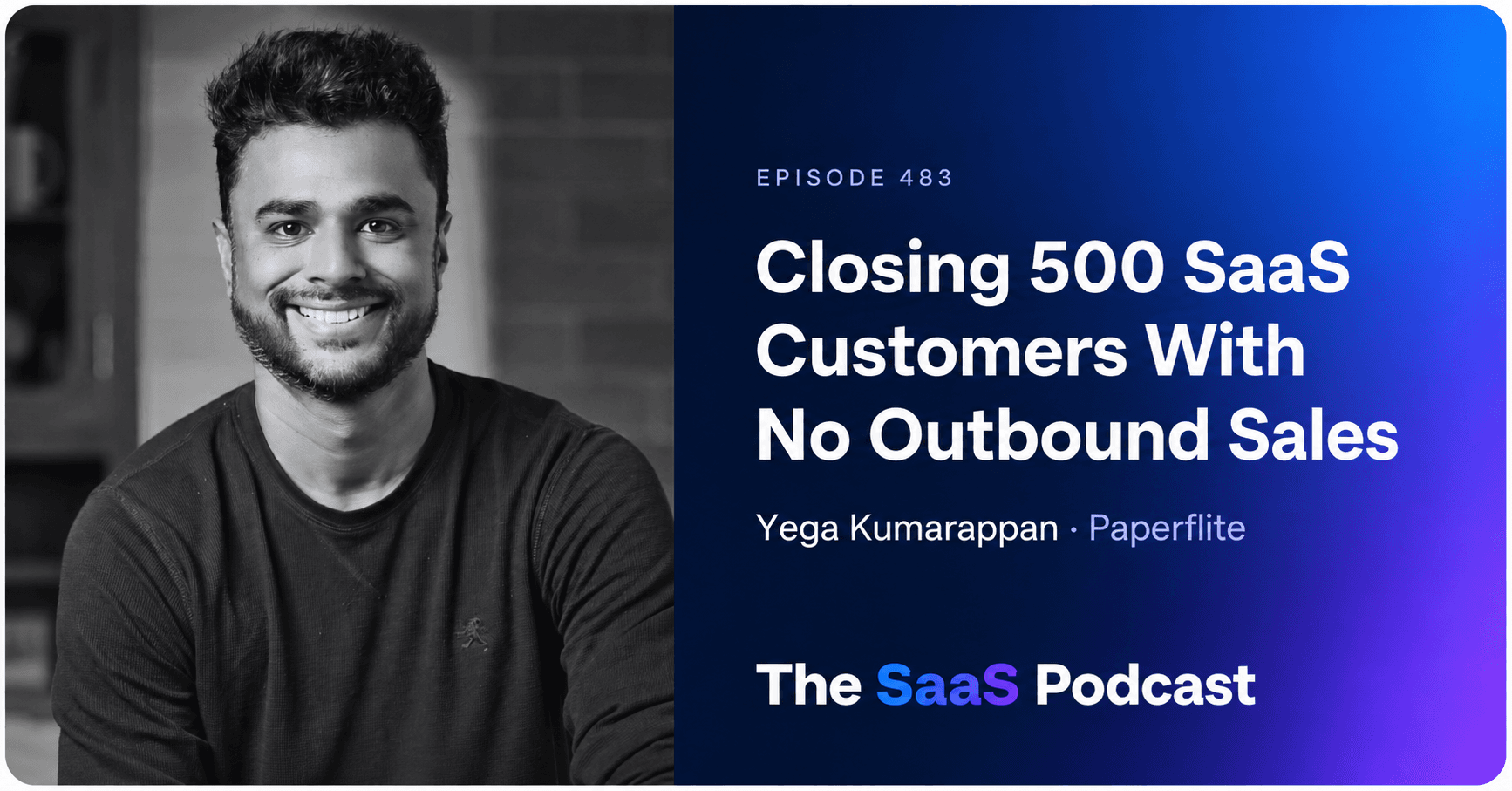
Yega Kumarappan ran the early Paperflite prototype past CMOs and heads of marketing. The response was unanimous and enthusiastic. "We've not seen something like this. The experience is really good. We will buy it." Omer asked the obvious next question: did they buy it? Yega's one-word answer: "No."
The mistake is not running validation calls. The mistake is reading them as commitments. Validation conversations are useful, but conversion only happens once money is on the table.
Why Founders Make It
Three pressures push founders to misread validation:
- You need the dopamine. Building pre-revenue is hard. Verbal commitments feel like real signal because they're the closest thing to a yes you've seen all month. Your brain weights them more than it should.
- The prospect isn't lying, but they're not buying either. Marketing leaders in larger organizations have an internal reason to delay: they want to watch a new vendor for some time before committing budget. Yega's read: "they wouldn't want to subscribe to a platform that is just coming off the ground just now. They'd want us to watch for some time before they could pick us up."
- It's 100x harder than it sounds in the room. Yega's exact words: "I mean, I think always there are promises and when you do hit the ground, it's harder. It is 100 times harder for you to convert."
The flawed reasoning underneath: "If they said they'd buy, they'll buy when we ask." They won't.
How Paperflite Used the Conversations Anyway
The validation calls failed as predictors. They succeeded as learning. Paperflite kept doing them.
What the team extracted from each call:
- Why would you buy it? The CMOs articulated their own reasons, which became Paperflite's positioning later.
- Why is this better? The answer here told Paperflite what to lead with in actual sales conversations.
- Why does this solve your problem? This surfaced the language buyers used internally, not the language Yega's team used externally.
Yega's framing: "The conversations were very good because we were able to ask them, why would you buy it. And why do you think this is better? Why do you think this is solving your problem?"
The hard responses to those questions fueled the next two years of building. The verbal commitments did not.
The Fix (If You're Making It Now)
- Do this immediately: Re-grade every validation call from the last 90 days as "learning" not "demand." Anything not paid, drop from your pipeline.
- Do this this month: For every new validation call, log the answers to the 3 questions above. Use those answers to write your next outbound email. Do not log "would buy" as a stage.
- Do this next quarter: Build a forecast that only counts dollars received, not dollars promised.
The Signal to Watch
If your "highly interested" pre-revenue pipeline converts at under 5% when you actually ask for money, you're confusing validation with demand. Measure that ratio weekly.
Ready to build your SaaS with founders who get it?
Join thousands of SaaS founders getting weekly insights and proven strategies from real founder conversations.
Free weekly newsletter · No spam