Why Distribution Is the Moat When AI Makes Building Cheap
What Everyone Says
The conventional advice for SaaS founders is still "build a great product." Spend your time obsessing over UX, shipping features faster than competitors, and writing better code. The product is the moat. If the product is 10x better, growth follows.
This made sense in 2015. Building was hard. A capable team and strong engineering were genuine differentiation. VCs rewarded product-led founders. Most early SaaS companies that won, won on product.
It still feels like the safe path. Founders trust their craft. Building is what they enjoy. And the lean startup canon reinforces it: ship, iterate, talk to users, ship more.
Why That's Wrong
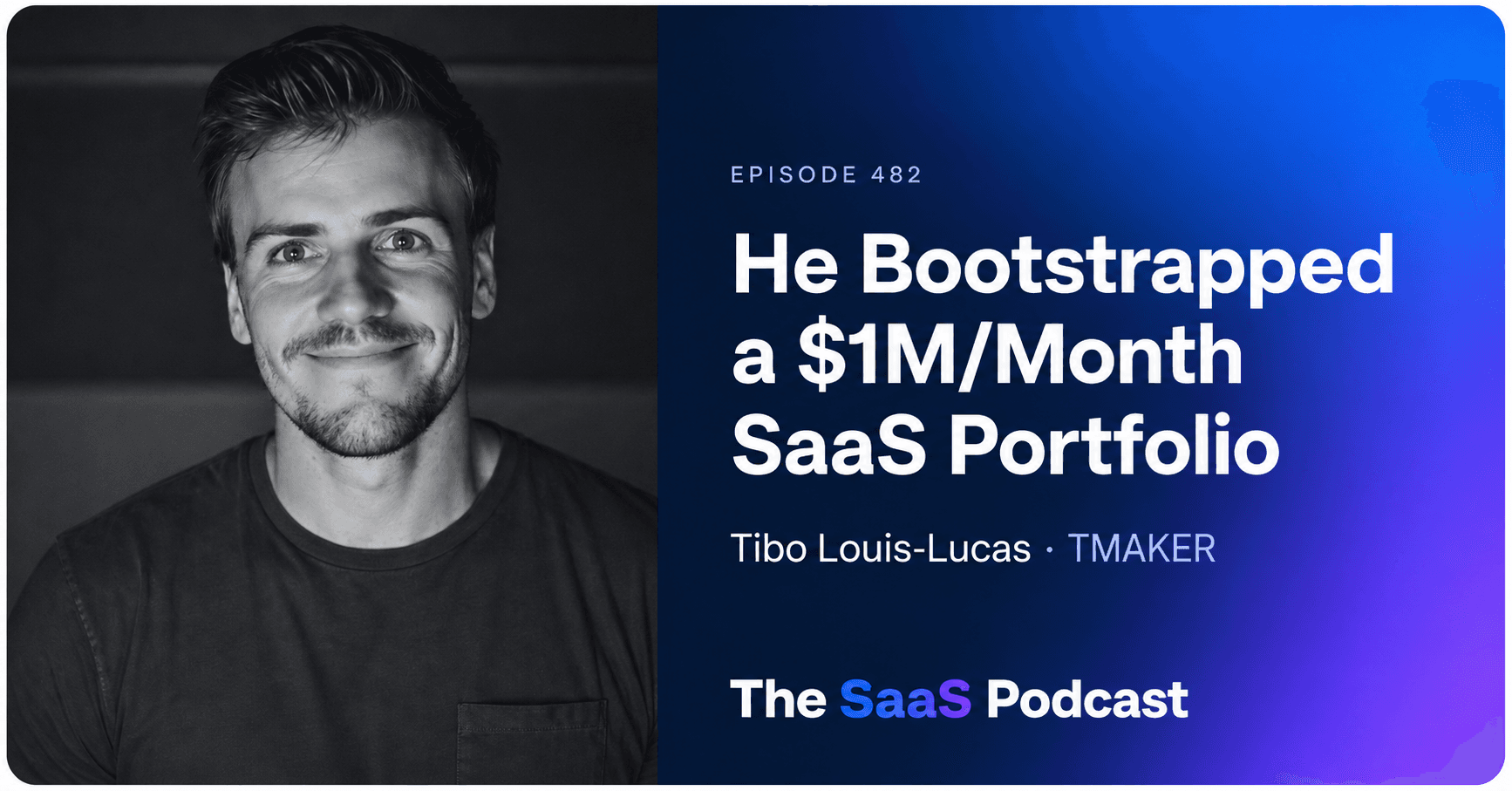
AI changed the cost curve. Tibo Louis-Lucas, founder of TMAKER, puts it bluntly: with AI making building so easy, "the success of products is going to be based mostly on distribution."
When anyone can ship a usable MVP in a weekend, the product is no longer the wedge. The wedge is who can put that product in front of buyers with intent. If you only know how to build, every new copycat erases your lead the week they ship. Vibe-coded clones come fast. The hidden assumption is that product quality compounds. It doesn't. Distribution does.
What Tibo Did Instead
After selling Tweet Hunter and Taplio, Tibo flipped his role. He stopped being the maker. He became the distribution operator. TMAKER now runs 5 active products doing over $1M per month with a team of 10.
The reusable distribution stack he built includes:
- An SEO playbook - Outrank, his flagship at $200K MRR, exists specifically to ramp SEO fast on every new product.
- An ads pipeline - reused across products, not rebuilt per launch.
- An influencer network - the same JK Molina-style deals can plug into any product.
- A personal audience - Tibo's Twitter following is the on-ramp for every MVP test.
In Tibo's own words: "You can build an ads pipeline, you can build an SEO playbook, you can build an influencer network and every single product can benefit from those systems."
Result: Outrank hit $200K MRR. Revid passed $600K per month. The portfolio crossed $1M per month with a team of 10.
The Principle Underneath
Distribution compounds. SEO content from Tibo's Tweet Hunter days is still ranking three years after the sale. Audience and partner relationships carry over to the next product. Code does not.
When building costs collapse, the scarce resource shifts to attention and trust. The founder who owns a distribution channel can launch product two, three, and five with traffic on day one. The founder who only knows how to build has to start from zero every time.
Reframe: a moat is anything a competitor cannot copy in a weekend. AI copies code in a weekend. It does not copy a five-year SEO position, an audience that trusts you, or an influencer who has already shipped you 25% revenue lifts.
Should You Do This?
Do this if you are past your first product, your category has obvious AI copycats, and you can credibly own one distribution channel deeply (SEO, audience, paid, partners).
Skip if you are pre-revenue on your first product. Tibo's playbook assumes you have already proven you can build. If you have not validated demand once, building distribution before product is premature.
One question: if a vibe-coded clone of your product launched tomorrow at half your price, what would still bring you customers next month? That answer is your moat. If it is "nothing," distribution is your next year of work.
Ready to build your SaaS with founders who get it?
Join thousands of SaaS founders getting weekly insights and proven strategies from real founder conversations.
Free weekly newsletter · No spam