The Co-Maker Model - One Distribution Operator, Five SaaS Products
The Framework
The standard SaaS scaling story is "go deep on one product." Build a single thing, push it past $10M ARR, hire the org chart that matches.
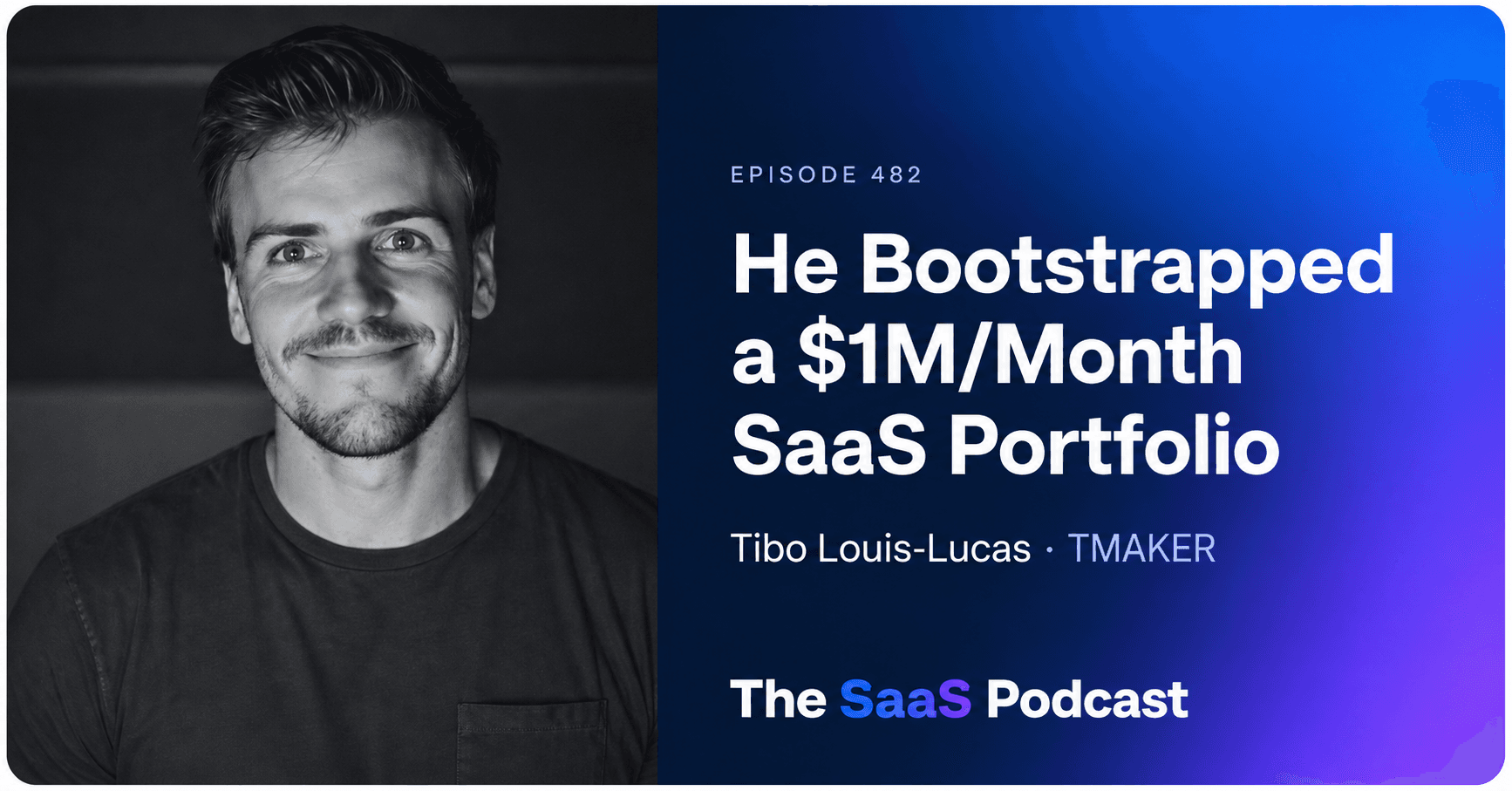
Tibo Louis-Lucas runs the opposite. TMAKER is 5 active products doing over $1M per month with a team of 10. Outrank is at $200K MRR. Revid does over $600K per month. None of them required a separate founder, and Tibo is not the builder on most of them.
The model is the co-maker structure. Tibo plays the distribution operator. He partners with a developer co-maker who builds the product. Equity is shared. Co-maker shares are tied to active contribution. The reusable assets sit with Tibo: SEO playbook, ads pipeline, influencer network, audience.
Why it works: building costs are dropping. Distribution costs are not. One distribution operator can power 5 products that 5 solo founders couldn't.
The 4 Steps
-
Pick one buyer, one set of channels. Every TMAKER product targets the same buyer: small business owners and solopreneurs trying to grow. Same SEO keywords, same audience, same influencer relationships, same ads accounts. Common mistake: spinning up products in different niches that share zero distribution infrastructure. You end up running five companies, not one portfolio.
-
Build distribution as a reusable system, not per product. Tibo built one SEO playbook (Outrank-driven) and reuses it everywhere. One ads pipeline. One influencer hunting process. Each new product plugs into the existing system on day one. Common mistake: starting product two with zero baseline traffic and rebuilding distribution from scratch.
-
Partner with a co-maker who owns the product. Tibo brings audience, SEO, ads, partnerships. The co-maker builds. Equity is split. Critically, co-maker equity is tied to active work, the same structure he used with JK Molina. Common mistake: hiring a developer on salary instead of structuring it as a real partnership. Salaried developers don't own outcomes.
-
Run multiple products in parallel and switch context fast. Tibo: "I have five different windows with five different agents doing some work for me. At the same time, I'm switching context every two minutes." Common mistake: trying to give equal daily attention to every product. The portfolio runs because the system runs, not because the operator focuses.
Real Numbers
The TMAKER portfolio after applying this model:
- Total revenue: Over $1M per month, crossed a few weeks before this episode
- Team size: 10 people total (across 5 products)
- Outrank: $200K MRR (flagship)
- Revid: Over $600K per month (acquired from a tiny tool called TypeFrame and rebuilt)
- Number of products: 5 active
Compare to the alternative: 5 solo founders, each running 1 product, would need 5 separate distribution stacks, 5 separate audiences, and 5x the calendar to hit the same combined revenue.
When It Fails
This model breaks if you don't have an existing distribution channel before you start. Tibo had a Twitter audience and the Tweet Hunter exit credibility before launching TMAKER. A first-time founder cannot copy this. You need at least one validated channel that compounds.
It also breaks if the products require fundamentally different buyers, sales motions, or compliance. Audience tooling for solopreneurs scales across products. Mixing dev tools with healthcare SaaS does not.
Your First Move
Audit your current product. List the 3 distribution assets you've built that would carry to a second product (audience, SEO, ads accounts, partnerships, etc.). If the answer is fewer than 2, build distribution first. If the answer is 3 or more, the next product question is: "what else does this same buyer need?"
Ready to build your SaaS with founders who get it?
Join thousands of SaaS founders getting weekly insights and proven strategies from real founder conversations.
Free weekly newsletter · No spam