The Cold LinkedIn Message That Gets Strangers to Take Your Call
Most founders run LinkedIn outbound and get ignored. Julius Körfgen used it to open his first sales conversations at Uplane, from a standing start with no produ
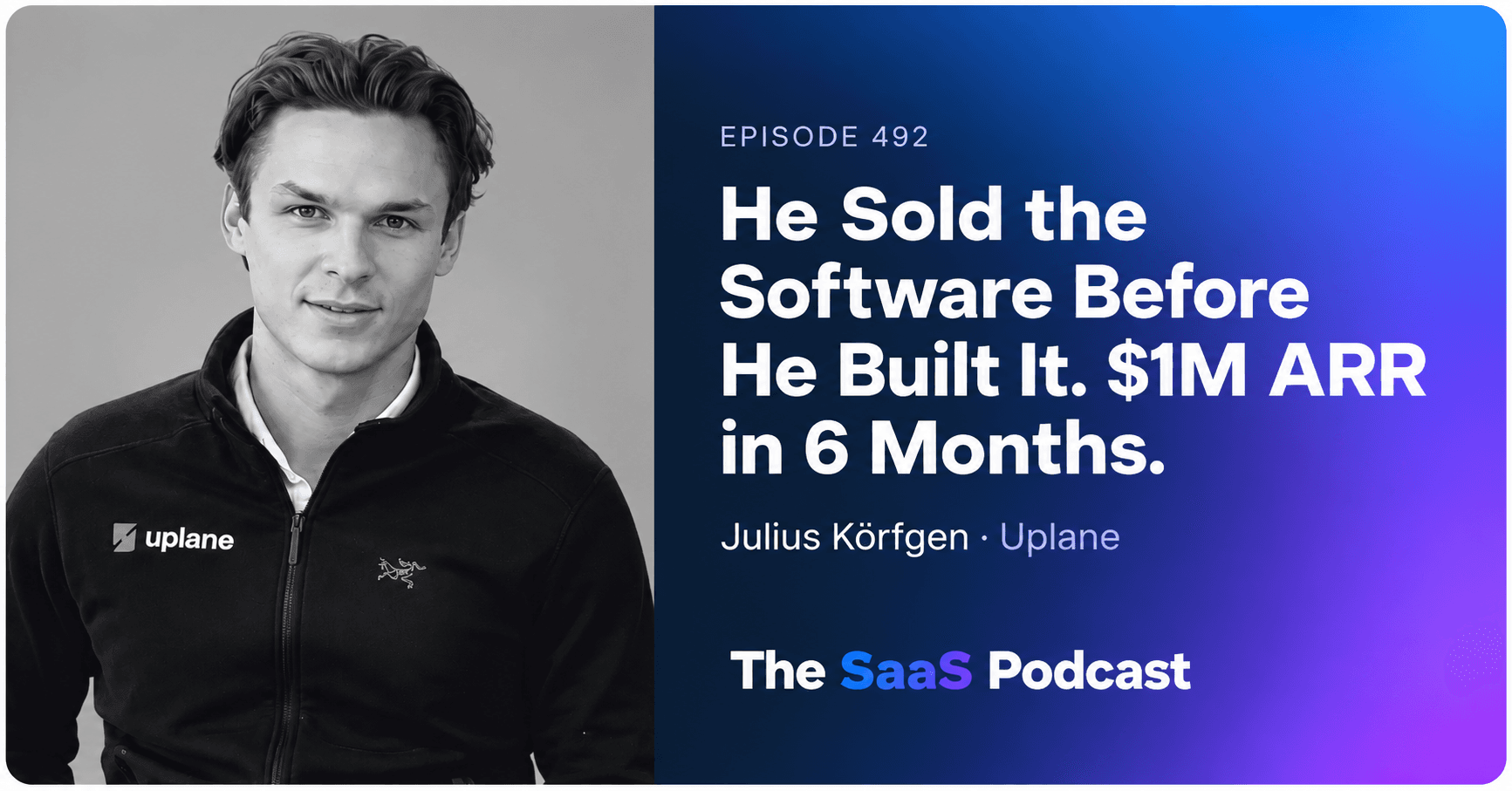
How SaaS and AI founders who scaled got their first customers
One email every Thursday. Unsubscribe anytime.
Julius Körfgen built around ten thousand ads by hand as a marketing director, one at a time. So he left to build software that would do the work for him, and then sold it to his first customers before writing a line of code. Uplane reached a million dollars in ARR in about six months.
The mechanic was the same every time. A cold LinkedIn message asking to learn, a discovery call where he only asked questions, and a promise to come back in one week with a solution. Then he and his two co-founders would build whatever they had just promised.
Julius Körfgen spent years running marketing at a European startup, where he personally built around ten thousand ads. Writing headlines, testing image variants, checking which call-to-action buttons converted. He estimates that roughly ten percent of ads are ever profitable, and that companies keep running the other ninety percent because the process of finding out is slow and manual.
So he left with two co-founders to automate it. What he did not do was build first. He ran cold LinkedIn outreach to strangers, framed every message as a request to learn rather than a pitch, and used the discovery calls to find out what marketing teams actually struggled with. At the end of each call he would say the same thing: give us a week and we will come back with a solution. Then the three of them would grind out whatever they had just promised.
He also refused to run free pilots. His argument is that without a dollar attached, you cannot tell the difference between a real business case and a polite conversation.
Uplane reached a million dollars in ARR in about six months and now runs around twenty people across San Francisco and Berlin. AG1 is a customer, and a project with Deutsche Bahn is underway after roughly nine months of conversations.
In this interview, Julius breaks down the outreach that got strangers to take his calls, the one-week sprint, why he threw out per-seat pricing in favour of a fixed fee that only covers costs plus a variable share of ad spend, and the guardrails that stop an AI from putting bad ads in front of an enterprise brand's audience.
Uplane co-founder Julius Körfgen reached a million dollars in ARR in about six months by selling to customers before writing any code, running cold LinkedIn outreach framed as research rather than sales, then building a working demo within one week of each discovery call and charging for it rather than offering a free pilot.
Most founders run LinkedIn outbound and get ignored. Julius Körfgen used it to open his first sales conversations at Uplane, from a standing start with no produ
A free pilot feels like the safe way to start. Lower the barrier, get someone using the thing, prove the value, then charge later.
Charge per seat. It's the SaaS default.
Most founders build first, then go looking for someone to buy it. Julius Körfgen ran it backwards.
How did Julius Körfgen get Uplane to a million dollars in ARR in about six months without building the product first?
He sold before building. Cold LinkedIn outreach got him discovery calls, he ended each call by promising a solution within a week, then he and his two co-founders built exactly what they had promised and charged for it.
What did Julius Körfgen say in his cold LinkedIn outreach to get strangers to take his calls?
He introduced himself as a founder who had just left his job and was exploring an idea in their field, and asked for a few questions rather than a meeting. He describes the tone as humble and grateful, with a response rate around five percent.
Why does Julius Körfgen refuse to give first customers a free pilot?
Without a dollar sign attached you cannot tell whether you have a business case. He has seen founders stay attached to an idea for too long because nobody ever asked them to pay, and the budget conversation is what exposes it.
What is the one-week sprint Uplane used to win its first customers?
At the end of a discovery call he would propose reconvening in a week with a solution. He and his co-founders would then build a scrappy but working version of what the customer had described, and demo it.
Why did Uplane throw out per-seat pricing?
Julius argues seat-based pricing does not align incentives. Uplane charges a fixed fee that covers operating costs at little or no margin, plus a variable success fee tied to a share of ad spend, so the company earns more only when campaigns perform.
How does Uplane handle attribution on performance-based pricing?
Uplane charges a percentage of ad spend rather than trying to claim credit for revenue. The logic customers accept is that if the campaigns work, they will move more budget onto them. Clients get daily reporting on every ad and its cost per result.
How does Uplane stop AI from producing off-brand ads for enterprise customers?
Through what Julius calls atomic content. Brand and compliance guidelines, reference ads, product descriptions and ERP data are fed in as constraints, evaluations run on generated ads, and an account manager reviews output before it goes live.
Why does Julius Körfgen say most companies using AI in marketing are getting it wrong?
They use AI to produce far more content without connecting it to the analytics that show what works. The volume goes up and the relevance stays flat, so the constraint moves from producing content to selecting the small share that performs.
What is Uplane's response-time rule for customers?
One hundred and twenty seconds. Julius treats being reachable as an early-stage company's main advantage over a marketing agency that takes days to reply.
Julius Körfgen [00:00:00]:
Had the exact pain point that I'm solving right now. I don't know how many ads I built myself, probably like 10,000 ads in my life that I've built by hand. And it's also my biggest advice, maybe, I mean, if we talk about it, is to start selling first. Before you even touch a line of code, you should start selling. And by selling, I mean make those discovery calls, learn about the problems, schedule a demo one week later, and then grind with your team. Actually have something working in one week.
Omer Khan [00:00:27]:
Hey, welcome to the SaaS podcast. I'm Omar Khan and this is a show where I sit down with real founders and dig into how they actually built their SaaS companies. I've had almost 500 of these conversations now and I put out a new one every week to help you build and grow your startup. If that sounds useful, hit subscribe or check out SaaS Club I.O. to learn more. My guest today is Julius Kurfkan, the co founder of Uplane. He ran marketing at a startup and built over 10,000 ads one at a time. Eventually he left to build software to do all of that for him. But before he even wrote a single line of code, he was already selling it. And about six months after launch, Uplane hit the first million in ARR. In this interview, Julius breaks down the LinkedIn cold outreach that got strangers to take his calls. The one week Sprint he and his co founders ran after every discovery call, why he refuses to do free pilots, and the pricing model that replaced seat based pricing, and why his customers love it. So I hope you enjoy it. All right, Julius, welcome to the show.
Julius Körfgen [00:01:36]:
Thanks. Hi Omar, nice to meet you.
Omer Khan [00:01:38]:
Yeah, same here. So tell us about Uplane. What does the product do, who's it for, and what's the main problem trying to solve?
Julius Körfgen [00:01:46]:
We solve the problem that basically half the world as end is wasted in digital marketing. So companies spend a lot of money on ads that bring almost no result. And the reason for that is that when you run digital marketing that like out of your ads only like 10% are actually profitable. And why companies still run like the 90% that are unprofitable is because of slow manual processes, design processes, communications with agencies with in house teams. And what we do with Uplane is we solve this problem by automating with AI the entire operative workflow of marketing. So we automate the entire research that goes into it to analyze what ads are likely to work. We automate the entire production. So we create ads and landing pages for our clients, push them live across channels and Then it's like high frequency trading where we monitor all the assets that are live, see which ones are working, which ones are not working and we double down on the winners and take the losers offline. And this is how then our clients spend way more money on well performing ads than on low performers.
Omer Khan [00:02:59]:
Great. And who's your icp? Because I know you have a very specific customer that you go after.
Julius Körfgen [00:03:04]:
We go after everyone who's using the major platforms right now. That's Google, Meta, TikTok, LinkedIn and Taboola, outbreak and many more. They all use the same platform. We have like a sweet spot where our technology works best is anything beyond 100,000 ad spend per month. Before that like there's not enough room to test and iterate so fast. When we are really in the high spend creative is almost always an issue. They have too little ads that test too few and our engine can really get going if we have more ad spend to play with.
Omer Khan [00:03:42]:
Great. And give us a sense of the size of the business. Where are you in terms of revenue, customers, size of team?
Julius Körfgen [00:03:48]:
Yeah, so I think revenue is the most interesting number where I can't disclose. So we're yeah in a seven figure number. Where we operate right now team is we have a San Francisco team and a Berlin team that's taking care of the European business. We're roughly 20 people overall. And yeah clients, we have like clients around the globe by now. I'm super proud that we're working in the US with some clients like Kalshi or AG1 is a big client of ours as well. And yeah, happy to answer your questions today about that. How we got there.
Omer Khan [00:04:29]:
One of the first things I want to unpack is you got to the from zero to the first million in ARR in about six months. So want to definitely talk about that and see what lessons we can learn from that. Before we get into that, tell me about where the idea for this product came from. Because you were effectively building a product for an itch that you had yourself.
Julius Körfgen [00:04:55]:
Correct, Correct. So my background lies in marketing. I've been in marketing my entire life. And when I worked at npal, which is like a European startup or became a scale up after a while. Yeah, I was responsible to run marketing there. My position was marketing director. Ran a lot of ads, had the exact pain point that I'm solving right now every single day by yeah, I don't know how many ads I built myself. Probably like 10,000 ads in my life that I've built by hand. Later I had a team where we really pushed to produce lots of ads, to test, to do data analytics. Like, what are the headlines that are working? What are the CTA buttons that are working, the image components. And yeah, we really struggle to keep everything together, to track cleanly, to test and iterate fast enough. And yeah, Uplane is solving exactly the problem that we had in such an organization.
Omer Khan [00:05:57]:
So what was the moment that you decided, you know, you're probably going through, like, periods of frustration, and you're like, I wish there was a better solution for this, and then one day you decided you were the guy who was going to go and build this solution. So just tell me about, like, what was that kind of inflection point that pushed you towards committing to this idea and this business?
Julius Körfgen [00:06:20]:
Yeah. So, first of all, it's not just me, but it's also my two amazing co founders that are in this business together. And I think for all three of us, it was clear throughout our lives that we wanted to be founders someday, that this is the most impactful way to help a lot of people and to change something in the world, in a way. And this was the problem that was, like, to me, super apparent. And like, it's also a very big problem for businesses. Right. The amount of money that goes into operative, repetitive tasks, the amount of frustration that marketing managers have. Right. People become marketing managers because they want to bring their amazing ideas to life and tell great stories, and then they are stuck in some scrappy tools and do operative work in messy sheets. So this was a real problem. And the pain that, like, my team and I faced every single day. So obviously that's very close. Like, if you say you want to build a company one day and you have this problem every single day that you're annoyed by, it's very, very close to build something around that. And this is how it started. Yes.
Omer Khan [00:07:33]:
So did you feel like you'd already validated the idea and like you guys were ready to go and build something, or did you still spend time trying to talk to strangers?
Julius Körfgen [00:07:43]:
We also found the time to talk to strangers then. Right? I mean, I had conviction on this idea from the very first second. Because when you feel this pain, like, for such long time and you. You see that there's a solution, it just like I would be a buyer, like, every second of my job before. So I, I said like, okay, this must be a good, good point. And actually like, the, the team that I worked in before, they also our client now. And, um, so apparently that judgment was right in that sense, but obviously we had Discovery calls, right. I mean they weren't our very first client because it's a big company. They have like, like I was managing seven, seven figure, figure monthly budget when I was there and we, we started like with way smaller clients. Right. So we did the normal LinkedIn outreach discovery call strategy to win our very first clients here.
Omer Khan [00:08:43]:
So you landed your first customer through LinkedIn Outbound. Walk me through what you were doing on LinkedIn and how you basically were able to get this conversation going with this potential customer.
Julius Körfgen [00:09:00]:
I think like the starting point is always or for us it was like a normal discovery call. Like saying, hi, I'm a founder, I just left my job and I have an idea in your field. I would love to spare about that. And I mean in the beginning it is just that, right. You have nothing. You have maybe a vision or an idea or you think you have an understanding for your potential client, but actually you don't. Right. And in those discovery calls you actually learn. Yeah. What they're really struggling with and you should approach it in exactly that way. First start with learning. Like what is the situation? Do you work with an agency? Do you have like a team who is designing your ads? Is, is that actually a pain point? Do you have more pain point with media buying? Right. You, you try to understand what they struggle with and if you don't come like into a call like you're going to sell them something or like you're teaching them something. People are actually very open, right. If you actually like, if your mindset is that you want to learn something from this person, they actually open up and they also show some kind of vulnerability where they say, oh yes, we actually have a problem here or oh yes, we actually have a problem here and there. It's super important to like just be very humble, be very open minded and be very grateful for the time of the people and listen to them. And everyone who's working in any job at any business, they have problems. Like there are always problems to solve. And yeah, if you get on the, on the right wavelength, you will learn about them. And then like the way we did it is we say cool, great. This is something like it's somewhere on our hypothesis. Let's reconcile in one week and we'll present you our solution. And then it was like Marvin Lucas and me sitting down, grinding and building, building the tool to show them in one week, showcasing the demo. And obviously there was like little scrappy back then or.
Omer Khan [00:11:01]:
Right.
Julius Körfgen [00:11:01]:
I mean it's completely normal, but it was solution to their problem. And this Is like how we approach, approach the really first days. And this also my biggest advice maybe, I mean if we, if we talk about it, is to start selling first. Like before you even touch a line of code, you should start selling. And with selling, I mean make those discovery calls, learn about the problems, but schedule a demo one week later and then grind with your team to actually have something working in one week. And then if the customer is willing to pay for that, you know that this is something you should maybe go deeper into.
Omer Khan [00:11:38]:
I think a lot of founders try to do LinkedIn outbound and they don't have a lot of success or they just feel that people are just ignoring them. What do you think you guys did differently to be able to get people's attention and more importantly their time to talk to them?
Julius Körfgen [00:11:59]:
I mean nowadays with AI, it's about personalization. Basic personalization is done everywhere, right? I mean like I get, I don't know, probably like 20 LinkedIn messages a day. Hi Julius, great career at NPAL. Amazing to see that you got YC funding, blah, blah. All the basic information on the Internet that you get, right? If you say write a personalized outreach message to Julius and I think like it's really important to, to stand out. So this can be done in two ways in my opinion. And now I'm actually giving away like a little secret sauce. But first one is doing even better research or doing like research on information that's not accessible to anyone. Like this could be maybe a talk that this person gave or something, right? And you'll actually listen to this talk or you let your AI agent listen to it and have some information from that that you can pull in your outreach. So it's even more personalized or it's even like information that you would actually only have if you know this person very well. And the second part is that it's like a very casual and a very non. Like it's like it's outreach that I do actually like. Like both types of outreach I actually do manually. We stopped working with, with outreach agencies that do bulk outreach. We do very curated, very well thought through outreach where we like actually analyze the strategies, et cetera. Like that's the first category. And the second part is it's very casual. Like I text the CEO of the company on LinkedIn, I'd be like, hey man, I saw your marketing, I think it's great. We have a chat and that's it. And that's like the other, the other side of outreach. When I was doing discovery, it was A little bit different. I was actually being like, as I said, very humble. Hey, I just left my job at npal. I'm thinking about founding something in the marketing space. Would you be able to answer a few questions? I'd be super grateful. Something like this, right? Super humble, super grateful. And obviously the response rates are low, but then it's just a numbers game. Maybe you get a 5% response rate and then you need to send 100 messages and you have five meetings. So that's it. Yes.
Omer Khan [00:14:18]:
So who was that first customer? Can you mention them?
Julius Körfgen [00:14:21]:
Yeah, I can't name the name, but it was like a startup from Berlin that we've been working with. Yeah. And it was really completely cold outreach. I didn't know this person before. Yeah, they were, they were very friendly. Was obviously like probably like 5 to 10% of the deal value that we do right now. But yeah, it's the starting point, right?
Omer Khan [00:14:49]:
Totally. Hey, even that first dollar is super important.
Julius Körfgen [00:14:54]:
Exactly, exactly. And I think one also really important thing is that you don't do free pilots for your first customers. You need a dollar sign attached to the value that you deliver, because otherwise you might think you have a business case, but you might not have one. And I saw a lot of founders struggling with that, that they have been stuck with an idea longer than they should have because they thought they had a solution. But the moment they said, please pay us for it, the client basically said, sorry, there's no budget or it's not important right now and this doesn't work then. Yeah.
Omer Khan [00:15:29]:
So you had the conversations, you did these discovery calls, and then you got to the point where you were like, hey, we can come back and give you a demo. So that you got this week of scrambling and figuring out what you're going to build and show them. What did you take back to them? Was it just kind of like a fake prototype that actually didn't do anything? Was it, you know, some working functionality, but sort of a limited feature set?
Julius Körfgen [00:15:56]:
Yeah. So what we sell is, I mean, we're, we're selling a service right now. It's marketing. So we're, we're doing what a marketing agency does for our clients. But at a 10 times like this, our, our goal at a 10 times faster speed. And, and that's why we're, we're way better. And 10 times better quality, we also say, which means basically more personalized, more researched, et cetera, et cetera. And what we showed customers is, is the output of our work. Right. So after a week, we would come up with like a full fledged marketing strategy, a new website, like an ad strategy for different Personas, how we would do everything. And yeah, so this is like how, how we used to come back. Now we have like a few clients that have purchased also our software and there it's. Yeah, that's a different game. It's like we actually show them what we have. Right. Sometimes we had a situation where we needed to build custom features new, but I wouldn't recommend like putting just. I mean, with AI you can build products so fast. I wouldn't recommend to have like fake demos. I don't think sustainable, like you shouldn't do that. And yeah, I know that lots of founders are doing it. I think it's a little risky. And if you can build it like you will be like, if you think there's a realistic way to build your solution, you should be able to build like a scrappy demo in a week or two. Yeah. Yes.
Omer Khan [00:17:36]:
Yeah. Or set expectations that this is a prototype, this is what we're planning to build as opposed to going in there and pretending that it's a fully baked product when clicking the button does nothing.
Julius Körfgen [00:17:48]:
Exactly, exactly. Right. I mean, and people are open for that as well, right? They love that you're just starting something. And actually I just started to work with like a super, super, super early stage founder, but he solves a really big problem for me and his platform is super scrappy and messy and I have like maybe once or twice a day the situation that I'll text him like, man, this and this is not working. But he's like, he's responding in 120 seconds. He's there, he solves the issue immediately. And I'm so happy to work with him. Right. Because he solves the problem for me and it's not annoying in that sense. And I know I have the advantage that I can reach the founder every second and this is maybe then another piece of really important information. Be insanely reachable for your clients. Right? We have this rule, we need to respond in 120 seconds. This is like our benchmark in my go to market team and also for operations team. Then when a client has a question, we respond in 120 seconds. And this is our advantage against any marketing agency that takes like days to respond. We are always there for our client. And I think as an early stage founder, this is your main advantage, that you can actually be there for your client. Fix issues immediately. And yeah, give yourself this 122nd rule and show your clients that you're there for them.
Omer Khan [00:19:07]:
So I want to clarify something you said a little earlier about there's like two ways that you're selling uplane today. One is almost an agency type model where you are using AI to be a lot faster and scale and do all of these things, but then also giving customers the software for them to do it on their own. Can you just explain that a little bit?
Julius Körfgen [00:19:37]:
Yes, that's completely right. I mean we are building software. So we're a software company, right? We have engineers, we build software that automates marketing. And we just learned that clients maybe sometimes don't want to use software, they just want someone to do their marketing. And like our software is good, but like no one wants to give like 100% of control to a software. So what we have, what we have found or maybe they want someday, but what we have found like up to now is that if you really want to outsource everything, you're happy to have like an account manager on our side that's handling the software for our client. And this started very organically just due to the fact that we didn't have any software in the beginning. When we started selling, we just had the vision of what our software was capable of doing. And maybe we had like two, three features built. But we closed our very first clients when we like when we couldn't automate like, like the entirety of marketing. And there's still many things we, we haven't automated yet, right? And those are the things where our AI marketing strategists step step in. They work in the upland platform. They strategize with with our clients. They show flexibility, right? If there's some, some need for our client that we haven't automated that yet, they will step in. And this is how we can offer a very broad service and a very fast, reliable, high quality service even for features that are like, have just been deployed, right. That we always ensure our clients get really, really good quality of work is through this setup. And then the original idea like this, like to automate performance marketing with a software as an insanely complex endeavor. And it took some time to build software that is at this point that it can actually operate across like certain accounts or across certain channels. We started selling this also a while ago now. And this is then more for enterprise firms that have like a large marketing team. They want to keep stuff in house. They have like technical integrations and there we build actually like we only sell this to enterprises at the moment. There we have then an implementation project where we look at the Current tech stack that they have, the uplane platform gets all the relevant information from their salesforce, from their Zotap, from their meta ad account, Google Ad account, et cetera, to create ads and operate them. So yeah, we have those two models right now.
Omer Khan [00:22:13]:
Great. I think it was about nine months into after you had launched that you landed Deutschpahn. And I mean for folks who aren't familiar, this is kind of like the national railway company, right, in Germany. This is a huge organization. Tell me about how you landed that customer when you're effectively like a nine month old startup with no track record.
Julius Körfgen [00:22:44]:
Yes, yes. So obviously this doesn't come from nowhere. And we had ongoing conversations for a long time until the deal was so to say, closed. And the way this works is basically the same way as before, right. I had like a relationship to one of the people there, I knew them through my network and reached out and was basically the same story. Hey, I'm founding something in the space. Would you be open to share some information, how you're set up, what problems you might have, et cetera, et cetera. And this actually then evolved, right? He said, basically we have like one issue. Our agency takes this and that long. Or we have here a process step where the formatting of an ad is very painful, where we have to send all the ads to one agency that is just doing formatting and send them back in two weeks. And I was like, great, we can automate that. So this is how the conversation started. Then he was like, oh my God, that's amazing. That saves me so much money and so much time and so much many nerves. If I can just put it into your tool and we can like reformat it. And this actually how the conversation with Deutsche Bahn started that we then discovered that we're actually doing way more than just this formatting thing. Right. It's like one tiny part of our process. And yeah, then like from this person we got to know the entire team. We spoke to their creative team, we spoke to their media buying team, we speak to their analytics team. And then we actually like, yeah, have been able to start this project where we actually deploy the entire platform with Deutsche Bahn. But it just again started with this communication here. I didn't. It wasn't a cold outreach. So I knew the person before, but it was the same approach, right. Hey, I'm founding something. Would you be open to spare? Share me your thoughts, like what is, what are your problems? And we had, I think the first call with Deutsche Bahm was almost like this Guy took some time after his, after his workday. Like I think we spoke at like 6pm, 7pm and I think we spoke almost two hours where he was like taking me like how they do everything and what the problems are here and there. And like for me, I worked in a startup in a scale up before. This was so insightful to learn how an enterprise is actually like organizing their marketing. And from all this information that like I got there, we've been able to then one week later show the demo and go from there. Right. It's the same process.
Omer Khan [00:25:15]:
How long did these conversations go on? And then when they got to the point where they were ready to buy, what happened next? Was it like a, let's do a proof of concept. How did you move this forward?
Julius Körfgen [00:25:32]:
Like we're still in the state, like we're obviously we just started working together so we're still in this so called phase where we have to prove ourselves. Right. They're running a tender right now, so I can't speak so much for like the full. Yeah, for the full rollout across different channels, across different teams. And yeah, we hope we're in a very good position to convince them that we're the right partner to do this with. And I think we're in a good spot. But yeah, obviously it takes a lot of time. You need to meet all the people, you need to understand every person's problem. We're building the platform custom for every client so that each team has their own interface. We know what which person is going to do in the upland platform. And yeah, then you go through like.
Omer Khan [00:26:25]:
Right.
Julius Körfgen [00:26:25]:
I mean it's European enterprise. We go through compliance, we go through purchasing department and all of those steps. So I think overall it took roughly nine months. We spoke basically when we launched, we had the first conversations and yeah, it takes that long. And I think nine months is actually fast.
Omer Khan [00:26:46]:
Yeah, for a size of organization. Yeah, that big. The other interesting thing about you guys is that you threw out seat based pricing and you decided to basically just go performance based. So I guess effectively whatever revenue we generate for you, we'll take a cut of that. Can you explain a little bit more about how that was structured? And. I'm just curious about if I was a fly on the wall. When you go into that first customer and you propose that, what was the reaction?
Julius Körfgen [00:27:27]:
It's actually pretty nice, I think. So we have, we have like two parts of our, our fee. We have a fixed fee that covers our normal operative costs. So this is something where we don't earn any money or like super thin margin. But it's like nothing that's going to make us grow. And where we earn our money is with a variable fee. So this is the success based fee and we want our clients to win. And if like I think we sit like we align incentives perfectly if we align our fee with the success of our clients and it makes a sales pitch actually way easier if we say, hey, I'm not going to like, you're just covering my costs and I'm going to earn money when you earn money. Right. I think this is a way easier sales pitch than when you say I earn money regardless of our performance. And you can see how you earn money. Right. Like it's, it's actually, it made the pitch, in my opinion, way easier and takes a little bit of risk away, I think from the client that they see they actually only going to pay us like a normal fee, I would say actually where we have the typical margins that businesses have if they actually become successful. And it's obviously a risk that we take, but that we need to take if we enter a new market. And yeah, I think with the clients that we have, we've been able to prove that it's worth shifting more and more budget to uplane and that they get great results with the campaigns that we manage. So yeah, it was actually an argument to work with us and not against working with us.
Omer Khan [00:29:06]:
I think, I guess one of the hardest things about doing any kind of performance based work is attribution. And I guess to some degree with what you're doing, where you're running the campaigns, you're building the landing pages, you have an end to end kind of flow where you can track what's going on and have some level of attribution. But how much of a problem or challenge was that for you at the end of each month to be able to say to the client, this is how much we made for you? And they agreed with that number.
Julius Körfgen [00:29:44]:
Yes. So the way that we agreed with, I think all of our clients, or maybe one or two, where something is different, a little different, but basically with all of our clients, we have a setup where we're charging a percentage of ad spend and we say like, if you're happy with the work that uplane campaigns do, you will shift more budget onto them. That's like very basic logic that everyone agrees with. And the attribution thing is obviously like they need to do it all the time anyways. Right. Like, how much does my Google campaign like result in? How much do my Meta campaigns result in they have tracking implemented like most of our clients have tracking implemented. When we join, we actually also help a lot for most of our clients. We bring their tech stack to a new level. We implement our tracking technology like we're all about data and we're like obviously super happy to help clients set that up properly. And our clients get daily reportings what happens to the spend that uplane runs. They see exactly on what ads we run, what are the cost per result that we run on those ads. And I think transparency is one really important part of. Yeah. Of all of this. So we hope that we can deliver this great to our clients. Yes.
Omer Khan [00:31:07]:
So I came across this interesting stat that I think you had shared somewhere. Maybe it was on your website that with AI companies are producing up to 12x times more content, but most of that isn't performing very well. Just share the stats so we can understand exactly what you mean.
Julius Körfgen [00:31:34]:
Yes, I mean one of my favorite quotes is by like CMO of Salesforce, Bobby Janya. He said we're using the most powerful technology in human history to produce more AI, to send more one way spam faster. Right. And I think this is like a perfect, it describes perfectly what's happening right now and like what I see in my inbox, for example, every single day where people are just using AI to send more, more emails that are not tailored to my needs. Right. And what. And this exactly the issue, right? Like, I mean they send way more, like they probably send even more than 12 times as many emails as before. But the quality of these emails and the like, the knowledge of the problems that I have is, is still zero. And this is why these emails don't resonate with me and this doesn't work and just annoys me. And I think the way that we need to set up AI and I'm like, obviously one of the biggest believers in AI, like I'm dedicating my life to it right now, is that we need to like break the silos like and actually get the relevant information into AI and what this means. For example, right. If we speak about marketing, how do you break those silos? Right, you have, for example, you have an analytics team that knows exactly which ads are performing at what level, which are actually the high performers, which are actually the low performers. And if you bridge the silos, you will then generate only further ads that are actually iterations of the top performers. And what companies do right now is they don't care at all about like the analytics team. They have just the throughput they push out ads. The more the better. And yeah, this is then, this is then what happens in my inbox right now.
Omer Khan [00:33:30]:
Yeah, yeah, I have exactly the same thing that I just think the, the sheer volume of noise is just mind blowing. Yeah. But the quality, the relevance of what's coming through, like, I mean, it's, it's so easy for a, an email to stand out when somebody potentially uses AI to do the research, but maybe writes it in a personal way and they take the effort to figure out that how do I make this actually relevant? Everybody else seems to be like, let's just send up more emails, more noise.
Julius Körfgen [00:34:14]:
We've done that as well. We've done that as well. Yes. We stopped it now completely. Yes.
Omer Khan [00:34:20]:
So then the problem moves from creating enough content or ads or landing pages, and it becomes more about selecting the 10% that drives most of the results. And so is that where you focus most of your energy on with. With uplane?
Julius Körfgen [00:34:46]:
Yeah, actually that's very true. Right. Like the 10% that actually perform is not as easily said. Right There. Like different Personas that purchase. Like, like if we speak about Deutsche Bahn, for example, right. Everybody travels, but everyone has a different reason to travel or different point of time to travel. And what we have them to do is actually reach their audience at the way they are.
Omer Khan [00:35:09]:
Right.
Julius Körfgen [00:35:09]:
We reach grandparents with like, when was the last time you saw your grandchild child, maybe? Or like we share some inspiring story about grandparents or like with one of our clients, Kalshi. Right. We also have like so many different use cases where we can push out ads for basketball fans about like the season starting later this year or, or we have like in the World cup we could produce, right. Like for different fans, different ads. And then our goal is to bring the most relevant ads, like about a topic that people care about actually to this audience. And it will perform way better than when we have like very broad advertising that we just mainstream push out and hope that like, it resonates somewhere.
Omer Khan [00:35:51]:
What are the guardrails you put into place? Like, I mean, if I'm an enterprise and I'm spending that amount of money, I want to be pretty confident that AI isn't going to push out a lot of slop and content. Right.
Julius Körfgen [00:36:05]:
That represents my brand 100%. Right. So there are two ways that we stop this or that we control this. We call this concept like atomic content and we have content pieces that we receive from our clients. So this is like brand guardrails, compliance guardrails, maybe reference ads, all of that product descriptions Access to their erp. Like anything that we can know about the way that they do their marketing. Maybe that's even like previous templates for ads or anything like that. And with that we actually train our AI to produce, then just picks different pieces together from different resources and we'll match them into one ad. And the more guidelines we have, the better it actually becomes and the more. Yeah, the safer it is. And yeah, but that's, that's how we do it. And this is actually working really well. Like we train, we give really strong guardrails and I can work in those. We have like if code implemented that stops AI from going beyond that or evals that we run on ads. Yeah, this is how we set it up. Obviously this needs like implementation with our software clients. So this is where our forward deployed engineers step in. And for our managed service clients we have the account manager that's on the deal and that's actually checking like the ads before they go live training our system building. Like we actually built this atomic content snippets for clients that don't have them.
Omer Khan [00:37:41]:
Right.
Julius Körfgen [00:37:41]:
We built ourselves brand guidelines for our clients and they don't even know. It's just to make our AI better and produce more content pieces for our clients. Yes.
Omer Khan [00:37:51]:
The other interesting thing that came up when I was researching for this interview was like, how much of what you built was based on your personal experience versus talking to customers. Now I know you did these discovery calls, you really spent time trying to understand how they did things, what their pain points were and so on. But I think somewhere you said like, hey, 95% of what we built was really based on my own experience. And that's very counter to what, you know, I get tired of every time I talk to a founder who's built something great. And I go, what? How many customers did you talk to? And it's like, well, okay, go, go and talk to some people, people. And then here we are, you know, you got some, you know, you got to the first million in like six months. You've, you're, you know, seven figure business now. How do you, how do you rationalize that? And why did you feel that in many ways you knew better what to build for those customers?
Julius Körfgen [00:38:59]:
That's like, I think typically you would pivot a lot before you hit. Like you need to test so many different avenues until you find one that works. Typically. I have many friends that are founders as well and it's very uncommon that actually the first idea is picked up or works or at least you iterate And I still think sometimes, okay, maybe our company will completely pivot at some time and we find, like, something that works even better or. I don't know, right. I'm still. I try to still keep in this mindset. And when a client asks for something in a discovery call and we don't offer it, my default answer is, yes, we can do it. And then I'll get an engineer and try to build, like, a solution and see where we can take it. And it's just like an exploration phase. But I think this is, like, the mindset that we try to be in for as long as possible, that we still keep learning from our clients. What do they actually want? We still structure our calls in the same way. Right? We still do problem analysis with them. We try to understand their issues. We try to learn. And then, like, our sales and our product team work insanely close together. We spear about the new things, like which clients are in the pipeline, what issues did they have? How likely are they to convert? Do we have a demo ready for them? Yes.
Omer Khan [00:40:25]:
No.
Julius Körfgen [00:40:26]:
Right. And we build actually very, very close to client demand. And, like, if I think back, obviously, I had, like, lots of things that I imagined differently from what we're doing right now. But I think the most important thing is this mindset. To know that you know nothing and to question yourself every time, go into every client meeting, like, I don't know, probably forever, trying to learn about what the client is not happy about and try to offer them a solution. And as long as you keep this mindset, you keep reinventing yourself and keep being better and better and staying competitive, I think that's what we're trying to do.
Omer Khan [00:41:13]:
So how do you stay competitive? Because obviously this is an area that is pretty crowded. To me, it feels like whatever market you're in, everybody is figuring out how to build some kind of product. And so you have so much noise in the space when you talk to customers or make your pitch or if I was to talk to one of your existing customers and ask them, why do you use uplane? Why do you stick with them? What's your biggest differentiator?
Julius Körfgen [00:41:52]:
We're not a point solution. We're not just some tool that does ads. We're not just some tool that does analytics. We're not just some tool that does media buying. But we are actually integrating those silos. And this is how we can work way more intelligent. We can do way more intelligent media buying because we know from our analytics what target Personas are more likely to buy on which ads we know which ads to create because we saw the analytics on what ads have been working before in the past couple of months. We know what the competitors are running, we know what viral TikToks are live. And we pull all of this together into like asset creation and media buying. And this all integrated approach is obviously super difficult to build, but this is the reason why our clients choose us.
Omer Khan [00:42:41]:
We should wrap up. So let's get onto the lightning round. I've got five quick fire questions for you. Great. Okay. What's one of the best pieces of business advice you've received?
Julius Körfgen [00:42:52]:
Sell first. I think it's the best advice like start selling, learn and then stay humble, stay hustling. That's the most important thing.
Omer Khan [00:43:02]:
And then scramble to build that demo in a week.
Julius Körfgen [00:43:04]:
Yes. Like build a demo that feels like magic to your client that they're just stunned. What you can do. Yeah.
Omer Khan [00:43:12]:
What book would you recommend to our audience and why?
Julius Körfgen [00:43:14]:
I think the book that influenced me the most was seven habits of highly effective people because it teaches you to completely be proactive, take life in your own hands and like actually figure out that if you do a B will happen and if you realize that a lot can change. Yes.
Omer Khan [00:43:36]:
What's the best money that you've ever spent on your business or so far?
Julius Körfgen [00:43:41]:
A really good question. I think Visa for our German employees to bring them to the US Right. We started the company in Germany. Then Y Combinator happened. We got these huge US clients. We decided to come to the US and build from here. And we had like obviously the way the high investment but we said we leave no one behind. And yeah, it was a really expensive thing, but I think it's worth doing.
Omer Khan [00:44:12]:
What's your favorite personal productivity habit?
Julius Körfgen [00:44:16]:
Planning. I'm by nature the most chaotic person on earth. When I was in school, my backpack looked like a paper trash can. I never knew what my homework was. I was completely all over the place. Everything was super chaotic. And I think my friends had a hard time with me. I was always late or I forgot that we where like meeting up or some stuff. And I learned to be insanely organized. So I have everything in my calendar when I will work on what different colors, I don't know. And I just plan like crazy to keep my chaotic brain under control somehow. Yes.
Omer Khan [00:44:57]:
Reminds me of my daughter's backpack. I almost have a heart attack when I look inside there. And just the mess and the chaos.
Julius Körfgen [00:45:04]:
Exactly. That was my backpack as well.
Omer Khan [00:45:07]:
And finally, what's one of your most important passions outside of your work?
Julius Körfgen [00:45:10]:
I Love to be outside. I go swimming every morning right now since I'm in San Francisco, so it's something that I love. I love going into cold water, like looking at a sundown. Yesterday night I was really late, but I decided to cycle up one hill in San Francisco and look at the bridge and just enjoy the view. So I'm no outdoors guy, so I just like to be out and enjoy the little moments in the day or when I cycle to work. I just look at the sun and I'm like, this is so beautiful. I don't know. I embrace nature and I love to enjoy the little moments that I have outside. Yes.
Omer Khan [00:45:50]:
I was watching a documentary about Leonardo da Vinci yesterday and how much he connected everything to nature and in how he spent his time and how he connected ideas and stuff. So maybe it's a sign of genius to spend time out there.
Julius Körfgen [00:46:11]:
I have to look into that. That's interesting.
Omer Khan [00:46:15]:
So if people want to check out Uplane, they can go to uplane.com and if folks want to get in touch with you, what's the best way for them to do that?
Julius Körfgen [00:46:22]:
LinkedIn. I'm on top. Or email is actually good. You can text me@juliusplane.com I'm on top of my emails. I said I became really organ. And other than that, on the website there's like a demo signup portal. So yeah, everything's possible here.
Omer Khan [00:46:40]:
Well, Julius, thank you so much. It's been a pleasure and congratulations on everything you and the team have achieved so far and I wish you the best of success.
Julius Körfgen [00:46:50]:
Thank you. Was really great.
Omer Khan [00:46:52]:
My pleasure. Cheers.
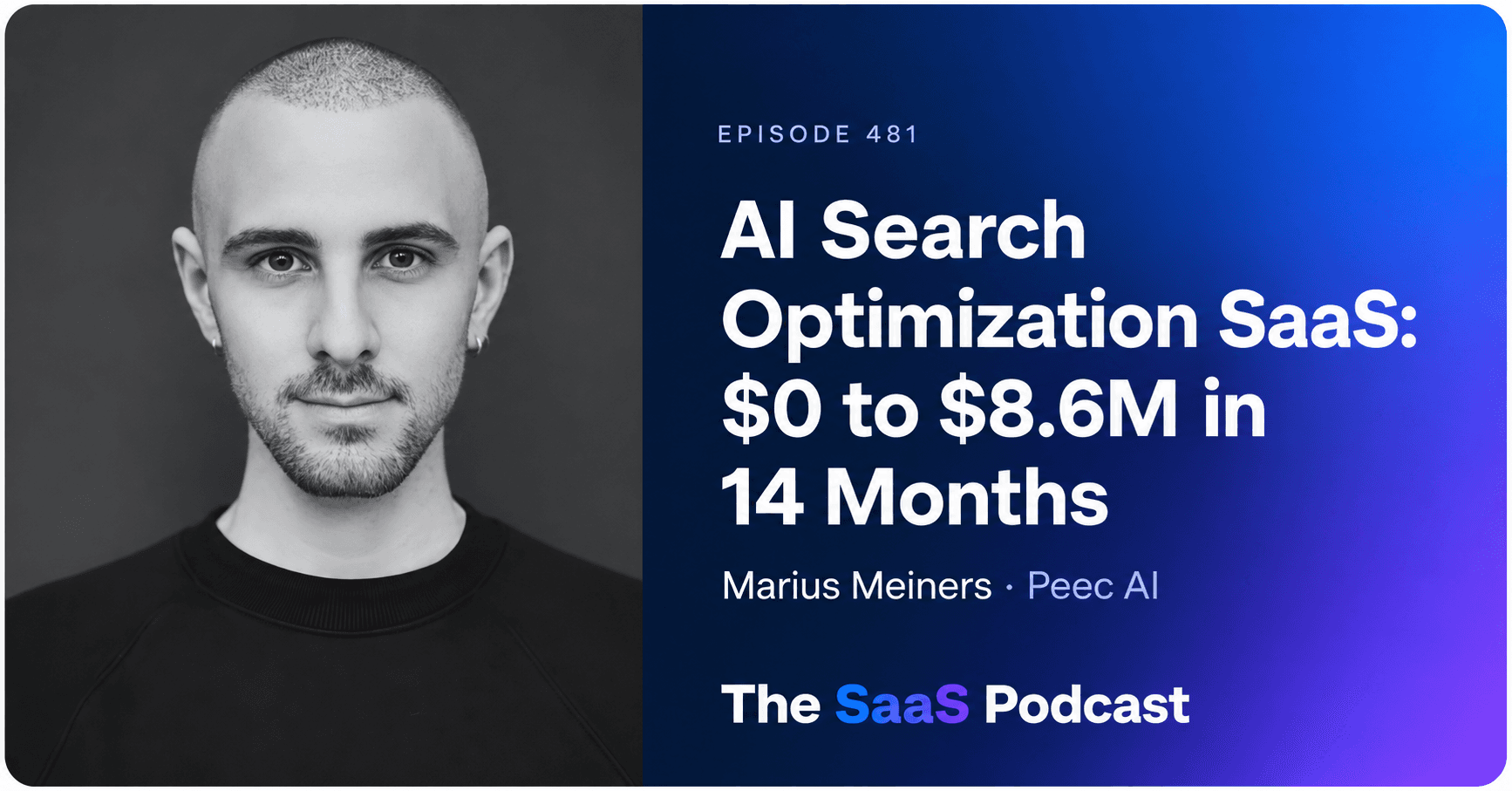
Marius Meiners, Peec AI
Marius Meiners is the co-founder and CEO of Peec AI, a platform that helps marketing teams track how their brands appear on AI search tools like ChatGPT, Perplexity, and Gemini. After studying economics, working in venture capital and M&A at PwC, and joining Antler's Berlin cohort, Marius found himself with no team, no idea, and four years removed from writing any code. Then in late October 2024, ChatGPT launched search. Marius saw it and decided this was going to change everything. The smartest SEO experts in the world were already obsessed with it. The signal was loud. So he turned to AI search optimization as the wedge - a category that would explode as marketers scrambled to figure out how to get cited by AI assistants. He vibe coded the first prototype with V0 in a day and a half. Eight customers signed letters of intent based on it. Antler wrote a 100K check. His CTO joined and built the real product in six weeks. Peec launched in February 2025. Then came the bet. Their biggest competitor had raised five times more money and was chasing the world's biggest brands. Marius made the opposite call. Peec priced at 85 euros while competitors charged over 500. For six months, Marius and the team ate two-euro canned food every day, wondering if the mid-market AI search optimization play would ever pay off. Today Peec has over 2,000 customers, $8.6 million in ARR, and a team of 55. All in 14 months. AI search optimization went from speculation to a live revenue channel - 20% of Peec's own conversions now come through AI search itself.
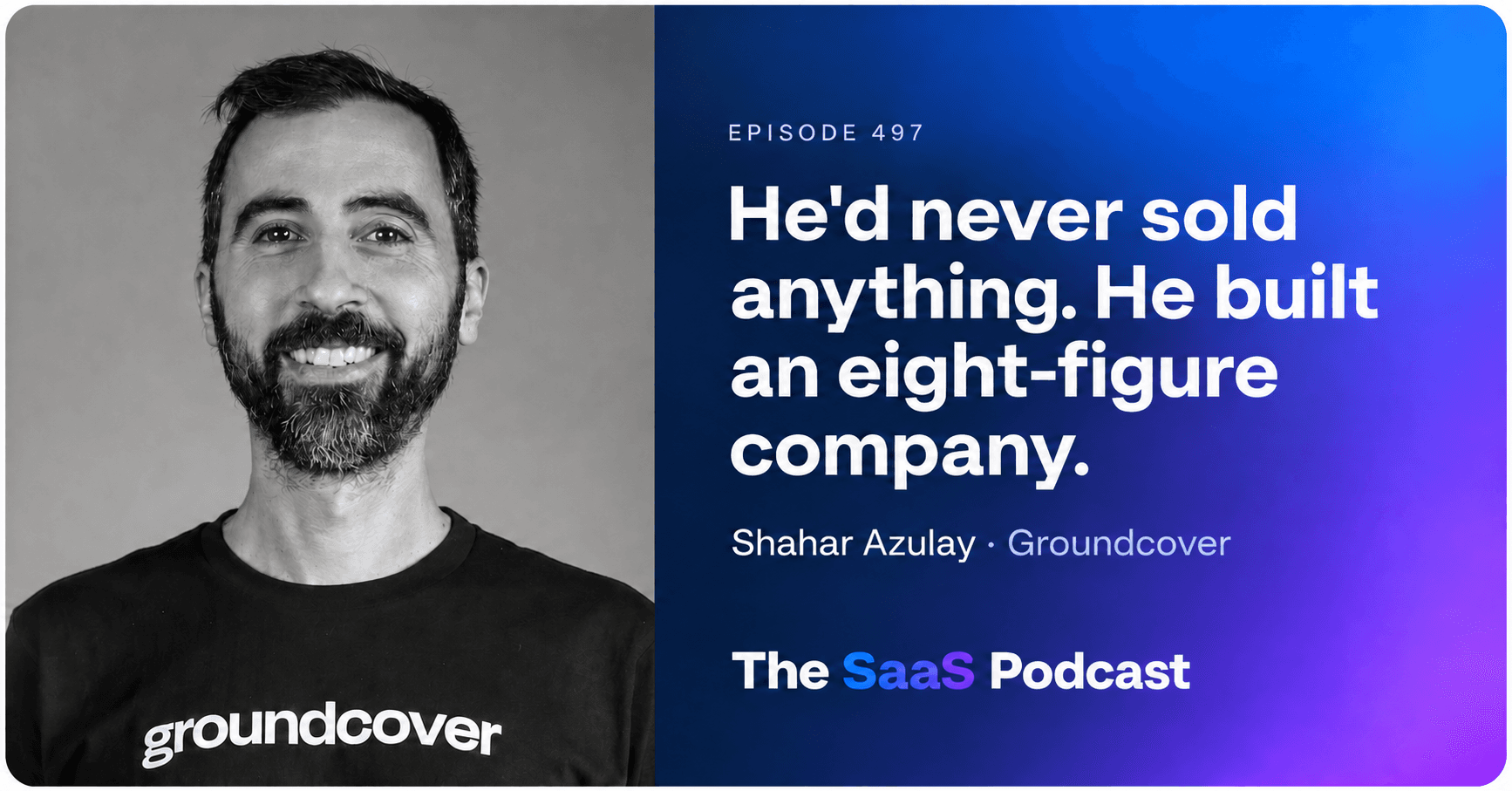
Shahar Azulay, groundcover
Shahar Azulay is the co-founder and CEO of groundcover, an observability platform that helps engineering teams catch problems in production before their customers do. He has built it to eight-figure ARR with more than 250 customers, competing directly against Datadog and New Relic. He came to it as an engineer, not a seller. Shahar and his co-founder had spent their careers as engineering managers, living the same frustrating cycle: instrument your applications, emit the telemetry you need, then get told the bill is too high and start sampling and switching things off. They set out to solve that with technology rather than a different margin, and bet the company on eBPF, a kernel technology nobody in observability was using at the time. The selling was harder than the building. Three months in, groundcover closed its first customer through a connection to a head of DevOps. There was no user interface yet, just the sensor and some dashboards. Shahar went into the pricing call asking for $100,000 and came out with $10,000 a year, because neither he nor his co-founder knew what they were negotiating against. His conclusion from that is contrarian: close your first dozen customers at whatever price they will pay. The learning, the references, and the confidence are worth more than the contract value, and you cannot expect to grow those early accounts anyway. Shahar also covers how the first 50 to 100 customers came from his own network and a handful of LinkedIn messages a day, why he published list pricing and then discounted it by up to 70 percent, and the moment customers started ripping out Datadog before groundcover was ready for it.
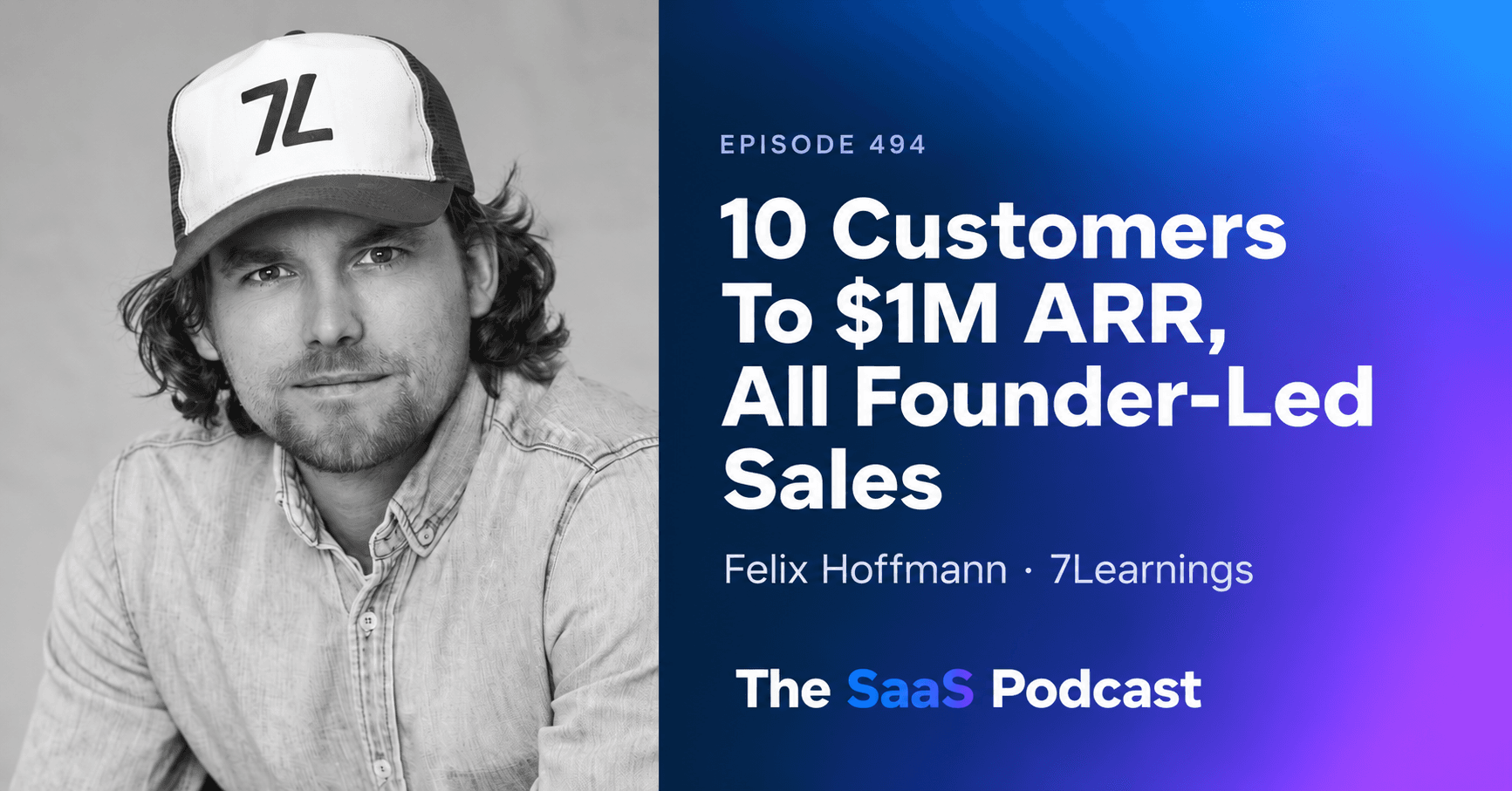
Felix Hoffmann, 7Learnings
Felix Hoffmann is the co-founder and CEO of 7Learnings, a Berlin company whose software decides what a retailer should charge. He spent six years as a pricing consultant at Kearney and two years running price optimization at Zalando, Europe's largest fashion marketplace, where he saw predictive pricing working at scale. From his consulting years he already knew almost nobody else worked that way. Today 7Learnings is at multiple seven figures in ARR, with around 40 customers and 60 people. The hard part was never the idea. A demand forecasting model needs a large retailer's historical sales data, and no large retailer hands that over to a company with no product. Felix also spent the early months trying to recruit two technical co-founders in Berlin, which he describes as close to impossible when engineers can earn well without taking any risk. So the first contract 7Learnings signed was not software at all. It was a consulting project. The retailer got help implementing its own pricing approach, 7Learnings got paid, and it kept the right to use the data to build a product of its own. The first paying software customer came through his old consulting network, structured as an A/B test: the algorithm priced half the assortment, the retailer's team priced the other half. The first run was a disaster. Prices came out far too expensive on high-priced products, and in e-commerce you know within a day. They reworked the models, and a later test came back with a 13% profit uplift. Felix also covers how a pricing company prices itself, why he refuses success-based fees, the objection he still hears from almost every retailer, and why he thinks LLMs do not belong in the pricing decision itself.