The 10-Hour Custom Demo Playbook That Took Conversion From 2% to 20%
The Framework
Most founders treat the demo as a product tour. Walk the prospect through the features. Hope they imagine it working in their world.
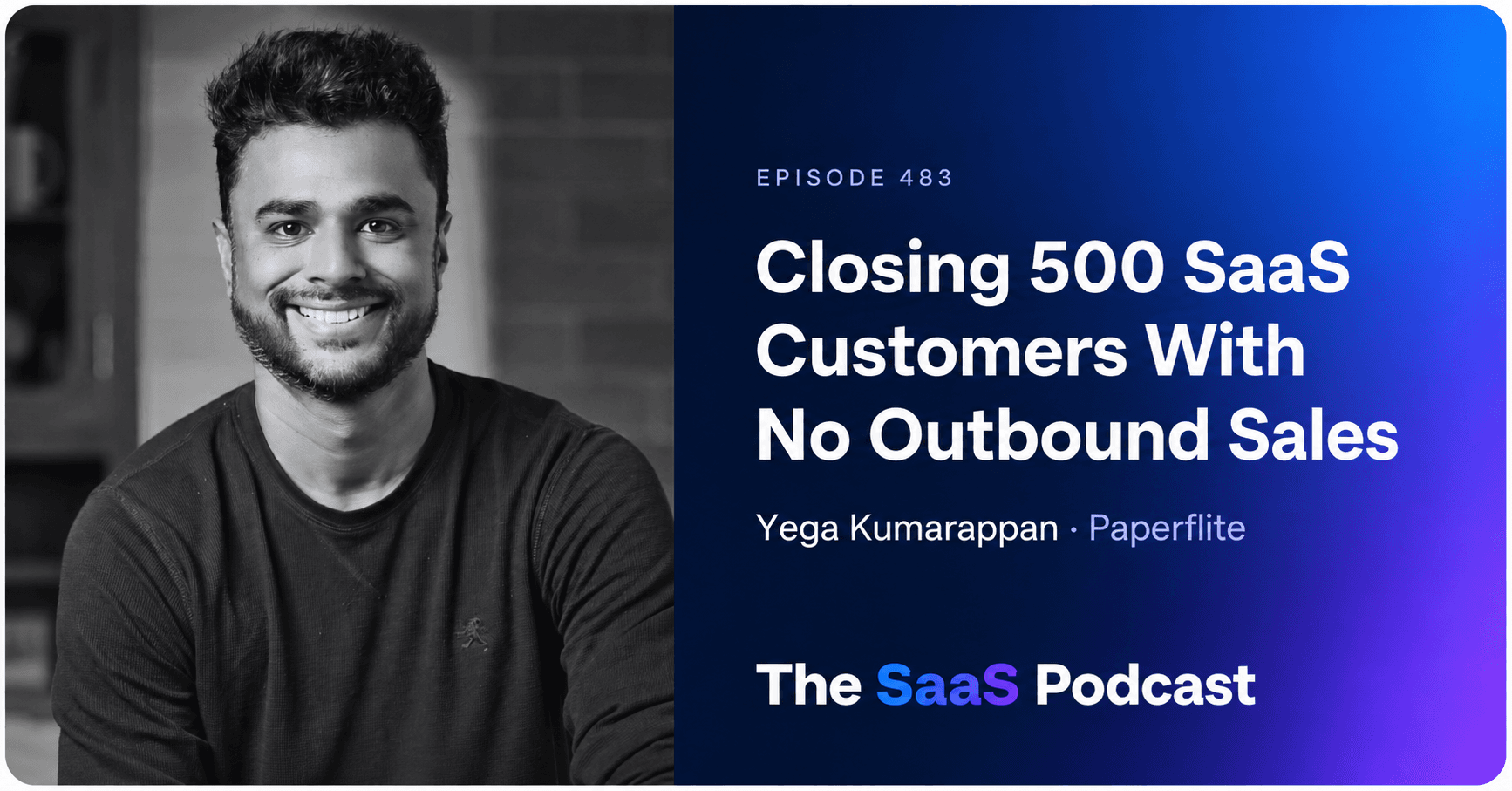
Yega Kumarappan and his co-founders at Paperflite did the opposite. Before any demo call, they spent 8 to 10 hours building each prospect's actual Paperflite hub. Their content. Their regions. Their buyer segments. By the time the call started, the prospect wasn't watching a product tour. They were watching themselves use the product.
That single shift took conversion from 2-3% to 17-20%.
The framework: stop showing the product. Show the prospect's product, rendered inside yours, before you talk price.
The 4 Steps
-
Research the prospect's content surface before the call. The team figured out what business they were in, what content lived where (SharePoint, Dropbox, email, shared drives), which regions they sold to, and how big their sales org was. Six to seven hours of work before anyone opened a slide deck.
-
Build the prospect-specific hub. Setting up the platform took another two hours. Yega's team pulled the prospect's actual case studies, decks, videos, and one-pagers into a personalized Paperflite environment that matched their products, regions, and buyer segments.
-
Open the demo with the aha moment, not the agenda. Yega's words: "When we get in and when we show them, here's how your hub can look like, here's how all of your knowledge can look like, that's the first aha moment. That's actually when you tip them."
-
Use the remaining demo time to remove integration objections. Once the prospect has tipped, the conversation moves to "Do you integrate with this platform? Can you offer this?" Solve those live or commit to a follow-up.
Real Numbers
Paperflite A/B tested the high-touch approach against a self-serve cohort to validate the cost was worth it.
Generic demo / self-serve cohort: 2-3% conversion. Custom 10-hour demo cohort: 17-20% conversion.
Paperflite ran this playbook for the first 50 to 70 enterprise customers. At a 20% conversion rate, that's 500 to 600 prospect hubs the team built. Yega's own math: "you're really looking at 500, 600 prospect experiences or applications that the team would have built."
The hub-building work was unpaid. It was also the single biggest lever in getting from zero to seven figures in ARR on a 400K seed.
When It Fails
This framework breaks when:
- Your product can be evaluated in a free trial in under 10 minutes. If the prospect can self-validate fast, custom demos are wasted effort and a slower path to revenue.
- Your ACV is too low to absorb 8-10 hours of pre-call setup. Paperflite was selling 4-figure-and-up enterprise deals where one win covered weeks of demo work.
- The product itself isn't ready to be shown in a prospect-specific way. If you can't render the customer's content in the demo, you can't deliver the aha moment.
The signal you should drop it: when conversion on your custom demos stops beating self-serve by 5x or more.
Your First Move
This week, pick the next inbound demo on your calendar. Block 6 hours the day before. Pull the prospect's actual content from their site, LinkedIn, and any public assets. Render it inside your product. Open the demo with "here's how this looks when it's yours" instead of an agenda.
If conversion on that one call beats your last five generic demos, the framework is real for you. Scale it from there.
Ready to build your SaaS with founders who get it?
Join thousands of SaaS founders getting weekly insights and proven strategies from real founder conversations.
Free weekly newsletter · No spam