A One-Person Business Is a Job, Not a Company
What Everyone Says
Build a solo business. Stay lean. Keep headcount at zero and pocket all the profit.
The AI-solo dream is everywhere right now. One founder, a stack of AI agents, seven figures in revenue, no employees, no payroll, no management headaches. It looks like the perfect company.
And when you're the founder doing it, it feels like winning. No salaries to make. Full control. Every dollar is yours.
Why That's Wrong
A one-person business isn't a company. It's a job you own that you can never leave.
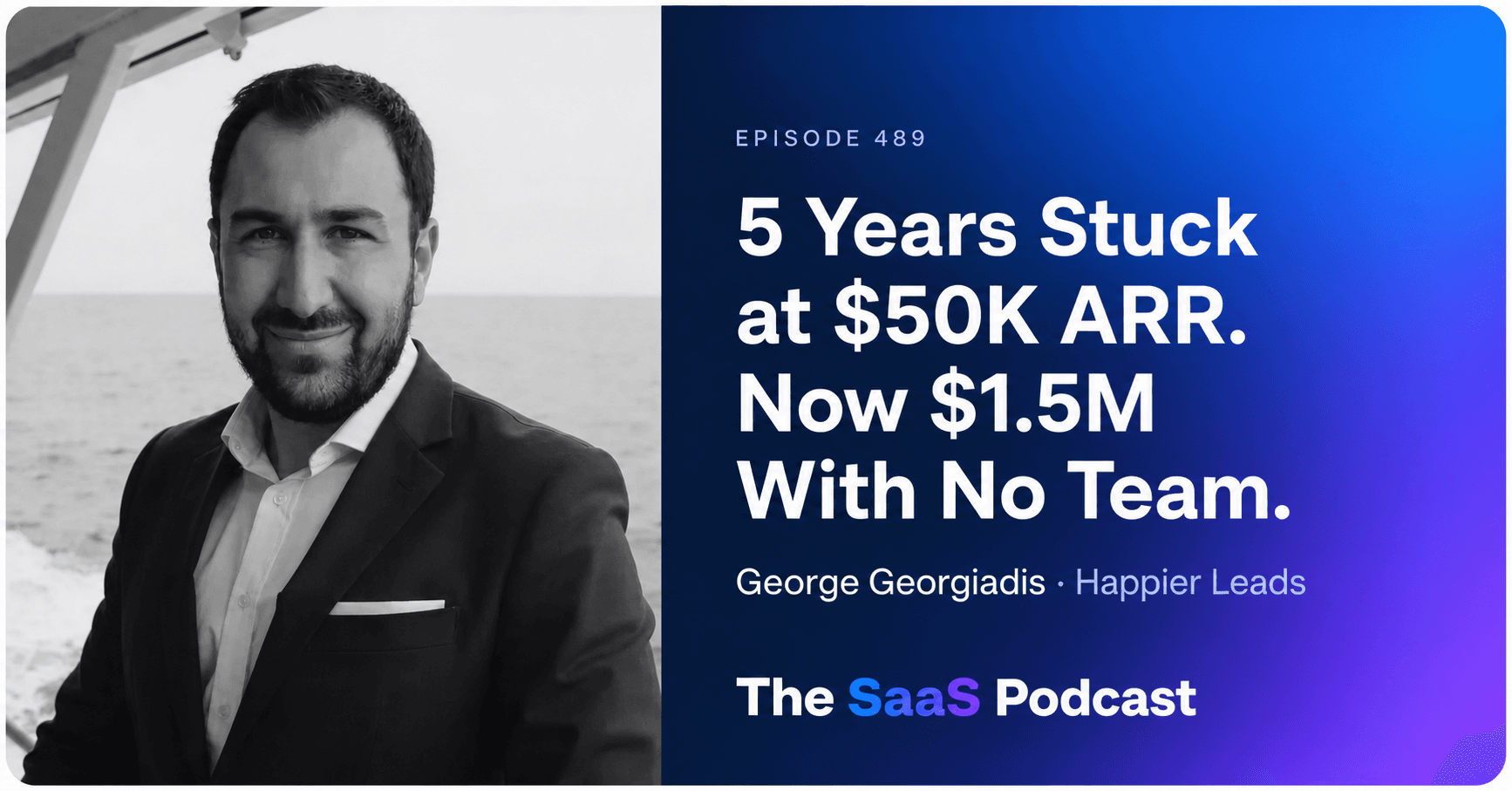
George Georgiadis runs Happier Leads at $1.5M ARR with zero employees, just him and AI he built himself. By the AI-solo scorecard, he's the poster child. And he's the one telling you it's a trap.
His reasoning: "If you are one person, you are an operator. You're not a business owner. You don't own the equity."
The hidden cost is that you can't sell it and you can't step away. The business is you. If you stop, it stops.
What George Did Instead
After hitting seven figures solo, George decided to start hiring. He's walking away from the exact setup most founders are chasing.
He built the AI himself because he could code. "It's like 100 people working for the business right now, 24/7, self healing things that can break." The system runs support, fixes bugs, and follows up with leads on autopilot.
But he saw the ceiling. "You will not be able to exit the business if you are the business. If something happens to me tomorrow, I will not be able to operate."
So the plan is to bring in smart people who can use AI to push the business further than one person plus agents ever could. Not to replace the AI, but to turn a job into something he can own and eventually sell.
He's blunt that this is situational: "I don't want people to just copy me."
The Principle Underneath
An operator gets paid while they work. An owner builds something that holds value without them in it.
The AI-solo path can get you to real revenue. George proved that. But revenue isn't the same as equity you can sell. If the business only runs because you run it, you've built yourself a well-paid job, not an asset.
The move that turns a job into a company is removing yourself from the critical path. AI can automate the tasks. It can't yet own the business for you.
Should You Do This?
Do the solo-with-AI path if you're a solo founder, you're not raising money, you don't want to spend on external software, and you can code it yourself. George is explicit that this specific situation is the only place his path fits.
Skip it if you want to exit one day, or if you can't build the systems yourself. Not everyone can vibe code their own CRM, chatbot, and support engine, and George knows it.
Ask yourself one question: if I disappeared for a month, does this business survive? If the answer is no, you own a job, and it's time to hire.
Ready to build your SaaS with founders who get it?
Join thousands of SaaS founders getting weekly insights and proven strategies from real founder conversations.
Free weekly newsletter · No spam