Why Mid-Market Beats Enterprise When Competitors Chase Whales
What Everyone Says
The conventional VC playbook for AI-native categories is to chase enterprise logos as fast as possible. The story goes: AI search is becoming a multi-billion-dollar market, the brands that matter are Fortune 500, sell big enough deals to fund the war chest, and use enterprise revenue to crush smaller competitors. Marius Meiners' biggest competitor in AI search raised more than 5x Peec AI's capital and went after the world's biggest brands. Most founders would have followed that playbook or tried to land grant-funded enterprise pilots.
Why That's Wrong
Enterprise logos take 6-month sales cycles, integration pilots, and infinite procurement. They reward whoever has the most capital to burn while waiting for closed loops. The hidden assumption is that enterprise is where the biggest companies in a category live. Marius found the opposite when he looked at the SEO software space: "the biggest companies in the SEO software space are actually not the biggest enterprise platforms. The biggest companies in the SEO software space are the mid market targeting companies. Because SEO as a topic is so relevant for so many small customers." Mid-market in horizontal SaaS dwarfs enterprise by customer count, and ARR adds up fast at €85 a month when 2,000+ companies sign up.
What Marius Did Instead
- Marius priced Peec AI at €85 a month when his biggest competitor was charging €500+. The product was the same category - track AI search visibility - but the price tier opened a market the enterprise-focused competitors could not touch.
- He targeted companies of 100-200 employees. Two-thirds of Peec's customers fit that profile. They could approve €85 without procurement, ran lean marketing teams that needed fast time-to-value, and did not expect a 90-day onboarding pilot.
- He shipped product to match the mid-market expectation. As Marius put it: "for a mid market company or an SMB, they need to get to value very fast. Like they have like a marketing team of like three people or two people or one person." Peec built features that delivered same-hour value, not integration depth that takes months.
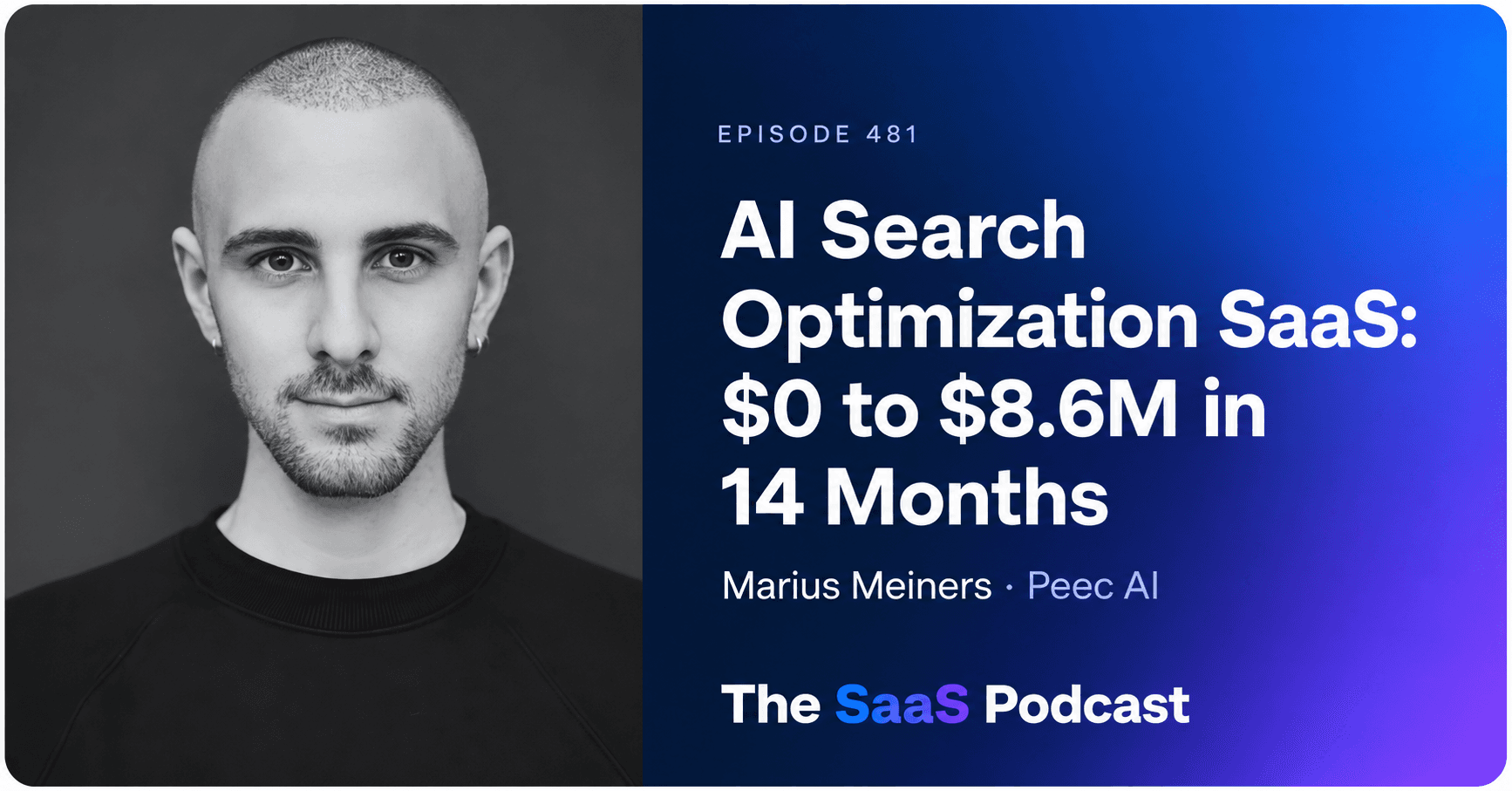
- The result: zero to $8.6M ARR in 14 months. 2,000+ customers added. 300+ new customers per month. Same TAM the enterprise competitors fought over, won at the layer they ignored.
The Principle Underneath
In any horizontal SaaS category, the largest concentration of revenue lives in mid-market, not enterprise. Enterprise has higher ACVs but fewer accounts. Mid-market has lower ACVs but vastly more accounts AND faster sales cycles. When well-funded competitors chase enterprise, they leave mid-market exposed. Price-sensitive mid-market buyers actively reject enterprise tools because of price, complexity, and procurement overhead. The opposite-of-VC-playbook is not naive. It is a wedge into a market the funded players cannot follow you into without breaking their unit economics. Pricing low is not a race to the bottom. It is a moat. Once you own mid-market, you can move up-market on your terms.
Should You Do This?
Do this if your category has clear mid-market demand, your product can deliver value in under an hour, and the enterprise competitors are well-funded enough that you cannot out-spend them. Skip if you are in a category where every customer needs heavy integration (core banking, regulated industries) or where the buyer is consumer-grade and pricing low signals "toy." Ask yourself: are 2,000 customers at €85 better than 10 at €5,000? In horizontal SaaS, almost always yes.
Ready to build your SaaS with founders who get it?
Join thousands of SaaS founders getting weekly insights and proven strategies from real founder conversations.
Free weekly newsletter · No spam