Your Lead Magnet Might Be Your Real Product
Based on this episode
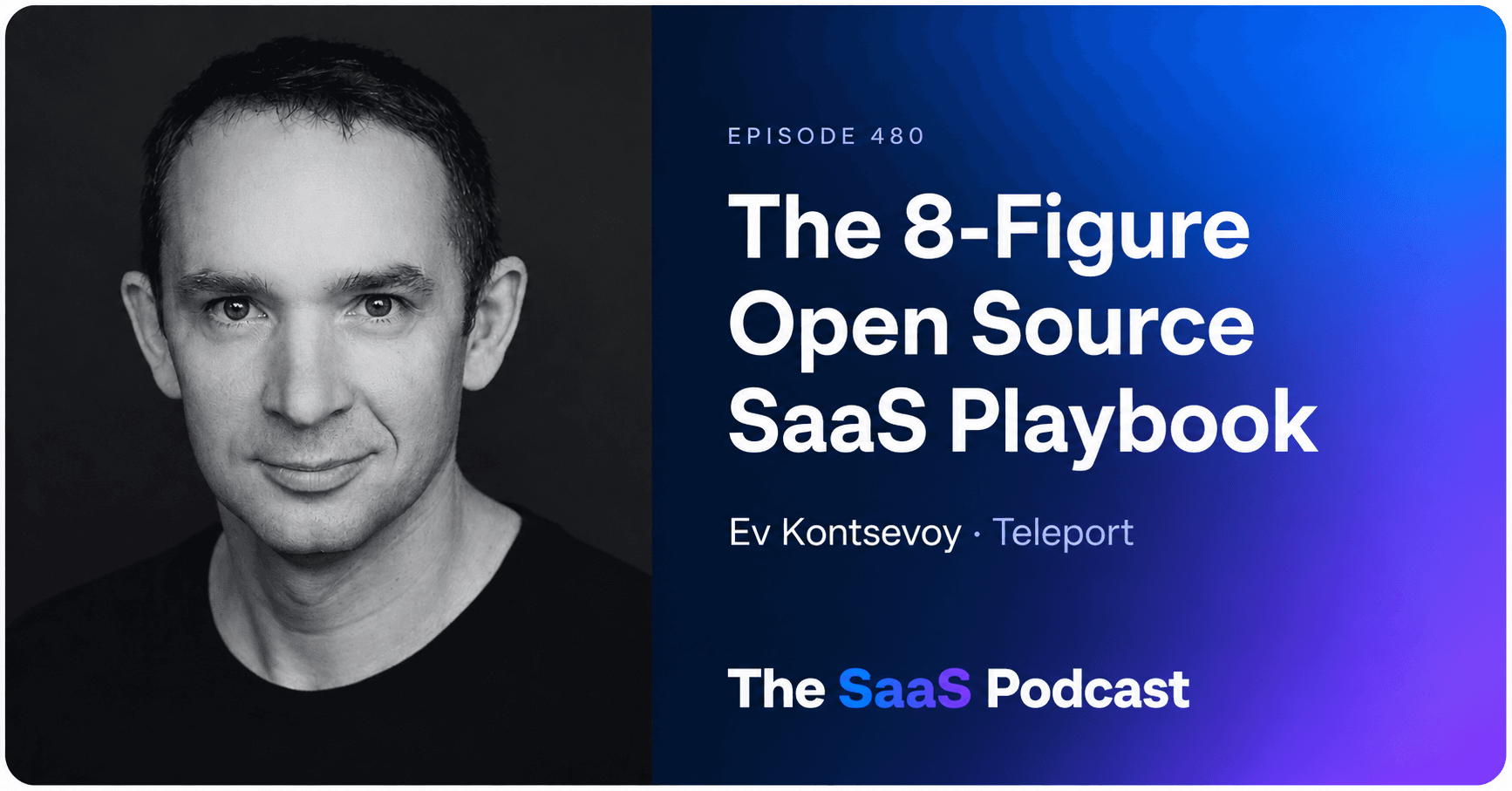
The 8-Figure Open Source SaaS Playbook
Ev Kontsevoy, Teleport
What Everyone Says
Build one flagship product. Pour your engineering, design, and sales energy into making it the best thing in the category. Anything else you ship (a free tool, an open source library, a calculator) is just a lead magnet. Its job is to pull attention toward the real product. Treat it like bait, not dinner.
Every founder has heard this. It feels responsible. You do not want to split focus. You do not want to dilute the brand. You especially do not want to compete with yourself.
Why That's Wrong
The flagship product is what you think customers want. The lead magnet is what they actually reach for on their own. One is your thesis. The other is revealed preference.
Founders who ignore that signal end up protecting the wrong product. They keep pouring money into a flagship pipeline that dries up while a "free tool" quietly builds demand they refuse to monetize. The assumption that the big thing must be the important thing is the bias that kills the real business underneath it.
What Ev Kontsevoy Did Instead
Ev and his team at Gravitational built Gravity as their crown jewel. It was a packaging and deployment product for SaaS companies that needed to run in multiple clouds. Teleport was one component inside it, released as a free, Apache-licensed open source tool.
The plan was simple. Give Teleport away. Use it as demand generation for Gravity.
Then COVID hit. Engineers were suddenly working from home and needed remote infrastructure access. Teleport was on GitHub solving that exact problem. Customers started calling and asking to buy Teleport on its own. Ev's response the first few times was essentially "go away, use the open source, we sell Gravity."
But the pattern kept repeating. By Ev's account, Gravity pipeline collapsed while Teleport inbound exploded. Gravity had been growing to around 4 million ARR over 2 to 2.5 years. When Teleport caught up in revenue with fewer engineers and faster growth, the signal was undeniable.
They rebranded as Teleport in November 2020 and stopped doing everything else. The former lead magnet is now an 8-figure ARR business with over 500 customers.
The Principle Underneath
Markets do not care what you call your flagship. They buy the thing that solves their specific pain with the least friction. A free open source tool that nails one job is a more honest product-market fit signal than a premium suite that customers tolerate.
The reason this works is that lead magnets get adopted by people who do not have to justify a purchase. They pick it up because it is useful. If those same people start asking you to take their money, that is the purest demand signal you can get. No sales pitch contaminated it. No discount drove it. They are telling you what they actually want.
When pipeline leans the same direction over and over, stop defending the flagship and follow the pull.
Should You Do This?
Do this if the smaller product is pulling inbound demand on its own, customers are asking to pay for it without you pitching, and you can see a pattern (not just one loud customer).
Skip this if the interest is thin, if the flagship is still your biggest revenue line and growing, or if the "lead magnet" is really just an underpriced version of the main product rather than a genuinely different solution.
One question to ask yourself: if we stopped shipping the flagship tomorrow, which product would customers fight us to keep?
Ready to build your SaaS with founders who get it?
Join thousands of SaaS founders getting weekly insights and proven strategies from real founder conversations.
Free weekly newsletter · No spam