They Sold a Point of View Before They Had a Product
Build the product, then go find customers. Get something in people's hands, collect feedback, iterate.
How SaaS and AI founders who scaled got their first customers
One email every Thursday. Unsubscribe anytime.
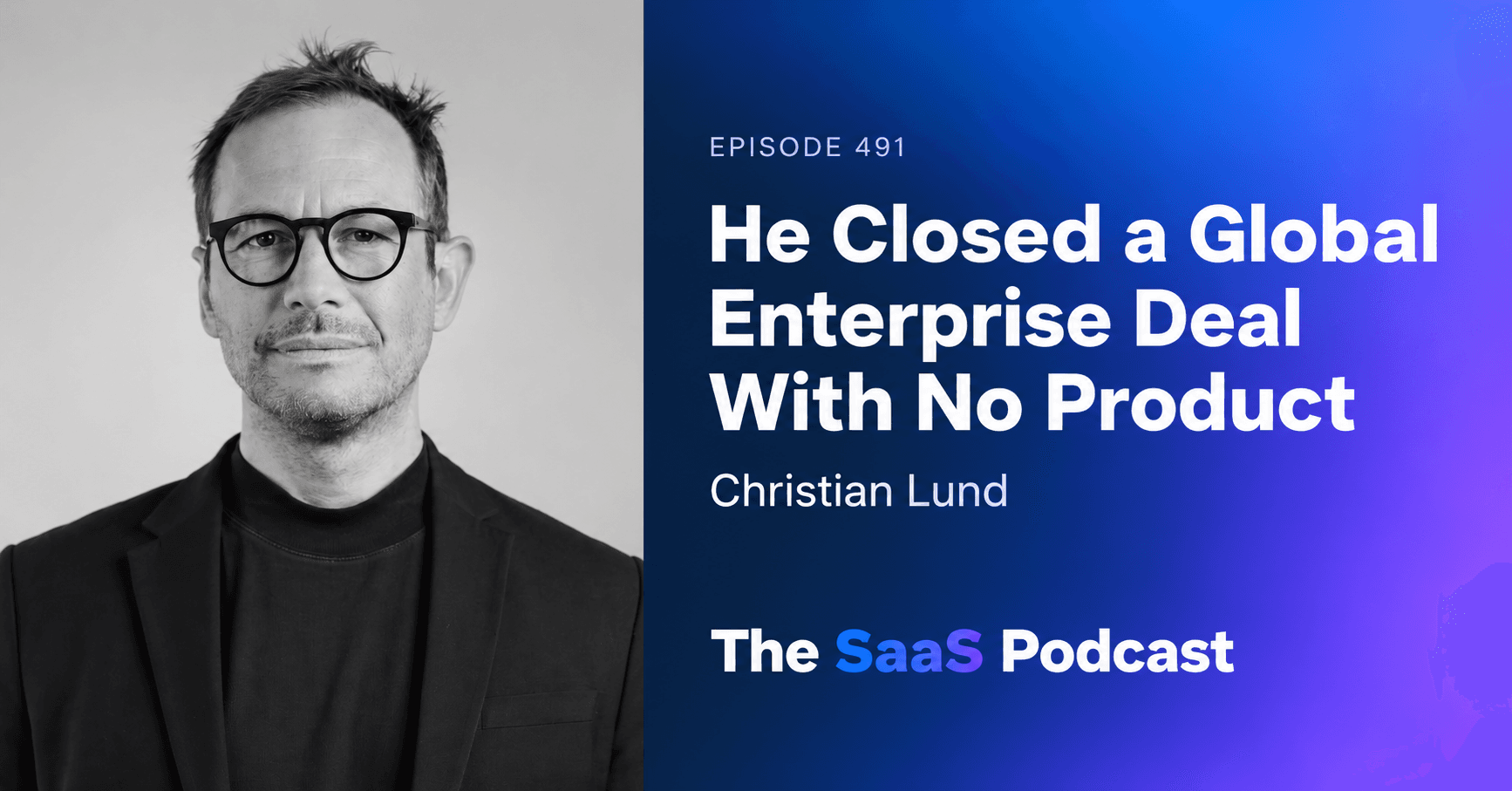
Templafy co-founder Christian Lund closed one of the world's biggest accounting firms as his first customer before the product existed, by selling domain expertise instead of software and refusing any pilot without agreed proof criteria. At the time the company was two founders and two engineers.
When that customer asked to start with ten people, Christian didn't say no. He said "yes, if." The conditions he attached ended up shaping how the customer evaluated every vendor in the category.
Christian Lund had spent years running an on-premise document business before he saw the cloud shift coming. Rather than retrofit the old product, he and his co-founder spun out Templafy and started over from scratch, with two engineers and no product to sell.
What they sold instead was a point of view. Christian identified roughly 800 people worldwide who he thought were mature enough to have the conversation, targeted them with specific messaging, and used those conversations to get in front of enterprises long before there was software to demo. Templafy raised its first funding round close to twelve months before the product existed.
That approach landed one of the Big Four accounting firms as the first customer. But the deal nearly went the way most enterprise deals go, with a small pilot for ten people and no defined outcome. Christian pushed back, not by refusing, but by attaching conditions: agree exactly what we are proving, and agree what happens if we prove it. When some prospects later opened the decision up to competing vendors, Templafy had effectively written the evaluation criteria.
Templafy now runs at eight figures in revenue with a couple of hundred people. Christian is putting the business through the same reset again for AI, rebuilding the technology foundation from scratch over two and a half years. He is candid that the messaging got ahead of the market, and that being eighty percent ahead instead of fifteen percent cost the company conversations it needed.
Templafy co-founder Christian Lund landed one of the Big Four accounting firms as his first customer before the product existed, by selling domain expertise rather than software and refusing any proof of concept without agreed success criteria and a defined rollout on the other side.
Build the product, then go find customers. Get something in people's hands, collect feedback, iterate.
Sales is about persuasion. A good rep can turn a skeptic around, handle the objection, and win the doubter over.
A big enterprise dangles a pilot. Ten people, low risk, "let's see how it goes." Most founders grab it, because a logo is a logo.
Getting the vision right and still losing, because you were too early. Christian Lund, co-founder of Templafy, made this exact mistake with AI, and he'd made a
Most hiring advice treats "great people" as one thing. Christian Lund, co-founder of Templafy, splits them into two, using an analogy from skiing.
How did Christian Lund land one of the Big Four accounting firms as Templafy's first customer before the product existed?
He sold domain expertise instead of software, using conversations about how the cloud shift would change document creation to get in front of enterprise buyers, then co-created the product with the customer.
Why did Templafy refuse to run a standard ten-person proof of concept?
Christian says a POC to find out whether a customer likes the product wastes both sides' time. Templafy only ran one when both parties agreed exactly what was being proved and what rollout followed if it worked.
What does Christian Lund mean by "we didn't say no, we said yes if"?
Rather than turning down a small pilot, Templafy attached conditions: clear proof criteria, a real budget, a timeline, and agreement on deal size and rollout if the criteria were met. Without those, they walked away.
How did setting proof criteria help Templafy win competitive enterprise deals?
When prospects later opened the decision to other vendors, they often wrote their evaluation criteria using the proof points Templafy had already defined, which put Templafy in a stronger position even in a competitive process.
Why does Christian Lund say every enterprise customer is its own market?
A single enterprise can have hundreds of thousands of employees across teams producing different documents, so landing company-wide creates an internal market Templafy can expand into without repeating the security and procurement process.
Why did Templafy land wall-to-wall instead of using land and expand?
Getting approval to roll out technology inside an enterprise requires the same security and procurement work whether it covers ten people or a hundred thousand, so Christian pushed for the widest possible rollout upfront and went deep afterwards.
How does Templafy use disqualification in its sales process?
Christian's team disqualifies prospects who are defending the current way of working rather than trying to convince them, on the principle that sales is not about convincing people and that convincing takes too long to be viable.
What mistake did Christian Lund make with Templafy's AI messaging?
Templafy pushed its AI thought leadership too far ahead of what buyers were asking for. Christian says you can be fifteen percent ahead of the market but not eighty percent, and being too early cost them conversations and opened the door to competitors.
What does Christian Lund mean by uphill and downhill skiers when hiring?
Early-stage companies need uphill skiers who find new paths, while mature companies hire downhill skiers who optimize a known route. A technology shift forces a mature business to hire uphill skiers again, which Christian says is hard once everything is built for speed.
Christian Lund [00:00:00]:
It's a very risky place for many startups to actually jump on that train. You have a big logo in front of you and they're asking, we can partner with you. Are we going to buy your software? But let's start with 10 people. We didn't say no, we said yes. If we would never go into a POC to see do you like it, we would go into that to see does it work. But since we planted the flag and we put down the criteria for what what needed to be proved, we also kind of really corrected what those criteria would be for them. So as they wrote those out, we would actually be the one oftentimes actually been writing them.
Omer Khan [00:00:35]:
Hey, welcome to the SaaS podcast. I'm Omar Khan and this is the show where I sit down with real founders and dig into how they actually built their SaaS companies. I've had almost 500 of these conversations now and I put out a new one every week to help you build and grow your startup. If that sounds useful, hit subscribe or check out SASClub IO to learn more. My guest today is Christian Lund, co founder of Templify. Today they do eight figures in ARR with a couple of hundred employees. But when they spun it out, it was just two founders, two engineers and no product. Their first customer was one of the biggest accounting firms in the world. In this interview, Christian breaks down how he sold that deal before he had software to show the yes if answer he gives a big customer who wants to start a small pilot, why he disqualifies more prospects than he tries to convince, and the AI messaging stake that turned out to be a huge problem for their business. So I hope you enjoy it. All right, Christian, welcome to the show.
Christian Lund [00:01:38]:
Thank you so much. Thanks for having me.
Omer Khan [00:01:40]:
So tell us about Templafy. What does the product do and who is it for?
Christian Lund [00:01:44]:
So it's enterprise focused product for document automation and we basically help everyone in a company to get rid of all the work that used to go into creating business documents across large organizations.
Omer Khan [00:01:57]:
Great. And give us a sense of the size of the business. Where are you in terms of revenue, customers, size of team?
Christian Lund [00:02:04]:
Yeah, sizable. Around 200 people. Actually we used to be even more, but with how you run businesses today, also optimize that a little bit. Around 200 people, sort of eight figure number on the revenue. So pretty sizable and mature.
Omer Khan [00:02:22]:
Great. So Templafy was founded in 2013. I think before that you were running a business called Omnidocs, which was more of an on prem solution. At some point you saw the writing on the wall, you saw the opportunity with cloud. But tell me the process you went through and why you eventually decided to make that. You made the decision that you were going to focus your energy on this new business.
Christian Lund [00:02:53]:
Yes, you're absolutely right. We've been running actually a similar type of business, solving, I would say, essentially the same problem, looking at pretty much everyone with a job just spending way too much time on doing presentations, email spreadsheets, price quotes and so on for a long time, and put in a lot of work to understand what that meant as an enterprise, this balance between trying to work fast and also making sure that the business had some sort of control of what happened at the same time. So we kind of knew that. And then actually what happened back then was a big shift in technology. Back then, it was cloud coming in that really put some pressure on how businesses were even buying technology and a lot of expectations to what the future would look like and things like that. So we thought it was a great opportunity for us to think about everything we learned and make sure that we would be solving the same problem moving forward and even more of it potentially now that we had more capabilities in terms of technology, but also restarting completely from scratch from a technology perspective, to make sure that we would be supporting the whole, the technology path that the customers we were serving were actually taking. So that was actually what triggered that, this big shift in technology around that 2013, 12, 1314, that we really sort of jumped onto that and unlearned everything we ever knew on building technology and learned that from the ground up again, and then actually decided to build a complete new business?
Omer Khan [00:04:25]:
How did you make that transition? Was it like we're going to do this new thing for 20% of our time while we run Omnidocs? Was it kind of going completely all in and leaving somebody else to run the existing business? What did that transition look like?
Christian Lund [00:04:42]:
Yeah, at the time we were five partners in the original from Omnidocs. And we all discussed this obviously and looked at what is the opportunity here. And what we ended up doing was we took the smartest one, one of my co founders, also the technical guy, to really put in a lot, lot of work and actually spent. He spent around a year of his of his life just trying to figure out what technology, what cloud technology was all about at the time, to really unlearn everything here new and try to build that up again. So similar to being a Danish native speaker and then trying to learn Chinese from the ground up. So he took that on him and did that and we sort of paid for it and funded it ourselves within that business. And then when we saw that things were really coming together, we could see there was a great opportunity to actually spin this out. And ultimately what we decided to do was the two of us. So Henrik, my co founder, and me took this journey with Templify as the other guys kind of kept running the existing business, which by the way is also grown into a very sizable and very successful business alongside, but doing slightly different things. So that's kind of how we did it. So ultimately we were no more than the two of us and then two engineers that had only been working on that project. That was kind of how we started and everything was from the ground up again.
Omer Khan [00:06:10]:
What did you initially sell? Was it a prototype, an mvp? How much work went into building that before you went to market and started showing it to customers?
Christian Lund [00:06:23]:
Yeah, that's a good question. That's a fun question actually. Because what we learned pretty quickly at the time when you have these big technology shifts, is that, funny enough, especially very large businesses that kind of need to lean in very early and invest very heavily when these things happen, they were not really buying product first. They were buying people that could understand what that transition would look like. So what we were selling originally and some of the first very large projects we did was really based on, I would say, thought leadership more than anything. This is how the world will change now that you still need to produce all these business documents. One of our first customers was one of the big four accounting firms on a global deal we did with them. And that was based on us just having a lot of the main knowledge around, around business document creation and automation around documents, and then having a very good understanding of what this new technology would be, which was incredibly important to them. So we really started from the, from the top. We thought, who in the world are making most documents of every business in the world? And we thought this is a good, this is a good chance for us to sort of wedge that in and get this type of discussion so we can start co creating with them and making sure that once we actually have a product that we can on a more sort of typical way take to market. That will be something that is founded in world class. So that's essentially how we did it. It was selling a lot of thinking and not so much product in the beginning.
Omer Khan [00:08:01]:
How did you get into those organizations in the first place to start having those types of conversations? Most founders, they start off, they have a product they have no logo, they have no background, they can't even get their foot in the door into an enterprise. So how were you able to do that?
Christian Lund [00:08:23]:
Well, we did use the very, very unfair advantage that we did have from Omnidocs at the time. It was called Scabaloon design because we had all the access to these people with a lot of enterprises, also very sizable large global enterprises. So we had an unfair opportunity to really get in front of them, which is something that we used very heavily. If we take it a little bit further down the road, though, on how we started to really take it to market, we tried to be extremely deliberate on specific type of messaging against very specific type of people and being very sort of very strict on doing that for a while to make sure that all marketing was actually to get us into those types of conversation where it was more speaking about how the world is changing and less about product for a longer while than you would think was actually how we did that before. The product then finally matured and we could start putting a more like sort of classic sales motion around it.
Omer Khan [00:09:24]:
Can you give me an example of that? When you talked about a specific message for a specific person today, I would
Christian Lund [00:09:29]:
say it's what everybody's been doing forever, like being very targeted on social media. LinkedIn was one that we used a lot, but back then it actually wasn't also LinkedIn. LinkedIn for example, was a lot less mature. So we thought, well, there might be like 800 people in the world that we can identify would be very much. Even though the market is much, much, much bigger than that. The ones that are mature enough in the way of thinking that sit in these organization in roles where this would be relevant are these people. So we were ultra targeted with these people with certain messaging to get into like I would say inbound dialogue, but not necessarily with the intent of selling a product, but more with the intent of getting of them and starting to have this discussion very, very early on. And as a side note, we also did something similar actually on the. On the funding side. And we. We raised the first funding round actually close to 12 months before we even had a product. So it was, it was like very early out there on really selling mostly. Why is this a massive change? What's actually there is a. There was a world before and this is kind of what the world looks like now. And the ones that will win will be the ones that kind of take that route. And we were able to tell that both to customers and to investors at the time to really get us in a good state where we can start really focusing on building the product that we also knew would be necessary. Like the quality of product you have to build. If you do like large 100,000 people in the first rollout type of setting, it has to live up to a lot of standards. We knew that. But we had to kind of get the buy in before really putting in the investment to going all the way of building up the product. So that was very much building the airplane while flying it.
Omer Khan [00:11:17]:
So that got you into the door to have these sort of thought leadership type conversations. It, I guess, achieved a couple of things. One is you're deepening or building more of these relationships which potentially could become customers down the road. But you're also learning a lot from these different organizations about where they see things going, what they're likely to need, what type of product you need to build. Tell me about the. When you actually built the first version of the product, what did that look like? What did it. I mean, I'm sure it was really different from what you have today. And there's always this struggle about how much should we build before we get it out to customers. But what was your V1 like?
Christian Lund [00:12:11]:
Yeah, I mean, one learning that has sort of stuck with me as well. Even where we are now and other things I've been involved with is that when we go out and speak to. When we went out there and we spoke to these businesses and companies, obviously we wanted to acquire the knowledge around what they were thinking. But actually to be honest, what we really, we try to really strike the balance on, that's great. But actually we think this is going to sound wrong. We think no, better. We know better just a little bit because we've been around this forever and we understand what they're asking, but we have to make sure that we don't fall into the build me a faster car type of, or sorry, faster horse analogy that we end up doing things just because they ask us to. So we were very, very deliberate on picking up a lot of knowledge. And then we came up with the first hit on what we thought would be right. And that was also leading them a little bit. So for a long while it was less asking them what they wanted and more showing them what they needed, to be honest. And then of course when we, when we. Things matured up a little bit more, there was a. There was a lot more iterating over that. But we kind of planted the flag on what we knew would. What we thought we knew would be like a winning Strategy that would not be optimized for just one company and what they thought in their own process, but for a general, like the whole market movement that would go in a certain direction. And we just trusted our domain knowledge to do that while still asking questions, but also being very deliberate on picking our own path.
Omer Khan [00:13:44]:
I've heard you say that every enterprise customer is its own market. And so you obviously had the background with Omnidocs, but when you're starting out with Templify, you have zero logos, zero case studies. Walk me through the process. You went to land that first enterprise customer. And just explain what you mean by every enterprise customer is its own market.
Christian Lund [00:14:15]:
Yeah. So the first customer, we had not allowed to mention the name, but it was one of the big of the big fours. Now I think it counts all the big tents. So we have a lot of those customers in the accounting consulting area. And again, as I said before, it was very much driven by a big shift in technology. And we wanted to be the partner that they could really work with to get things done over time with us, which is what we used to make sure that they would invest with us. One sort of thing we put up for them to say, if we're to lean in and being that partner with you, it has to be for everyone. And we kind of got away with that. So we agreed with them. It has to be like across the board, this is everyone in the company on the get go. And that was very important for us because what I mean, you asked the question, what do I mean by every customer's market? Obviously, if you have like 200,000 people working in your company and with a lot of individual teams doing tons of different types of documents where you can apply your technology to, that means that you have like an unfair advantage from working inside the fence once you close that deal. So the reason that we for a long, long time had the strategy that we would rather go wall to wall, making sure that we would land very wide and then work from the inside to go deep as the second step versus what is the most classical way. You start with a little team and then you start to grow from there. That was actually very deliberate, especially with enterprises, because to go through being allowed to even roll out technology in an enterprise, there is a lot of security boundaries and so on. A lot of things you have to go through, regardless if it's like 10 people or if it's 100,000 people. So we thought, why, if there was a chance for us to actually do that on the get go, we should do that now and then use that opportunity to work as a partner with that company and grow the accounts obviously on revenue over time. And also another very good sort of side positive to that is that it really creates a lot of stickiness as well when you do that. Once you have like you're involved and you support a very large portion of the employees in an organization, you're also hard to get rid of. So we tried to be very strategic on really landing wide in companies to give ourselves that position as having that as a market on its own that we could then work from the inside subsequently.
Omer Khan [00:16:48]:
So it sounds like a very sensible strategic move, but it also sounds incredibly difficult to achieve. What were some of the struggles you had to overcome in order to get some of these deals closed? Or maybe just the first one?
Christian Lund [00:17:08]:
Yeah, I mean for everyone, I would say ultimately, because there was obviously a lot of struggles to do that, you really have to stay true to that and avoid potentially going down a path where they would be asking, why don't we start with 10 people? We see how well it works, we do a poc, we go that path. So we had a lot of those discussions obviously where people were, where companies were asking to try things out. And I think it's a very risky place for many startups to actually jump on that train. You have a big logo in front of you and they're asking you to be, we can partner with you or we're going to buy your software. But let's start with 10 people. So one big struggle was to get past that and try to flip that around and instead be very deliberate on. If we were to do any type of pocing at all, we would have to know that there was definitely like it was the right timing and they were actually looking for a technology like this. There was a very much a clear budget and the timeline that they had or the obviously the intent of buying and the timeline was really supported around that. And also the final thing was that we knew what we had to prove in order for making it like a much larger, making this a rollout that would go out to a larger amount of people, otherwise we wouldn't do it. So if those sort of simple prerequisites were not in place from our side, we would walk away. And that was a struggle because when you're looking at that and you're just trying to get customers, you're trying to get logos, we thought that's going to kill us from a strategy perspective because we're just going to run like a thousand POCs not going to get anywhere. So not difficult, but just necessary.
Omer Khan [00:18:57]:
I'm trying to sort of imagine being a fly on the wall when you're having those conversations and somebody's proposing a 10 person POC. It sounds like a good move forward. It's incremental. It gets you started, it gets your foot in the door. How do you say no to something like that? And what did you say to them to convince them that this wasn't the right way to go?
Christian Lund [00:19:27]:
We didn't say no, we said yes. If. So again, if we understand that what you're trying to appeal, see, is to prove the concept. So if we agree on what we're proving and we understand what comes after, then we can do it. So there's no point in just figuring out, see if you like it. That's one thing that we did actually. We would never go into a POC to see do you like it? We would go into that to see does it work? Does it work? Because we had to go on the other side and make sure that we would have proven these things and then we would have to agree with them. What then? If we prove these things, then what are we speaking about in terms of deal size and rollout and timing and all these things as well? And what exactly do we need to prove? So we didn't say no to that. We just put criteria for when does it make sense also for the customer? And the interesting thing with that was actually that as we started to do that, some of them would come back and they would say, now we've looked at a little bit more. We're actually going to run like a tender process on this and we'll invite more vendors in to see what they had. But since we planted the flag and we put down the criteria for what needed to be proved, we also kind of really directed what those criteria would be for them. So as they wrote those out, we would actually be the one oftentimes actually been writing them. So we give ourselves a much better chance of actually winning those deals either way, even though sometimes it was a little bit further down the road. But we were really firm on not just jumping on the POC train because we made that mistake many times before, earlier. So that's how you learn, right?
Omer Khan [00:21:12]:
So for that first customer, can you give me an example of what type of proof you agreed with them? Like, okay, this is what we need to prove to you by the end of this process?
Christian Lund [00:21:27]:
Yes, we would always go through a process with them on making sure that they were actually on A move, there was a shift going on. They wanted to go from here to here and then try to make sure if that's going to be a possibility, then these things have to be in place in order for you to get there. So to take something very simple that we would put into like a step in a criteria. For us, it's a. We are doing, we're automating documents, so getting access to the template that you would be using and making sure you could give it the correct inputs that would be required. That was kind of how you did it at the time. That's very firm. Like when you open this, does this add in, pop up, yes or no? Does it show here, this particular example, when you get in there and ask the criteria, are you able to do it? When it actually populates this information, is it correct? It sounds so simple and down to earth. But it was very important to make sure that we agreed on what would actually be something that would prove that if you were to go from here to here, these are the criteria or the things that has to be in place in order for you to be able to do this. And this is how we would be able to prove that. So we had to go through that. So that's an example of doing that. Just always like, there's no way you're going to be able to do that unless you can do this. And this is how we prove it. Do you agree? Yes. Good, then we do it. If you don't agree, let's iterate over it and do what we agree on. But we have to agree on what we prove, on what we're trying to prove here. Otherwise again, we're just wasting everyone's time.
Omer Khan [00:23:03]:
And in terms of what's next, what did you try to pin them down on? If we deliver a successful proof of concept and this is a criteria and we can prove that we've met all these things, this is what we will do next.
Christian Lund [00:23:21]:
Then we're back to our strategy on what we wanted to achieve. Then we're looking for these, the widest possible rollout that we were able to do because that was what was for us. That was what would create, we thought would give a lot of value to the customer, obviously, but also what would create the situation where we actually have a new market because now we have a real partner. So we were looking for the highest number of people involved, which meant as well a lot of opportunity to do specific things with specific teams. So there was always like a general whole thing for us that was very much let's make sure we control the brand. Whenever anyone produces anything in this company, it has to follow the brand standards and other types of requirements you have on legal standards. What have we. But we knew that on the back of that you have a lot of specificity that goes into more individual documents that mostly sit within certain teams. So we wanted to go across with a company wide use cases and then we went deep with the more specific use cases subsequently. That's a very large reason onto or yeah, that's kind of how we grew the business very rapidly in those early years.
Omer Khan [00:24:31]:
So you took this approach because you had been, I guess, bitten in the past by not putting these kinds of safeguards into place when agreeing to do a pocket with this first customer. How did the PoC go? How did things work out? And despite having put all these things into place, did you look back and still wish like you had done something
Christian Lund [00:24:57]:
differently a million times? First of all, it was unbelievably difficult because another thing in going into enterprise early is I don't think there's a way where you kind of have to look a little bit bigger than you are otherwise. That's just being honest, looking back at that. Because of course when we then had the chance, we had to really, really, literally roll in a bus of people. Everything we could get on board on that was just full on. So it's like now we have the opportunity, we cannot mess it up. There's just no way. So we had to really put everything on that bed. And that was incredibly difficult. When you, when you know that there is a lot of work, if you know how difficult technology is in the context of an enterprise, you know what you're up against when you go into those types of projects. So that was incredibly difficult. And there was a lot of back and forth and obviously the customer was also like, guys, kind of why are we waiting longer for you than we approved that we kind of originally approved and a lot of these iterations, but we kind of kept it warm and kept true and kept on it and involved the customer a lot in the, in those processes on everything we did so they could see what was actually going on so we could grind through it. And on the other side of it, what happened outside of having like a fantastic reference customer, we had a, we had a product that just like got 70% better with a, a ton of real proof of how they should actually work inside of a real business and even one that's kind of number one that you could potentially pick. So that was what we wanted to achieve. But it was far from easy. But it was the right bet to do.
Omer Khan [00:26:45]:
You've said that one of the hardest things was convincing customers that you weren't just giving them a better version of something they already had. Fundamentally, it was something new. Now when you're having those types of thought leadership conversations and you've invested the time to do that, maybe that is a more natural transition to talking about the solution. But I'm curious, after those initial customers, as you went to market and you were talking to new, new prospects, what were some of the challenges
Omer Khan [00:27:31]:
you had to overcome when it came to just educating them? Were you like, okay, we need to spend another year having these thought leadership conversations type thing before we can get them on board?
Christian Lund [00:27:44]:
No, actually that's another pitfall trap you can put yourself into that you keep there, you keep staying with that, you keep inventing and like keep reinventing the wheel all the time. And of course that's not how you run a business. You have to do it for a while and then you have to transition, which is the most difficult thing on building businesses altogether, that you constantly have to kind of progress and transition into something else. So we, as quickly as possible, of course we wanted to get away from that. And what we did, like after, okay, we cannot continue to have thought leadership conversations every time. Now we actually have a product. So the next thing was really to be really good at disqualification. We disqualified a lot of customers, so we generated leads. But we knew that we just had the mantra, there is no way we're going to convince anyone of anything. It's not going to happen. That's too hard. So we have to look for the ones that are open to take the route that we are, like jump on the bus that we kind of already put on the train that we put on rails. If we can see that there is an opening that they might be open for that in case we're able to meet the requirements they have and of course give them deliver good value to them, then we will do the same. But then at that point in time, we decided on what that was. So we were not ready to say just because it's a huge customer coming and say, yeah, we like what you're doing, but we like do this instead. That, that was one thing we said, we can't do that. We did that once or we not didn't. No, we didn't do that once where we, we had the path of putting ourselves on a, on a certain track. Now we stay, you know. Yeah, so we didn't Pivot from a technology perspective until like very recently with AI. So that was. That was very firm. Yeah.
Omer Khan [00:29:33]:
So disqualification was about
Omer Khan [00:29:37]:
making sure that you were only moving ahead with prospects who had the specific problem that you were focused on solving at the time. But there was also, I guess, some sort of. You were looking for more early adopter type people.
Christian Lund [00:30:00]:
Yeah, I would say that the early adopters or the ones at least that would be like, this is the world as it is today. That's not going to stay. It will change because of this whole new technology environment at the time. Cloud, today, AI, this is going to be disrupted, you know, so this will be the new thing. The winners would sit over here, the ones that do things in this way. They would do things something like this, because if they don't, they will die, kind of. And you met a lot of customers that were more defending, you know, especially back then, defending what was. And we got really good at disqualifying those because it was just too difficult of. Of going into trying to convince them to do something else they had to kind of, they might be able to do. We saw a lot that later did that, then they convinced themselves or something happened, then they were ready to embark and embark on that journey, not necessarily with us, but at least accepting there's a change going on where you need to go over here. So we had to get the people in that had that mindset. This is a. We didn't create this. You know, the world created this. There is a change going on, but if you don't believe in it, we can't help you. That was the disqualification that we were really doing. And we're doing that again now, by the way, a lot. So. And I think that's very important to do. Otherwise, again, you can really. It's. I don't believe in sales as anything to do with convincing people that it doesn't work like that.
Omer Khan [00:31:26]:
Yeah. So let's talk about AI. So you effectively had this sort of epiphany about the cloud back in 2012, 2013. You made some major changes, spun out, templafy, and then you're sort of back in that situation again. We're going through another major shift, a new technology wave. And I guess a lot of products out there are maybe just kind of figuring out how do we just tack on some kind of AI functionality into what we're already doing. But for you, as we were talking earlier, you look at this as almost like another reset, another back to startup mode again. So tell me a little bit about what the opportunity is and why you what you're doing differently now with the business.
Christian Lund [00:32:28]:
First of all, you're absolutely right on how we thought about it. Also with cloud. A lot of others of our competitors back home were cloudifying their products a little bit, putting duct tape around it that would make it a little bit cloudish. And we decided to build a new technology from the ground up because we thought if we don't do that it's not going to last. Then you can't sort of set the direction for this. And we had the same mindset with this. It's like if we're to continue to be like a leader in our market, we have to do this even though it's going to be terrible for a while, because we know what we need to build is probably a little bit ahead of what people think they need right now.
Omer Khan [00:33:07]:
So.
Christian Lund [00:33:07]:
And that was especially with AI where you have this kind of magic wand coming in that it appears to be like now it can do everything for you and you put all the power to the user and everything is down there. And we knew, yeah, for a while that's going to be correct. But you would need to put in the guardrails, you have to sort of templatize everything again just in 2.0 type of logic to it. But in between where people really thought something different to where we are now, where it's really starting to pick up an enterprise, that's probably how you're going to run it regardless of you do documents or something else. It needs to be more like a co worker for you that you can also control and give direction to and so on, rather than sort of a God that does something for you. So
Christian Lund [00:34:01]:
we took that path. We decided to really take that path and invested very heavily very early on and put out a lot of messaging around it, which is one of the big mistakes we did, by the way. I'll get back to that maybe. And made that pretty big transition of just pivoting completely, not on the value we generate to customers, but on the technology foundation we do it on. That was completely from scratch one more time. So we spent the past two and a half years of just redoing templafy from a technology perspective and trying to rethink how to add value in the world in the age of AI. But the mistake that we did was mostly on the communication part. We were way too far ahead too early when we communicated to customers about how the new world was. Our thought leadership was way too early on the push there. And we that hurt us a lot, early days, you know, because it was just. You have to sort of balance it out. You can be like 15% ahead but not like 80% ahead. Then you just, you lose everyone in the, in the discussion.
Omer Khan [00:35:12]:
How did it hurt you?
Christian Lund [00:35:13]:
It hurt us with, by not being able to get into the, into the, into the right conversations as we were, as I just explained earlier, to the same extent that we expected, because what people, what companies were looking at early on was more like, how can this, how can AI help the individual in my enterprise company today? And we were thinking much more like when this go further, how can you reclaim the control around how AI should be a big part of how you run your business? That was kind of our narrative and that was just. Which is today a much better narrative to have, but it wasn't at the time. And, and that just meant that we were disqualified in a larger. In, in, in, in indefinitely in some conversations. And also we open up the door for other players, competitors to just take that path. Like, if you don't want to do it, we can definitely let's. We can take that more simple path to get people going. And it took us way too long to kind of understand that, that you had to kind of rethink, get the user first and do all that stuff in a different way. That was a big learning for us for sure.
Omer Khan [00:36:26]:
What do you think is the biggest challenge for you ahead as you sort of kind of go fully into this AI world? There's a lot of things happening. What's the right product to build, what direction to take it? How much of this do you open up? And I know you, like many other products out there, you recently released an MCP for Templify, but you've got new competitors who are appearing out of nowhere. I'm sure you probably got some customers thinking, how much of this can I build myself now?
Omer Khan [00:37:11]:
Which of those or something else, what do you sort of think is one of the biggest challenges for you now that you have to. Or you spend most of your time thinking about?
Christian Lund [00:37:22]:
Yeah, one is actually on that, on what happens on the market and competition. What that is all about is really to make sure that you differentiate in the right way and at the right pace, which is actually quite difficult. I think we found a very good path for that now and are positioning us very well because ultimately we're just doing every. We're doing the same we already, we've always done. It's just with new technology and we can really use our sort of foundation in how Enterprises work to apply this onto how AI should help in that process. So that's good. But the other thing, which is more kind of, I think what all startups go through in these cycles is that when you are starting up very early, the type of people you need to have are the ones that are just open and trying to take all sorts of direction. It's less process and more like, give me a machete, I'm just going to pull my way through the jungle or going out. I have this analogy from skiing, actually. We have two types of skiers. They're the ones that would typically on alpine skiing, they go downhill, they try to go as fast as possible. Next time they go up, they go even faster. And then you have the other type, which are the ones that do the skinning, the randonnet. They go up to find the next path down the mountain where you might be able to find like, you can go new tracks and do things like that. And when you're early, you really need a lot of uphill skiers because you have. You don't know where the path will take us. Then when you mature, which is where we were, you only hire people that are downhill skiers because everything is on formula. And then when you're, when, when the market disrupt again and you had a new technology, all of a sudden you have to rethink that and you need to go back to uphill skier mode again, which is quite difficult if you already built a business that is now so mature that everything is optimized for just going downhill. Right. So that is actually something that is really difficult for a lot of businesses like us that built a business and now need to rethink what that means in the age of AI and making sure that you really get everyone on board, start to rethink what they should be doing, start hiring more of the uphill skiers. Again, think like a startup again. That is a big challenge when you have like a sizable business. And for sure, it's something that we constantly, every day are trying to discuss with people, to invite people to join on that journey again. But it's not for everyone. So I would say that's perhaps the biggest challenge for us, the price of success.
Omer Khan [00:39:59]:
Right? And then you'll be looking for more of those downhill skiers before you know it.
Christian Lund [00:40:05]:
Again, again, as once you get it right. And then you need downhill skier. So that's so striking. That balance is not easy.
Omer Khan [00:40:12]:
Right, we should wrap up. So let's get on to the lightning round. I've got five quick Fire questions for you. What's one of the best pieces of business advice you've received?
Christian Lund [00:40:22]:
I would say one of my friends once said to me, best practice is worst case. So when you set off to something, there's just no reason ever that you would do it worse than what is already best case. So it has to start with best case and you go from there. I think that's. I brought that with me for many years.
Omer Khan [00:40:43]:
What book would you recommend to our audience and why?
Christian Lund [00:40:46]:
I would say a book that is 120 years old. It's from a Danish writer called Henrik von Toppen. So it's a classic. And it's called Lucky Peer or A Fortunate Man. It was just actually, there's a movie now that's actually on that because it speaks about an entrepreneur. And what I like about it is all the goods and bads that actually sits within being an entrepreneur. Even, you know, explained in a way that's like, I think the book is going on like 150 years ago. Everything there, the mentality around it, everything is so, so grounded in how people are and just also the type of people that are able to even run businesses for it. I think that's very both inspiring and frightening to look at that because a lot of the entrepreneurs I knew, I can definitely see them in that. So I think that's interesting reading for a lot of reasons.
Omer Khan [00:41:38]:
Cool. What's the best money you've ever spent on your business?
Christian Lund [00:41:42]:
The best money I ever spent on business has to be, I think, a general spending on my people. Honestly, that goes beyond the social things with my people. I know it sounds like crazy, but making sure especially early days to get a team going that is so tight together and you work like a family to spend a bit of money to make sure you get that kind of involvement for everyone early on, that's probably the best money I spent. Early days, it's typically not even a lot of money. It gets a lot worse when the company gets bigger. But early days, I think, spend a lot of money on building a family with your business. I think that's well spent.
Omer Khan [00:42:29]:
What's your favorite personal productivity habit?
Christian Lund [00:42:33]:
I would have to be honest there and just say I completely just dove into the whole AI journey. So my best buddy right now is Claude. That drives a lot of progress productivity to me. And the second best might be Gemini.
Omer Khan [00:42:48]:
So
Christian Lund [00:42:50]:
I'm honestly trying to drive a lot of productivity and getting rid of my stupid habits by getting a lot of help from that. So it has to be that.
Omer Khan [00:42:58]:
And finally what's one of your most important passions outside of your work?
Christian Lund [00:43:02]:
It has to be my family. My behavior is growing up. And as I grew older, I probably would have given you a different answer, like 10 years ago or 20 years ago. But family is. Family is big for me, and that is my for sure, my passion.
Omer Khan [00:43:17]:
I'm with you there. 100%. Great. Well, Christian, thank you so much for joining me. It's been a pleasure. If people want to check out Templafy, they can go to templify.com that's t, m p l a f y dot com. And if folks want to get in touch with you, what's the best way for them to do that?
Christian Lund [00:43:36]:
Yeah, look me up on LinkedIn would be probably easy. Christian. Templify, definitely do that and go nuts. Try out the product. It's free to try, so if there's any interest, definitely let me know. And thanks for having me.
Omer Khan [00:43:50]:
Awesome. Thank you so much. And I wish you and the team the best of success.
Christian Lund [00:43:55]:
Thank you so much.
Omer Khan [00:43:56]:
Cheers.
Tom Dunlop, Summize
Tom Dunlop is co-founder and CEO of Summize, a contract lifecycle management platform that helps companies create, review, and manage contracts. In 2019, Tom was working as an in-house lawyer for a tech company. During an acquisition, he had to manually review 500 contracts - a painful task that got worse when he had to repeat the entire process just to check one additional clause. This frustrating experience led him to partner with a software engineer to build a prototype that could automatically create contract summaries. After getting positive feedback from potential customers, they raised 250K to build the product. Then COVID hit right as they were launching. But what seemed like terrible timing became an opportunity. Companies scrambled to understand their contract obligations during the crisis, and Summize found its first customers among catering and events businesses that needed to understand cancellation clauses overnight. Still, the SaaS go-to-market path was unclear. Tom spent the next 18 months chasing any customer he could find - law firms, in-house legal teams, companies of all sizes. He fell into the "happy ears" trap, where positive feedback felt like validation but never turned into deals. The turning point came when Summize narrowed its focus to in-house legal teams at mid-market companies and built the product to work inside tools people already used daily - Teams, Slack, Outlook, Salesforce. Tom Dunlop grew Summize to late 7-figure ARR with 100%+ year-over-year growth by fixing the SaaS go-to-market with a narrow ICP and building outbound sales as the primary growth engine. The company has raised $10 million and serves customers like Revolut, Rothschild, and Miami Heat. Today, Summize is approaching 8-figure ARR with dual headquarters in Manchester and Boston.
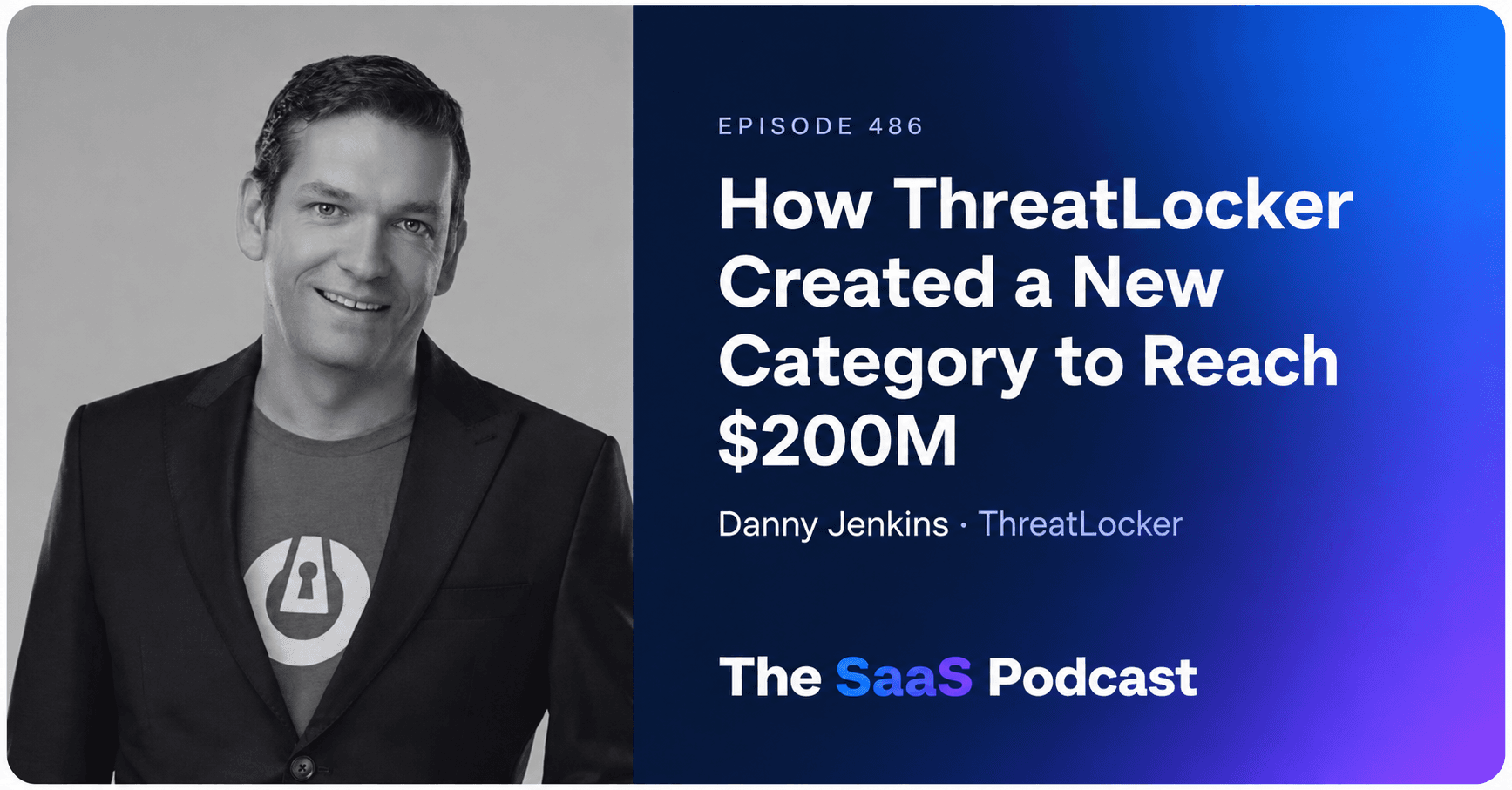
Danny Jenkins, ThreatLocker
Danny Jenkins started ThreatLocker with a simple, contrarian belief: instead of trying to detect every cyber attack, you should block everything by default and only allow what a business actually needs. The problem was that the market for that idea looked tiny. When Danny sized the whitelisting market, it was a few hundred million dollars at best, and winning it would have cost more than it was worth. So he made the bet that defines this episode. Rather than fight for a corner of an existing market, he used category creation to turn a small niche into a $10 billion opportunity: zero trust for every business, not just the largest enterprises. Getting there was brutal. It took 18 months to land the first paying customer. Danny remortgaged the house, ran the family onto credit cards, repaired a hurricane-damaged roof himself, and considered bankruptcy. When he finally got a customer on the phone, he was so scared to ask for the order that he was shaking. In this conversation, Danny shares how he validated the idea before raising money, why a blunt salesperson outsold a polished one, how MSPs became his wedge into the small-business market, and the two things he says are the only things that matter when you are starting out.
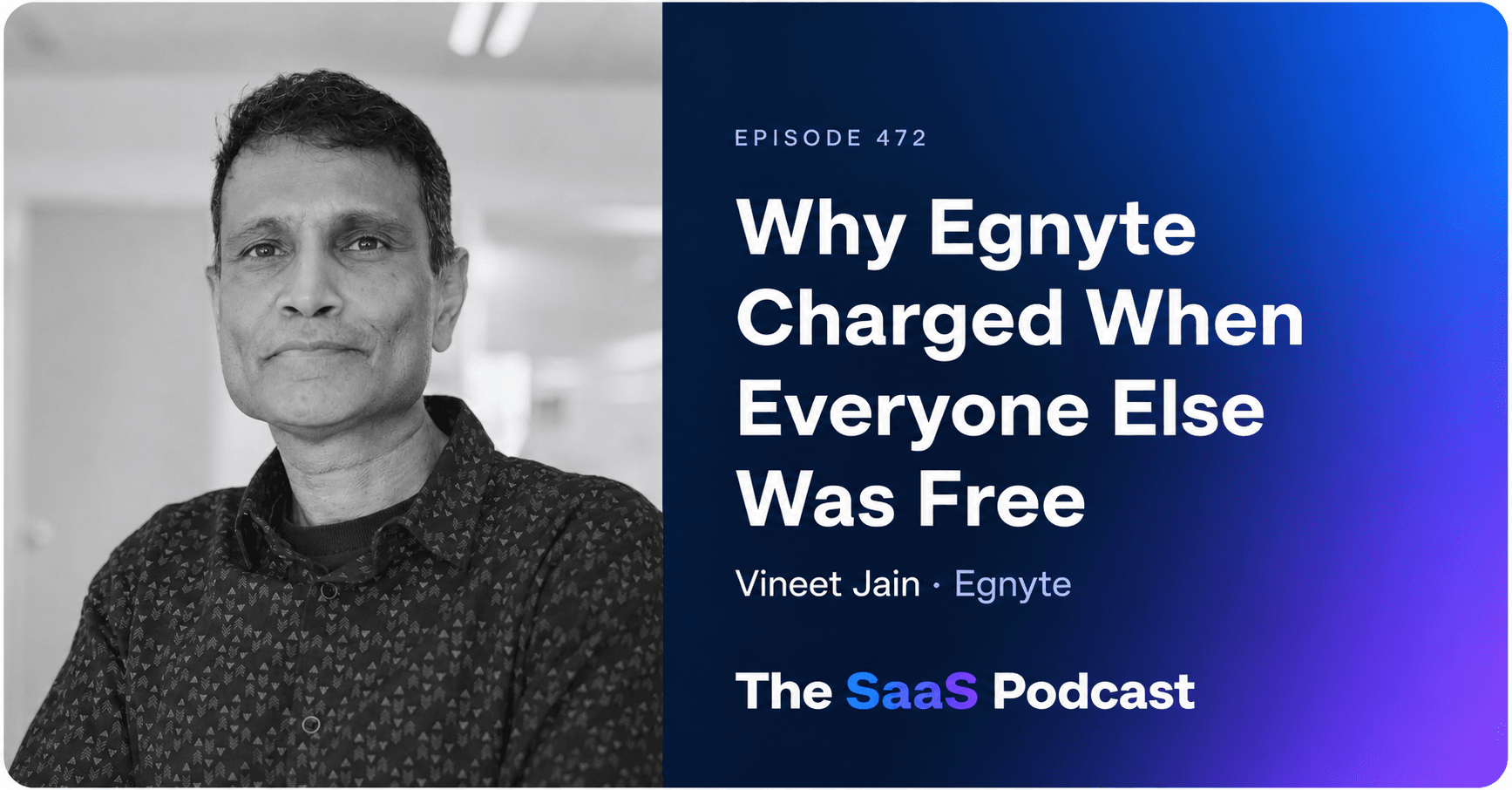
Vineet Jain, Egnyte
Vineet Jain is the co-founder and CEO of Egnyte, a content collaboration and security platform for mid-market and enterprise businesses. Vineet arrived in the US with $100 and no connections. He spent four and a half years at KPMG learning to sell to everyone from line managers to CEOs. That convinced him he could build something of his own. In 2001, right after the dot-com bubble burst, he co-founded Valdero, a supply chain software company, and raised $7.5 million from Kleiner Perkins. Revenue grew quickly. Then Oracle and SAP moved in. Pricing pressure crushed them. They sold. Investors made money. The 70 employees didn't. That failure stuck with him. In 2007, Vineet and three co-founders rented a small office. No funding. Two did consulting while the other two wrote code. The idea: move the physical file server to the cloud. When they launched, analysts lumped Egnyte in with Box and Dropbox - hundreds of companies chasing the same market. Everyone told Vineet to do freemium. His board pushed back. Analysts questioned how they were different. Vineet Jain built Egnyte to over $300 million in enterprise sales revenue using three strategies: charge from day one, offer hybrid cloud when everyone said go cloud-only, and keep cost of acquisition low with inside sales offices in cities like Spokane and Raleigh instead of Silicon Valley. In 2016, Gartner named Egnyte a leader - a tiny company standing alongside competitors that had raised billions. Today, Egnyte has 23,000 customers, 1,400 employees, and has raised just $137.5 million with no additional funding since 2018.