Seven Sales Leaders With Perfect Resumes All Failed
The Mistake
You have outgrown founder-led sales. So you hire the most credentialed sales leader you can afford: strong logos, good numbers, ran a team at a company ten times your size.
It seems like the obvious de-risking move. They have already done the thing you are trying to do. You are buying a shortcut past your own inexperience.
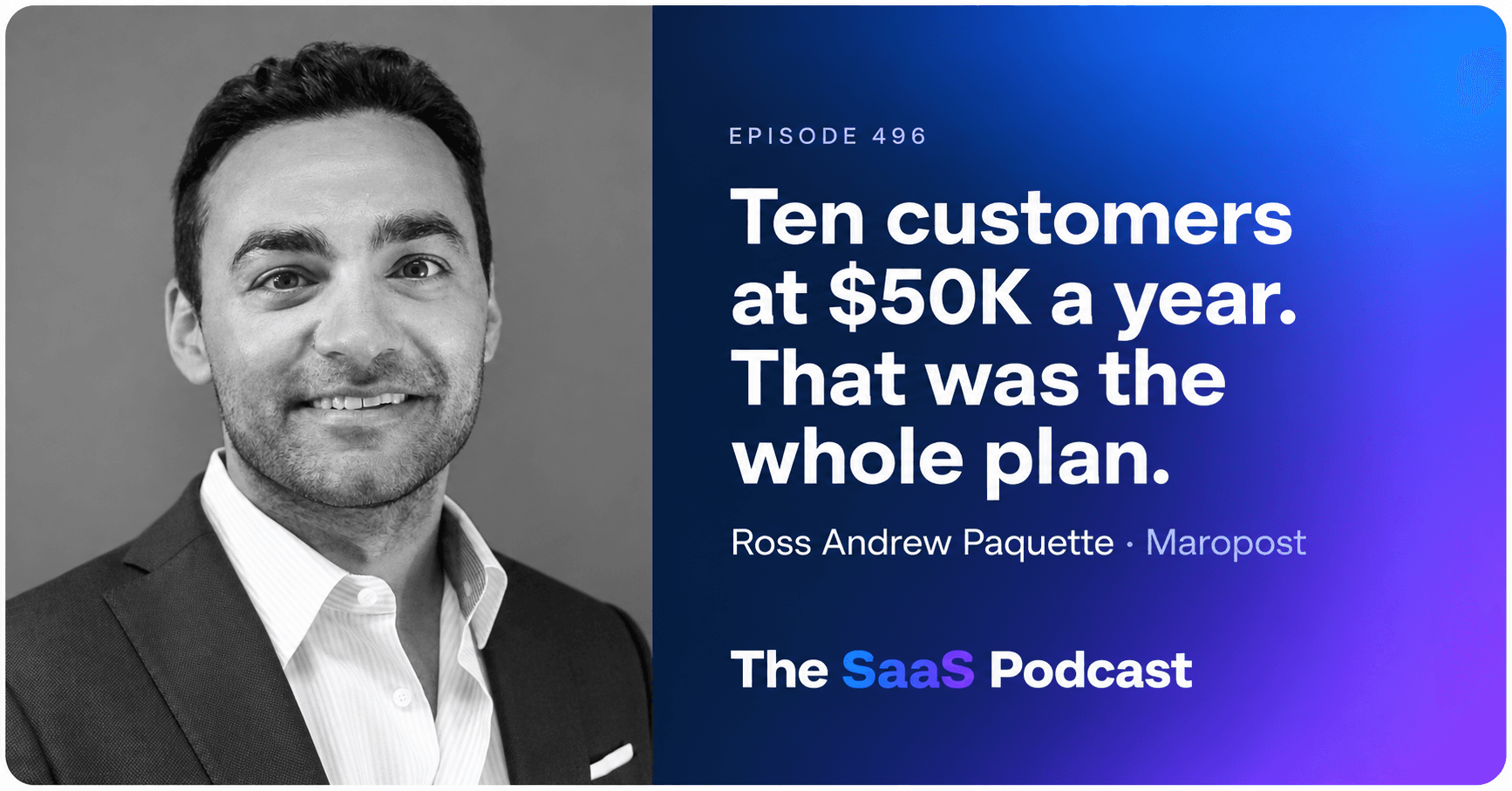
Ross Paquette ran this play at Maropost seven or eight times. His summary: "on paper they look phenomenal, they've worked at good companies, they've had good metrics, and then they've come in and it just hasn't worked."
The cost was not one bad hire. It was about ten years of not getting out of founder-led sales.
Why Founders Make It
The resume looks like proof. Logos and quota attainment feel like evidence, but they describe performance inside a machine that already existed: a brand buyers recognised, a product that demoed itself, a marketing engine feeding pipeline.
Founders undervalue what they personally provided. Ross closed deals because he had designed the functionality and could run a personalized demo with no deck. A hire with none of that context is not doing the same job.
Scale experience reads as transferable. It is the least transferable thing. Ross's framing is the sharpest version of this: "what would somebody from even a 50 million revenue company have in common with somebody who's at a million? It's not a lot."
And it cuts both ways. He also hired from companies under $10 million: "they get lost in the weeds within the first month or two."
How Maropost Lost a Decade
Maropost reached $27 million in 28 months with six or seven people, almost entirely on Ross selling. That was the moment to build a sales organisation.
Instead the company cycled through seven or eight sales leaders, plus VP hires in customer success, each time expecting the experience to transfer. Ross calls moving from what he termed "Ross and Co" to an actual organisation "the hardest part by far."
The investor period made it worse. Every VC pitch came with the same spreadsheet: hire twenty reps, here is the performance. Ross's verdict on it: "this looks, seems so easy. That sounds perfect." Growth over that stretch fell from around 400 percent to roughly 6 to 10 percent.
His own accounting, ten years later: "we're just getting there now, which is quite painful when I look back."
The Fix (If You're Making It Now)
1. Hire for tenacity before pedigree. Ross's answer on what actually worked: "just the tenacity. That's the biggest thing." Experienced hires "over strategize, over document, over train."
2. Match the stage, not the logo. Ask what the candidate personally did when there was no brand, no pipeline, and no playbook. If every answer assumes infrastructure, they are describing a job you cannot offer.
3. Take hiring itself seriously as a skill. Ross is direct that nothing changed "until we took hiring a lot more seriously and brought in stronger people to help with regards to the process." His one-line advice on what he would do differently: spend a lot more time on recruiting.
Be honest about the cost. This is a twelve to eighteen month rebuild, not a quarter.
The Signal to Watch
Track how many deals still need you in the room. Not how many you attend out of habit, how many would actually stall without you.
If that number is flat six months after a senior sales hire, the hire is not ramping, the hire is wrong. Ross waited far longer than six months, seven or eight times.
Ready to build your SaaS with founders who get it?
Join thousands of SaaS founders getting weekly insights and proven strategies from real founder conversations.
Free weekly newsletter · No spam