Why Workshop deleted the per-user fee it had built on purpose
The Insight
Price on the thing that grows when your customer gets more value. Then delete any charge that makes them pause before pulling in another department.
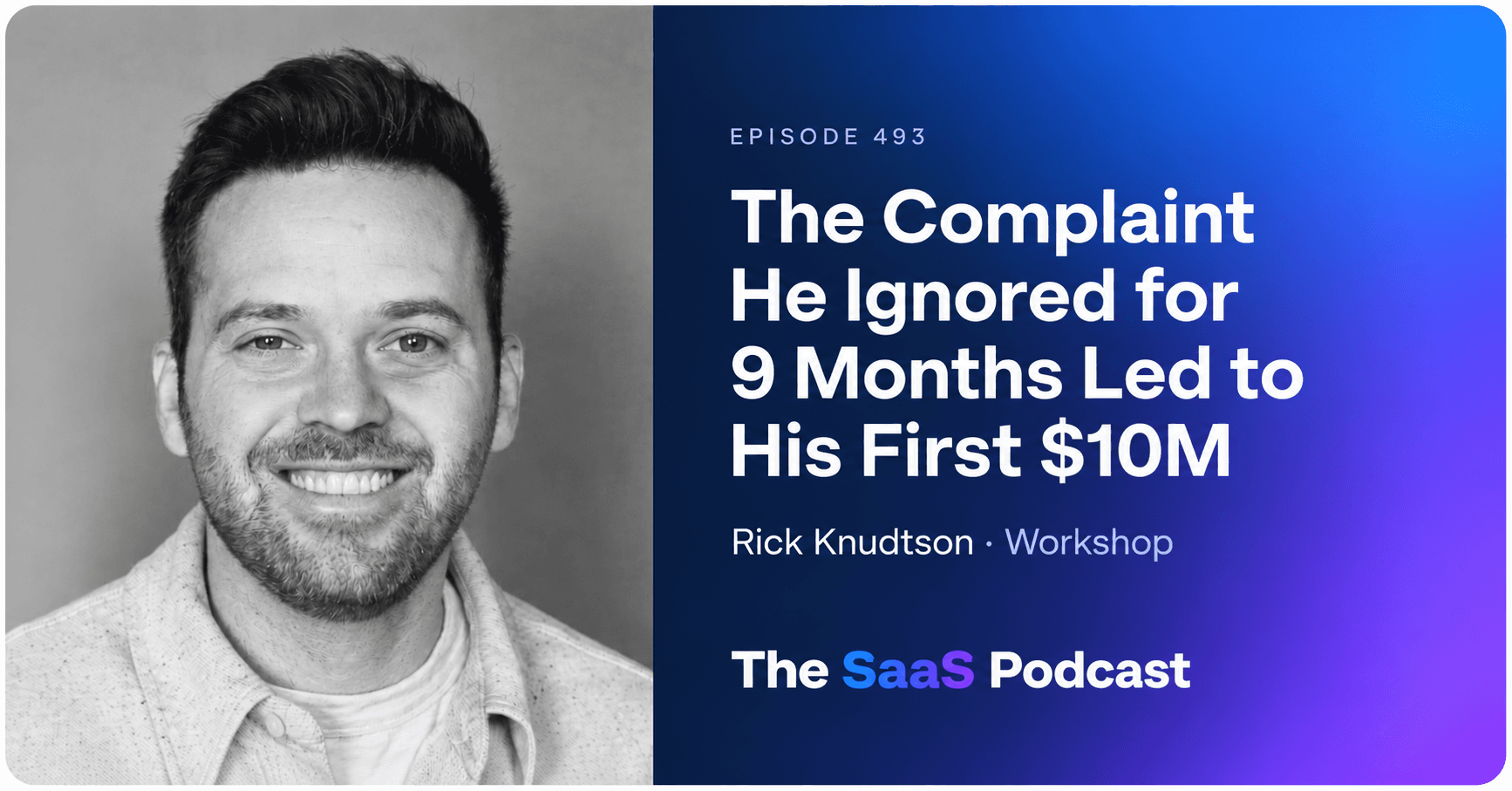
Workshop has no seat-based pricing at all. Rick Knudtson charges on audience size, meaning how many employees you're communicating to, plus which channels you bought. Email is one price. SMS costs extra.
There was one exception for years. Workshop set a high user limit and charged for additional users past it, deliberately, so the customer success team had a reason to call and expand the account. About three years ago they removed it.
The rule underneath the decision: if a fee stands between a customer and the behaviour that keeps them, the fee costs more than it collects.
How They Did It
-
Price on audience, not seats. What a customer pays tracks how many employees they reach. Workshop's largest customer, Capgemini, has 400,000 employees worldwide. That number grows as the customer covers more of its own organisation, and it never penalises them for adding one more admin.
-
Make channels the second lever. Email is the base. SMS, which is how you reach frontline staff, costs more. Expansion revenue comes from new channels and bigger audiences instead of more headcount inside the tool.
-
Describe your retained customer before you touch pricing. Workshop's looks specific: a large organisation with five or six departments in the product every week, running a lot of automations. Rick only killed the user fee once he could say that out loud.
-
Delete whatever blocks that profile. Adding a department meant a price conversation, and a price conversation at a big company means "let's spend two weeks going to procurement, it's like a whole thing." Two weeks of procurement to get one more department using your product weekly is a bad trade.
What Trips Up Founders
Charging for the behaviour you most want. Workshop's CS team was treating the extra-user fee as an expansion opportunity. It was a stop sign standing in front of the exact action that predicted retention.
Confusing a pricing lever with a growth lever. Per-seat pricing feels like it grows with the account. But at Workshop the seat holders are the comms team and the department heads sending messages, while the value lands on the employees receiving them. Rick priced the second number.
Setting the model before you know what retention looks like. If you can't describe a customer who stays, every pricing decision is a guess dressed up as strategy. Workshop made this change about three years ago, well after it could name the profile.
When This Doesn't Work
Audience pricing breaks if your costs scale with users rather than with audience. If every extra seat means real compute, storage or support hours, giving seats away doesn't remove your margin problem, it moves it.
The signal that you've got it wrong is simple. Watch what happens to gross margin as a big account adds users. If it drops, your pricing is disconnected from your cost base and audience pricing will make that worse, not better.
The Question
Open your price list and ask one thing: what do we charge for that we most want customers to do more of?
If a line item stands in front of the behaviour that keeps customers, you're being paid a small amount to make your own retention worse. Rick found one line like that in Workshop's pricing. He deleted it.
Ready to build your SaaS with founders who get it?
Join thousands of SaaS founders getting weekly insights and proven strategies from real founder conversations.
Free weekly newsletter · No spam