Kill your own product when the experiment beats it
The Insight
Most founders treat the thing they built as the thing they have to make work. Every new signal gets read as evidence for the plan. Every disappointing month becomes a reason to push harder on the same road.
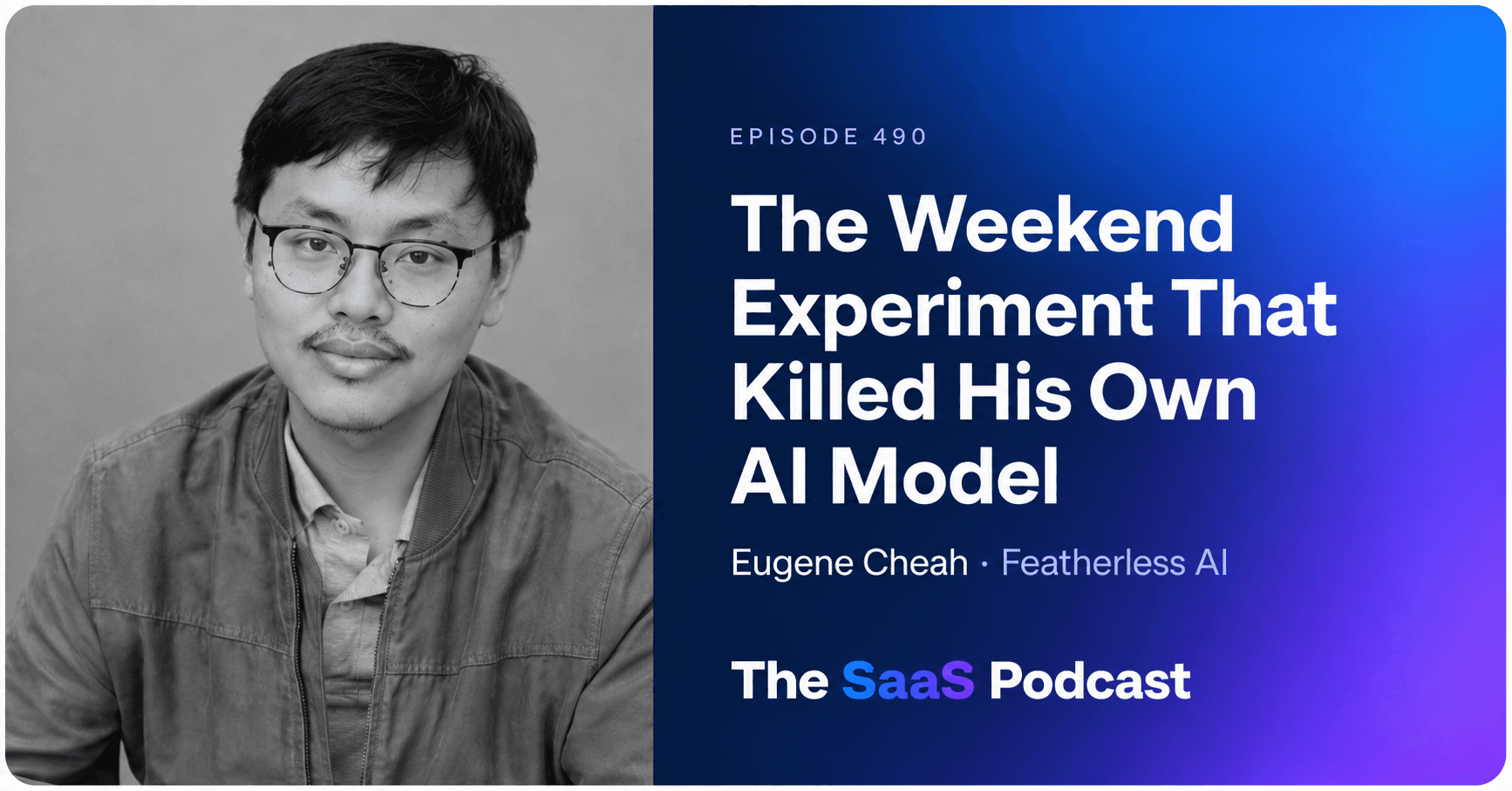
Eugene Cheah spent about two years building an open source AI model under the Linux Foundation. His team shipped a 7 billion parameter model that beat Llama's equivalent. Then a side experiment, launched over a single weekend, brought in more revenue than the main platform.
He killed the original product and rebuilt the company around the experiment.
The decision rule is simple to say and hard to follow. When a thing you built on the side outperforms the thing you have been building for years, the side thing is your business. Your job is to notice fast and act, not to defend the investment.
How They Did It
1. Ship the experiment cheaply. The team already had the technology. They repointed it at models people were asking for instead of their own, and launched under a new name.
2. Compare revenue, not enthusiasm. The signal Eugene acted on was money over one launch weekend, against the platform he had spent two years on. Not signups. Not compliments.
3. Name the attachment out loud. Eugene's summary of the moment: "the reality is people want these models more than your model. And it was a realization that I was holding my own mission back."
4. Move the whole company, not a side team. He renamed the company and rebuilt around the experiment rather than running both.
What Trips Up Founders
They protect the sunk cost. Two years of work feels like a reason to keep going. It is a reason to look harder at what the market is actually paying for.
They mistake the artifact for the mission. Eugene's mission was making AI accessible regardless of language or compute. He assumed that meant his model. Once he separated the mission from the artifact, the pivot stopped feeling like a loss.
They run the experiment as a side project forever. Hedging keeps both things underfunded. The revenue signal was clear within a weekend, and the response was to move everything.
When This Doesn't Work
If the experiment's revenue comes from a one-off spike with no repeat usage, you are reading noise. Eugene had a second signal before committing: demand he had already watched build in public, in communities asking how to run models they could not host themselves.
If the new thing is further from your mission rather than closer to it, you are chasing revenue into a business you do not want. Eugene's test was that Featherless served the same mission better than his own model did.
The Question
Ask what you would build if you were starting today, with no history and no code.
If the honest answer is the side project, you already know. The only thing left to decide is how long you spend defending the other one.
Ready to build your SaaS with founders who get it?
Join thousands of SaaS founders getting weekly insights and proven strategies from real founder conversations.
Free weekly newsletter · No spam