Omer Khan [00:00:09]:
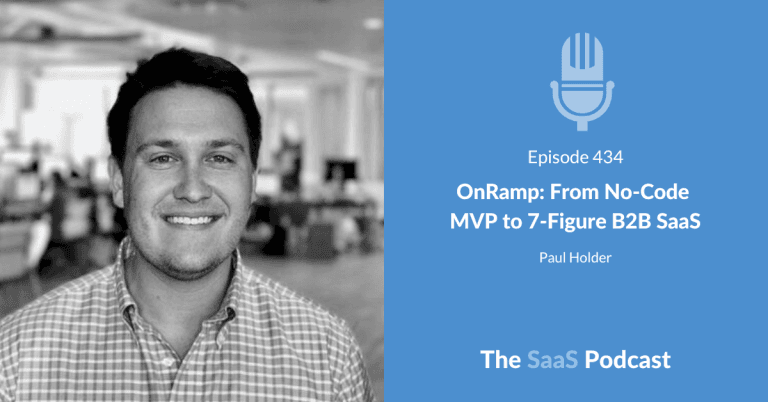
Welcome to another episode of the SaaS podcast. I'm your host Omer Khan and this is a show where I interview proven founders and industry experts who share their stories, strategies and insights to help you build, launch and grow your SaaS business. In this episode I talk to Paul Holder, the co founder and CEO of OnRamp, a platform that automates and orchestrates customer onboarding for B2B companies. In 2019, while leading customer success at Troops, Paul and his co founder Ross kept reflecting on the challenges they'd faced with customer onboarding at their previous companies.
Omer Khan [00:00:42]:
They spent several months validating their idea by interviewing customer success leaders to ensure the problems they saw weren't unique to their experience. Both co founders were non technical, but that didn't stop them. They learned to use Bubbles, a no code platform and although their MVP was far from perfect, they still managed to get their first 15 customers using it. After raising a pre seed round, they hired their first engineer and began transitioning from their bubble prototype to a custom built solution.
Omer Khan [00:01:09]:
Initially focusing on startups, they discovered their solution was even more valuable for larger organizations where small efficiency improvements could drive million dollar impacts. But the duo faced significant challenges getting traction. They struggled with trying to build too many features simultaneously while watching their cold email outreach campaigns fall flat. Making the bold decision to move upmarket meant potentially losing some of their SMB customers. But the strategic shift proved to be a game changer.
Omer Khan [00:01:37]:
Today on Ramp serves nearly 100 customers, has raised over $14 million in funding and generates seven figures in ARR with a team of 25 people. In this episode you'll learn how Paul and Ross validated their idea before writing a single line of code and and got their first paying customers using just a no code tool. Why moving up market was crucial for their growth and how they executed this strategic pivot.
Omer Khan [00:01:59]:
How they built a powerful multi channel outbound strategy after cold email hit rock bottom, what made them realize they were building too many features and how they changed their product development approach. And we talk about how they successfully transitioned from a no code MVP to a custom built solution while continuing to grow their business.
Paul Holder [00:02:16]:
So.
Omer Khan [00:02:17]:
So I hope you enjoy it. All right Paul, welcome to the show.
Paul Holder [00:02:21]:
Thank you so much. Glad to be here.
Omer Khan [00:02:24]:
Do you have a favorite quote? Something that inspires or motivates you that you can share with us?
Paul Holder [00:02:29]:
Yes I do. Life begins at the end of your comfort zone. If you want to know why, I could tell you why. I think. Listen, starting a startup is all about it. Especially as a first time founder doing things that you've never done before. And that's going to push you in many different ways. And, you know, I like to try to embrace some of that and say, hey, like, that's living, man. You do things you've never done. You push yourself.
Paul Holder [00:02:52]:
And so anyway, that quote's always just stuck with me and is relevant every single day in what I'm doing here.
Omer Khan [00:02:57]:
Totally. I love that. Actually, I had to think about that for a split second for. I never heard that one before. Okay, so let's talk about on ramp. What does the product do, who's it for, and what's the main problem you're helping to solve?
Paul Holder [00:03:11]:
Yeah, so OnRamp automates and orchestrates customer onboarding, and customer onboarding is that critical time from kind of when you sign a new customer to when they're getting value from your product or service. And we do this by giving our customers the tools to build, run, and measure their onboarding programs, as well as share those programs with their customers to complete them. We're a B2B SaaS business, and our customers are from a variety of verticals and a variety of industries, but it is, you know, it is a mix of both SaaS businesses and non SaaS businesses.
Paul Holder [00:03:46]:
So, yeah, we have a wide swath, a wide customer base, which is fun,
Omer Khan [00:03:50]:
cool, and give us a sense of the size of the business. Where are you in terms of revenue, customers, size of team?
Paul Holder [00:03:57]:
Yeah. So we're coming up on 100 customers. We have 25 employees, and we're doing seven figures today.
Omer Khan [00:04:05]:
That's great. And I think you have raised just a little over 14 million so far.
Paul Holder [00:04:10]:
That's right. Yep. Yep.
Omer Khan [00:04:12]:
Okay, great. So the business was founded in 2020. Let's go back to maybe like 2019. What were you doing at the time? What was your co founder Ross doing? And where did this idea come from?
Paul Holder [00:04:27]:
Yeah, so at the time, I was leading customer success for a company called Troops, which was acquired by Salesforce after a few months. After I left, my co founder, Ross was at business school and so had all the time in the world to think about startup ideas. But actually where we met was a company called VTS, which is a SaaS business in the commercial real estate space. And I actually led customer onboarding there, and Ross was on my team for a little bit before doing operations, finance, accounting work.
Paul Holder [00:04:56]:
But that's really where the idea kind of seeded for us. And Ross and I had kept in touch over the years and realized that, hey, the problems we kind of asked ourselves is the problems we face kind of scaling and creating amazing customer onboarding experiences. Was that just a VTS problem? Was that just something we were dealing with, seemingly really critical to us, but not anybody else? And fortunately, we were able to take some time and really validate that that wasn't the case.
Paul Holder [00:05:24]:
And we heard the same thing over and over again from a bunch of interviews that we did with other customer success leaders. And obviously that made us feel like we were onto something at the time.
Omer Khan [00:05:33]:
Okay, great. So you have this idea. A lot of people have ideas and do nothing with them. What was the case with you guys? How long was this just an idea you talked about? And how long did it take for you to say, okay, this is something that we're going to execute on?
Paul Holder [00:05:49]:
Yeah, for us, that was a period of probably about three, four months back in 2019. And it was funny. Ross at the time, again, he was at business school. Fortunately, he was in a PM class and they needed to have an idea for something to work on and kind of validate an idea on. And him and I had been kind of in the background thinking of different businesses we could potentially work on together. And again, we kept coming back to this idea of customer onboarding, customer experiences.
Paul Holder [00:06:18]:
And what we were able to do is, Ross, like, you know what? I'm going to use this in my PM101 class and see if we can get some validation on this and get some traction on it. And that, that honestly kind of kicked off. Hey, this just an idea on a whiteboard. And the whole thing to like, oh, what does the actual use case look like? What are the pains that we're actually solving? How would you actually think about this? Is a software product the right way to solve this or is it something else?
Paul Holder [00:06:45]:
We were lucky at the time to be able to have those resources and him going through that experience to kind of help push us out the door, so to speak, at the time.
Omer Khan [00:06:54]:
And as part of that process, did he create a prototype or was it just like a pitch deck or what was it?
Paul Holder [00:07:03]:
Yeah, in the early days, it was just a big PRD and a presentation to a class. But when him and I said, hey, this is actually something we think is worth pursuing and, quote, quitting our jobs over in his case, not finding another one, we said, hey, we're two people who are not technical. How do we go validate this in the market? And we ended up using a tool called Bubble, which is a no code platform, to build a product.
Paul Holder [00:07:30]:
We learned it as best we could, build a prototype, and that led us to get in front of folks and say, would you actually pay money for the solution that we're bringing to you?
Omer Khan [00:07:40]:
Love that you and I were talking about Bubble earlier and how, I mean, there's a lot of AI tools around, but Bubble's been around for years and it's amazing how much you can get done even on a product like that without AI if you have no technical skills now. So both of you non technical, you don't have a technical co founder, you want to build this product, so you're having to teach yourself how to use Bubble in order to be able to build the product. What did it actually do?
Omer Khan [00:08:13]:
Like how sophisticated was it the version I built?
Paul Holder [00:08:16]:
Not very sophisticated. And to make matters more interesting, right. As I mentioned, we're not just a tool for our customers to use that can just be used internally. There's actually that component, but then there's what we call the customer portal or their customer facing component. So imagine trying to add that complexity to a tool like Bubble.
Paul Holder [00:08:36]:
I think for us, what we did initially was we realized that what really got people excited about the idea was this idea of, hey, give me something amazing I can put in front of my customers to take them step by step through our onboarding program. So with the first version of Bubble, we basically just built that and a very, very simple version. And the question that we tried to answer at the time was a, will you pay money for this? But B, is this something you will actually put in front of your customers?
Paul Holder [00:09:06]:
Is this good enough to. Where's that bar? Right. And I think we realized pretty quickly that there's really nothing in the market to solve this. And so despite it being super simple, despite it being bubble, like, people were willing to, you know, people were willing to use it and that, you know, I'll never forget the first couple customers who actually did that, you know, for us is that was a pretty watershed moment for us.
Omer Khan [00:09:30]:
So you were able to actually sell the Bubble product. It wasn't just a prototype.
Paul Holder [00:09:35]:
Yeah. Now our customers at the time, I don't think they knew it was on. On Bubble. That was not widely advertised. But. But yeah. And I mean, I mean, listen, early customers, right? You're talking like 100 hundred bucks a month or something. I even forget at this point, but the point is less about the how much it's more will you actually pay for this? And so the answer for us was yes. And that was obviously really exciting. Felt like we were onto something.
Omer Khan [00:10:00]:
Yeah. Yeah. Okay, great. So you kind of go through this process, you get like those first 10 customers or so. I think maybe one thing we should clarify before we go further is, is a lot of people listening to this would be familiar with, you know, kind of like onboarding for a SaaS product, right? You, you maybe have some, some kind of guide to get people to go do a very simple product led growth type, you know, you know, onboarding experience.
Omer Khan [00:10:31]:
Maybe give us an example of a non SaaS customer and how or what they would be using on ramp for. I think that might make it a little bit more real for people to understand.
Paul Holder [00:10:41]:
Yeah, for sure. And I think there is a difference between PLG SaaS onboarding, like user level onboarding and what we do, which is kind of the overall orchestration of the onboarding and adoption kind of programs. And so I'll give you a SaaS example and I'll give you a non SaaS example. The SaaS example I like to use is Slack.
Paul Holder [00:10:59]:
Obviously you can go in, you can use Slack and like you can share it with your friends and get super viral just from like you didn't need to talk to anybody at Slack or work with anybody at Slack. But you just, you know, early days, right? You'd be like this is cool, I'm going to invite somebody, right?
Paul Holder [00:11:12]:
But you know, when Slack looks at implementing slack at a company like IBM, they can't just rely on oh we're going to release this thing into the 100,000 person organization that is IBM and assume we're going to be successful, right? They have a really, you know, organized, frankly complicated set of procedures and workflows that they need to work through with IBM. It's a massive project essentially and that is something that we would help facilitate on the non SaaS side. Here's an example.
Paul Holder [00:11:42]:
One of our customers, Cardinal Health, a huge health care distributor, when a pharmacy who's their customer signs a contract with Cardinal, there is a about 30 day process where they have to get set up on all of Cardinal systems. They have to provide and exchange a bunch of data with Cardinal and previously that was done all through email and literally in person meetings and now it's all done through on ramp.
Paul Holder [00:12:09]:
And so those like mom and pop pharmacies, right, are able to be onboarded about 50 to 100% faster than they used to be using our platform.
Omer Khan [00:12:19]:
Now I know these days you're moved or moving more upmarket and targeting bigger customers. In the early days who was your icp? Who were you focused on? I mean I know in many ways in the Zodiac it's anybody who'll buy the product. Right, but who were you trying to reach at that time?
Paul Holder [00:12:44]:
Yeah, it was, you know, again, this came out of birds, out of kind of Rosselmine's experience at VTS. And so we tried to find lookalike SaaS, companies who were like, who had a white glove, largely white glove onboarding process. Right. Somebody who was in our ICP was, yeah, this is a totally PLG product. You know, I'm going to use Appendo or some other tool to like onboard my users. Right. It was, hey, this thing takes three or four months to get our customers stood up. It's actually a pretty complicated orchestration.
Paul Holder [00:13:14]:
There's technical components involved, there's an integration, there's many team members involved, like both on our side and our customer side. And so, yeah, for us in the early days, it was, you know, it like classic, but like it works like other startups that fit that, other startups that fit that bill. And it had to be other startups because, you know, at that time we couldn't go to a fortune, you know, 500 customer and say, hey, we're two people in a garage. Like, will you take this on?
Omer Khan [00:13:41]:
We just learned to use bubble and we got this product.
Paul Holder [00:13:45]:
We just learned to use Bubble. You know, I think the thing about our tool that's interesting is, you know, this is something that, you know, is, is a key component of your customer journey. This isn't something that's just like, oh, hey, we're selling to an engineer. Go use this off to the side and tell us if it's interesting, if it is great, if it isn't like, cool, we're going to learn. But no skin off anybody's back. This is like, you're going to use this for your customer onboarding.
Paul Holder [00:14:09]:
That's a big, like, you know, that's a big promise that we have to fulfill. And so for us, like going to those earlier stage companies that were, that were willing to take more risks and be more entrepreneurial minded, that was really where we cut our teeth in the early days and learned a ton from.
Omer Khan [00:14:26]:
I think you told me that outbound had been one of the biggest growth channels for you. Can you tell me about how things got started and maybe one of the bigger challenges you had in getting that working for you?
Paul Holder [00:14:48]:
Yeah, I mean, outbound's hard, right? It's drumming up demand from nothing is not easy. Everyone wants to ideally just hit the ads button and just let be like, oh, we're just gonna have inbound, Inbound leads all day, come to us. And for Us in the beginning, that worked for a little while and we had a heavy Google Ads presence. Right. And it was working from the perspective of it brought in folks, but they often were not our icp. They were often, for example, trying to figure out how to even set up their onboarding program. Right.
Paul Holder [00:15:24]:
And they were looking for a services business, not a SaaS business. And so what we realized was that the customers who we can best serve are those who are trying to scale and automate and grow their onboarding program programs. And those folks were not coming in from Google Ads was not a way to reach those folks. And so, yeah, we had to kind of pivot our strategy and really rely on various outbound channels, which I'm happy to kind of talk through to bring in the right type of customers. Right.
Paul Holder [00:15:59]:
Which is ultimately what we're trying to do.
Omer Khan [00:16:01]:
Yeah, yeah, let's talk about that. Maybe. Tell me about one of those outbound channels.
Paul Holder [00:16:07]:
Yeah, LinkedIn's a big presence for us and increasingly so. And you know, I am the first to admit I get annoyed by the, some of the LinkedIn dribble and some of the, you know, some of the, what I would say is less than valuable posts. But I, but I'll tell you this, I think used to great effect, it can, it can work really, really well. And for us, you know, we really, it's where our bios, it's where our buyers are, it's where they hang out, it's what they watch and listen to.
Paul Holder [00:16:37]:
And so like, for us, it's just a. For us, I think it's twofold. One is it's driving awareness of our product category and who we are. And LinkedIn's huge for that. And I'd be happy to share some tactics that we've used for that. But two is like, yeah, we've also shifted our paid dollars there as well, and that's been successful and is picking up. So for us, that channel has just made a lot more sense than, than, you know, a just purely Google Ads strategy.
Omer Khan [00:17:07]:
So, yeah, maybe talk a little bit about LinkedIn and maybe LinkedIn ads, how that works. So what kind of ads are you running? How are you getting in front of the right people? And then once they do raise their hand, what does that buyer journey typically look like?
Paul Holder [00:17:24]:
The ads, we're testing them all the time. So we're testing content, you know, all types of content. But what I would say is, and that's true of any social site is videos, rich content far outpaces text for us, A lot of Times. And as far as who we're targeting, LinkedIn does a great job of giving you the tools to say, hey, I'm targeting. For us, it's SaaS with these specific Personas in these specific verticals and we're able to test that. So that's been fairly easy for us to set up and get going on.
Paul Holder [00:17:57]:
But I would say the content's really interesting.
Omer Khan [00:17:59]:
Right.
Paul Holder [00:17:59]:
Like as a new product category, you don't necessarily have people searching or looking for customer onboarding software. It's kind of new. So what you have to do is really speak to the problems and speak to, in our case, these customer success directors, VPs, managers, in a way that drives top of funnel awareness for your product category first and then convince them, hey, we're the right solution for this. But many times it's a problem they didn't even know that they had. And they know it once they hear it.
Paul Holder [00:18:31]:
But it's one of those, like they have to be told that they have this problem first before actually finding a solution for it. So I say all that because a lot of our ads and a lot of our content is really driven towards those things. And so for us, that's what's been successful in driving the leads that we really want, the people that we want to bring in.
Omer Khan [00:18:51]:
Yeah, I mean, this is not like selling a CRM where somebody's saying, I need a new CRM, I go in shopping and pick one. Here you're having to go much higher up in the funnel and educate people about the problem that they have, but don't fully realize that they need to solve or have just accepted that this is the way it has to be. I guess that's always a challenge when, when you, anytime you're kind of building a new category. What does the typical sales cycle look like?
Omer Khan [00:19:28]:
I mean, if there's like a lot of education going on and you know, is it like, you know, like, how long does it take to close a deal?
Paul Holder [00:19:37]:
Yeah, and certainly it depends if we're, you know, selling 100 person, 200 person company compared to a Fortune 15, as I'm sure you can imagine. But yeah, typical. What's cool is there's a lot of education, but we're trying to get that education done up front even before they come in and officially enter the sales cycle. And you asked what happens when they actually raise their hand? Yeah, they get connected. They get connected with a rep and we do.
Paul Holder [00:20:01]:
I would describe it as a fairly traditional process of they'll do a discovery call, we'll actually figure out, okay, is the problems they're talking about is why they came to us. Is that something we can actually solve? And we're very upfront with if we can't then, you know, it's not worth our time and not, not worth their time. But from then it's a series of what tends to be demos and getting the right people on board and you know, it's your product or solution is half the battle of selling.
Paul Holder [00:20:27]:
The other half is getting, you know, the customer, getting everyone aligned to, you know, internally to again like selling upward, selling outward, getting as many, you know, champions as you can, you know, involved in the process. And what that culminates for us is about a 60 day sales cycle end to end on average. But a bigger company can take six months. An enterprise can take six months where you're just driving it. You feel like you're having the same conversation eight or ten times.
Paul Holder [00:20:56]:
But it's all slowly chipping away at building that momentum and having your customer feel comfortable with bringing a startup on board, which is a big, you know, bet for them to make ultimately.
Omer Khan [00:21:08]:
Yeah, yeah, I want to just go back quickly to the mvp, the bubble product. Firstly, how, how far were you able to get with the bubble product in terms of, you know, did you hit six figures with it or did you, was there a certain point where you're like, okay, I can't go any further. We need to, you know, actually get somebody to build the product now.
Paul Holder [00:21:32]:
Yeah, yeah, it was. We didn't get to six figures with it, but we did. I forget exactly where we got to, but, but we got our first, I think maybe our first like 15, you know, customers on it. And that was, you know, kind of me and my co founder building it at first.
Paul Holder [00:21:46]:
We, we then were able to, you know, with the validation that we had, we're able to raise a pre seed round which allowed us to actually bring on board an engineer, Sean, who's, who's shout out Sean, he's still with us today, which is, which is awesome. And he, he then built OnRamp on our own code base.
Paul Holder [00:22:03]:
And for us I think it was pretty clear that trying to scale Bubble beyond that first 15, 20 customers and trying to get to six figures, it wasn't going to, we were running into, at that point, we were running into too many like, okay, we can't quite do this with this tool but we know that this is the thing that people want. Let's go for it. And for us, going for it meant actually hiring a real technical talent to build it out. Right.
Omer Khan [00:22:29]:
And I guess also because this wasn't like a crud app that you've just like, you know, it's a simple database and you just add records and update and delete and whatever. You had to build this thing to solve a problem and then you had to build it for your customers to be able to use with their customers, as you said earlier. And things start to get pretty meta and kind of complicated very quickly when you're trying to do something like that.
Paul Holder [00:22:54]:
It does. And it's fun. When we obviously use On Ramp to onboard our own customers and so they're using On Ramp as that we call them end customers first and then they're using it to onboard their customers, it gets very meta. But yeah, to your point, like a bubble or some of these other tools, I think if it is just kind of a crud app and something that can be used internally, I think it would have legs to go further.
Paul Holder [00:23:18]:
But what we're talking about is onboarding is this, like your company's reputation is on the line when that sale is signed. And now the rubber actually meets the road and you have to deliver on the promises that were made during the sales cycle. And so we take that responsibility really seriously. And it became clear to us that okay, to build an amazing portal and end customer experience, we're going to have to do it on our own code base and actually build our own IP around it and all of that stuff.
Paul Holder [00:23:51]:
So that's what really drove the decision making around that at the time. And yeah, there was months where we had to manage that transition and try to still sell and bring people into bubble, but we were transitioning. So that was an interesting time. But when we did it, we haven't looked back from there.
Omer Khan [00:24:12]:
Now the other thing you told me about the MVP was that you were like, hey, we built this MVP and we got the V, the viable and the product part right, but we weren't very good with the minimum piece. Tell us a little bit about what happened.
Paul Holder [00:24:28]:
I think ultimately and you know, advice for anybody who's trying to start a business is, yeah, it's funny, you hear all these things that are like, truly like, scope down your MVP as much as possible, right? Don't sell to fire bad customers. And then when you actually get into the pressures of hey, we gotta grow at all costs, or like, hey, we're just trying to get people to use this. Hey, these customers are telling us things like, yeah, let's do it. It's funny actually listening to those principles and Actually doing it is harder.
Paul Holder [00:25:00]:
And so for us, I think one of the mistakes we made was we tried to build too much too quickly. We went really wide as opposed to finding a wedge and going deep. And so to bring it to life for us. Right. We're kind of a. We're a task management. You know, we're a task management tool. We're a workflow tool. And then we have this end customer experience. Those are like three separate product categories in one. And we're trying to build all three, like, at the same time.
Paul Holder [00:25:29]:
And, you know, our customers came to us and said, hey, I've used task management before. Why don't you guys have dependencies? Why don't you have this? Why you don't. Why don't you have that? They use all these great. These wonderful tools that do some of that stuff, and they're like, well, that's easy to build. It's like, no. Well, it took another company, 10 years of dedicated effort to go do that. And I think we got a little caught up in the, like, oh, let's just go, cool.
Paul Holder [00:25:49]:
Let's get to feature parody on some of those things that customers expect. And reflecting back on that, I think what we would have been better served to do is to say, hey, let's take one part of the onboarding journey. And really, Nick, because I. Onboarding, there's many steps and phases within this onboarding journey. Let's take one part. Let's take the highest kind of pain point part, really go deep on that, and then we can build out from there. And we didn't. And listen, I'm sitting here now.
Paul Holder [00:26:14]:
I'm glad we have the breadth that we do because it served us well today. But I think reflecting, we could have gone further, faster if we had taken maybe a different approach.
Omer Khan [00:26:23]:
Yeah. I think it's like you went through that pain and eventually you came out the other end and you're like, yeah, okay, I'm kind of happy where we are now. But you probably wouldn't want to experience that pain again because now you can see that there was probably a less painful path to getting to where you are.
Paul Holder [00:26:47]:
Yeah. And listen, I think that I'd like to think we take those learnings into what we're doing today. So, like, as we make big, hairy, audacious product bets. Right. Which we. We all love to do, we're not. You know, I think we got to. And also now it's not just Ross and I. We have a bunch of great, great people on the team that can keep us Honest on this, but, you know, we do ask ourselves, like, hey, what is the problem the customer is actually trying to solve?
Paul Holder [00:27:10]:
And what's the, what's the shortest path to actually solve that? And we may have all these great ideas and all these, you know, ways to think about the future state of it and all of that, but, like, let's start with step one. And again. Yeah, again, I'm not preaching anything new, but I think actually putting it into practice is a skill. Is a skill that you have to learn and one that we've learned over the past couple years.
Omer Khan [00:27:33]:
Yeah, yeah, totally. In terms of getting to the first million in ARR, what was the most, or was there one growth strategy or channel that was the most effective in helping you to hit that milestone?
Paul Holder [00:27:49]:
It was, you know, listen, like, and I think for any business, depends on your ticket size and all of that, but for us, like, really just pounding our networks was, was huge. And I think, you know, I think, you know, if you think about our, our kind of business and you think about five figure, you know, plus contracts, right. You don't, you ultimately don't need that many of them to get to a million dollars. Right. Which is why I personally like selling up market. And it's more, more of my style.
Paul Holder [00:28:19]:
But, but I think like, really, you know, our approach was. And it's always a balance, but it's the, hey, founder asking for advice on something, right? To start an intro call. And then you kind of get someone hooked on, you know, you hopefully bring that infectious energy to the problem you're solving. And someone's like, you know what?
Paul Holder [00:28:35]:
I, I do kind of have that problem, or I know someone who has that problem and you start, you know, you just kind of build that, you know, that muscle of like, hey, I'm just gonna go talk to a bunch of people and try to drum up, drum up the business.
Omer Khan [00:28:48]:
Yeah.
Paul Holder [00:28:49]:
Reflecting on when we, you know, going from those first 10 customers to the first like 50, it was honestly a lot of. It was a lot of that. Beyond any spend money, beyond any ads or anything. It was, hey, let's go. You know, it's amazing. People just want to be helpful, which is awesome. And so, you know, if it's not the right fit for them at the time, they'll know someone who it could, could be.
Paul Holder [00:29:09]:
And for us, for Ross and I, we just pounded the pavement frankly, doing that, and we're able to learn a ton along the way. Now that's not scalable. Right. Like, ultimately that network runs out or that, you know, Whatever. But I think getting to your first million, that can be a really viable strategy, again, assuming you have the ticket sizes to kind of be able to do that effectively.
Omer Khan [00:29:33]:
Did you try cold email outreach?
Paul Holder [00:29:35]:
We did. We've tried cold email outreach a lot and it is, it is dead, in my opinion. Respectfully, I think, I think, like, we listen, you know, cold email without anybody having heard of you is just like the open rates have gone down significantly over the past five, 10 years. Now you have these flood of AI tools just crafting all of these personalized, but they're not like, I frankly think, you know, we had a lot of work to do there messages and it's just this like, bombardment. I, you know, I get how many a day.
Paul Holder [00:30:11]:
Right. And obviously now people have set up filters, you know, and, you know, tools are better at flagging that stuff. And so, you know, for us, I think it became pretty clear that while the right type of outbound can be a really good approach, that particular channel for us is, yeah, we don't spend a ton of time on it. Honestly, it just hasn't been successful for us.
Omer Khan [00:30:32]:
Yeah, I mean, I know people doing cold email outreach who still believe in it and are having success with it, but I agree with you. I think it's become harder and there's so much noise with these AI solutions now that I just think there's just too much noise and it's making everybody even more resistant. Like they're kind of training themselves to block it out more. I started using this product. What I realized was I was getting all of these kind of cold emails, and half the time they're not even relevant.
Omer Khan [00:31:11]:
And you can do some level of kind of protecting your inbox, but every one is a distraction. And for me, who always has somebody who always has problems focusing, right, that, that it's like, it's, it's a, it's a big ding to your productivity. And so I've been using this product called Clean Email for, for a few months now. And one of the things I like about it is that what it does is every time you get an email from somebody you've never received an email from, they just park it into a screened place.
Omer Khan [00:31:47]:
And then you decide when you want to go and take a look. And you can just go to this page and you can just see a preview of them. And very quickly you can just tell, even without opening it or just the first line, oh, this is one of those. And with a one click, you can just say, okay, I'm going to block that. Never get, never see it again. And I think people are going to have to do more of this stuff.
Omer Khan [00:32:07]:
I don't know why this stuff isn't built into Gmail and all that stuff,
Paul Holder [00:32:10]:
but, but Ross use a superhuman and they have some of that kind of stuff they're starting to build, as I'm sure you can imagine. Starting to build. And admittedly I don't, but he does. So he showed me essentially a version of that. And I think you're right. And so I think the question you have to ask yourself as you're trying to reach people is do we want to try to navigate that? Are we equipped to solve that problem?
Paul Holder [00:32:33]:
And by that I mean reach those people effectively with all those barriers in the way, or is there a better way to reach the people we want to reach? And again, I think it, it absolutely depends on the business and who you're trying to target at 100% does. But I think for us, like, instead of wasting cycles and time trying to saying like, how do we best navigate that minefield that's super crowded, we're like, let's get out there, get in front of people, let's like go make that personal connection.
Paul Holder [00:33:01]:
Let's go, you know, find the person that will intro us to this next person. And for us it's like that, that hits 10 out of 10 times. And it's like, we just think that's a lot more effective use of our time. But yeah, totally, you know, I. Totally dependent on the business is my opinion of it.
Omer Khan [00:33:19]:
Yeah, yeah. So we talked a little bit about like LinkedIn ads, but you're doing more than just ads on LinkedIn. Just, just explain that a little bit. And I also want to kind of talk about where your AES fit in with this and what they're specifically doing to reach out to customers.
Paul Holder [00:33:37]:
Yeah, we take like a bear hug approach to it. So, you know, it's, yes, it's ads, but it's also driving through our, you know, we use a tool called dripify, for example. I don't know if you've heard of it, but it's essentially like allows us to make a bunch of connections on LinkedIn and grow our network. And everyone in the company is involved in that. It's a full effort. But what we post and what we talk about is not just on ramp. It's not just always on ramp. It's about our industry.
Paul Holder [00:34:06]:
It's about sometimes it's, you know, of course, like our best performing post was about like swag. Right. Which like is absurd. But what that, you know, has nothing to do with our business necessarily, but what it does is it drives eyeballs to us. And the next time someone we do publish a piece of content that is relevant to our space or again, more thought leadership type content and stuff like that, people have heard of us, we proverbially warn them up. And so it's a lot about organic, trying to drive organic traffic as well for us.
Paul Holder [00:34:40]:
And again, content's a big name of the game there. And then our reps are, yeah, they're super active. They're super active on LinkedIn. They're also calling, you know, they're doing, they're doing calling. And yeah, you can also say, well, Paul, that's crazy. Like you said, email is dead. Like, isn't calling even more dead? We all have filters and the truth is like, not, that's not what we're finding.
Paul Holder [00:35:02]:
And, and you know, yeah, a lot of people will hang up or a lot of people won't answer your call, but I think we find that by, you know, targeting someone on LinkedIn with really thoughtful, valuable content, them seeing an ad, them then getting a call, that's kind of this like holistic strategy that gets someone to take action and respond. I don't think it's a silver bullet, right?
Paul Holder [00:35:26]:
Like, you can't just sit there on the phone as an AE and be like, hey, I'm going to just call a million people and like, I'm going to get picked up from people who have never heard of me before. But I think our, you know, RAs take the approach of, hey, I have to warn, I have to, I have to do a lot of warning. And that's just a part of this game.
Paul Holder [00:35:40]:
And so for us, you know, it's kind of that, you know, that, that suite of things that is driving, you know, the right people to us at the, at the right time.
Omer Khan [00:35:50]:
Sometime in the last year you made the decision to move up market. What, what triggered that and what was the strategy that you decided to pursue?
Paul Holder [00:36:03]:
The reason that we did it was, as I mentioned, when we started the business, we were selling, you know, other startups. They're great, lovely people, people like us. We were selling other lookalikes. And then we realized that the, and that's great again for your first $100,000 or whatever it is. We realize though that the problems we're solving are even more acute with bigger and more complex organizations.
Paul Holder [00:36:28]:
And in fact, in particular with what we do, which is automate drive efficiency and create great customer experiences, moving the needle even 5 or 10% has potentially millions of dollars of impact with bigger customers. Compare that to a startup that's like, hey, I don't even know what my business is going to do next year, right, next month, let alone next year. And you know, for us then we had this dichotomy of we had these Fortune 15 customers that were really great customers of ours and then we had these, this really long tail of SMBs.
Paul Holder [00:37:01]:
And unfortunately, as nice as it'd be as a 20 person company or whatever to serve all of them, you kind of have to pick a, you have to pick a lane because the product you're going to build for those that long tail is fundamentally going to be different from the product you build for bigger customers. And there's a bunch of, I have a bunch of examples of that. But ultimately what drove that was we can't be everything to everybody and we in fact will kill ourselves trying to be everything to everybody.
Paul Holder [00:37:31]:
So let's make a hard decision here and actually go after the customers we think will drive the next 10 million of business rather than thinking of every little dollar that we can get from somebody just saying yes, right, great.
Omer Khan [00:37:46]:
So that decision drives changes in your go to market motion, the kind of product features that you're going to invest money in. What did it mean for existing customers? Who, you know, the SMB type customers, Are they still around? Are they still using the product?
Paul Holder [00:38:10]:
Yeah, you know, some of them are. And we've been okay with saying, you know, whereas our, our own CS team used to like, we're going to fight for every single dollar and every single customer. In fact, you know, maybe whatever to say, but like we aren't necessarily taking that approach anymore because again with our limited resources, we know that they are much better served serving our upmarket customers.
Paul Holder [00:38:35]:
Now we still go, those folks support, they write in, you know, we, you know, we have, we aren't trying to completely ignore them, but here's what it's doing that I think is great. It is frankly weeding out the ones that weren't really good fits to begin with and it's keeping the ones that actually will grow into a meaningful business for us in the future. And I think without being intentional about that strategy, I think us and our whole team would be stressed out about every customer lost, right?
Paul Holder [00:39:06]:
Oh my gosh, yeah, maybe a small dollar customer, but it's another customer that we lost. Whatever. By being intentional about this strategy, we're setting our goals in a different way. And so when those things happen, they're intentional, they're not necessarily, like, cause for alarm or panic. And I think that's a really important thing because, you know, driving a strategy like this, you not only. Not only have to, as a founder, right. Get yourself behind it, but you have to get your whole team behind it.
Paul Holder [00:39:30]:
You have to get your board behind it, you have to get your investors behind it. And so, you know, by setting the right goals and really saying, this is what we're going to do and putting a stake in the ground, it allows you to make all the decisions, you know, around that. And, and for us, that's been a process here, but one that we're seeing pay off, fortunately.
Omer Khan [00:39:48]:
I'm curious, how do you disqualify
Paul Holder [00:39:54]:
the
Omer Khan [00:39:55]:
wrong type of leads today? Because anybody can come to your website and request a demo. Right. And different companies have different ways of dealing with that. What's your approach?
Paul Holder [00:40:08]:
Yeah, and every customer, every. If you're in business, if you're a business, you do onboarding. Presuming you have customers, you do onboarding. Right? And so, like, for us, it's also like, you know, people say, oh, customer onboarding. I'm going to go check this out. So it's, you know, we do get a wide swath of people at different stages of their maturity journey. I think for us, there's a couple things that we do.
Paul Holder [00:40:29]:
One is at this point, if you're, if you're, you know, under a certain size, we say thank you, but we literally say you're not a right fit. For us, at this point, we are literally saying no, which is really interesting. Gave me heartburn in the beginning, but I think now is good.
Paul Holder [00:40:44]:
And then if they do pass our criteria, screener, for us, we are very intentional about if you're a customer, that's again, you have a low volume of customers yourself or you're trying to figure out your onboarding program, maybe someday, but right now, we're not a fit for you. We're not gonna help you. And in fact, you're gonna be frustrated you're buying a Ferrari for what you should be doing manually, so don't do that. And we're very intentional about that today. So we treat every.
Paul Holder [00:41:18]:
No matter who comes through the door, we treat them with respect and we treat them as like, hey, let's have a conversation if they do meet certain criteria. But if we realize it's not gonna be a fit, much better to say no upfront and early than going through the process, taking everybody's time, potentially them being a risk churn. Right. And I think as we grow the business, we're gonna open that aperture further. Like, going back to SAP could be a really great business for us. I firmly believe that.
Paul Holder [00:41:42]:
But we need the resources to do it successfully. Right. And today, again, it's all about. Yep. You only have a certain number of resources to point in a certain direction. So where can we most effectively do that? Those are kind of, that's kind of how we think about it.
Omer Khan [00:41:55]:
I mean, yeah, you're right. You have to pick a lane, Right. It would be in the ideal world, you serve all those customers and build the product that keeps all of them happy. And your marketing would work for, you know, all of that stuff. But it's, it's a, it's a really difficult thing for anybody to, to pull off. And I think having that level of focus is like, it's, it's, it's, it's a question of survival. Right. And giving.
Omer Khan [00:42:22]:
Like, you can do a lame job trying to serve everybody or you can do a great job just focusing on a specific type of customer.
Paul Holder [00:42:31]:
Yeah. And I mean, listen, for us, like, if you think about it, right, if you, if you think about serving a much higher volume of lower paying customers because that's what you're doing, you have, you need to do, you know, you need to think about product LED growth. You need to think about, you need to think about how do I create the best. Let's prioritize user experience over everything else. Right.
Paul Holder [00:42:51]:
And for us, yes, those things are important, of course, but for us, we're asking the question, okay, there's so much great value add product for us to build. I'd rather build game changing features and functionality and not worry so much about, oh, is this the perfect user journey? And we're going to go ab test this 100 times, right. And have the perfect flow for it. For now, people are paying us high enough dollars, we can help them through that process and I think we can always revisit at some point.
Paul Holder [00:43:20]:
But to me it's about who can innovate and learn the fastest. And so anyway, that's how we think about those kind of decisions. But yeah, you got to pick a lane. You really do.
Omer Khan [00:43:32]:
Cool. Okay, let's wrap up. We're out of time here, so let's get into the lightning Round seven. Quick five questions for you. Ready?
Paul Holder [00:43:40]:
All right, let's do it.
Omer Khan [00:43:41]:
What's one of the best pieces of business advice you've received?
Paul Holder [00:43:44]:
Put yourself in a position to get lucky. Seems like the people that get lucky tend to you think like, oh, how fortunate were they? And the truth is like we don't realize is the months and years of work they did to put themselves in a position to get lucky. So I always try to remember that one.
Omer Khan [00:44:01]:
What book would you recommend to our audience and why?
Paul Holder [00:44:03]:
There's a book the Sales Acceleration Formula by Mark Roberge. He's a HubSpot alumni work from Boston, so we're big HubSpot fans here. Anyway, great book. To help you really put math behind your funnel in a way that was eye opening for me starting out the business.
Omer Khan [00:44:19]:
I agree.
Paul Holder [00:44:20]:
Great book.
Omer Khan [00:44:21]:
What's one attribute or characteristic in your mind of a successful founder?
Paul Holder [00:44:25]:
Being a truth seeker. You have to find the truth and you have to ask the right questions to get to the truth. And ultimately if you can do that as a founder, you're going to be successful.
Omer Khan [00:44:36]:
What's your favorite personal productivity tool or habit?
Paul Holder [00:44:39]:
Yeah, I'm not. There's all these fancy tools and all in the Twitter sphere. Goes nuts with all this stuff. For me, I do my best work in the morning so I put my hardest tasks first and I block off my time in the morning first. To me that's been the biggest thing is just recognizing that in myself. And so my tip is to just, if you're that type of person, get the hardest stuff out of the way in the morning.
Omer Khan [00:45:03]:
What's a new or crazy business idea you'd love to pursue if you had the time?
Paul Holder [00:45:06]:
You know, I'm a consumer electronics nerd. I love all things consumer electronics and so for me I think it would be some version of like create a business to bring like AI smart home solutions to the masses. I love, you know, I have a home here and I love like making it smart and doing all that stuff. So I'd find some way to weave that passion into, into a new business idea.
Omer Khan [00:45:29]:
What's an interesting or fun fact about you that most people don't know?
Paul Holder [00:45:33]:
I'm a twin and my co founder is also a twin. So I don't know what that says about us, but yeah, I think that's pretty rare. It's gotta be pretty rare. You know, co founder duos, we're both twins.
Omer Khan [00:45:43]:
That's a weird coincidence. And finally, what's one of your most important passions outside of your work?
Paul Holder [00:45:48]:
You know, these days it's really being the best dad I can be to my 2 year old son and 3 month old daughter. They, you know, they certainly take up, you know, my non working time. And so for me just you know, seeing them grow is a joy that
Omer Khan [00:46:02]:
has got to be pretty crazy having two kids in that age range right now.
Paul Holder [00:46:07]:
Needless to say, yes, it is.
Omer Khan [00:46:09]:
And you're still smiling.
Paul Holder [00:46:11]:
I, you know, for now, you know, maybe in, you know, 20 minutes, we'll see.
Omer Khan [00:46:14]:
But yeah, my kids are, my kids are teens now, but they were. There was. There was a. About a two year difference, so almost the same as yours. And those years just seem like a blur right now and a lot of happy memories. But when you're in the middle of it, it's like you just. You loot. I don't know. Maybe what I meant was it was a blur back then. But yeah, look back, look back at it with fun memories.
Paul Holder [00:46:43]:
Totally. You know, I'm trying to like, keep myself in the moment. You know, you only get one chance to be a parent, right? You only have so many kids and so try to balance that blurriness with being there for them and being present as much as possible.
Omer Khan [00:46:57]:
Paul, thank you so much for joining me. It's been a pleasure. Great to just unwrap that story of you guys starting out with the idea, building on bubble and kind of getting to where you are today. It's awesome. Hopefully we gave people listening some ideas, some insights, something that they can take away and apply in their own businesses. If they want to check out OnRamp, they can go to OnRamp us. And if folks want to get in touch with you, what's the best way for them to do that?
Paul Holder [00:47:30]:
Paulnramp us.
Omer Khan [00:47:32]:
I wish you and the team the best of success.
Paul Holder [00:47:34]:
Thanks so much. Cheers.