Omer (00:16.320)
Welcome to another episode of the SaaS Podcast.
I'm your host, Omer Khan and this is the show where I interview proven founders and industry experts who share their stories, strategies and insights to help you build, launch and grow your SaaS business.
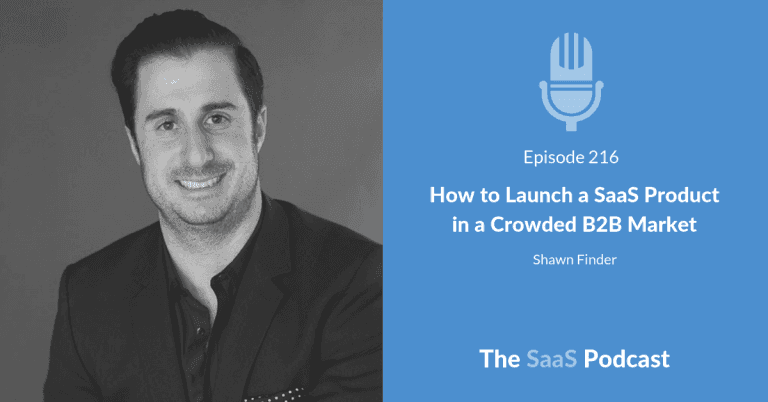
In this episode, I talked to Sean Finder, the co founder and CEO of Auto Close, an all in one outbound sales automation platform.
Now, competing in a crowded market can be really tough.
Having a great product and clear differentiation is super important, but sometimes the that's not enough.
You also need a great product launch that helps you stand out in the market and drive rapid product adoption.
In 2016, Sean had an idea for a new SaaS product.
He already had an existing business and realized that many of his customers were struggling with the same issue.
So he started thinking about how he could build a SaaS product to help them.
And after doing some research, he decided he was going to go all in with this new SaaS business.
But there was one problem.
Sean was building a sales automation product.
And so he was about to enter an extremely crowded and competitive market.
No matter how good his product was, he knew it was going to be a challenge to stand out in that market.
So he knew that a successful launch was going to be critical for this new business.
In this interview, you'll learn how Sean started promoting Auto Close six months before it launched and how he had a thousand demos booked the day they launched.
We'll also talk about how Sean worked with industry influencers and partners to help promote Auto Close and get in front of a much bigger audience.
And we talk about how Sean used social selling on LinkedIn to position himself as an authority in the space and attract more prospects.
And as a result, the business has gone from zero to over a million dollars a year in about 18 months.
There are a lot of great insights and lessons in this interview, so I hope you enjoy it.
Sean, welcome to the show.
Shawn Finder (02:23.600)
Very excited to be here.
Omar, I can't wait to talk to you about our SaaS platform.
Omer (02:27.840)
So first, let's start by talking about what gets you out of bed.
Do you have a favorite quote that inspires or motivates you or kind of just helps you work on your business every day?
Shawn Finder (02:37.680)
Yeah, I do actually see what I've always been.
I always have ideas.
So the quote that resonates with me, and I'm a very big sports fan, is Wayne Gretzky's.
You miss 100% of the shots you don't take.
And that was kind of a quote that I learned early on in my career.
Omer (02:52.930)
People often talk about that other quote right by the Puck with Wayne Gretzky.
Shawn Finder (02:57.330)
Yeah, there's another one.
But I find, you know, you got to keep throwing darts and then hopefully one sticks.
Omer (03:02.610)
Yeah, yeah, I love that.
Okay, so let's talk about Auto Close.
Can you just start by just telling for people who aren't familiar with the product, what does it do, who's your target customer and what problem are you trying to solve?
Shawn Finder (03:13.930)
Yeah, so Auto Close is a sales engagement platform with a built in B2B database.
So therefore we have the automation aspect, the sales automation aspect, we also have the data aspect put into the software so people that are looking to fill the top of their sales funnel with new qualified leads and prospecting can go in, search and filter through our database and automate their outreach to those clients and personalize it directly in one place.
Omer (03:39.070)
So when you say sales engagement platform, one of the things it does is it helps you automate the process of sending out cold emails.
But it says more than that, right?
Shawn Finder (03:46.610)
Yeah.
And the follow ups, I mean, a lot of salespeople, I think, you know, nowadays, you know, after one to two emails, if they don't get a response, they say, oh, that person's not interested.
What a sales automation platform allows you to do is, you know, automate 6, 8, 10 emails over a certain amount of time to really keep engaging with that prospect until they actually hopefully reply to you and say, yeah, I'll give you 15 minutes for a call, demo, et cetera.
Omer (04:07.410)
And what do you mean by a built in B2B database?
Shawn Finder (04:11.810)
So 4 years ago I started a company called Exchange Leads, which is a data company.
So the Data company has 28 million B2B prospects in it.
We sell data from that company and what we did was we just integrated that inside Auto Close.
So inside the platform, when you're choosing who you want to email, you can, you know, upload your own contacts or you can actually search and filter through our database to get brand new contacts into your sales sequences.
Omer (04:34.770)
Got it.
Okay.
Yeah.
So this is like there's a lot of tools out there that make it sort of easy for you to say if you have a list, you can kind of upload that and get it in here.
But you're going beyond that and saying, yeah, you can do that.
But we also have a database of millions of people, it's built into the product and you can start using it once you're signed up and in the product.
Shawn Finder (04:56.810)
Yeah.
So if you look at like outreach or Sales Loft, and on the other hand, you have, like, Discover Org and Zoom.
Imagine having both those tools combined in one.
And that's kind of what the play we are with autoclose.
Omer (05:06.930)
Got it.
Okay, so you launched Auto Close a couple of years ago.
I think it was 2017, right?
Shawn Finder (05:14.690)
Yeah, it was late December 2017.
Omer (05:17.730)
Yeah.
And I've been kind of seeing a lot of buzz and, you know, certainly from my perspective, traction happening with Auto Close in a fairly short amount of time and in a fairly crowded market.
So I was kind of really keen to get you on the show to kind of find out, like, what.
What have you been up to?
What have you guys been doing?
But before we get into that, tell me a little bit about, like, how did you come up with the idea for Auto Close?
Shawn Finder (05:44.950)
Okay, so it's a great question.
I'll even go back a little further than that.
I actually did an MBA in finance, So I had a finance mba, was working downtown in Toronto at one of the largest banks.
And the true story was on the elevator after two weeks, my manager was beside me, and everyone was just staring at the computer or the screen at the top, you know, the TV at the top.
And no one says good morning.
And I would say good morning to my boss, and he would look at me like, Shawn, like, why are you saying good morning?
And I said, you know, this is not for me.
I'm very outgoing.
I've always been a good networker, an extrovert personality.
And I got an opportunity as a VP of sales.
I took that opportunity as a VP of sales and found, you know, a thing in the market with data that goes, you know, there wasn't high quality data on the market.
There was companies that were selling data, but it wasn't high quality.
And I came up with my first business, Exchange Leads.
And then once we came up with Exchange Leads, two years in, I said, yeah, I can either pay the government in Canada a lot of taxes or I can build another product.
And our clients were asking for something to use.
They loved our data, but they didn't have a platform to email from.
And that's how we came up with the idea of Auto Close, by listening to our clients.
And then a year and a half after developing it, we came up with Auto Close.
And here we are today.
Omer (06:53.600)
And so was Autoclose your first kind of software product?
Shawn Finder (06:57.610)
No.
So Exchange Leads is my first product, but we have Exchange Leads data integrated inside autoclose.
So exchange leads, what feeds the B2B database inside Otterlo.
So autoclose is my second SaaS product.
Omer (07:09.690)
Okay.
Okay, so it wasn't just a database in terms of.
With Exchange Leads, it was actually a product.
Shawn Finder (07:16.090)
Yeah.
So Exchange Leads was a SaaS product.
And then what we did was we still have Exchange Leads, but it also feeds Auto Close.
But our main focus as a company today is Auto Close.
Omer (07:25.900)
Okay, so what did you do to get started?
I know you kind of started doing a fair amount of kind of marketing before you even launched the product, right?
Shawn Finder (07:34.940)
Yeah.
So one of the best things I did, actually, was I actually wanted people to feel like they were a part of building our product.
So what I mean by that is eight months before we actually even launched, we built just a landing page with our idea and an email.
And people that would leave their email throughout that eight months, we would send them surveys, questionnaires.
Once we built 20% of our product, we'd send it to them in a video.
So we basically made, like, you imagine having a building, and you're going floor by floor and you're building it.
We made all of our subscribers and early on subscribers feel like they built the product with us, and we built it for them.
So we actually launched Auto Close.
We already had 2,400 people on an email list where, when we had our webinar, we had hundreds of people come to a webinar that were interested right away only because they felt like they were part of building something for eight months and not just, you know, sent an email three days before, come see what we've built.
So I think that was a very, very big reason why we had such a successful launch.
Omer (08:32.309)
And you ended up doing, what, like a thousand demos on launch day?
Shawn Finder (08:35.830)
So we had actually almost 1000 demos booked on our launch day.
And at that point, to be honest, it was just me in a boardroom, and I was like, oh, you know what?
I have to get salespeople.
So I actually had three of my friends take a week off their job, taught them over a weekend our product, and had the four of us really in our office drilling the Auto Close demos.
And funny enough, two of them actually quit their jobs because they love the product so much, and now, still to this day, work for us.
Omer (09:02.440)
Wow.
So I'm curious because, like, even going back to 2017, there were probably already a lot of products on the market similar to Auto Close.
So what was it about the opportunity that kind of made you feel like, yeah, this is the thing that I want to invest my time and money in for the next few years?
Shawn Finder (09:22.480)
Yeah.
So it came to the.
Where I felt like sales leaders in general are now looking for consolidation.
There's so many different CRMs out there.
There's so many different marketing tools, email marketing tools and sales tools.
Now the tools that are going to stand out are the ones that consolidate more into one because at the end of the day salespeople want to make money.
They don't want to have to go to their computer and go to the tab and log into Salesforce, then log into another application and log into mailchimp and et cetera, et cetera.
So our advantage was having the built in database inside the platform because as you said there's a lot of sales automation tools out there, but there's not many or any tools that have an internal built in database right in the platform.
So you don't have to go buy data, you don't have to go buy a sales engagement tool here.
You can buy one tool and you have it all inside it.
Omer (10:08.400)
And how did you decide like what market you were going to focus on?
Shawn Finder (10:11.360)
So that's, you know, that's one of the early on mistakes.
We didn't really do enough research on our buyer's Persona at the beginning.
We'll talk about that a little bit.
But I wanted to have you know the sales lofts and outreach are good at what they do.
And one thing I with all my business, I never put my competitors down.
So I will tell you, they both have very good platforms and their platforms are more for those whale clients, those really big enterprise.
So we kind of fit ourselves in that SM small medium sized businesses and if we have a whale play that likes it, we'll let them come on.
But if they want to compare us to an outreach, I'll say listen, outreach is a great tool for enterprise so we try and stay in that sweet spot and that's where we've been focusing most of our targeting on right now.
Omer (10:49.790)
Okay, so you've been in business with auto close for less than two years.
Can you give us an idea of the size of the business?
Shawn Finder (10:57.630)
Yeah.
So currently in the size of business we have about 30 to 35 people now that between support, development and sales and marketing and actually our year end is next week and we actually hit seven figures.
So we grew about 3.3.5x in our first, our first year.
We about 300,000 in our first year and we hit one of our milestones this year which was over seven figures.
Omer (11:18.500)
Oh, that's awesome.
Congratulations.
Shawn Finder (11:20.260)
Thank you.
Omer (11:21.220)
Okay, cool.
So is the business bootstrapped?
Did you fund it through the exchange leads business?
Did you look for investment?
How did the business get funded?
Shawn Finder (11:30.660)
Great question.
So we actually bootstrapped it.
So we bootstrapped our first company, Exchange Leads, and then Exchange Leads is what I guess paid for the development of Auto Close.
So we took the profits instead of, as I said, paying the government.
We took the profits from Exchange Leads, built Auto Close and we were break even, I would say, in our first 60 days.
So we had a very successful launch and we're currently at the stage now where we're looking to really scale.
So we are potentially going to look at investors.
But so far everything's been bootstrapped.
Omer (12:00.870)
Okay, so I want to talk about, like, how you've grown so quickly with the bootstrap business.
The first thing, I want to kind of go back to the sort of the six months before you launched and this sort of this buzz that you were creating, number one, like, how are you building the list to sort of generate this buzz?
And, well, let's talk about that first.
So how were you building that list so simply?
Shawn Finder (12:26.040)
We had just a simple landing page.
All we had was a landing page and we would use that and we would a.
We also had our Exchange Leads clients.
So that also gave us a big boost.
So we'd have a landing page and we'd send it to our Exchange Leads clients, say, hey, we're developing this.
So that was one way.
I'm a very big advocate of social selling and LinkedIn.
So we promoted on LinkedIn and told people on LinkedIn what we're building.
And we just, we just did a lot of blog and stuff around what we were, where we were planning on going and kind of like sharing our roadmap.
So for that we had a lot of people sign up and give their email on that one landing page, which, as I said, gave us the big boost at the start.
But you know, to be perfectly honest, we did also have the Exchange Leads clients that liked working with us, trusted us already.
So it was pretty easy to convince them to come to a webinar when we actually did launch the product.
Omer (13:11.320)
Got it.
And then once you'd launched, so you've got this initial traction, this excitement, you've got these demos booked.
What did you do beyond that to start to grow this business?
Shawn Finder (13:22.470)
So, I mean, anyone that's building any SaaS product, if you don't believe in your own product, you shouldn't start a SaaS product.
So what we did was we started using Auto Close.
While we were building it, we started using Auto Close with our database to promote Auto Close because ideally it saves hours and hours a day in prospecting.
So for the first little bit, we used auto close to generate more leads.
But we also do a few other things.
We also started from my own network, started connecting with influencers, you know, and started working on my personal brand and our brand on LinkedIn.
And by that, when you connect with influencers and you start posting stuff and you build a relationship with those influencers, when you do launch a product or anything, they'll help you with the launch.
Because now say for example, I have 20,000 followers and then you find 15 influencers that each have 20,000 followers.
Well, guess what?
Now you have half a million people seeing that landing page.
So connecting with influencers was a big, big way.
We got a lot of buzz.
And obviously you have to build those relationships months before your launch so that they actually help you when you do launch your product.
Omer (14:25.200)
What were you doing to reach out to these people and try to build a relationship?
Shawn Finder (14:28.800)
Great question.
Social touches.
And we still use social touches in our campaigns today.
And what I mean by that is go on LinkedIn.
And if you what I would do is first, obviously you have to connect with those influencers on LinkedIn and then anytime they post, you want to share or like their stuff and build conversations with them.
Because LinkedIn and sales in general, it's a give and get.
If you're not going to give, you're not going to get.
So by me giving and sharing their content on LinkedIn and liking their content on LinkedIn and commenting and building conversation with people on LinkedIn whenever I would go up to them and ask them for a favor, they realize that I always help them by sharing stuff with them.
That when I ask them to share something, I don't even have to ask they're going to do it because I've done it for months and months, which is something I still do today is now, I don't do with influencers.
I actually do it with prospects.
We have quotes out there with big clients.
I'll start commenting and posting and engaging with them on LinkedIn as a social touch to try and get them to sign that deal a lot quicker.
Omer (15:22.690)
And so how much time were you spending or do you spend on LinkedIn because you're a guy about, you know, you're in a business about basically automation, getting this stuff done in less time.
And a lot of the things you're talking about here with LinkedIn and connecting with influencers and these social touches sounds like a lot of work and a lot of time.
Shawn Finder (15:40.490)
It definitely is.
So auto close to Me runs itself.
Auto Close sends out not even any sales engagement tool.
You know, you send out the emails emailing for you, it's prospecting for you.
I'm on LinkedIn.
My LinkedIn tabs up open all time, but I'm on it very regularly.
I actually, I share all our podcasts, I put quotes, I put sales tips.
We get a lot of clients by just being engaged on LinkedIn.
So hours wise, I would say when I'm not on demos or on calls, I'm on LinkedIn.
So if I have six calls, my call ends at 2:40 in the afternoon.
From 2:40 to 3, I might post something or engage the next hour.
So I always find time for LinkedIn at nighttime.
In the evenings, I'm on LinkedIn a lot as well.
My wife might hate me for it, but I am on it.
Omer (16:25.190)
And sort of.
In that first year when, after you'd launched, what kind of content or posts were you sharing on LinkedIn?
Shawn Finder (16:35.480)
Yeah, so one of the first things we posted.
I'll talk about the first thing we posted with autoclose, which was in our first three months.
And it was a book, an ebook.
And it was called, I believe, 367 years of sales Experience, for example.
And what we did was we had 27 influencers.
We combined how many years of sales experience they each had when they told us, and we built an ebook around it.
And just that one ebook alone, without a dollar in paid advertising, got us over 3,000 leads people to download the book and read it.
So we find that from LinkedIn?
No, that was from just our book.
We just posted the book and published it and sent it to our mailchimp newsletter list, etc.
On LinkedIn.
We post it, our influencers shared it, and we got about 3,000 leads.
And then those 3,000 leads would go through Auto Close.
And then a certain percentage of those, we book demos with our sales team, et cetera.
So when we go into different ways, I would say ebook, we built one about three months ago, again, is one of the best ways.
We actually received a ton of leads outside of Auto Close.
Omer (17:35.829)
Why do you think that is?
Because there's a lot of ebooks out there that don't do that well and they're not that particularly interesting.
People might download it and then sort of just forget about it.
I know you guys, I saw a recent one that you had.
Maybe it was something.
It was kind of like a B2B kind of sales guide or something that maybe.
Shawn Finder (17:52.600)
Yep, yep.
The sales handbook.
Yeah.
Omer (17:54.480)
So, like, what's Your thinking, like, how do you think about packaging this up in a way that this, whatever you put out there is going to resonate with people, stand out.
Shawn Finder (18:09.120)
Yeah.
And it's because I put real life stuff, real life situations.
I show them the results.
So I mean, for example, in that ebook, one of the things we did was we showed how I got one of my posts got, I think it was 273,000 views on LinkedIn.
One post, it took me five minutes to post, got 273,000.
We talked about why it got the post and what we post and the reason why and different growth strategies on LinkedIn, how to beat the algorithms.
One of the other things we talked about was, you know, email templates.
We know that a lot of our clients have trouble building templates, or let me say our clients, let's say anybody in general, salespeople sometimes don't know how to build a good converting template.
So we actually in the book will put the 14 best converting templates from our clients.
So what we're doing is we're continuing to provide value on what are the best subject lines to use.
It's nothing to do with auto clothes.
It's not salesy.
It's more of value that a salesperson can open it up and say, oh, let me try this template.
Oh, you know what, let me like this person after I send a quote and see if that works.
So we show a lot of the stuff that works in those books and it really resonates with the average salesperson because they, they will use it.
And it's just a lot of things that we do that's outside of the box that a normal salesperson would not do.
Omer (19:23.470)
So one more question about LinkedIn.
When you were in that first year, were you kind of.
I see a lot of people like, they kind of spend a lot of time just reaching out to people on LinkedIn, trying to get a connection, sending out a connection request, etc.
Were you kind of taking that approach or was this more about, you know, I'm going to kind of position myself in terms of an authority and I'm going to share content and I'll build followers, but I won't sort of actively spend time kind of trying to build connections.
What was your approach?
Shawn Finder (19:52.510)
So my approach, I'll tell you my approach and I don't know if it was.
It's the exact way I would do it today.
But my early on approach was I actually hired a virtual assistant and my virtual assistant would log into my LinkedIn two hours every night.
When I was sleeping because they were outsourced and they would be adding because the max you can add on LinkedIn was 100 per day.
I don't know if that's still the same.
And the most you can have is 30,000 connections.
I would have them personalize messages to 100 people every single day, take them two hours to do.
But they would do people that were in my target market might be VP of Sales, might be National Sales Manager, etc.
And that's how I built my initial connection up to 30,000.
Would I do that now?
Maybe.
I mean I get a lot of followers now by how much we engage in the blog.
But I also back then didn't have the time to do all the content because I was starting a business where I didn't have 30 some odd employees like I have today.
So when it was just a handful of us, I had to take on the responsibility of do it and I outsourced a lot of it.
So the virtual assistant was a very big help early on to get that early traction.
Because I always say your network is your net worth.
So continue to get those connections on LinkedIn because every person is going to buy from you, you're going to sell to, that's going to be your prospect, that's going to be your client has a LinkedIn profile.
You just have to go in there and find them.
Omer (21:05.970)
Yeah, yeah.
Okay.
So you also have spent a fair amount of effort in building different types of partnerships as well.
Can you tell us a little bit about that?
Shawn Finder (21:16.050)
Yeah.
So that's one thing we've been recently doing, is trying to build out a lot of partnerships.
You know, there's a lot of very cool things that you can add to email.
So one would be like video, you know.
So we partner with Vidyard Calendly, which I love for scheduled automation.
We partner with them.
Now the good thing about partnering with these companies is a, you provide another asset to your clients, but B, when you do some sort of cross promotion, you know, we're promoting Calendly to our users and I use Calendly, so I will endorse it, but Calendly then endorses us.
So it's kind of a give and take.
So one thing I like to do is I only partner with companies that I've actually got my hands dirty with.
I won't just partner with anybody.
So Vidyard was one, Calendly was one.
And then we started doing integrations with different CRMs, et cetera.
So when people come to us because Anybody that's going to need a sales engagement tool is going to say, oh well what CRM should I connect it to?
Or what's the best way to cold call these people, et cetera.
So we partner with people that we trust, we build relationship with them and then we do cross promotion webinars, et cetera, to teach our audience how to use those platforms.
Omer (22:19.010)
And so some of these partnerships were kind of like the integrations with Calendly.
Shawn Finder (22:24.610)
Yep.
Omer (22:25.170)
And then others were kind of like you were just doing like kind of webinars or sort of educational type events.
Shawn Finder (22:32.690)
Yep.
So what we would do is I would do special things with, let's say somebody has 50,000 people in their Facebook group or their LinkedIn group has 20,000 inside sales or something.
We'll actually contact the owner and we'll do, we'll give them revenue for us to do some sort of cross promotion inside with their followers.
So we did like an affiliate program or let us do a webinar or something to your audience and we'll give you 20% recurring revenue of whatever people purchase off us, etc.
So that also gave us way to get into these different groups and work it that way.
We also did something where we would work with like an influencer and say, hey, I saw you just published a book.
Why don't we do this?
Why don't we.
I'll do a webinar and we'll talk about your book on the webinar.
So you could promote your book to our audience and we can promote our platform to your audience.
It's a win win.
So any partnership is only going to work if it's a win win situation.
If it's going to be one way, A, you're going to lose a friend and B, you're going to lose a partner.
Omer (23:25.720)
Yeah, it's a good way to think about it.
So you've clearly had some experience from your previous business with Exchange Leads, which also kind of laid the foundation in many ways for the Auto Close business.
And all the things you've described so far, everything from, you know, months before launching the product to all these sort of growth efforts that you've been taking have clearly paid off and helped you to get to, you know, over a million dollars a year.
What were some of the mistakes that you made?
What didn't go well?
Shawn Finder (23:59.310)
That's a great, great question.
So the first mistake that I would say is I focused too much on bringing clients and not focusing on the product, which I think I mentioned with Auto Close we focus more on the product and let the clients come.
So that was probably the biggest mistake.
Early on we did.
Second, I would say when we originally started with Auto Close or any of our site, we know, knowing, how can I say, we started prospecting to sales VPs of sales.
And then when we actually sat down on a weekend, one weekend, it was about actually three months ago, and we said, what is our buyer's Persona?
You know, why are people buying?
What should the content be?
And we found that our content to our VP of sales might have been incorrect.
So what we did was we said, okay, you know, CEOs, they want to make more money.
VPs of sales, they want their sales reps to hit their quota because they get bonuses on it.
Sales reps want more demos.
So we had to really find out who our buyer's Persona was.
And we found that out late.
And now we're finding out that, you know, for small medium, you know, it's almost best to go right to the decision maker CEOs, then go right over the sales managers because the CEOs, if they don't make the decision, we will introduce you to the VP of sales.
So that was one other thing recently that I would say would be a mistake.
The third is pricing.
And initially we kind of went in where we knew we were up against sales loft and outreach and these bigger guys, and we priced ourself really cheap.
And we got kind of bigger companies would look at you and if they think you're too cheap, they think, oh, well, they're probably just a startup, they're not ready for us, et cetera.
So I think one of the things we did early on was our pricing was too cheap.
I did like our strategy, but it did hurt us a little bit for about a few months.
But now when people see all the features we release, we've kind of made that up.
So I would say those would be the three really big business lessons that I learned.
Actually, I got one more for you was when a developer tells you something is going to take them two months, multiply it by three or four.
Because developers always exaggerate how long it will take for development or a new feature.
And I'm a sales guy, so I always think, you know, okay, I take your word for it, but development is a lot slower than expected.
Let's just say that.
Omer (26:09.860)
Yeah, okay.
So the first mistake you talked about was with exchange leads and saying, you know, I focus too much time on getting clients and not enough time on the feature in the product.
I've spoken to a Lot of founders who would say, you know, one of the biggest mistakes I made was I spent too much time focusing on the features and the product and not enough time on getting customers.
So why was that a problem for you?
Shawn Finder (26:42.080)
Well, I wouldn't say it was a problem.
I just, you know, as you said, it's a very busy market, so if you're not keeping up with your competition, you're going to be behind.
So with Exchange Leads, we focus so much on getting clients, but then we said that we had the same product and we weren't focusing anything on the feature.
So when you focus so much on the clients and you're not building new features, people are going to potentially leave you to go somewhere where they're more innovative, they're more adding new stuff every week.
People always want to see improvements.
I want to see new features.
And with Auto close, you know, to be honest, it's become where it's more word of mouth.
And, you know, on our newsletter, every two weeks we are launching new something new.
Every two weeks we launch.
This week we're doing a B testing.
For example, two weeks from now, we're going to be just tagging.
Two weeks from now we'll do something else like a LinkedIn integration.
And the clients like to see that you're always improving your product.
And the one thing that we do, another very growth hack and great for building features, is we actually ask our.
We don't build features on what we want.
We actually sent a survey out to our clients, said, what features do you want?
Here are eight things we have on our roadmap.
You pick 1, 2 and 3, and we're going to take a vote from all of our clients and whatever 1, 2 and 3, that's what we're going to build.
And we've done that.
So now every time we throw it up feature, the majority of our clients asked for it, so they're always looking forward to something new.
So I wouldn't say it was a problem, but I just think that we continue to build features, we continue to improve our product.
Our clients appreciate that more than having a stagnant product or feature that just does the same thing month over month.
Omer (28:16.530)
And then in terms of pricing, you said that that had been a mistake because you'd price yourself too cheap in the early days.
How much were you charging when you launched?
Shawn Finder (28:24.910)
This is actually the best piece of business advice I've ever received.
Okay.
And I'm going to tell you who it's from.
It's from David Cancel at Drift.
He was speaking at an event and he said, and this is before I started articles.
He goes, never give your software away for free, even if you have to charge one penny a month, one dollar a month, make them have something invested.
And I listened to his advice and it was probably the best thing we did.
So when I first got my first 20 clients, I would actually go on the phone and go, I'd show them a demo and they'd be like, how much is it?
I'm like, how much is it worth to you?
One guy would go, I don't know, 20 bucks a month, you got it.
One person might say, 30 bucks a month.
You got it.
One person might say, well, I can't afford it, and I'd give you five bucks.
You got it.
And that's how I actually got my first 20 clients.
I actually let them tell me what they were willing to pay for it.
And then what we did was we found out, like, the sweet spot and we slowly moved our way up.
But we had them.
We had people invested in our product from day one.
So nobody, at that point, we didn't even have a free trial.
So nobody got the product for free.
Everyone had to invest at least a dollar a cent something month to month to start our product.
And that was probably the best thing that happened to us early on.
Omer (29:38.610)
So instead of, like, what a lot of people would do is they'd launch the product.
Either they'd give the product away for free.
And I mean, that can totally work.
I mean, you talked about Calendar earlier, and I just recently did an interview with Tope, the founder of Calendly.
And giving away the product away for free was actually one of the smartest things that worked for him.
So in certain industries or cases or whatever, it makes sense.
But I think here, I totally understand what you're saying, but I think a lot of founders would say, okay, well, I got this product, I've decided I'm going to charge for it.
And then they're going to look at what other products, competitive products are charging and probably base their price on that or maybe a bit cheaper or whatever.
Right.
That's kind of like how sort of a V1 pricing strategy might look.
But I think it was interesting that you sort of deferred that completely to your customers and.
And let them decide what it was worth to.
How did people react when you asked them, like, how much is it worth to you?
Shawn Finder (30:38.230)
They were.
They were shocked because I had, like, I would actually.
And I would hold them to it.
So when I said something, well, how Much is it worth you?
The guy goes, 20 bucks.
I'm like, okay, that's what you're paying.
And he goes, well, it's a 10.
I'm like, well, no.
Now it's like, I actually gave people early on, but that helped me find out, you know, early on while we were building features, what our product was actually worth.
Because when we had more, we had a lot of people say, well, you know, $20 a month.
$20 a month.
We actually started our pricing at 1999amonth.
And then what we did was, because you can always start low and then continue to raise your pricing, but hard to keep your price at 100 and then go the other way around.
So we started at 1999, and we kept increasing our pricing every three months until we found we were getting feedback from people saying, oh, well, you're competitive to this guy.
Originally, when we were 1999, everyone's like, Whoa, you're so cheap.
And they love the product.
At 29, you guys are so cheap.
And that's how we kind of figured out our pricing.
So we actually had more of our clients determine what pricing we were going to use until today even.
Omer (31:33.270)
And then right now, the product starts at around 50 bucks a month, right?
Shawn Finder (31:37.990)
Exactly.
49.
99.
And that's where we've been for the last six months.
We moved from.
I said, you know, from almost a dollar, whatever people wanted to this price over the first year of the product.
Omer (31:48.070)
So when you were charging 1999amonth or whatever that was like, did you feel like you were attracting some of the wrong types of customers?
Shawn Finder (31:57.460)
Yes.
But to be honest, early on, it was the best thing for us.
So what it was is we were getting those clients that were very nitty picky, but they would find bugs.
They would find things in our software that another person might not be able to find.
So even though they weren't the right clients, they did help us build our product, what it is today, by finding different things that even our testing and our development team couldn't find.
So it has its pros and cons.
And I mean, we still have some of those people.
We grandfather them in.
So we have still some people at 1999 that still use the software.
Omer (32:30.140)
That's really interesting.
Yeah, that's a great way to define testers.
Right?
It's like, let people pay you to test the product and find bugs.
Shawn Finder (32:39.660)
Exactly.
Omer (32:40.300)
All right, okay, great.
So while I have you here, there's one other thing I wanted to talk about.
Kind of related to just the business that you're in.
And you know, I was talking to a founder recently who had been using cold email to try and kind of get meetings set up with prospects and wasn't having a lot of luck with it in terms of getting responses.
And I really wanted to kind of pick your brain in terms of like if you were like sitting down with somebody, you know, an early stage founder who said, okay, I want to use cold email and I want to use that as a way to reach my prospects.
Apart from going and reading the Auto Close blog, which we'll link to, and getting the B2B handbook, which we'll also put a link to in the show notes, what are some of the top tips that you would give them to sort of take away and think about?
Shawn Finder (33:37.010)
God, I could probably go on for hours.
So I'm going to make this.
I'll give you a few of them.
A few is subject lines.
Remember, most people read their emails on their phone.
So if you're writing long subject lines, they're not going to read half the words.
So make sure you keep your subject line short and sweet.
Another thing I would recommend is, and I hate when people do this is in their first line of their email they say, hi, my name is Shawn Feiner, I'm the CEO of Auto Close dot dot.
Okay.
Never introduce yourself in the first line of your email.
What you want to do is first of all they already know who you are and what company you work for because you emailed them and it says shaunautoclose.com so they know your first name, Sean, and they know you work at Autoclose.
What you want to do is go right into a value or a challenge in that first line.
In that first three seconds.
If you're talking to a CEO, for example, you might want to say, I'll use an example.
It'd be like, you know, if I told you I can triple your revenue when cut your sales reps time in half.
You know, that might be interesting.
Somebody might read that email.
But if you just go into, hi, my name is, you know, Bill from ABC.com, don't talk about yourself or your company.
Talk about a challenge or some value that you can provide your end user client.
And the other thing would be personalization.
Personalize your emails.
Don't make it sound like you're on mailchimp sending it to a thousand people.
These are personalized emails.
So include different things that are personalized like your name, the company, maybe the revenue or the state there and et cetera in your Message and then the last thing I'll say to you is stop with the long emails.
I would say 50 to 75 words in an email is perfect for a cold outreach.
Your follow ups can be three to four sentences.
Do not write paragraph after paragraph selling your product.
You should have a call to action.
Your end goal should be to try and get them on the phone, send them a case study, build that trust and that engagement in those emails so when you pick up the phone or you reach out to them, they'll actually reply.
Omer (35:28.980)
How would you do a follow up?
I mean we often hear like, hey, you know, don't do the I'm just checking in or I didn't hear it back from you from my last email.
So what's kind of your approach to doing follow ups in a way that's more likely to get a response?
Shawn Finder (35:45.730)
I'll do a few different things.
I mean, I'm not totally against just checking as we close out the week, just following up as we start the week.
I'm not totally against that.
But what I like to do is be a little bit different.
So I'll add like a personalized video or I might say, I understand as a CEO you're very busy.
I just create a five minute recorded video for you to watch.
So then I'll send them a video video where I can see if they watch and how much the video they watch.
Or I might go into like a case study.
For example, let's use a company that's in manufacturing.
I might find another manufacturing company or talk about the results of another manufacturing company or one of their competitors in the email and say, hey, you know, we've helped company A, B, C. This is the results they had.
We can do the same for your company.
You know, here's a link to our case study because you, you need to continue to build trust and the only way to build trust is by continuing to engage and maybe show them a case study of some proven results that somebody else has had.
Omer (36:40.430)
Yeah, I think the video is a really nice touch and Vidyard is a great product for doing that.
Not a lot of people would make the effort to do that.
So I think just, just by doing that, I think it helps you to stand out.
Shawn Finder (36:52.590)
Exactly.
Omer (36:53.110)
All right.
No great tips.
Great tips.
Thanks for sharing those.
So let's wrap up.
Let's get onto the lightning round.
I'm going to ask you seven questions.
Just try and ask them as quickly as you can.
Ready?
Shawn Finder (37:02.270)
Yep.
Omer (37:03.200)
Okay.
What's the.
Well, you've already answered this, but what's the best piece of business advice you've ever received?
Shawn Finder (37:09.040)
Well, as I said, the best business advice is don't give your product away for free.
Charge something for your SaaS product.
It could be anything.
Even ask your clients what they want to pay.
Omer (37:18.960)
What book would you recommend to our audience and why?
Shawn Finder (37:21.920)
I'll just say one that I read recently was From Inevitable to Impossible by Aaron Ross.
It was a great book on how some other SaaS companies and bigger companies that scale their business.
So it's a, it's a great novel and a great read.
Omer (37:34.120)
What's one attribute or characteristic in your mind of a successful entrepreneur?
Shawn Finder (37:38.600)
You got to be competitive because you're going to win some, you're going to lose some.
But you have to be able to take that roller coaster.
And I think competitive people make great salespeople and great entrepreneurs.
Omer (37:48.040)
What's your favorite personal productivity tool or habit?
Shawn Finder (37:51.800)
You know, I'm not going to mention my own company.
I'll say LinkedIn.
I love using LinkedIn for different engagement tools and for my own personal brand, which I think nowadays is very important.
Omer (38:00.520)
What's a new or crazy business idea you'd love to pursue if you had the extra time?
Shawn Finder (38:05.000)
Well, it's not really a new or crazy business idea, but if I had the extra time, I live in Toronto, I would be flipping house in this Toronto real estate market because it is just going crazy.
Omer (38:17.000)
Yeah, I love watching those flipping shows.
Shawn Finder (38:19.000)
Yeah, yeah, me too.
Omer (38:20.280)
I tell you, I tell you, they make it look so easy.
If only if it was.
Anyway, what's an interesting or fun fact about you that most people don't know?
Shawn Finder (38:27.050)
I played professional tennis.
I was a number two ranked in Canada and had a world ranking of 190 in the world as a junior and also played in the same tennis tournament as the Bryan brothers, Roger Federer, etc.
Because we're all the same age.
Omer (38:42.250)
We were talking about that before we started recording.
That's one of the most interesting facts I think we've had from anyone.
And finally, what's one of your most important passions outside of your work?
Shawn Finder (38:52.800)
I love all sports, but a real passion and something I love to do in my spare time whenever I travel is play poker.
I've always been a very avid poker player, hoping to play in the WSOP next year.
Hopefully finally, because that's one of the things I really want to do.
Omer (39:07.920)
Cool.
Great.
Well Sean, thank you for joining me.
It's been a pleasure and thank you for sharing.
Kind of like the story of Auto Close and jumping into the details of what you've done to grow the business and some of the mistakes you've made and lessons you learned from that.
If you people want to check out Auto Close, they can go to autoclose.com and that's close with a K. And if they want to get in touch with you, I know where the best place is.
But just tell them the best way
Shawn Finder (39:36.880)
to get in touch with me is I'm always on LinkedIn.
You can add me on LinkedIn.
I also post all our content on our LinkedIn page.
But if you have any sales questions or you're starting a SaaS or anything, feel free to email me.
I love to network with everybody, so if you you can email me Sean S H a w n autoclose.com and that is Auto Close with a K.
Omer (39:57.390)
Auto Close with a K. Yeah.
Don't forget that.
Awesome.
Thanks, Sean.
It's been a pleasure and I wish you all the best.
Shawn Finder (40:02.830)
Thank you so much.
That was a lot of fun, Omar.
Omer (40:04.750)
Cheers.