Omer Khan [00:00:09]:
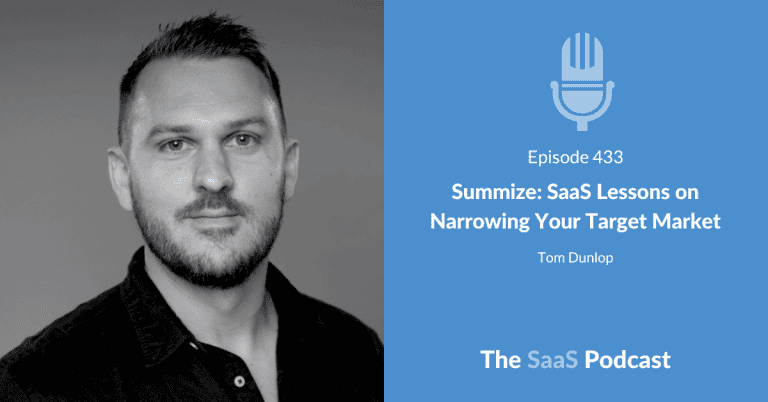
Welcome to another episode of the SaaS podcast. I'm your host Omer Khan and this is a show where I interview proven founders and industry experts who share their stories, strategies and insights to help you build, launch and grow your SaaS business. In this episode I talked to Tom Dunlop, the co founder and CEO of Samize, a contract lifecycle management platform that helps companies create, review and manage contracts. In 2019, Tom was working as an in house lawyer for a tech company.
Omer Khan [00:00:38]:
During an acquisition he had to manually review 500 contracts, a painful task that got worse when he had to repeat the entire process just to check one additional clause. This frustrating experience led him to partner with a software engineer to build a prototype that could automatically create contract summaries. After getting positive feedback from potential customers, they raised around £250,000 to build the product. Then Covid hit right as they were launching. But what seemed like terrible timing became an opportunity as companies scrambled to understand their contract obligations during the crisis. Still, the path wasn't clear.
Omer Khan [00:01:15]:
They spent their first 18 months chasing any customer they could find. Law firms in house legal teams, companies of all sizes. They tried free trials, they tried events, but nothing really clicked. The breakthrough came when they focused solely on in house legal teams at mid sized companies and made Surmise work inside the tools people were already using daily. Today Surmise brings in late seven figures in ARR growing over 100% yearly. They've raised over $10 million and the company is based in the UK.
Omer Khan [00:01:45]:
In this episode you'll learn how Tom validated his initial product concept and secured funding before building a full product. What critical lessons Tom learned about the dangers of lacking focus in the early stages of a SaaS startup, why their product led growth strategy failed, and how they successfully pivoted their go to market approach. We talk about how Tom transformed event marketing from their worst to their best ROI channel and what strategies they used to successfully expand into the US market despite significant regional differences. So I hope you enjoy. All right Tom, welcome to the show.
Tom Dunlop [00:02:20]:
Thank you for having me.
Omer Khan [00:02:22]:
My pleasure. Do you have a favorite quote, something that inspires or motivates you that you can share with us?
Tom Dunlop [00:02:26]:
I'd say rather than a quote as such, there's certainly a mindset that kind of, well, heavily influenced something my career and it's very sporting focused. It was from Roger Federer doing this kind of commencement speech at Dartmouth and it really resonates with me. I've got a sporting background, but he talked about to be the number in the world win 80% of his matches. But he actually only ever won 54% of the points that he played.
Tom Dunlop [00:02:51]:
And something really resonates with me about that statement, which was that and his point was every point was the most important thing in the world at the moment in time. But when you know, the loss ratio of points, he could kind of easily put them behind him and move on. Whether it was the ultimate backhand smash that won the the Wimbledon championships or whether he lost the point, he treated them the same way and moved on to the next.
Tom Dunlop [00:03:15]:
And I think I've adopted a lot of that mentality, I think with scaling a business, if I'm honest, where I expect mistakes, I expect bumps, I expect things to go wrong, we deal with them and then we just move on, we go to the next. And I think it's a really powerful mindset that definitely influenced me quite a lot after I heard it.
Omer Khan [00:03:34]:
Love that I had no idea that 54% could make you one of the greatest tennis players of all time.
Tom Dunlop [00:03:45]:
It's a crazy start, isn't it? But it's a powerful concept when you, I guess, apply it to any part of life, really. Yeah.
Omer Khan [00:03:53]:
So tell us about smize. What does the product do, who's it for and what's the main problem you're helping to solve?
Tom Dunlop [00:04:00]:
Yeah, so I guess I'll start with my statement about contracts being kind of the ultimate system of record. And I start with that because most people can resonate with contracts. They'll deal with them in day to day lives. They set out who you're contracting with, why you're contracting, how you get paid, for example, what the obligations are. They're kind of the foundational, I guess, description of what the relationship actually means in any business transaction. I guess most people resonate with the problem that it's very hard to create them, review them. Extremely manual, inefficient processes.
Tom Dunlop [00:04:37]:
But also due to the importance they're crafted by legal experts that have their own language to a certain extent. And certainly once signed, most people lock them away and they're inaccessible. No one really understands what's in them. So really with what surmise does is we focus initially on creating summaries of signed contracts. But very much today we're kind of a full end to end clm, which means we help companies create contracts, review them and manage them.
Tom Dunlop [00:05:05]:
I think the big thing that we did very differently is we also understood that the power of contract or I guess contracts permeate an entire organization. So sales teams interact with them, marketing teams, legal. So we deliberately built our product to Kind of be embedded in the tools that people use every day. So you kind of get the power of a clm, but you very much get them within teams and Slack and Outlook, Gmail, Salesforce.
Tom Dunlop [00:05:33]:
So no one really has to go to somayas.com, and that's definitely the big ethos that we've had as a product development and what makes us kind of very different.
Omer Khan [00:05:41]:
Yeah, that's great. I mean for me personally, I find it easier to understand code than looking at a contract and making sense of what it actually means.
Tom Dunlop [00:05:50]:
Which says something. I don't blame you. Me too sometimes as well. Yeah.
Omer Khan [00:05:56]:
Give us a sense of the size of the business where you in terms of revenue, customers, size of team.
Tom Dunlop [00:06:02]:
So we're kind of late seven figure ARR, very soon, eight figure ARR and kind of those typical series B, I guess metrics. So we've been growing more than 100% year on year since inception. Kind of dual headquarters across Manchester and Boston, hence the British accent. But in terms of customers we kind of focus typically large, mid market, small enterprise people like Revolut, Rothschilds, Miami Heat, Matillion, SeatGeek, kind of very cross vertical. But generally businesses with probably at least one in house lawyer that obviously deal with contracts on a day to day basis.
Omer Khan [00:06:36]:
And I think Crunchbase tells me you've raised about 5 million pounds, which is a little more in dollars.
Tom Dunlop [00:06:45]:
Yes, yes. It depends on the conversion rate of the day, doesn't it? But I think in total we're probably closer to the kind of $10 million mark in terms of raise the date.
Omer Khan [00:06:53]:
Okay, great. So let's talk about where this all started. Like where did the idea come from?
Tom Dunlop [00:07:03]:
So my background is a lawyer by trade. So I was, you know, when I qualified as a lawyer I went in house pretty early on. So I was the kind of in house lawyer for tech businesses actually. So I worked with scaling software businesses and generally was quite small legal departments and was the general counsel or legal director of those business businesses. And one in particular got purchased, got bought as part of a transaction and I was the unfortunate person that I guess had to manually review about 500 contracts which was pretty soul destroying.
Tom Dunlop [00:07:34]:
Yeah, many a long day doing that. And then I guess the irony was once I did it, I created an Excel spreadsheet and kind of looked at the answers and thought hang on a minute, I don't really understand what I mean. 100 contracts above I said yes, this one I said what the clause said and they're not consistent. And then probably the Nail in the coffin really was the CFO at the time turned around and asked me to basically add an additional clause.
Tom Dunlop [00:08:00]:
They said, oh, it'd be really good while you're doing that if you could just look at this as well. But little did he know I'd already done the project. So I then had to go back and almost do another 500 contracts, manually reviewing them and reading through these locked PDFs. So the idea, my co founder was a senior software engineer at the time and I basically went over probably a very broken man and very upset, kind of saying, you know, this is what I need to achieve. Surely we can automate this and create instant summaries.
Tom Dunlop [00:08:28]:
And that was kind of the catalyst of the idea.
Omer Khan [00:08:31]:
I think if nothing else, that was enough pain from the sounds of it to motivate you to find a solution. This doesn't sound like scratching an itch, it sounds like a much bigger injury than that.
Tom Dunlop [00:08:44]:
Yes, this was a wound. No, I think it was, but it's an interesting one. I think at the time. I've always been one of those people that wrote down in a little book business ideas. And the irony was this was on the book, but yet almost because it was my pain, you almost feel as though it's insignificant.
Tom Dunlop [00:09:02]:
Maybe you think of growing a business which is much more to the masses, I'd say, but I think in retrospect you soon realize that actually if you've suffered that pain or you've had that wound, you've got a much higher chance of success because you're motivated to fix it. So yes, definitely felt the pain.
Omer Khan [00:09:19]:
So David is your co founder. He's the software developer you just mentioned initially when you had that conversation. I'm assuming it was about, look, is there a way to automate this to help me do the job or do my job here? At what point and how did this become an idea for a business that the two of you are going to go and sort?
Tom Dunlop [00:09:41]:
Well, I think at the time, if I'm honest, I was pretty motivated to see if this could be because I think I was always a bit that mindset of I'd worked in these scale up software companies. You get inspired by the founders. I think everyone thinks they're a mini entrepreneur in that environment. And I think I was sat there thinking, there's nothing on the market. I know that other people have this pain and I know the solution.
Tom Dunlop [00:10:06]:
And if we can make this into some kind of automated product, then we could probably sell this to a lot of people. So I think it was always the intention. But then I guess flipping that into actually becoming a business. The catalyst for us was, I guess I knew we needed to do a load of development work. I could prove out the concept by going to my network and saying, look, a load of general counsels or lawyers, this is what it does, and show them a really, really rough.
Tom Dunlop [00:10:34]:
Dave won't mind me saying that really, really rough prototype that was just showed a PDF going in and a summary popping out the other side, but got people to say, yes, this looks really interesting and I would pay for that. We did a few POCs and at that point I kind of went for some pre seed funding to say, look, we validated the concepts. I've got the expertise, I need this amount of money to get developers to essentially build out that kind of mvp, really to go and sell it.
Tom Dunlop [00:11:02]:
And that was obviously the turning point for me, where we actually committed to the business, we created the products and then our next job was to try and sell it. But that was when we flipped and I stopped for being a lawyer.
Omer Khan [00:11:17]:
How much did you raise on the seed round?
Tom Dunlop [00:11:20]:
So I'd say we did a pre seed round, about £250,000. So again, conversion rate, few hundred thousand dollars initially.
Omer Khan [00:11:30]:
And did you spend most of that money on development of the product?
Tom Dunlop [00:11:34]:
Yeah, pretty much exclusively on the development. We did have some on the first couple of salespeople that we tried. I mean, we actually hired them three weeks before the COVID lockdown. So that was an interesting time to hire an outbound sales team. But we did that with the kind of rest of the money and then very much we were trying to get to a milestone where we almost pre agreed with the investors that, look, if we can validate this and sell this to this scale, will you put more money in?
Tom Dunlop [00:12:01]:
And that was kind of what we were working towards.
Omer Khan [00:12:03]:
How long did it take to get a working product or an MVP that you could get in front of those potential customers? And what did it do? So you described that prototype as basically put a PDF in, get a summary on the other end. How far did the MVP go next?
Tom Dunlop [00:12:21]:
I'd say it didn't go much further than that in terms of functionality. It just looks a lot nicer. I think we actually created a UI and a web application for you to do it without us having to hold your hand and kind of do it using almost like it was like a code that would pop out on the very rough version. Whereas we kind of overlaid that UI and it obviously made it a bit more foolproof.
Tom Dunlop [00:12:45]:
And it was probably about six months really, of developing the product to a point where even basic things like using permissions and a folder structure, you could actually hold them in afterwards that. That probably the initial prototype didn't have because it just proved the concepts. But there's all these things that came out that when you actually got someone to test it and use it, they'd ask a very simple question. Well, it would be simple to them. But then you're like, ah, yeah, we probably should have thought of that at the time.
Tom Dunlop [00:13:12]:
So there's a bit of iterative kind of going back and forth, but I'd say about six months to get something which was sellable and we could actually go to market with.
Omer Khan [00:13:20]:
So you did the right things in terms of going out and talking to potential customers, showing them at least a prototype and getting at least some positive signals that people were interested. One of the things that often happens is that founders go out and have those conversations. People say nice things about this prototype, they go away and build something and then they say, it's ready. And then there's crickets, right. Or people ghost you.
Omer Khan [00:13:50]:
And what was your experience when the product was ready and you were like, okay, there's something that you can actually pay for now?
Tom Dunlop [00:13:57]:
Yeah, it's a really interesting dynamic because obviously I had a great network to start with because I felt the pain. I was a lawyer, I was in the industry and I was the customer as well as the vendor in some ways. So I could get a number of people to test and be the kind of guinea pigs. But it was an interesting dynamic to go back to those people and say, right now you need to pay for it. And. And like you say, there was a number that said went quiet and difficult time.
Tom Dunlop [00:14:27]:
And bear in mind we did this at the point of COVID So it was very much kind of. There's a good excuse. You could argue for a lot of people to say, well, there is a global pandemic, so probably not going to pay for this right now. But what that also did, and I guess this was the beauty of the product to some extent in it being quite general, was all of a sudden there was a need for people to understand.
Tom Dunlop [00:14:49]:
There was the typical fourth major cause people were cared about when Covid happened or what happens in the scenario of this. Do any contracts cater for this scenario? So we could kind of latch onto that. And we found that there were certain verticals, which was actually the best of first customers that we found where they suffered that pain. So catering businesses, like they were Overnight they lost all their business.
Tom Dunlop [00:15:16]:
So rather than target software companies, for example, that we knew would prosper and they're not necessarily that affected, we had to look at the industries that were essentially going to lose a big portion of their revenue overnight and we went after them. And as a initial target market, actually that did work really well and it was a really good, actually arm's length contract to secure, rather than just my network that were not necessarily as forthcoming with paying for it.
Omer Khan [00:15:50]:
We always talk about build a painkiller, not a vitamin. And it sounds like you found the people who definitely had severe pain from this. Was there any I could imagine, like if you're in a catering business and you look like something overnight, 90% of your business looks like it might disappear or it has, has, you're probably not inclined to start going and investing in a whole bunch of new stuff. So you definitely latch onto the right pain. But what was the process of selling?
Tom Dunlop [00:16:28]:
Like this was the interesting kind of. I mean, I obviously had a unique insight into the problem, but being a lawyer, I kind of could sort of preempt what they would have in their contracts, which obviously was a huge help in the early days and a unique insight. So we generally found that catering businesses or businesses that have events or elements like that have a number of cancellation provisions, have certain things that say you will still be paid money in these events and you won't in these scenarios.
Tom Dunlop [00:17:01]:
And it's actually the definition of what those things are that's the really important bit. So we had a bit of insight to kind of understand it's a huge pain. But actually we know that a lot of them in the contract will have remedies. The problem is to get to those remedies would have cost a fortune manually in time, or it would have been outside council spend and to law firms who would do it on their behalf, but charge a disproportionate amount where you're not solving the problem.
Tom Dunlop [00:17:28]:
So there was that kind of unique space that we found in those first few months really that we honed in on and we did try the law firm routes as well. I would say that we. It sounds like we were really focused on a really defined ICP from day one. I'd say we did try and sell it to everyone. I'd say that the most traction though, when you look back and everything's great in hindsight, is when we focused on a particular pain, a particular type of business.
Tom Dunlop [00:17:56]:
They were great early customers and I almost in those days wish we'd almost repeated That a lot more than think, let's still go after this random vertical over here or let's still try and push this because they've said they like the product and we did that a lot. But that was a great first 10 customer tactic.
Omer Khan [00:18:15]:
You and I were talking earlier. Outbound has been the biggest growth vehicle to help you to get to seven figures and beyond. You built out a sales team and are having a lot of success with that in terms of the business today. But in the early days, some of those things that you just talked about in terms of not having super.
Omer Khan [00:18:40]:
Being super clear about the ICP and going after a bunch of different verticals and things like that, all of that was going on right in the early days and Outbound didn't work as well as it is now.
Tom Dunlop [00:18:53]:
Right.
Omer Khan [00:18:53]:
Can you just talk about this sort of the process you went through and some of the challenges you were dealing with when you started?
Tom Dunlop [00:18:58]:
Yeah, I mean, I think it's one of those where now you look back at why you would do one, go to Market Motion over the other. I think the Outbound model is obviously very good for a very targeted almost the individual within an organization with a very prescribed message that you can kind of craft to that person. And people describe it as spearfishing versus casting a net. And I think that that's a good analogy. And I think when we started the Outbound Motion, we took the benefits of the control, but we just cast the net.
Tom Dunlop [00:19:30]:
We were kind of like, I don't have sales experience, I'd never let a sales team. And I think it was one of those where we just said, look, every lawyer in the world could use this product, so just, yeah, go and sell it to them. And then it was very much kind of whether it's a law firm and the commercial team and they'll have this use case versus just any in house lawyer. And.
Tom Dunlop [00:19:54]:
And you could tell because a few of our opportunities that we were getting quite excited about might have been from the extreme end a huge conglomerate that was in a telecoms industry that expressed an interest versus an SME that had 20 people in the advertising industry. Something that you would never draw a line of comparison, that they both need the same tool, but they both showed interest in the concept. And I think we just wasted a lot of time reacting to interest. And we call them happy years, where basically someone says that was really cool.
Tom Dunlop [00:20:28]:
And we was just. Particularly as the founder, it's a compliment, right? This idea that you've had, you've probably harbored for a while and not told anyone about. It's kind of been super secretive. And then you show it to people and they're like, this is a really good idea. And you kind of want to keep having those conversations. It's almost like a dopamine hit that you get. So we definitely did that for a long time.
Tom Dunlop [00:20:52]:
And I think it was only when really we started to see that that wasn't just conversations actually this was turning into product requests. It was turning into whole different kind of ROI conversations. The scripts that we had or the things we were trying to standardize just couldn't be standardized because they were two completely different cells that we really realized that we have to focus a bit more now. And at the start it was just do we sell to law firms or do we sell to in house legal teams? That was the first decision.
Tom Dunlop [00:21:21]:
And then obviously since then we've gone a lot more specific down verticals and geos and everything else. But I think that was the initial problem we had.
Omer Khan [00:21:29]:
You said we did this for a long time. How long was a long time before you had that realization?
Tom Dunlop [00:21:33]:
I think it was at least 12 to 18 months, I think before we really became quite, quite focused on particular verticals or even in house. And I think that was because we were still getting interest and we did do some deals. So it's almost hard when you're getting an element of validation down one of your theories that it didn't work. Well, we did close some deals. So then you're still kind of tempted because it's like the age old thing with salespeople who have pipeline and it's the hope factor.
Tom Dunlop [00:22:06]:
You're hanging onto it thinking like, yes, I know we shouldn't do that and logic says we shouldn't do it, but we did just close a deal over there. They did just sign a contract with us. So should we not just do a little bit more of it? Just see. And I think we held onto that for probably too long. Well, yeah, definitely too long in retrospect, but it's tempting. It's hard to fall into that trap. Easy to fall into that trap. Sorry.
Omer Khan [00:22:29]:
Totally. You talked about the Personas, the, the law firm lawyer, the in house legal counsel. You decided you were going to make a decision. Who did you pick and what happened next?
Tom Dunlop [00:22:44]:
Yeah, we initially leaned into the in house legal market and I think again we were relatively broad with that. We didn't necessarily look at size of business. And definitely influenced by my background. You know, I was an in house lawyer. So I just found that the conversations I was having with those potential prospects were I could resonate so much more with their day to day life. We could build a use case around it.
Tom Dunlop [00:23:08]:
It was almost a cheat code that we had that I could jump on a call and say I know exactly what you do. You say today and this is exactly how it helps. So it was almost an obvious decision. Again it should have been. But we honed in there. We focused in the UK to start with just because that was where we were founded. We tried to hone that in but we were very much cross vertical and I don't regret necessarily doing that. I think we needed to understand where we play.
Tom Dunlop [00:23:33]:
So we had to try and sell it to a number of different size businesses. Where does it resonate? Is it business divisions within a bigger company? Is it this size, that size? How many lawyers need to have? There's a number of I guess tests that we had to run. We probably didn't iterate quick enough.
Tom Dunlop [00:23:49]:
We were almost flattered by the fact that we could sell to all these and just continued that strategy rather than necessarily saying well actually this was a really quick deal, it was a better value deal and they were really good on implementation so they used the product much quicker. Adoption was better. Let's just really focus in. I think we tested for a while. Again I keep on saying we did things for a while but we definitely kept up numerous verticals.
Tom Dunlop [00:24:16]:
And then I think what we ended up doing, and this is probably because of the better sales people we brought in would naturally say well hang on a minute, I can earn more commission if I sell quicker and this particular area I'm going to focus on. And that kind of took the company in that direction a little bit more than maybe what we're doing at the start.
Omer Khan [00:24:34]:
Okay, great. So you picked the Persona and then eventually was there like one vertical or a couple of verticals that you said this is where we're going to focus our energy on?
Tom Dunlop [00:24:44]:
Yeah, there's a couple of verticals and I think what we did which was quite unique about the products was and it comes back to your point before about I guess the painkiller and where do you focus? We had a different story for growth based businesses which were all about hurdles to growth and procurement or the contract function would slow down deals. So all of our messaging to software companies or high growth businesses was very much focused around how we can remove those hurdles, particularly pre signature.
Tom Dunlop [00:25:11]:
But then we also had the use case of the companies that had very operational larger contracts that they almost live in the signed contracts, the Barrier is they just don't know how to access them because they're huge operating contracts. So it was more post signature summarization, understand your obligations, that kind of thing that we could sell to that market. So the verticals we picked were very much aligned to one of those two use cases.
Tom Dunlop [00:25:36]:
And then we just kind of aligned the salespeople to those verticals and really pushed those messages which were a lot more specific than we can help you review contracts or something like that, which was a very generic message and didn't necessarily land the pain as quick as focusing on verticals.
Omer Khan [00:25:53]:
Yeah. And this initial lack of focus of not having a clear ICP and target market or vertical, it wasn't just causing sales problems. It was also causing problems with figuring out what product to build as well. From what you were telling me, you were getting all kind of random requests of where you could potentially end up taking this product.
Tom Dunlop [00:26:22]:
Yeah, it's an interesting dilemma that I think when you're starting a business and growing it initially, you don't realize the impact and finding your ICP early has. Because the other advice that you get when you're building a business is listen to your customer. I mean, it's always ask your customers as many questions as you can, understand what's important and let them help you build the product. And this was quite a good, I guess, experiment that we went through really because we targeted two very, very different types of customer.
Tom Dunlop [00:26:55]:
A kind of siloed law firm that was a particular department that basically had billable hours they needed to hit. And so was efficiency really a big motivation? Probably not. Versus an in house legal team that cared about what sales thought of legal and how their process integrated with the sales function. And they were just very, very different in terms of what they saw as a benefit from the product and ultimately the roadmap that they would want. So we were getting a lot of requests about project management and how we can manage clients.
Tom Dunlop [00:27:29]:
Can we create a two way portal where we interact with clients in the products versus can we have a calendar built in? Because we need to manage termination dates and can sales access this and can you plug into Salesforce? And all these different requests were coming in and if you're not careful, you can get really drawn into designer products for this feedback. And you're going down a certain route without really knowing whether that is the ICP that you should be chasing. You're kind of committing before you really know.
Tom Dunlop [00:27:55]:
And we definitely almost fell into that trap. But I think it was quite good to have those two different almost streams running. So we actually could consciously say, oh, hang on a minute here, we're not going to be able to develop a product unless we focus. And it kind of forced our hand to focus the ICP because they were just so different in terms of the requests.
Omer Khan [00:28:17]:
We hear a lot about PLG product led growth and all the goodness that comes with that. That was something that you guys also decided that you were going to invest in. What was the sort of the general driver, what pushed you in that direction?
Tom Dunlop [00:28:35]:
So I think when we looked at the market initially and we were kind of going with our story and we got feedback on the product and it's probably because we were a new product as well. The other products we were up against were slightly more legacy, probably a bit more clunky. There was a heavy implementation and that was almost what we'd hear back when we talked about. That was our kind of pitch, really. It's a, it's a quick and easy tool, get up and running really quickly.
Tom Dunlop [00:28:57]:
And I think when we were thinking about that internally and about the sales motion and obviously at the time, because product growth went through a real growth of its own, there's a real movement in the SaaS industry a couple of years ago where almost like product growth became the really cool go to market strategy. I think we were kind of. And somebody's drinking our own koolaid thinking, yeah, but we're that company, right?
Tom Dunlop [00:29:21]:
Everyone tells us that we're easy to use, that we're quick to set up and why don't we design actually why should I go to market motion? Be the same as, you know, those guys that have been more clunky. We should be slick. You know, they go on the website, they enter some details automatically in the products and they can have a click around and then they, you know, should we do credit cards and can they pay in the credit card? And we, we went through this whole like design phase.
Tom Dunlop [00:29:47]:
I feel like I'm saying all the, all the mistakes we made, these were, those are really reiterated quite quick. But I think we, and we definitely went down that route because that was again, some feedback from customers was that was how they thought we were different. Again, looking back and when we really got customers to try and go through this route, it's pretty clear that there's very few pieces of software really that you can just log into and just go, right, great, I know how to use it. It's optimized to me.
Tom Dunlop [00:30:15]:
And we're talking about contract review. This is a relatively complex kind of piece of software that is trying to automate what a very highly skilled lawyer does on a day to day basis. So almost the naivety to think that the product could just get to a point where it can help you with that without any formal speaking to us.
Tom Dunlop [00:30:36]:
And I guess configuration was probably not the right strategy and we again probably led through it with about three to four months, I'd say we really pushed it and we didn't necessarily lose our USP at the time, which was quick and easy, but we didn't push that to the go to market function and really grow the PLG strategy anymore and went back to that kind of more traditional software process.
Omer Khan [00:31:03]:
Did you start doing free trials as well at some point?
Tom Dunlop [00:31:06]:
Yeah, we did free trials. So we did do the whole process where they could sign up, have a free trial and we didn't necessarily do pay on the site, but we did a kind of. As the trial was counting down, there'd be an option to say contact sales and it would spit up a chat or we could directly get in contact with them and try and do the sale. So I had a very. Still quite a jarring experience.
Tom Dunlop [00:31:30]:
But they could get into the products on a free trial very quickly and we would publish our pricing on the website. We very much went down that route of PLG quickly into the products and quickly get the money from them and scale that way, but then stopped it after a while.
Omer Khan [00:31:48]:
Take away PLG is great, but not right for everyone, right?
Tom Dunlop [00:31:52]:
Yes, exactly. I'd definitely say that's the takeaway.
Omer Khan [00:31:56]:
So beyond outbound in terms of growth, you're doing more inbound today. And as you were telling me earlier, you have less dependence on outbound now as your inbound engine is kind of becoming bigger. Events are one way that you're finding customers. Talk to me about how you started just getting into events and what was the initial experience like of doing event marketing?
Tom Dunlop [00:32:32]:
Yeah, events are kind of been an interesting channel for us. I think we've seen the kind of good and bad sides a bit when we first started. Again, it comes back to that slight naivety, but almost when you're launching a product into the market, the more that you hear positive feedback or the more people that see it, you almost want to show the world this product that you've created. And we very much. You go into an event and you've got hundreds if not thousands of people walking past your stand.
Tom Dunlop [00:33:03]:
They're coming to us, they're chatting to us, they're asking questions about our products and we would show them and they'd have really, really positive reactions. And it was a huge, almost like vanity pro for us, where we got really excited about any conversation we had where they'd express a bit of interest. So our outbound motion was very much, we'd ring people and if they picked up, we could have a conversation. And the metrics meant that we'd have fewer conversations, obviously, than dials.
Tom Dunlop [00:33:30]:
Whereas you're in an event and everyone is having a conversation, it's quite overwhelming in terms of the interest. But we didn't really pay attention to, I guess, how we worked that conference. We didn't necessarily think about where we were positioned in the actual conference hall itself. Did we really care about, does this event organizer allow you to get access to the data? Who's going, even if it's a name and company level? And can we understand if this is our ICP or not? And do we have access rights to be able to contact people in advance?
Tom Dunlop [00:34:00]:
And do they even facilitate communication on an app, for example, during the event that we could utilise? And a number of these strategies just weren't clear to us at the time. It was more about, in the event at the time, how many people can we speak to? And they just didn't provide an roi.
Tom Dunlop [00:34:16]:
And I think what we learned was, particularly as we started to launch in the US a couple of years ago, we thought events were a great way to kind of get our name out there and get a lot of people to see our brand. And it was. But actually the dual effect of that was we managed them much better. We got the lists, we were able to contact people in advance, we could set up meetings actually ahead of the event. They were a great talking point.
Tom Dunlop [00:34:38]:
So almost the biggest value actually happened pre event and then the follow up and the kind of, I guess the sequence we did and the calls we did afterwards and were really what made those really big ROI events for us now. So we only go to certain trade shows or events that tick all those boxes and then we work them really hard to the point where what was probably our worst ROI is now probably one of our best ROI activities that we do. Yeah, it's been really kind of flipped on its head.
Omer Khan [00:35:10]:
Yeah. I've heard of a number of founders saying they've invested in events and they get a lot of excitement when they stop people and demo the product and, wow, this is great. But after the event, when they try to follow up, it's like no response. Nothing leads to nothing. And I think in many ways, first of all, like, you just described, you need to have a strategy on how you're going to run those events. And what you do before the event is just as important as what you do after in terms of follow up.
Omer Khan [00:35:41]:
And the bit in the middle that we all get excited about is kind of probably the least significant piece that just kind of holds everything together. But. You mentioned the US market that you went into a couple of years ago. I'm curious. You got to the point where you're selling to customers in the uk, presumably Europe, and you kind of figured things out, how to sell this thing, the messaging, the scripts, all of that stuff. When you went to the us,
Tom Dunlop [00:36:19]:
how
Omer Khan [00:36:20]:
easy or hard was it? What was one of the biggest challenges or insights that you had of going in there? Often I talk to founders who are outside of the US and saying, I want to break into the US market. Not sure how to do that. What was the one insider takeaway for you from that experience?
Tom Dunlop [00:36:38]:
I think the first thing is, is exactly that they're very different markets and I think you have to have an understanding of that and not think that you can just replicate. Just because it works in the UK or in Europe or in Australia or whatever it might be, it doesn't mean it's guaranteed to work in the States. And I think what we found was, and this was probably a symptom of there was a lot of funding into CLM or contract management solutions around this time.
Tom Dunlop [00:37:02]:
And all those dollars almost went on educating the market really about what a CLM is. And there was a number of players that kind of pre educated the market before we got there, you could argue, which is good for us. And that happens a lot. In general, the American market is where everyone wants to break into. And I think the educational dollars are spent before any of the markets. And what that really means is that when we landed in the US we had a strong USP and differentiator.
Tom Dunlop [00:37:31]:
And I think even today in the UK and Europe, it's actually hard to get to a point where I guess prospects or people understand the differentiator if they don't even actually understand what the benefits CLM can bring to them is. So we were kind of going to the US and saying, we're a clm. Yeah, I know what a CLM is. We've already got budget, we actually have a supplier. Why are you different? As we were like, oh, right, okay.
Tom Dunlop [00:37:54]:
And you can imagine them kind of flicking through the scripts, kind of thinking, what's our, let's go forward a few pages. But then that message really landed. And it was all about the fact that we embedded in people's existing tools and we're not another platform and they go, oh, great, yeah, that immediately resonates. We may not have had the adoption we thought we were going to get because we're trying to ask sales to adopt a new solution and they're pushing back. Well, we solved that, so we're much more receptive to our differentiator.
Tom Dunlop [00:38:21]:
But you have to have a differentiator. Whereas in the UK and emea, we found that we're still educating people. We start off with, have you thought about a clm? Do you think you can review contracts quicker or how do you currently do it today? And we help them build a business case, they don't necessarily at that point understand the differences, feature level between us and a competitor. So it's very hard to get that differentiation. So that's the one thing that we've learned that the go to markets are very different.
Tom Dunlop [00:38:46]:
We have different scripts, we have different, I guess, campaigns, we target slightly different verticals as well. And we also don't assume that the go to market emotion in the UK is going to be the same in the us. The US is much more educated, much more advanced. We get to know quicker, which is better in the us, but we can definitely be. We can also get to. Yes, a lot quicker and we don't have to do a more consultative sell. It's a lot more on the differential. So that was how we did it.
Tom Dunlop [00:39:15]:
And there's a load of other things around physically, how do we do it? Moving offices, who do we put here first? That maybe a bigger conversation, but I think we did a number of things that went well on that side as well.
Omer Khan [00:39:28]:
And your biggest differentiator is the fact that Cemise is integrated into all these places that people are already working, whether it's Microsoft Word or Slack or teams.
Tom Dunlop [00:39:40]:
Exactly. Yeah. I think the biggest fundamental. We don't really want people to go to smize.com, ironically, we actually want them to get the benefits of Somise, almost like the. The copilots that are coming out there. But they can create a contract, submit for review, understand what's going on. They can get all the intelligence of AI redlining or an assistant, all within exactly the tool that they currently use.
Tom Dunlop [00:40:04]:
So in one company we might be in Gmail, Slack and Jira, for example, and different departments are actually using a different version of cemise depending on what tool they use every day. Whereas the alternative was go to software.com and log in and Everything has to happen in that web application. And that was the jarring experience, particularly for a product that was very much designed to integrate or I guess interact with a number of departments depending on the stage of the lifecycle. So it was a very big, and it still is a very big differentiator today.
Omer Khan [00:40:41]:
Great. Well, on that note, let's move on to the lightning round. You ready?
Tom Dunlop [00:40:46]:
I'm ready. I'm ready. Okay.
Omer Khan [00:40:48]:
What's one of the best pieces of business advice you've received?
Tom Dunlop [00:40:52]:
So I think the first one I heard was more from Reid Hoffman that said do things that don't scale. But I think when I heard that later, it was always at stage commensurate. And for me that's been really important because I think people get carried away with what they hear about metrics and what should be important to founders and focus.
Tom Dunlop [00:41:09]:
But it's 100% dependent on where you are in the, on the stage, 0 to 1 to 1, to 10 to 10, to 25, whatever it might be, and where you should focus your energy, where you should be recording those efficiencies and what kind of, I guess stats matter depends completely on the stage that you're at. And that's a really, really important thing that I've internalized and apply on a daily basis. Is it stage commensurate is what we're doing. Stage commensurate that keep repeating.
Omer Khan [00:41:37]:
Sweet. What book would you recommend to our audience and why?
Tom Dunlop [00:41:40]:
I think certainly as we were talking about the first 10 customers and kind of getting that go to market flywheel going, the best one I've read, which is pro, quite known as impossible to inevitable. It was the Jason Lemkin one that was really, really good to get that initial flywheel going. It was kind of a step by step guide to kind of get your go to market function going. And that's still been the most influential book probably on our journey today.
Omer Khan [00:42:05]:
Great. What's one attribute or characteristic in your mind of a successful founder?
Tom Dunlop [00:42:10]:
I think a kind of serial winner is a really weird kind of personality trait to a certain extent. Where certainly with serial entrepreneurs and we've got a number around the board table that people often ask if you exit a business, would you do another one and why would you if you've exited? And I think that the number one thing that keeps coming back to is they just love to win.
Tom Dunlop [00:42:31]:
Like the feeling of winning is the number one motivator for a lot of the people that I guess found the business successfully and continue to go and go again. You have to. The drive to win has to out, I guess, has been more than any of the other emotions you experience along the way, which is a lot. So I say winning is the number one kind of characteristic that most founders have.
Omer Khan [00:42:55]:
What's your favorite personal productivity tool or habit?
Tom Dunlop [00:42:58]:
I'd say more habit. I did something more recently. I have to book out times. Goes to the gym. There is a spa there. I regularly get told about work that all I do is go to the spa. But I think it's more to do with me taking the time out and actually realizing that it's okay. I don't have to be working 24 hours a day and never allowed to focus on me.
Tom Dunlop [00:43:17]:
And genuinely the effects that it's had on how I think about things, the future of the product, taking me out the day to day just to dedicate the time for that kind of fitness regime. I know it sounds pretty basic, but actually for me it's had huge, huge benefits for I guess, clarity of thought and I guess my mental state as we've gone through this journey. So that's still my number one, I guess, productivity habit rather than tool.
Omer Khan [00:43:42]:
I mean, don't knock it, right? I mean, Henry Ford used to spend all this time in nature and the outdoors, right. And it worked for him.
Tom Dunlop [00:43:50]:
Well, this is it. This is it. And often you're made to feel guilty about it. I think you're not chained to your desk 24 hours a day. But it's been the opposite for me. I have to do it.
Omer Khan [00:44:00]:
What's a new or crazy business idea you'd love to pursue if you had the time?
Tom Dunlop [00:44:03]:
I mean, I think about these all the time. I think one that's kind of stayed in the mind for a while is I think there's probably a need for some kind of social knowledge platform, if that's the right descriptive term for it. Basically kind of selected content that you ingest rather than just the noise that is out there on social media platforms. Selected trusted experts.
Tom Dunlop [00:44:24]:
If you could kind of harness that knowledge and ultimately have it as your own model or chat that you could interact with, I think some kind of social knowledge platform will be a huge valuable asset to a lot of people. You can record this, you could use this in future and chat with the. Get the advice and be able to use it day to day.
Omer Khan [00:44:42]:
Yeah. Yeah. Love it. What's an interesting or fun fact about you that most people don't know?
Tom Dunlop [00:44:47]:
So I'm going to use one that I think most people do know. But the last few employees we've hired claim ignorance to this. So I'm going to pretend that this is not known. But I used to be a great British badminton player. So I used to be an athlete and going to the Olympics and very much kind of on the Great Britain program before becoming a lawyer and then obviously starting the business. But that was a big part of my life at one stage.
Omer Khan [00:45:14]:
Yeah, I came across that in the research and I was like, what?
Tom Dunlop [00:45:21]:
Kind of a very different skill set. So you don't see many people necessarily go from athlete to lawyer is one journey, but then lawyer to, I guess, founder is another one. I just like to do the complete opposite to what people might think I'm going to do next.
Omer Khan [00:45:35]:
And now it all makes sense when people connect it back to the winning, the Roger Federer thing we started with at the beginning.
Tom Dunlop [00:45:44]:
Yes, yes. You'll see a theme.
Omer Khan [00:45:47]:
And finally, what's one of your most important passions outside of your work?
Tom Dunlop [00:45:50]:
I think I'd say this almost has to be. My passion is like I've got three kids as well. So that's another story about scary business with. With three kids, I'm on the way, but I think genuinely, it forces me to switch off mentally spending time with my kids outside of work and actually genuinely spending time with them in the moment. And more recently they're getting to an age where they're getting into activities. Now our eldest daughter is. Plays football or soccer. Sorry. At a pretty high standard and I genuinely live for that.
Tom Dunlop [00:46:19]:
The weekends, it's really. It's turned into a huge passion that I probably never thought it would, but definitely just my kids while they're doing their activities, it's a big part that
Omer Khan [00:46:31]:
I love, love it. Tom, it's been great. Thank you so much for joining me and chatting and kind of uncovering this, this journey. Hopefully we gave people listening some inspiration, some insights, something actionable that they can go and apply. From hearing your story, if people want to learn more about Surmise, they can go to surmise.com and if folks want to get in touch with you, what's the best way for them to do that?
Tom Dunlop [00:47:02]:
Probably LinkedIn. I'd say that I'm probably most active on LinkedIn. So yeah, connect them there and it's the best way.
Omer Khan [00:47:11]:
We'll include a link to your LinkedIn profile in the show notes, but Tom Dunlop is not going to be too hard for people to find on LinkedIn.
Tom Dunlop [00:47:19]:
Hopefully not.
Omer Khan [00:47:20]:
Hopefully. Yeah. Great. Thank you so much. I appreciate your time and I wish you and the team the best of success.
Tom Dunlop [00:47:27]:
Thank you. And thanks for having me.
Omer Khan [00:47:29]:
My pleasure.
Tom Dunlop [00:47:30]:
Cheers.