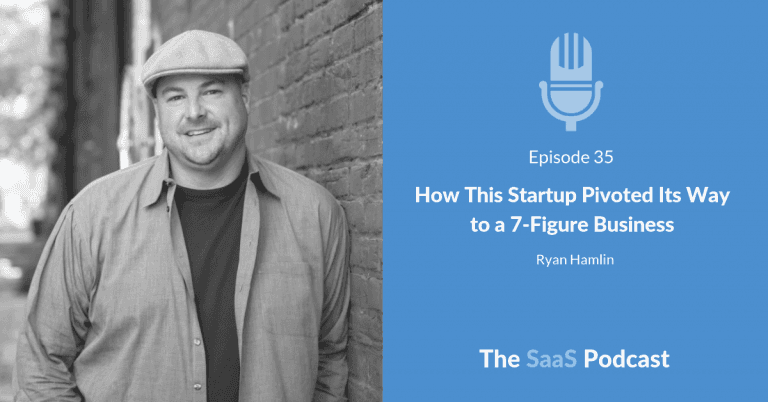
Ryan Hamlin, PlaceFull
From Free Marketplace to $1M in Freemium SaaS Revenue
Like this episode?
Get real founder strategies for the AI era. Delivered weekly.
Free weekly newsletter · No spam
Episode Summary
Ryan Hamlin spent $400,000 of his own money building a free marketplace for booking events. Then he realized the freemium SaaS model he needed was hiding inside the product he had already built.
PlaceFull started as a consumer-facing booking platform - like OpenTable for birthday parties, camps, and classes. Merchants listed for free and paid only when bookings came in. The problem was that free users had no incentive to keep their inventory updated, and the unit economics made the business unsustainable. Ryan pivoted to a subscription model, grew to 27,000 freemium users and 1,000 paying merchants, and hit $1M in revenue.
Ryan Hamlin left Microsoft after years of running marketplaces like Carpoint and HomeAdvisor. In 2011, he co-founded PlaceFull with George Webb, investing $400,000 of their own money to build an online marketplace for booking spaces, classes, camps, and events.
The original model was simple: merchants listed for free, and PlaceFull took a cut of each booking. But Ryan quickly hit a wall. When merchants pay nothing, they have no skin in the game. Inventory went stale, bookings were unpredictable, and the unit economics pointed toward failure.
So PlaceFull made a freemium SaaS pivot. Ryan rebuilt the platform to become the master scheduling tool for each merchant's business, adding Google Calendar sync, website embedding, and Facebook integration. He introduced a monthly subscription fee of $30-40 and reduced transaction fees by 80%. The result: merchants who paid even a small amount treated the platform as a core part of their business.
Today, PlaceFull has 27,000 merchants in its freemium SaaS tier and about 1,000 paying subscribers. The company is on track for its first million-dollar revenue year. Ryan shares how partnering with industry associations drove cost-effective acquisition, why he wishes he had been less rigid about his MVP, and how consecutive months of 15-20% growth finally gave him confidence the freemium SaaS model was working.
Key Insight
PlaceFull founder Ryan Hamlin pivoted from a free marketplace to a freemium SaaS subscription model after realizing that merchants who paid nothing had no incentive to keep their listings current. The shift to a $30-40/month subscription converted 1,000 of 27,000 merchants into paying customers and drove PlaceFull to $1M in annual revenue with 15-20% month-over-month growth.
Key Ideas
- PlaceFull's free marketplace model failed because merchants had no incentive to maintain up-to-date inventory
- Switching to a $30-40/month subscription reduced transaction fees by 80% and gave merchants skin in the game
- 1,000 of 27,000 freemium merchants converted to paid subscribers, generating $1M in annual revenue
- Partnering with industry associations let PlaceFull acquire merchants at near-zero cost by leveraging existing member networks
- Adding calendar sync, website embeds, and Facebook integration made PlaceFull indispensable as each merchant's master scheduler
Key Lessons
- 🔄 A freemium SaaS model needs skin in the game: PlaceFull's free marketplace failed because merchants had zero incentive to maintain listings. Even a $30-40/month fee changed behavior completely, turning passive listers into engaged platform users.
- 💰 Unit economics reveal when your freemium SaaS model is broken: Ryan tracked three variables - acquisition cost, monthly recurring revenue, and lifetime value. When those numbers pointed toward failure, he pivoted from transaction fees to subscriptions before running out of cash.
- 🤝 Partner with associations to acquire freemium SaaS customers cheaply: Instead of spending on ads, PlaceFull partnered with industry associations that promoted the platform to their members. This gave PlaceFull third-party credibility and near-zero acquisition cost.
- 🛠️ Make your product the master system before charging for it: PlaceFull added Google Calendar sync, website embeds, and Facebook integration so merchants relied on it daily. Only then could Ryan justify a subscription fee, because the product was running their business.
- 📉 Being too rigid about your MVP delays the pivot you need: Ryan admits he turned down ideas outside his original scope too quickly. Loosening MVP boundaries earlier would have surfaced the freemium SaaS model faster and saved months of struggling with broken economics.
- 🚀 Consecutive 15-20% monthly growth is the SaaS confidence signal: Ryan says he only believed PlaceFull would work when he saw sustained double-digit month-over-month growth in both merchant signups and revenue, not from a single big win.
Chapters
00:00Introduction
00:52Meet Ryan Hamlin
01:40Favorite success quote
02:31What PlaceFull does and who it serves
04:13Ryan's background at Microsoft
05:22Where the PlaceFull idea came from
07:01Validating the marketplace MVP in Seattle
08:06Bootstrapping with $400K and raising angel funding
08:54Getting the first paying customer
09:37Biggest early mistake: being too rigid about MVP
10:41When PlaceFull started getting meaningful traction
12:52Why PlaceFull pivoted from marketplace to SaaS
14:55Convincing free merchants to pay a subscription
16:39How the subscription model helped merchants too
17:07Embedding booking on merchant websites and Facebook
17:32Expanding beyond kids events to new verticals
18:57What Ryan wishes he knew about customer acquisition and churn
20:22Business size: 27,000 freemium users, 1,000 paid, $1M revenue
21:02Association partnerships as a growth strategy
23:45What excites Ryan most about the business today
24:45Lightning round
28:36Where to find PlaceFull and Ryan
Episode Q&A
How did PlaceFull pivot from a free marketplace to a freemium SaaS model?
Ryan Hamlin analyzed PlaceFull's unit economics - customer acquisition cost, monthly recurring revenue, and lifetime value - and realized the transaction-only model was unsustainable. He introduced a $30-40/month subscription while cutting transaction fees by 80%, which gave merchants predictable costs and PlaceFull predictable revenue.
Why did PlaceFull's free marketplace model fail before the freemium SaaS pivot?
When merchants listed for free, they had no incentive to keep inventory updated or use the platform consistently. Revenue was entirely tied to bookings, making it seasonal and impossible to forecast. The unit economics showed PlaceFull would run out of money without a recurring revenue stream.
How did Ryan Hamlin convert free users to paying freemium SaaS subscribers at PlaceFull?
Ryan rebuilt the platform to become the master scheduling tool for each merchant's business, adding Google Calendar sync, Outlook integration, website embedding, and Facebook booking. Once the product was indispensable for daily operations, merchants understood the value of paying a monthly fee.
What customer acquisition strategy did PlaceFull use to grow to 27,000 merchants?
PlaceFull partnered with industry associations - photography associations, pottery groups, batting cage networks - and offered their members discounted subscriptions and custom directories. The associations promoted PlaceFull to their member bases, giving PlaceFull third-party endorsement at near-zero acquisition cost.
How did Ryan Hamlin validate PlaceFull's marketplace idea before building the product?
Ryan focused his MVP on one market (Seattle) and one vertical (kids birthday parties). He pitched trampoline parks, bowling alleys, and art studios on listing for free, spending six months onboarding local merchants before expanding to other categories.
What was Ryan Hamlin's biggest mistake in PlaceFull's early days?
Ryan was too rigid about sticking to his MVP definition. He turned down opportunities outside his original scope, which delayed learning that could have accelerated the freemium SaaS pivot. He now advises founders to treat the MVP as a starting point, not a boundary.
How did PlaceFull achieve 15-20% month-over-month growth after the pivot?
The subscription model gave PlaceFull predictable recurring revenue and let merchants see clear ROI - on average, 1.5 bookings per month covered the subscription cost. Prepaid annual plans locked in revenue, and association partnerships kept acquisition costs low.
What role does Facebook play in PlaceFull's freemium SaaS booking platform?
About 20% of PlaceFull's bookings come through Facebook. Every merchant gets a fully integrated Facebook booking experience, which expanded distribution beyond the PlaceFull marketplace and each merchant's own website.
How much did Ryan Hamlin invest to bootstrap PlaceFull before raising funding?
Ryan and co-founder George Webb invested roughly $400,000 in PlaceFull's first year. After realizing they needed more capital, they raised over $2.5 million from angel investors, leveraging Ryan's network from his years at Microsoft and the Seattle tech community.
Book Recommendations
Full Transcript
Omer (00:11.840)
Welcome to another episode of the SaaS Podcast.
I'm your host, Omer Khan and this is the show where I interview proven founders and industry experts who share their stories, strategies and insights to help you build, launch and grow your SaaS business.
Today's interview is with Ryan Hamlin.
Ryan is the founder and CEO of Placeful, an online marketplace that allows merchants to offer real time booking of their spaces, services, camps and classes.
Placeful was founded in 2011 by Ryan and his co founder George Webb, and to date, the company has raised over two and a half million dollars in funding.
Ryan, welcome to the show.
Guest (00:52.170)
Hey, thanks for having me, Oren.
Omer (00:54.390)
Now, before we talk about Place four, tell the audience a little bit about yourself.
Who is Ryan when he's not working?
Guest (01:04.070)
Well, I'm a big time dad.
I have four boys, so I spend a lot of time just with my kids, my family into sports, athletics.
You can probably find me at a gym.
If I'm not watching a basketball game, I'm probably shooting hoops with one of my sons.
And just try to be, not to be too cheesy, but try to be pretty involved in the community.
I'm a local Washingtonian, born and raised here, so I love the state, I love Seattle.
I love kind of the tech energy that's in this, in this general area right now.
And so I try to do my time on some boards as well.
Omer (01:39.840)
Now we'd like to kick things off with a success quote to better understand what drives and motivates our guests.
What is one of your favorite quotes?
Guest (01:50.100)
There's a quote out there and it's a twist on one, much like you had mentioned as well.
We've heard of the quote, balance is the key to life.
There was an author, I read a book a few years ago, Dr. Edwin Cole, and he had a twist of it and he said balance is the key to life and variety is the spice of life.
For me, I think that's just really important.
You heard in the intro, I've got four kids, I'm busy.
Work is super important, but so is family, so is my community.
And I think, you know, if you focus on any one of those in particular and you don't have that variety, I think you do miss out on kind of the spice of life.
Omer (02:31.380)
The spice of life.
I love that.
Okay, let's start by giving the listeners a better understanding of Place four.
Can you talk a little bit about who are your target customers and what are the top pain points that you're trying to solve for them.
Guest (02:47.960)
So there's Like a lot of startups, we had a pivot.
So if you go back to 2011, when we started, our customer was the consumer.
And the whole idea was have a Marketplace much like OpenTable, where you could search, find a class or camp or an event and book it.
And it was free to our businesses to be on that marketplace.
We quickly realized that that was a great consumer experience, but there wasn't enough motivation to the merchant to make sure that they kept their inventory up to date, that they actually used Placeful in a meaningful way, that when we promoted it to consumers, it would drive the kind of value that we had hoped.
So like a lot of startups, we pivoted about 18 months ago or about 16 months ago, I guess now.
And really our customer became the merchant and we took our product and it was already a platform.
We went more into a software as a service play, started charging a monthly fee for them to use our product, the merchants, and really saw just a complete difference in our growth and our revenue because we now had a way for the merchants to feel accountable because it's like anything when something's free, you just don't have that same incentive versus even when you're paying a small nominal fee of 30 or 40 bucks a month.
It's.
It really gets skin in the game and the merchant makes it a point to really focus in on the product.
Omer (04:13.440)
Okay, I definitely want to talk more about that, but before we get into the details, what were you doing before you started Placeful?
Guest (04:23.200)
So I was at Microsoft and was there for a while and ran a bunch of different marketplaces at the company.
So early MSN days with running Carpoint and HomeAdvisor, and interesting enough, my experiences there are pretty parallel to what I'm doing now because even way back when in the late 90s with Carpoint, we were selling referrals to automotive dealerships.
And the general idea is you do your research on a car and then if you're interested in purchasing, you would submit your information, it would go to a dealership in your area.
And Microsoft had a basic referral model where they would make money off of that.
And interesting enough, that's how Placeful started, was a marketplace instead of just a referral, but it was real time booking.
But the general idea was the same, work with merchants to find them leads, find them customers, and provide value through a booking or a referral model.
Omer (05:21.700)
Okay, so let's go back to the early days of Placeful and explore how you got started.
Can you tell me a little bit about where the idea first this product came from
Guest (05:32.900)
the idea of placeable was driven from my own personal experience.
Had a bigger family, had a large team at Microsoft, and it felt like almost every night it was either going to a business function or going to a family function, or maybe it was something board related.
But we're always looking for venues or events or activities and it involved picking up the phone and calling.
And there was a. I got personally frustrated because it was by the time we all do our jobs, we get home at night and we actually have a few minutes to think about the next day or the next weekend, everybody's closed.
And so you'd find yourself leaving messages or sending emails and you never really knew.
And the reality is, in the day and age we're in now, consumers are trained to instant gratification.
I mean, it is what it is, whether you like it or not.
A society now that expects instant results, instant gratification.
That's where the idea came from, was, hey, let's take something like OpenTable did for restaurants and let's create that same experience for all these other merchants that aren't restaurants, but they have all these other cool things that you can rent, whether it's an event space, a class for a kid, or a birthday party or a camp that you want to send your child to for summer vacation.
So that was the premise that Placeful was started on.
Omer (07:01.330)
Okay, so you've got this idea for a product.
What did you do to try and validate the idea?
Guest (07:09.410)
So we started with our mvp and so our minimal viable product was the Seattle market.
And we were going to focus in on just kids events because even though activities and events, they happen for corporations and for adults, we wanted to zero in on the kid side of it and say, okay, let's focus on kids businesses in the Seattle area that need to have an online presence for booking, primarily around birthday parties.
And so we started looking at trampoline places, bowling alleys, art studios, any place that would host a kid event primarily around a party.
And we went and talked to them and had the idea, we pitched them on it and we said, hey, for free, come sign up for Placeful and we'll get you in the marketplace.
And that's our first six months really were around Seattle only getting local merchants to publish onto the placeful.com marketplace.
Omer (08:05.800)
Okay, how much money did you need to get that first version of the product built?
Guest (08:11.320)
So it was bootstrapped by me and myself and the co founder and we probably spent that first year about $400,000 to just kind of bootstrap it, which is a pretty big amount of money for a bootstrap for a couple of us to come in.
Then that's really when we started to realize that to make this thing go, we needed to have some additional funding.
We started to look at an angel funding realm.
Fortunately, having been at Microsoft for a while, had a really nice network there of folks.
And then born and raised in Seattle area, had a good network of angel investors here in Seattle.
Omer (08:54.440)
Do you remember how you got your first paying customer?
Guest (08:58.520)
Yeah, it's funny you said it's maybe typical of others.
It was a friend, you know, hey, come use Blazeful.
And we have, you know, the funny thing is we have the booking registration up on our wall.
He booked a boat rental for a group of 10 adults to go out on Lake Union.
And it was one of our first customers was a guy that had kind of a fancy boat.
And he rented his boat out for little Saturday day trips.
And I convinced him that, hey, that'd be a really cool thing to do.
And by the way, when you rent it, why don't you take Julie and I and my wife.
Omer (09:37.050)
Now, looking back at those early days, what do you think was one of the biggest mistakes that you made?
Guest (09:45.460)
I think that for us, the biggest was I had this belief that I really needed to stick to my mvp.
I think the concept of defining your minimum viable product and your market that you're attacking, I think that's a really good way to enter into a startup.
But you have to have flexibility.
I think for me, that was the biggest learning is I found myself saying, yeah, we shouldn't do that because that's really outside of our mvp.
And I think early on, if we would have let ourselves go outside of the boundaries just a little bit, I think we would have learned some of those lessons that we had to learn maybe a little harder later on.
So I think the biggest lesson for me and the biggest advice that I definitely say to entrepreneurs now is don't get so caught up in your MVP definition that you lose the broader goal and focus of what you're trying to accomplish.
Omer (10:41.370)
That's good advice.
Okay, so you launched Placeful in 2011.
So you've been at this for about three years.
At what point did you feel like you were getting meaningful traction?
Guest (10:56.810)
Yesterday?
No, no.
You know, it's.
You look back always and you feel like in the moment you're in that, yes, we're making great progress.
And so each time you have that moment, six months later, you think back and go, Wow.
I really didn't realize.
We really didn't have it figured out.
I think with a startup, things are always changing.
Things are always.
You're having to make those adjustments.
For us, the biggest thing that was the aha moment for me, like, wow, this thing's really going to work, was when we started to see consecutive months of 15 to 20% growth.
And that growth was in the form of merchants signing up as well as our revenue growth.
Because I think in a SaaS, particular SaaS model, it's a slow road.
You're not going to become all overnight, instantly viral and triple your revenue.
A SaaS business really is about 10 to 20% growth, and you just keep chugging along like locomotive, and eventually you have this great base of merchants that gives you this reoccurring revenue stream and you kind of look back and go, man, now we're set.
I mean, I can look now in our financials and realize we have all these customers that have prepaid for the year.
So I know that that income is in the bank and we have that reoccurring revenue stream, which is a beautiful thing because I think as a startup, you got to be really careful when you build businesses that you don't have a reoccurring revenue stream where it's completely seasonal.
Or in the case of placehold, when we first started, they only paid when they had a booking, the merchants.
So it was really hard for us to do any sort of forecasting because we had no idea how many bookings would come in in any given month.
And so now that we have a software licensing model in place, it really gives us the ability to forecast and understand our business much better.
Omer (12:52.090)
All right, I want to go back and talk more about this pivot that you.
You mentioned that you guys made about 16 months ago.
Now, as I understand before that, the business model was basically you bringing on these merchants, not charging them anything, and then taking some kind of transactional fee when a consumer made a booking.
Tell me more about why you made that change back then.
Guest (13:24.190)
Yeah, so I think it's the classic question that a lot of entrepreneurs have to look at, which is you look at your financial statement and you need to understand, is this a business that's going to be a sustainable business?
We were going down this path of a marketplace.
We had, unfortunately, the seasonality of a product that we could only forecast revenue when there was bookings because we weren't in a SaaS model yet.
And for us, we looked at the unit of economics, and people always talk about unit of economics, but it's an extremely important part of running a startup for us.
Unit of economics is three key variables.
It's how much does it cost to acquire a customer, how much monthly reoccurring revenue does that customer bring, and lastly, what is the lifetime value of that customer?
And you have to really look at all three of those and understand that if those numbers aren't working, you're not going to be in business.
So you need to make.
And for us, that's really what it came down to.
We looked at the current marketplace and we recognized that given our current unit of economics, we're going to be out of business.
So we had to come back to the table and figure out, okay, how do we make this a sustainable business model that is going to give us the right economics so that we can grow this thing?
And that's really when we said we needed to have a reoccurring revenue stream.
And we transitioned from a transaction only revenue based on bookings to a software as a licensed business.
And we now have the ability to forecast out because we know our reoccurring monthly revenue based on our subscription fees.
Omer (14:55.170)
So how did you make that change with these merchants?
So you've been working away at bringing these merchants on.
They're used to not paying anything.
What did you have to change, both in terms of the product or the offering, to convince these merchants to start paying you?
Guest (15:17.030)
Yeah, well, number one, we had to make sure that the platform that they were going to be using of ours had the right set of features for them to want to commit to saying, you know what, you guys are going to become the master scheduler.
Because if you think about booking any event, the worst thing that can happen is you book a time that's either not available, someone else has taken it, or, or you double book something.
So in this case, we had to make sure that our calendar was the master calendar for their business.
So we had to go in and we had to do things like Google Sync, so if you're using a Google Calendar, that'll sync up with a placeful calendar or using Outlook.
So we had to go through our feature set and make sure that we had the right set of things built in so that it would make it really easy for the merchant to say, yeah, I can count on placeful as my master of my schedule and my data so that it avoids any sort of conflict with users.
Once we did that and we explained to them why we needed them to pay a monthly fee, and we basically lowered their transaction fees almost down to 20% from what they were paying before they got it.
And they understood, okay, now I know what you guys are at.
You're not just a marketplace where I'm going to get the occasional booking, but you guys really are a core part of our business that we're going to partner with you and you're going to help us run our business.
Omer (16:38.890)
And presumably by moving to a subscription model or licensing model, as you called it, it gave those businesses more predictability as well, in terms of what they were spending with you.
Guest (16:51.530)
Yeah, exactly.
You could show value because now when you're driving business to them and bookings are coming through, it's really easy to say you have roughly, on average, one and a half bookings a month and you've just paid for your software license.
Omer (17:06.530)
So do these merchants also use your service on their own websites?
Is that how it works now?
Guest (17:12.850)
Yeah.
So that was part of the pivot, is it wasn't just on the marketplace, but we provide them an embed capability on their own website, on their Facebook page as well.
In fact, about 20% of our bookings come from Facebook.
So there's a full integrated Facebook experience for all of our merchants.
Omer (17:31.900)
Got it.
And so, you know, you focused on businesses with spaces to rent, or you talk about classes and things like that, but it sounds like that this product could have much broader application, right?
Could it be used by doctors or hair salons or.
Guest (17:52.060)
Yeah, no, that's.
And goes back to our first comment about mvp.
When you look at, okay, who's using this, what kind of merchants, you start to learn the characteristics of the businesses and you apply those characteristics across other verticals.
So in our case, it was, okay, anybody that has any sort of a reoccurring event, and a reoccurring event could be, you know, you took the beginner class, but now you're going to take the intermediate class.
Or your kid went to this camp last year, maybe they want to go to the next camp.
Or you had a birthday here last year, maybe you have another birthday.
So when we saw that our platform worked for reoccurring events, we started to look beyond, like, okay, well, hair.
Not in my case, if you see my picture.
But most people need haircuts once a month.
You want to go to the salon, you need your house cleaned, you need your gutters clean.
These are all things that now are reoccurring events.
And that's really where placeful we started to look and go, we're a really nice fit for those merchants and those verticals that have These reoccurring events.
Omer (18:56.910)
Now, looking back at the business over the last few years, what's one thing you wish you'd known when you started out working on this business?
Guest (19:13.000)
Well, I think probably the biggest.
We talked about the MVP before, but for any startup in particular, in our case, in my case, you and I both coming with a Microsoft background, when you have Microsoft on your business card, a lot of doors open, a lot of phones get picked up, and when you start and you're this company called Placeful and no one's ever heard of you, simply building a really great product doesn't necessarily mean that merchants are going to be knocking down the door to sign up.
So for me and for us, merchant acquisition and frankly, churn is probably the biggest learning we've had to kind of understand and coming up with creative ways, inexpensive ways, because you're watching the finances.
To acquire new merchants is super important.
And then once you acquire them, you've got to take care of them.
It's the classic scenario where once you have a customer, you can't afford to give them up because you spend so much money acquiring them.
So really understanding your merchant acquisition strategy.
And then even more importantly, how do you keep them so they don't turn off?
Omer (20:22.060)
So let's talk about the size of the business today.
How many customers do you have?
Guest (20:30.650)
So we have about 27,000 customers in what we call our freemium model.
They all have a one page presence, they get free referrals, they're in our directories.
If you were to go to, for example, pottery.placeable.com, it would include a directory of pottery locations all throughout the United States.
And then we have about 1,000 of those in our subscription model.
And this year will be our first year where we'll have over a million dollars in revenue.
So we're really excited.
Omer (21:02.200)
Oh, congratulations.
So how did you go about acquiring these 27,000 users?
What were some of the marketing strategies that have been most effective for you guys?
Guest (21:22.770)
So a lot of people would say SEM and SEO.
I mean, I think we all get caught up in the buzzwords of late, but the reality is it's a given.
You have to have good SEO when you engineer your product.
So I'm not really going to talk about that.
You have to do a little bit of SEM search spend.
But frankly, startups don't have the kind of money to really buy the kind of terms you need to make a big presence online for SEM.
So if you kind of assume those two aren't necessarily your Main ways you have to be creative.
And in our case, we went after associations.
So we recognized that a lot of these merchants that we were dealing with were members of associations.
So whether it was a photography association or a pottery association, you know, batting cage facilities, pretty much all of these small businesses we deal with, there is one or two associations out there.
You'd be surprised by all of them that you can find.
And so what we did is we partnered up with them and we would establish a relationship to give them value, give the association value.
And basically by saying things like, hey, if your members sign up, we'll give you a discount on their subscription fee.
They'll be in a custom directory for you, so you can have your own directory for your association.
And those would be our freemium onepages that we'd give to them.
So for us, it was really cost effective because we wouldn't have to spend that much to generate these one pagers and give them a directory.
And the beauty of it is they promoted us because they would promote it to their member base.
And so now you've got a third party promoting you, which is kind of the best of both worlds because you're not having to spend the money and they're promoting you.
Omer (23:03.790)
Got it.
So if I understand correctly, you figured out, once you understood who your target customers were, you figured out who the influencers were in those markets and then you went out and reached out to those guys directly and used them as a way to leverage your marketing.
Guest (23:20.490)
Yeah, and influencers.
That's a great way to say it, because that's the associations.
We do have sponsored sites too.
For example, in our case, kids sites that are marketing our mommy blogs that are writing, that have big subscription base, that talk to moms about what to do this summer or what's the best birthday party, and then we go and we partner with them for both content and our directory.
Omer (23:45.230)
Is there one thing in your business that you're most excited about right now?
Guest (23:51.310)
It's probably boring, but honestly, it's month over month growth.
I mean, when you struggle to start a business and when you finally start to see that month over month growth number, it gets you excited, right?
Each month instead of kind of dreading looking at the financials, I look forward to see our month end financials, to see what percent growth we had.
So that it's kind of maybe a nerdy startup thing to say, but honestly, the growth of the business is super fulfilling and satisfying.
Omer (24:22.600)
Yeah, well, that's what it's all about.
And I think getting to Seven figure business is a great milestone, right.
I think it's just a great story in terms of the value of being flexible and figuring out when to pivot.
Guest (24:41.060)
Yes, no, that's absolutely right.
Omer (24:44.740)
Okay, Ryan, it's time for our lightning round.
I'm going to ask you a series of questions and I'd like you to answer them as quickly as possible.
Are you ready?
Guest (24:51.700)
I am ready.
Omer (24:52.740)
All right, what's the best piece of business advice that you ever received?
Guest (24:58.660)
So I was back at Microsoft and I was young and focused on career and titles a little too much and I had a boss that basically told me, hey Ryan, your career is a marathon, not a sprint.
Stop worrying about your title, stop worrying about how many people work for you and focus in on just doing the right thing.
And that really kind of hit home and has really carried through even now in a startup.
Omer (25:23.600)
What book would you recommend to our audience and why?
Guest (25:27.760)
So I read Tipping Point a while back with Malcolm Gladwell and then I like even better than that, I liked his follow up.
So I like blink.
The power of thinking without thinking.
Blink.
For me it really helped understand that inner voice and that kind of gut feel that you get as a leader.
So yeah, blink.
By Malcolm Gladwell.
Omer (25:49.470)
What's one attribute or characteristic in your mind of a successful entrepreneur?
Guest (25:55.950)
You have to be 150% convicted and belief in your idea because you will have everyone telling you negative things on what won't work.
And you have to parse through all of that and have this unending belief in your idea.
Omer (26:15.340)
What's your favorite personal productivity tool or habit?
Guest (26:20.220)
So one of the best times, and I try to do this at least once a month or if not twice a month, is I literally go into a conference room, I shut the door, I grab a piece of paper and I draw out ideas.
I'm not a guy that just sits and types out new features or new thoughts.
I'm a visual person and I just draw.
Sometimes I'll draw a screen and I'll be like, you know what?
We need to design something like this that can do this.
So I'm a very visual person and frankly I love the opportunity to have two or three hours just to sit down and think and draw out some ideas.
Omer (26:52.810)
If you had to start over tomorrow, how would you go about finding that next business opportunity?
Guest (26:58.490)
I realized definitely through my time at Microsoft and now Placeful.
I'm a consumer guy.
I like helping either businesses that are helping consumers or consumers directly.
So I would do something in the consumer space.
I love all the stuff that's going on right now around fitness, I think things like Fitbit and GPS tracking, I think there's going to be tons of innovation in this space over the next couple of years.
I think I'd do something in that category.
Omer (27:26.930)
What's an interesting or fun fact about you that most people don't know?
Guest (27:32.930)
I don't know if you know this or not, but I was interviewed live on Good Morning America when I ran the anti spam team at Microsoft.
It was in the height of all the spam negativity and I was fortunate enough to fly back to New York and be interviewed live on Good Morning America.
Omer (27:52.490)
I did not know that.
And for folks listening, I've known ryan for, gosh, 14 years.
Guest (28:00.890)
Yes.
Omer (28:01.530)
And I still didn't know that I
Guest (28:04.250)
had to come up with something.
Omer (28:06.490)
All right, and finally, what is one of your most important passions outside of your work?
Guest (28:14.520)
I'm going to just have to say being a dad, my kids keep me grounded.
You can have bad days, good days, but coming home and just shooting some hoops with my sons or playing catch brings everything back to ground level and tells me what's really important in life.
So that's what it's going to be.
Omer (28:35.720)
All right.
Great answers.
Ryan, I want to thank you for joining me today and sharing your experiences and insights with our audience.
And thank you for letting us get to know you a little better personally as well.
Now, if folks want to find out more about Placeful, they can go to placeful.com or if they want to get in touch with you, what's the best way for them to do that?
Guest (28:56.510)
Frankly, they're going to email me directly at ryan r y a naceful.com with two L's.
Omer (29:02.750)
Awesome.
Ryan, thanks again and I wish you continued success.
Guest (29:06.350)
Thanks, Omar.
Thanks.
Appreciate having me this morning.
Omer (29:08.990)
Cheers.