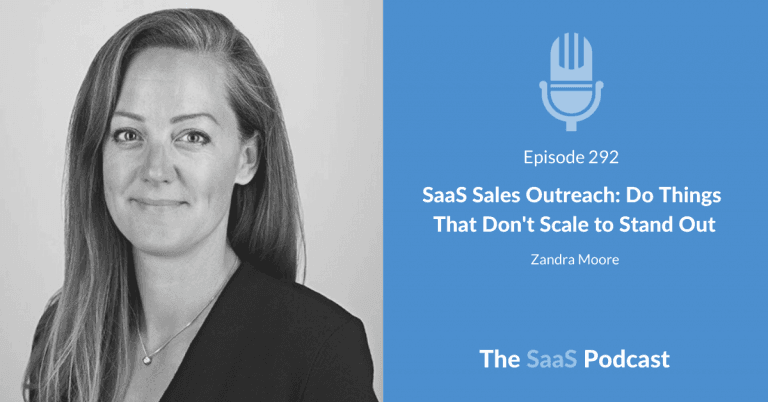
Zandra Moore, Panintelligence
Handwritten Letters to 7 Figures: Competitive Differentiation in SaaS Analytics
Like this episode?
Get real founder strategies for the AI era. Delivered weekly.
Free weekly newsletter · No spam
Episode Summary
Zandra Moore and her co-founders carried a server across a car park to start their company. Then they wrote 500 handwritten letters to software vendors - because in a market dominated by Tableau and Power BI, competitive differentiation meant doing things nobody else would.
In this episode, Zandra reveals how Panintelligence grew into a multiple 7-figure SaaS business with 50+ employees by embedding white-labeled analytics inside other SaaS products - and why their competitive differentiation comes from keeping data where it already lives.
Zandra Moore is the co-founder and CEO of Panintelligence, a white-labeled business intelligence and predictive analytics solution for SaaS companies.
Zandra and her two co-founders acquired the product they were building at their old company and spun it into a new startup. They packed up and carried a server across a car park to their new office.
To get started, they got a list of 500 companies from Dun and Bradstreet and sent each one a handwritten letter in the mail. It wasn't scalable, but it helped them land customers.
Since then, their startup has grown into a multiple 7-figure SaaS business with over 50 employees. They're disrupting the SaaS analytics sector and competing against giants like Power BI and Tableau. And they're doing all this from a city in the north of England.
Zandra talks about how they found their competitive differentiation by focusing on what the big players don't do - embedded, white-labeled analytics that queries data in place without moving it. She also shares how they used the Crossing the Chasm framework to narrow their ideal customer profile from "all software vendors" to four specific verticals on AWS.
The episode covers their creative outbound approach, including handwritten letters, fish-and-chip demos, and LinkedIn personalization - proving that competitive differentiation in sales matters just as much as in product.
Key Insight
Panintelligence CEO Zandra Moore built a multiple 7-figure SaaS analytics business by finding competitive differentiation against Tableau and Power BI: white-labeled, embedded analytics that queries data in place without moving it. Her go-to-market started with 500 handwritten letters and narrowed from "all software vendors" to four verticals on AWS using the Crossing the Chasm framework.
Key Ideas
- Panintelligence queries high-volume transactional databases in place - unlike Tableau, Looker, and Power BI which all move data
- The team carried a server across a car park and self-funded for three months before generating enough revenue to survive
- 500 handwritten letters to software vendors drove early pipeline because email was too noisy to get attention
- After trying resellers, marketplaces, and broad outbound, Panintelligence narrowed to four verticals (fintech, retail tech, martech, edtech) on AWS
- Personalized outreach consistently delivers higher conversion rates than automated campaigns - even at scale
Key Lessons
- 🎯 Build competitive differentiation by solving what giants ignore: Power BI and Tableau move data and serve end users directly. Panintelligence found their niche by querying data in place and white-labeling for SaaS vendors - a use case the big players overlooked.
- 🤝 Handwritten outreach creates competitive differentiation in sales: Zandra sent 500 personalized letters because email was too noisy. Doing things that don't scale - fish-and-chip demos, hand-signed letters - got attention when automation couldn't.
- 📉 "All software vendors" is still too broad an ICP: Even after choosing to sell only to software vendors, Panintelligence discovered they needed to narrow further. The Crossing the Chasm framework helped them focus on four verticals with existing references.
- 🔄 Reseller channels drain resources without competitive differentiation: Resellers needed heavy enablement and lacked technical depth. Direct relationships with SaaS vendors who embed the product proved far more sustainable and valuable.
- 💰 Personalization scales better than you think: From handwritten letters to LinkedIn messages citing specific podcast quotes, Zandra's personalized outreach consistently converts at much higher rates than automated campaigns - even at 50+ employees.
- 🏢 Spinning out gives you customers but not pipeline: Panintelligence inherited a few customers from the parent company but started with a blank whiteboard for pipeline. The first months required bootstrapped hustle to fill the gap.
Chapters
00:00Introduction
01:49Zandra's quote: Givers gain
02:30What Panintelligence does: embedded white-label BI for SaaS
03:57Customer examples: ACI Worldwide, schools, healthcare
05:32The broad market challenge: analytics for everyone
06:17Origin story: spinning out from Pancredit
09:21What "spinning out" actually looked like
11:01Carrying a server across a car park
11:24First three months: 500 handwritten letters
12:56Why send letters instead of emails
14:24What the letters said: personalization approach
15:32The lesson: do things others aren't doing
17:35Narrowing the ICP: from all vendors to four verticals
20:22Expanding from UK to international markets
22:30Using LinkedIn and content marketing for outreach
25:10Following up 12 times without being annoying
28:00AWS partnership and marketplace learnings
31:00Competing against Tableau and Power BI
34:00Why data-in-place is the key differentiator
37:00Building ML-powered predictive analytics
40:00Lightning round
Episode Q&A
How did Panintelligence find competitive differentiation against Power BI and Tableau?
Panintelligence queries data in place without moving it, unlike competitors that require data migration. Their product is purpose-built for embedding and white-labeling inside other SaaS platforms - something the big BI tools were not designed to do.
Why did Zandra Moore send 500 handwritten letters to get Panintelligence's first customers?
Email was too noisy to get attention from software vendors. Zandra observed that she always opened handwritten envelopes first, so she personalized each letter with company-specific news and hand-signed every one.
How did Panintelligence narrow from selling to all software vendors to four specific verticals?
Using the Crossing the Chasm framework, Zandra identified that "software vendors" was still too broad. They focused on fintech, retail tech, martech, and edtech on AWS - verticals where they had existing reference customers and repeatable propositions.
What mistakes did Panintelligence make with reseller channels and marketplace partnerships?
Resellers needed heavy sales enablement and lacked technical capability. Marketplace partnerships required more brand recognition than Panintelligence had at the time. Both distracted from the core direct-sales motion.
How does Panintelligence's competitive differentiation extend to predictive analytics?
Beyond data visualization and reporting, Panintelligence includes ML-powered predictive models in the same white-labeled platform - used in healthcare to predict missed appointments and in schools to predict student outcomes.
How did Zandra Moore use LinkedIn to land a Fortune 500 customer for Panintelligence?
She listened to a CEO's podcast, sent a genuine LinkedIn message commenting on his insights, and he checked her profile, saw what Panintelligence does, and connected her with his VP of Product - no pitch required.
What was Panintelligence's approach to following up with leads 12 times without being annoying?
By personalizing each touchpoint and adding genuine value - commenting on company news, sharing relevant content, and timing follow-ups around meaningful events - rather than sending the same template repeatedly.
How did Panintelligence fund the early days after spinning out from a fintech company?
The co-founders emptied their bank accounts to buy the IP. The CFO co-founder bankrolled salaries for the first three months. They had a few existing customers generating revenue, which bridged them to sustainability.
Why did Panintelligence choose to compete in the embedded analytics space rather than general BI?
General BI is dominated by billion-dollar incumbents. But SaaS vendors who want to embed analytics in their own products need white-labeling, multi-tenancy, and security features that Tableau and Power BI were not built for.
Book Recommendations
Full Transcript
Omer (00:10.000)
Welcome to another episode of the SaaS Podcast.
I'm your host, Omer Khan and this is the show where I interview proven founders and industry experts who share their stories, strategies and insights to help you build, launch and grow your SaaS business.
In this episode I talk to Zandra Moore, the co founder and CEO of Pan Intelligence White labeled business intelligence and predictive analytics solution for SaaS companies.
Zandra and her two co founders acquired the product they were building at their old company and spun it into a new startup.
They literally packed up and carried a server across a car park to their new office to get started.
They got a list of 500 companies from Dun and Bradstreet and sent each one a handwritten letter in the mail.
It wasn't scalable, but it helped them land customers.
Since then, their startup has grown into a multiple seven figure SaaS business with over 50 employees.
They're disrupting the SaaS analytics sector and competing against giants like Power BI and Tableau.
And they're doing this all from a city in the north of England.
In this interview we discuss how they leverage LinkedIn and content marketing to reach their ideal customers.
How they've used high touch and personalized cold outreach to get high response rates.
How they're able to follow up with leads at least 12 times without being annoying.
What they've learned so far about how to focus on a very broad market opportunity and how they're differentiating and competing against some huge competitors.
So I hope you enjoy it.
Zandra, welcome to the show.
Zandra Moore (01:49.060)
Thank you very much for having me.
Omer (01:50.660)
Do you have a favorite quote?
Something that inspires or motivates you or gets you out of bed that you can share with us?
Zandra Moore (01:58.100)
I've used this one a bit and it's two words as opposed to a quote.
It's givers gain and a mother who is very much glass half full and always felt that the best way to make things happen for yourself is to give before expecting to receive from others.
And it's amazing how much people sort of come back to you and find you again in life.
So yeah, that would be mine.
Omer (02:20.520)
Nice.
Nice and simple.
So tell us about Pan Intelligence.
What does the product do, who's it for and what's the main problem you're helping to solve.
Zandra Moore (02:30.120)
So thank you.
Yeah.
Pan Intelligence is a software business.
We develop a business intelligence analytics solution that is designed to be embedded and white labeled by SaaS vendors.
So we're a bit like a, a looker when it comes to data visualization.
So allowing people to easily Build their own data insights in a, in a visual way.
They can drill in slice and dice, but they can also build things like reporting.
So think of a formatted report like a crystal report or an SSRS that they can schedule and distribute to lots of different people and brand as their own.
And then lastly you can also build machine learning models.
So build a model that can predict outcomes so new data comes in.
It can score that data and make a prediction and give people that, that insight so they can make a decision on what they'd like to do or if you wish, automate it.
So we sort of say it's a three in one thing.
So you know, data visualization, reporting and machine learning in one technology, in one tool that is purely designed to be white labeled and embedded by SAS vendors who usually are getting to a point in their roadmap where they've built some kind of custom basic kind of reporting and dashboarding, but their customers are asking for customizable access to that data and they want to build that into their platform and they choose to work with us and embed our technology as opposed to continuing to extend and build that functionality out.
So that's what we do.
Omer (03:57.360)
So what type of SaaS companies are using Pan intelligence?
Can you maybe give us one or two examples?
Zandra Moore (04:03.680)
Yeah.
So we work across a whole range of sectors because it's not specifically about a sector but we have a lot of experience in fintech more because that's the sector we spun out of.
We were originally part of a banking software vendor 10 years ago and as a small team we decided to spin this technology out.
We built it for the banking platform as an alongside solution and we spun it out in 2014.
And so we've done quite a lot in payments, online banking, e commerce, retail and also marcoms people like lead forensics for example, through to point of sale platforms.
So we have companies like Bouc in Holland and then we'll have ACI worldwide global payments provider.
So yeah.
But a range of sectors are also in education and healthcare.
We have 7,500 schools using it through RM CMIs, 80 colleges through tribal and then into the healthcare sector where we're used in GP practices for predicting patients that most likely not to attend an appointment or even predicting scans that might fail in primary care hospitals.
When it comes to things like radiology, I mean the application is wide ranging.
So we have about 450 technology companies and licenses with companies that use it to really expand that kind of access to data for their customers.
So always sort of embedded in their platforms and white labeled, but like I say, lots of different sectors, real range.
Omer (05:32.400)
Okay, yeah, we need to get into that because my head is already exploding thinking about all the different markets and just some of the examples that you just gave.
Now and then we're talking about, okay, let's, you know, you launch a SaaS business and you're focused and you have a clear target audience.
And whenever I hear any founders saying, yeah, my product is for everybody, it's like, yeah, not really.
Right.
It's like, who do you really need to.
But it sounds like that might actually apply to patent intelligence.
So I want to dig into that.
So I want to kind of go back in time and talk about how you came up with the idea where this product started.
So where did the idea come from?
Zandra Moore (06:17.830)
So I can't take any credit.
I have to be really honest here.
I've got two co founders, a guy called Ken Miller, who's cto, Mike Cripps, who was the then FD of the business that we were part of a company called Pancredit.
And Pancredit was founded by a guy called Peter Constance who actually became a seed investor when we spun the company out in 2014.
Omer (06:39.720)
So just in terminology, when you say FDA, you're just talking about a CFO, right?
Zandra Moore (06:43.200)
I am a CFO.
Apologies.
Yeah, CFO.
So, yeah, so we were building this because we were using a tool called Business Objects at the time, which was acquired by SAP.
And we found that we were having to build more around the things that BusinessObjects didn't do than it did do in order for it to kind of enable our customers that were the big banks and financial intermediaries here in the UK to consume data.
So Ken being the guy Ken is, said, hey, I can build this.
He's been working with Business Objects for years and he started building Pan Intelligence and I was working with him to help take that product to the customers that we had and Pan Credit, but also taking it out to the wider market to other SaaS vendors or the software vendors.
Because we were a software business ourselves and we built everything we needed to that mattered to a software vendor around things like security, multi tenancy, authentication, embedding.
Right.
Labeling the stuff that kind of other tools didn't start from the ground up with.
And we had to.
So we were a really small team, sort of there's a alongside product where the thing we were selling was multimillion pound lending systems and we were this kind of add on, afterthought dashboarding technology.
And we Saw an opportunity to kind of take that to a wider market.
The market we had was quite narrow.
It was very, just very much banks in the uk.
So yeah, so we spun that out because we saw that actually the bigger market opportunity wasn't the banks but actually other software vendors.
Because we were different.
We were different.
We weren't leaving data like other tools like tableau looker, they all move data, we don't.
We can query high volume transactional databases and you know, a lot of software vendors want to keep their data where it is but want to enable their customers to kind of do more with it.
So that's the origination really of us and we've really stuck to that strategy of selling into software vendors ever since 2014.
But we have, you're right, had to refine that ideal customer profile down.
In fact we thought it was pretty narrow when we picked software vendors and actually what we realized was that wasn't narrow enough.
So we've really, really gone on a journey using a framework crossing the chasm framework, which is very popular for that kind of getting to a place.
We've got a really repeatable proposition that you can really command a target segment or a SAM.
And we decided to work with SaaS vendors on AWS to start with across four core segments.
So where we had to referenceability.
So fintech, retail tech, martech and edtech is where we've ended up putting a lot of our focus and energy to really of get deeper into those markets.
So yeah, whilst we're in lots of different markets, we are specializing in some because we feel that that's a better way for us to really accelerate.
Omer (09:21.370)
Got it.
Okay, so I want to just explain this a little bit more about what you meant by, you know, we kind of spun this out.
So what does that actually mean?
Zandra Moore (09:30.810)
Yeah, it's a good question.
So we built a basic product but actually it was built using, I mean it makes, I think anybody cringe.
It was built in Flash originally, which is obviously, you know, talk about technical debt.
So we spun out this product knowing we had to completely rebuild it, but we had a few customers and I'm there for some revenue and a very, very small team, like one developer, Ken, myself, the other co founder, the CFO Mike and one other person.
So you know, we were a tiny, tiny team and we just thought we've got to rebuild this, but we're never going to rebuild it inside this Fintech because they just were never going to prioritize the development of it.
It was like I say it was A very small part of their proposition.
So, yeah, so we basically carried a server across a car park and squatted in an office that's half the size of our current boardroom.
Now, all five of us and just kind of working out everything from banking to.
We were paying ourselves for the first three months.
In fact, it was our CFO Mike that, that bankrolled the majority of us for the first three months whilst we were getting everything up and running.
But we all emptied our bank accounts to buy the IP and then had to try and work out how to pay ourselves for a little while.
But it was good.
It was good because it was basically a startup with a bit of tech that had all the right principles and foundations of the core product, but needed rewriting, which we did, and it's completely rewritten, so it's all the latest tech.
Omer (11:01.600)
Okay, great.
So you carried the server across the car park.
I love just that picture in my head.
And you said you, you already had a few customers using the product.
What did those first three months look like in, in terms of growth?
Like what were you doing to find new customers?
Zandra Moore (11:24.790)
We'd had the benefit of being in another company, so we'd had access to all their marketing and their customers and everything else.
And obviously when you're suddenly on your own in office with a whiteboard that's blank with no pipeline on it, it really was right, if we're going after software vendors, we need to go on a list somewhere, print off a list of all of the software vendors.
And I mean, we had a bit of this pre thinking before we bought the business, but it did feel like this in the first six months.
Let me use Dun and Bradstreet.
We printed off a list of software vendors in the UK and we literally wrote them letters.
I mean, we really were putting, you know, stamps on envelopes and writing to people.
In fact, I was running the Institute of Directors Young Directors Forum, which I'd set up here in Leeds.
And I'd been working on a mentoring program with a guy who'd moved to ACI Worldwide, who I mentioned earlier.
And I just reached out and went, hey, they're on my list.
I'll just find out if he's happy to have an introduction call with us.
And actually that ended up being one of our first customers.
It was a really big win for the business.
And the same with Tribal, who are very early software partner of ours.
It was all through connections and networks.
People that I knew, or we knew one of them, we literally took them fish and chips opposite the road, because we're literally behind the big fish and chip shop in Yorkshire.
Unsurprising.
And we just said, look, will you come and have a meeting with us and we'll take you for fish and chips?
And I remember Ken doing a demo to him over fish and chips, which was brilliant.
But, yeah, it was hustling, really, and using the networks that we built up over the years.
Omer (12:56.520)
Why send letters?
Why not just use email like everybody else do?
Zandra Moore (13:01.570)
You know, it's about getting attention in a noisy market.
At the time, email marketing felt really noisy.
I think everything goes through waves and people were just not sending letters.
And I always knew that if I received a letter, especially with a handwritten envelope, it would be the one I opened first.
And I sort of observed myself doing it.
And I thought, you know, why not?
If we're going to try and get people's attention, let's hand write the envelope, let's hand sign some letters, and let's personalize each letter.
You know, here's a list of 500 software vendors.
Surely it's worth our time.
And that's what we did.
And it did get people's attention.
And then you picked up, the phone rang, people say, hey, did you get my letter?
And they go, I did, actually.
And they do remember it.
And yeah, for a small company with not any budget, frankly, at the time, because we'd not raised any funds, we were sort of bootstrapped and it worked really well.
It was really simple.
And obviously we've built much more sophisticated marketing engine now.
But I still go back to.
I listen to a podcast over the weekend.
I really loved what the CEO said about, you know, Gen Z and the change in kind of behaviors in E commerce and around how they buy and how they're switching off from Amazon.
And I just thought what he said was really good.
I have a Gen Z daughter and I just dropped him a note on LinkedIn, you know, commenting on what he said.
And he must have looked at my profile, looked what we did, replied, and just went, you know what we're looking for, what you guys do?
I want you to meet with my VP of product.
And that's like a virtual letter, really, isn't it?
Same thing, really.
Omer (14:24.620)
Yeah, yeah.
What were you writing in these letters?
What were you saying?
Zandra Moore (14:28.940)
I was always commenting on something that related to news about that business.
So I'd find, I do some research on the company, find out if they'd recently acquired a business or made an announcement or raised funds, or if the person I was writing to is new in post and I knew where they'd come from.
So just personalization really relating to something that was either relevant to the business or the individual.
In fact it was how I started working with Pancredit originally was I wrote an inmail to.
It wasn't in mail then.
Mail didn't exist.
I think it was just an invite to the CEO Peter, because I sat on the trustees.
I was a trustee for Leeds Rugby foundation, which is obviously a rugby team here in Leeds, and I sat on that board and they also sponsored one of the players and I just used that as a connection to say you sponsor one of the players.
I sit on the trustees.
I'd love to come and have a chat to you about how I can work with your business.
And yeah, that's how I started there.
So it's amazing.
If you personalize things and just put a little bit of time into things, it goes a long way.
Omer (15:32.720)
So a couple of things there.
Number one is I think that's a brilliant just idea there that it doesn't have to be writing letters.
It's just I think the lesson there is you figured out if we just do what everybody else is doing, we're going to get lost in the noise.
So what can we do?
What would I pay attention to?
And let's try that.
The other reluctance I think people might have is just like these days sending 500 emails.
If you try, anyone can kind of do those outreach tools and upload a list of 500 emails and send them the same email.
But to actually personalize an email takes enough effort.
But then if you have to write it on paper, stick a stamp on and everything.
So what would you say to somebody who looks at it and says yeah, that's great, but it's not a scalable thing and it just takes too much time to do.
Zandra Moore (16:30.250)
It isn't scalable and we don't do it anymore.
Right.
That's where we started.
But I think if you're in an early stage business and you want to stand out, definitely do the things everyone else isn't doing and if that takes you a little bit more time.
And the great thing is it didn't cost us a lot some paper and some stamps and a bit of time and we sort of had the time in those early stages to get everything off the ground.
So yeah, it's not scalable but I think personalization can be and there's lots of automation is a given.
Right?
There's loads of tools for automation.
But I mentioned lead forensics, one of our Customers, they've got a platform called webeo, which we're embedded in, and that's about personalizing people's landing page experience experiences when they go on the website.
So it says, you know, hey, welcome back.
It's got your name, it's got your company, it knows what you've looked at before, and it's personalizing your experience based on that, that last time you were there.
So I think, you know, there are lots of things around personalization and technologies you can use to enable you.
But I think the principle is people pay attention to stuff that's clearly tailored for them and it's worth the effort.
I think conversions, in my experience, are always much higher.
Omer (17:35.520)
Yeah, yeah, love that.
So let's talk about figuring out who that target customer was, because I know that, I mean, as we just talked about earlier, it potentially is very, very broad and covers lots of different types of businesses and industries.
How did you go about dealing with that?
Because you said you started off with this list of like 500, but then as we were talking earlier, before we started recording, you sort of went in a bunch of different directions after that.
Right?
Zandra Moore (18:07.680)
We did.
Right.
So we started to get drawn into business that maybe we certainly wouldn't necessarily do now.
But at the time when we were hunting after those software vendors, something would come up.
A reseller would approach us and say, hey, we'd like to do pan intelligence for this product, but we don't own the ip.
And they would need a lot of support, sales enablement.
They didn't have technical people in their organizations and they just needed a huge amount of time from us, and we weren't geared up as much for that.
And we did build a reseller channel around Sage, and we still run that today.
But again, it's not a core focus for us because managing a reseller channel is very different to having the direct relationship with the software vendor that's putting it inside their product and making that product available to their customers because they're much more invested in it.
A reseller isn't a reseller.
It's, you know, a sales transaction for them.
Their level of investment in that is not as high and they don't have the technical capabilities.
So, you know, reseller channels, we still have some of that and we still work with that, but.
But again, it's very different and you need to have a different kind of structure and way to service and support support resellers.
And then we also picked up customers in segments where we had to do some bespoke configuration around the product which still part of our code, we have a single code base.
But even at the time when we were doing that, we sort of like, this is probably taking our product in a direction that we don't really think is useful to everybody.
We wouldn't do that now.
We would be much more kind of, we would be more confident to say, you know, this isn't really going to work for everyone and it is not the right direction to travel for the product and say, no.
But I think that's.
I think every software business sort of goes through some of those, you know, go to market, you know, channels, marketplaces.
We tried, didn't really work for us.
Again, we didn't have the brand and you need to be quite a big, a bigger player for people like Salesforce and others to really position you and also market you.
And we tried that and probably invested in an area which we pulled away from because we realized we were not committed enough to marketplace partnerships at the time and we weren't at the size where we could really do it justice.
Whereas now we're sort of considering alliances because we're getting to that stage in our business, whereas it wasn't right for us earlier on.
Does that all make sense, Omer?
Omer (20:22.610)
Yeah, yeah, totally.
And so in the early days, were you just targeting customers in the uk?
Zandra Moore (20:29.170)
Yeah, absolutely.
We were predominantly UK focused.
We did have software businesses in Australia and a few in Europe and a couple in America, but the majority of the software businesses were in the UK.
That 500 list was software businesses in the UK.
And then when we closed our Series A round, you know, we'd already opened an office in Boston.
We were already starting to.
To win and attract more business in the US because we started to refine our ICP to cloud.
We got on the AWS marketplace and we started to focus much more on targeting cloud vendors.
And then when the pandemic hit and the acceleration of move to SaaS, we completely moved all of our go to market activities just onto SaaS vendors on private clouds, public clouds, should I say not private clouds on aws, Azure and gcp.
But yeah, we've kind of narrowed.
Ironically, as we've grown, we've narrowed.
We narrowed our go to market because our addressable markets, like you say, so big it could be any sector, any software platform.
Omer (21:28.200)
Yeah, yeah.
So I want to kind of continue down that thread and the couple of channels that you've used successfully, one has been just content marketing and the other is how you've used LinkedIn.
And so I want to spend A little bit of time just digging into those.
But I think the same challenges apply in terms of whether you're creating content or you're using a platform like LinkedIn.
How do you get a message out there that attracts the attention of your ideal customer, when potentially your ideal customer is every type of business that's doing something like this?
So tell me a little bit about, like, maybe let's start with LinkedIn.
So how has that worked for you?
What have you been doing on that platform?
Zandra Moore (22:17.810)
Well, LinkedIn's been a sort of evolving channel for us.
It started with us just using it to find the name of somebody in an organization so that we could then pick up the phone to them or put them into our database and we wanted to reach out to.
So, you know, right.
In the early days, it was more like Yellow Pages.
They used to say, God, if I'd had this in my first job when I was given a the Yellow Pages and a mobile phone, basically a phone directory and a phone, and that was it, and a Rolodex, this would have been awesome.
So I've always been amazed at just the wealth of information that is in LinkedIn for you to be able to understand the person that you're trying to engage with.
So really, it felt like a glorified phone directory.
And then with things like Sales Navigator and using it much more to kind of collect groups of people that you're wanting to speak to and track those conversations.
And that the outreach, they used something called Point Drive, which they got rid of, but we used it quite a lot.
And Point Drive enabled you to see if somebody had clicked on some content that you had created.
We used like, almost like PowerPoints, tailored PowerPoints for people, but like those tailored letters, personalized PowerPoints.
If you imagine which we would send to people and they.
We'd know if they'd looked at it, but it would really speak to them and, and what they were trying to do.
And then we've moved on to using, you know, paid ads on LinkedIn.
But again, knowing that Persona.
So for us, our Persona is a Chief Product Officer, VP of Product, or a CTO or a founder of a SaaS business.
And their pain points and problems is they want to be successful in market with a product that can compete, and they want to make sure they've got functionality that is leading edge.
And things like data visualization, reporting and machine learning can take a long time to build out.
And they're making prioritization decisions about where their dev resources go.
So therefore we can accelerate their Roadmap help them to be competitive in market with their product very quickly.
But also we generate expansion revenues because most of the time people will enhance their subscription for that SaaS platform in order to have self service capabilities for accessing data and building their own reports and charts or even prediction capabilities.
So we can be a really fast path to expansion revenue.
So we know that our Persona, we know that the people that are worrying about product and how they deal with their product priorities and also the CEOs and founders are thinking about growth and expansion and retention and we really can, we can talk to those, those people and understand because that's all we do and we just make sure that our ads and our content and the things that we surface through things like LinkedIn right the way back to if we were just sending them an invite, we'd personalize it.
If they're a cpo, we talk about their roadmap.
It was a CEO.
We talk about kind of expansion revenues and improving retention.
Yeah.
Omer (24:58.530)
Okay, so with the LinkedIn ads, what does that funnel look like?
So you're running these different ad campaigns targeting your ideal customer profile.
Once people click on that, are they getting sent to some sort of landing page?
Are you trying to drive people to request a demo?
What's that look like once they actually engage with an ad?
Zandra Moore (25:24.540)
So I think we must have anyone time about five or six ads running minimum.
Some are ebooks guides.
So they're downloading a kind of thought leadership type piece.
So it might be a five page document on you know, the lessons learned in embedded analytics or the five mistakes or the, you know, those sorts of things.
I imagine there's this, the ROI of embedded analytics.
So we've got a number of papers that, that, that we present and people click to download and then we'll, we'll, we'll capture and follow up.
Or they might be more kind of case study type content pieces which a bit more kind of information but sector relevant.
So because our ICP and cohorts and we know what segment they're in, we make sure we're presenting them kind of stories about people we're working with in a segment that they, that is theirs and therefore they can relate to.
And again, you know, we can, we can track that engagement and see the clicks on those ads.
So that's how it works essentially.
Omer (26:21.060)
Okay, so once they, let's say they download some type of thought leadership content, what happens next?
How do you do the follow up?
Zandra Moore (26:30.290)
Yeah, so we have an SDR function.
They basically are following up all of Our channels of engagement.
So paid ad engagement, we use other kind of tools for automation.
So pardot for email automation, which is obviously a Salesforce product and we take intent data from things like G2 so we can see that an IP particular company is looking at solutions like us and therefore we then find the Personas that relate to that company and surface content to them.
So intent data can be really useful.
And we use an SDR sequencing tool called Apollo I.O.
which enables them to do some callback and follow up.
And it's really great for SDR outreach and, and helping to manage that team to manage kind of follow up and continuous follow up.
We have this rule that if you've not reached out 12 times then you've not reached out enough.
And true enough, whether it's you're picking up the phone, you're sending them an email, you're connecting to them via social channel, you just try 12 times.
And patient persistence and not badgering people with emails but using a mix of different channels to try and reach someone and say hey look, we're here and we love to chat.
And it's amazing how many people kind of go yeah, I've been listening and I can see and I'm ready now.
And they don't seem to be my experiences.
People are not bothered if you're doing that in a kind of respectful and you know, a frequency that is, it feels like it's, it's comfortable for people.
So you know, once every month would be too far, you know, too far apart.
But you know, once, once every week or so and I think people get
Omer (28:11.540)
it and then how do you do that?
Like I know some people listening to this are going to be thinking oh my God, 12 times.
That would be.
I would just be annoying the hell out of people.
I'm going to get rude emails telling me to go and do this.
What's your advice on how to be persistent with the follow up but to do that in a non annoying way.
Zandra Moore (28:33.340)
Personalization.
People want to feel that this is not always.
Don't do everything through automation.
Automation.
The, the risk of relying too much on everything being automated in sequences is that it will feel like they're just in a pot and it's not for them and then they'll stop listening and they won't read it.
So that energy is wasted.
So the way we use the tools and the team is that once we've got somebody that we believe has had a certain number of engagements, kind of must be looking around, they've downloaded this document, they've been on the website, they may have opened an email, right?
Got a few touch points.
They then get a score, an ICP score and we go, yeah, they're somebody.
We want the SDR team to then use a number of different touch points to try and open that door and have that conversation with them.
And some people it's first touch point, right?
They've downloaded something, you pick up the phone, hey, yeah, it's been a really useful document, let's have a call.
And others, it needs a bit more kind of patience, persistence, so we don't jump on everybody.
We just make sure that we've got people that clearly look like they're engaged and interested and we just patiently keep going at it.
I think we just don't rely too heavily on automations to do that.
We take a bit more of a personalized approach.
Omer (29:40.830)
So what would that personalization look like when we're not talking about replace first name?
Right?
Zandra Moore (29:49.870)
No.
So again, our SDR team would look at their.
We create LinkedIn and Crunchbase and all these amazing resources can tell you a huge amount about a company, its ownership.
People's interests are available on all their social media channels.
So if you take a few minutes, especially if you know they're a target customer, they're in your sweet spot, they're an ideal customer profile, they're absolutely right fit for you.
They're worth the time to just do a little bit of research on that person that you know is the right Persona for you to target.
So just personalize and look for something that makes that outreach feel tailored to them because it will be tailored to them and they're more likely to pay attention to it.
And I'm not talking, you know, hours of work, it's a quick scan.
Or they've just commented on this article, I'll make reference.
Or they've just posted this blog that they've talked about or they've.
It says on their Twitter feed that they, you know, that I coach a girls football team, so if I see somebody coaches girls football, it's one of the first things I can comment on.
Common ground.
It opens up the conversation.
So, yeah, that might seem like hard work, but if you know you've got your ideal customer profile right, and you know you've got your target audience right, and you know you've got the Persona that is going to be the people you need to speak to, then it's worth the effort, I think not Spray and pray.
Oh, it's just.
Omer (31:08.270)
Yeah, yeah.
And I mean that, that approach seems to Be working like the business has grown to a team of over 50 people now.
Zandra Moore (31:18.300)
That's right.
Omer (31:19.500)
And how many customers?
Zandra Moore (31:22.540)
So we've got 450 and growing.
We sort of bring in two or three new logos a month and that's going up all the time.
So it's.
And these are mid market enterprise size deals, if that makes sense on a monthly basis.
And because it's embedded and white labeled it's quite sticky.
So churn is low.
And because this is not pure play SaaS, you know, it's not spin something up for 30 days and then switch it on 50 pounds a month, $50 a month.
Because this is a long term kind of embedded relationship with the software vendor.
That account based marketing approach, that more personalized approach, that really tailored kind of ideal customer profile.
You can do that when you've got a sort of higher like you know, you've got a long longer lifetime value which we have because of the, the type of sale that it is.
And it's more like I say sort of middle enterprise, mid to enterprise value.
And yeah, you're not talking about signing up 200 companies a month.
Omer (32:19.700)
Yeah.
And how do you sell it?
Is it just like annual deals or multi year deals?
Is that.
Zandra Moore (32:25.300)
Yeah, so it's multi year deals usually although we do have people sign up annually and it's monthly revenue and it's tied to their unit metrics.
So if we back the right SaaS vendors, if we work with the right companies that are on a great growth trajectory.
So we have some key characteristics.
You know, we're looking for people that, you know, companies that are on not late stage can be relatively early stage SAS vendors actually but they've got a great sweet spot in the market and they're growing.
We tied to their unit metrics.
So it's, you know, it's a usage model, unit based model.
As they grow, we grow.
So that's great.
So it's good for them and good for us.
Omer (33:04.620)
All right.
And where are you in terms of revenue right now?
Zandra Moore (33:07.820)
So probably don't want to disclose too much.
We're seven figures on ARR.
We closed our Series A round in 2019 at the end of the year just before went into lockdown in 2020 we raised US$6 million and that's sort of funding our growth and expansion at the moment.
But yeah, good growth trajectory.
It's probably as much as, I'll say fair enough.
Omer (33:28.860)
And what does the sales cycle look like?
Because I mean you mentioned that once this, the technology is embedded in to Their product.
It's not something that they just, you know, gonna wake up one morning and say, I'll try something else.
So that that has some advantages around Churn, but I also kind of feel like, does that make the sales cycle longer?
Because people have to go through a whole bunch of due diligence before they're willing to commit to doing the work and integrating with you?
Zandra Moore (34:00.310)
Yeah, I think the time to close for us at the Moment is about 150 days, which is about right for a cycle of doing a proof of concept and then doing an initial kind of configuration and pilot before going live with your customers.
So there is an element of their technical teams wanting to get their hands on the product we deploy inside their vpc.
So they actually get their hands on our technology and deploy it into their platform.
So it's not sort of set outside their infrastructure, it's sat inside their infrastructure.
And they want to test that kind of integration, embedding, authenticating users and also connecting it to whatever data sets that they've got, as well as configuring usually a small library of charts and reports that are out of the box for their customers, which tends to be the case.
And it may take them 100 days from initially getting their hands on the software to get to that point where they've done that to their own satisfaction.
It's not really something that's a limitation of us or our product.
It's more about their time and resource to do that more than anything else.
But yeah, you can deploy us and spinners up and connect us to databases and build all of these things out in a matter of a couple of days.
But we're usually dependent on the processes they need to go through internally and their own release cycles as well.
If they have longer release cycles, that can have an impact.
Omer (35:19.540)
And now I assume your customers are global, more US based companies as well?
Zandra Moore (35:25.260)
Yeah, they are increasingly US based, which is great, but global.
We have quite a few in mainland Europe, less so in Asia Pacific, but we're seeing a lot of interest from Israel and Israeli businesses right now.
There's a huge kind of SaaS ecosystem there.
I think they've had more IPOs in the last 12 months than anywhere else.
So we do get drawn into certain markets as opposed to targeting them directly.
But yeah, the pipeline is absolutely international for us.
Omer (35:56.580)
So one of the things that really stood out for me when I was doing research for this interview was you've got a product that is basically competing with sort of Silicon Valley type alternative offerings and you've got a customer base which is growing in the US and then you're running a company based in Yorkshire, in Leeds, which isn't exactly, you know, known for being a tech hub.
And then also the other thing about you in terms of, you know, you being a mother of two and you started the business, is it true you started the business initially?
Like I read something about, like you wanted to kind of start working, but you kind of wanted to do something remotely like what was the deal with that?
Zandra Moore (36:51.440)
Yeah, so I had a business before this which was a, it was a consulting business, which I think is probably what you've read.
So I had a sales consulting business to software vendors where I was helping them kind of launch their products to market and get their kind of go to market propositions and their solutions and win those first customers.
And the reason I set that business up was because I was a sales director for a software company.
I had been sort of working for a number of different software businesses in my career and I'd had two children and it was really difficult to maintain a kind of the travel and the demands of a sales director role in a team with two young children at preschool age.
So I just thought, you know, I don't want to stop doing what I love doing, which is working in the kind of software sales, but I want to enable earlier stage companies that, you know, can't afford to have a full time sales director, but would love to have somebody, you know, a few hours a week or a day a week to help them kind of get off the ground.
And that really worked for me because I could fit that around my kind of child care arrangements and I made it so more localized to me.
So I focused on working with SAS businesses in, in the north of England as opposed to having to travel as widely as I had done in my career.
So that helped and helped me to kind of strike a balance but keep my hand in really to working with.
And it was all SAS businesses, early stage SAS startups that I worked with and Pan Credit, which was the foundation for Pan Intelligence, was, was one of those clients.
So I kind of, I say cheekily reached out to the CEO and said, hey, can I come and work for you?
Actually I put a pin in a map and drew a circle and said, I want to work with businesses within this circle.
And Pancredit was in it and it was two miles from my house, two miles from my house, literally two miles.
So I knew I could be dashed back to nursery and get the kids if I needed to, if they were poorly or anything else.
And it's amazing how many software businesses within a 10 mile circle of your house when you start to look.
It was quite unbelievable really.
Omer (38:44.520)
That's brilliant.
All right, so being in Leeds, how has that been made things harder to compete with Silicon Valley type companies?
Or has it helped because you're different to your competitors?
How's that played out?
Zandra Moore (39:05.330)
So I've always lived in the Yorkshire bubble that believes that Yorkshire is the best place on the planet.
And I've come from many generations living in Yorkshire.
And whilst I've traveled the world, I believe that we can do anything in the city, in Leeds in particular.
And I still believe that.
But I think becoming a founder and scaling a SaaS business has made me realize just how much we do lack some of the kind of expertise of being in an ecosystem like Silicon Valley, for example, where there is just so many people that have been on that journey, have learned the lessons, understand the kind of new rules, the playbooks and everything else, and having that sort of access to advice and support and guidance at your fingertips, I think it'd be a real enabler if you're kind of on that journey for the first time and we don't have a huge amount of that here in Leeds.
We're building an ecosystem here and I'm gathering up all of the CEOs I can find in software and SaaS on my doorstep to make sure that we're leaning on each other and helping each other out.
But we're not Silicon Valley.
And I think we're a long way off being that.
And I think that's just being really honest.
And I think there's more happening in London than there is in Leeds, but it's growing here and I think we're just at the early stages of really seeing a kind of explosion of tech startups here in Leeds.
There's a real kind of a really amazing buzz around the innovation centers at the university and some of the developments that are going on here.
But I think that has made it a bit harder.
Had to try a lot harder to find people to kind of help us and support us.
Access to talent hasn't been a challenge, actually.
Develop and salespeople and we often retrain people into sort of a SaaS and software business from other sectors, which works for us.
But yeah, I do think it's.
I miss when I go out to Boston and I sort of drop into the tech ecosystems in places like Boston and other parts of the world, you do realize that actually being part of that can Be really, really, really helpful.
So I'm looking forward to getting back out to the US soon, actually.
Omer (41:03.750)
Cool.
Tell us a little bit about.
There's a couple of organizations.
So you founded an organization called Lean In Leads.
Tell us a little bit about what that is.
Zandra Moore (41:12.070)
That was a completely selfish endeavor.
I've read a book by Sheryl Sandberg, who's the CEO of Facebook.
It was all a book about female empowerment and self empowerment and really helping you to kind of, I suppose, manage your own personal, kind of self limiting beliefs.
Actually, often it is to help you to achieve your own personal vision of success, whatever that might be.
And I really loved it because it was about empowering women to think about, you know, what, what they could do for themselves as opposed to perhaps seeing the barriers that are in their way.
And it says at the end of the book, hey, you know, join a circle near you.
I looked, there wasn't one.
I created one.
I thought it'd be wonderful to meet with other female CEOs on my doorstep.
That went from the first dinner that we had of 20 people and we now have 900 members, which is just bonkers.
And there's obviously a need to bring that kind of community together to talk about kind of challenging those boundaries for women in being able to realize their own ambitions and trying to understand what's causing those limitations.
I think that's what really stood out for me is that there's so many women just wanting to connect, go, hey, I really want to do this, but this is making me want to not or I feel held back or I don't know what's stopping me.
And just being able to have a safe space to bring in people that have been there and done it, to share their stories or to have workshops where people can actually learn about new skills or change their thinking and approaches to things.
So we run a workshop every month and an evening event every month and really kind of enable that community.
So I'm hoping, a legacy that I'd love to leave is that we turn Leeds and Yorkshire into one of the fastest growing kind of female leadership community in the uk.
That would be, that would be a wonderful, wonderful place to be.
Omer (43:03.560)
Yeah.
That's awesome.
And then if that wasn't enough, you, last year you also founded no Code Lab.
So what.
What is that?
Zandra Moore (43:11.000)
Yeah, so that was.
We're a no code platform so people don't have to write line of code to deployers or users.
And I was just really interested that this seemed to be a community that was burgeoning in the us, but nobody was talking about it here in the uk.
And I was kind of frustrated because I thought, God, this makes so much sense.
It really kind of reduces the barriers to entry for people getting into technology.
That's great for diversity.
That's brilliant for helping to improve the skills pipeline because we don't need everyone to have done technical degrees and we don't need people to have to have the funds to support an education to do these roles.
This is brilliant.
This is such an enabler for the industry to build amazing tech using their code tools.
And I just wanted to bring that conversation to the UK and start to kind of lead that and bring a community together.
So we've done white papers for the national Data Strategy, got involved in government, worked with people like Tech UK on this agenda as well as gathering a whole load of no code technology companies here in the UK and overseas to talk about this and how this is a real kind of interesting wave and movement for innovation and enabling a really kind of wider pool of talent into the tech sector, which we need.
And I would love to see a much more diverse representation across tech.
We're still at 17% after 10 years of women in technology roles, which is a shame for such a new industry that we've not changed that needle in 17 years.
So I'm really hoping this can be a part of that.
And plus it's really great.
People can spin up a product in days and an MVP in hours using no code tools.
And people can realize that ideas for tech innovation in whatever problem they're solving without having to be a developer.
It's great.
It's a great movement.
So yeah, we run events and we try and bring the community together and basically input into conversations and dialogue at a national and local level.
Omer (45:03.140)
Awesome.
Do you know Ben TOSSEL who runs MakerPad?
Zandra Moore (45:06.660)
I've heard of MakerPad.
I don't know Ben.
Omer (45:08.500)
So yeah, I mean MakerPad is pretty popular here in the US but like he's running that out of like, I think he's in Milton Keynes.
Zandra Moore (45:17.450)
Really?
Okay.
Omer (45:18.290)
Yeah, I should introduce you guys like both in the note.
Zandra Moore (45:21.130)
You should.
You know what I've literally written down?
Omer (45:24.250)
There you go.
Zandra Moore (45:24.770)
Yeah, okay, thank you.
Omer (45:28.170)
All right, great.
So we should wrap up.
Let's get on to the the lightning round.
I'm going to ask you seven quick fire questions.
Just try to answer them as quickly as you can.
Ready to go?
Zandra Moore (45:38.810)
I am, yes.
Omer (45:39.930)
All right, what's the best piece of business advice you've ever received?
Zandra Moore (45:43.180)
Received.
Fail fast with a smile on your Face.
Omer (45:46.300)
Smile on your face.
What book would you recommend to our audience and why?
Zandra Moore (45:49.820)
Crossing the Chasm.
But also who Moved my Cheese?
Omer (45:53.180)
Oh yeah, I haven't come across that book for a long time.
Zandra Moore (45:56.300)
Good change book.
Good change.
But very old one.
But it's a goodie.
Yeah.
Omer (46:00.300)
What's one attribute or characteristic in your
Zandra Moore (46:02.740)
mind of a successful founder sticking at it?
Omer (46:06.700)
What's your favorite personal productivity tool or habit?
Zandra Moore (46:10.270)
Urgent Important matrix by eisenhower from the 7 Habits of Highly Effective People.
I use it every day and I have a grid that I write on and it helps me to keep focused on what really is important because things are important are seldomly urgent and vice versa.
Things that are urgent are seldom important.
Omer (46:26.510)
What's a new or crazy business idea you'd love to pursue if you had the extra time?
Zandra Moore (46:30.270)
I love to paint.
I love the segue of art and tech.
I think developers are basically artists of code and I'd love to bring developers together with artists in some kind of crazy mashup of innovation and see where it takes us.
I think it'd be awesome.
Omer (46:46.200)
Awesome.
What's an interesting or fun fact about you that most people don't know?
Zandra Moore (46:51.720)
I was once on an album in a choir for Emmerdale Farms.
Emmerdale Farm is a program here in Yorkshire for those of you that are not from the uk but a very well, a very well loved program here.
And I was, yeah, I was on the, I was in the choir and on the front cover of an LP vinyl very long time ago singing in the choir.
Omer (47:16.270)
Oh my God.
I remember watching Emmerdale when I was in the.
I think back in the 90s, it's still running around, right?
Zandra Moore (47:24.110)
Oh God, yeah.
Oh yeah.
And half of the cast seems to go to.
Parents seem to go to my kids school as well, which I think it's quite funny.
I don't know any of them anymore because I don't watch it but apparently everybody else does.
Omer (47:36.150)
And finally, what's one of your most important passions outside of your work?
Zandra Moore (47:40.390)
I'm a girls football coach and I absolutely live for my weekends with the girls doing football coaching and taking them to various games and just seeing her, just seeing their joy really of working together as a team.
They're sort of under 16s now, so I may only have a year left with them but they're an amazing group and they inspire me every day.
Love it.
Omer (48:00.670)
All right, so if people want to find out more about Pan Intelligence, they go to panintelligence.com and if people want to get in touch with you.
What's the best way for them to do that?
Zandra Moore (48:10.670)
I've talked a lot about LinkedIn today, so it'd be hard not to say LinkedIn.
So, fortunately, Zandra Moore is a relatively unusual name.
And if you just Type that into LinkedIn, you'll find me.
Same for Twitter, actually, if you just type Zandra Moore in.
I'm at Xandra Moore.
So, yeah, I use those social channels.
Reach out, say hi, send me a message.
I'll always reply.
I do like that kind of personal.
Talk about a lot of personalization today.
So a bit of personal outreach, and I'll be absolutely sure to reply and connect.
Omer (48:39.260)
Awesome.
Well, thank you so much for joining me today, Zandra.
And I love how you've been able to not only build this business, but in many ways, do it on your own terms, from putting the pin in the map and drawing the circle through to everything else that you're kind of making things happen in Leeds.
So thanks for sharing that, and I wish you and the team the best of success.
Zandra Moore (49:02.750)
Thanks, Simon.
Omer (49:04.270)
All the best.
Cheers.