Omer Khan [00:00:09]:
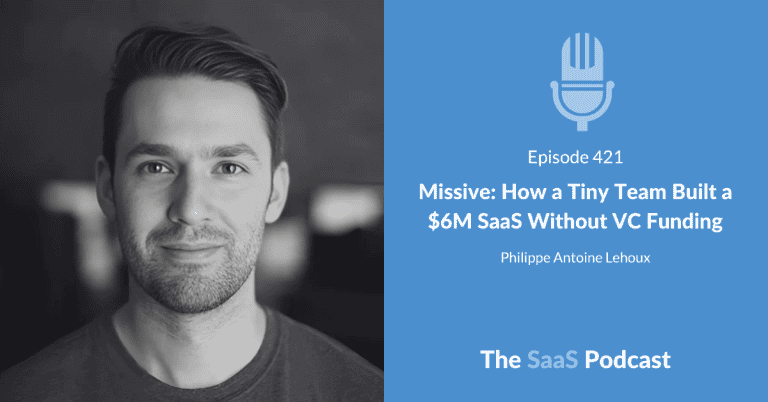
Welcome to another episode of the SaaS podcast. I'm your host, Omer Khan and this is a show where I interview proven founders and industry experts who share their stories, strategies and insights to help you build, launch and grow your SaaS business. In this episode, I talked to Philippe Lehoux, the co founder and CEO of Missive, a tool that helps teams work better together through email. In 2015, Philippe and his co founders were doing well with their Shopify app business. But they spotted a big problem with how teams used email and decided to fix it.
Omer Khan [00:00:40]:
Using money from the Shopify app, they started building Missive. And for over a year they poured everything into it without making any money. It was a big gamble for the founders. When they finally launched, hardly anyone noticed. Growth was painfully slow. For two long years, they struggled to reach the first 10k in MRR. Many would have thrown in the towel, but Philippe and his co founders kept going. They stayed a tiny team of three, doing everything themselves, from writing code to helping customers.
Omer Khan [00:01:06]:
And they focused on building a great product instead of marketing, which meant getting new users was even tougher. But their different way of doing things eventually started to pay off. They came up with an unusual affiliate program that began to bring in more users. Word started to spread slowly but surely, and their commitment to keeping things simple began to resonate with customers. After years of using their own money and staying small, they finally hit a growth growth spurt. In just the past year, they've grown from three to a team of 11 people.
Omer Khan [00:01:34]:
Today, Missive helps around 3,700 businesses, generates almost 6 million in ARR. And they've done all this without taking any outside money and going toe to toe with competitors who have big investors backing them. In this episode, you'll learn how Philippe handled the risky move of building Missive for over a year without making any money, the tough times during their first two years after launch, and how they pushed through.
Omer Khan [00:01:57]:
Why their unusual affiliate program became the key to growth when they realized regular marketing didn't work, how staying small and focused helped them compete with bigger, well funded rivals, and why they put the product first and how this approach eventually led to their success. So I hope you enjoy. Filip, welcome to the show.
Philippe Lehoux [00:02:17]:
Hey, thanks Almer.
Omer Khan [00:02:18]:
Do you have a favorite quote? Something that inspires or motivates you that you can share with us?
Philippe Lehoux [00:02:22]:
I don't know. Keep things simple. Pretty simple quote.
Omer Khan [00:02:28]:
That's great. So tell us about Missive. What does the product do? Who's it for? What's the main problem you're helping to Solve.
Philippe Lehoux [00:02:35]:
All right, so it's a collaborative email client. Think of like a multiplayer email client. Like if Gmail and Slack were merged in the same product. And just doing that kind of makes Missive a solution for many types of problems like email delegation, customer support, just team communication and whatnot.
Omer Khan [00:02:54]:
And yeah, and basically I think who you're for is like anybody who uses email or collaborates with teams.
Philippe Lehoux [00:03:03]:
Right? Yeah, I would say SMBs. So small and medium businesses, we're not a tool like for a call center, but SMBs and pretty much all SMBs do emails. Usually with the SMBs that email is part of their core communication strategy. People emailing a lot like people in finance, lawyer, travel agency. Any businesses that rely on email to
Omer Khan [00:03:33]:
communicate with their customers and give us a sense of the size of the business. Where are you in terms of revenue, customers, size of team?
Philippe Lehoux [00:03:40]:
Right. Right now we're around. We serve around 3700 businesses and the MRR is at 480k per month USD. And the team size now we're 12. But 11. Sorry, 11. But we were just 3. Still like a few months ago, like a year ago. So we just recently expanded the team.
Omer Khan [00:04:05]:
Great, so you're closing in on 6 million in ARR. The business was founded in 2015 and you've bootstrapped it all the way. You haven't raised any money.
Philippe Lehoux [00:04:17]:
Yeah, we still own 100% of the business.
Omer Khan [00:04:21]:
And you're profitable?
Philippe Lehoux [00:04:22]:
Yes.
Omer Khan [00:04:23]:
Okay, great. So let's go back to 2015. Like what were you doing at the time and where did the idea for Missive come from?
Philippe Lehoux [00:04:33]:
So me and my co founder Etienne and Rafael, we were bootstrapping another business, pretty much like a name badge editor. Like, so let's say you had a conference, you won name badges, you come on our website, you connect Evan Bright, you design your name badge and we would print and ship them to you. And so we had relatively good success with that. We could ditch our job being full time on conference badge, but quickly we realized like, that's actually not a technological challenge that we enjoy fixing.
Philippe Lehoux [00:05:06]:
So let's like use that as a way to bootstrap something more ambitious. And I don't know where or how, but like at some point I think I was making a lot of typos in my emails. And like the guys was like, let's just like bring collaboration in email so we can like bulletproof your emails. And then just like we start to work on like a Nemo and then launch it for free in 2015. And then I think our first customer was 2016.
Omer Khan [00:05:39]:
And of course before you wrote any code, you went out and talked to a bunch of customers and did a bunch of customer discovery.
Philippe Lehoux [00:05:46]:
Right? 00. We were our own customer. Like we were dogfooding this. So for the first year it was just us pretty much working on this without talking about it to anyone.
Omer Khan [00:05:59]:
And the first business, you ended up selling that, right?
Philippe Lehoux [00:06:02]:
Yeah, last year we sold it to Tiny from Andrew Wilkerson. It's a business that totally was annihilated by Covid conferencebad. Com. And then so post Covid we could like, we successfully brought revenue back and then quickly like given like missivet at quite a lot of success. We couldn't invest more time in it and run it in parallel. So I contacted Andrew and I think three weeks later it was sold. So yeah.
Omer Khan [00:06:34]:
Wow, okay, cool. So the three of you start building missive and how long did it take to get that first version of the product out? And were you really just building it for yourself or did you have some kind of customer in mind?
Philippe Lehoux [00:06:51]:
I would like to say that we had communicate or exchange with people, but it was pretty much just like let's build a cool product for us first. I remember that when we were working on conference, we were using Kickoff. Kickoff was like IPChat or Slack, before Slack and they were sold to Stripe and we really liked it. And when they were sold to Stripe we were like, let's like, okay, let's build an email client with chat in it so we can actually do our internal and external comment inside the same application.
Philippe Lehoux [00:07:27]:
So we were geeking out around that idea and just pretty much enjoying ourselves geeking out on that idea. And then obviously it took a long time. And after we launched for real, we stopped to talk to customer. It took a long time. I think it took two years to get to 10k. Mrr. And in those two years we had a lot of conversation. There's things we did not have in V1 that was required for a lot of people and it was assignment.
Philippe Lehoux [00:07:55]:
So people have emails, they want to be able to take them and assign them to other people in their team. So just the ability to chat in between email was just not good enough in V1. So we had to talk to customer eventually to understand where's the value in such a product. And then it's rate iterate. Talk to customer. Iterate it's right, talk to customer. And then eventually we started to have more traction with our early customers.
Omer Khan [00:08:22]:
So it purely started from scratching your own itch a problem that you were having and then just following your curiosity and basically a bunch of geeks who are like, yeah, we love building products, so let's just spend a bunch of time building something that we're really excited about. And then you went out there and started to find customers. Basically what we tell most founders not to do is like how you guys started, right?
Philippe Lehoux [00:08:49]:
But, but the important thing is to know we had Conference Badge, which was a profitable product. We could run for few hours per month, right. So pretty much it was running so big, people were ordering name badges and then we had a printing partners doing that stuff. So we're pretty much just doing customer support for those. And the rest of our time was available to do missive. Right. And I would never have done missive without this first because like the scope is the ambition of working on an email product.
Philippe Lehoux [00:09:21]:
You soon realize, okay, it's not like a two months project. Right. It's probably a lifetime project now.
Omer Khan [00:09:27]:
Yeah, yeah, yeah. I mean, I think that's a huge factor. The fact that you had that other business and it takes a lot of pressure off. And that was the question I was going to ask you, was like, of all the stuff that you guys could have built, this is like a complicated piece of technology and wasn't there something simpler you could have done?
Omer Khan [00:09:48]:
And it's like now it makes a lot more sense that it's like you've got a business, it's paying the bills, you don't have that much pressure and it gives you that freedom to be able to really explore something that you feel like is challenging and you want to go and fix and stuff. So you ended up launching a free version of Missive. I think you told me like end of 2015 and then it took what, about a year or so to get the first 10 customers?
Philippe Lehoux [00:10:19]:
Our first 10 customer, I think was like probably five to six months. Like the first customers was Conference Badge, obviously. Right. We were doing like all of the support and everything with it. But then I think it took probably six months before having our first 10 customers. And to this day, the first two real customer, so not Conference Badge, obviously, because it's us, but the first two customers, they are still missive customers. So there's one which is a solo user, but there's a team. Kanye.
Philippe Lehoux [00:10:52]:
Kanye is like a product feedback so startup you can use like to gather feedback on your product. They've been like our first customer. They're still around.
Omer Khan [00:11:01]:
Wow. How did you get the word out? How did you find those first 10 customers?
Philippe Lehoux [00:11:06]:
I think canny was probably us call reaching them or via Product Hunt. I think we launched on Product Hunt and that start a few conversation, you know when you, you release an email client it's, it's exciting for a lot of people because like there's a lot of already ad tech adopters and they want to try everything. And our first version was kind of cool, right? It was kind of beautifully designed for 2016 and or 15 and so we had a lot of good feedback of people interested in the tech that we were building.
Philippe Lehoux [00:11:41]:
It was just like they were not necessarily teams. Right. So they were mostly like solo user or developers. I mean in 2050s like Product Hunt was mainly, I guess it's still the same but it was mainly like indie hacker and people, you know, everyone on Product one was pretty much people trying to launch a product on Product Hunt, right. So that started a few conversations and I think Canny was our real first team customer. I think we found them via product.
Omer Khan [00:12:16]:
So Product Hunt and then you were spending time on like was it communities or Twitter or wherever and just like starting conversations wherever you heard people talking about issues with other products.
Philippe Lehoux [00:12:34]:
Yeah, that was just one of the most effective strategy initially was like hey, let's say there was a conversation about on Twitter about how do you do support? How do you do support around email in your business? I would go and like hey, I built that product, you can try it for free. Or if people were talking about a competitor product like another email app or another help desk, I would drop in, hey, we have a new way to work around your customer support. It's a real email client, no need for a help desk.
Philippe Lehoux [00:13:06]:
And the reaction was surprised, surprisingly always good. And I think a lot of people converted with this. At first I was, it's not like I'm not a marketer, like, like I don't like to interrupt people. Like I don't like sales call. So to me at first that was not something easy to do. But I learned that because it was relevant to the conversation people were having. It was not salesy. Like reception was always extremely good. And I think that a lot of our early success were from those, those social media conversations.
Omer Khan [00:13:44]:
So would it be fair to say that the majority of your effort, all the founders was about building the product or was it like okay, we're going to spend like half the time on product, half the time on growth.
Philippe Lehoux [00:13:57]:
It was 90% time on product. I mean I'm the only one who did marketing. I either two other was 100% product and I probably spent just 10% of my time on marketing.
Omer Khan [00:14:11]:
Okay, so you were doing this sort of cold outreach, just looking for opportunities to start conversations. And then you started building these alternative pages, right? Or versus pages. Can you talk about that?
Philippe Lehoux [00:14:26]:
Yes. Our competitors, most of the time massively funded Silicon Valley businesses. So they had first, they did a lot of marketing, good marketing, and they were able to educate people on what is a shared inbox or, you know, how what is a good modern email client, or. And so we were looking for a way to write those, you know, so let's say they spend 20 millions in marketing and we can actually insert ourselves in the conversation when people are dissatisfied with them, or they're actually when they're planning to buy them.
Philippe Lehoux [00:15:04]:
Looking for there's other products that are similar to it. So we build those long versus page. There's two types of versus page. Just like, hey, this is our product and it's five bullet points and it's always the same against each product. Or versus page rate. In our case, it was like, hey, you cannot do that or you can do that or yeah, it's actually this product is best for this use case. But our product is based for this product. So we tried to do an honest job there. And all product were always evolving.
Philippe Lehoux [00:15:37]:
So sometimes we had email. Hey, you're saying that in your versus page. Oh, sorry. And we would like fix it or change a copy to still make it fair. And I think to this day that's probably our most successful marketing initiative. And still today, we still rank good for a lot of those pages, even though we don't really put much effort in those anymore.
Omer Khan [00:16:01]:
I mean, the thing with those pages is like everybody does them now. And it's getting harder and harder to rank in terms of organic search for those pages, especially if you're competing against some of the bigger players. And probably, I'd say most people are getting to the point where they probably don't believe what it says on the page anyway.
Philippe Lehoux [00:16:23]:
Right.
Omer Khan [00:16:23]:
Because it's so biased most of the time. But it's still a great way for people to discover you.
Philippe Lehoux [00:16:30]:
Right?
Omer Khan [00:16:31]:
And it's like they may still be skeptical, but it's like, okay, great, there's another product on the list. I'm looking for something else. I should at least check them out.
Philippe Lehoux [00:16:39]:
Yeah, definitely. Like it's normal. Actually people are skeptical. I am like extremely skeptical customer. So I wasn't expecting people to read those pages like, oh, you know that other. Because all products are, you know, those are the products. They're goods in their own niches or they offer things that we don't. So I tried to do something first. But, yes, the idea was having people to download missive and actually, like, try it or attend our webinar where we could explain the difference. And.
Philippe Lehoux [00:17:11]:
And because those other products, like Front Superhuman, invested so much in marketing, even if we could insert ourselves in just 5% of the people that knew about those, it would still be a big win for us. And a lot of time was. The crazy part is, like, I was doing all the webinars for a long time, and a lot of people that use those products for a few years and then discovered us when they were unsatisfied via the Versus page, sometimes they were pissed. There was like, what?
Philippe Lehoux [00:17:41]:
You've been around since 2015, like, come on, man, beef up your marketing, man. Why didn't I know about you, right? Like, you're a goddamn good product, right? So this is just an illustration that first, like, we were writing the success of those other businesses and that we're absolutely the worst marketers.
Omer Khan [00:18:08]:
So when I was looking at missive, like, we talked a little bit about this earlier, but before we started recording, I was trying to figure out the positioning. Where does Missive fit? Because it was like, is this an email client that's sort of competing with the Superhumans and other clients out there? Is this a team inbox that's competing with the Zendesks and Fresh Desks and those types of products? Or is this some kind of communication tool that's competing with Slack? And when I asked you that, you were like all of the above, right?
Omer Khan [00:18:51]:
And then you gave me an interesting fact where you broke down and you said how horizontal your product is. Can you just explain that in terms of the niches or the types of customers that you serve today?
Philippe Lehoux [00:19:02]:
Yeah. So if you look at our mix panel, where we break down, like, our customer base and what industry they are, we do that by first asking them in the product or by other ways looking at the domain and whatnot. And I think the biggest industry is like 7% of our customer base. And I think it's like logistic and transportation, like freight brokers, things like that. Right? And then travel businesses, travel related businesses. So like travel agency people with many Airbnbs or things like that. And then there's lawyers, then there's financial accounting.
Philippe Lehoux [00:19:45]:
Those are like 4, 5, 6%, never more than that. And in terms of use case, we also ask in product, what's your use case with it? And it's all over the place, right? It's in between email delegation, customer support, just internal external communication like you said at the end, like Slack +gmail so all over the place. So we pretty much do like, we pretty much go against all business advices. It's, it's app, it's an original product. We don't have any niches we're serving. It's like Gmail. Like we're pretty much like doing like Gmail Play.
Philippe Lehoux [00:20:29]:
Like it's just an email app. Right. Use it as best as you can. Of course, having said that, when we have conversation with customers we try to understand like they have a lot of different use case but we try to come up with the essence of what's common in between all those industry, how they use it and build the feature around those things. But yeah, pretty orange or horizontal.
Omer Khan [00:20:54]:
So how did you, how did you focus like where I know you said you weren't sort of doing a lot of intentional marketing, you were looking for some of these opportunities. Although you did start doing SEO and these, these landing pages. But when you've got a horizontal product like every time I talk to a founder who's like trying to serve like multiple market, it's like and not you know, struggling to get traction. I always say like find one niche, one place you can start. It'll be easier to target those people.
Omer Khan [00:21:24]:
It'll be easier to figure out the right messaging, the right use case, all of that stuff and then you can expand from there. Did you guys try to do anything like that? And if not, how did you like how did you market to the right people?
Philippe Lehoux [00:21:44]:
We really built missive at first for us, right. So I think that led us like when you build something that you deeply care about that you use daily. And a funny story is that initially after I think was probably in the first year we were for co founder initially and one was like hey guys, it's not working. We should focus on conference bad and whatnot. Like should we stop doing missive?
Philippe Lehoux [00:22:08]:
And the four of us, we sit down and I remember, I think it was Etienne saying like well we can stop working on mist, but I know I would still code it in the nights and weekends because I still want to use it myself. Right. So that really what gave us the energy to work for so long to escape and have velocity in other people industries that we didn't know about. Right.
Philippe Lehoux [00:22:35]:
So I would say earlier probably the people in transportation and finance, that user were like early adopters willing to take a risk on such product and because it was like a new sexy email client it was like they could project their own use case into missive. Right. Because it was like it was an email client in the end. Right. Everybody is doing email, so people try to innovate with their workflow and whatnot.
Philippe Lehoux [00:23:02]:
So I think those things allowed us to insert ourselves into those other industries without having to focus or, you know, like target our marketing around their needs or whatnot. I'm not saying we won't do that. Obviously there's like, we're growing a team, we want to invest more in marketing. So all those traditional things we're probably going to start doing now and have more like clear landing page for each industries, adding case studies with customers and whatnot. So obviously those things are all good.
Philippe Lehoux [00:23:32]:
But I think initially for us, it was important to build our original product because we didn't want to restrict it to one specific use case on issues.
Omer Khan [00:23:45]:
And the versus pages we talked about, how many of those did you start up building and how long did it take for them to start driving, at least move the needle in terms of the type of traffic you were getting?
Philippe Lehoux [00:24:01]:
I think the most successful one was all about new product as well. So we've been around for a long time. So anytime there was a new email like app, we would try to come up with a page like that, like front Superhuman shortwave and whatnot. So I think we had success because we could insert ourselves, we could build content around new products. So there was no content about those products. Right. So we built one for Slack that never had any traction. Right. So we built one for Gmail that never had any traction.
Philippe Lehoux [00:24:39]:
So it was our. It was. Those worked because those products were same age as missive, right? So I guess Google was like, okay, well, similar industry, similar product. Like, we should rank those guys at the same age.
Omer Khan [00:24:53]:
Are you a surfer? No, because it's like you guys, it's like this thing. It's just every exact example you've given me, it's like finding these waves, right, that are sort of emerging and then figuring out how to ride them at the right time.
Philippe Lehoux [00:25:08]:
I think it's a good analogy. Yeah. Any SEO success we had or content we had was always around a wave. And I think that's why it's important to be on social media or to read things on social media. Like last year when OpenAI released their ChatGPT, it's like it was instant for me. It's like, I mean, I do so many typos in my emails and it's like, okay, that thing can actually make me a good writer. Right. And so it's like, I need that admissive.
Philippe Lehoux [00:25:41]:
And I knew that if I would be the first email client with that, it would be good for SEO and content. So I think like, a month later, we released the first, like, version of the OpenAI plugin. And then to this day, we're still like a best 2024 email client with AI. We're always in those lists. Right. So that helped. That was riding the AI waves, even though. But still, I built it for myself because I wanted it. But I think it's important.
Philippe Lehoux [00:26:10]:
Anything you do, you always need to find a way to insert yourself in a movement, and that's how actually you can have an impact, even if you're a small team. And obviously the success with AB is not, like, tremendous or exponential, but we still had some amount of success. Right. And it's a good point. A lot of time was about inserting ourself in a movement. Right? Yeah.
Omer Khan [00:26:35]:
Okay. So I guess the product today we talk about very horizontal, lots of use cases, but you're still very clear about the types of customers and the types of use cases. That missive is a great solution for and the people that you can help the most. In the early days, you had a lot of solo customers using the product. Were you marketing it as a collaborative tool from the beginning?
Omer Khan [00:27:07]:
And I know trying to support these solo users, you spent probably too much time on them until you said, no, look, we need to stop and we need to focus on the collaboration aspect and teams more. But just tell me a little bit about that, because that's an interesting part of the journey in terms of figuring out who your ICP is. Because even if you had an idea of who that person was, you're getting other people coming and they're paying you money. It's good money. Right. So it's like, what happened?
Omer Khan [00:27:38]:
What sort of problems did you start to see that had you rethinking that?
Philippe Lehoux [00:27:42]:
Yeah. So first, like the first. For the first few years, I'd say for me personally, it was important to listen to those solo users. Right. And the reason is we're building an email client. Right. So to me, there was two pipeline in the roadmap. Collaborative innovation and then just nailing the email client aspect of the product. Right. And this silo here was the artist. Right. Anything people like, it's crazy. It can be the shortcuts, it can be, like, how the quote is rendered, how there's a lot of. There's thousands and thousands of small details.
Philippe Lehoux [00:28:20]:
And nailing those was possible because we what we had excited early customers and most of the time those were early tech adopters with no team. They just liked missive and they just wanted to use it for their email because they find like all the other solution was like either old or not good enough to them. Right? That was the first few years, but then we just like crunched the number and the churn rate for organization, admissive we call them, with more than three people was like 1.6% and then churn for solo user was like 16%.
Philippe Lehoux [00:28:59]:
Right? So it's like, okay, so solo user, I mean obviously they can use free email client, right? So our competitors are pretty much like, it's like the competition is free, so it's hard to compete, right. Eventually you can't just compete on aesthetic or quality of the product. At some point the product doesn't offer more, much more value for a solo user. So just manually at one point we said, okay, well I think now that we have many customers, especially a lot of teams, we should probably price the product for them, right? So.
Philippe Lehoux [00:29:42]:
And that was increasing a bit the price. So it became out of reach for most solo users. Right. And it might sound counterintuitive, but for a small team like us, we cannot have too many people in the pipeline, incoming new customer, if they churn because it's like supporting those enthusiastic users take a lot of time because they send you emails like hey, you should improve that. You should. And right. And at some point it was like, okay, let's change the pricing.
Philippe Lehoux [00:30:13]:
So it's, it's, it's still off because it offer a lot of value for the team, it's still affordable and it still makes sense for the teams. But for solo users, it's not going to even be part of their, their, their, their, their, their thinking when they start thinking about using an email client. Right? And yeah, so that, that pretty much slow discovery of, of that.
Philippe Lehoux [00:30:34]:
But initially like, because we didn't have any marketing or any ability to define who our target customer was, like we were pretty much happy with all the customers and all feedback was. And then eventually that changed.
Omer Khan [00:30:49]:
Like I said, let's talk about affiliates. So that was the next thing that helped you grow. And it makes a lot of sense given what we talked about this horizontal market and trying to reach customers directly across the board is a huge, huge undertaking.
Philippe Lehoux [00:31:11]:
Right?
Omer Khan [00:31:12]:
So being able to use like intermediaries, like affiliates makes a ton of sense. But a lot of startups will put, you know, launch affiliate programs and not necessarily see a huge amount of traction through that. So how well did it work for you? And then just kind of walk us through like what you did because there was a few things that you did which again was a bit counterintuitive to what most startups would do.
Philippe Lehoux [00:31:38]:
Well first let's start with the counter intuitive things. We did not use an affiliate service or app. Right. We built it from scratch because the reasoning was people love missive, they're our best ambassador. Let's give them, they like to talk about it just for the sake of being happy talking about an interesting tool you're using. Right. But let's give them value in doing so on top of it bring value, like monetary value.
Philippe Lehoux [00:32:10]:
So the idea was let's have an affiliate program where we can either all the, let's say I use missive and I stop talking about it and then somebody use it. I can either get three months or if I'm an extremely good athlete, just have get a payment. But the core idea was that plus because we're an email client, we're not comfortable having third party script or tracking things in our all, you know, pipeline, whether it's a public website to the app itself. So we had to own that part as well.
Philippe Lehoux [00:32:51]:
Not to add those in our like let's say GDPR or any other terms of certain page where you, you know, you don't want to list those marketing ish product that and have to say that they have access to data when they don't really have access. So it's a counterintuitive thing. We built it from scratch and I think it's a reason, I think why it worked because now it's ingrained in the product for customer when they start using it like the dashboard is in the product, it's not something on top of it.
Philippe Lehoux [00:33:23]:
And I would say half of our affiliates right now are customers now. The other half is professional marketers just like either doing ads with it or using other strategies. Sometimes I have no idea what they do with it but we try to monitor things. So it's like they're doing things that are okay. But I would say half and half nowadays, like half professional marketers, half customers.
Omer Khan [00:33:50]:
Cool. So that was the other counterintuitive thing that I think most startups would probably say you can be an affiliate but you can't run ad campaigns or you can't target certain keywords like our branding, whatever. Did you do that or did you just give them free reign?
Philippe Lehoux [00:34:11]:
Initially it was like you could do anything. Well, except illegal stuff, right? Obviously. So for a long time and that Guy's a customer of missive, but he's just on the marketing firm. But that for a long time, if, if you type missive in Google, like the first was like a link that you like, you use this asset link, it was paying eventually, once we got our trademark. So we could enforce not using missive in any ads first because it would make less sense for them because the price of the clicks would go up a lot.
Philippe Lehoux [00:34:48]:
And also because eventually they were making a lot of money and it was like, okay, I think, like, we should stop this. And that would change the policy. You cannot advertise on missive. Like, and you cannot use the term missive and advertise against it, whether it's on Google or YouTube or whatnot. But that affiliate actually submitted a list of keywords that we approve we could not use, like missive pricing and whatnot. A lot of those.
Philippe Lehoux [00:35:20]:
And then we say, okay, it's okay if you want to use missive some of the times on longer queries, that's fine, no problem. We have our conversation with him because it's good. But in a way, it's kind of a way to not have to deal with paid ads. Right? It's like you let your athletes deal with that stuff and we can still be a small team and not adding, like dedicated resource in the company doing it.
Philippe Lehoux [00:35:43]:
Of course, we're probably leaving money on the table, but like I said at the beginning, like, keep, keep things simple.
Omer Khan [00:35:49]:
Okay. So I want to just kind of be clear about the timeline. So you. I think the first paid customer was kind of like end of 2016, it took about 2 years to get to 10k in MRR. And then what? It was another 2 years to get to the first million in ARR.
Philippe Lehoux [00:36:13]:
Yeah, 2 year and a half year.
Omer Khan [00:36:15]:
And if I had to describe it, it's like I kind of see like this big circle where 90% of this is all about building a great product, doing some plg. And then outside of that, there are these efforts around, okay, we did some cold outreach in communities or on social media, these versus pages, and then starting to introduce an affiliate program. But outside of those three things, was there anything else that was a significant driver to get to that first million?
Philippe Lehoux [00:36:44]:
No, It's a good summary. I wrote a blog post called 10 Years of Lazy Marketing. In the sense that I think there's 28 bullet points in it in 10 years. That's not a lot of things. And I really tried to really remember everything that I did. I look at my Twitter feed, so I Scroll to see like whatever I did that I post right to the years and, and I, I ended up with 28 bullet points in, in nine, nine years. Not much.
Philippe Lehoux [00:37:16]:
But, but, but yeah, product led being in a space email client, right, where people are willing to experiment and try them. It's easy. Like you download, you try it, you like it, right. You start using it, maybe you're a solo user, you start talking about it to your friend that owns businesses and whatnot.
Omer Khan [00:37:36]:
So what I thought was interesting was that the business today is 480k, nearly 500,000 in MRR. And nine months ago, in December, the team size was still three people.
Philippe Lehoux [00:37:58]:
Yeah.
Omer Khan [00:37:59]:
How, how did you manage to go that far, that long with just the three of you?
Philippe Lehoux [00:38:05]:
I don't. I think it goes back to keeping things simple, right. Never spending time on imaginary problems or creating fake work. There's a lot of fake work in businesses and a lot of fake work in startups, I believe. Right. One reason I was like, people ask me because venture firm or people were interested in missive always kind of, what's that thing? Sometimes I had conversation and so people like, hey, you talk to those guys, Would you be interested to get investment?
Philippe Lehoux [00:38:39]:
I was like, honestly, I have no clue what I would do with that much money. I would have had to invent things. Let's try those 10 initiatives that I have absolutely no clue if they're going to work or not and just create work around them. For us, it was always to do just the bare minimum and the bare minimal minimum was often just replying to our customer email as best as we could, fixing their problems, getting into call with them to understand their issues, their pains and then iterating and improving the product.
Philippe Lehoux [00:39:14]:
And of course you need time to do that, you need a runaway. And in our case, like I said, we had that runaway from Conference Badge. And in a way I sold Conference Badge when Missive was bringing enough revenue so we didn't need that runaway anymore. So to me it was more annoying to have that small business running on the site. Right. Preferred selling. It wasn't a huge price, it was a fair price, but I preferred to stop adding it because it was a distraction. But for a long time it was just an enabler.
Philippe Lehoux [00:39:51]:
That's why we could invest so much time into all of this. And so I think Paul Graham said that you want to be cockroach. We were the absolutely best cockroach. I was always like, there's nothing that can kill us. Just like keep doing those small things daily. And then those Things compound. I think right now we're at a moment where probably in a year or in two years, the company will look a lot different because I feel it's a new season and the three co founders, our personal situation, the traction of missive.
Philippe Lehoux [00:40:27]:
I feel that we're at a place where we are going to change the ingredients and now we're cooking. But for a long time that was it. Keep things simple.
Omer Khan [00:40:38]:
I love that. You know, you were telling me that you felt like you had underinvested in marketing and now you're changing that and building a team around you. And I asked you like, hey, do you think your revenue would be significantly greater if you had done that earlier? And you were like, yeah, of course, Absolutely right. And then I thought about it and maybe it's just like I'm getting older and like a bit more philosophical and stuff, right?
Omer Khan [00:41:08]:
But it was like, hold on a minute, you're running a business that's profitable or at least you had another business along as well to put you in a place where collectively it was profitable. So you don't have that pressure. It's growing. You're working on something that you really enjoy, all three of you. It's something that even as you said, even if we weren't doing this or selling this, we'd still use this product ourselves. And it's like, then I was like, well, what's the rush, right? It's like you're in a great position.
Omer Khan [00:41:45]:
That's what everybody wants, right? To be able to work on something that you enjoy is fulfilling. You don't have to worry about money. So who cares whether it's 6 million or 60 million, right? I mean, if you had investors, obviously they care. And now you guys are sort of like into a point where you've been forced to really bring on that team because you've realized it's just too much for just the three of you to do. But just tell us about that. The team is now what, like 12 people?
Philippe Lehoux [00:42:14]:
Yeah. So first we mostly onboard developers because dealing with emails, just an infinite long term tell of issues, exceptions that you need to dealt with. And then not only do we have emails, but we support many APIs and channels and API and channels always evolve, there's always issues and whatnot. So at some point it's just not possible for just the three of us to cover all of this. So we onboarded developers. I also onboarded, I think another counterintuitive things we did the first IR was Operation Person.
Philippe Lehoux [00:42:51]:
I knew we had no time to Onboard people successfully. We were just too many things to do that were core to running the business like the three of us. Whether it's support or it was an infinite flow of things to do. And I knew from past failures that if we wanted to onboard people successfully, we had to have the trustable people person that could help with that. And so I hired Jenny at operation and then that helps a lot. She came from a place where she was in bigger teams.
Philippe Lehoux [00:43:25]:
I mean keep in mind we were in three for many years. So we were kind of didn't know how to actually manage a team. Right. So she helped with that and then that could help us scale the team. So I hired someone at support customer experience. I could detach myself from support from webinars, think more long term. And then it's been a year now that we've hired people and we just starting to feel like things to accelerate again. Like the first few months was just like okay, stop and go, stop and go teaching.
Philippe Lehoux [00:43:54]:
It was a lot of teaching documentation and then telling what's the culture telling how because we never had to explain ourselves. If it's just the three of us, we were all synced. Funny thing, my wife is always oh, how's the day? How's Raf, my cto? I have no clue. I haven't talked to him. Like what? Like when was your last meeting? I don't know, like two weeks ago. Like it was just like we were all in sync. Right. And so you have to unlearn some added you've developed and that way of working.
Philippe Lehoux [00:44:30]:
And now that first year with bigger team was like to learn and to improve around that. And yeah, so now probably our long term goal is to not be more than 20. So it's still important for us to be a small team. So I think we're probably going to take a year to reach that 20 person size of the team and then I want hard stop at 20.
Philippe Lehoux [00:44:55]:
I want us to be able to do a lot with just 20 people and knowing that in advance and telling people I think help us like, like build systems and whatnot to make it work. But that's the long term goal to be really. It was impressive to just be three. I still want the size to be impressive in two, three, four years.
Omer Khan [00:45:15]:
Love it. All right, we should wrap up. Let's get onto the lightning round. I've got seven quick fire questions for you. What's one of the best pieces of business advice you've received?
Philippe Lehoux [00:45:25]:
Well, I just love all basecamp books. I mean that's probably Something you hear a lot here. But yeah, pretty much all of their
Omer Khan [00:45:32]:
books or teaching anything that Jason and DHS says. Right?
Philippe Lehoux [00:45:38]:
Yeah. I mean I was at the Rails World last week in Toronto and that was the first keynote was dhh and that guy is just like, is a giant. I mean, you know, sometimes I'm a bit annoyed by it, but every time, like I think in first principle I'm like, well, I pretty much agree with everything you just said. Right. Yeah.
Omer Khan [00:45:57]:
What book would you recommend to our audience and why?
Philippe Lehoux [00:46:00]:
I love Biography because I love. I pretty much just read Biography. No business book. Well, except Basecamp, but those I read them years ago now. One that I read recently was called Black Spartacus and it's the story of the black general who elaborated Haiti or Saint Domingue in those times. And the reason that one is interesting, but I pretty much love them all.
Philippe Lehoux [00:46:28]:
It's like I love to see the struggle of people that had an impact in their time or in their culture and it really helped relativize your own struggles or your own problems because I mean, all their lives were shit shows usually. And reading about them usually comfort myself and how I do things.
Omer Khan [00:46:52]:
What's one attribute or characteristic in your mind of a successful founder?
Philippe Lehoux [00:46:56]:
I mean, it's a cliche now last few weeks, but they talked about founder mode and it's probably for bigger startup and business, which missive is not. But caring about the details. Right. To me is really important and I think the three of us, we really care about all the small details and yeah, so not being managers, but being people that cares about small details, I think that's one reason where we're successful.
Omer Khan [00:47:23]:
What's your favorite personal productivity tool or habit?
Philippe Lehoux [00:47:26]:
Me personally, the last two years I have a three session with a trainer, a gym trainer, and that changed my life.
Omer Khan [00:47:34]:
Cool. What's a new or crazy business idea you'd love to pursue if you had the time?
Philippe Lehoux [00:47:39]:
I want to start Incidentary. Oh, that was my kids.
Omer Khan [00:47:45]:
The kids are here. We knew we were kind of hitting that time.
Philippe Lehoux [00:47:48]:
So.
Omer Khan [00:47:49]:
It's all good. It's all good.
Philippe Lehoux [00:47:50]:
Awesome. Yeah. Cideri. I want to have a cideri at some point. I don't digest beer, but I love to drink with friends. I drink cider, so eventually I'd love to have a cider farm. Yeah, that was always a dream.
Omer Khan [00:48:02]:
The kids have got a perfect timing because the next question is like, what's an interesting or fun fact about you that most people don't know? And I know the answer.
Philippe Lehoux [00:48:10]:
Yeah. I have four Kids. I have four kids. Yeah.
Omer Khan [00:48:13]:
And they've just come home from school. Well, they're starting to come home.
Philippe Lehoux [00:48:16]:
It's just there.
Omer Khan [00:48:18]:
And finally, what's one of your most important passions outside of your work?
Philippe Lehoux [00:48:21]:
That one's hard because I work a lot, and so I would say my passion is still, like, my work, which I don't know if it's okay to say, but, yeah, work is my passion.
Omer Khan [00:48:33]:
Cool. Filip, thank you so much for joining me. The thing I love the most about this conversation is about this constant theme of keeping things simple, focusing on the core stuff, not getting distracted by shiny objects and unnecessary stuff, and just a lot of counterintuitive stuff that you've done and that you've made work. Which hopefully other people thinking who might be hitting their heads against the wall today might just get a bit of inspiration from that and say, well, maybe I need to try something different instead of what everybody else is doing. Right.
Philippe Lehoux [00:49:09]:
Usually being different is good. Yeah.
Omer Khan [00:49:12]:
Awesome. So if people want to check out missive, they can go to missiveapp.com and if folks want to get in touch with you, what's the best way for them to do that?
Philippe Lehoux [00:49:22]:
X.com Twitter like Pilou or on LinkedIn. If you search my name or missive,
Omer Khan [00:49:30]:
we'll include links to both in the show notes.
Philippe Lehoux [00:49:33]:
Great.
Omer Khan [00:49:34]:
Thank you, my friend. It's been awesome. I appreciate you making the time, and we almost made it before the kids came back.
Philippe Lehoux [00:49:42]:
He's just there, and I really want to get in.
Omer Khan [00:49:44]:
You want to come now?
Philippe Lehoux [00:49:46]:
Yeah. All right. Cheers.
Omer Khan [00:49:48]:
Take care. All the best. Bye.