Omer (00:11.840)
Welcome to another episode of the SaaS Podcast.
I'm your host, Omer Khan and this is the show where I interview proven founders and industry experts who share their stories, strategies and insights to help you build, launch and grow your SaaS business.
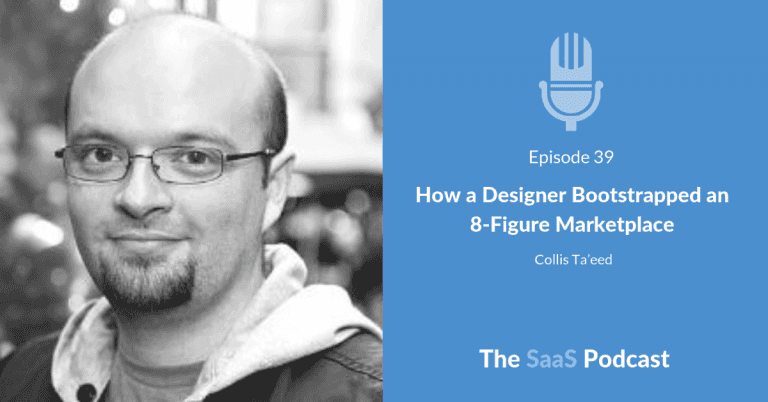
Today's interview is with Collis Taid.
Collis is the co founder and CEO of Envato, a network of sites used by millions of people for their creative projects.
The network comprises Envato Market, envato Studio and Toots.
Envato was founded by Collis, his wife and best friend, in 2006.
The company is based in Melbourne, Australia and has been bootstrapped since day one.
Collis, welcome to the show.
Collis Ta'eed (00:56.950)
Thank you so much for having me.
Omer (00:59.110)
Now, before we talk about envato, tell our audience a little bit about yourself.
Who is Collis when he's not working?
Collis Ta'eed (01:07.110)
Well, I'm a dad of two little kids, which kind of, if you've had children those early years, kind of seems to define your life when you're not working.
So I've got a one year old and a three year old.
Omer (01:19.190)
Wow.
Collis Ta'eed (01:19.990)
Yeah,
Omer (01:22.400)
that's all I'll say.
Collis Ta'eed (01:23.600)
Pretty brutal.
No, it's awesome.
They are two wonderful little nightmares.
Very cute.
Two little boys.
Yeah.
So I think that defines a lot of me.
I'm half English, half Iranian, but as you mentioned, live here in Australia.
A proud Australian citizen.
Though I'm a bit of a rubbish Australian in the sense of I always feel like I let people down when they hear my accent, that it's not.
Not.
Omer (01:53.340)
I was going to say that.
From what I understand, you were born in England, but you left when you were pretty young.
Collis Ta'eed (02:00.620)
Yes.
Yeah.
I grew up in a place called Papua New guinea, which is just north of Australia, actually.
It's like a little island nation.
Omer (02:08.620)
But you still have a pretty good English accent.
How did you manage that?
Collis Ta'eed (02:12.860)
Oh, it's all over the place.
We had an international school there in Papua New guinea.
So just teachers from all over the world, other kids from all over the world.
So it was kind of nice in that sense, a real multicultural experience.
But, yeah, it did leave me with a weird accent.
Omer (02:30.200)
I know exactly how you feel.
I grew up in England and I moved to here, to the Seattle area about 10 years ago.
And I've got that sort of mixture of accents as well where when I'm here, people still sometimes don't understand what I'm saying.
So, you know, I have to say, you know, I want some water instead of water.
And then when I go back to England, some of my Friends will say, why are you putting on that fake American accent?
And I'm like, what are you talking about?
This is how I talk.
Collis Ta'eed (03:02.580)
It's a rock and a hard place.
Omer (03:05.140)
All right, now we like to kick things off with a success quote to better understand what drives and motivates our guests.
What is one of your favorite quotes?
Collis Ta'eed (03:12.500)
Yeah, so one of my favorites is it's like an African proverb, apparently, if you want to go fast, go alone, and if you want to go far, go together.
Omer (03:24.880)
I've never heard that.
I like that.
Collis Ta'eed (03:26.480)
Oh, nice.
Yeah, I mean, it just kind of encapsulates a lot about entrepreneurship, I think, especially starting out.
For me, I used to like doing things by myself because I could just knock stuff out.
But ultimately, if you want to build a real big business, you got to do it with others.
Omer (03:47.440)
Can you tell me that again?
If you want to go.
Collis Ta'eed (03:50.170)
If you want to go fast, go alone.
If you want to go far, go together, go together.
Omer (03:56.570)
That's great.
Okay, let's start by giving our listeners a better understanding of Envato.
Who are your target customers, and what are the top pain points that you guys are trying to solve?
Collis Ta'eed (04:12.890)
So we have a couple of segments of our audience.
A big one is freelancers and agencies, professionals working in the design development space.
So, for example, we sell lots of music to video agencies making advertisements or promotional videos, that kind of thing.
So we have a big footprint in the space of people who are making creative things for clients.
And sometimes it'll be in house, but often agency style.
And then the other big segment we have is small businesses, startups.
Startups.
Companies who have someone who's a bit diy, a little bit of a tinkerer, or someone who's happy to deal directly with a freelancer via, say, Envoto Studio.
So we service that segment as well.
And so the pain points, I guess, for each are a bit different, but they kind of come back to the same thing, which is that we help people make great websites, great promotional materials, great videos through both assets.
So Envato Market sells creative assets, whether it's like a WordPress theme or an after effects template or a photo or a great piece of background music.
So assets.
And Envato Studio is people, so freelancers who can install your WordPress theme for you, design a logo, or stitch it all together.
And then on the side, we also teach people how to do things through the Tuts network.
So if you want to learn how to do one of these things almost to become a seller on one of our sites or to, you know, just pursue a career in that space.
Then we teach all kinds of, all kinds of skills.
Web design, graphics.
We used to have a craft part of the site as well, if you wanted to learn how to do cross stitching.
Omer (06:14.670)
Wow.
Collis Ta'eed (06:15.550)
Yeah, one of the more out there parts of the network.
But yeah, a lot of it's in the same sort of creative space, audio production, if you want to be a dj, that kind of thing.
Omer (06:27.450)
What were you doing before you started this business?
Collis Ta'eed (06:31.450)
So I was a designer, a web designer.
I mean, I studied math once upon a time.
I was really lousy at it and became a designer because I had a best friend or a flatmate who was a designer.
I was like, man, his job looks way better than my studies here.
And doing math and whatever it was, I can't even remember now.
These days math just looks completely like another language to me.
At the time I recall kind of understanding it.
But yeah, so after that I became a designer, a web designer working for a couple of small agencies and then a freelancer.
So I sort of had some experience on the other side needing things to get your project up and going quickly or stuff to kick you off with some inspiration.
So like a lot of entrepreneurs, I think I was kind of scratching my own itch.
I'd start actually selling stock assets.
So, you know, when you're a designer or a creative, you often have like stuff you just throw away or you don't use concepts the client didn't like.
And I'd.
I started selling little bits of Flash.
If you remember Adobe Flash from way back, I used to sell bits of those on other sites.
And so the genesis of Envodo was really wanting to build a marketplace which was.
Targeted a person like me wanting to sell that kind of stuff, and targeted a person like me on the other side needing just to get some stuff to go up and running or for a small project where the client didn't have much budget or whatever it was.
But.
And so we decided to kick off Envato, which was at the very beginning was back then it was called Flashden and that was our very first product.
Omer (08:06.290)
So you weren't the first person to come up with an idea for creating a marketplace.
And most people who come up with some kind of marketplace idea either never do anything about it or they, they quickly find out how incredibly difficult it is to build a marketplace.
You know, obviously you, you've repeated that success multiple times over the years.
But what was your experience?
What, what happened in those early days when you try to Build this marketplace?
Collis Ta'eed (08:38.700)
Yeah, absolutely.
So I, as I said, I actually sold some Flash.
So I think that was one leg up in the sense that I had had some.
I tested the market a little bit, knew that there were people who would be interested, and I'd been selling it via a marketplace called iStockphoto, which was for photos mostly, but they sold Flash.
It was really not geared towards me.
So when I look back, I think that in a sense, going into the business opportunity, I had a proof point, if you like.
I tested the concept of selling Flash and knew that there were people like me who wanted to sell it, and there were people on the other side who wanted to buy it and kind of knew the marketplace model worked.
So in that sense, I think it was slightly de Risked said it is really hard to kickstart a marketplace, as you know, it's one of those particularly tricky problems in entrepreneurship.
And marketplace models and the Internet are kind of like, they work real well, two peas in a pod.
So lots of people try them, and it's all about that kicking off the momentum, I think.
And it's much worse if you're in a space where there's not much interest or you have to prove the concept, or it's something no one's ever heard of.
In our case, selling Flash, I guess I knew there was a market.
So that kind of, I think, brings the difficulty level down a little bit.
The other nice thing about the marketplace that we got into is the people who buy and sell, especially in those early days, were the same audience.
So the only kind of person who could sell Flash was a person who could make and use Flash.
And the only person who'd buy it was the same kind of person, someone who used and made Flash products.
So I think that helped a lot.
We didn't have to market to two separate audiences.
It was kind of.
You'd hit the same group of people, and sometimes your buyers might also be sellers, and sellers might also be buyers.
And I think that was a big lever.
As we've gone along, that's become less the case.
So, for example, one of our big marketplaces is in stock music.
And usually the people who buy stock music are not music makers.
They are people who need music.
They're like video producers or, you know, someone with some kind of multimedia project they're doing.
And that's a trickier thing to do.
But what we did was we leveraged the first marketplace we got into to slowly like to create sort of beachheads into these other adjacent verticals.
And that helped A lot because you kind of like reuse the audience.
You just have to target similar needs.
So, for example, a Flash maker, one of the things, I don't know if you remember back in the day when there was all those skip intro things, they used to often have music behind them.
So our early music offering was geared towards actually web producers doing music or needing music.
And that kind of helped us get it off the ground and get a library in.
And then having a library, you could then start to market to the kind of real ultimate buyers.
And I think that's the key with those marketplaces is you have two sides.
You need to sort of flip between pushing each side.
Obviously it's hard to do two things at once.
So you kind of need to concentrate on getting some content in so that you have something to sell to the buyers, then concentrate on getting some buyers in so the sellers can see some traction.
Then get back to the sellers and beef up that content library and then back to the buyers.
And it kind of, it's a bit flip floppy.
Omer (12:23.510)
So going back to when you guys came up with the idea, what did you do next?
Did you, did you guys go in and just build a website and start trying to sell some, some assets or what?
What were the steps you took?
Collis Ta'eed (12:37.670)
Yeah, so in it would be in 2005, I'd been working as a web designer freelancer and selling and selling stock Flash and I also sold a few stock illustrations and I tried a couple experiments in that space.
I was making like $400 a month.
So, you know, it was a reasonable little side income and was kind of exciting.
And my wife and my best friend and I, we'd often talked about starting some kind of business.
And as I mentioned, we settled on like this Flash marketplace.
Feels like it could be the thing.
And because we were like, my wife's a designer and my best friend's a designer, because we were people who knew how to make stuff, the first thing we did was start making stuff, which is not always the best thing to do.
In our case, it was okay, you know, you kind of go to your, you go to your skill set.
I'm sure if I just had a business background, first thing I would have done was model the potential revenue.
If I had been a, whatever developer, I would have started choosing what libraries I was going to use.
But as a designer, the first, very first thing I did was design the website and as a logo, really not that necessary.
And we hired a web developer and it took us six months from planning to actual launch of the Site in retrospect, I mean, there's been a lot of material these days about lean startups and concentrating on just the bare essentials and getting an MVP out.
But back then, when I look back at the site we launched, it had a lot of extraneous stuff.
I think we could have really carved down that.
Omer (14:20.990)
For example, like what?
Collis Ta'eed (14:22.790)
Oh, just a lot of extra features.
So for example, we imported a lot of the concepts from the marketplaces we'd seen.
Like we had this deposit system where you could deposit money and then over time it would expire if you didn't use it.
And you could also just buy things one off.
And it's like, did we really need all that complexity?
Could we just build a thing that just let you buy the thing that you were trying to buy?
But for some reason I was like, that's the way you have to do it.
Let's build that.
Let's build an inspiration gallery and let's build.
It's just a lot of feature overload.
Omer (14:58.860)
How much money did you need to get that business started?
Collis Ta'eed (15:02.700)
So I think in actual cash we spent maybe $40,000, which is a, I guess it's 10 years ago, it's not that long, but you know, inflation or something, that must be worth more than it was at the time.
But also I think the market for makers has gotten a lot more expensive.
So I think we did it pretty cheaply.
I designed and did a lot of the front end development.
The only other expense we had really was a back end developer who worked with me and it was someone I'd worked with before and you know, a few miscellaneous fees like hiring a lawyer and an accountant and whatnot.
Omer (15:47.490)
And did you guys just use savings or did you borrow money from family?
Collis Ta'eed (15:52.610)
Yeah, so we used mostly savings until that ran out.
Actually getting to launch wasn't that expensive, but it was another two years, I think, before we drew any kind of salary.
So over that time, after we'd finished savings, then we maxed out credit cards, then eventually borrowed money from my parents, which is a bit embarrassing, and moved in with Cyan's, my wife's parents in their basement, which is also a bit embarrassing.
But eventually it all paid out.
So now it seems like, oh yeah, go you.
But at the time, of course, you don't know if it's going to work out.
You could just be the guy who's got no money, living in a basement and borrowing.
Omer (16:39.430)
So over those two years, was there ever a point where you felt like maybe I should just go and do something Else?
Collis Ta'eed (16:50.630)
No, actually, because there was a point just before launching that I thought that, or not so much that I should go do something else, but that I'd blown it.
So about five months in of the six months build, it wasn't clear that we were going to get to the finish line.
You'd think it would be because we're only actually a few weeks away, but, you know, sometimes just feels like you're having troubles.
I think at the time our software dev was ill or there was some reason why he'd become unresponsive.
And, you know, we're five months in and we spent most of our savings and it was like, oh God, what are we doing here?
But once we launched on day one, we had our very first sale, which is actually in retrospect, kind of an awesome thing.
At the time I was a bit like, what?
We only made $10 on day one.
Because of course when you put six months of work in, you kind of imagine the rest of the world put six months of work in.
But they didn't.
They don't know you from a rock on the ground.
But yeah, we had a sale on the first day and by the end of three months, we were selling about $1,000 a week of Flash.
So it wasn't given that there was three founders working on it and we were still getting our contract developer features.
It wasn't enough to give any of us any income except for the one guy we'd hired, but you could see money coming in and one year later we'd grown 20 fold.
So during that year, although there wasn't enough money to pay us because we're just pushing it all back into the business, it was very clear there was a growth trajectory.
So I think that kind of kept me motivated.
Omer (18:26.470)
Okay, so you, how did you get the word out about the business?
How were people finding you?
Collis Ta'eed (18:36.530)
So we did all kinds of stuff.
I don't think there's a specific silver bullet that applies in every situation.
So my sort of philosophy on these kinds of, that sort of early marketing period is to try a lot of stuff, have some analytics in place so that you can tell whether those things you're trying are working out for you, but try everything.
So for us.
So having in mind that we were a Flash marketplace, so we were targeting Flash designers, we did things like go to Flash forums and chat to them, chat to people that didn't scale super well.
So I don't know if that was our best strategy.
We networked with bloggers to see if we could get Ourselves mentioned, we ran cheap ad campaigns, which I think are probably.
I'm sure there's still ways you can do real cheap ad campaigns.
There definitely were.
Back in 2006, you could run some pretty targeted campaigns on little Flash sites.
We didn't have a lot of money, so we didn't do a lot of advertising, but just a few banners here and there.
Because it was a site aimed at Flash web designers.
One of the things that we used was a lot of web designers go to Instagram inspiration galleries to look at other people's work.
So the design of the original site itself, we managed to get featured on a couple of galleries, a couple of web design galleries, and that drove some of our early traffic in that first $10 sale.
That's how that came.
And over time, about two months in, when we'd exhausted some of the.
Hey, we've launched cannon traffic, we targeted those design galleries by making a.
We called it like a showroom.
We pieced together something out of all the.
Some of the assets that we were selling and made like this kind of gorgeous showroom built out of Flash and built out of the stuff we sold.
And then we managed to get it featured on a whole bunch of sites targeted at Flash designers.
So it's a bit like useless example for other people, I think, because it's so specific.
But I think the.
The utility of the example, I suppose, is mostly just you kind of need to know your audience.
So for us, understanding what Flash designers did, where they hung out, where they spent their time on the Internet helped us then target them.
And we kind of tried all the different places we thought they might be.
Like, here's some blogs they read, here's some forums they chat on, here's some galleries they visit, here's some sites they go to for tutorials.
Let's put a banner ad there.
And like, slightly systematic, but also slightly just like, you know, we drew up a big, long list and went down the list trying all kinds of different things.
Let's run a competition.
Let's, you know, have a wallpaper contest and see if we can get wallpapers into people's monitors or whatever it was.
And some of them were total fails.
The wallpaper contest was an epic fail.
Took ages and didn't go anywhere.
Omer (21:43.890)
Wow.
So looking back at those early days, what do you think was one of the biggest mistakes you made that you wish.
If I could go back, I would do this one thing differently.
Collis Ta'eed (21:57.650)
Look, I think actually probably the biggest one would be that we had a overblown launch Like, I think we could have paired the site right back and done something faster and earlier to test out the market.
Because once we tested out the market, shortly later it became pretty clear that there was a market there and we started.
The way my mind goes is, okay, this is working in flash.
We can now do the exact same thing in the following niches.
And over time, we've gone into eight or nine other spaces, websites and music video, etc.
And I think that we over complicated the product, which then led to it taking longer to expand, if that makes sense.
I think that a simpler product would have let us then jump into other verticals faster, which would in turn have led to earlier growth.
Because a lot of the growth trajectories were just based on when we started.
And it's like, well, if we'd started one year earlier, presumably we just would have been one year advanced in our cash flow.
So, yeah, I think over complicating and especially as a designer, I think you have a tendency to go, oh, it could do this and that and this and that.
I think you need to really try to focus down on the core of what you're actually trying to accomplish, make sure that thing works and is solid, and then plan your strategy of what you want to do next.
At the end of the day, development time is probably one of your most expensive resources, both in the sense of cost of making stuff, but also just the time of creating features, launching features, marketing them, getting people to use them.
It's actually quite an expensive thing.
And in a startup where you're trying to grow as fast as possible, time is a valuable commodity.
Omer (23:52.980)
Okay, so you launched in 2006, and then you said it took about two years before you guys started drawing a salary.
Was that the point that you felt that you were starting to get some meaningful traction and growth with the business?
Collis Ta'eed (24:09.770)
It was just the point where finally we had enough profits that we could pay ourselves something.
And it wasn't like a super salary for a while.
I think Cyan and I were splitting a $50,000 a year salary between the two of us.
That was another year.
And then just over time, we were like, like, okay, now we compare ourselves a little bit more.
As a bootstrapped company, we had no investment.
I didn't really understand that you could get investment.
That whole thing was a foreign concept.
So it was as a bootstrapped company, it really was, make some money, reinvest that money, make a bit more money.
Okay, there's just a little bit extra that you can take.
Okay, then Reinvest everything else.
And especially with a fast growing business, we would just take everything that came in and see if we could put it back into growing the business more.
A lot of those two years I kept doing freelance jobs in the evenings to also help pay the bills.
So kind of working two jobs for a while, which I think is probably not uncommon for most people who bootstrapped and that kind of helped.
The traction point though, I think that the two key points that I look back on was the first time was about three months in when we reached about $1,000 a week and we pushed our big promo campaign to build a showroom.
That was a big traction point where I felt like, oh yeah, this is seems like it's going to happen.
And about one year later, when we'd grown 20 fold in a single year and we'd gone from that thousand dollars a week to $20,000 a week, which is a million a year in run rate revenue, that was the point where I felt like, wow, this is definitely, definitely going to work.
And I think seeing that traction mostly just spurred me on to thinking, let's reinvest more, we can continue living.
I mean we're.
I think I was 27 when we started and Si was 25, so we didn't exactly have a lot of commitments or a lot of.
We didn't have children, didn't have a house, didn't have anything really.
So we could live on, not a lot, which is good.
It helps when you're bootstrapping.
Omer (26:16.760)
So why did you guys decide to start launching more products?
Why not just focus on the one?
Collis Ta'eed (26:26.280)
Great question.
Possibly another of the big mistakes actually was.
Well, I think it wasn't a big mistake to launch more marketplaces because we had a real proven model and we then multiplied it.
But about six months in, I started getting into blogging.
And we started first a site called Freelance, which is no longer around, but for a long time it was the biggest freelancing publication around.
And then a little while later I started putting up Photoshop tutorials and they got a lot of traffic.
So we started PSD Tuts just to teach Photoshop and then multiplied that into lots of verticals as well.
I think it's just my nature is just to make more stuff.
The first product, as stupid as it sounds, got a little boring.
It's like, okay, great, but we've got this flashback marketplace, people buying, selling flash and it was taking a long time to get it to our second marketplace.
So in my spare time I just was like, let's start a site about freelancing.
We know a lot about freelancing.
We should teach people about freelancing.
And then the Photoshop tutorial site started because I'd gone to this.
If you've ever seen the SitePoint Marketplace, it's called Flippa now, and you can buy and sell websites.
And I was like, I'll buy a website and I'll do it up and then and sell it and it'll be an interesting little project.
And I bought a site, I paid too much for it.
It was actually quite a crappy site.
I couldn't stand the idea of just touching it up.
So I gave it a complete overhaul and just started publishing tutorials there and then couldn't stand to give it up.
So I was actually a really, really bad website.
Flipper.
We still have that site eight years later.
Omer (28:11.410)
So you and I sound similar in many ways that I.
We have like the core of what we know we're supposed to be doing, but we almost have this.
This deep burning desire to go and build other stuff at the same time.
Right.
And you know, I mean, like, personally for me, I started, you know, I spend a fair amount of time after I produce these episodes to publish them.
Collis Ta'eed (28:35.780)
Right.
Omer (28:35.980)
There's a whole bunch of stuff that you need to do from after you've done post production, you know, creating the.
Adding the id3 tags to the mp3 file, creating a show notes page, getting images.
There are a whole bunch of things that come on that take a fair amount of time.
So I was like, you know what?
I'm going to build some software that's going to do a bunch of that stuff for me.
And, you know, I probably started last month and I actually finished last night, which is this.
Basically this app which does about 80% of what I wanted to do.
And it is.
But when I thought about it, it was like, why am I doing this?
Collis Ta'eed (29:17.270)
Right?
Omer (29:18.710)
And I think it's this sense of excitement and I just feel like I need to be doing things like that.
Collis Ta'eed (29:24.990)
Right.
Omer (29:25.190)
So it sounds like you're very similar.
Collis Ta'eed (29:26.950)
Yeah, I mean, like, the common wisdom is to focus.
Right.
But at some level, I think you have to also be comfortable with who you are and what you are.
For me, I think the flip side of not focusing, though, is you're open to all these other things.
I'm sure along the way as you've been building this software, you've probably had some other ideas around, hey, I could do this thing with that.
I think being a kind of an exploratory type of person, which is the kind of person who likes different ideas, does mean you're exposed to a lot of different spaces and a lot of different opportunities.
I think if you can temper it with some discipline, which I've tried to do over the years, I think it could be quite, quite productive.
If you're not careful and you, you don't learn the discipline bit, it can, well, you know, you can just be distracted or a person who doesn't finish or whatever.
But yeah, I don't know, I've gotten more and more comfortable with it, but I, I have gotten lots of flack about focus over the years.
Omer (30:26.780)
Well, it sounds like it's still, it, it hasn't, you know, you've, you've still made a tremendous progress.
Collis Ta'eed (30:33.380)
Hasn't been a disaster.
Omer (30:37.730)
Okay, so we talked about Flashdance, the Freelancer site, PSD Tuts.
Just give me an overview of how the other sites came up.
Were you launching like one every year or something or how was that working?
Collis Ta'eed (30:52.130)
Pretty quick for a little while there.
So in 2006, we launched Flashdance.
In 2007 we launched Freelance Switch and PSD Tuts.
In 2008, we launched Audio Jungle and Theme 4 Forest and Net Tuts, which was like a web development version of PST Tuts.
One of the dangers also of knowing how to make stuff is it's, it's actually so when you make a product, there's a lot of like after the, you know, the morning after lasts a long time, you just have to run this thing right.
But when you can make things, you could just make them really quickly and then pay the price later.
At Net Tuts, I always remember it was like Friday and I was sitting with San having a cup of tea.
I was like, we should do web development tutorials.
And by Monday we'd launched it and by Wednesday I was like having a big crisis about oh my God, who's going to write these things?
So much time needed to write these things anyhow.
I mean ultimately it led to.
We found this awesome editor who produced a lot of the content and that was.
That all worked out.
But yeah, so we were, we were launching multiple sites a year, but they were kind of of just new verticals in the same space.
That's one other mistake maybe that I sometimes regret is that I had this idea early on that we shouldn't just build a single brand, we should make a sort of sub brand for everything we did.
And I don't know it like it had some upsides, especially around targeting sites to specific little communities.
The people on Audio Jungle were really into audio and they didn't really care that we ran other market marketplaces.
But on the downside, we ended up with all these domain names and logos and brands and half the time nobody knew that we ran all the other ones.
To this day, sometimes, even though we've now since tried to consolidate a massive amount down to just envato and envato products, we still get people who are like, What?
You sell WordPress themes?
It's like, oh my God, we really need to work on that.
Navigation.
Omer (32:47.930)
Okay, let's talk about your community of authors and content creators.
Now.
A couple of interesting statistics that I came across on your website that to date you guys have paid out $224 million to these people.
And I believe that 30 authors are generating over a million dollars from Envato.
Collis Ta'eed (33:16.820)
Yeah, that's right.
Omer (33:17.860)
Can you tell me about one of those people?
Collis Ta'eed (33:21.060)
Yeah, absolutely.
Yes.
So we, for example, the top author on Envato Market is actually a partnership, a Pakistani developer and a American designer.
They got together on our site and formed a business together to sell WordPress themes, or more specifically a single WordPress theme, which I believe has passed $5 million in sales now.
Which is kind of mind boggling for a single WordPress theme.
Yeah.
And it's kind of cool though, seeing an international partnership.
It's like everything that's right about the Internet that, you know, people from across the world who'd never met just get together and go, hey, let's do this thing together.
And they've been really successful, which is.
Yeah, it's pretty neat.
I don't think they've ever even met in person.
Omer (34:08.930)
Wow.
What's the name of the theme?
Collis Ta'eed (34:11.650)
Aveda A V A D A.
At least I think that's how you say it.
Avada, Aveda.
Omer (34:19.970)
Tomato.
Tomato.
Right?
Collis Ta'eed (34:21.650)
Yeah, it's all the same.
But yeah, it's kind of cool.
I mean, our mission statement at Envato is to help people learn and earn and seeing how much the community has earned is kind of.
It's kind of awesome.
Awesome to be a part of ultimately, you know, it's.
You kind of have to be a bit philosophical about this kind of thing.
I think probably a lot of them would have found other ways to earn money if we hadn't been around, but it's just kind of a privilege to have been a part of that success for this, this huge community of creatives.
Omer (34:51.880)
And how many people do you have working at Envato now?
Collis Ta'eed (34:55.480)
There's about 150 here in Melbourne, another hundred or so spread around the world.
So yeah, maybe 250 people.
People also kind of mind boggling and weird.
I still remember, you know, just a couple people in a garage.
We have these all hands meetings where everyone gets together every couple weeks and I often stand at the front thinking, wow, how did this happen?
It's a bit daunting the responsibility to make sure you run the company well with all these, these great people working here.
Omer (35:24.900)
So last year I believe you guys were voted Australia's coolest tech company.
Collis Ta'eed (35:33.440)
Yes, we were.
Omer (35:34.240)
What makes you guys so cool?
I have to know.
Collis Ta'eed (35:40.400)
Yeah, look, I think the, the general approach to flexibility helps a lot.
You know, we've got all these international people and we, we have a very flexible approach to working from home or working remotely.
We've got a guy here who's a self proclaimed nomad who periodically just goes to work from Chiang Mai and Thailand or other places in the world.
I think that has a bit of sexiness to it, the idea of working and living anywhere.
It has a lot of hurdles to cross as a business to administer this kind of thing and to make sure that you're working to different laws and whatnot.
But I think that was kind of cool.
We work out of this office which used to be a, like a, I don't know what, it's a heritage building.
It's like just a very old Melbourne building which we've, we've kind of renovated.
Have a very sort of, you know, I'm a big fan of in buildings.
I'm a big fan of old meets new.
So it's, it's got a lot of old rustic features of old iron pipes from, I don't know, the 1800s.
And we have a courtyard with this giant chain winch thing that I think they used to load wine barrels because it was like a wine storage house.
And I think that's kind of a cool office.
But yeah, I don't know, I don't feel super cool.
So I'm not sure what it is that got us the award.
Omer (37:05.260)
So when you're not, you know, focusing on running the business or I'm sure you, you still have other side projects that you're working on at nighttime.
What are you doing to create this kind of culture that your employees seem to love so much?
Collis Ta'eed (37:23.640)
So I think.
Culture, yeah, look, I think a lot of it is through how you behave and what you value, such as the leader and founders of companies.
I think you have a big, you have a big footprint on what happens after just Because I think of culture as something that infects people.
It's like a virus and you start off with patients zero, and the next patient who enters gets the virus in one way or another.
And there's a bit of mutation goes on with each subsequent person.
But a lot of it stems from that beginning bit.
And I think the culture of Envato is a lot of it's defined by our values.
So we put a lot of emphasis on our values and we try to make sure the values are not just things we say, but we talk about them in terms of like actual actions and things that have happened.
I think that impacts the culture a lot.
So, for example, our first value is when the community succeeds, we succeed.
So it's this mentality of win, win.
And we try to use that all the time.
So for example, a while back there was a product manager who suggested, hey, on ThemeForest, there's so much money going through that site.
If we did a paid search listing, so maybe the top item on every search is a paid placement, a bit like AdWords, I think that would generate a lot of revenue.
Revenue, which I think it would.
And we all kind of had this discussion and it's like, well, it's not really helping the community succeed though.
It's just helping a very small elite group of people succeed.
And yeah, we'll make lots of money out of it, but ultimately doesn't feel like it fits with our values.
So we can.
The idea, I think that having strong values and having them a part of daily conversation has a big play on the culture of the place.
Of course, you have to remember that any sort of value for it to have meaning.
Everyone needs to be accountable.
So periodically, I mean, I tell the staff that with values, it's like, you know when you're playing cards and there's like a certain card like the ace of spades that just trumps everybody else, the values, like that's like the ace of spades.
You can have a conversation and it's like, not on values.
You can be like, hey, I don't think we should do this thing because of bam.
Values.
And so it sometimes comes back to haunt me when I'm like, yeah, we should do this awesome thing.
And someone's like, well, well, is it fair though?
I'm like, oh, maybe not.
I guess we should go back to the drawing board, think about how to make it more values oriented.
It's good, it's good.
Ultimately,
Omer (39:51.070)
let's talk about revenue.
I know you guys don't disclose revenue.
Numbers publicly.
But you do disclose numbers like the $224 million that you've paid out to your authors and content creators.
So, you know, taking an educated guess, I would be guessing that you guys are doing in excess of $20 million.
Would I be right?
Collis Ta'eed (40:17.960)
Yeah.
Yeah, I think that's.
That sounds about right.
Omer (40:20.920)
Okay, I won't push it anymore.
I think that will give everybody a good sense of where you guys are doing.
And are you guys profitable?
Collis Ta'eed (40:29.240)
Yeah, yeah, we've.
I mean, as a bootstrap company, you kind of need to be profitable, so.
We've been profitable for a long time.
In the very early days, it was like kind of a fake profitability because we weren't paying some of the key staff, that is me, my co founders, but these days, yeah, just a proper, good old fashioned profit line.
Omer (40:49.290)
Is there one thing in your business that you're most excited about right now?
Collis Ta'eed (40:56.410)
Yeah, I'm kind of loving our.
We've got this new.
It's actually not that new.
We started a year and a half ago, but a new product area called Envato Studio, which is hiring freelancers to do small jobs.
And it was kind of a logical extension from selling things to then go, hey, we could tack people services in here.
You buy a WordPress theme and then you get someone to help you install it.
That's been growing quite well.
We just passed the 20,000 jobs completed mark, which is kind of cool.
It's just a bit mind boggling to think, wow, 20,000 different freelance jobs have gone through there.
Of course, we're still pretty small in the world of freelance job sites, but it's growing quick and logo designs is the most popular thing on there, which is I was surprised at.
I thought there'd be other things which would be really big, but I guess every business starts with a logo.
Omer (41:50.420)
Yeah.
All right, Carlos, it's time for our lightning round.
I'm going to ask you a series of questions and I'd like you to answer them as quickly as you can.
Collis Ta'eed (42:01.150)
Okay?
Omer (42:01.710)
Ready?
Collis Ta'eed (42:02.590)
Yeah, shoot.
Omer (42:03.710)
All right.
What's the best piece of business advice that you ever received?
Collis Ta'eed (42:08.990)
Yeah, sometimes.
So my dad gave me this advice early on that sometimes it's better not to really understand how hard something is, that if you're going to attempt it.
When we were starting in Bode, it was like, yeah, you guys are a little naive about business, but that's probably one of your better strengths.
Omer (42:28.780)
What book would you recommend to our audience and why?
Collis Ta'eed (42:32.140)
I'm a big fan of 37 Signals.
The very first book Getting Real.
I think it's even available for free online.
And this just has.
That kind of says something about me.
It has a lot of stuff about focus.
Omer (42:46.700)
I should go back and read that too.
Collis Ta'eed (42:48.300)
Yes.
I should reread it as well.
Omer (42:51.260)
What's one attribute or characteristic in your mind of a successful entrepreneur?
Collis Ta'eed (42:56.210)
I think you have to be a generalist.
So someone whose everyone has some kind of background, particularly good at a specific thing.
But I think it's important to be open to and at least decent at doing all kinds of stuff.
Because as an entrepreneur, especially if you have no money, you're a bootstrapped entrepreneur.
In particular, you have to kind of do all the.
All the things because you don't have anyone else to do those things.
Omer (43:21.940)
What's your favorite personal productivity tool or habit?
Collis Ta'eed (43:27.220)
I have been into journaling for like a couple years now, so I keep a journal using day one.
If you've ever seen day one is like a iOS Mac app.
And it's.
I mean, it's not completely productivity though.
Some of it's just so I can remember what the hell happened in my life later on.
But part of it is also just especially for things like mood tracking.
I use it for mood tracking.
Sometimes startup life is kind of stressful and so I'll keep an eye on how I'm feeling about work so that I don't get too much into a rut about it.
And that kind of, I think eventually impacts productivity.
You got to be happy about what you're doing to be productive.
Omer (44:09.310)
If you had to start over tomorrow, how would you go about finding that next business opportunity?
Collis Ta'eed (44:15.630)
Ah, how did it go for.
I think it would have to be another passion, like has to be something you're really interested in, especially for a new business opportunity.
I'd always be worried of living in the shadow of the first one if it was too close.
The one thing I would definitely not do is start anything in the same space.
I'd love to do something around storytelling.
I would like to write a book myself.
And so doing something in storytelling, like a side which lets people make awesome manga comics or I don't know, something in that space would be cool.
Omer (44:48.530)
See, I knew it.
You've got a bunch of things still inside head, right?
Okay, what's an interesting or fun fact about you that most people don't know?
Collis Ta'eed (45:00.290)
My mum is the second cousin of Ringo Starr, the drummer from the Beatles.
Omer (45:05.010)
Wow.
Collis Ta'eed (45:06.610)
Awesome claim to fame.
I don't think she ever met him or anything like that.
But they're both from Liverpool.
Omer (45:14.430)
And finally, what is one of your most important passions outside of your work?
Collis Ta'eed (45:18.510)
Probably my religion.
So I'm a Baha' I by religion and like, one of my side projects is I run a little blog called Baha' I Blog and that is probably like, to understand me, you have to understand my work, you have to understand my faith.
I think those are the two key things in my life.
Plus, of course, the two little champs who run around my house.
Omer (45:39.640)
And although this wasn't one of the questions in the lightning round, I've got to ask you, how the heck did you get the time to do all these things?
Collis Ta'eed (45:48.360)
I don't do a lot else?
Like, yeah, going out, movies, a little bit behind on some of these other things in life.
Omer (46:00.520)
All right, great.
Carlos, I want to thank you for joining me today and sharing your experiences and insights with our audience.
And thank you for letting us get to know you a little better personally as well.
If folks want to find out more about Envato or they want to get in touch with you, what's the best way for them to do that?
Collis Ta'eed (46:16.580)
Yeah, sure.
So visit envato.com, e n v a t o.com for learning about the company and you can reach me at Collis c o double L I s@invato.com Though I get lots of emails, so it sometimes takes me a while to get back to things or I don't quite manage it, but I do read them all.
That's probably the best way.
I'm on Twitter as well as Collis, so find me there too.
Omer (46:39.480)
Wonderful, Collis, it's been a pleasure and I wish you guys continued success.
Collis Ta'eed (46:43.880)
Thank you so much, Omer, for having me on the podcast.
Omer (46:46.280)
Cheers.