Why Talking About Your Product Gets More Engagement Than Educational Content
Based on this episode
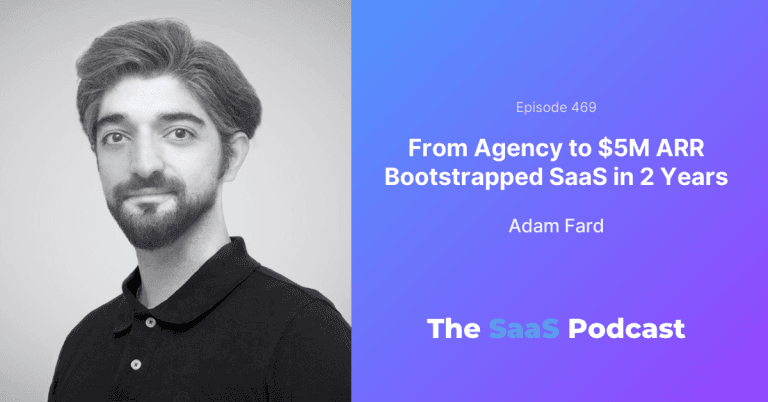
How a Bootstrapped SaaS Hit $5.3M ARR in Under 2 Years
Adam Fard, UX Pilot
What Everyone Says
Build an audience by providing value. Don't sell. Share frameworks, tactics, and insights. Earn trust first, then eventually people will check out your product. Every content marketing playbook says some version of this. Every LinkedIn guru preaches it. And it makes intuitive sense. Nobody wants to follow an account that just pushes their product. So founders spend hours creating educational content, hoping it eventually converts.
Why That's Wrong
Adam Fard ran a UX agency with a 600K-subscriber newsletter. The content was exactly what the experts recommend: useful educational information about UX frameworks, how to design certain things, how to talk to users. High-value, no-selling content. It worked fine for the agency. But when Adam launched UX Pilot, he noticed something that broke the conventional wisdom. "When I was just talking about UX Pilot and the new features and new things, how they could impact the design process, people actually were engaging a lot with it. They were replying back, they were sharing feedback." The product updates outperformed the educational content. People wanted to hear about what he was building, not another UX framework breakdown. The same pattern showed up on LinkedIn. Feature announcements and product updates drove more replies, more shares, and more engagement than the carefully crafted educational posts.
What Adam Did Instead
Adam flipped his content strategy. Instead of leading with education and sprinkling in product mentions, he made product updates the core of his newsletter and LinkedIn presence. His approach was simple. Every time the team shipped something new, he'd share it. Not as a sales pitch. As a story about the problem they solved and how it changes the design workflow. "We released this feature and it can help you design faster. You can generate five versions at the same time instead of doing it manually." That's not selling. That's showing people something useful exists. He posted three to four times a week on LinkedIn. Some posts performed well and drove spikes in traffic for a day or two. Others didn't. But the product-focused content consistently outperformed the pure education posts. The results went beyond engagement metrics. People who followed the product updates stayed with the product longer, upgraded more often, and referred colleagues. They felt like they were part of the journey.
The Principle Underneath
Educational content positions you as a teacher. Product updates position you as a builder. And founders connect more with builders. When you share what you're shipping, you're doing three things at once: showing the product exists, demonstrating you understand the problem, and proving you're actively making it better. That's more compelling than a blog post about "5 UX Frameworks Every Designer Should Know." This doesn't mean education has no value. It means that for SaaS founders, the product itself is the content. Your audience wants to see what you're building and why. The hidden benefit: product updates also serve as retention content. Existing users see new features they didn't know about. Trial users see reasons to convert. Non-users see a product that keeps getting better.
Should You Do This?
Do this if you're actively shipping features and have an audience of potential users (even a small one). Your changelog is your best content strategy. Skip this if your product isn't evolving. Talking about the same features every week will get stale fast. You need a steady stream of real improvements to make this work.
Ready to build your SaaS with founders who get it?
Join thousands of SaaS founders getting weekly insights and proven strategies from real founder conversations.
Free weekly newsletter · No spam