Enterprise Sales: How He Closed Deals in Just 9 Days

Get weekly SaaS insights from proven founders

Bassem Hamdy closed enterprise sales deals in just 9 days. Not 6 months. Not 12 months. Nine days.

In this episode, Bassem reveals his enterprise sales playbook for selling AI automation to CFOs in construction and manufacturing—industries where “unsexy is sexy.” You'll learn why you should never do free POCs, how to fire bad enterprise clients before they sink you, and why focusing on vision and value beats demoing features every time.

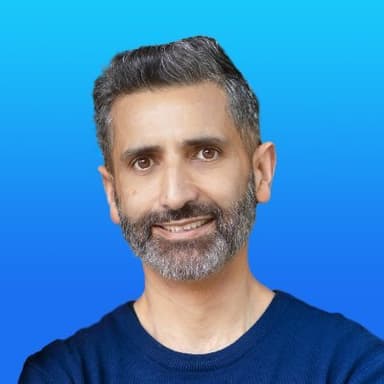
Bassem Hamdy is the co-founder and CEO of Briq, an AI orchestration platform for the construction and manufacturing industries.

Most founders think enterprise sales takes 6-12 months. Bassem Hamdy closed deals in 9 days.

Bassem built Briq, an AI workforce platform that automates back-office work for construction and manufacturing companies. After spending 15 years in construction tech—including scaling Procore from $10M to $100M as EVP of Marketing and Strategy—he knew the industry's pain points intimately.

His enterprise sales strategy is counterintuitive: never demo the product early, never do free POCs, and focus on vision and value alignment before showing a single screen. “I could demo a blank screen,” Bassem says. “They don't know what you're demoing anyway. Focus on vision and value and you can close very quickly.”

Briq grew from zero to $1.5M ARR quickly, hit 8 figures in revenue, and now serves Fortune 100 companies. But the journey wasn't linear—Bassem made a costly pivot to a forecasting product that lost product-market fit, forcing him to refound the company and return to their AI orchestration roots.

His land-and-expand playbook includes: always charge from day one (even a dollar creates commitment), target CFOs who control the budget, and fire bad enterprise clients before they drag you down. For pricing, he experimented with per-employee, unlimited, and tokenized models before landing on consumption-based pricing.

🔑 Key Lessons

  • 🎯 Sell vision and value, not features: Bassem closes enterprise sales in 9 days by confirming vision alignment and ROI before ever demoing the product. "I could demo a blank screen—they don't know what you're demoing anyway."
  • 💰 Never do free POCs—charge even a dollar: Free work attracts time-wasters from innovation teams. Payment, even minimal, creates commitment and filters for real buyers.
  • 🤝 Land and expand drives enterprise sales growth: Start with a small paid implementation that proves ROI, then expand across departments. Briq went from $15K deals to tracking $100K+ annual contracts.
  • 🏢 Target the economic buyer, not innovation teams: CFOs write checks; innovation VPs waste your time. In enterprise sales, always qualify whether your contact controls budget.
  • 📉 Fire bad enterprise clients before they sink you: Large companies can drag you into dark alleys with endless requests. If they're not paying or not aligned with your vision, cut them loose.
  • 🔄 Your ICP will shift as you commercialize: Bassem's experience bias pointed to general contractors, but specialty contractors (electrical, plumbing) had the real labor crunch and became Briq's best customers.
  • 🛠️ Partner with industry associations for early credibility: Before you have enterprise logos, partner with trade associations to earn the social proof CFOs need to trust you.

📖 Chapters

00:00 Why SaaS Founders Should Ignore Feature Requests
00:43 Introduction & Welcome
01:32 Is AI “Human Replacement” Software?
06:36 The “Construction Data Cloud” Idea (And Why It Failed)
09:07 Finding the Wrong ICP
11:07 The “Agile” Trap: Why Most Product Teams Are Waterfall
13:18 The Investor-Forced Pivot to Forecasting
16:26 How to Close Enterprise Sales Deals in 9 Days
21:01 Selling on “Vision & Value” vs. Features
25:54 SaaS Pricing: Moving to Tokenization & Consumption
27:49 First Price Was $15K—And It Was Too Cheap
29:17 CFO Sales: Overcoming Risk Aversion
35:00 Building Trust with Industry Associations
38:00 Firing Bad Enterprise Clients
42:00 Land and Expand Strategy
45:00 Lightning Round

Build Your $10K MRR SaaS
Get weekly coaching, proven frameworks, and a community of founders on the same journey.
Start Now →

Book Recommendations

Show Notes

Episode Q&A

How did Bassem Hamdy close enterprise sales deals in just 9 days?
By focusing on vision alignment and value alignment before ever showing the product. Bassem skips feature demos and instead confirms the prospect shares his vision for AI automation and sees clear ROI—then the close happens fast.

Why does Bassem Hamdy say you should never do free POCs for enterprise sales?
Free POCs attract innovation teams who waste your time with shiny object requests. Until money changes hands, enterprise clients aren't truly committed—even a dollar creates real accountability.

How did Bassem Hamdy scale Briq from zero to 8-figure ARR?
Bassem used a land-and-expand strategy targeting CFOs, starting with small paid implementations that proved ROI, then expanding across departments. His earlier experience scaling Procore from $10M to $100M informed this approach.

Why does Bassem Hamdy target CFOs for enterprise sales instead of other executives?
CFOs in construction and manufacturing often control IT budgets and are the economic buyers. While they're risk-averse and demand price certainty, they can write the check without additional approval layers.

What pricing experiments did Briq run before finding the right model?
Briq tried per-employee pricing, unlimited usage by department, and now uses tokenized consumption-based pricing. The unlimited model was easy to sell but made expansion difficult since each department required a new sale.

Why did Bassem Hamdy's pivot to a forecasting product fail?
The forecasting product had no product-market fit because forecasting is “just guessing”—it was art rather than science, and customers didn't want to make the sacrifices automated forecasting required.

What mistake did Bassem Hamdy make when identifying Briq's ideal customer profile?
His experience bias led him to target general contractors, but the real labor crunch was among specialty contractors (mechanical, electrical, plumbing) who had a much stronger need for AI automation.

How does Bassem Hamdy recommend founders build trust with enterprise buyers?
Partner with industry associations for social proof before you have logos. Briq partnered with financial associations in construction to earn credibility with risk-averse CFOs.

What does Bassem Hamdy mean by “fire the bad clients” in enterprise sales?
Big enterprise clients can put you out of business as easily as make you successful. If they drag you into dark alleys with endless requests and no payment, cut them loose to protect your team and resources.

Transcript

View Transcript

Bassem Hamdy [00:00:00]:
When you interview a client, never take their solution. So feature requests from a client require real serious digging. Like, real serious digging. Because they’re going to define something myopically, like touching the elephant. You got to define the whole elephant. I don’t take feature requests at face value, but why are they asking for it? Is the first thing I would say. But when you have your vision internally, it’s very easy to figure out which feature requests to do or not to do. And, you know, when a feature request comes in, like, I want to be able to stop the AI autonomous workforce to check in on them every once in a while, you know, they’re not vision aligned with you.

Bassem Hamdy [00:00:41]:
And that feature request gotta be turfed.

Omer Khan [00:00:43]:
Basim, welcome to the show.

Bassem Hamdy [00:00:44]:
Thank you. Omer, how are you?

Omer Khan [00:00:46]:
I’m great. How are you doing?

Bassem Hamdy [00:00:48]:
Very good, very good.

Omer Khan [00:00:49]:
Do you have a favorite quote? Something that inspires or motivates you that you can share with us?

Bassem Hamdy [00:00:54]:
That’s a great question. So when we closed our Series B, you know, you get a lot of no’s, and actually one of the big VC no’s, the partner was so convinced of Brick’s ascension that he said, I’m gonna put in my own money check, which he did. And he wrote me a note that said, go forth and crush. And that was. That’s actually my slack handle. So it’s go forth and crush.

Omer Khan [00:01:21]:
Love it. Love it. That’s got to be the most unique quote I’ve heard for a while. So tell us about Brick. What does the product do, who’s it for, and what’s the main problem you’re helping to solve?

Bassem Hamdy [00:01:32]:
So Brick is an AI orchestration platform. We really focus on robotic, which is deterministic and problemistic AI solutions to solve major work streams in what we call the physical industries. So a physical industry, just to start off, is anybody that takes raw material and turns it into a product, takes a thing and makes stuff. You know, that stuff could be a product that’s manufactured, usually custom manufactured or fabricated. It could be a bridge, a road, a data center. It could be a school, a hospital. It’s anything in your physical environment. We don’t sell to SaaS companies.

Bassem Hamdy [00:02:10]:
That’s kind of the one clear path. But we’ll sell to folks that, you know, do the hard, dirty, and dangerous work. You know, it sometimes sounds inhumane to say this, but really, Brick is human replacement software. But generally, our clients are growing. So if a client is scaling in an industry that’s a little less sexy and, you know, B2B people on this call, take this, take this to heart. Unsexy industries are sexy from a go to market perspective. They, they can’t get enough white collar workers in accounting, in business development, in operations. It’s just there’s not enough people joining these industries and they use this AI technology to log into their archaic solutions, create Excel spreadsheets, go through and generate data, access data using this AI orchestration layer so it can move data around, enter data and act like a human as if you have half dozen extra employees.

Bassem Hamdy [00:03:10]:
Because it works 7, 24, 365. So that’s really what we focus on. From an ideal customer profile, it’s really anybody doing over about 50 million in revenue and or somewhere around a hundred plus employees. We usually see fit there. And then obviously it scales up to billions of dollars in revenue. We have some very large Fortune 100 on Brick. And then we usually come in through the office of the CFO. But that has been changing as AI has been Dr.

Bassem Hamdy [00:03:38]:
Talked about. And basically our machine used model, it’s different than say anthropic. But now people know what a machine use model is or a computer use model is. So we’re seeing operations and business development as also our gateway in. So we have COO or CFO is really the core entrance.

Omer Khan [00:04:00]:
Okay, great. And what are the top two or three verticals for for you today with your business?

Bassem Hamdy [00:04:06]:
We’re still highly construction oriented. We started in construction. I would say that’s about 80% of our client base. I think it gets hard to describe to people that don’t live and breathe construction what that means. I think a lot of people think of construction and they think of commercial construction. Whereas yes, that is a portion of our business. But the vast majority of our business are doing bridges and roads, infrastructure data centers, power generation, solar, all the way, all the way to, you know, mechanical and plumbing contractors that do major work. So it, you know, when we use the term construction, it means a lot of different things, not just the big buildings you see in New York.

Omer Khan [00:04:49]:
Yeah. And then beyond construction, what are your favorite verticals that you’re targeting?

Bassem Hamdy [00:04:54]:
Right now the fastest growing one is custom manufacturing. So you’re seeing a lot of synergies with companies that are fabricating things. One of the largest steel fabricators, for instance, runs Brick to automate their drawing management tools. So essentially they get a lot of custom orders and they need these specs and drawings to be generated and viewed and analyzed for manufacturability and so they use our tools to do that. So it’s like an expert drawing manager, if you will. So we’re seeing a lot of success in that fabrication, custom manufacturing area.

Omer Khan [00:05:31]:
So give us a sense of the size of the business where you in terms of revenue, number of customers, size of team.

Bassem Hamdy [00:05:36]:
Yeah, so core product or AI orchestration product is eight figures. So we have kind of crossed that bridge from zero to one to one and up. Now we’re focused on a three year plan to get to 100 million. That is the big audacious goal. And I think my history people. It might sound silly to say this, like 100 million seems unattainable, but when I joined Procore, which is a cloud based project management solution as head of go to Market, as I was EVP of marketing and strategy, we did that. We went from 10 to 100 and that’s kind of that I want to break through and do that again, not as go to Market but as CEO. So I’d love to be at the helm to do that.

Bassem Hamdy [00:06:20]:
And so that’s where we’re trying to get to.

Omer Khan [00:06:22]:
You’ve had the taste of it once and you want more.

Bassem Hamdy [00:06:25]:
Not easy, but we’ll get there.

Omer Khan [00:06:26]:
I hope so. Let’s talk about the idea. Where did the idea come from? What were you doing at the time? I think this was. You founded the business in around 2018.

Bassem Hamdy [00:06:36]:
Yeah, we’re an older vintage, I would say. So 2018. I came up with this idea that I thought was fabulous. This is a great idea. It turned out not to be a good idea, by the way. So the idea was something called the construction data cloud. And I had just done a lot of API work at Procore. I just came off of going to markets with marketplaces and I’m like, APIs are everything we’re going to be able to.

Bassem Hamdy [00:07:04]:
This was the theory be like the car facts of an asset, a physical asset. So everything that’s ever happened, you know, the plumbing contractor, the electrical contractor, the GC material tickets, what was delivered, what was installed. And I thought this is going to be great. So we actually started building something and we had this kind of ontology data model of asset to the components of that asset. And then came filling in the data model, which is a problem because all the software in the industries we’re serving are like 30, 40 years old and there are no APIs. So I’m like, oh, that was a quick business, I guess I’ll go back to work. But I ran into an engineer and I was just like hunting and pecking and found this guy who’s still with us, Ash Kapoor. And I said, hey.

Bassem Hamdy [00:07:53]:
How can we access data without an API, without trying to understand a database? And he, at the time, 2018, we called it robotic process automation. I didn’t know much about it, but I knew about bots making harder to buy Taylor Swift tickets or whatever. And so he’s like, let’s try it. And eventually.

Bassem Hamdy [00:08:14]:
Today we’ve taken what we originally built in 2018 and created a SaaS model that navigates. When we thought, okay, we are going to get this data, this is kind of the right turn we took. People were more interested, wow, you have something that can execute against 30 year old software. Does it enter data too? And we said, yeah, it does. So all of a sudden the digital worker was born. And that was a big step forward for us. We found product market fit very early on, this concept of a digital worker in accounting initially and then operations. And so that was great.

Bassem Hamdy [00:08:53]:
And I, you know, I can tell you, I think we talked a little bit about this, the left turn we took after that, but that, that is where the idea was generated. And that’s, that’s the story of brick today.

Omer Khan [00:09:03]:
Did you know who your ICP was at the time? Like, how clear were you?

Bassem Hamdy [00:09:07]:
So that’s a great question. So ultimately, you know, my, my history was always in this construction space, right? So my first 15 years with with a construction ERP solution, the next three to four was with a project management solution. So I kind of had it in the blood. So I said, I know my tam, I know my addressable market, I’m very familiar with it, I have connections in it, I’m not a young founder. So I had some history. And that’s why we chose the industries we chose initially. It was easier to get broken in, right? So our first real robotic process automation was on very large social media company and a very large general contractor that I happen to know installed our robots on a data center project. That was like the first thing that we really got off the ground.

Bassem Hamdy [00:09:55]:
So I chose it or it chose me. I don’t know one way or the other, but I chose to go through our icp. Now I made mistakes on our ideal customer profile because of my experience bias. And I think that’s, I think that’s one thing that, you know, if I could have done differently. My experience bias stated that I should go after general contractors, basically the big companies that run these projects. What I didn’t realize is they don’t really have a labor crunch as much as the specialty contractors that do the mechanical the electrical, the plumbing, you know, the site work. That was a big surprise. So what we realized was, you know, know thyself.

Bassem Hamdy [00:10:38]:
Our ICP shifted quite significantly from what I thought it should be to what reality was as we commercialized.

Omer Khan [00:10:47]:
How many conversations did you have with potential customers when you were building that first version of the product? Because you have a lot of history, which can be, you know, they say it can be a curse, right? Because you, you know a lot already. But how much was it like, okay, I know the problem, I know the solution. Let’s build it versus let me go and talk to as many people as I can.

Bassem Hamdy [00:11:07]:
I’m a big advocate of building the plane in the air. And that could be crazy, but.

Bassem Hamdy [00:11:16]:
You know, people always say, hey, we’re agile. We love agile. And then they’re like, when you talk to them, they’re really waterfall. And, you know, agile means giving, like this much that does this much, not giving this much that does nothing. And if you’re like, hey, you know, do you want to move one document type from A to B using a robot? Yeah, okay, let’s create that one little thing, that micro step that’s meaningful but easy. And I think what we did was we tried a lot of different things. Oh, my God, did we try a lot of different things. I think what’s different about scaling an AI company today versus a software company is we could try things.

Bassem Hamdy [00:12:00]:
Without a user interface very easily because.

Bassem Hamdy [00:12:04]:
We wanted to be autonomous. We didn’t want users logging in. So that made our story a little easier. Now with things like replit and lovable, like, if you’re creating a true software company, not an AI company, you can create prototypes, functioning prototypes that store data, that have authentication, that look production ready and try things. And I think what we’ve lost in product management is that go fast and break things concept, which is we do a lot of interviews. I think it was Marty Kagan or one of the product management schools. They were, what problem are you solving? And then you talk to some of these younger product managers, and they’re not doing anything. They’re just writing notes, and it’s like, build something.

Bassem Hamdy [00:12:49]:
And now that anybody can code build something and try it and show it and get them to use it and watch them use it, I think a lot of this product management generation today kind of annoy me because it’s so theoretical. And you just want to be like, hey, SaaS software is a full contact sport. If you’re on the sidelines too long, you’re out of the game. Get off the bench and get into the game, I would say so.

Omer Khan [00:13:18]:
You sort of alluded to this about this left turn that you took, which I think was around 2020. How much traction had you gotten by that time? Or was it you were still trying to find traction and that’s the reason you sort of took this left turn.

Bassem Hamdy [00:13:36]:
We got zero to one pretty quickly, actually. We’re probably one and a half in 2020.

Omer Khan [00:13:43]:
1.5 million ARR in AR and we.

Bassem Hamdy [00:13:47]:
…when we say no, we don’t want daily active usage other than the robotic usage.

Bassem Hamdy [00:14:13]:
People were like, you’re crazy, you have to find a product. And we were lucky enough to be in that kind of roaring twenties moment where it was a little easier to fundraise. And so we said, okay, here’s this robotic product, this automation product. But inside this automation product, we started to see some traction around forecasting. And it was actually a pretty clear cut view that there was no competitors in that forecasting world. And they’re like, okay, that’s interesting, great, let’s go with that. So we built a forecasting tool that kind of looked and felt like Excel. And what we realized is we had product market fit and then refounded the company without product market fit in a product segment that was more art than science.

Bassem Hamdy [00:15:02]:
And when we say art, it’s like you’re forecasting, you know, what’s the forecast? It’s an Excel tool with very little ability to automate. And so what we ended up doing less than 24 months later is discontinuing that product. The interesting part of that is we fundraised on it. Yes, but we also sold a lot of it. People wanted the promise of automated forecasting, but when they saw the sacrifices you need to make in automated forecasting, which is, it turns out forecasting is just guessing. From what I could tell.

Bassem Hamdy [00:15:37]:
…was right at the intersection of people understanding what AI orchestration is. And so that’s when we doubled down, built our, we call it a large action model which we call auto, that learns, that speaks, that talks to the industry and has computer use for these archaic client server type solutions that nobody else has.

Bassem Hamdy [00:16:22]:
And so we have that competitive moat and that’s where we came back to our roots.

Omer Khan [00:16:26]:
Now many founders who start to get into the enterprise space from day one, the biggest fear is it’s going to take me six to 12 months to close a deal. I have 0arr, I don’t have any logos. How the heck am I going to close a deal? And you were able to close some deals in as quickly as nine days with enterprise customers. So tell me about that. How were you able to do that? What was the pitch and why do you think you were able to be successful with that?

Bassem Hamdy [00:16:58]:
I think that from a go to market, it’s all about land and expand. If you can give them that little base of value with a check, never do anything for free. I think that’s one thing that founders learn very quickly is that.

Bassem Hamdy [00:17:11]:
I see this a lot actually. So we do some mentoring with younger entrepreneurs and you see them going in and saying, hey, I have this huge company, they don’t want to pay us. I’m talking to the VP of innovation and they want to try stuff and you’re like run out of the room screaming because a you’re not talking to a financial buyer. They’re going to drag you in dark alleys a lot of times because they have all these shiny objects they want you to fix and at the end of the day they’re not paying or paying enough for your time. So I see these people go out and say, yeah, I closed Bechtel or I close, but you didn’t close them, you’re just talking to an innovation guy that’s wasting your time. So I think never do anything for free. Give them a little bit of value that they’re willing to pay for even a dollar because as soon as they’re pot committed on payment, they’re going to really try to use what you have. And then finally, like with enterprise specifically, fire the bad clients is as important as closing the good ones because like I said, a big company is as likely to put you out of business as well as put you on the map.

Bassem Hamdy [00:18:18]:
So from my perspective, I’d say think all about land and expand. Sell to the user or the group that sees an ROI in your solution, especially in the B2B space and then ultimately go into.

Bassem Hamdy [00:18:35]:
Analyzing that client very quickly to make sure that they are really an ICP. I think one of the challenges people have on closing big deals is can I get this solution in that does XYZ for a million bucks. And I think you got to work your way up there. I mean like we just started probably last year, just started metricing deals of over 100,000 per year as like one of our core metrics. So it’s a journey. So don’t expect that big enterprise client to just pay you a million bucks day one.

Omer Khan [00:19:13]:
So give me an example of a deal that you closed in nine days.

Omer Khan [00:19:20]:
How did it start from day one? And how did you keep things moving and getting to close so quickly?

Bassem Hamdy [00:19:25]:
Yeah, so we have a pretty standard demand gen to BDR to AE model. And when we say start small, we have AI that allows people to coordinate with third party systems owned by somebody else. So just imagine you’re being asked to build a data center and as that part of that data center project requirement, you’re being told you need to log in to this other person’s system and add data to that system so they can have a data store of all the things that are happening. So for us it was very easy to come in and say, hey, do you like doing that? And the answer is no. So okay, let’s, let’s get through that. So when, when the demand gen starts.

Bassem Hamdy [00:20:14]:
We talk about this micro skill, I call it this small thing that we can offer them and we can say, hey, in exchange for this thing, do you want this? And the answer is yes. It was invariably yes, if you like. I think the problem with, you know, certain products is you can’t define the roi. And so for us the ROI was they were going to hire a person to do the double data entry. That was really easy. Yes, that is a simple roi. ROI has gotten more complex now. But if you can’t say this is what you’re saving, concisely, if you’re focused on demoing a product or explaining the product, or if you’re in love with your own tech, which, you know, a lot of people end up being in love with the tech, not the money, you’re going to have a problem closing any deal.

Bassem Hamdy [00:21:01]:
So what I say is focus on vision alignment and value alignment and your deal cycles could be 24 hours because if they have a vision match. What is your vision? If our vision is to automate physical industries where there isn’t enough white collar workers, do you want to do that? Yes, UK check. Do you see value in doing this? Yes, Check vision value, then talk about the solution. I think too many people in enterprise or even in mid market try to focus on the software. I could demo a blank screen. Like it doesn’t matter what’s on the screen. They don’t know what you’re demoing anyway. Like they’ve never seen your product before.

Bassem Hamdy [00:21:39]:
They was like squinting, they’re looking at a zoom. Focus on vision and value and you can close very, very quickly.

Omer Khan [00:21:45]:
They was like squinting, they’re looking at a Zoom. Focus on vision and value and you can close very, very quickly.

Bassem Hamdy [00:22:08]:
That, the key is, I think in a lot of when you’re short staffed, I think a lot of those early baby steps may have partially been squandered because we didn’t have enough people on the account management side to come in and start expanding them. And so I think don’t, just don’t forget the expand and land and expand. That’s I think one of the lessons. But land and expand is from my perspective, if your product lends itself to land and expand, that’s got to be the GTM because that gives you the ability to go in and get paid. Get that dollar. I cannot stress enough, a POC with an enterprise client is a waste of your time unless there’s a dollar or some amount attached to it.

Omer Khan [00:22:55]:
So you decided to focus your ICP. As CFOs in these companies.

Omer Khan [00:23:03]:
Traditionally those guys tend to be pretty risk averse. So going in with a new product.

Omer Khan [00:23:14]:
What kind of, what kind of objections did you face and how did you get, get over that first one?

Bassem Hamdy [00:23:21]:
Always security, security, security. That was the, you know, CFOs in our industries generally run it as well. So there’s that real question of like how secure is this? The other thing is they’re not just risk averse, they are.

Bassem Hamdy [00:23:39]:
Spend averse. I’ll put it that way. They love certainty. So you know, we, you know, we have a tokenization model and accountants, we’ve just recently gone to consumption and the accountants, you could see it on their face, they hate any. But how many tokens is that going to be? How many? Like I don’t understand. And we’re like, well it’ll be approximately this and it’ll be this much per month. And they’re like ah, I can’t so, you know, I, I think they love price certainty. But the nice thing about going after the CFO, they also write the check.

Bassem Hamdy [00:24:11]:
So they are the economic buyer generally. So that is kind of gateway in. But there, there are so many things that you have to do in order to earn. You know, we talk about vision, value and then solution. There’s a kind of a middle layer that a lot of people, you know, feel uncomfortable talking about, which is trust verification. You know, you might not have a lot of logos, so you have to earn the trust some other way. And either that’s domain expertise or expertise on the type of business they are, or it’s technical expertise giving them something they don’t understand how to do themselves, that gives you that added trust. So yeah, it’s vision and value, quick, close to deal once the solution is verified.

Bassem Hamdy [00:24:55]:
But in between that is trust. With CFOs, you’re right, the trust metric has to be high. They have to trust and believe in you. And the way we did that was partnering with a lot of the financial associations in the industries we serve because that provided that kind of social proof. Before we had a lot of logos. So that was really kind of core to our go to market. You know, I wrote a book called the Book on Account Based Marketing and it’s just all about going in and talking about account based marketing, understanding your ICP, understanding who your ideal customer profile is. Not just the people that come in and the personas that are going to buy you, but also the ones that are going to be the blocker.

Bassem Hamdy [00:25:39]:
And I think going through the exercise of saying what is my true ICP or target and it’s going to move and shift over time and what persona is going to hate me and what persona is going to love me when I’m selling an account? So that’s kind of the core of how we did.

Omer Khan [00:25:54]:
And you were selling a product. There was no precedent. It was basically a new category for these companies. How did you figure out the pricing, what to charge?

Bassem Hamdy [00:26:07]:
We’re still working on it.

Bassem Hamdy [00:26:10]:
Pricing is always kind of a moving experiment. I feel like more so with us recently. But.

Bassem Hamdy [00:26:18]:
At first we would just say, how big is your company? I mean, this is not the most scientific way. And said, okay, this is bigger than a bread box. And we just tried a bunch of different things. If you look at our early paper, it’s like all over the map. Right. So there’s so many different pricing models that we experimented with. Looking at Velocity, you know, how are they retaining, are they expanding? So you Know, it’s just. I wish I had a better bulletproof answer for this, but pricing is just always a challenge in our technology world, because, first of all, in tech, gross margins are great.

Bassem Hamdy [00:26:57]:
So you’re not like, building a widget and then shipping a widget, and you can say, oh, I want to be 30%. Most tech companies are 80, 90% gross margins. So you’re thinking, okay, I can charge anything I want. And that flexibility lends itself to a lot of experimentation. I think we finally nailed it. I think we did by more akin to how, like, a ChatGPT charges, which is token usage, or maybe how an AWS charges, which is about computer use or, you know, compute power used. So that has provided, you know, an easier way of explaining things. But, you know, I.

Bassem Hamdy [00:27:36]:
I’ll. I’ll tell you, pricing modeling never stops. There’s entire companies out there that do experimentation on pricing. But I wish I had a better answer to that question.

Omer Khan [00:27:49]:
I’m curious, what was the. What was your first price to a customer? And how wrong did you get that?

Bassem Hamdy [00:27:57]:
Oh, it was awful. It was like $15,000 for a project or something. It was like some. Just, like, it was too cheap. It didn’t scale, didn’t allow for expansion easily. And we just, like, we need money. How much are you willing to pay? I really took to heart, give us whatever you got in your pocket and you can have this. So that’s how it started.

Bassem Hamdy [00:28:19]:
And then we started getting a little bit more scientific, where we started to say, hey, let’s base this on the size of the company and the amount that will be a doppelganger for the amount of volume we’re going to see. That’s really, you know, if you have 100 employees, we kind of know what your payroll looks like or what your AP looks like. So we’re going to use that as the doppelganger. And then what we did, which was a very successful pricing model, but not a great expansion model, which was unlimited. Unlimited. Unlimited within a department or domain within that company now. Very easy to explain. Very easy for a salesperson to explain.

Bassem Hamdy [00:28:57]:
Hey, don’t worry about it. You buy it for the AP department. That’s what you’re getting. It’s 25,000, let’s say, because you’re 100 employees. Unlimited. Unlimited. Unlimited. The challenge there was when we went to expand, we couldn’t go to, like, it was hard to go to the next department to resell them that solution.

Bassem Hamdy [00:29:17]:
And they’re like, it’s not, you know, I don’t know, you know, Chuck runs ar. That’s not my area. So, you know, it’s like a brand new sale all of a sudden versus now with tokenization and consumption modeling, there’s no limit on what they can do. They just pay per minute, you know. And so we’ve gone both ways, from unlimited to consumption. I think what will happen next year, I think you’ll see some sort of hybrid of that. If you commit your use, you’ll get near unlimited based on the domain. But yeah, we got wrong a lot.

Omer Khan [00:29:50]:
When we were talking earlier, you were telling me about how often founders, one of the mistakes they make is going in and working with one customer and effectively building a custom solution for that customer. And it sounded like you in the early days ended up doing the same.

Bassem Hamdy [00:30:10]:
Thing a little bit. I think I learned my lesson quick.

Bassem Hamdy [00:30:17]:
Because they weren’t paying right. There was no real money associated with it, or the money looked more like services than they did a recurring revenue number. Actually, in some of those cases we should have booked them as services. We thought they were buying our product, but they’re like, yeah, we like your idea, but we wanted to do all these different things that it didn’t do yet. And in some cases those partnerships can be great. And in some cases they were very good. They gave us access to domain expertise and use cases that we hadn’t thought of, which is fantastic. But in some of those cases, when you’re not talking to the business users.

Bassem Hamdy [00:30:54]:
Whether it’s IT or innovation or the experimentation department.

Bassem Hamdy [00:31:00]:
They don’t have as much skin in the game, in the business as you think. And so getting in and going into the front door of an innovation group and saying, hey, this is the kernel of our product now help us build out the rest of it. You’re going to end up with a Frankenstein product that is probably very hard to sell to the next client because you’re solving for their problems, not solving for a holistic set of problems. And I think that’s what ends up being, you know, I always say n equals 1. When you’re building for one enterprise, n needs to be higher than 1 to build a successful product. So if n equals 1, you got a problem. And I think we learned that and what we were able to pull out of that quick. I love mid market.

Bassem Hamdy [00:31:43]:
We call it the fat middle, like upper mid market. Like you love those hardworking companies. They’re the ones that will join multiple clients on a steering committee to give you great advice. So just always be wary. I see some of these startups that have just gotten funded in the AI space announcing, oh, some agreement with a massive company. And I look at it and I go, maybe a good idea, but odds are it won’t work out.

Omer Khan [00:32:14]:
So it sounds like you learned your lesson pretty quickly. And when it comes to finding product market fit, I came across a quote from you, I think, where you said, if you try to do everything, you end up doing nothing. And so I’m curious, like, how did you figure out what feature requests from customers to say no to? And even better, is there an example of a feature request that, on the face of it, seem to make a lot of sense, but you’re really glad you didn’t end up building it?

Bassem Hamdy [00:32:47]:
Sure. I think, you know, the answer to product management is like, what problem are you solving? Right? And I think clients, people that are in it every day, have real issues.

Bassem Hamdy [00:33:03]:
Defining their problems. I call them XY problems. You know, they’re asking for if you, if you Google Search or ChatGPT, what is an XY problem? It’s the idea that, you know, they’re defining the problem set in the terms of their own mind. And you’re. And you’re trying to solve a problem that is the wrong problem to solve, essentially. And so you, when you interview a client, you know, what are your problems? You know, where are your issues? Where you see that bottleneck? Never take their solution. You have to define their solution. So feature requests from a client.

Bassem Hamdy [00:33:38]:
They’re like, this isn’t my problem. So I call it like bandages on bullet holes. It’s like, you solved the wrong problem. So I don’t take feature requests at face value. You look at the feature, why are they asking for it? Is the first thing I would say, why are you asking for this? And one of the things that I think I learned not to say no to is I have this idea of the autonomous workforce for these physical industries. I want to be the Roomba of the, you know, I want to be the Waymo of the Roomba, not the vacuum cleaner or the, you know, the Ford, like I want the thing to run by itself in the background. That’s been my vision from day one. Took a left turn as we talked about.

Bassem Hamdy [00:34:06]:
They’re like, this isn’t my problem. So I call it like bandages on bullet holes. It’s like, you solved the wrong problem. So I don’t take feature requests at face value. You look at the feature, why are they asking for it? Is the first thing I would say, why are you asking for this? And one of the things that I think I learned not to say no to is I have this idea of the autonomous workforce for these physical industries. I want to be the Roomba of the, you know, I want to be the Waymo of the Roomba, not the vacuum cleaner or the, you know, the Ford, like I want the thing to run by itself in the background. That’s been my vision from day one. Took a left turn as we talked about.

Bassem Hamdy [00:34:53]:
But when you have your vision internally, it’s very easy to, to figure out which feature requests to do or not to do. And you know, when a feature request comes in, like I want to be able to stop the AI autonomous workforce to check in on them every once in a while, you know they’re not vision aligned with you and that feature request gotta be turfed. So I think everything needs to be in the light of what is the shining light, what is the big audacious goal of your company. Mine is to have, you know, millions of autonomous workers running these companies. If the feature request isn’t aligned with your vision, then toss it. Not to make it sound easy or callous, but I think it is easy when you say this vision, this request don’t match. And I think that’s how we do it now.

Omer Khan [00:35:49]:
Did you ever lose any deals because you didn’t have a feature a customer or a potential customer wanted?

Bassem Hamdy [00:35:55]:
Always. I mean like, yeah, it happens daily.

Bassem Hamdy [00:36:00]:
They also might say, hey, this is a great new feature and that’s where a lot of good ideas come from. Because if, you know, I can’t stress enough like I was lucky enough to be like a go to market CEO, product, sales, marketing, I’m non engineer so I get on a lot of sales calls. I think the sales calls are great to hear what the. It’s one very, very important input of what the market is saying right now. It’s like find what the prospect is asking for and again, be careful in XY and non vision align feature requests. But if you lose a deal a couple of times, that’s when you know you should build that feature. So yes, it happens all the time, but it’s a learning lesson. It’s actually a great thing because you didn’t have that feature, maybe you needed it or maybe you didn’t so you’d have to make that decision.

Bassem Hamdy [00:36:50]:
But.

Bassem Hamdy [00:36:52]:
Yes, all the time you and.

Omer Khan [00:36:54]:
I were talking earlier about like, you know, have the number of employees used to be the thing to flex about and it isn’t so much today. And it reminded me of a conversation I had with Adam Robinson who runs retention.com and he was at some party and there was some like startup folks there and a woman asked him what he did and then I think the story was basically like how many employees do you have? And he has a very healthy multiple seven figure business at a time. But he said 15 people or 20 people? And he said, I’m not interested in talking to you. She’s walked off kind of thing. So it was like, you gotta. Yeah, I gotta have like thousands of people. So it sounds like you went through a similar thing in terms of. Just tell me about what your experience has been like.

Bassem Hamdy [00:37:45]:
I mean, we ballooned to 300 employees and what that did was just breed more and more problems. We’re down to 100 now and went through the typical RIF process in 23, 24, just like everybody else did to get to very, very cash efficient, which is a requirement to fundraise now. And.

Bassem Hamdy [00:38:09]:
What you see is extremely healthy. A much healthier company throwing bodies at problems does not result in more code written or in some cases more sales. I gotta give it that. But you’re not gonna get a lot more productivity out of people. And actually the more hands in the pot, we found that we lost the plot.

Bassem Hamdy [00:38:31]:
And you get further away from the problems and further away from the solutions when you have so many bodies in between you and the problems and solutions. So I do think it’s the flex should be revenue per employee. If you can say ARR per employee, that’s the flex. 100 grand. That’s my target. A hundred grand. Whatever the market states, that’s really the flex. But I do agree with you.

Bassem Hamdy [00:38:55]:
At coffee or at parties or they’re like, oh, how big is your company? Is part of the discussion. And people don’t like talking about money, so they use people as a doppelganger to that. But the reality is being a great efficient company, eating your own dog food on AI, making sure that you’re writing code, using AI or doing everything you can to be more efficient. That’s the flex today.

Omer Khan [00:39:19]:
Yeah, totally agree. Okay, let’s wrap up, get onto the lightning round. So I’ve got seven quick fire questions for you. What’s one of the best pieces of business advice you’ve received?

Bassem Hamdy [00:39:32]:
So in my first job running product, you know, is in there. And I said to this engineer, I need this little feature. I thought it was like wrote it up really nicely. They said, that’s going to take two weeks, it’s going to take a sprint. And it was like adding a field or a drop down. So my boss at the time goes, move your chair next to the engineer and tell them that you’re going to sit at his same desk every day until it’s done. And it was done within an hour.

Bassem Hamdy [00:40:01]:
That was decorated.

Omer Khan [00:40:04]:
There’s a great ad I saw with I think it was for, was it for Upwork or. I can’t remember. I’m going to get creative and somebody’s asking for a feature and the guy’s saying, yeah, maybe we’ll get to that in Q5. I was like, hilarious.

Omer Khan [00:40:23]:
What book would you recommend to our audience and why?

Bassem Hamdy [00:40:25]:
I stopped reading business books to a large extent, I have to be honest. A lot of them have just kind of got bogged down and in all this, you know.

Bassem Hamdy [00:40:36]:
Super business speak. But I, you know, I do subscribe to manifestation. I love The Secret. I really do think that it’s like being spiritual is part of like having this job. You got to, you got to manifest positivity almost every day. So I’ll throw in The Secret.

Omer Khan [00:40:52]:
Love it. What’s one attribute or characteristic in your mind of a successful founder?

Bassem Hamdy [00:40:57]:
Oh, I think there was a few. Hard work, natural curiosity.

Bassem Hamdy [00:41:04]:
You know, I think hard work is probably the biggest statement. But natural curiosity, a desire to learn all the time because you are learning and you know, I call it the scars on the back to show like you’re going to get the crap eaten out of you in a lot of cases. And so having that natural curiosity, that optimism, that idea that you are going to be get yourself back up and that hard work is. It is hard work. Those are the attributes I think make a great founder.

Omer Khan [00:41:32]:
What’s your favorite personal productivity tool or habit?

Bassem Hamdy [00:41:37]:
I found that recording myself rather than taking notes has worked. So I use something called Plod, which is like a little clip on mic that you can talk to yourself and it’ll transcribe. Uses some AI, the basic AI. I find that better than taking voice notes because it does a little bit more analysis and you’re more in the moment. You could just pop it on and then freestyle. So I’ve been using that a little bit.

Omer Khan [00:41:59]:
So Claude, like the anthropic Claude?

Bassem Hamdy [00:42:01]:
No, Plod, P L O D. It’s like a, it’s a tool that you just kind of have a microphone with it and you talk to the microphone or you can clip it on like this little thing and you can just start talking.

Omer Khan [00:42:13]:
Pretty cool. What’s a new or crazy business idea you’d love to pursue if you had the time?

Bassem Hamdy [00:42:18]:
A dog, Dog boarding. Because I just got a large dog and I never realized like we always had small dogs which are like cats. Like you don’t have to worry about boarding. Somebody’s gonna take them. A large dog nobody wants to take and then you have to board them and like boarding a dog right now is like going to a five star resort. I don’t know what’s going on with this pricing, but yes, let’s do that. We should go into business together.

Omer Khan [00:42:41]:
What’s an interesting or fun fact about you that people don’t. Most people don’t know?

Bassem Hamdy [00:42:46]:
Fun fact. I’m very open book. So like if you read anything by me or you see these interviews, I’m always very, very open. I think a fun fact is I’m Canadian but hate winter. So I don’t know if that’s a fun fact. But I love California. I hate winter.

Omer Khan [00:43:05]:
And finally, what’s one of your most important passions outside of your work?

Bassem Hamdy [00:43:08]:
Family. I have a 12 year old, my wife and I, three dogs now, three crazy ones, and my child. It’s. That’s the passion.

Omer Khan [00:43:19]:
Awesome. Well, thank you so much for joining me. Basam. It’s been a pleasure. If folks want to check out Brick, they can go to Brick. That’s b r I q.com or AI. And if folks want to get in touch with you, what’s the best way for them to do that?

Bassem Hamdy [00:43:34]:
Brick.com. it’s easy. The letter brick.com B R I Q dot com.

Omer Khan [00:43:39]:
Well, thank you so much. Congratulations on everything you’ve achieved so far and I wish you and the team the best of success as you work towards that 100 million ARR goal.

Bassem Hamdy [00:43:50]:
Go for it.

Omer Khan [00:43:51]:
Yeah. Awesome. Take care. Cheers.