Omer Khan [00:00:00]:
Onur, welcome to the show.
Onur Alp Soner [00:00:01]:
Great to be here, Omer.
Omer Khan [00:00:02]:
Do you have a favorite quote, something that inspires or motivates you that you can share with us?
Onur Alp Soner [00:00:07]:
I do actually, and we can, uh, do a full podcast about just this quote. You are not a drop in the ocean, you are the entire ocean in a drop. So this is a, a quote by Rumi, uh, a, a 13th century Persian, uh, mystic. The way I interpret this for business is wisdom Purpose and clarity, they are not out there. They are within you, right? So I think we have to look more within ourselves.
Omer Khan [00:00:38]:
I love those deep quotes. You're right. We could talk about that for hours. Probably not, not as intelligently as Rumi, but you know, all right. So tell us about Countly. What does the product do? Who's it for? And what's the main problem you're helping to solve?
Onur Alp Soner [00:00:52]:
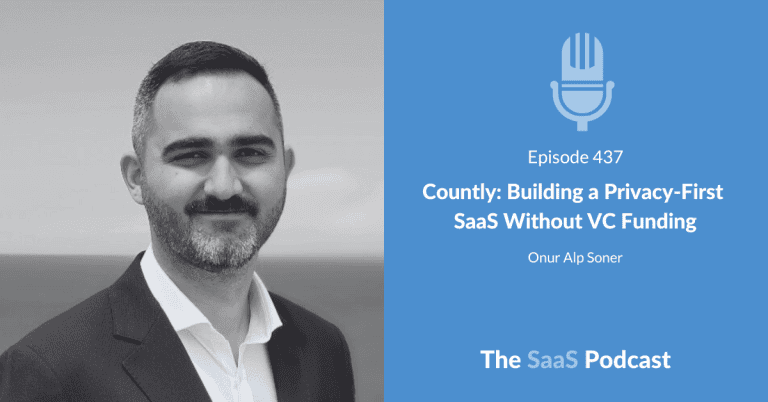
Uh, so Countly is a privacy-first digital analytics and customer experience platform. Uh, so we help companies capture, analyze, and act on, uh, you know, first-party data across mobile, web, desktop-connected devices without relying on third-party tracking or giving up the control of their data, right? Uh, I guess the biggest differentiator would be the focus on privacy, right? So, uh, we have been privacy-focused since the beginning, 12 years ago, and the way we see it is in order for the, you know, the companies to, to really not only value the privacy of their users, but the importance of data is accelerating even further with the introduction of AI and everything else, right? So we want companies to own that data, not give it away to third parties or risk losing the data being stuck in those third-party platforms.
Omer Khan [00:01:55]:
And give us a sense of some of the customers that you have. I know you've got some, some major brands using Countly.
Onur Alp Soner [00:02:03]:
Yeah, of course. So Countly has 3 editions, Omer. So we actually have an open-source version, Countly Lite. We have a self-serve SaaS version called Countly Flex, and we have our flagship product, Countly Enterprise. So throughout the ecosystem, we are serving, you know, thousands of small and big companies. But I guess on the kind of the enterprise side, we have, you know, some, some great names, for example, BMW, Coca-Cola, AWS, Roche, like we have worked with really large organizations throughout the history of the company.
Omer Khan [00:02:43]:
And give us a sense of the size of the business. Where are you in terms of revenue, size of team?
Onur Alp Soner [00:02:48]:
So we are a 40-person team. Uh, so we are from 12 countries, uh, at the moment. So we are a 7-figure ARR business. We are fully bootstrapped, uh, didn't raise any VC money, uh, so far and not really thinking of doing so going further. Um, yeah.
Omer Khan [00:03:10]:
Great. So the business was founded 2013. Where did the idea come from? What were you doing at the time?
Onur Alp Soner [00:03:18]:
Actually, I was working in Huawei and, you know, actually I was working not, not with my co-founders, but we got connected somehow and there was, you know, this, this idea of building a self-hosted mobile analytics platform. So, you know, we were working in large companies, right? So I guess it was apparent the, the privacy aspect of data being exploited too much, and we couldn't wrap our heads around, okay, how do companies agree to giving away their data to these large companies, to these third parties? This can't be the future, right? So the future should be like these companies should own the data, and that's actually the, the, the core reason why we, we started Countly and why we still believe in the same thing, right? So companies should own their own data.
Omer Khan [00:04:14]:
Okay, so you got the idea, you see that there's a potential opportunity, but how did you go out and validate the idea? Did you, did you start kind of building something internally at the time, or was this more about let's do some market research and let's figure out if, if this really is a valid concern?
Onur Alp Soner [00:04:32]:
I guess we just jumped into it, Omer, right? So there was, there wasn't much of a validation, right? So we loved the idea. Okay, let's just build this and see the reaction. I mean, of course, the count— they— we are talking about 12 years ago, we are talking about like a very basic self-hostable analytics platform that just works for iOS and Android applications. That's it, right? I mean, pretty simple MVP, but it became quite popular actually back in the day. I mean, there is still SourceForge. I don't know, I'm sure you know the, the sites. I mean, we weren't using GitHub back in the day or even Git for that For that reason, we were using SVN, you know, the older ones in the audience will remember, but essentially it became quite popular quite quickly, right? We weren't really expecting that demand and actually, you know, we always had the plan of next to the open source version, we will have an enterprise edition. Without being able to do that, the first customers started asking for an enterprise edition with more features, support, hands-on, kind of dedicated teams for them.
Onur Alp Soner [00:05:44]:
So I guess the market pulled the product from us in the very beginning. I mean, things aren't that easy right now, but 12 years ago, that was the, the, the story.
Omer Khan [00:05:56]:
Okay, let's take a quick breather here. Are you struggling to bring your SaaS idea to life without a technical co-founder? Well, Gearheart is here to help. They're a product development studio founded by serial entrepreneurs. Acting as your fractional CTO, they've built over 70 successful products, including SmartSuite, which was named 2024 SaaS Startup of the Year. After selling his last company for $200 million, SmartSuite's founder turned to Gearheart to build his next big idea. Their Ukrainian-born team combines world-class expertise with Silicon Valley connections, helping you scale your product faster and smarter. Gearheart's leadership team even works directly with founders, offering deep insight into startup success. Book your free 1-hour strategy session with their leadership team before the end of May @gearheart.io.
Omer Khan [00:06:41]:
That's gearheart.io. Okay. So you, you decided to build this open source version and just put it out there. How long did it take you to, to ship something and get it in the hands of potential users? And once it was out there, how long did it take for these enterprise type requirements to start showing up?
Onur Alp Soner [00:07:05]:
I guess from idea to, to shipping the first version, uh, I think somewhere, uh, like, like 6 months, uh, or so. Like the very first, like, MVP type of version, uh, I think it took like 6 months or so, uh, but the enterprise version probably took another 6 months, right? So in a year we had an open source version. I mean, there wasn't much of a difference between open source and enterprise actually. Enterprise, it's just like one additional feature, uh, and support on top of the, the open source edition of Calendly. Yeah.
Omer Khan [00:07:42]:
And, and were you guys still working full-time? Was this like evenings and weekends thing, or, or did you, you know, once, once you started building it, you, you decided, hey, there's enterprise opportunity, let's, let's jump in and go full-time?
Onur Alp Soner [00:07:56]:
Uh, in the very beginning, uh, yeah, it was— it started as a weekends and after work sort of thing for for a, for a little bit, right? But then I immediately jumped into it. So I quit my job. I had, you know, a little bit of money and so I like, I, you know, okay, I'm very young, like there's nothing to lose really. Let me just try this out. If it doesn't work, like I will just go back to my corporate job for that matter. So my co-founders had a little bit more commitments than I did, so they didn't immediately quit their jobs, so they stayed a little bit, but, you know, still supporting me and everything. But yeah, like, I, I guess chose to, to just jump into it immediately, given the age advantage back in the day, I guess. Yeah.
Omer Khan [00:08:47]:
Okay, great. So putting, putting the open source version out there on SourceForge, that was a great distribution platform at the time that, you know, people are discovering this and everyone's kind of downloading it and starting to use it. How did, uh, the enterprise opportunity— because you said it was, it was your intention to ultimately build an enterprise version of this anyway. That's what you had been thinking. But, uh, those enterprise customers started turning up. How did that happen? And who were some of those initial, you know, enterprise companies that you started having these discussions with?
Onur Alp Soner [00:09:30]:
Great question. So, uh, after launching the open source version, I guess we, we tried to do a little bit of like content marketing. I remember, uh, I had a blog post that I sent to Hacker News, uh, and it got to the first page and there was a lot of attention. It was about why I chose the technologies I chose and not some other technologies, uh, back in the day. Right, so talking about the getting out of comfort zone and trying, you know, new stuff for, for your projects. And I guess not only that, but also like the overall, uh, we were pretty serious on writing proper documentation. We had, you know, a blog, so to speak, so like that content area. So I guess all of that plus the open source perspective contributed to these large companies finding us themselves, right? So we didn't really go to any large company ourselves.
Onur Alp Soner [00:10:30]:
We were lucky, I guess, one of the first paid customers we had, paying customers was, was Intel, right? And they found us through the open source version, right? Because they had this developer platform and they were looking to add analytics into that platform. They came like, okay guys, you know, this is great, but 'we need more features, we have like an enterprise version of this.' We didn't actually at the time. So, I mean, we had the plan, right? So it was in the works, but the product wasn't really available. So I guess, you know, the first 1, 2, 3 customers reached out themselves and there wasn't even a product to sell yet.
Omer Khan [00:11:10]:
So I'm curious because at that point the product wasn't doing a lot, right? Because you'd only been spending about 6 months part-time building this. And for some of these larger companies to come along, you know, I think there's often this tendency to just say, let's build this in-house, right? We can do this ourselves. And so why do you think that there was enough interest for them to reach out to you, um, and, and, and kind of work with you to get more features into this versus trying to just go off and build something in-house?
Onur Alp Soner [00:11:46]:
I think, I mean, we sure had certain companies insisting to build in-house after having conversations with us, right? But I would say the smarter ones because especially mobile analytics is very complicated, right? So unlike web, right? For web, you have a JavaScript SDK and it's everything is JavaScript-based, right? So you're, you know, It's, it's not platform dependent. It's JavaScript, it's cross-platform, it works in every browser. But with mobile, for every platform, you need to have an SDK specifically created for that platform, right? So I guess the, the enterprises that know what they are doing, they kind of understood very well this challenge, right? So we can't possibly do an Android SDK, an iOS SDK. Then like these other frameworks started to, to pop up. React Native, Flutter, like, you know, there are a lot of different tools and platforms and frameworks to, to build these applications for. So I guess that was an early win for us. We were mobile first, right? So we had those SDKs ready. They were fully open source, by the way.
Onur Alp Soner [00:12:58]:
They were MIT licensed. We wanted the, the companies to see what we are capable of under the hood, right? So, okay, just look at the SDK, what we've done. How we are maintaining it, it's fully transparent and, you know, visible on GitHub. So yeah, I would say that's like, that was the biggest reason they would choose us versus build, right? But yeah, I guess this is still a thing, Omer, after 12 years and us spending millions of dollars on building Countly, we still get that reaction time to time. Why, why, I can just build this myself. You know, no one can, like, doesn't matter, like, the size of a company. If this is not your primary focus, there are, like, too many individual bits and pieces that you don't know, right? So you can— you cannot really know without fully focusing on, on analytics.
Omer Khan [00:13:49]:
Now, you mentioned Intel, uh, being one of your first customers. Uh, on the one hand, that's amazing to be able to attract a, a customer like that. But as we know, when you're early stages of a startup, you're bootstrapped, you're a small team, having a big customer turn up with requirements can also become a nightmare very quickly. And so what happened with you guys and, and working with them?
Onur Alp Soner [00:14:19]:
That's exactly what happened actually, Omar. Uh, so, uh, you know, they came in with high expectations, not just Intel, right? Any, you know, probably all of the, the first 10 customers, they came with the same expectations, like high expectations, broad customization demands, and a pace that didn't really match our scale, right? So at this point we are talking about the team of 3, 4 max, so Uh, of course we couldn't really say no, right? Because imagine like, okay, you took the risk of quitting your job, you have this software, and then Intel comes in saying, I want to pay you guys, right? So I, I didn't have that business mentality really. Like, I'm, I'm a developer by background myself. Uh, so we couldn't say no, right? So we accepted most of those things. We didn't get paid enough. And now like thinking about, you know, all the stuff we did for them. So, but I guess after the first 10 or so mistakes, let's put it that way, we, we, we learned to stand our ground, right? So holding firm to like a product vision, right? So if I'm obviously, this doesn't mean we didn't listen to the customers, we listened to them, but there was a larger vision and if what we are hearing doesn't really align in any way with that vision, we wouldn't do it and we explained or tried to explain to, to the customers and they understood, right? So I think that worked pretty well and that's what we do right now, right? So still in enterprise business, customization is inevitable because in a way that's the value you bring to the table. Like Google Analytics will not change their product for you.
Onur Alp Soner [00:16:10]:
Or add an additional feature for you, most likely, but, you know, we can make that happen and suddenly you become very important for that company. We still do that, but again, not in the sense that— I mean, I remember we used to do like, okay, we do analytics, can you add push notifications? Sure. We are talking about like an entire, you know, business, not a small feature, right? No, not anymore, luckily.
Omer Khan [00:16:41]:
Yeah, I mean, it's hard in the early days, right? Because you want— you've got an opportunity, you want to delight those potential customers, you want to keep them around. And so it's tempting to say, okay, it's kind of deep down, we know it's not on strategy, it's not part of the vision, but we could do it, right?
Onur Alp Soner [00:17:03]:
I mean, it's still not easy, Omer, I would say, right? So you have this big opportunity from this customer. 'You know, they can't— you can't make this usable for other customers.' And like, like, you know, like, still there is that, uh, perspective, I would say. But yeah, early on, I think everyone should be mindful of, uh, not overdoing it. I mean, sure, I'm not saying don't listen to your customers, they don't know, etc. Of course they know the market, they know what they need, etc. But, uh, those early day stuff can kill the company early on, right? So we were lucky, I guess, from several angles, including not having VC money, right? Because certain things took us longer to build properly. And I, and I can't imagine a VC sticking with us for like 3 years until we figured this out. And, you know, we had that time.
Omer Khan [00:17:58]:
So at that point, you had the open source version, which people could download and self-host. You had this enterprise version, which enterprises could, you know, install in their own, you know, behind their own firewalls or whatever. How long did it take for you to get to those first 10 customers? I assume they were all enterprise customers. And you mentioned that, hey, we did a lot of work for it, for Intel and other people. And, you know, in hindsight, we probably didn't get paid as much as we should have for the value we provided. What did you learn from that and what did you do differently with the next few customers that, that came along?
Onur Alp Soner [00:18:37]:
I guess how, how long did it take? I mean, we are talking about 12 years ago, uh, Omar, my, my, my memory is a little bit, uh, not, not super clear, but I think, uh, I would say the first 10 might have actually took like 1 year to close, right? Because one problem with enterprise software is also the sales cycle, right? There's contracts. To review, read— I mean, I guess we didn't even have a contract as far as I remember when Intel reached out, right? Like suddenly there is panic, okay, you know, let's find a lawyer, prepare a contract. How can we afford the lawyer? No money, like, okay, you know, figure something out, etc. So we also delayed, like we weren't ready for that sales cycle to begin with, but also of course, you know, large companies have their own processes, you know, had to go through all of them. So I think A fair estimate would be a full year to close the first 10. So I think what we have learned from the first 10 is definitely that expectation management and charging for not only the software, right? So I guess that's, that's the biggest learning for me. So I mean, as a developer, like a technical person, I guess there is this tendency to think about what you're selling is just the product, right, just the software. But in these kind of enterprise, uh, contexts, you are selling the know-how, experience, and, you know, the, the contributions you are making to the strategy of the company on the other side, right? In some occasions, this is actually more valuable than the software you are selling, right? So I think, uh, companies like Intel made us realize this a little bit better.
Onur Alp Soner [00:20:26]:
So that's why, you know, we still to this day, we don't have public pricing for Enterprise Edition. And the reason is we want to understand the situation as much as possible, right? How much help do you need from us? Do we need to be there handholding you or you already have an analytics culture, you know what to do and what you're after is just the software, right? There's a big difference between the two. So I think that's— But we had to learn early on because if we continued like that, we would be probably dead in a few months. Like, okay, there's not enough money, uh, this is not really— I mean, great, of course, working with, with Intel and the likes of Intel, but at the end of the day, this needs to, uh, grow, uh, and expand into other stuff. Uh, and yeah, that's how, how we evolved, or, or what we learned. At the end of the day.
Omer Khan [00:21:19]:
And were these first 10 customers all inbound? Was it just from a combination of either discovering the open source or by coming across the, the content that you were publishing, like the Hacker News example you gave?
Onur Alp Soner [00:21:32]:
Yeah, exactly, Omar. To this day, I guess, you know, we will probably talk about this later on, I don't think we are great at outbound still. So inbound, I guess that stuck, that that's, that's stuck with us. Like, okay, we are inbound, we are organic, you know, of course being bootstrapped has— this has its limitations and certain way of thinking. Like, you know, 12 years is a very long duration. So we had to really internalize the idea of whatever we do needs to be, you know, having an ROI like immediately. Like we don't have 2 years to, you know, collect the results of a marketing campaign or a cold outreach. So I guess, you know, we had our mistakes, of course, in terms of outbound, but, but inbound was the primary thing then and even now.
Omer Khan [00:22:22]:
And the content stuff, you— the Hacker News example was one, the blog post that you, you mentioned. I know you were, you were writing content, publishing content and just sharing what you were learning. When I talk to founders who are in those early stages, one of the things they often struggle with is they don't know what to write about. They don't think it's particularly useful. So they're like, you know, why, why bother? And often they— it almost feels like there's some overthinking about who, who am I trying to write to? Who's the buyer? How do I reach them? All of this stuff. And, and you can almost get a lot of analysis paralysis and end up doing nothing. And it sounded like you were taking a slightly more simplified approach, which was let's just share what we're learning along the way and hopefully somebody will find it useful. Am I oversimplifying that or was there some more thought about target audience and that stuff?
Onur Alp Soner [00:23:21]:
Definitely. So I think, yes, we were, we weren't really overthinking about it, right? So, but if I started now, I would also, you know, maybe go into that overthinking route right now, like social media and everything is a different game than, you know, compared to like 12 years ago. So we should always, you know, keep that in mind, but even from now, uh, like, I mean, okay, like, I, I also go into this time to time, like, should I share things on LinkedIn? How frequently? Like, whatever, just don't think about it, right? So like, you, you know something, maybe everyone knows about it, doesn't matter, just go at it, share it, write an article. I mean, don't make AI write your blog posts, or just write as much as you can with what you know. That's pretty much what we did. I mean, you know, I was, what, 20-something years old at the time. I didn't really know much, right? So I only had like 3 years of prior work experience. And, you know, the first thing we wrote was actually a proper documentation, right? Just talking about the product, not like technically as in, okay, this is what this dropdown does, but rather if you are a product person, This is how you can use this feature for— like, our documentation was very broad, not only covering, okay, these are the API endpoints or the, the UI, and here is an explanation of the UI, but rather if you come to Countly and see the dashboards, what can you do here? How can it be useful for you? Basically, we wrote about everything we can think of.
Onur Alp Soner [00:24:52]:
And then the blog, you know, the one I mentioned about Hacker News. I'm not particularly, you know, especially at the time, I wasn't any sort of expert in any of those technologies, but the, the point of the, the post was getting out of your comfort zone, right? I, I was a C++ programmer back in the day and currently was built on Node.js and MongoDB. And before that, I guess I tried Python and some other stuff. Uh, and I, I wrote about like, okay, I'm not comfortable with any of those stuff, but it's okay, right? So that was the post, right? So there is almost always a unique aspect of, uh, these founder stories. You face something, there is an obstacle, right? There is something unique to you for sure, right? So don't try to be like those bigger influencers, I guess is, is a good way to think about it. You don't need to be famous from day 1, 2, 3. I mean, at some You know, maybe a few months, maybe a few years, no one will care about you. But at some point, if you're doing the right stuff, yeah, people will notice what you do.
Onur Alp Soner [00:26:02]:
So I think that should be the thinking, but it's not, you know, I guess it's easier said than done, sort of.
Omer Khan [00:26:08]:
I think a useful tip that, that I came across was that when, when people are reluctant to write because they don't feel like they're an expert is maybe just reframe it and think about You know, if, if this was, if you were writing for yourself one year ago, what do you wish you could teach yourself? Right. What's, what's the thing that might help you?
Onur Alp Soner [00:26:28]:
Right.
Omer Khan [00:26:28]:
That's probably useful enough, right? Without feeling like you have to come across like an expert. Definitely.
Onur Alp Soner [00:26:33]:
I mean, with that thinking, I shouldn't be here in your podcast, right? So you had guests that had built like unicorns, right? Why am I speaking with you? Because like I have unique angles to share that probably they didn't, you know, face, or maybe it will be useful to a specific person in the audience. Same with writing, I just share whatever you can.
Omer Khan [00:26:55]:
Yeah, yeah, totally. Now, you, you also now have this, you mentioned this SaaS version of the product, the, the Flex version of, of Countly, uh, and, and you've been working on that for, for a couple of years now, uh, you You tried to build a SaaS version before and that failed originally. Can you talk about that? Like, what happened? Why did it not work out the first time? Yeah, of course, of course.
Onur Alp Soner [00:27:24]:
Uh, so actually the first time was, uh, very close to, uh, like, I, I now question that decision, but after launching Enterprise Edition like a couple of months later, we launched the SaaS version too, right? So we didn't wait like, okay, SaaS, like, you know, won't be a thing, but rather we just meant— wanted to go full in, right? So enterprise, open source, and then SaaS version. Uh, the problem was, first of all, small team, uh, and distraction, right? So that's the biggest problem, uh, because here you have found a clear, uh, angle. That's going to like product-market fit direction very rapidly, which is like the, the enterprise and open source combo. Uh, in this, in the SaaS area, uh, you know, especially because we are talking about a privacy-centric solution, uh, we didn't really differentiate enough, right? So what is the difference of Countly, uh, from Mixpanel, from Google Analytics? Nothing, right? So it's a shared environment, it's a, you know, uh, shared SaaS service. There no separation of data. There's no security feature other than, you know, the, the normal security, security stuff everyone does, like encryption and, and, and all that. Uh, so basically it quickly turned into— I mean, it started making money, right? So that part, I mean, not a huge amount, but we immediately had paying customers very quickly. Uh, it got to a certain point, but then, uh, it couldn't passed that point, right? So we were stuck at some, uh, MRR and it never really went above that number.
Onur Alp Soner [00:29:10]:
And the reason I think is, again, uh, we were the small player in the market. We didn't really fully put, uh, much thought into building, uh, Count the Cloud. It was called Count the Cloud back in the day, by the way.
Omer Khan [00:29:25]:
Creative name.
Onur Alp Soner [00:29:26]:
Creative, yeah, exactly. Uh, so we, we decided like, okay, this is not really aligned with this privacy perspective we are trying to, uh, pursue. Uh, and it, you know, we can't really differentiate, you know, content with the, with the cloud version right now. So we killed it at that point to focus fully on enterprise and open source combination. Got it. And why we did it again, maybe, maybe I can also talk about that one more. So. We wanted to do it again, right? Because with Enterprise Edition, there is always the problem of that kind of business model only works well if you are dealing with, you know, large— I mean, the customer doesn't need to be large per se, but the contract value needs to be large, right? Because we don't have thousands of enterprise customers, right? So it will be in hundreds for any player in the market, but because, I mean, because of all the after-sales interaction, right? Because of the way how closely you are supposed to work with the customer.
Onur Alp Soner [00:30:31]:
You know, it's on purpose built that way. So this will be a limited operation. But at the same time, Countly is a pretty capable product, especially now, right? Maybe not 12 years ago, but now you have analytics, we have engagement capabilities, like you can show surveys or send push notifications. And all of this is in, is in a single platform. Right, so this is super valuable even for small companies. So we were like, okay, we need to be able to give this to, to smaller organizations, right? So you don't need to be like a Fortune 500 to, to make use of these features, but at the same time we wanted to preserve our privacy perspective, uh, thus, uh, you know, this time we did it differently. So Flex is not like a traditional SaaS where it's like a, shared environment and everyone is using that shared singular database, but rather just like a cloud provider. When you go into Flex, you create your own Countly server, right? So it's still a dedicated server.
Onur Alp Soner [00:31:37]:
You choose the location, right? Okay, I want a server in Germany, Frankfurt, and we launch your server there and you start using your server that's dedicated only to you, right? So we basically preserved the story, right? So this is still about privacy. We still want you to own your, your data and keep it in a location or region you want, etc. So that's why we, we wanted to go and try it again, right? Because we know clearly SaaS is a, is a booming, uh, you know, market, uh, uh, and, and, you know, we don't have anything there in that market. So we wanted to, uh, basically make Count available for a larger audience, especially preserving our core values of privacy being, you know, data ownership-centric, et cetera.
Omer Khan [00:32:26]:
So it's not a true sort of multi-tenant type SaaS, but, but you're, you're, you're, you're basically making it easier for people to self-host, right? Because you're, you're saying, you know, the, the flex version, rather than you taking the code and figuring all that stuff out, it's almost like being able to go to like a DigitalOcean and just do a one-click and it spins up something for you.
Onur Alp Soner [00:32:50]:
Yeah, exactly, exactly. DigitalOcean was a big, big, you know, inspiration actually, right? So the way how it, you know, it's, it's easy to launch a droplet, uh, and get started with WordPress, whatever, uh, the same idea. I mean, we could have launched, I guess, in these marketplaces of cloud providers, but, but then we want to have, uh, a little bit more control over the whole setup. So it's not just a singular solution you launch, but rather there are a lot of things you can do within the Flex ecosystem itself.
Omer Khan [00:33:20]:
Now I've seen other analytics products out there that also talk about privacy, but they, they, when they're talking about privacy is from like a different perspective, like, you know, we're not going to use your data or like Google might be using it with Google Analytics. But when you talk about privacy, you're like being hardcore. You're just saying, hey, it's going to be a a completely dedicated environment. It's your data, you control it, and so on. And so when you talked about doing this the first time and not being able to have a clear differentiator versus some of these other products that were out there, was this the one thing that you decided to get behind? And, and, and did it, did it resonate with the market? Like, Was it a matter of just doubling down on privacy and, and, uh, you know, creating that, that differentiator for, for the product this time?
Onur Alp Soner [00:34:22]:
The topic of privacy, Omer, is a, is an interesting one, right? Because on one hand, no one seems to care about it unless Google, Facebook, whatever does an oopsie about losing customer data. But, you know, most of the— at least back in the day, right, 12 years ago, it's super— it was super different than how it is right now. It was like, you know, okay, privacy, like, sure, like, I don't really care, but tell me. But now it's mostly regulation-driven thinking, I would say, right? There are all these things like, you know, GDPR in Europe, California Privacy Act, like there are multiple different versions of this within the US in different states. Then like Middle East, you know, has, has its own regulation. Then, you know, Turkey introduces a similar thing, then China. So this quickly spread and it's a regulation-driven thing. But I think especially in the last few years, the value is even more understood, right? Because for a topic like, like AI, right? So I guess we, we owe that to AI.
Onur Alp Soner [00:35:33]:
You need enormous amounts of structured data. Right? So, you know, because AI is not magic, right? So it needs to be trained. You need to have proper data for your internal, external, whatever AI applications you're trying to develop. So I think apart from data privacy, the ownership became the important aspect, right? So, you know, I guess this goes hand in hand. The ownership, like me having direct access to my raw data, or keeping it close to my AI model, so that I can just feed whatever information comes into my, you know, model immediately in real time, or, you know, instead of trying to use the API of Google Analytics to fetch the data and then get limited by bandwidth. And not only that, but also the, the depth of information that you can collect in a tool like Google Analytics is pretty limited. Compared to not only us, but the, the wider product analytics market. So I think the demand for quality data really made the data ownership concept more and more important.
Onur Alp Soner [00:36:47]:
And as a side effect, I guess customers or end users, they get to enjoy the privacy aspect. I can't really say like, you know, customers or, or large companies care about privacy and that's why they self-deploy. It has to be something in it for them, right? And that topic is right now data ownership, right? So having direct access, unlimited access and control over, over the data.
Omer Khan [00:37:15]:
I want to talk about founders or co-founders. You mentioned your two co-founders. And so in the early days, very early days, there was like three of you. But once the dust settled and as you grew the business, it really was really just two of you who, who kind of ran, ran the business together and grew it. Um, and then we were talking earlier about, uh, a dispute between the two of you that, that almost killed the company. Can you talk about that?
Onur Alp Soner [00:37:49]:
Yeah. Um, so I guess, um, For us, as the business grew, right, so I guess we, you know, this is quite common in, in every company, co-founder disputes, etc., but for us there is an added dimension. Currently is quite an old business, right? 12 years, that's not a very common thing to see it, okay, 12-year-old startup and we are still calling ourselves a startup. So I think over those years, you know, I never believed in people when they They told me like, okay, co-founder relationship is like a marriage. Be careful who you start the company with. Not like be careful, like that's a bad person, but rather you need to be really compatible with each other, right? You know, beyond what you initially imagine. So it's not just about like, okay, I know technical side, this guy knows sales side, we will be a great team. Not really.
Onur Alp Soner [00:38:45]:
It doesn't work that way, right? You need to be compatible in a, in a personality manner as well, right? So the vision, And I mean, that compatibility is, I think, the most important thing in the long run, especially after like 5 years. Things start to get a little bit different, right? So you have been together forever, it feels like forever, and you start to notice or pick up on to like these individual things you notice on the other side sort of thing. Uh, so I guess ultimately we started having different visions for the company and for ourselves. So this misalignment started to affect execution, decision-making, like this tension, you know, started becoming visible across the larger team, which is something, you know, uh, you would want as the last thing to happen, right? Because people look up to you like you are the founders of the company and you are fighting with each other. So that doesn't really work out. So yeah, I mean, at some point, I wish we handled the situation, I guess, cleanly. It didn't end up clean, unfortunately. You know, yeah, that unfortunately, like, we broke up and I remained in the company.
Onur Alp Soner [00:40:07]:
Of course, I'm not talking about, like, you know, he's kicked out. Didn't get anything, etc. So of course there was, you know, compensation and everything, uh, but I wish I could have kept a relationship, right? So I guess, uh, if I look back and question, okay, how could I have kept the relationship, I think we waited too much to address the apparent issues, right? So we always thought like, okay, let's focus on building the product, the business, but we didn't really build our relationship, we just, you know, put under the rug all the problems. And then after a very long period of time, they— those things come up, right? And at that point, we still tried to fix, but unfortunately it was too late to go back to where we were.
Omer Khan [00:41:02]:
When you look back now, how long do you feel this was going on. You know, it's like when you're kind of going through the process, you don't really sort of— maybe you have less awareness until it gets to a point where it gets really bad, and then maybe there's this 3-month period or 6-month period where things get intense. But when you look back, you go, honestly, there were signs of this like 2 years ago, 3 years ago, that there was something that was not working, but we tried to kind of, as you said, like brush it under the carpet and just, just move on?
Onur Alp Soner [00:41:39]:
I think before the peak, I would say things started like 4, 3, 4 years ago, it already started to not be like the same relationship anymore, right? So I think, I mean, of course we ignored the signs, but like, but, but anything is a sign, right? So you have to remember like, okay, you know, How, like, you have to look into how are you really resolving the conflicts, for example. Are you really resolving them or are you just like someone, you know, decides on the next step and you go with that person's decision and not talk about what the other person is, is thinking, right? So I guess we had many of those and, you know, like many other topics, of course. But yeah, I think This is definitely not like an immediately happened kind of topic. So I think the final, final stages are— it doesn't take too long, right? So I would say for us it was maybe 6 months, 3 months, 3 to 6 months. But yeah, like there is a like 4-year history before those final moments.
Omer Khan [00:42:51]:
If you were back in that, back in those days, in the early stages when you realized that there was some potential issue, or maybe somebody's listening to this who's in a similar situation right now, that maybe things aren't quite working with their co-founder or co-founders and, and they're trying to ignore it. Uh, the outcome might still be the same, but, but if there was one thing maybe you could have done back then to at least get to resolution or closure faster, is there anything that you would have done differently? Uh, definitely.
Onur Alp Soner [00:43:30]:
I think I would have, um, I think, I mean, I, I was more, uh, I guess I was sugarcoating things more back in the day. I would say sugarcoating as in, okay, I'm sure he didn't think that way, or I'm sure he didn't mean that, right? So basically, without speaking to the person, I made my conclusions in the most positive way, and that's how So I continued essentially going forward, but I think I would recommend having those harder conversations as soon as you notice something is off, right? Don't wait for something to happen. That's already a very bad stage. Like, I can tell you that breakup period probably took like 8 months from my time in terms of like emotionally not being able to work, right? And I don't know. Whether we will be able to actually solve the problem, right? So this could— that could have killed the company, right? Because at that point, you know, okay, no one really owns the company, what happens? Uh, so I think initially, uh, addressing that, uh, it would have been better if we had those hard conversations, even like if we fought, uh, in those early signs of, of conflict or misalignment. It would have been a better result, right? So I think basically have that— those crucial conversations very early on, right? Don't wait for anything significant to happen would be what I, I would change. I guess I applied to that to everything right now, right? So even with, with the people I work, I try to be, you know, uh, to the point and concise when it comes to those critical conversations, because this is the same with, with every relationship or like any, you know, team member you will have in the company. Don't wait until that significant one event, just talk about the topic immediately.
Omer Khan [00:45:24]:
There's probably a lot more we could unpack for the last 12 years of building this business, but I think this is probably a good point for us to, to wrap up. Um, so let's get on to the lightning round. I've got 7 quickfire questions for you. Sure.
Onur Alp Soner [00:45:42]:
All right.
Omer Khan [00:45:43]:
What's one of the best pieces of business advice you've received?
Onur Alp Soner [00:45:47]:
I still remember to this date, right? So, a famous VC in San Francisco, so in the very beginning, we were, you know, speaking with, with some VCs to understand the market. He told me, you have to do way more chest beating like a gorilla, right? So he was, he talked me into like, okay, this is what we do in San Francisco and that's one of the primary a difference. Everyone here is a great marketer. They will talk about things that they don't even have yet and they will sell it to you. And you have this great thing, but you don't talk about it enough, uh, was I think a— I mean, uh, is it like a super unknown advice? Not really. It's a very obvious thing, but I still remember like the, uh, the, the gorilla reference and like how it really captures the way you should do it very properly. Yeah.
Omer Khan [00:46:45]:
And I think especially for like maybe founders in Europe or other potential places where culturally it's not normal to do that kind of chest beating, right? But once you're in the US market, it's almost like you know, you, you kind of almost come across as underselling yourself. So, uh, what book would you recommend to our audience and why?
Onur Alp Soner [00:47:13]:
Yeah, I think, uh, I, I would recommend, uh, Deep Work by, by Cal Newport, uh, Omar, right? Not that I agree with every single word in the book, but I think focus, uh, is an aspect we are, uh, more and more forgetting, right? So we are all over the place. We want to do everything now, right? So we are not focusing on that one thing we should be really focusing about. And I think, you know, I usually work that way, but that book kind of reminded me the importance of having like a mentality around, you know, really dedicating time to do your deep work, meaningful work versus the everyday tasks. So, you know, not a very, I guess, deep read, but I would still recommend to, to anyone in, startup world, business, or creative work, I think they'll find something they can relate to.
Omer Khan [00:48:06]:
Yeah, yeah, I totally get that. I think that's a great book. And also I found that, you know, my natural mode is to be kind of almost this ADHD mind, which tries to do like 100 things in a day. And the rare moments where I'm able to just say, I'm going to focus on one thing in one day and just do something meaningful. It is so rewarding to be able to do that, but it's also a very hard switch to make mentally if you're not wired to be able to do that. This is definitely great advice. What's one attribute or characteristic in your mind of a successful founder?
Onur Alp Soner [00:48:46]:
I would say resilience, Omar, right? So I guess it doesn't matter if you are the smartest person in the world, you have the best product, or you have the best team. It will get tough, right? It will then get better, then it will get tougher, then it will get even better, right? So this is inevitable. Even if you're OpenAI, this is the story, right? So it doesn't matter if you're a small startup or, or like a super large company. So I would say this journey is nothing to be afraid of, right? So, and I would do it all again. If, you know, if I were— if I was asked, okay, would you do it all again? But you need to be ready to embrace all the ups and downs, right? So remember, like, I think, sure, there is like the, okay, what's your exit strategy? And, you know, we can talk about that, but at the end of the day, exit is just one point and like this is a full journey that you're going through and it will have ups and downs, but you are doing it for the journey. You should be doing it for the journey and to go through it, you need to be really resilient, I think. That's, that will be my one pick.
Omer Khan [00:49:59]:
What's your favorite personal productivity tool or habit?
Onur Alp Soner [00:50:04]:
I really, uh, don't have, uh, one, Omer, but I would say at least I try, like, for me what works best is, uh, I, even if it's small, I need to feel I accomplished something in that day and I need to go to bed with that feeling and wake up with something I will target that day, right? So basically it's end-to-end, uh, filled with some accomplishments and something to do that's meaningful, right? So I try to keep at least like one thing for the next day, uh, and I, I kind of— that, that's my win for the day. As long as I have that back to back, I'm productive. Uh, of course I can't do it all the time, right? So it you know, it's not a 100% schedule I can follow. The moment I don't have that anymore, you know, especially if you are the founder of the company, like whatever, you will be dragged into all sorts of different places in the company with, you know, customer conversations and everything. And, you know, those feel like productive things, but I would say usually they aren't contributing anything, right? So you just feel productive because you stayed in a meeting for an hour. With this random person.
Omer Khan [00:51:23]:
What's a new or crazy business idea you'd love to pursue if you had the time?
Onur Alp Soner [00:51:29]:
I won't tell you exactly. I might still do it. But I think I had before, before Countly, I had this, this idea for a game, right? And especially with the advancements in AI, that game would be super nice if done right now. With the introduction of AI. So I guess that would be my project. I even drew like some pixel art for that game, by the way. It was that serious. I was almost, you know, doing it and then, you know, COVID happened.
Onur Alp Soner [00:52:05]:
So yeah, that would be my, my pick.
Omer Khan [00:52:08]:
I'll keep a lookout for it.
Onur Alp Soner [00:52:10]:
Yeah, I'll definitely let you know if I ever do that.
Omer Khan [00:52:15]:
What's an interesting or fun fact about you that most people don't know?
Onur Alp Soner [00:52:19]:
Okay, so this, this I will hit you from a different angle for sure. So I think I have watched the entire Harry Potter series like 10 times. So I feel like that's like, like the movie series is like 8 movies and like basically I watched like 80 Harry Potter movies in that calculation. So I feel like that's, that's like a reset button. Like I love the, concepts, like I just want to go back to that, okay, we are starting again, like the whole story and everything. So yeah, I would say that's, that's a fun fact.
Omer Khan [00:52:58]:
That is a fun fact. And finally, what's one of your most important passions outside of your work?
Onur Alp Soner [00:53:02]:
I should mention my kids at this point, right? So because if I jump into other things, my wife might be listening. And of course my wife, right? So my wife and kids and not just kids, but, but I I think if we go into like, okay, like a hobby kind of angle, uh, I'm, I'm really obsessed with mechanical wristwatches, uh, especially lately. I would say I'm, I'm into those like for several years now, but I think it's mesmerizing to learn and explore all the inner workings of such complicated watches. And actually, when you think about it, they went through just like the tech business, right? So there was this introduction of the quartz movement, like the first battery-powered movement, and suddenly these, these brands, they need to reimagine what they do, right? Because what they do is not unique anymore, or it's not like they can only do this masterpiece, but some cheap manufacturer just puts this movement into a watch and it's, it's more accurate than what what you do as a, as a 100-year-old watch brand, right? So basically they need to readjust. So I guess, you know, the way I think about is this feels like AI maybe, right? So like, okay, you know, AI is the quartz movement, uh, so how do you adapt to it? Like, do you live with it, integrate into what you do, or you try to do a different perspective?
Omer Khan [00:54:32]:
That's, that's an interesting parallel. I never thought of it like that. It's like, what about AI? Yeah.
Onur Alp Soner [00:54:37]:
Yeah, yeah, yeah. I guess like I'm trying to add everything, uh, I think about like the AI is part of it. I mean, I'm not really like a, an AI nerd in any way, but what we do of course is, is very much into the topic of like data and like training and all this stuff. So inevitably that topic is always there. Totally.
Omer Khan [00:54:57]:
Awesome. Honor, thank you so much for joining me. It's been a pleasure. Um, if people want to check out Countly, they can go to countly.com. That's countly.com. And if folks want to get in touch with you, what's the best way for them to do that?
Onur Alp Soner [00:55:13]:
I guess, you know, I'm happy to give my email directly, oas— so that's my initials— oas@count.ly, right? So we actually got the countly.com domain later on, so our first domain was count.ly, so we still use that for emails. And also I'm on LinkedIn. I'm not, I'm not super active on, on X, uh, you know, uh, I mean, I'm not a social media person really for that sense, uh, but yeah, I'm an email person still.
Omer Khan [00:55:45]:
So yeah, yeah, yeah, it's like Cal Newport would be disappointed in you if you were spending too much time on social media, right?
Onur Alp Soner [00:55:51]:
Yeah. Yes. All right.
Omer Khan [00:55:53]:
Thank you so much for, uh, for joining me. It's been a pleasure and, um, I wish you and the team the, the best of success.
Onur Alp Soner [00:55:58]:
Thank you very much, Amar. It was my pleasure. Thank you. Cheers.