Omer Khan [00:00:09]:
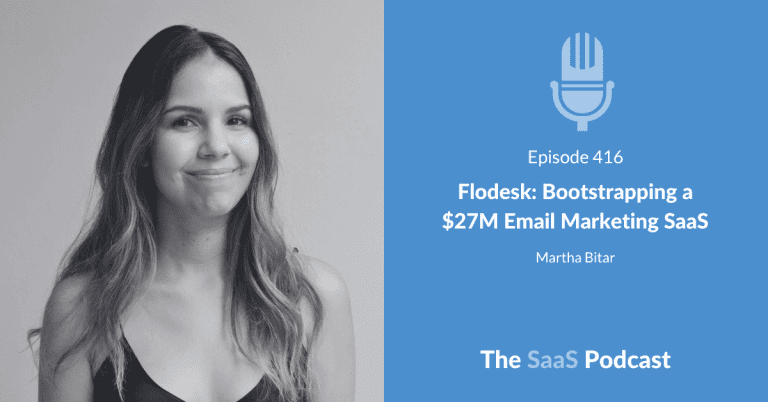
Welcome to another episode of the SaaS podcast. I'm your host Omer Khan and this is a show where I interview proven founders and industry experts who share their stories, strategies and insights to help you build, launch and grow your SaaS business. In this episode I talked to Martha Bitar, the co founder and CEO of Flodesk, an email marketing platform designed to help small business owners create beautiful emails. In 2018, while working at HoneyBook, Martha noticed that many small business owners struggled to create good looking emails that matched their brand.
Omer Khan [00:00:43]:
So she teamed up with her friend Rebecca, who ran a design firm at the time, and developer Tron to create an email marketing tool focused on modern, beautiful design. Martha and her co founders were driven by their vision, but they quickly realized they were in way over their heads. None of them had any experience with email platforms. They spent months creating wireframes and prototypes, but when they showed them to users, people were confused. And this wasn't just a minor setback. They had to start over, focusing on making the product simpler and easier to use.
Omer Khan [00:01:11]:
And they kept at it, tweaking wireframes, showing them to users, getting feedback, and then doing it all over again. In 2019, after countless iterations, Flodesk was ready for launch. But the founders knew that having a great product wasn't enough. They also needed a solid growth strategy and they came up with two clever tactics. As a result, they hit the first million in ARR just four months after their launch. But the success also brought challenges. As they scaled, AWS kept shutting them down due to the high email volume triggering anti spam measures.
Omer Khan [00:01:44]:
Customers would get locked out and the team would have to scramble for solutions every time. Then came Black Friday. With their rapid growth, they weren't prepared for the surge in demand. The platform crashed for four hours, leaving their customers in the lurch during one of the busiest sales days of the year. Despite these setbacks, the founders kept pushing forward. They worked to improve their product, their infrastructure, and regain their customers trust. Today, Flodesk has grown into a successful bootstrapped SaaS business.
Omer Khan [00:02:10]:
The company generates $27 million in annual recurring revenue with over 80,000 paying customers, all on a straightforward $35 per month pricing model. In this episode, you'll learn how the founders turned early setbacks into success by focusing on simplicity in design and user experience, why they chose a flat $35 a month pricing model and how it's impacted their growth. What two growth tactics the founders used to go from zero to the first million in ARR in just four months after launch.
Omer Khan [00:02:39]:
How How Martha and her team navigated major technical challenges and built customer loyalty despite repeated outages in the early days and the key strategies they used to bootstrap their way to $27 million in ARR. Without any venture capital. So I hope you enjoy. Martha, welcome to the show.
Martha Bitarr [00:02:57]:
Let's do this.
Omer Khan [00:02:59]:
Do you have a favorite quote, something that inspires or motivates you that you can share with us?
Martha Bitarr [00:03:04]:
Yes. And I cannot remember who said this, but it goes something like, when I stand before God at the end of my life, I would hope that. That I would not have a single bit of talent left and say, I used everything you gave me.
Omer Khan [00:03:16]:
Love it. Love it. That's super inspirational. So tell us about Flodesk. What does the product do, who's it for, and what's the main problem you're helping to solve?
Martha Bitarr [00:03:26]:
Of course, Flodesk is beautiful email marketing. So you can design emails people love to get.
Omer Khan [00:03:31]:
That's gotta be one of the most crisp, concise, elevated pitches I've heard. Love it. So who's it for? And you know, what was the problem that you. The main problem that you're helping solve. To solve?
Martha Bitarr [00:03:44]:
Yes, of course. So who is it for? Small business owners? Marketers, ideally small business owners. And the problem we were trying to solve was ugly emails, truly. I mean, we were just receiving really crappy emails in our inboxes that we weren't in love with. And then all of a sudden we were seeing really big brands like Airbnb or Anthropologie Urban Outfitters with the really cool designs that are just impossible for non designers or for small business owners.
Martha Bitarr [00:04:13]:
So we wanted to level the playing field and bring those tools to the businesses that we really wanted to see succeed.
Omer Khan [00:04:20]:
Love it. And give us a sense of the size of the business. Where are you in terms of revenue, customers, size of team?
Martha Bitarr [00:04:28]:
We are 27 million ARR. Actually we just hit that number two days ago and we have 80,000 paying customers and 51 employees.
Omer Khan [00:04:40]:
Great. And is the business bootstrapped? Have you raised any money?
Martha Bitarr [00:04:44]:
We have not raised any money. It's fully bootstrapped.
Omer Khan [00:04:47]:
Wow, that is awesome. You and I were talking about this briefly before we started recording and it's kind of mind blowing just what you and your co founders have done with this business. And a lot of the things are kind of like the opposite of what you're told to do when you build this kind of business. And so I'm looking forward to just unpacking that and kind of just figuring out like what you did and why you made some of those decisions. Let's start with just like, where did the idea come from?
Omer Khan [00:05:23]:
What were you doing at the time and how did you come up with this idea?
Martha Bitarr [00:05:27]:
I was working in partnerships at Honeybook. It's a CRM for small business owners and solopreneurs. And my co founder, Rebecca had her own template shop where she was designing email marketing templates that you could then buy and implement in mailchimp. And I kept running into people in the industry, creatives who were super crushing it at email marketing. They just knew what they were doing, but they had a designer and a marketer and a very bloated team. And then you would have the typical small business owner who is not. They're doing everything by themselves.
Martha Bitarr [00:06:06]:
Or maybe they have a team of four, but not really a team of specialists and they were completely struggling with email marketing, even if they were completely crushing other channels. Maybe they had millions of followers on Instagram, but they just couldn't get a newsletter out or an email campaign or a basic automation. And then they, because I was in the space, they kept telling me about it and I'm very hacky. I'll just play with a tool and try to get it done the dirty way or just Google tutorials.
Martha Bitarr [00:06:40]:
So I started telling them, just come by my house, we'll have coffee and I'll create a design for you. That's when I started realizing that design was truly the problem. It wasn't that they didn't know what content they wanted to share. They couldn't make make it look the part. And for a small business owner, their business is their identity, right? A lot of times their business name is their personal name. So if it doesn't look on brand, you could spend six hours on another platform and it just never sees the light of day.
Martha Bitarr [00:07:10]:
And when I was starting to see that this is a really big problem for a lot of people in this space, I talked to Rebecca and Rebecca is the best designer in the world, truly. She started designing for rock stars like Rihanna and Linkin park and then she started her own template shop and it was already super popular. So then I asked her, hey, can I send you some people your way? Because they're really struggling with email marketing design and you have templates for these, so maybe you can help them out.
Martha Bitarr [00:07:37]:
And she said, martha, don't you dare send people my way, because this is a really big problem. I can create the most beautiful designs. And the moment they try to implement them in any platform, they just break because the platforms aren't really made for beautiful design. They're all very much dinosaur systems that work with the designs that we were able to create 20 years ago. And in fact, her number one ticket for support was people buying the designs and then these breaking in the platforms.
Martha Bitarr [00:08:08]:
And then she said, you know, I've actually been thinking that we should probably create something different like a tool where my designs could work. And that was, I think that was the moment of spark. And I asked her, well, if you've been thinking about this, why haven't you done it? And she said she had been sitting on this idea for three years and she's. Rebecca is very much creative. She can see the future of the world. I am an executor, right.
Martha Bitarr [00:08:35]:
If you tell me that you have an idea, I can imagine very clearly, like here are the paths that we can take to make it happen. So at that point we decided to partner and make it happen.
Omer Khan [00:08:46]:
Great, great story. So one, one clarification, the a lot of the email marketing platforms, let's talk about like mailchimp, because that's the, that's the, it's kind of a pun, like the monkey or the gorilla in the room. Right, the 800 pound gorilla. Right. Those type of products, they have built in templates, right. So you don't have to go out and buy stuff. You could use some of those built in templates. But it sounds like people were even struggling with those. But why do you think that was?
Martha Bitarr [00:09:15]:
Yes, because they're not flexible. So if you think about Canva, for example, right. You could argue that Adobe had design tools since the beginning of Adobe, but they're not the design that you want to see today. It's not really modern design and it's also really hard to use. And mailchimp is the same. If you want to grab the template and just send it with an existing template, which let me tell you is not beautiful design, then it might work for you, but it's really not. It doesn't stand out right. In today's world.
Martha Bitarr [00:09:50]:
And I like to think about this in like the old businesses, right. Where before we had Internet businesses, you would walk down a street, normal street, where there's like food traffic and if you saw a store that looked good, you'd probably come in, right? And now we have online businesses and that storefront is the design and the design has up leveled, right. And what you see from other brands set a new standard.
Martha Bitarr [00:10:16]:
And if you're not meeting that standard, you're not actually standing out and it's not Just about getting people to open your emails or click in your emails. But it's also about trust, right? If you're not looking the part, then unfortunately that becomes your storefront. And people don't believe that you are a legitimate business. And what's worse, sometimes that is tied to the business owner's confidence as well. So if you can't make it look good, then you don't believe that you look like a legitimate business.
Martha Bitarr [00:10:45]:
And that is a bigger problem, right, that we could have an entire conversation about that.
Omer Khan [00:10:50]:
So what did you do next? So you've got this idea that Rebecca's been sitting on for a few years. Both of you see that there's a need for something like this first hand experience. How did you validate that there was a business here? Like, just because there's a problem doesn't necessarily mean you're going to be able to turn it into a business. And in many ways this is a very competitive space to get into.
Martha Bitarr [00:11:23]:
Agreed. So the very first thought we had was exactly that there must be a solution for these already. And then we started exploring what was out there. And what we realized was that all of these companies were built first to create and send emails, right? Because back then it was truly a hardware problem. You needed to have database, right? And database administrators, and then it became a software problem where you needed to be able to create the software that sends emails. So most of these competitors were built to be able to send emails.
Martha Bitarr [00:11:57]:
And that was a challenge, right? And now, I mean, Amazon provides the server infrastructure, right? Like nobody really starts a business unless you really have to and you're serving like maybe the government where you have to provide the servers and hire database administrators. Like the focus of the business is different, the challenge is different, right? It became a design problem. So when you think about it from that mindset, it's very easy to see why the existing tools aren't working. Because they were built to solve for hardware and software problems and not design and experience problems.
Martha Bitarr [00:12:32]:
But now that hardware and software is commodity, we could solve for it in a very different way. So essentially building email marketing tools as if they were created today, right? Because we were creating them today, fresh, with everything different from 20 years ago. So then the next step was to figure out if people were truly experiencing big enough problems that they would try something new. And at that point that was the validation stage, right? So we said, let's go and talk to people and ask them if they would try something new.
Martha Bitarr [00:13:08]:
And we started talking to a lot of people and at first, the conversations were so positive. They were super into it. They said, I'm struggling. This is the one area that I can't seem to get right. Whatever you build, I'll buy. So then the very next step was for us to build mock ups. So we were using Figma to build an envision right back then we built some napkin sketches.
Martha Bitarr [00:13:29]:
We were trying to not make it super pretty just to see if it was actually solving a problem, because we can make things look very pretty very easily. But we also didn't want to bias people and just have them say yes because it looked nice. So then when we first sat down, our initial, I would say, like, maybe 12 people. And by the way, these were people that were complete strangers.
Martha Bitarr [00:13:50]:
I actually went on Facebook forums and looked for small, like, small businesses in San Francisco, for example, and posted, hey, anyone struggling with email marketing, can you check out what we're building? So we got a lot of people to reply, fortunately. And that also validated that there was a problem. But then we sat them down and we showed them our amazing solution on how we imagined email marketing should work. And it was such a failure. I mean, I remember Kelsey, she's a fashion blogger.
Martha Bitarr [00:14:20]:
We were in person with her, and she was in front of our computer, and we asked her to just try to create an email with a prototype that we had created. And she didn't even get past the first step. And all she did was slowly sink in her chair, lower and lower, until we asked her, kelsey, what's going on? And she said, martha, I have no idea what I'm supposed to do. This is so confusing to me.
Omer Khan [00:14:43]:
And this was somebody who was already using email marketing as part of her business.
Martha Bitarr [00:14:49]:
Exactly. So we had been very successful at creating something that was even more confusing. And that was really hard because you don't want to have put all of this effort and get your hopes up, and then all of a sudden you're doubting if you have what it takes. Right? So I remember for Rebecca, it was very hard. I come from a sales background, so for me, rejection is, like, normal. And I think I built thick skin to handle rejection. But for her, like, Rebecca's path had been success after success after success, right?
Martha Bitarr [00:15:20]:
So she said, martha, like, do we actually really have something here? So we had to sit down and we had to change our mindset, right? We had to focus on what we really wanted to learn, which is, it's okay if this is not real business. It's okay if we don't find an opportunity. What we want to know is if we have it or not. If the answer is no, that's just as fine. We'd rather find out early on than be hopeful and holding onto this thing that may or may not exist.
Martha Bitarr [00:15:51]:
Deep down, I don't think we ever really doubted it. But it's hard to hear people that just completely don't relate. But we were holding onto that idea of people are having enough pain that strangers are responding to our forum comments and then change the mindset to say, okay, let's apply a little bit of a sales mentality here. Let's aim for the no, right? Our goal is success is to get people to say, no, I don't like it, and to find out exactly what they don't like so we can build something that they like.
Martha Bitarr [00:16:21]:
And once we changed that mindset, it started becoming more like a video game where we were intentionally trying to drive people to the knowledge. And I think our emotional connection to whatever we were building at that point got a little more spacious so that we could truly understand what people were struggling with.
Omer Khan [00:16:42]:
I think there's so much to unpack in what you just said. I love the idea of just focusing on no. There's something, I don't know, magical about that. You kind of compared it to a video game. But when you're having these conversations with customers, whether it's to get feedback or a sale, when you go in with the mindset of I hope they say yes, it's really hard because you're creating such a sense of importance around whatever this meeting is. And when you go in and say, I just want to get to a note, right?
Omer Khan [00:17:24]:
So let me just figure out how to get there as quickly as possible. You kind of let go of a lot of the baggage that you might bring in. And it's kind of funny because it's like if you can't get them to say no, you're almost kind of disappointed because it's become this game, right? It's like you have to try it to really, I guess, to get it. The other thing was that you did all the right things from the sound of it.
Omer Khan [00:17:48]:
Like, you didn't go out and start saying, oh, we've seen this problem, and people are replying. So let's go off and spend months building software because people are going to love this, right? You created these wireframes and you were very intentional about not making them look too nice. So people were focusing more on functionality rather than, yeah, that looks great, that kind of thing. So that sounds like you do all the Right. Things. Looking back now, what do you think was the problem with that approach?
Omer Khan [00:18:27]:
What was not quite right with these wireframes and why do you think that happened?
Martha Bitarr [00:18:32]:
We were building, I think we were fearing that we did not have email marketing expertise and we were building with zero knowledge on software and zero connection to what the customer ultimately wanted to do, which is just impossible. Right? Like, how could we have built something of value if we weren't directly tying it to the ultimate goal of the customer or ideal customer, or the ultimate pain that they were trying to solve? So instead, what we started doing was let's just break it down into each step. What happens when someone first comes in?
Martha Bitarr [00:19:10]:
They want to find a template and they want to see if there's a template that fits their content structure. And that mindset is get shit done time. Right? They don't want to be creative, they don't want to look at design options. They just want to know, is there a template here that will fit the structure that I have in my head? The very next step will be get fun done time, which is, can I customize these to look on brand? And that is where the bigger chunk of the pain was.
Martha Bitarr [00:19:36]:
So that's where we spent most of our time as well. And at that point, instead of building everything and showing everything that you needed to see, at the same time, we started removing truly almost everything until the point where it was just functional. We did not make assumptions anymore.
Martha Bitarr [00:19:59]:
And you are going to want to send a test or you're going to want to save this to Favorites, or you're going to want to customize your subject line, or all of the things that if you go into mailchimp, for example, you see all of that in one screen. And for people, especially for people who had never done email marketing before, they just don't know. They don't have all of those learnings yet. So it's a lot. It's very overwhelming. So instead we're thinking, what is the very first thing that you want to do?
Martha Bitarr [00:20:22]:
And then we'd focus on that part of the experience, Keep on asking ourselves, like, what else can we remove from the screen so we can get you to the goal action faster? And then once we were able to get people to the goal action, then we added the very next step and then the very next step. And the result was something that's a lot less bloated than even the most simple platform out there. Because the truth is, most of the power you don't really need to see. You just need to be able to find it.
Martha Bitarr [00:20:49]:
And then the way that we'd figure out where to place items, for example, we'd ask them where would you click if you wanted to change the background, for example? And then we'd actually spy where the cursor would go. And then that is how we would make the decision. Well, then the button should be here, right? If we ask them where do you think the cursor would go? They're going to tell us what they think. But that's very different, truly very different from where their unconscious mind takes the cursor if you just let them.
Omer Khan [00:21:18]:
You said something earlier about we try to remove everything. Can you just explain that a little bit more? What were you doing? Was this about simplifying the user interface? So there was just like you could just do one thing and there was one button you could click that type of thing.
Martha Bitarr [00:21:39]:
That type of thing. And in fact, that works so well in decreasing the amount of time that it would take people to complete whatever goal action they were doing in that moment that instead of having one screen with everything you could do, we created flows. And this is why flodesk became the name. Right. So you would just look at the templates and then click Next and then you would edit your template and then click Next and then choose your subject line and preview text.
Martha Bitarr [00:22:06]:
And it's all in the order of how your brain would process information. But typically you see that in one screen or all at the same time and you don't really think that way for the most part.
Omer Khan [00:22:18]:
Yeah. I've got to say, from my experience, I don't use mailchimp, but whenever I have used it, I've used a lot of email marketing platforms and I consider myself fairly tech savvy. But there's always this feeling in mailchimp that I'm going to do something wrong because there's so many options around that you're always like. And so I think it's a fair point that if somebody who doesn't their life isn't about just spending time in software all day, they want to actually do something. It can be seriously overwhelming.
Martha Bitarr [00:22:54]:
And then the other issue it creates is that your users never feel like experts because if you have all of these options that they never need, they'll always like, you'll survey them and we actually did this experiment and they'll say, well, I feel like I'm under utilizing or I'm not utilizing FLOTUS to its full potential. And then you start removing options but still make them very easily accessible.
Martha Bitarr [00:23:14]:
And their feeling of expertise increases and the more experts they feel, the more, the more confident they feel about your tool and the higher the brand loyalty as well.
Omer Khan [00:23:26]:
Yeah, I love that. You know, I was talking to somebody last week about just this idea of one of the mistakes that a lot of products make is with the onboarding. They try to, they try too hard.
Omer Khan [00:23:44]:
And when somebody signs up and I went through this experience where I was using a product, I was on a trial and they were trying to tell me about everything that I could do and there was tool tips and pop ups and way too many emails and you know, I just got to the point where it was just like I feel more confused now than I did before I started using the product.
Omer Khan [00:24:07]:
And it really boils down to what's the one thing that you want people to do when they sign up that's going to get them to that, you know, that aha moment. And then once, you know, once you're clear about that, why are you showing them everything else? You can do that later. Right. But I think maybe there's just this, I don't know, this thinking or this kind of misconception and it's just like, well, we've got all this great stuff here, we've got to tell people about it. Otherwise this is our only shot.
Omer Khan [00:24:39]:
Because otherwise after this they've onboarded and they don't know, maybe they're not going to stick around. Right. But I just think it's just so counterintuitive. But simplifying it is actually a much smarter way to go. Okay, so the second time round, what happened? So you've really thought this through and what was the feedback from people this time?
Martha Bitarr [00:24:59]:
It wasn't a second time around, it was a second and third and 14th and 30th. Right. We were just, we were iterating daily. Right. So even the second time around was the very same day, just later in that evening. And things just started changing, right? Little by little we started getting fewer nos and more people excited. And then we heard somewhere on Twitter that you should start building product when you make someone cry because that's when you know that you're solving a really big problem. So we, we were very serious about that.
Martha Bitarr [00:25:31]:
We said let's start, start building product when we make someone cry. And, and I think a few months went by and nobody cried. People were very, very excited. And I started fake charging them as well because I wanted to see if they were ready to pay. So at the end of our demos, I would again looking for the no making them Comfortable with saying no, I would ask, why wouldn't you use Flodesk? And the reason why I wasn't asking why do you want to use it? Is because that creates this compromise.
Martha Bitarr [00:26:04]:
Then they don't want to let you down. So maybe they say yes, but if you give them full permission to say no, and they still say yes, then you know you have a winner. Right? So I would ask, why wouldn't you use flutus right now? And people started saying, I can't think of anything I want to use. Can I use it? And then all of a sudden, they were asking to pay. So then I said, yes, you can use it. You can pay us.
Martha Bitarr [00:26:26]:
I think at the beginning, we said something crazy, like a hundred dollars, right? For the next amount, like, however many months until we launch. And then we started testing more specific numbers just so that we can start learning what our sweet spot would be for pricing. And people just said, yes, like, truly, most of the time. But we still didn't make anyone cry. And then eventually we did someone. Mary is her name, and she has a creative business. And she did actually start crying, like, happy tears.
Martha Bitarr [00:26:59]:
But we saw a tear, and she said, this has just been such a pain for me, and I'm so excited that I'm finally going to be able to do these. And for her, it meant not just sending beautiful emails, but actually converting and making sales and creating a profitable business. Right. So that was really nice. And then we knew we needed to start coding.
Omer Khan [00:27:20]:
Wow. How many iterations did you have to do before you got to make Mary cry?
Martha Bitarr [00:27:28]:
I have no idea. Honestly. It must have been hundreds. But these iterations would happen from one call to the other. We'd already make an iteration. Right. We weren't trying to get statistical significance. Like, the feedback was very clear for the most part. And we were having. I was booking 12, a minimum of 12 customer calls per day. Not everyone would show up, but assuming, like, nine people show up, that's a lot of information. So we went through the motions very quickly.
Omer Khan [00:27:53]:
How did you figure out, like, you know, let's. Let's kind of try to get to the know, or let's ask them why they wouldn't use it. Was this based on your sales background in terms of thinking about objections and how to deal with customers, just kind of whether they're actually committed to this thing or not? Or was it something that you learned during this process?
Martha Bitarr [00:28:23]:
I think it was just common sense.
Omer Khan [00:28:26]:
Well, not everybody has that common sense. So you were just like, this was just something that you just Felt like just intuitively, as you went through this process, you've just figured it out?
Martha Bitarr [00:28:38]:
Yes.
Omer Khan [00:28:39]:
I was reading something yesterday where somebody was saying that I don't know if it's how important intuition is. It's not just all about rational and numbers and logic. And this person who's a pretty successful entrepreneur, he was saying that he thought women were a lot more intuitive. And I don't know whether men just have this thing about it's got to be logical and whatever, but I think we've all got to learn to trust our gut a little bit more. I think whatever you call it, I love it. So great.
Omer Khan [00:29:15]:
So Mary starts crying and you're like, okay, great. So we got the green light. We're going to go and build this product now. How did you build it?
Martha Bitarr [00:29:24]:
Okay, so this is where the real struggles started happening, because we had no idea how to build software and we had no idea what email marketing. I think if you. Anyone who actually knows what it takes to build email marketing software probably does not want to build it. So we built it because we had no idea what we were getting into. And I think that was a really big plus for us, that ignorance. Once we started building it, we needed someone who could collaborate code.
Martha Bitarr [00:29:51]:
And Rebecca had built her template shop with Trung, who eventually became our cto. And we just called him and said, hey, we think we have a really good idea here and do you want to be part of it? And he said, no. He said, I don't really, and I'm working on something else for myself, but I can get you a team of developers and I can supervise them and does that work? And we said, yes, we'll take it. We'll take whatever at this point.
Martha Bitarr [00:30:21]:
And then we started building the platform and the design we knew how to do and getting the customer's needs we knew how to do. But the infrastructure was just completely new and tricky and we were doing it so wrong that as we started like this is post launch, but once we launched and we started getting more and more people to use it and started seeing sending emails, Amazon kept shutting us down because we were just violating all of the rules, right? Like we were getting spammers in, we were getting bots.
Martha Bitarr [00:30:55]:
Some people were just sending content that would get flagged as spam, but they were legit business owners. We weren't really creating the right send from addresses. We did not allow for custom domain verification or dkim or any of those things that we just had no, no idea that existed. So it was like almost a Daily occurrence at that point where people were already using the product, they were paying for the product, and then we just get shut down and all of a sudden our platform was completely gone.
Martha Bitarr [00:31:27]:
And this was really hard, actually, because we could not get a hold of anyone at aws. Every time we'd call support, we'd get someone somewhere in the world picking up the phone who had no idea if we ever got anyone to pick up the phone, they had no idea what we were doing. They would think that we were a customer, like an entity instead of an email service provider. So there was just no way to get them to give us any insight into how do we do this. Right.
Martha Bitarr [00:31:59]:
So that was probably the hardest, most critical point because we could have just disappeared as a company.
Omer Khan [00:32:08]:
How often was this happening?
Martha Bitarr [00:32:09]:
Truly, almost on a daily basis for a while.
Omer Khan [00:32:11]:
Oh, my gosh.
Martha Bitarr [00:32:12]:
But we weren't. We wouldn't go. We wouldn't be completely shut down. We'd get shut down and then we'd quickly call support and then we'd explain again that we're an ESP and these are our customers and that we're. Then they sort of give us an insight into what we were doing wrong. But they never want to tell you fully what you're doing wrong, just in case you're truly a spammer. They don't want to give you the keys to the kingdom. Right? So.
Martha Bitarr [00:32:36]:
So we were sort of guessing, right, and doing a lot of analysis on our end, catching the issue and then giving them this long brief, telling them how we solved it, and then within maybe anywhere from 20 minutes to four hours, we'd be back up. So, yeah, this was really hard. And then eventually we started learning. We just started learning so much. And every time, I think in retrospect, it was probably a really good thing for our business because it was forced us really quickly to build a better platform.
Martha Bitarr [00:33:09]:
And every time we went from maybe within one week, we got shut down three times to we didn't get shut down for a few months, and then all of a sudden it happened a couple more times and then it just was crickets for a while. So we'd keep asking each other, are we out of the trouble with Amazon? And eventually, I think we gained enough traction that the volume and also the spend that we were having with them got someone that knew what they were doing to contact us.
Martha Bitarr [00:33:41]:
And then we started working with them as a customer and that got fixed, thankfully. But we really had to be resourceful and learn fast and build a better platform.
Omer Khan [00:33:52]:
There's this. They Call it the curse of knowledge. And I think you sort of touched on this earlier, where a lot of people who know about building a platform like this either wouldn't do it, as you said, or they would spend a really long time trying to get all of these things right before they shipped the product. Fortunately for you, it worked out fine and worked out very well. I'm sure it was very painful at the time.
Omer Khan [00:34:26]:
It's kind of funny where you were saying, like, you know, sign of success in those early days was like, yeah, we didn't get shut down by Amazon for a few months, right? But what would you say to. Because there's always this school. You have people who, your founders who might be thinking, I know I should launch quickly, but I don't want to put a crappy product out there. And. But, but the danger with that is sometimes they take, like, way too long to get it out there.
Omer Khan [00:35:01]:
And I think many people would be really terrified of experiencing what. What you guys went through. What. What would you say to them? Like, you know, I think partly you said you, you. You learned to, you know, build a better product much faster, but what other benefits do you feel you got from just shipping fast?
Martha Bitarr [00:35:26]:
I think the key here is to forget the idea of the day of launch, because when did we launch, right? Did we launch when we started building campaigns manually for people? Did we launch when we had the Figma prototype, when we started charging people? That was before we even had a website, right? So. Or did we launch when we created a growth channel? To me, it's like you're launching all the time, right? And the moment when you. It depends on what launch means to you.
Martha Bitarr [00:35:56]:
But I do think you can launch too soon or think that you're launching too soon. And I do think that you can wait longer. But the challenge is if you launch too soon, worst case scenario, you get people like Kelsey who sink in their chair and say, I have no idea what I'm doing and this is not a solution that I want to use, right? And the worst case scenario, if you waited too long, I mean, there's a lot of problems with that, right?
Martha Bitarr [00:36:20]:
Like, maybe you miss the market, maybe, I don't know, like, the economy changes, Maybe like another tool comes in and they steal your market share, or you're just, like, spinning your wheels and not getting enough learnings fast enough, right? So to me, the moment someone tells you that they're willing to pay you, that, like, go for it, accept it, right? And then bring them on as customers. And that is a timeline. That you can control, right?
Martha Bitarr [00:36:43]:
Because from the very first moment that you talk to someone about it, even if you just say, I have this idea, you can say, and they're excited about it, you can say, okay, pay me for it. And worst case scenario, they'll say no, right? And I think on the launching, too late. This is so common because you have your vision in your mind, right?
Martha Bitarr [00:37:03]:
So whatever we ended up launching with, and I'm quoting, air quoting, because again, like where, where is it launch, whatever we ended up launching with is so far from what we had in our mind that we set out to build what we have today out there in the market is so far from the vision that we have, from what we really want to build. So if we wait for that vision to be complete, then yes, that's too late, right?
Martha Bitarr [00:37:31]:
And if we wait for a super clear differentiator, for example, or for a full feature parody or full expression of our capabilities, then that would have been too late, right? We launched with very clear differentiator, which was beautiful emails and ease of use, but we don't have all the features that other companies are going to have. We didn't even try to get to feature parity, right? We were tool at that point in a lot of different areas that we thought some people are not going to necessarily need right now.
Martha Bitarr [00:38:02]:
But if they really need the design and they really need the ease of use, we've got it, right? So that, that was the right balance for us.
Omer Khan [00:38:10]:
So, so you shipped the product, I think it was August 2019.
Martha Bitarr [00:38:14]:
That's right.
Omer Khan [00:38:15]:
And you got the first 500 customers like within days. And it's like, how, how did you do that?
Martha Bitarr [00:38:25]:
Okay, so this is the beauty of it's not going to be applicable to everyone. But if whatever you're building has the potential of a viral footer, you have to do it, right? Because we didn't do it, our users did. So if you think about email marketing, right, if you think about an email, you send it and somebody sees a result, the beautiful email that you've created in Flodesk, and at the bottom we inject a footer that says made in Flodesk, right? And this is not something that we invented. This is a Hotmail model, right?
Martha Bitarr [00:38:56]:
This is how Hotmail became the number one email platform back in the day. And anytime there's a viral footer opportunity, that's a machine that's just working for you. And it also allows you to not focus on growth but to really laser focus on making every new user successful, right? So if we only get like a good chunk of our new trials to not even pay, but just send their first email, then their entire audience is going to see the result. And what better way to sell it, right?
Martha Bitarr [00:39:27]:
Nothing we say about our tool is going to replace the impact that you see when you see a floatist email in your inbox.
Omer Khan [00:39:33]:
Yeah, I love that. So you, I know you told me that the first 10 customers was mostly outbound. You were going to the forums and finding customers there. And then the first hundred or the five hundred, did they mostly come just from getting a few early customers successful sending out emails? Was it as simple as that?
Martha Bitarr [00:40:01]:
Yeah, it was as simple as that. In fact, the viral footer alone got us from yeah, 500 to well, okay, yes. And we also added another growth channel which was an affiliate program. So we created our affiliate program before we even had a website. We just didn't launch it. We launched it at the same like time that we launched a website. Because when we were working with these outbound customers, very often they would ask us if they could refer somebody else and we had no website. They couldn't sign up. Right.
Martha Bitarr [00:40:34]:
So they had to come to us and say, hey, can so and so work with you as well. And we realized that this was going to be something that. And this is a small business owner characteristic, right? They make purchasing decisions based on what other small business owners are doing. So we recognize this very early on and we created an affiliate program where you could come in, grab your affiliate code or your referral code and share flodesk and make $19 when someone joined through your link and paid.
Martha Bitarr [00:41:03]:
So when we launched, there were two engines at work. The first engine was the viral footer. So Natalie, one of our first emails that went out funny because now she's our head of marketing. But back then, customer and she sent her first email to 16,000 people. 16,000 people were exposed to an email that was so beautiful, unlike anything that seen before. And we actually got a lot of people clicking on her link. Then they signed up, right? And when they came in to create their account, we showcased these share flotus with a flying cash emoji.
Martha Bitarr [00:41:39]:
And then when they clicked on it, it would take you to your affiliate page that showed your referral code and your ability to make $19. And because they were so excited about a new email marketing platform that was beautiful and easy to use, they were very quick to share it. So it was a compounded effect of the viral footer and also the affiliate program. And then we did something pretty Drastic. So we linked the footer to their affiliate program.
Martha Bitarr [00:42:05]:
So now anytime, let's say Natalie sends her email again to 16,000 people, and somebody clicks on the footer, and then they sign up through the website and they pay us. All of a sudden, we have another viral loop, because we're sending Natalie an email saying you just got paid because you referred someone and she didn't do anything. Right? So all of a sudden we're giving you the dopamine before you even take action. Right. And that just creates more activity, and it's all, again, a video game. So it's just really fun. We just made it fun.
Omer Khan [00:42:36]:
So just with. With the viral footer and the affiliate program, you basically went to the first million in ARR in about four months. By the end of 2019, you were there, which is pretty amazing for a bootstrap business. I know you're saying that these were the two main things that helped drive the growth. And not everybody will be able to do something like this or have some kind of virality built into their product. But I think it's also because of the time you spent doing these wireframe iterations and getting this feedback.
Omer Khan [00:43:21]:
And even though the product didn't have a lot of features, you had picked one thing, sending beautiful emails that you knew people cared about, and you'd made that easy. And I think that that was also a big thing, because if you had just, you know, been a copycat of mailchimp with this, you know, viral footer, I'm not sure it would have had the same outcome as people wanting to share this because they really feel like their life is better. And.
Omer Khan [00:43:53]:
Or when people come to the site, they can clearly understand how this product is different to what else they could be using. So let's. Let's talk about pricing. Now. Typically, you know, the. We talk about having, like, a SaaS product. It's got to have three tiers. You got to have different plans for different people. Something very common with email marketing platforms is you will pay more as you get more subscribers on your email list. And you didn't do any of that. You basically had one plan. And I think you still have one plan.
Omer Khan [00:44:41]:
Is that right?
Martha Bitarr [00:44:42]:
We have two now.
Omer Khan [00:44:44]:
Two. Okay. Right. And it's like $35 a month, and you're not charging people. It's a flat fee. So Whether they have 10 subscribers or 100,000 subscribers, they're still paying the same amount. So why did you do that?
Martha Bitarr [00:45:03]:
Very complex answer. First, we did it because we didn't want to distract with pricing both the user, but also ourselves. We didn't want to have to spend time figuring a pricing model when we could be spending time talking to customers and building product. We really didn't think that this was going to scale to the extent that it has scaled. Then when it started working, we started looking at why hasn't it broken yet? And our margin is super high as well. And we realized that the pricing model works for two reasons.
Martha Bitarr [00:45:34]:
One, what other people have specifically. So the tiered pricing model is in place because it's a very good way to maximize your revenue and grow linearly with the size of your customer. So it's a really brilliant pricing strategy for. But it's not necessarily needed because the cost of sending emails has gone down so much from 20 years ago when Mailchimp, for example, started that in a way it could be outdated. Right? So if you think about Squarespace, for example, they're not really charging you in tiers based on how many visits your website gets, right?
Martha Bitarr [00:46:07]:
Serving traffic is not that expensive, so it's not really necessary to anchor your pricing model to it. But people still do it because it's a very brilliant way to. To increase your average revenue per user. So we might still do it at some point, but we might not. And we really need to be smart here because if you think about it, mailchimp made things easier. But that wasn't their only radical differentiator. They also created a free plan, right? And that is how they completely disrupted constant contact.
Martha Bitarr [00:46:39]:
So one of the learnings, and this is to be written and discovered, but one of the learnings we're having is that pricing unintentionally has become a differentiator. And I think we still need to figure out how do we scale it. Eventually we're going to go up market, and as we go up market, we can also go down market because we can afford it. But for now, starting from the core instead of from one of the edges has allowed us to build a very profitable business that just gives us all of these options. Right?
Martha Bitarr [00:47:13]:
And there's a chance that we might just keep it this way and create pro tiers that still keep the unlimited subscribers and unlimited emails. Because again, it doesn't have to be anchored to the pricing model, but maybe we find another way to add value. It could be something like API calls. I'm not sure I'm being completely raw and transparent here, but we know people love it, we know the economics make sense. So that was a very fun surprise discovery.
Omer Khan [00:47:44]:
I think it's brilliant I think that conventional wisdom would tell you you can't bootstrap, charge $35 a month, unlimited usage, and even get to, you know, a million ARR. And you have, like, you're closing in on 30 million ARR with doing exactly that. And I guess you're right. There are some things unique about your business, and you've been smart about how to take advantage of those. But yeah, I always wondered, was it an intentional thing?
Omer Khan [00:48:26]:
Like, I know you said, hey, we don't want to get distracted, and this is why we did it, but it's many ways. It's like a lot of the things I see you doing, it was almost like, hey, this is what everybody else is doing. We're going to do the opposite. Right?
Martha Bitarr [00:48:40]:
Well, okay. It was intentional in a way that we knew we didn't want to support free users. Right. And because we don't have a free email plan, we can actually afford the unlimited pricing. Right. So if you look at other companies around our size. Right. That are targeting the same amount of customers, the large majority of their users, and I'm going to say like 80% plus are on their free plan. So they're not actually paying them anything. Right. And they're depending on enterprise. Right. Or upscale marketing, upmarket customers to support them.
Martha Bitarr [00:49:17]:
And we wanted a more direct pricing approach, Right. Like you're getting. You're paying for the value that you're getting as a customer. So. So we can afford to do that by not having a free plan. And that part was really intentional. The pricing, the actual pricing, the total was very intentional. We did a lot of research there. And then the unlimited piece was. Because we also found that there was a pain in. Every time I grow my list, I have to think about pricing.
Martha Bitarr [00:49:45]:
And people don't want to start email marketing because they have this huge dark cloud over their heads that they're going to have to pay more. And that's painful. So. So yes, it was an intentional experiment, but I think we're still in experiment mode, if that makes sense.
Omer Khan [00:49:59]:
Yeah, yeah, totally. Let's talk about. I think when somebody's hearing this story. Well, first of all, I'd say I think you've done a great job to just share both the ups and downs of this journey. And it wasn't easy by any means, but I think when people, you know, kind of listening to this might be thinking, you know, it sounds like, you know, you. You guys got lucky. The three of you came together.
Omer Khan [00:50:28]:
You had this great team, and that's why you were able to get through these, these hard times and, and you know, find product market fit. But behind the scenes there was even problems just figuring out how to work with each other, right?
Martha Bitarr [00:50:48]:
I think the human part of building a startup is probably the hardest. And I think I heard somewhere that that's the number one reason why startups fail. Just like founders not getting along with each other instead of not finding product market fit or getting paying customers. Right? And I can see why at the beginning we struggled with this a lot because you have Rekha, you have Trung and you have myself. And we never work together, truly, and especially not in SaaS.
Martha Bitarr [00:51:16]:
And we're all new to the space and we want to be perfect in front of each other, right? We're showing up and we're in the fake it till you make it mentality, right? I don't want to come across Super Junior. I want to seem like I know what I'm doing. And the challenge is that because we were trying to show up so perfect, we weren't talking about the real issues. And the real issues along with the fact that we did not really know what we were doing and we didn't have our act together.
Martha Bitarr [00:51:48]:
And problems kept happening where like for example, we were approaching our first Black Friday, right? So we launched in August. A few months later, it's November and we didn't even think. We knew Black Friday was an important date for our users. We didn't think this is the high season for email marketing. Anyone that works in email marketing will tell you like, you have to have your act together for this day. So I thought, oh, maybe I should be pushing our CTO to make sure that we have a super scalable system.
Martha Bitarr [00:52:20]:
But I didn't really want to rock the boat. We were all very conflict avoidant as well. I didn't want to imply that maybe he doesn't know what he's doing. He didn't want to share that he didn't spend a lot of time making sure that we were hyper scalable, testing our solution to make sure that it was actually scalable. We were building on Mongo database and they have this auto scale feature and we turned it on and we thought, okay, well we've got this, right?
Martha Bitarr [00:52:48]:
And Black Friday comes along and remember we have a viral footer, right? So people start upping their activity and sending more emails, more eyeballs start getting exposed to the flow disk footer, more people start signing up. And this is a very fast viral loop, right? So within hours you can get a lot of people to your website and we did get a lot of people to our website and the demand, the usage increased at a much faster pace than we expected and also a much faster pace than the database needed to upgrade itself.
Martha Bitarr [00:53:22]:
So the demand was faster than the actual database process. So the auto scale did not work for us and we completely crashed. And this time, if you crash on a random, like, Monday, it doesn't matter, but if you crash on Black Friday, oh, my gosh, like, we were. We were crying, we were emotional. It was horrible. The worst part was that we had these, like, at this point, thousands, right, of customers who, who had put their faith in us, right?
Martha Bitarr [00:53:48]:
They had switched from another platform that was reliable, and guess what was like having uptime during their most critical sale of the year. And this is. This is how they make money, right? So we were getting in the way of the livelihood of our customers, and that was not okay. So we fixed it quickly. Thankfully, we were down for four hours, but it was so early in the morning that the impact was little. It was recovered. But even then, I thought that we had fully lost the trust for the customers.
Martha Bitarr [00:54:22]:
To me, everyone was going to cancel and we were going to lose everything that we had built. And you don't really recover from a lack of trust, right? It's really hard. So all of a sudden, I start getting a lot of tags because I was managing our Instagram and people are tagging us, right? And people keep tagging us. And in my mind, I'm thinking, like, human, right? Worst case scenario, I'm thinking, okay, all of these customers that we've failed are probably going online and telling everyone, do not use flotusk. They massively screwed me over, right?
Martha Bitarr [00:54:51]:
And I'm scared. And I remember for like a good 10, 15 minutes, I tried not to open them because I thought, okay, we have to just, like, be in problem solving mode and then we can go and deal with all of these, like, super angry customers. And they were right, right in being angry. And then something really crazy happened. I opened the app and I started looking at the videos and one after the other, it was these faces that we had, you know, interacted with at some point because they were new.
Martha Bitarr [00:55:18]:
And we're just calling them and asking them, like, why are you here? What attracted you to Flores? And it was these faces that were sharing in their Insta stories. Something like, guys, Flo broke the Internet. Like, they are having so much demand, their site is down. As soon as they're up, you have to go there and you have to sign up because they're Onto something big. And I'm not kidding. Like, oh, my God, that just marked our lives forever, right? Like, that level of loyalty and trust and support. Oh, my gosh, I'm getting, like, chills.
Martha Bitarr [00:55:54]:
You don't break that anymore. You don't fail them again. Like, that was the motivation to get up every single day and say, we're going to build the best platform ever. Not the better platform, the best platform ever. We're going to disrupt ourselves every single day for these people. Just change everything.
Omer Khan [00:56:11]:
Love that. Wow. That is not what I expected you to say. Like, I thought those videos ago, like, you guys suck and whatever. But that's, that's, that's awesome. I think it just goes to show the kind of, you know, if you're open and transparent about what you're doing, if you're listening to feedback, if you're making people feel like they're part of something, you can't underestimate that.
Omer Khan [00:56:41]:
And I think, you know, I think Intercom did something similar where they built these, these, you know, these loyal fans by just being very transparent about, you know, how they were going about building their business. That's awesome. All right, I think on that note, I think we should wrap things up. Let's get on to the lightning round. I've got seven quick fire questions for you. You ready?
Martha Bitarr [00:57:08]:
Yes.
Omer Khan [00:57:08]:
All right, what's one of the best pieces of business advice you've received?
Martha Bitarr [00:57:13]:
Build a painkiller, not a vitamin.
Omer Khan [00:57:16]:
What book would you recommend to our audience and why?
Martha Bitarr [00:57:18]:
Blink by Malcolm Gladwell. Because it tells you that sometimes your intuition tends to be right and it's a matter of when do you need to seek that extra validation? It's back to where you were just saying.
Omer Khan [00:57:30]:
What's one attribute or characteristic in your mind of a successful founder execution?
Martha Bitarr [00:57:36]:
A lot of people have the right idea, but they just never take action.
Omer Khan [00:57:39]:
What's your favorite personal productivity tool or habit?
Martha Bitarr [00:57:43]:
Shower markers. Because the best ideas come. You know, it's like when your to do list just comes back to mind.
Omer Khan [00:57:49]:
I tell you, it's just like I like I do the same. It's just like that's. It's like showers and driving going nowhere. Right? Those are the two things that get my best ideas. What's a new or crazy business idea you'd love to pursue if you had the time?
Martha Bitarr [00:58:05]:
I love escape rooms and I love this video game where you have to detonate a bomb, and it's by solving several different puzzles. So a real life escape room where you detonate a bomb would be 100% it.
Omer Khan [00:58:19]:
Wow. And what's an interesting or fun fact about you that most people don't know?
Martha Bitarr [00:58:24]:
I grew up in Mexico and my first language is Spanish.
Omer Khan [00:58:28]:
Cool. And finally, what's one of your most important passions outside of your work?
Martha Bitarr [00:58:32]:
My almost 2 year old baby girl.
Omer Khan [00:58:36]:
Oh, yeah. So it's not like, you know, you're not busy when you're not at work, right? That's like two years. There's a reason they call them the terrible twos. It's like, from my experience, it's like,
Martha Bitarr [00:58:51]:
okay, we're about to get into the. She's still 20. One month. One month old a month. I never get used to it. But she's not terrible. She's truly just perfect.
Omer Khan [00:59:02]:
That's awesome. Martha, thank you so much. It's been a pleasure. Thanks for unpacking the story and sharing so much about the ups and downs. And hopefully I think people can walk away feeling a little bit more inspired and go and try something in their own business today that can help them get to the next level. So I really appreciate you doing that. If people want to check out Flodesk, they can go to flodesk.com that's flodesk.com and if folks want to get in touch with you, what's the best way for them to do that?
Martha Bitarr [00:59:31]:
Hellolodisk.com Wonderful.
Omer Khan [00:59:34]:
Thank you so much. Congratulations on everything so far and I wish you and the team the best of success.
Martha Bitarr [00:59:40]:
Thank you. This was really fun. Thank you so much.
Omer Khan [00:59:42]:
It's my pleasure. Cheers.