Omer Khan [00:00:00]:
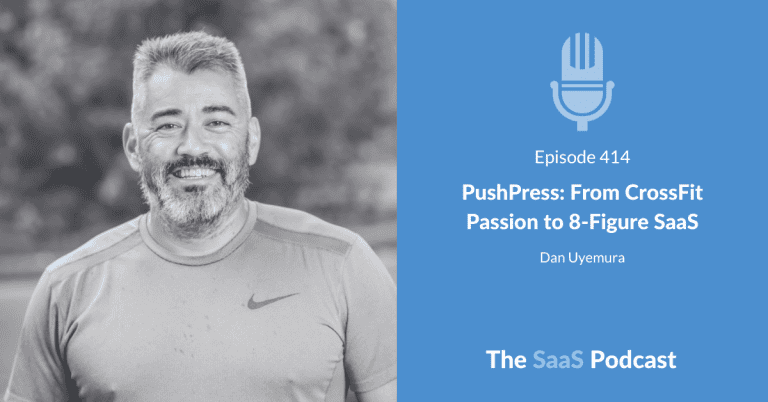
Welcome to another episode of the SaaS podcast. I'm your host Omer Khan and this is a show where I interview proven founders and industry experts who share their stories, strategies and insights to help you build, launch and grow your SaaS business. In this episode, I talk to Dan Waymura, the co founder and CEO of pushpress and a gym management software platform for boutique gym owners. In 2009, Dan was working as a front end developer at MySpace while also falling in love with CrossFit as a personal hobby.
Omer Khan [00:00:40]:
His passion for fitness led him to open his own gym. Despite having no prior experience in the industry as a gym owner, Dan quickly realized the existing software options weren't meeting his needs. So believing he could create a better solution, he recruited two friends and a developer and a designer to help build his own gym management software. But building the software proved much tougher than any of them had expected. As they were working on it, they also talked to other gym owners and realized many shared Dan's frustrations.
Omer Khan [00:01:11]:
So, seeing the bigger opportunity, they decided to turn the tool into a product that they could sell. But for years, the founders struggled to gain traction and they faced several technical challenges along the way, often having to scrap entire versions of their software and start over. The slow progress was demoralizing. It took them nearly five years to reach the first million in ARR, and behind the scenes, Dan was battling personal demons. He struggled with drug addiction, which added another layer of complexity to his entrepreneurial journey.
Omer Khan [00:01:42]:
And his personal challenges threatened to derail both his life and his business. By 2017, Dan was on the verge of quitting Pushpress and going back to running his gym. In a last ditch effort, he decided to invest in an accelerator program and that decision proved to be a turning point. The changes the founders went on to make started to pay off. Pushpress doubled revenue to 2 million ARR. The following year, they also teamed up with another company to add features that they needed in their product. And then a competitor came along and bought that company.
Omer Khan [00:02:14]:
Suddenly, the founders were back in crisis mode. They had to race against time to build those crucial features themselves or risk losing everything that they'd work for. Today, PushPress generates eight figures in ARR, serves over three and a half thousand gym clients, and has grown to a team of about 100 people. They've also raised about $11 million in funding. In this episode, you're going to learn how Dan and his co founders persevered through those five years of slow growth before reaching the first million in arrival.
Omer Khan [00:02:42]:
Why PushPress decided to pivot from relying on third party integrations to building their own full stack solution. How a competitor's acquisition of their partner company forced them to rapidly having to develop crucial features. Why PushPress chose to focus on customer retention and organic growth rather than pursuing aggressive paid acquisition. And how Dan balances running the business based on instinct with the need for more data driven decision making as the company scales. So I hope you enjoy. All right, Dan, welcome to the show.
Dan Uyemura [00:03:12]:
Thank you so much. Excited to be here.
Omer Khan [00:03:14]:
My pleasure. Do you have a favorite quote, something that inspires or motivates you that you can share with us?
Dan Uyemura [00:03:20]:
It's not a quote so much as it's just a mindset and it's basically focus on inputs, not outputs. It's something I really try to drive every aspect of my life around.
Omer Khan [00:03:29]:
Cool. So people who aren't familiar with pushpress, what does the product do, who's it for and. And what's the main problem you're helping to solve?
Dan Uyemura [00:03:38]:
Yeah, so PushPress is basically a gym management software platform for boutique gym owners. So think single owner operator, yoga studios, Martial Arts Studios, CrossFit Studios, stuff like that. What we're basically our big value prop is trying to give these gym owners who are fanatical about delivering whatever fitness modality that they love and believe in, more time and energy to focus on their clients while giving them software and processes to streamline their business.
Omer Khan [00:04:06]:
So can you give us a sense of the size of the business? Where are you in terms of revenue, customers, size of team?
Dan Uyemura [00:04:13]:
Yep, we're low eight figures, so below 20 million, but above 10 in ARR. 3,500 clients and about 100 people on our team right now.
Omer Khan [00:04:23]:
Great. So the business was founded in 2013, so let's kind of travel back in time. What were you doing back then? Like what was your background? And then how did you come up with the idea for PushPress?
Dan Uyemura [00:04:38]:
Yeah, so right around the time we started PushPress, I was working for MySpace as a front end developer. And I also at that time, maybe about a year before that, had discovered CrossFit for myself personally. And what I started to notice was on the work side of things, I was kind of just showing up to get a paycheck, but on my personal side of things, I was looking more and more towards being able to leave at the end of the day so I can make my CrossFit class.
Dan Uyemura [00:05:04]:
This is right around the time CrossFit was starting, like 2007, 2008 or it was early days for CrossFit and what was happening was a lot of gyms were spinning out of my gym. So the gym that I belonged to, I think maybe like five or six gyms spun out of it because people fell in love to and opened gyms. And because I kind of had a technology background, I was helping people who were opening gyms, like, set up their website and get lead funnels built and some of these stuff in place for them.
Dan Uyemura [00:05:28]:
I was myself just falling in love with the science of CrossFit. And I ended up getting a coaching licensure. And then I ended up opening my own gym too. And that's kind of. As I opened my own gym, I realized the software that was out there I wasn't super thrilled with, and I wanted to just build my own for something that I knew could be built that would be better.
Omer Khan [00:05:49]:
What was the process you went through? Did you. Did you go out there and try to look for software that could help you run the business and what did you find at the time?
Dan Uyemura [00:06:00]:
Yeah, and again, this was fairly early. We're talking 2009. Ish, 2000, maybe early 2010. First thing I did do was look for software, because I'm a software guy, so of course I'm looking for software. Everything I found I just felt was very disconnected from what I knew could be built just because they were built in probably the early 2000s. And between the early 2000s and late 2000s, the iPhone came out and APIs were created. None of these things were available in the early 2000s.
Dan Uyemura [00:06:29]:
So I just saw that visual disconnect between what was available and what I knew could be built. And I just decided, I don't want to use that. I foolishly thought it would be easy to build my own. It was actually super hard, but I thought I could build my own first version at my first gym. We just kind of rolled together something on top of recurley and WordPress and just kind of made it work. But what I didn't realize was I ended up kind of joining a whole bunch of gym ownership support groups.
Dan Uyemura [00:07:00]:
And those people in those groups ended up seeing my website and realizing I wasn't using what everyone else is using. And people started asking me, and that's when I realized that the demand was there.
Omer Khan [00:07:09]:
Around what time was that?
Dan Uyemura [00:07:10]:
20. 2010.
Omer Khan [00:07:12]:
2010. So that was about three years before you actually launched Push Press, correct?
Dan Uyemura [00:07:16]:
Yeah.
Omer Khan [00:07:17]:
So you've identified the demand, but like, how did you get to the point where you went from, okay, kind of, you know, kind of duct taping something together with WordPress to saying, I'm going to go and actually build a product for other gym owners as well.
Dan Uyemura [00:07:38]:
I mean, to be honest, I'm. I think I'm very entrepreneurial, entrepreneurial minded. So I'm sure it's all hazy now, but I'm sure when we opened the gym we were also thinking the software would be cool to build. Then we realized the software wasn't good because we were software people, right? So we're like, probably should build the software. Realized software isn't good, realized people wanted something different. So it was like helping us build conviction all the way around.
Dan Uyemura [00:07:59]:
And then probably around 2011, we actually sat down with the partners that were forming kind of the nucleus of the company that is today. And we just started coding. And so it was myself, another coder, and then somebody who was like a UI UX director at a pretty big company kind of formed the founding three. And so we would just go to Starbucks and coffee beans and anywhere we could just sit together and code and we just coded. And it took us probably a solid year and a half.
Dan Uyemura [00:08:34]:
I think things are way faster to build nowadays. So this might sound crazy to people listening, but a solid year and a half. And I think we threw away two versions of code because first version we built on top of WordPress. Again we did something else that wasn't running. Then Stripe came up and we're like, oh, we should use Stripe. So it was kind of a process that took quite a long time.
Omer Khan [00:08:51]:
So while you were developing that idea and getting ready to ship this product, there were some struggles going on in your personal life, which I think didn't, you know, didn't help. Can you, can you talk a little bit about that?
Dan Uyemura [00:09:10]:
Yeah, so I'll back it up a little bit. So the catalyst for me actually starting CrossFit was I got a divorce. So I got out of a kind of a bad relationship, got a divorce, lost my house. I don't know if you remember during those like Obama years where they were doing the whole housing, I forgot what they called it, but the, they had a program where you can try and restructure your loan because there was predatory lending. I was in that boat, lost my house, had a lot of negative things happening in my life.
Dan Uyemura [00:09:35]:
Also got laid off from my space, opened the gym, which was positive, but just all in all a lot of bad things happening during that time. I got introduced to drugs and literally in a six or a nine month time frame, I went from being a fully functional normal person to a fully functional drug addict to a non functional drug addict who kind of Lost his head. And it kind of, I guess capitulated in me thinking that the mafia was trying to come kill me.
Dan Uyemura [00:10:05]:
During that time, I had bought some guns, which probably a stupid thing to do in hindsight, but ran out in the middle of the street, shot my guns in the air, called the cops to tell them to come save me. Cops arrested me because obviously I'm the crazy one. And then it happened to be by a park. So I got like these enhanced charges because drugs were involved near a park and a gun shooting.
Dan Uyemura [00:10:23]:
So it turned into this whole felony offense and it was just like some crazy thing that just like snowballed out of nowhere. So, yeah, it was nuts. And I basically was kind of like confronted with this life choice once I sobered up because they left me in like a holding cell for like four days straight. And I sobered up and I'm like, well, I'm a college educated professional who has a good job. I've never done anything wrong. What am I doing?
Dan Uyemura [00:10:45]:
And it was kind of this moment where I had to basically pick a path because normal people probably don't think this way, and I've never thought this way. But when I was confronted with this whole felony, I realized, like, you can't get a job, you can't get an apartment. You're basically relegated to, I don't know, a life of crime or really low pay for the rest of your life. And on top of that, I was sitting on 13 years in a state pen. So I'm talking like places they send killers.
Dan Uyemura [00:11:11]:
And so I'm having to make this choice of, like, if I go to jail, how do I survive? Because I consider myself adapt. I think most entrepreneurs are adaptable. Like, we will try to excel wherever we are. So honest, literally in my mind, I'm like, do I have to shank somebody? How many fights am I going to have to get in? Like, I'm mentally preparing for this because this is the way I'm going.
Dan Uyemura [00:11:31]:
But then as the judge started to show me leniency, I'm like, okay, I'm 110% going to fix my life, never going to be here again. And that was kind of the turning point when I think the judge thankfully gave me leniency and said, like, community service, no felony, blah, blah, blah. So, yeah, it's pretty nuts that that's
Omer Khan [00:11:48]:
like one is like, it's just crazy that something like that happens considering kind of, you know, your background and what you were doing maybe, you know, 612 months before. But also it's like this, this point where you get to where you know, someone's decision or something externally could have, you know, sent your direct, your life in a completely different direction.
Dan Uyemura [00:12:15]:
Yeah, yeah. So I'm very thankful for that. And I think, you know, I think I had the ability to recognize that exact fact that like I could be in a federal penitentiary or I am able to fix my life. And I, once I was given the choice to fix my life, like I went 100% that way. I will say maybe someone out there is struggling with some type of a problem. I think a lot of entrepreneurs are obsessive compulsives. And obsessive compulsiveness shows up in different ways. Drugs, sex, gambling, starting businesses, buying domains.
Dan Uyemura [00:12:46]:
Just like we do obsessive compulsive things. And in some ways, push press saved my life because I was able to go 110% into helping gym owners and building software as opposed to, you know, something a little bit more negative or a lot more negative. Yeah.
Omer Khan [00:13:02]:
Okay, great. So let's, let's talk about the, you know, getting the product out there. So eventually you guys, after several iterations, you, you got a product that you were ready to ship. So 2013 comes around, you get it out there. One, what was the reaction? Like, were people running to, you know, sign up and start using the software?
Omer Khan [00:13:26]:
Did you do any marketing, like as you were working up to the launch, or was it what some founders experience, which is like, okay, we finally built the product but now it's like crickets and it's like, oh, like what do we do now?
Dan Uyemura [00:13:38]:
Yeah, more the latter than the former. I think as all entrepreneurs are building their product, they're so attached to it, they think like, oh, we're going to launch this and we're going to have a flood of people wanting to use it. It's so obvious that was not the case for us. Like my gym was the first client. We happened to land a second client like the day after I launched my gym, just randomly. And that gave me the signal of like, oh, we're good, like this is going to be great.
Dan Uyemura [00:13:59]:
But then it was like very slow from that point forward. And the way I describe it, it's basically like you're in a jungle looking for people to have hand to hand combat with. It's not even just hand to hand combat. It's like you're looking for the fight and they're few and far between and you lose more than you win.
Dan Uyemura [00:14:18]:
The other way I kind of describe it is like you're basically in the early days of running a business, you're basically like, you know, fighting Mike Tyson or pick a pro boxer, but you don't even know how to box yet. And so after a few rounds, maybe you learn how to block a punch and then you're getting better at blocking and then you're able to throw a punch, but you miss.
Dan Uyemura [00:14:36]:
You know, it's just like this slow progression of actually being able to hang in the ring for a while, but you've got to take all the punches for all those rounds.
Omer Khan [00:14:43]:
So I think it took you about, I think you said, you told me like four or five years to get to the first million in ARR. So this wasn't like, you know, kind of like the first, the second customer came and then there was like 10 and 20 and. And before you knew it, you know, you were a seven figure business. And I want to spend a little bit of time talking about how you actually grew that business and got to that first million.
Omer Khan [00:15:08]:
But just to set some context here, it was about a four or five year journey and you got to a point where I think after about three or four years where you were ready to quit, push press and go back to running your gym, right?
Dan Uyemura [00:15:22]:
Yeah, yeah. It's, you know, every, every business, it's in gyms and it's in software. You get just enough clients where it's hard to shut down because enough people rely on you, but you're not growing fast enough where you can see a clear line of sight to like, I can pay myself and anytime soon. We were at that point probably in 2017.
Dan Uyemura [00:15:39]:
I remember turning to my, my co founders and I said, hey, I think I'm just going to focus on the gym because I know I can make this gym get to a point that pays me some money. And I was not sure about that. About push press. Yeah, I mean, starting any one of these businesses, like, to get to a point where you have enough velocity that you can pay yourself and you start to see a bigger picture than just like getting through the month.
Dan Uyemura [00:16:03]:
It's, it's really, really hard work and it requires a lot of conviction. So I'm kind of a proponent of like, you should start a business either around something that's super trendy, that you can like definitely launch and get going fast, or around something you're really passionate about because there's gonna be a lot of low moments and you're gonna need that passion and that connection to the customers you serve or whatever to like get you through some many days. In the beginning yeah, yeah, I, I
Omer Khan [00:16:26]:
think it's like the number of times I talk to founders who are working on an idea that they don't really seem that passionate about, and they're sort of. They may not say it, but I think the bet they're making is, well, it'll be okay because I'll get this out there and make money and, you know, something good will happen. And it's like, yeah, hopefully, you know, that might happen. But are you willing to go through the years that you're going to have to struggle and wake up and question yourself and.
Omer Khan [00:16:56]:
And people are going to be telling you to quit or why the hell you still doing this thing and you feel like a failure and all of that stuff. So I want to. Let's kind of unpack that. Those, those first four or five years from that second customer. Like, how long did it take to get those first 10 customers and how did you go about getting them?
Dan Uyemura [00:17:18]:
We probably got to 10 customers in the first few months. You know, maybe let's call it quarter or two quarters. The beginning was really just founder led everything. Sales, marketing, word of mouth, everything. So personally, myself and another co founder, we landed ourselves in these, like, Facebook groups where gym owners were. And we've, you know, since day one, we've adopted this help first mindset. So somebody would ask a question, hey, I'm thinking about, like, building a landing page. What technology should I use? And I would just tell them I didn't.
Dan Uyemura [00:17:51]:
We've had landing Pages built into PushPress, but I would tell them, like, hey, if you want to build landing pages, you use like, I don't know, one of these landing page systems. And you'd set it up doing this way and you'd want to get a stripe account so you can get payments and blah, blah, blah. Or you can use pushpress. Like, I'd always throw in the like, easy button at the end, but I wouldn't sell from the front, I'd sell from the back. So it felt more help first.
Dan Uyemura [00:18:10]:
And that was kind of my initial motion of getting the word out, because I think we genuinely were seen as help first. Like, and it wasn't just Anything technology that PushPress could solve. It was anything, anything. Like a hard. I want to build a founder's plan at my gym. How should I do it? Here's how we did it, you know, and I would say how I did it at my gym. So just establishing that credibility in the community as a fellow gym owner, but somebody who can also help in technological ways.
Omer Khan [00:18:33]:
And then that led to people. Some of those people checking out push press, signing up. What was the product actually like? Like, were you finding that once, you know, the time that you guys had spent those two or three years building the product. Product, how much of it did you feel you got right, that customers were actually able to run their business with it and weren't coming back and saying, I can't do this or that, or they were churning. How well did that first version do?
Dan Uyemura [00:19:07]:
I think for. Let me start by saying this gym management software, probably like a lot of other vertical management. Vertical softwares. It's a vertical software, but it's very horizontal. Meaning, like part of our original release, we had to build waivers, which was basically DocuSign, but we had to build a really light version as a feature. We had to build calendaring and scheduling, which was basically acuity, but we had to. You know, it's like we had to build a lot of stuff, very lightweight across the whole domain of running a gym.
Dan Uyemura [00:19:37]:
So I think honestly, it landed pretty well and we did pretty well with our first launch. But as it's. It's race. Because as gym owners become better business owners, they are demanding more functionality as business trends change. When we first launched, there wasn't a concept of workout tracking. Like, people actually like tracking their workouts and seeing their progress and looking at charts, like the customers of gyms that hit the scene a couple of hours a couple of years after we launched. So we had to build that. Like, they're just constant, never end.
Dan Uyemura [00:20:06]:
Like, to this day, I still feel like we have 20 years of product to build. This is never ending.
Omer Khan [00:20:11]:
Were most of the customers coming through this Facebook group?
Dan Uyemura [00:20:14]:
We'll call it word of mouth. Yeah. So originally it was basically me and my other co founder helping first. And then one of the. One of the tenants that we had early on was. And it was kind of spelled out as clearly as customer support requests are answered within five minutes. So a frustration of mine as a gym owner was anytime I used any software system, I'm like, hey, how do you do this thing?
Dan Uyemura [00:20:35]:
And I had a customer standing next to me who wanted to join the gym, and they didn't get back to me for three days because that was like the common response time. I'm like, well, thanks. Not only. Not only did it not help me in the moment, but when they did get back to me, I'm like, well, thanks a lot, because three days ago, this would have helped me, but I don't know why you're even answering me now. So we kind of had this motto of customer support in five minutes.
Dan Uyemura [00:20:55]:
And what we found was there's actually two interesting findings, the customer support ones. One. So in the customer support one, we found that people were so unaccustomed to anyone getting back to them in any kind of real time without it being a robot or a telephone tree, that they were like, whoa, whoa, what? You're actually helping me or talking to me? And they actually began to lean on us and like, hey, I can't figure out how to make my TV work. Like, stuff that wasn't even push press. And we would help them.
Dan Uyemura [00:21:18]:
To this date, one of our most highly SEO'd and trafficked help docs is how to restart your fire stick, your Amazon fire stick, which has nothing to do with Pushpress, but it gets like 100,000 hits a month or something. So that turned into word of mouth. The other crazy thing is what we found was when we released bugs, if they wrote in and were like, and this was very nimble, like, I would get a. I would talk to somebody and I would just fix it, right? Because I could do that.
Dan Uyemura [00:21:43]:
And it was just this crazy thing to be like, yo, your system's broke. And I'm like, tell me about it. And they're like, okay, I just pushed the fix. Does it work? Like, oh, my God, it works. Like, that's amazing. We actually got more props for fixing bugs than just releasing good code. So, like, later on, it became a joke of like, oh, I did that on purpose so I could fix it for people. But that those two things turned into a lot of word of mouth out in the.
Dan Uyemura [00:22:02]:
In the population, because they're like, dude, they listen to you. They're there to help you. They fix their bugs, you know, and it turned into this word of mouth cycle that I think really helped us early on.
Omer Khan [00:22:11]:
Is that something that, like, do you think that was because of your experiences as a gym owner? Like, if you hadn't had that experience, would. Do you think maybe you guys would have just said, well, let's just do what everybody else does?
Dan Uyemura [00:22:23]:
Yes, yes, exactly. I think most of our competition at the time were not built by gym owners, so it was easy for us to say, like, well, I don't know why they do that. That doesn't make any sense. Because as a gym owner, I would expect this. And that gave us that early wedge. And I think that wedge was playable from like 2010 to 2015. Now it's like, you see coffee shop software being written by coffee shop people. This kind of a thing happened across every vertical in the last 10 years.
Dan Uyemura [00:22:51]:
But yeah, early on it was like people who were so disconnected from the space that they had no idea how to even interact with their own customers.
Omer Khan [00:22:57]:
Right. What's the downside of doing what you did? If you over optimize for, for support or being super responsive, maybe you need to hire more people. But I just wonder why more startups don't focus on.
Dan Uyemura [00:23:18]:
So I'll answer the first question. I have ADD so I might forget the second question. But the two questions were what are the downsides and why don't more people do that? So the downside, I'll tell you explicitly is our company is founded on empathy, customer empathy and everything has a double edged sword. So like in the later years it turned into like, oh my God, this one client's writing in, they have this problem with this one abstract unique thing that only they do.
Dan Uyemura [00:23:41]:
And it'll be like, oh everyone stop what you're doing and let's fix that one thing. And we had to change our culture to be like, well does it really impact like a hundred people or just one? We still have remnants of that today where it's like the smallest problem that's that every pain that's felt by a customer once it comes into our my team is like magnified.
Dan Uyemura [00:23:58]:
Cause they're like, oh, a customer's feeling pain, we all have to just stop and talk about it, you know, which I'd rather, I'd rather err on that side of things than not. But it's not really scalable and it also doesn't help you grow in the right directions when you're trying to do focus later on, which is where we are now. Why don't other people do it? I remember that's gives me props. Other people don't do it I think because they're not connected to the industry so they don't really understand.
Dan Uyemura [00:24:24]:
You know, it's like if I was a Stanford Business school graduate and I come out and I'm like, oh, the biggest opportunities in logistics shipping software, I'm just gonna build logistics shipping software. But I don't really know except for the interviews I do and stuff. Like I don't really feel the pain that the customer feels inherently like in my gut. And to this day it's like I think we can make decisions on a gut call that are more than 50% right.
Dan Uyemura [00:24:50]:
I would even say like 70% right just because we've sat in the seat of the gym owner. Whereas if I didn't it would be like you're very blind to a lot of things and you just don't know all of the nuance and details of what a gym owner is thinking, feeling, seeing, etc.
Omer Khan [00:25:05]:
Yeah, I think in many ways if you're, you're an early stage founder. Yeah, it's hard. Yeah, it's going to take up more of your time, but just going.
Omer Khan [00:25:16]:
In fact, I would say when I think about a lot of the founders who've been on this show and have done, have, you know, you know, done well in terms of building, you know, multiple seven figure, eight figure business, a lot of times you go back to those early days and a lot of them were going the extra mile to help customers and it wasn't, you know, some, some, I don't know, some kind of strategy at the time.
Omer Khan [00:25:42]:
It was just like, they just wanted to help and the more they did that, the more people talk about you, the more people are like. Because, like, like we would, we were talking earlier. The bar is so, so low.
Dan Uyemura [00:25:55]:
Yeah, it's like you shock people when you actually are there to help them. I would get on sales calls and say, like, oh, we're not the right software for you because we don't do X, Y and Z yet. And people would be like, what, what? Like you're telling me the truth. This is insane. Like, I actually want to use you. And I'm like, not yet. You're gonna have to wait. And then I would get like five referrals from them. You know, it's just like, it's crazy to me because the equation for business is so simple.
Dan Uyemura [00:26:18]:
It's like, I'll defer to like a couple things. Like, what is the, what is the definition of money? Money is the transfer of value in a deferred state. Like, I give you some value, you give me value back, but it's like something I can, I can hold onto and use later. Right. That's what money is. Um, how do you, how do you earn money? You give value to customers, like just, it's just that simple.
Dan Uyemura [00:26:40]:
And if you, the closer you get to the customer, the more you understand the customer, the more value you can focus on providing them. This is the input versus output thing. The money comes, the money is the output. Right. But most people are just focused on the money, so they're, they're like not worrying about. How do you actually deploy business strategy to earn the right to have money?
Omer Khan [00:26:58]:
That's a good way to think about it. Okay, so those first few years you're getting customers, most of them Coming through word of mouth, but you're still seemingly far away from that first million we talked about. You get to this point where you're saying to your co founders, look, I might just go and run the gym business. What happened after that one? Why did you continue with push press? And then did something happen that accelerated your, you hitting the seven figure mark or.
Dan Uyemura [00:27:36]:
Super good question. So I don't know where or why this happened because I've never been a fan of school. But sometime around that time I realized that there was so much stuff we didn't know that we had to get help from people who have been there. Now I'm on a never ending quest. Like I'm always trying to position myself around people who have been way farther than me so I can get just nuggets of like what I know is around that next corner today.
Dan Uyemura [00:27:59]:
So it's not, you know, so you're not like scratching for it in the dark, you know?
Omer Khan [00:28:03]:
Yeah, it's like that expression like, you know, if you want to be good at tennis, like I guess play someone who's going to kick your all the time. Right. It's like that's how you're going to get good.
Dan Uyemura [00:28:11]:
Yeah. Yeah.
Omer Khan [00:28:12]:
Okay, great. So you, you get to the seven figure mark. The business, you're starting to get traction, you've got a little bit more focus on this business. Let's talk about the, the partnerships. At what point did they come into play where you started looking at the competition and saying, look, there's competitors, now we have a bunch of gaps in terms of what we need to deliver. And then you started looking at potential partnerships.
Dan Uyemura [00:28:43]:
Yeah. So what happened was, and I mentioned this earlier is as we were going through our journey, the business acumen of the gyms was widening. So they went from just wanting software to bill people to also wanting software to do workout publishing and tracking. And you know, like that's kind of like value delivery to the clients. And also there's another segment of basically like website lead nurturing customer life cycle management. So in a gym specifically it's like, oh, you've been at the gym for nine, nine months.
Dan Uyemura [00:29:13]:
I want to send an automation to you that's like recognizing the fact you've been here for nine months or maybe the first 30 days. It's like, here's the rules, here's the etiquette, here's some recipes. Right. Like there's a, a cadence, right. To joining a gym and, and going through your life cycle with the gym. Those two big trends popped up after we had launched, but there was no way we were gonna be able to build either of those. Cause they were so hefty. The workout Publishing and tracks the interesting story, because we acquired a company.
Dan Uyemura [00:29:38]:
I have a little backstory to tell about. This is a fun one. Um, there was another company that was competing with us, and I used to. And he used to ask questions all the time on Facebook in the. In like a SaaS operators group. And I used to answer all his questions, like, how do you do this? How do you do this? And he was literally trying to compete with us.
Omer Khan [00:29:54]:
Did you know that when you were answering all his questions?
Dan Uyemura [00:29:56]:
Yep. Yep. And he's like, he. He. And he messaged me. He's like, you know, I'm trying to compete with you. Why are you answering all my questions? And I'm like, because what you're trying to do is so hard. You don't realize how hard what you're trying to do is. I could tell you everything you need to know and you're probably going to fail. You know, like, it's all about execution and it's really hard. Right. And so anyways, because of that, I built a little bit of relationship with him.
Dan Uyemura [00:30:16]:
And then the time he ended up partnering with someone who was close with us for business adv. And I told that person, like, hey, we're looking to buy a workout tracking thing. And he's like, what if we got. He's like, this company, his name is Mike. Mike doesn't really want to compete with you anymore. He realizes it is hard. He just wants to focus on workout tracking. What if you guys buy them? Like, what if.
Dan Uyemura [00:30:36]:
And because I had created that relationship by helping him and working with him early, like, the trust was already there and the deal was much easier to put together. So it's just. That was a really interesting story, right. Of how that came together.
Omer Khan [00:30:46]:
I. Are you one of those people who believes in karma? Like, just going out and doing good things and coming back?
Dan Uyemura [00:30:52]:
Yeah, I firmly believe. And it goes to the input, output and how you earn money. It's like, if you just do the right things. And a lot of this comes from my relationship with drugs and my recovery process. It's like, when I was going through recovery, I was very cynical. I'm like, I don't know how anyone can get to this point just by doing the right thing every day. This is stupid. Because we would go to speaker meetings and they'd be like, oh, just do the right thing every day.
Dan Uyemura [00:31:11]:
And in 10 years, see where your life goes and da, da, da. I'll tell you this story real quick. And like, there was a guy on the stage, he was worth 10 million or something. He was talking about it, and his basic message was just wake up every day, do the right thing, and one day you'll be worth $10 million. And I saw, like, I went to the bathroom after he went in the urinal next to me, and I'm like, it's not true. Tell me it's not true. Like, it can't be true.
Dan Uyemura [00:31:31]:
And he's like, it absolutely is. And he was so positive about it. It just stuck with me that I do believe that, like, as long as you know where you want to go and you're doing the right things and treating people right and being a good, A good human being about it, like, the universe comes back to you. And I think I experienced the opposite boomerang. Like I was doing the wrong things, I was, you know, hanging out with the wrong people, blah, blah. And like the universe got me. I do believe that 100%. Yeah.
Omer Khan [00:31:54]:
And then you, you ended up raising a series A, which is about $11 million.
Dan Uyemura [00:32:01]:
We raised a seed first, which I have another interesting story to tell about that one for founders. So the, the guy who, who or the company that, that funded our seed, I had pitched him five times. First time, you know, was like, not interested. Second time was kind of a not interested. Third time was like, hey, when you get to 10,000 mrr, come back, you, you've. You've probably reached escape velocity. We'll talk then. Right when we hit 10,000, I called him. He's like, when you hit a hundred thousand mrr, come back, you've probably hit a.
Omer Khan [00:32:30]:
He.
Dan Uyemura [00:32:30]:
He gave me the same line. Like, I think he forgot, right? Like, when he hit a hundred grand comeback, you've probably hit escape velocity. Came back, we hit 100 grand, and he's like, nah, not interested. And then when he found out from other people that we were raising kind of a friends and family around and some people he knew were invested in it and bought into it, then, then he called and he's like, okay, like, let's have some serious talks now.
Dan Uyemura [00:32:49]:
But it was that perseverance of like, I, I don't know how many times I pitched him and got told no, you know, and only for that relationship to have been built. So that when the time was right, he came back and funded the seed.
Omer Khan [00:33:02]:
So what was it overall? It was like eight years of trying to raise funding.
Dan Uyemura [00:33:07]:
Yeah. Yeah. So the first, I mean, all three of Our co founders have been CEO at some point. All three of us have pitched. All three of us have failed. Now that I've gone through the whole process, I realized, like, there is a very clear way of pitching that works, which we did not possess early on. So in the beginning, I had a big chip on my shoulder thinking that VCs were stupid and this, this, and this. But I realized more. It's now it was more us. Like, we didn't know how to approach the pitch.
Dan Uyemura [00:33:33]:
We didn't come off with the right. We didn't have the right information. We didn't have the right deck. We didn't. We weren't excited enough. You know, like, some. Some VCs were like, we don't sense the excitement in you. And I'm like, we are so excited. What do you mean? But it's just like, how you deliver. The actual pitch matters. So, yeah, eight years, probably a good six of them literally laughed out of rooms like, yeah, not interested. Don't waste our time again. You know, that kind of stuff. It was pretty brutal in the beginning.
Omer Khan [00:33:56]:
And then when you raised your Series A, what was the valuation?
Dan Uyemura [00:33:59]:
I think it was 62 posts, so it would have been like 52, 51 pre.
Omer Khan [00:34:06]:
So you beat the 10 million valuation the guy told you you'd get to, right?
Dan Uyemura [00:34:12]:
Yeah. Yes, we did. And that's the other thing I would say to founders is like, as I went through this journey and as I've talked to other founders, VCs can never understand the TAM. In fact, like, they thought Airbnb's TAM was like, one tenth of what it is today. You know, like, nobody understands the TAM until you've built the business and you start to understand what the customers want.
Dan Uyemura [00:34:31]:
Like, I already know, and I don't have a way to convince any VC at this point, but I already know our TAM is gonna be 10 times bigger than anyone's even thinking right now, because I know how to approach these customers in a way that provides so much value to them, it's gonna unlock. Again, think of the values. The money is a reciprocation of value. Like, when I provide this much value, the money will come.
Omer Khan [00:34:51]:
I want to talk a little bit about growth and data. And obviously, with running a SaaS business, there's a whole bunch of metrics and data that's super important. When you and I were chatting, you told me we're still figuring a lot of that stuff out. We still don't really feel on top of the data piece. And in many ways, a lot of the reasons we've been able to grow and get to where we are in terms of an eight figure business. It's been driven by gut more than by data.
Omer Khan [00:35:25]:
So just, can you, can you just tell me about that? Like how did that happen and like what are some of the things that you've been dealing with?
Dan Uyemura [00:35:31]:
Yeah, I mean a lot of this is symptomatic of as you're, if you're a first time founder and you're growing, it's really hard to attract people who have really been there, done that. Like really seasoned people who know exactly where you need to get to to hit certain levels levels of the business. So you're always kind of like adding people to the company as you can who are the right fit at that time. But very rarely are they like oh yeah, I've been a series C CFO at, at Seed. Right.
Dan Uyemura [00:35:58]:
Just, it just is really hard to do. So if you're in that boat it's totally normal. But you, you're just blind. Like you don't know. By the time we become a series B series C company, we're going to need to know not only like our customer acquisition costs but by channel and by ICP type. Like we're going to have to be able to slice this data four different ways and be able to look at charts, understand how a plan attaches to the actuals and week over week, not month over month, day over day.
Dan Uyemura [00:36:25]:
There's just so many ways that the data pivots as you grow in order to make good decisions and have I guess a proactive approach to looking at data that until you get there you don't know and we didn't know until we got there. So it is something we're kind of backfilling now and now we are at the revenue levels and we have the cash in the bank to hire the people who have had the previous experience. But it's a constant battle you're going to have growing a business where like you don't.
Dan Uyemura [00:36:54]:
And this is why I say I try to talk to people who have seen around the corner for me because you will hit many times where you're just like, I didn't even see, I didn't even realize I needed to know this thing at this point until I was right here at this moment. And you need as much forewarning as you can get as you're going down the path. Data was one of those I think
Omer Khan [00:37:14]:
when it comes to data, yeah, I see founders who maybe rely on gut maybe more than they Say, but I also see a lot of founders who kind of over optimize. Like they try to almost want to track everything, which probably isn't a good use of their time either. So if you were going back in time and giving yourself advice in those early days in terms of like, okay, you don't know what you don't know, but you've got to do something.
Omer Khan [00:37:51]:
But you don't want to spend all your time just trying to track a whole bunch of metrics that are kind of ultimately meaningless. How do you find the balance?
Dan Uyemura [00:38:00]:
Yeah, that's super good observation and a good question. I think the difference is when you're kind of going from zero through series A and into series A, this has to transition probably around there. You can do a lot of things just with output metrics because you're pivoting so fast you're able to run through walls. You don't have teams of 30 engineers working on something for next year right now, like, you know, like you're working in the now, but as you get bigger, you start working in quarters and years a little bit more.
Dan Uyemura [00:38:34]:
Like, I'm already, you know, like I'm thinking about 2026 while I'm trying to get my team right now to plan the roadmap for 2025. And I have to have 2026 laid out so they can have 2025 directionally going in the direction of 2026. So you see how like, you start to expand your time once you do that. Like, you've gotta be able to think a little bit more in terms of data and in terms, you know, like where we need to go, what type of growth trajectories we need, stuff like that.
Dan Uyemura [00:38:58]:
So in the beginning, though, I think it would be overkill to track too much. And I think in the beginning you can probably get away with your standard output metrics, which would be, you know, your cac, your ARR, your nrr, ARR, growth, you know, just some of the basic stuff that track how you run your business. But as you become more and more sophisticated, I think you have to start thinking about inputs because it's really the inputs give you the levers to drive the goals and the plan that you're trying to achieve.
Dan Uyemura [00:39:25]:
And if you, if you're only thinking about the outputs, like you're not really giving your team the ability to, you know, change the output, change the direction of the output.
Omer Khan [00:39:34]:
Yeah, no, that's good advice. All right, I think we should wrap up. Let's get on to the lightning round. I'M going to ask you seven quick fire questions. Just try to answer them as quickly as you can. You ready?
Dan Uyemura [00:39:48]:
Okay.
Omer Khan [00:39:49]:
All right. What's one of the best pieces of business advice you've received?
Dan Uyemura [00:39:53]:
I go back to the inputs and outputs things and how that ties back to customer value. It is a cornerstone of everything. Yeah.
Omer Khan [00:40:00]:
What book would you recommend to our audience and why?
Dan Uyemura [00:40:02]:
For me, it was the Naval in the Mac, Naval on the Mac, or the how to Get Rich without being Lucky podcast series. Just like every single chapter or tweet
Omer Khan [00:40:12]:
is a gem, what's one attribute or characteristic in your mind of a successful founder?
Dan Uyemura [00:40:18]:
It's the combination of curiosity and relentlessness.
Omer Khan [00:40:22]:
What's your favorite personal productivity tool or habit?
Dan Uyemura [00:40:27]:
Having an ea.
Omer Khan [00:40:29]:
What's a new or crazy business idea you'd love to pursue if you had the time?
Dan Uyemura [00:40:33]:
I want to reinvent wineries.
Omer Khan [00:40:35]:
Interesting. What's an interesting or fun fact about you that most people don't know?
Dan Uyemura [00:40:42]:
I was in Glee club and I was a cheerleader in high school.
Omer Khan [00:40:46]:
I would never have guessed that. And finally, what's one of your most important passions outside of your work?
Dan Uyemura [00:40:51]:
Besides my family and my dog, I would say it is actually getting into the gym and lifting some weights.
Omer Khan [00:40:57]:
Cool. As quite a relevant and kind of a positive thing to do.
Dan Uyemura [00:41:04]:
Shocker, huh?
Omer Khan [00:41:05]:
Yeah, yeah, exactly. And you get to meet all your customers as well, probably.
Dan Uyemura [00:41:09]:
Yes. That's a cool thing.
Omer Khan [00:41:11]:
All right, great. Dan, thank you so much for joining me. It's been a pleasure. Just love to have a chance to share your story and kind of the ups and downs of building this business. Congratulations on what you've achieved so far. It feels like you guys have still got some big ambitious plans ahead of you and hopefully lots of opportunities that you're going to take tap into.
Omer Khan [00:41:37]:
If folks want to check out PushPress, they can go to pushpress.com and if people want to get in touch with you, what's the best way for them to do that?
Dan Uyemura [00:41:46]:
I think the easiest way. PushPress.com Dan has kind of a launch off to all of my contact ability, I guess, if you will.
Omer Khan [00:41:55]:
Okay, perfect. We'll include a link to that in the show notes as well. Great. Thanks, man. It's been a pleasure and I wish you and the team the best of success.
Dan Uyemura [00:42:03]:
Thank you so much. It was super fun. Thanks.
Omer Khan [00:42:06]:
My pleasure. Cheers.