Omer Khan [00:00:00]:
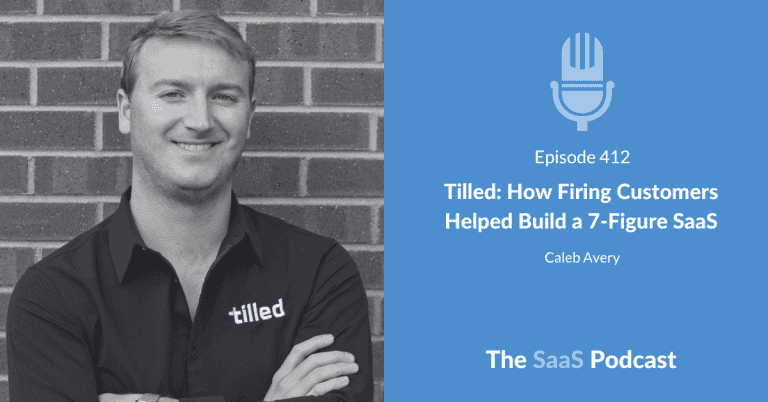
Welcome to another episode of the SaaS podcast. I'm your host Omer Khan and this is a show where I interview proven founders and industry experts who share their stories, strategies and insights to help you build, launch and grow your SaaS business. In this episode, I talk to Caleb Avery, the founder and CEO of Tilt and a Payfact as a service platform that helps B2B software vendors to embed and manage payment processing for their customers.
Omer Khan [00:00:36]:
In 2019, after years of angel investing and consulting for vertical software platforms, Caleb spotted an opportunity to help them generate more revenue from payments. He started Tilt as a Solo founder, spending 10 months exploring the viability of the business idea before bringing on a team. But the initial product launch was far from perfect. It took 18 months and a complete rebuild to create a truly sellable solution that could even attempt to compete with established players like Stripe. When the pandemic hit, their outbound sales and trade show strategy was thrown into disarray.
Omer Khan [00:01:12]:
Caleb Avery his team were forced to pivot to content marketing and Caleb Avery invested in building his personal brand on LinkedIn. He started with less than 500 followers in 2020 and has grown that to 17,000 followers today. But what's more interesting is that his personal brand on LinkedIn has helped drive 95% of their lead flow in that first year and got them pretty close to their first million in ARR. But as the team started to gain traction, they faced new challenges.
Omer Khan [00:01:40]:
They struggled with product market fit and onboarding customers that weren't ideal for their platform, which created numerous headaches for the team. Eventually they had to make the tough decision to fire many of their customers and refocus on their ideal customer profile, which led to a period of uncertainty. But after a few months, their bet eventually paid off and they started seeing significant growth. Today, Till generates multiple seven figures in ARR and is approaching eight figures. The company serves around 100 customers and has raised $40 million in capital.
Omer Khan [00:02:15]:
In this episode, you'll learn how Caleb's personal LinkedIn profile drove the majority of their leads in the first year and how you could do the same with your SaaS startup with why it took 18 months to build a truly competitive product and the lessons Caleb learned about creating a great developer experience, how Caleb Avery his team identified their ideal customer profile and why narrowing their focus led to faster growth despite initially losing revenue.
Omer Khan [00:02:37]:
We talk about the strategies the team used to pivot their go to market approach during the pandemic and the lessons they learned and how Caleb discovered and capitalized on channel partnerships and why this might be a game changer for your SaaS startup, so. So I hope you enjoy it. Caleb, welcome to the show.
Caleb Avery [00:02:54]:
Thanks for having me on today.
Omer Khan [00:02:55]:
My pleasure. Do you have a favorite quote, something that inspires or motivates you that you can share with us?
Caleb Avery [00:03:01]:
I do. I'll try not to butcher it, but it's a Dwayne Johnson quote. So a little bit of the rock for you here today. Success isn't always about greatness, it's about consistency.
Omer Khan [00:03:12]:
Love it. Love it. Very relevant for founders.
Caleb Avery [00:03:14]:
100%. Yeah. I mean, I feel like for me it's just showing up every day is half the battle. And the reality is there's no such thing as an overnight success. Like, I've been at this five and a half years, and I feel like every day I'm still learning new lessons.
Omer Khan [00:03:28]:
Yeah. So tell us about Tilde. What does the product do? Who's it for, and what's the main problem you're helping to solve?
Caleb Avery [00:03:35]:
Yeah. So at Tilde, we do what we call payfac as a service, which if you're watching at home, is on this obnoxious neon sign behind me. And, you know, when we think about the concept of PayFac as a service, it's about turnkey white labeled payments infrastructure for vertical software platforms. And so what does that mean? So if you're the founder of a vertical software business serving merchants in, let's say the dental vertical.
Caleb Avery [00:04:00]:
So for those dentists, we provide all of the underlying infrastructure for them to be able to process payment transactions and ultimately for that software company to generate revenue stream from all of those payments. And so we're typically replacing solutions like Stripe to allow those software companies to monetize their payments.
Omer Khan [00:04:17]:
Got it. Okay. So the use case is less about a SaaS company that is selling a subscription and would say, okay, instead of Stripe, I'm using Tilde. Presumably they could do that if they wanted to.
Caleb Avery [00:04:34]:
The vast majority of our clients do that as well. And so for probably 90 plus percent of our clients, they're setting up themselves as a Merchant for their SaaS account to save them money, you know, on processing those SaaS subscriptions. But that's really like an ancillary benefit of their relationship with Tilde. Our focus is really on helping them scale up the underlying customer base so the small businesses leveraging their platform to drive more volume, you know, through their clients.
Omer Khan [00:05:01]:
Got it. Okay, great. And give us a sense of the size of the business. Where are you in terms of revenue, number of customers, size of team?
Caleb Avery [00:05:07]:
Yeah. So, Tilled, we've raised about 40 million of capital to date. We got about 40 people on the team as well, service around 100 vertical software businesses, and at this point, doing strong seven figures, closing in on eight figures from a revenue perspective.
Omer Khan [00:05:25]:
Great. The business was founded in 2019, so why don't we go travel back in time to there? Like, what were you doing at the time, and how did you come up with this idea for this business?
Caleb Avery [00:05:39]:
Yeah, so at the time, I was really kind of between ventures. So I had started my first payments company when I was 19, going door to door selling payments to small business owners. Probably not what everybody was doing at 19, but that was the path, you know, that I started on. And between that first company until I was doing angel investing and consulting for vertical software platforms that were trying to get off of Stripe and start generating revenue on their payments.
Caleb Avery [00:06:03]:
And so really, the problem and the motivation for Tilde came through personal experiences with vertical software businesses that were typically anywhere from like 100 million to over a billion dollars of annual volume that just weren't generating any or not much revenue on their payments. And so, you know, I saw this opportunity and after a while, convinced myself that I needed to go start another business, which became Tilde.
Omer Khan [00:06:28]:
Got it. So just give us like a 101 on the economics here in terms of why a business may not feel like it's getting value from using Stripe and what kind of opportunity that created and then what was the kind of the model you introduced instead?
Caleb Avery [00:06:51]:
So, you know, if we take a vertical software business, let's say doing $10 million a month in payment volume on Stripe, they're likely passing through that 2.9% and 30 cents from stripe onto their clients. The practical reality, though, is it typically only costs more like 2.2% to actually process those payments. And so for a lot of clients, they're leaving something like 80 basis points or 0.8% on the table. And so on. Every $10 million that you're processing, you're talking about $800,000, you know, in revenue, you know, that you're leaving on the table here.
Caleb Avery [00:07:29]:
And so it's a. It's a very significant, you know, amounts of money, you know, at the end of the day.
Omer Khan [00:07:33]:
Right. So that was the. Basically what you were hearing when. When you were working, you know, when you're doing this consulting work, that this was an ongoing issue that kind of sparked the idea here.
Caleb Avery [00:07:45]:
Yeah, they didn't want to give away, you know, a million dollars a year and, you know, excess revenue To Stripe.
Omer Khan [00:07:51]:
So how long were you doing that consulting work? How long were you hearing about this problem and how long did it take for you to say, okay, I'm going to go and build a software business and solve this myself?
Caleb Avery [00:08:03]:
Yeah, so that was from 2015 to 2019 that I was doing the consulting and investing. So that was about four years of hearing the same problem over and over and over again. And then there was a period of probably about 10 months where I was solo founder, really exploring the early iterations, like, is this actually a viable business opportunity?
Caleb Avery [00:08:25]:
And so for me, it started with this hypothesis where from all of the conversations that I had had with customers, I felt like we needed to get down to a one week launch to really be able to scale up this business and solve this problem in a viable way. Where all of the existing solutions were about a six month process. And so it took myself about 10 months to say, hey, what does that path look like? And how realistic is it to go from a six month process today to a one week process to.
Caleb Avery [00:08:55]:
And then convincing myself that I was the right person to go solve that problem and take on that journey.
Omer Khan [00:09:01]:
And this launch is like, you're not talking about launching your startup, it's about how long it takes a customer to get up and running with a new solution.
Caleb Avery [00:09:08]:
Yeah, correct. And so the problem for a lot of these software businesses and why they were staying on Stripe as long as they were was the integration time and the implementation time to get up and running on a competing solution. And so I was suggesting to them, hey, we've got this great solution with, you know, CardConnect or Pivotal Payments or PaySafe or whatever. You know, the solution is their engineering time.
Caleb Avery [00:09:31]:
Engineering team would go look at the developer docs and say, there's absolutely no way that we're going to go divert, you know, the next couple of quarters of our roadmap to implementing this. And so they would end up, you know, just staying on stripe. And when I would go through you know, those customer interviews and say, like, well, hey, what would actually make you, you know, consider leaving Stripe? That time to market was, was the number one most consistent piece of feedback that I got.
Caleb Avery [00:09:54]:
And so that was the first problem that we needed to validate that we would be able to solve.
Omer Khan [00:10:01]:
Was there any concern about trust? Not necessarily with you, but they may not like paying that much money to stripe, but it's a known quantity, it's established, it's not going to disappear tomorrow. And when you're offering an alternative, a new solution an unproven solution. I guess there's going to be a concern that is this thing actually going to stick around? Are you actually going to grow this business? What kind of reaction were you getting from people in terms of just that specific issue?
Caleb Avery [00:10:36]:
Honestly, it wasn't that big of a concern for me, which maybe is just irrational confidence on my behalf. But I think if you think back to how I started my career in payments, I was a 19 year old college student convincing small business owners to trust the lifeblood of their business, which is their credit card processing. To me, and so I think I learned pretty early on that small business owners really hated a lot of the incumbent payment processors and were very willing to try something different if it would solve their challenges.
Caleb Avery [00:11:07]:
And I think I saw the same kind of mindset and behavior, you know, with these software companies were, you know, not to say that they were quite desperate because I don't know if it was quite to that level, but they were, you know, borderline desperate, you know, for, for an alternative, you know, solution. And so if we could inspire the confidence that we could solve, you know, the challenges that they were facing, that just wasn't really a major concern for me.
Omer Khan [00:11:30]:
Right, right. Okay, great. So you've identified the opportunity and you said you spent, you spent about 10 months having these conversations and, and trying to just validate that, you know, there was a, there was a business opportunity here and what kind of business you needed to build. Was that when we were talking earlier, you said, you told me about this kind of concept to market fit. Right. Getting to that. Is that basically what you were doing during those 10 months?
Caleb Avery [00:11:55]:
Actually, no. Those first 10 months were really me convincing myself that it made sense to continue pouring my own time and money into building this out. Before I started bringing on employees, before I started thinking about, you know, raising outside funding, it was really me validating the idea, you know, at all that, that concept that we talked about, you know, beforehand in terms of going from concept market fit to product market fit was probably about a year after that.
Caleb Avery [00:12:25]:
So after we had raised outside capital and we, we launched the, the concept of PayFac as a service, we went out to market and we had this tremendous interest. And so early on in the business, we were actually overwhelmed with interest from vertical software companies that were really wanting to get up and running until. And so as a founder, we're like, oh great, all of our problems are over. We have all of these customers that want to use our solution.
Caleb Avery [00:12:51]:
And what actually ended up happening was a large percentage of those Clients turned out to be a waste of time and resources for our business. And so we really had this struggle where we really needed to identify the right ICP or ideal customer Persona, where we said, hey, these are the types of customers that are finding success on the platform. We need to say no to every opportunity that doesn't look like this. And since we made that change, the business has really hit an inflection point in growth.
Caleb Avery [00:13:23]:
And we're growing close to 500% year over year at this point and feel like there's no stopping us now.
Omer Khan [00:13:31]:
Awesome. So, okay, so you went through the validation for 10 months and then how did you go about building the product? Are you, are you a technical guy? Did you have to rely on finding a developer or technical co founder?
Caleb Avery [00:13:50]:
Yeah, I'm not a developer or a technical person. I'm on the sales side of the business. And so for me, it was a lot of trust, you know, in bringing on a CTO to help us build out the team. And I still remember the interview with Matt where he told me I was like, rate yourself as a developer. And he was like, d minus. He's like, you want me writing code for the least amount of time possible. He's like, I'll do it, but what I will do is build you a world class team.
Caleb Avery [00:14:19]:
And that's really what we brought him in to do, is really assemble the team that could build, you know, that first iteration of the product. And, you know, very grateful that he was able to do that.
Omer Khan [00:14:31]:
Did you raise money before you started hiring people or you kind of bootstrapping initially?
Caleb Avery [00:14:37]:
We were bootstrapping initially and it was a lot of kind of my own personal money and then some friends and family, you know, capital in the, in the early days. And then we raised a small, like $2 million outside seed round in late 2020. And then from there we've since raised close to 40 million of outside capital, including two rounds actually back in 2021, in the early days of the business.
Omer Khan [00:15:07]:
Great. Okay, so you hire Matt, you're starting to build out this team. How long did it take to ship that first version of the product? And how good or not so good was it?
Caleb Avery [00:15:22]:
Yeah, I think that process was probably 10 months or so. And it was terrible. I mean, like, truly, truly just terrible. And we've since rebuilt that entire platform from the ground up. And so realistically to get to a proper ready to sell solution was probably more like 18 months from that point in time when we started building. And so, yeah, it was a very long path to get to, you know, that sellable solution.
Caleb Avery [00:15:56]:
I think what we didn't realize was the table stakes functionality required to compete against, you know, giants like Stripe and, you know, Adyen and others is pretty high. It's pretty high bar, which is probably why not that many people have attempted to build, you know, what we've built because it actually takes tens of millions of dollars and several years, you know, of time, you know, to build, you know, a sensible solution. And even, even that first solution, you know, kind of 18 months in, you know, still still left a lot to be desired.
Omer Khan [00:16:24]:
So give me a couple of examples of, of what was, what was problematic with that first version of the software. Why do you feel it was, it was terrible.
Caleb Avery [00:16:33]:
Yeah. So when you look at the, the first, you know, cohort of customers coming onto the platform, about 80% of those customers did full API integration. So they didn't leverage any of the like pre built UI tools that we had put together. And when we went out, you know, and interviewed the first, you know, clients, it was all about branding. They wanted their brand to be front and center with their merchants. They didn't want tilled, you know, on the onboarding experience or on the reporting experience.
Caleb Avery [00:17:00]:
And so we rebuilt the platform with white label as a first class citizen. And so if you didn't want the tilled brand, you know, to be shown to your customers, you didn't have to. And so the flip flop there is we went from 80% building all their own tools to now 90% of our clients white label our software and use our pre built tools.
Caleb Avery [00:17:22]:
And that was a major reason why we were able to go from a six month process when we onboarded the first batch of customers to now we're averaging a nine day integration for software companies to come get integrated into Tilde.
Omer Khan [00:17:36]:
Was that the main pushback with that first version of the product? There's just, they just were like the white label thing is really important. It's kind of a, it was the
Caleb Avery [00:17:46]:
white label and then the quality of the developer documentation. So if you're trying to compete against someone like Stripe, who's essentially the gold standard when it comes to developer tools and developer documentation, you've got to have a great experience for those developers. And so the two things that we focused on in that kind of year after the initial launch was really revamping the developer tools, the developer experience. You got to have a dark mode in your dev docs, as silly as it sounds, does make a difference.
Caleb Avery [00:18:15]:
And then adding in the support for white label and I Think those two things were absolutely critical for us making that transition towards product market fit.
Omer Khan [00:18:26]:
Yeah, I remember building a product and using a new API from a company who I won't name, but I thought they were kind of a fairly large company. But the number of times I would go in the documentation and just things just weren't there and I'd have to kind of ask, how do I do this? And like, oh, yeah, we'll update the documentation. And the number of times there would be bugs where things would stop working.
Omer Khan [00:18:51]:
And after, like days of troubleshooting myself, I'd get in touch with them and they'd say, oh, yeah, there's a problem with the API. We need to fix something. And I was like, am I the only guy who's using this?
Caleb Avery [00:19:04]:
That's not the feeling you want. Yeah, for us, the way that we approached that was we always had scalability in the back of our mind. We knew that as soon as we got the product and the ICP right, this thing was really going to start to scale. And so the two ways you could attack a problem like that is every time a problem comes up, okay, great, well, let's get people on it. And throwing people at the problem.
Caleb Avery [00:19:24]:
For us, it was, how do we automate this and improve the documentation itself so we never get that question again? And so every single time we got any question from any developer on the platform, we would create a resource so that we wouldn't get that question again. And so at this point, it's, you know, we've had, you know, hundreds of different, you know, developers that have gone through, you know, that experience, and they've asked those, you know, bizarre Edge Case questions that are no longer bizarre, you know, Edge Case questions.
Caleb Avery [00:19:49]:
They're dealt with, you know, pretty straightforward and standard, you know, in the documentation. And that creates just a substantially better experience for that, you know, next cohort of developers going through that integration.
Omer Khan [00:20:01]:
Let's talk about how you acquired customers and getting to that first million in ARR. Specifically, before we started recording, you told me a large part of the growth came from your personal LinkedIn profile, which was driving, you know, inbound interest leads, even investor interest, and a whole bunch of goodness happening. And, you know, given your background in the industry for many years, like, the question I asked you was like, oh, so you must have been building this LinkedIn presence for like a few years before you founded Tilde.
Omer Khan [00:20:48]:
And you were like, no, I wasn't doing anything on LinkedIn. And this was like 2020. And I had like, less than 500 followers at the time. And I was like, okay, that's probably closer to 90% of people listening to this are like, I'm probably in that situation. So I was like, okay, great, let's unpack this and let's just figure out, like, what did you start doing on LinkedIn that helped you generate all of these kind of good things happening for the business in the inbound leads?
Caleb Avery [00:21:20]:
Yeah. So a crazy stat that I learned about LinkedIn is that only 1% of the active registered users on LinkedIn post on a regular basis. And so you're absolutely right that the majority of people are in that bucket of. Well, I don't post that often. I don't have that many followers. Maybe they have their most recent company updated on their LinkedIn. And that's really where I started. And so for me, this was late 2020, you know, getting through the COVID period, where for us, the original plan for going to market with Tilled was outbound.
Caleb Avery [00:21:56]:
So we were going to, we were going to be reaching out, going outbound to customers, we're going to be going to trade shows. I was going to be traveling around, you know, meeting with folks that I knew in my network and early days of COVID that was a horrible plan. There were no trade shows, there was no travel. Nobody wanted to meet, you know, in person. And so I'm thinking, well, okay, how do we get, you know, start building up a brand, start building up, you know, interest in the, in the platform.
Caleb Avery [00:22:17]:
And so for me, it started very small. It started with me just commenting on other People's posts on LinkedIn and then resharing other people's content. And then the transition for me really starting to post was actually me bringing on a ghostwriter. So one of the things that I knew about myself was I'm not going to sit down and go write, you know, a thousand word blog. That's not, that's not realistic, you know, for me.
Caleb Avery [00:22:40]:
But what I am happy to do is go hop on the phone for 20 or 30 minutes and share my expertise, you know, with someone that can translate, you know, all of my thoughts into a coherent story and put all of that on paper. And so hired a ghostwriter. And this was probably seven or eight months before we went live with the product. We started doing these weekly interviews.
Caleb Avery [00:23:00]:
And so we built up this huge base of content so that when we were actually ready to launch the platform, I had more content than I needed for the, you know, the first year in business.
Caleb Avery [00:23:10]:
And so I started getting more comfortable, you know, sharing Those blogs and sharing, the journey of building out the business and the real point of inflection for me and the growth, you know, that presence on LinkedIn was when I started to share, like, my personal journey, the personal struggles, you know, of being an entrepreneur where no one wants to be sold to all the time.
Caleb Avery [00:23:30]:
Like, if I just post seven days a week about how awesome Tilde is and the new features and the new functionality, you know, that we built, like, there's a limit to the amount of people that really care to see that, you know, day in and day out, you know, in their feed. But when I started sharing, like, hey, you know, how to. Had a tough day at the office, or, you know, hey, I actually missed, you know, this meeting to go to, you know, my. My daughter's, you know, music recital or, you know, whatever.
Caleb Avery [00:23:53]:
It was, like, that's what started to resonate, you know, with more folks and I think built more of a personal connection, you know, with a lot of people that I've since now met in real life or our customers or our partners or investors, you know, until. Because they got to know, not just about Till, but about me, you know, Caleb, the. The founder. How.
Omer Khan [00:24:11]:
How did you find this, this ghostwriter and kind of give us a sense of the type of content that was getting created? So if someone's listening to this and saying, great, I'd love to go down that path. What.
Caleb Avery [00:24:25]:
What.
Omer Khan [00:24:26]:
What can they learn from you? And alternatively, if someone's like, man, I don't. I don't know, it sounds expensive. I don't know if I have a budget to start paying for a ghostwriter. I think I could take a crack at this myself. Right. So what kind of advice would you give them to at least get started small with LinkedIn and start to build a little bit of momentum?
Caleb Avery [00:24:45]:
So how I found Megan was actually, I read an article that I loved, and at the bottom of the article, the guy was like, I can't actually take credit for writing this article. This was written, you know, by this woman, Megan. And so I was like, oh, great. Well, I should reach out, you know, to Megan. And so I just kind of happenstance, you know, liked her writing style and stumbled, you know, upon her in terms of, you know, the budget for something like this.
Caleb Avery [00:25:10]:
I mean, I think we were paying, like, maybe a couple hundred bucks, you know, a blog. And so it wasn't a tremendous, you know, investment. Maybe we were spending, you know, 800 bucks a month, you know, or something, you know, like that. And so she would put together the Blog and then, you know, two or three pieces of LinkedIn content, you know, that I could, you know, post out. Certainly if you want to attempt, you know, doing that yourself, you can. I'll refer back to my Dwayne the Rock Johnson quote about consistency.
Caleb Avery [00:25:37]:
You know, if you're not really enjoying it, it's really difficult to be consistent. And the reality is it takes a very long time to build up, you know, a personal brand and an audience on LinkedIn. You're not going to go from, you know, 300 followers to 10,000 followers in a month. That's just not, you know, how that's going to go. It's probably going to take you two years, you know, to do that. But once you do it, you know, the, the amount of value, you know, that you can ascribe to it is unbelievable.
Caleb Avery [00:26:03]:
I mean, I can point to investors that have found us on LinkedIn, employees that have found us on LinkedIn partners, customers. I mean, it just helps, you know, drive the business. And one of the things that I always preach to, to folks, whether they're the founder or an executive or, you know, an employee at the business, that brand that you build up for yourself is a personal asset. That's not a company asset.
Caleb Avery [00:26:24]:
And so inevitably, whenever, you know, I go to, you know, the next business, you know, beyond tilled, I will still have, you know, that, that asset that I will, you know, bring with me. And I think that's something that you just have to look at it, you know, as a, as a long term investment. It's not a, it's not a short term, you know, hey, we're going to, you know, put out this one viral post and all of a sudden the business is going to get to, you know, 10 million ARR.
Caleb Avery [00:26:48]:
That's not how, you know, building an audience online works.
Omer Khan [00:26:51]:
So you mentioned blog posts. So were you publishing like long form articles on your website?
Caleb Avery [00:26:59]:
Correct. And then sharing the link on LinkedIn, driving people to our website, which was then getting them to consume other content, read about the business and then they would come inbound and fill out, you know, the HubSpot form on the website. And it drove. I mean, first year is 95% of our lead flow was us, you know, converting folks from reading stuff about us, you know, on LinkedIn, driving them to the website and then either they're DMing me on LinkedIn or filling out the form on the website.
Omer Khan [00:27:27]:
Right. And before that, you, you mentioned this kind of inflection point when you started writing more about your personal side as well. What drove you to do that? What was happening? Did you feel like, yeah, it's kind of getting some attention, but it feels like there could be more happening? And why did you decide being personal was the way to go?
Caleb Avery [00:27:48]:
Yeah, I think for me, it got to a point where I felt like all I was doing was trying to sell folks About Tilde on LinkedIn, and it just didn't feel authentic. That's not who I am. Like, a big part of, you know, me is my. My kids meet me golfing, the things I do, you know, outside of work. And so I felt like, for me, it was really just about trying to be, you know, authentic and true to myself. And the reality was it was reinforced by the engagement, you know, that I was getting.
Caleb Avery [00:28:20]:
And to be totally honest, we were getting more leads coming in, you know, once I made, you know, that transition. And I honestly think it's because it made, you know, me more approachable, where people felt like they knew, you know, me as a. As a person. And a lot of times it would be founders reaching out to me, just wanting advice, like, hey, you know, we're going out to raise our seed round. I see that you just, you know, closed your seed round. Would you be willing to connect?
Caleb Avery [00:28:44]:
And so there were a lot of conversations with folks that became customers, you know, maybe 6, 12, 18 months, you know, later that started with them just wanting advice on, you know, a pitch deck or, hey, would you be willing to listen to the pitch? I've got a big investor meeting tomorrow, and would you be willing to give me notes? And I was happy to do it and just pay it forward to other founders.
Omer Khan [00:29:08]:
How did you make sure that the content was getting seen by your prospective customers? I think the problem that many people have when they're starting out is it's like, okay, I got a couple of hundred connections or whatever on LinkedIn, I'm going to post, and probably like, five of them will see this thing, and they're not my customers. But how do I. How do I reach, you know, the people who. Who could be customers who could find this content useful? Like, there's. There's always this kind of gap between, you know, getting to there.
Omer Khan [00:29:43]:
So did you have that challenge as well?
Caleb Avery [00:29:46]:
Absolutely. I mean, I think I'll say three things on this thing. One is, the reality is, in the early days, you are kind of shouting into a black hol. A lot of those early posts aren't going to get seen by many people, and that. That's just kind of the practical reality. And you have to be okay with that. But in terms of how to combat it, I think two, like, practical, you know, tactical strategies. Thing one would be finding relevant hashtags that, that make sense that people, you know, that are your ICP are following.
Caleb Avery [00:30:12]:
And those tend to be, you know, much more smaller targeted groups. So if I'm doing, you know, hashtag payments, there might be 8,000 people, you know, that are following that hashtag or. But they're prime ICP clients for, for us. And then thing two is actually going and proactively connecting with folks that are in that ICP. And so I would spend, you know, 20 minutes at night while I'm, you know, eating popcorn, watching tv, you know, just going and adding like, hey, here's the 10 customers that we would love to have, you know, on the platform.
Caleb Avery [00:30:44]:
Let me go add the CEO, the head of payments. You know, if they have a finance guy, I'll add them. If they have a revenue guy, I'll add him and go out a couple of, you know, folks, you know, from the target clients in my network. And what I didn't do is then immediately send them a spam, you know, message to their LinkedIn DM. I just, I just added them as a connection and then they, you know, casually follow along, you know, on the journey. And if they want to come inbound to me, great.
Caleb Avery [00:31:09]:
If not, you know, carry on with your day and hopefully you enjoyed, you know, my, my post about, you know, my kids are golf or tilt or, you know, whatever it was that day
Omer Khan [00:31:17]:
you mentioned when you started out, you were, you know, going and commenting on other people's posts. Then you started publishing more of your own content and kind of building that. Were you still spending time kind of commenting on other people's posts? You know, you hear a lot of people who kind of building LinkedIn audiences always say, yeah, you should publish content and all of this stuff, but you should, like, I don't know, sometimes it gets ridiculous. Like some people say I leave 100 comments every day or something like that, which again, doesn't sound particularly authentic.
Omer Khan [00:31:51]:
But I guess the reasoning behind doing something like that makes sense. Maybe there's a different way to do it. But were you still doing that sort of stuff?
Caleb Avery [00:32:01]:
Absolutely, and I still do today. So, I mean, driving that engagement is absolutely critical. And I think if you take the mindset that you have to give before you can get, I think that's a really important, you know, piece here where, hey, I'm going to go interact with the people's content that I like that I appreciate their content or are, you know, our ICPs and kind of give them, you know, something there.
Caleb Avery [00:32:24]:
And then the expectation is, you know, hey, at some point they're, they're more likely to engage and like, or comment, you know, or come, you know, inbound, you know, based on that. And so it's still, you know, a key part of, you know, the activities that I do even at this point today. Honestly, I probably spend more time either engaging with comments on my posts or other people's posts than I even do putting together the posts, you know, themselves at this point.
Omer Khan [00:32:49]:
Okay, great, let's. I think what you told me earlier was that just what we just Talked about with LinkedIn drove was basically the main growth channel for you and got you close to the first million in ARR. Not completely all the way there by just by focusing on this one thing and being consistent with it the other, the growth channel was actually finding channel partners. Right, Tell us about that. Like, if somebody's not familiar with that, what are we talking about here?
Caleb Avery [00:33:28]:
Yeah, so for us, effectively these are resellers. And so these are primarily what are considered ISOs. So independent sales organizations like My First Business or Payments consultants. So people from the traditional payments ecosystem that are going out and targeting the same vertical software companies that would be direct customers at Tilde. But we're looking for a better solution. And for me, it was always something that I generally felt like would be successful. Because in all reality, if something like Tilde existed that I could have resold six years ago, I would not have started tilled.
Caleb Avery [00:34:04]:
And so I would have been the first customer reselling something like this if it had existed. And so I knew there were other folks like myself that were out there, but the real eye opening experience for me was going on a podcast. So I went on James Shepherd's podcast just to give him a little shout out. And we had 36 resellers come inbound to us within the first 24 hours of that podcast airing. And I had absolutely no idea that the reaction would be as strong as it was from that ISO agent payments community.
Caleb Avery [00:34:40]:
But as much as the vertical software companies were seeking a better solution, you better believe these ISOs were looking for a better solution to resell. And so we had just immediate interest from those folks. And some of those guys that reached out that first day are still great partners for us, bringing us deals even to this day several years later.
Omer Khan [00:35:04]:
So what's the kind of the business model there? Is it kind of like an affiliate type relationship? Are they getting a Commission on the kind of the business they bring you?
Caleb Avery [00:35:14]:
Yep, they're getting an override, so they're getting a share of the net revenue. So every time they bring us a software partner, they're going to get a percentage of the SaaS revenue plus a percentage of, you know, the, the take rate, like processing, you know, revenue on that business. And a lot of those partners are really helpful, you know, scaling up those, those clients. And so they may be assisting with, you know, sales or support or providing, you know, consultation. And so they're providing value, you know, to, to those partners.
Caleb Avery [00:35:41]:
But yeah, they're getting paid, you know, on every, every transaction, you know, that goes through the partners that they bring to Tilled.
Omer Khan [00:35:47]:
What was this something you discovered accidentally after the podcast, or did you go on the podcast to try and reach these type of people?
Caleb Avery [00:35:54]:
I would say it was more of a surprise at the level of interest. But we went on the podcast thinking like, hey, we're ready to start testing into this channel. And like, hey, is this a good way to go about getting in front, you know, of these people? And I think the, the obvious answer is yes, it was a phenomenal way, you know, to, to get in front of, of that target audience. So it was a bit of luck. But we were, you know, we were moving in that direction.
Omer Khan [00:36:21]:
Great. So I think this is a really interesting channel to explore for a lot of people, forgive the pun. But the idea of being able to, rather than go directly to find 100 customers, to be able to find somebody who's already selling something to those hundred customers, whether it's consulting or something else, and getting them to be basically, you know, your salesperson, your partner, your reseller, whatever. If somebody is thinking about doing something like that, help us understand, like the mindset of the reseller, right?
Omer Khan [00:37:03]:
Like what, what do they need to be hearing from the founder to make this type of relationship interesting? Obviously, like the financials of, of, you know, getting, getting some revenue and whatever is kind of an important part. But I'm guessing there's a lot more to it than just being able to make money from this type of relationship,
Caleb Avery [00:37:24]:
I would say, at least in our case, and I think this is the case for a lot of these types of relationships. The two main drivers are either revenue making money or the customer experience. And the holy grail is if you can provide both, if you can credibly go to them and say, hey, whatever you're selling today, adding a solution like tilled or a solution like you're selling will make you more money. And improve the experience for your customers. At the end of the day, that's kind of what they need to hear.
Caleb Avery [00:37:53]:
And in our case, the closer was that for a lot of these ISOs, they were already trying to sell to the customers that we were serving, but their close rates were abysmal because they were selling terrible technology. And so we were able to go to them, incredibly say, hey, we close our Data. We close 60% of qualified software companies that get on a first call with us, sign up with Tilt. And for these ISOs, they're like, yeah, my close rate is probably like 5%.
Caleb Avery [00:38:24]:
Of course I'm going to go with the guy, you know, closing 60%, you know, of these deals. Maybe we're going to make a little bit less money on each individual, you know, opportunity, but, you know, you're going to close infinitely more, you know, of these partnerships than I am, you know, on my own. And so we were creating more revenue for them. It was a better experience. And then ultimately, you know, we were closing more leads, you know, for them. And that was enough for us to really take a pretty dominant position in that channel.
Caleb Avery [00:38:52]:
And still to this day, we're one of the few companies in our segment of the market leveraging this channel, which blows my mind every day that more people aren't doing this.
Omer Khan [00:39:01]:
Okay, great. So being able to pitch them on the revenue, improve customer experience and demonstrating the high close rate, that gets them to say, hell, yeah, I'm going to do this thing with you. What did you have to give them to ensure they were successful? Like training, resources, what generally needs to happen in your experience, put these people in a position where they're going to be successful?
Caleb Avery [00:39:34]:
Yeah, I think the more that you can invest in the right channel partners, and I think that's an important distinction, but the more that you can invest in the right channel partners, the more that you're going to get out of that channel. And so we actually put together a full video training series.
Caleb Avery [00:39:51]:
So if you were an agent or an ISO that was trying to go sign up a software company for the first time, we've got, you know, five hours of content that you can go watch to learn about the segment in general, the macro trends, what an ISV is looking for. You know, in evaluating a partner who is tilled, how does the pricing work? And so it really outlined, you know, this whole experience for them. The other thing is kind of meet them where they are.
Caleb Avery [00:40:16]:
And so for some of the more sophisticated partners that we had, great, here's the contract. Let us know when the opportunities are closed and we'll get them implemented. And for other partners where you can tell that they have no experience in this space, why don't you invite us to that first call with the, you know, the prospect? And so we would kind of bring them along on the journey.
Caleb Avery [00:40:35]:
And so, hey, we'll ride shotgun on the first two or three opportunities until you're comfortable, you know, doing this pitch, you know, your, yourself and then now, hey, you're, you're off to the races, you know, selling. And so I think making sure they've got, you know, the proper collateral and training available and then meeting them where they are just realistically in their knowledge base, I think are two critical components.
Omer Khan [00:40:57]:
One other thing I want to just dive into a little bit before we wrap up is you told me earlier that getting to concept market fit was very fast for you, but getting to product market fit was much tougher and more of a painful journey. And part of that was because you had a lot of interest and you said, you know, there was just like a lot of time wasted on the wrong types of customers.
Omer Khan [00:41:25]:
And I think any founder who is in that place where they're trying to get to the first million in ARR has probably experienced that where they're just like getting different types of customers. They're not really sure who their ICP is. How did you figure out your icp?
Caleb Avery [00:41:47]:
Yeah, I think for us it started with being willing to admit that what we were doing wasn't working, which I think from the outside looking in was a difficult thing to acknowledge because we were growing very rapidly. We were having a lot of success raising capital. And so the business was scaling, but I think it was almost in spite of, of ourselves. And so for us it started with, you know, having that, that realization. But I think it was really a data driven decision.
Caleb Avery [00:42:16]:
So let's go look at, you know, these first 50 clients on the platform. Well, you know, these, you know, 15 or 20 are really having success and the rest of these honestly aren't. And for us it was really getting granular, looking at the data and looking at the unit economics and saying, hey, if we actually fired these 20 customers, we would actually have the bandwidth and the resources to focus on these other 20 that are really scaling and really having success in the business. And I think it was a pretty scary moment for our team.
Caleb Avery [00:42:47]:
But I had just absolute conviction and confidence that we had to make this decision if we wanted to reach the level of scale that I knew the business was capable of. And so it was Just having the, the kind of fortitude to make that bet. The business decision to say, hey, if we narrow in, you know, our focus and find more of the customers that look like the guys that are having success on the platform, you know, I think we'll grow faster.
Caleb Avery [00:43:14]:
And, you know, we've grown close to 500% year over year, you know, and so that decision was the driver that unlocked that higher level of, you know, growth and scale in the business.
Omer Khan [00:43:28]:
Yeah, yeah, no, I think that you're right. It's a really tough thing to do, especially when any revenue is very welcome and to turn it away is really hard.
Caleb Avery [00:43:44]:
It feels very strange as a founder, especially like early days, like, hey, we're 1, 2 million in revenue. Are we really saying no to customers that want to do business with us? And I think it was a lot of internal dialogue and a lot of struggle to get to that point. But as soon as we made that decision, you got to just commit and see it through. And that's what we did. And we came out the other side feeling like we made the right call.
Omer Khan [00:44:14]:
So when you made that decision, you pulled the trigger. How kind of, what was that transition? Like, did you, did you feel like fairly quickly you started to see the traction, or was this, this kind of weird period where you were like, did we make the wrong decision here?
Caleb Avery [00:44:35]:
So for us, it was, it was about a 90 day process to go through this, like, hey, let's define who these customers are. Here's the customers we're going to fire. How are we actually going to implement, you know, this, this strategy shift? And for us, there was probably about 60 days where there was a lot of, like, the data doesn't look great because, I mean, effectively we fired, you know, not, not, not half, but a good chunk, you know, of our, our customers. And so there was, there was absolutely, you know, this, this dip.
Caleb Avery [00:45:06]:
And I think what I started to, to realize was looking at some of our pipeline data, we were seeing this massive increase in the revenue potential of, like, each new customer that was coming in to the pipeline. So we were successfully targeting those higher quality, larger customers in the business. And then it was probably like 90 days or so after that shift that we had this first month of 25%, month over month growth. And we're like, okay, this is looking pretty good.
Caleb Avery [00:45:36]:
And then we did it again, and then we did it again, and then we did it again. And it's like, okay, the data is starting to reinforce that that in fact was the right decision for the business. But there was absolutely. This like 60 to 90 day, you know, limbo period where you're definitely asking yourselves, you know, questions and you know, the team's looking around like, hey, is this, is this strategy, you know, working? And you know, we had the, you know, fortitude to kind of see that through.
Omer Khan [00:46:04]:
Love it. Okay, we should wrap up, so let's get on to the lightning round. I'm going to ask you seven quick fire questions. You ready?
Caleb Avery [00:46:13]:
Let's do it.
Omer Khan [00:46:14]:
Okay. What's one of the best pieces of business advice you've received?
Caleb Avery [00:46:18]:
Culture Eats Strategy for breakfast.
Omer Khan [00:46:21]:
What book would you recommend to our audience and why?
Caleb Avery [00:46:24]:
Peter Thiel, 0 to 1. And if you've read that book, I think that's a pretty self explanatory answer. I love that book.
Omer Khan [00:46:32]:
What's one attribute or characteristic in your mind of a successful founder?
Caleb Avery [00:46:37]:
Perseverance. There's always headwinds and you got to find a way to persevere through.
Omer Khan [00:46:41]:
What's your favorite personal productivity tool or habit?
Caleb Avery [00:46:45]:
Listening to music. If I don't have AirPods in Spotify on in the background, I basically can't get anything done.
Omer Khan [00:46:53]:
What's a new or crazy business idea you'd love to pursue if you had the time?
Caleb Avery [00:46:57]:
I've really been getting into the idea of what AI can do for payments and so I feel like in the underwriting space there's a lot of that could be done with some AI tools.
Omer Khan [00:47:09]:
What's an interesting or fun fact about you that most people don't know?
Caleb Avery [00:47:12]:
I think most people don't realize that I actually love to play pool. So I have like a billiards table in my living room and every night I hold my one year old and we play pool.
Omer Khan [00:47:24]:
Love it. And finally, what's one of your most important passions outside of your work?
Caleb Avery [00:47:29]:
Golf. Absolutely love golf. Cool.
Omer Khan [00:47:32]:
Thank you so much for joining me, Caleb. It's been a pleasure. Great chat. It was great to unpack the story. But also I think you shared a ton of really useful lessons that I think for founders who are on their journey will walk away from this with some inspiration, some insight, some ideas of things that they can go and try and that's always a successful outcome if we achieve that. If people want to go and check out Tilt, they can go to tild, which is T I L L E D dot com.
Omer Khan [00:48:02]:
And if folks want to get in touch with you, what's the best way for them to do that?
Caleb Avery [00:48:07]:
I mean, I'm going to have to direct them to LinkedIn. We can't do a podcast on LinkedIn and me say Twitter or something like that. So Find me on LinkedIn. Would love to connect.
Omer Khan [00:48:15]:
Great. All right, thanks so much, man. I appreciate it. And I wish you and the team the best of success.
Caleb Avery [00:48:21]:
Awesome. Thanks for having me on the show today.
Omer Khan [00:48:22]:
Appreciate it. My pleasure. Cheers.