Omer (00:10.000)
Welcome to another episode of the SaaS Podcast.
I'm your host, Omer Khan, and this is the show where I interview proven founders and industry experts who share their stories, strategies and insights to help you build, launch and grow your SaaS business.
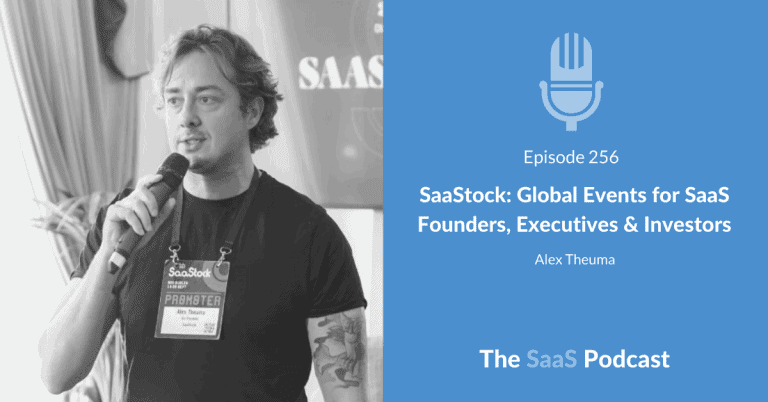
In this episode, I talked to Alex Thuma, founder of SaaS Stock, which organizes global conferences that bring together SaaS founders, executives and investors.
Alex had been working in sales for many years, but he longed to start his own business and work for himself.
But he didn't have any great business ideas.
He was interested in what was happening in the SaaS space.
So he started writing a blog about what he was learning and he also launched a podcast.
As he started to build a following, he realized that there was an opportunity to connect people.
So he organized meetups in London for people interested in SaaS.
He really enjoyed connecting people, but he still wasn't making any money.
Several people told Alex that he should do a conference to bring together SaaS people from across Europe.
At first he was reluctant, but eventually decided to jump in and do what people were asking him for.
Although it wasn't smooth sailing, he did manage to get 700 people to attend the first event, which was in Dublin.
And that's when he realized that he'd found his business idea.
In the next four years, he ran saasdoc events around the world every year and grew attendance to 4,000 people.
But then the global pandemic hit and the event business he'd worked so hard to build came to a standstill.
He had a simple choice.
Go out of business or find a way to pivot.
He had to do some hard thinking and make some tough decisions.
In this interview, you'll learn how Alex has reinvented his business, what he's doing to rebuild, and why he's optimistic about the future of in person events.
Now, I've tried to make this podcast a virus free place.
There are plenty of other places you can hear about all that stuff.
But it's hard to tell this story without talking about the pandemic.
So I hope you'll forgive me.
Enjoy the show.
Alex, welcome to the show.
Alex Theuma (02:32.910)
It's great to be here.
Thanks for having me.
Omer (02:35.150)
So this is something that we have been talking about doing, I think for quite a while since.
Alex Theuma (02:40.560)
So yeah, maybe two years or so.
Maybe.
Omer (02:44.400)
Well, good to have you here.
So I like to ask my guests if they have a favorite quote, something that inspires or motivates them or gets them out of bed.
Do you have something you can share with us?
Alex Theuma (02:55.760)
I do.
They're both from the same person.
So I have two, but one because one is topical and the other one is just one.
I think that has been a favorite quote for a number of years.
So they're both from Winston Churchill.
The one that I like and have kind of reflected on over the years is fear is a reaction, courage is a decision.
And I've definitely tried to live by that in many ways and make decisions and be courageous in decisions that we've made both in business and in personal life.
And then the other one, which is a bit more topical over the last few months, is, is never waste a good crisis.
And we've obviously been going through a few crises, I think, sort of like globally.
And yeah, I think there's always opportunity within that.
And yeah, like for us, it's been an interesting time and we can touch on that later.
Omer (03:51.160)
Yeah, absolutely.
And I know this has been an extremely challenging time for you and the nature of the business that you run, so I think there's going to be some really interesting stuff that we'll be able to share with, with the audience.
For people who aren't familiar, can you just give us a quick summary of SAS Talk?
What is it, who's it for?
And what's the main problem that you're helping to solve?
Alex Theuma (04:18.700)
Yeah, so our mission is to really make a real difference to the lives and companies of the SaaS community.
And how we've been doing it certainly to date is by running conferences, creating content and building community.
We've been doing that.
This is our fifth year of doing that.
And yes, the first conference was in 2016.
It was the first conference in Europe for B2B SaaS companies.
I started a blog, maybe 12 months or less before that first event, the Blog, and followed by a podcast, the SaaS Revolution show, then followed by some SaaS meetups.
So I was involved in content and community building and all of a sudden I had a bit of a community, I had an audience and I was really kind of passionate about doing this full time, but I was actually selling software at the time for a large Russian enterprise software company.
And I was trying to figure out, how do I monetize this, what is the opportunity?
And I tried paid advertising and there wasn't enough of an audience there.
And I looked at sponsorship and it wasn't really sort of working.
And then events and conferences was the kind of the third opportunity, third revenue stream.
And I was a bit reticent initially because I'd never done events, never done conferences, and so why would I quit my job and go all in on something where, you know, I hadn't really done before, but I did do that.
But not, you know, too, too foolhardy.
I did spend a good period of time doing customer development and I had spent about 12 months building an audience.
Right.
As well.
So we did that went from the first conference, 700 people in Dublin in 2016 right through to last year.
We had just under 4,000 attendees in Dublin and we ran four other conferences across the globe.
We had a conference actually in five continents, so one in the us, one in Latam, one in Asia, one in Australia, and obviously one in Europe.
Omer (06:16.590)
It always feels like to me anyway that SASDOC has been around for much longer than 2016.
That doesn't seem that far, far away.
Alex Theuma (06:26.860)
Yeah, it's not.
And it does feel like a lifetime sometimes, but then sometimes it also feels like year one.
I guess it depends on the day, right?
But yeah, we've been around for longer than it feels.
Omer (06:39.660)
What inspired you to start the blog?
Alex Theuma (06:42.940)
Yeah, good question.
I think, like, to be honest, I mean, I had 1112 year career in sales and selling other people's products and through cloud computing, IT services, enterprise software.
And I always felt I was entrepreneurial and always had the entrepreneurial ideas, but never really the drive to act on them.
And when I entered into my 30s, I was kind of reflecting on that and again, like, I haven't done anything entrepreneurial and will I be selling other people's software for the rest of my life?
And when I'm 50, you know, working at IBM or HP and selling, you know, other people's software?
And again, nothing wrong with that.
But you know, for me at the time I thought that's not my calling and I really want to make this entrepreneurial thing work.
But I just didn't really have a clue, to be fair, what it would be.
So I just thought, well, I'll experiment with a few things and test some things out.
I just thought that I had a passion, or certainly an interest, maybe more than a passion at that time in SaaS and seeing all these new call apps and platforms and companies come about.
I thought the likes of Twilio and Evernote and Box and Slack and so on were sexy and interesting and making software really interesting.
And that was that consumerization of software.
And I was working for this old clunky enterprise software company where you have to deploy on prem and spend about a million pounds on hardware and 12 months to implement.
And by that time it's out of date.
And so I was really drawn to this new world of the cloud.
So I thought, I'm going to write a blog on SaaS.
I looked in the market, I didn't really see a blog that was not a vendor blog.
So not selling somebody else's software.
That wasn't a blog from a VC that was really either trying to elevate their VC brand and their portfolio companies.
I thought there was a gap there for a bit of a neutral opinion, a neutral voice.
I started saskribe.com at the time, and the thing is, there's a couple of limitations to that idea.
Was one, that having never written a blog before, I actually wasn't the world's greatest writer.
Not that you have to be, really, to kind of start a blog.
Right.
I mean, I guess that comes with experience.
So I wasn't the best writer, but also I wasn't also the most knowledgeable on sas, certainly, you know, back then.
So if you're not a great writer and you don't know, you know a huge amount, and you're like, well, how is that going to succeed?
But I think, to my credit, I recognize the limitations.
So I still held the idea in high regard, but I had these limitations.
So how do I solve them?
What I'll do is I'll reach out to a bunch of influencers that actually do know what they're talking about and do know how to write content on customer success and on sales and so on.
And I was like, here's my idea, and it's a blog.
We're creating content for the SaaS community, and it's going to be by the SaaS community.
And what I didn't realize what I was doing was they kind of bought into the why, and they, to my surprise, said yes, and they gave up their time.
They created original content for this nascent blog with no traffic initially.
And it sort of built from there.
And because of these people being influencers already, I kind of, I guess, piggybacked off their network when they would promote that they've done this, written this content for Saskribe.
And we grew in the first sort of three months to like 30,000 visitors per month.
Omer (10:09.970)
Wow.
Alex Theuma (10:10.690)
And it was kind of a big hit.
And then we had all these companies kind of reaching out to me, saying, we love what you're doing, and so on.
So, yes.
So I guess that was a kind of a good idea kind of initially.
And we were putting out five pieces of content a week at one point.
And so I was spending.
And this was like a side hustle.
It was a hobby at the time.
So I was supposed to be doing this in the evening, but because I was working from home, I found myself, like, working a lot on saskri because I was really into it and kind of managing my job, you know, in between and doing just enough to kind of keep the job, which after a while was reflected in my results at work.
That's another story.
So, yeah, I just kind of became obsessed with saskribe and then getting on the podcast and I found myself, like, within, doing that initial kind of blog post or the initial kind of idea, and launching that first sort of post a few months later.
You know, I'm interviewing Mark Roberge, who was the CRO of HubSpot at the time, and Owen McCabe and Byron Dieter, Jason Lemkin and others.
And, you know, just in my bedroom with a, you know, sort of a young man with a passion around sas, that suddenly, you know, the idea kind of really, I think it struck a chord, you know, with the community at the time.
So the timing was quite good, I would say, and the initial results were quite good.
Omer (11:32.370)
So tell me about how the first event came about.
Because you mentioned earlier that you started thinking about how to monetize the blog and there was no kind of master plan here, Right.
It wasn't about, I'm doing this to get to running these events.
That was one of the things that you just sort of tried along the way and it sort of clicked.
But what led to that first event?
And like, why was that something you were sort of motivated to do?
Because from everything I've heard about running events, they can be a real nightmare.
Right.
This is not for the faint of heart.
So how did that happen?
And what sort of attracted you to doing that?
Alex Theuma (12:28.890)
Yeah, no, good question.
I mean, there wasn't an attraction certainly to do events, and I've never wanted to do events in my life, but I've enjoyed some of it and attended some horrible ones as well.
But, yeah, obviously I had this community that had sort of, like, developed and I had this drive to be a big part of building this community.
So after the blog and the podcast, I started doing these meetups in London and the first one attracted 120 people, and they came from all over the UK, actually, and there was a real passion amongst these people.
They really wanted to learn, they loved being together.
They were all starting up at create new and exciting businesses and it was just.
It was a really nice vibe, you know, that.
That kind of first meetup and everybody was so grateful and thankful and like, wow, like finally, we have a SaaS meetup in the UK.
Not only the first one in London, but in the UK.
And it's taken somebody that's not running a SaaS business, but is, you know, kind of at the center of a, you know, a SaaS blog and a podcast to do this.
And after running a few of these, there was this often recurring conversation.
Alex, why don't you start a conference in Europe?
Why don't start a conference in Europe?
You're the person to do it.
You're building a SaaS empire.
Which I used to sort of laugh at, but I was looking for that way to really do something entrepreneurial, to do something that mattered.
And it was staring at me in the face, right?
And everybody was saying to me, look, we want to come together, have an annual event, larger scale than these meetups, and bring everybody together across Europe.
And I've done about eight meetups at this point.
Several in London, flew to Dublin to do a couple, went to Berlin to do one, and I was like, yeah, look, I'm kind of ready to do this.
There's so much demand for it.
I'm going to do it right?
And I want to do it.
And because I want to be an entrepreneur so bad, and this thing is staring at me in the face.
It doesn't matter whether it was events or something else, right?
That was the time for me to really kind of, you know, kick on with it.
Perhaps the first time that everything came together, you know, the idea, the drive, the.
I guess, like, yeah, just kind of the whole.
Kind of the passion and everything to kind of go ahead and do it.
So the stars were aligned and.
And I went for it.
And as you said then, what I didn't realize is obviously then actually how difficult events are, not only to get the people there, but then, you know, running it and just like all of the nightmares that sort of come with it.
So, yeah, and the years of stress subsequently having run, I don't know how many now, but, yeah, it's not for the faint of heart.
And often, actually, you see quite a lot of high turnover in this industry.
Right.
Again, because it's not for everybody.
People start out and then they're like, no, this is not for me.
And you see some companies and conference businesses where actually every two years they kind of.
They're changing over the management teams and their personnel, because that's kind of like, you know, after two years, a lot of people can be a little bit burnt out, to be honest.
Omer (15:30.590)
So the meetups, were you charging for people to attend those, or was the just a free thing?
Alex Theuma (15:36.990)
Free.
Yeah, free thing.
I was doing it in the evenings, you know, my back.
And again, like, no money, like, involved.
It was like.
And again, you know, try to think back about the first meetup.
I think, you know, when I was doing that, there was no grand plan for the conference, certainly initially.
Right.
It was kind of through the meetups when I started to meet the community, the people that were reading the newsletter and reading the blog.
When I was starting to meet them face to face, those conversations led into them saying, like, why don't you do this?
Why don't you build this event?
And me then thinking about it and getting the cogs kind of turning around that idea and thinking, well, this is maybe a path for me to actually start my business, start earning revenue.
So, yeah, did it for free.
Did it for, you know, the passion of it and kind of experience.
And, yeah, that was the kind of the start of the, you know, this community building and then led to the conference.
Omer (16:32.670)
So 2016 was the first SAS talk in Dublin.
Alex Theuma (16:38.190)
Yeah.
Omer (16:38.750)
Good location.
Alex Theuma (16:40.190)
Yeah.
Omer (16:41.070)
And I think you said about.
About 700 people turned up.
How did you get those people there?
Was that all through the audience that you'd built, or did you have to go out and start actually marketing and finding new people?
Alex Theuma (16:53.320)
Yeah, yeah, yeah.
No, I mean, it was a bit of both.
Right.
I mean, in terms of the.
The tickets went on sale in mid January of 2016, and the event was in September 2016, and on the day of, you know, opening up the tickets, and I was, you know, trying to deploy, or I did deploy, you know, kind of like FOMO and scarcity tactics and, like, you know, which is kind of often typical in events and saying, look, these tickets, there's so much demand.
They're going to sell out on day one and so on.
But I was very experienced.
But as soon as we press tickets live, you can purchase now and send out that email.
That very first day, we sold about, I want to say, 37 tickets.
And I think it was equated to maybe something like, you know, €13,000 in revenue.
And I was very happy and very excited, and I was like, wow, you know, like, this is it.
We're on our way, you know, and when I say we, like, at the time, it was one and a half people at Sassox, it was me, and we had somebody who was consulting for me at the time.
And, yeah, I thought, well, you know, this is it.
But all of those 37 people that bought the tickets, they were the People that, you know, are subscribed to the newsletter, obviously, the ones that came to the meetups, the ones that, when I spoke to them, said they would buy a ticket if you did the conference.
So I was kind of doing this, you know, maybe I did know at the time it was customer development.
So I bought the book, the Mum Test, and, you know, I was, you know, having these conversations.
But yeah, those, you know, the early evangelists or the people that, you know, bought the tickets and put their money where the mouth was, was the people that I've been speaking to for a number of months.
Omer (18:36.490)
Okay, so great, so you got the 37 tickets, but probably still a long way away from getting to that 700 number.
Alex Theuma (18:44.840)
Yeah.
Then what.
So that was that in January.
And then.
So after that initial high, then you sort of realize that initial spike, you, you know, it kind of slowed, you know, to one a day, if that, you know, you.
You've still got nine months to kind of go.
But.
But it was very what I.
What I found out, what I was learning on the job, a very kind of spiky revenue business.
But it was often the strategies deployed in terms of selling tickets.
You effectively.
And what is commonly sort of used is you have your kind of early bird pricing, your regular bird pricing, and then your late bird pricing.
So how do you attract people to buy tickets to your event from such a long way out, from either 12 months or nine months out, you give them an attractive price which expires at certain time.
So we would always see these peaks of maybe 100 tickets might be sold, you know, at the end of the super early bird sale.
And then, you know, it's very quiet then for a month.
Right.
And then you get another peek at the kind of the next sale.
So that as a strategy worked.
My email list wasn't really big enough if we sort of like crunch the data to really drive from a conversion perspective, the 700 attendees.
So actually what I think really, really works in our favor was the kind of decision early on.
And I've been doing a lot of research on how this works.
And I was speaking to people in the industry.
Those A real help for me at the time was a guy called Paul Campbell who runs a ticketing platform called Tito, and I pick his brains a lot and kind of explained how to recruit speakers.
And part of that is you say, this is the event.
Here's the why, where it is.
Location.
People like locations in Dublin was one.
Here's who else is speaking.
Some people like to kind of see who else Is there?
So one of the things I kind of learned from that is look, if I early on get some really good speakers, there should be this kind of almost, I would say like viral effect, but people can see who's speaking and say, yeah, I want to join, I recognize these people.
And it's this sort of like a bit of social proof that.
So having also done and not gone into this cold, having, you know, spent 12 months or whatever on creating content and doing the podcast that enabled me to, when I emailed, you know, Des Traynor Intercom or Christoph Jans, you know, the managing partner point on capital, they, whilst we'd never spoken, they knew they, oh, we've seen Alex Zuma somewhere.
Oh yeah, like he's the guy that does the podcast or the blog, right?
And oh yeah, like what he's trying to do.
We like that.
And obviously they're invested in SaaS, in SaaS industry being successful.
If it's successful, they're successful.
So they want to, I guess kind of back somebody that's trying to make a difference and trying to help out within the SaaS industry.
So having gone for some high names, big names in my opinion early on and got those committed and showcased them on the website and then I could reference them in the email then enabled me to attract further really quality, in my opinion, you know, speakers for a first time event, you know, we get a lot of feedback that hey, the speakers you got for the first time event are, you know, are incredible.
And they all, you know, kind of backed it, they all promoted it and there was always like, say like a benefit from word of mouth, a viral kind of network effect that I would say like, I reckon at least like 50% of the attendees of the 700 were driven, you know, from the speakers that we had, from the speakers having conversations, you know, promoting the event, the other 50%, you know, from our email list.
So, so for us that really, that really worked.
But it was like, it was a long slog for, you know, nine months where like every day, you know, I was, you know, sending out emails, I was creating content, I was, you know, doing all the social media and all the stuff that you like until 11 o' clock at night.
And you know, you know, there was a lot of quantity and having never done it before, I was, you know, throwing stuff at the wall and seeing if it would stick.
And you know, some of it did, some of it didn't.
So I was just doing everything and anything that I could.
So there was a lot of grit in there, you Know, a lot of, I hate to use sort of the word hustle, but it was just a lot of hard work, a long slog.
I focused on the sales and marketing and then we, we got a company, like a third party company to come in, just do the production and logistics of the event, you know, on the day as well, to kind of take that strain away from us.
Because by the time of that first event, we were then three people and we'd nearly, you know, run out of money, of money a couple of times.
Again, just because of the, I guess, kind of managing cash flow.
I mean, that was the challenge, the spikiness of the revenue coming into the business and managing cash flow.
There were moments where it's like end of March, you know, we're going to zero in the bank account.
Oh, then I managed to close a couple of deals in on sponsorship and, you know, the last day of the month and then, you know, everything saved and we're fine again, you know.
So the first event, we generated 350k sterling in revenue, but we actually lost.
One of my big mistakes was we actually lost probably about 60, 70k in revenue.
So if you saw me on the day of the event, you know, I didn't look super well or happy because I didn't really sleep very well the night before with the final realization that I wasn't going to generate 70k of sales on the last day to cover that gap.
Omer (24:15.980)
Why did you lose that money?
What was the reason?
Alex Theuma (24:18.140)
The reason was poor budgeting, not knowing what the costs were.
So initially when set, the pricing, some of the sponsorship pricing that I'd sold hadn't factored in to what the costs were.
So I'd actually lost money on some of the.
On some of the partnership deals.
I'd also lost money because I sort of didn't realize I wasn't explicit when selling the partnership package.
And I don't know whether the partners took advantage of that or not, that what you got was the opportunity to speak, to have a booth, right.
And so on.
But the booths themselves and the ones that we bought cost several thousands to build.
And in some cases, because we weren't explicit that that was additional and that the partners should take this on.
I had conversations where I had to pay for some of these, right.
Because I'd made this mistake in the partnership deck.
And a couple of months before the event was really when I started to get this visibility from the production company on the costs of the event, on all of this stuff that we needed for it to run.
And I also went for, I always kind of also chose the most expensive option rather than the least expensive option because I wanted it to be look great and look fantastic, but it didn't need to look as good as it did.
And everybody said on the day as well, those that came from all over the world, they were like, well, this is much better than we expected and this looks much better than a first time event and you must have spent a lot of money on it.
And that was all true.
I spent too much money on it.
So I think there was just that financial management knowing the costs and having set the pricing earlier on and done a lot of the sales before we knew what the costs were and I knew what the costs were kind of then led to us trying to scramble to generate this additional revenue.
Because 350k for your first event, it's not bad.
But the amount of money that I spent and the inexperience in managing that was obviously not good enough.
Omer (26:18.210)
So how did you get people like DEZ and Kristoff to come to the event?
Yeah, I think you said like they weren't involved with the blog or anything like that before, right?
These were people that you didn't know.
And it's like, hey, I'm doing this event, it's the first time thing, haven't done it before.
You might not say it, pitch it that way, but that's kind of probably how they're seeing that.
Like, did they say yes right away?
Alex Theuma (26:45.100)
I would think almost yes.
I think like I knew for instance that Christoph was on my email list.
He was on my newsletter because.
And this was pre gdpr because I added him, right?
And so I knew that he would get it.
And look, I mean the guy is, he's investing in SAS companies, he wants SaaS to be successful because he's going to find more SaaS companies to invest in.
So if I approach him and say, well, look, obviously you know who I am because I've been spamming you or emailing you, you know, over the last kind of 12 months and you haven't unsubscribed and look, I'm going to build this SaaS conference, right?
And it's going to be the first one in Europe and here's the vision and here's the plan.
And he said, yeah, look, you know, I'll be a part of it, right?
And so I think he could see that, you know, I was somebody that had been putting in, you know, some effort and it wasn't somebody that hadn't been writing a blog.
Or like creating a community blog.
Hadn't been interviewing all these people on the podcast and then just come to them cold and say, hey, do you want to speak at my conference?
Because I want to earn a load of money off the back of your content.
I think they could see that this is somebody that's actually trying to build community in Europe in SaaS, and that would be great.
And also that would benefit the SaaS industry and it would benefit our portfolio companies and it would benefit our own company.
So yeah, why not?
Right?
And I mean for DES as well, you know, the conference was in Dublin.
You know, I said, look, you know, you only have to pop out the office for an hour to come and speak.
So it was kind of convenient.
I think if it was in Paris or in Madrid, I'm sure he would have said no.
Right?
Not because he doesn't like the cities, but because it's just, you know, a harder kind of ask.
But having said that, you know, if we look back at the speakers, you know, we had Nikos from Workable, flew from Boston, you know, we had Chris from Chad, flew from Chennai to speak, and Christoph from Germany and so on.
So a lot of people came from the US and all over to speak at this first time event.
But after we got those initial speakers, they could see that this would be, I think, a quality event really, based on the fact that the speakers were showing quality.
And I think it's often true if you've got a great speaker lineup that that should lead to some form of success and give some form of confidence that these people know what they're doing and speaking about.
Omer (29:11.850)
So yeah, and so even though you lost a fair amount of money, it sounds like you got the bug for doing events.
Well, we'll talk about other types of bugs in a while, but certainly for doing events.
And you know, you sort of have grown SASDOC into, at one point you were doing what, like five events a year around the world, 4,000 odd attendees.
So what, what happened next?
After Dublin?
Alex Theuma (29:45.330)
Yeah, so after that, the Dublin event in 2016, you know, what I did was like, what's next?
Right?
I mean, first of all, what's next?
I need to recover the losses.
You know, how are we going to do that?
Well, continue.
The plan was to continue selling for the next event.
I kind of put my finger in the air and said, well, let's do 1500 attendees next year.
Let's double the size.
Somebody said it was crazy to do the same thing twice, especially if you made a mistake.
But I didn't necessarily feel, yes, I made a mistake on the finances, but the event itself was clearly success and we got great feedback from everybody that was there on the day.
And afterwards I had that motivation to continue to do it again and double in size.
And 2017 just saw one event and then 2018 we doubled in size again, but still we were just doing one event per year.
And part of the trouble with doing one event per year, not only do you have a lot of time to kind of spend on marketing one event and perhaps too much time and spending time on all that detail, but it is spiky on the cash flow, so you're not selling tickets all year round, so that revenue disappears, you know, for long periods.
And then sponsorships are a bit more consistent, but it's not recurring revenue.
So the idea was then, you know, to create events throughout the year and also so a bit more spaced out.
So there was a bit more sort of consistency around revenue coming in and from different events.
And then also the idea.
And we didn't necessarily have to do this, but my idea was, well, why don't we, you know, have a cookie cutter Dublin model and you know, it's in Europe, but it is a global event.
But why don't we put it in the US and why don't we put it in Latam and Asia and Australia and start small and scale that up.
And again, that's what we did.
And in retrospect, could have been another mistake just in respect of doing it all in one go, all in one year and without having all of the processes and systems within the business to really execute it properly.
So what we found that growth sucks.
Cash is pretty well known.
That's the case.
And with us, that growth and investment into all of these other events started to mean that all of a sudden I'm paying out for venue deposits in the US and then the next day I've got to pay out another 50k for another venue deposit in Asia.
And not having the right processes in terms of payments and procurement kind of meant that there was sort of periods where I was paying out a lot of money, but actually not getting a lot of money back into the business.
And again, that kind of really affected sort of cash flow with the business.
And I think also not having the right systems and processes in place to do five events meant that it was much harder work for us to actually make them a success.
And in markets where we weren't known, where we didn't necessarily have a brand, and that kind of stretched the team a Little bit and affected probably culture, and a few people may have suffered burnout and stuff like that.
So we weren't quite ready for this expansion and doing it in one big bang.
What would have been perhaps better is enter one market at a time, maybe whether it's one per year or two per year, but and also getting all the processes right as well.
So that was definitely challenging, doing a global expansion when we weren't really ready.
We just had the idea and just kind of went for it.
But it really kind of stretched the business whilst we did.
We grew in revenue.
We were less profitable in that time.
Omer (33:29.460)
So one of the advantages, I guess you had was sastock was like, first to market in Europe in terms of SaaS events, and there was probably an overdue opportunity there that needed to be addressed.
But once you started moving into other markets like the us, where there were already other sort of events going on, SaaS events, how did you figure out how to differentiate SaaS stock from other sort of events that people could choose from?
Alex Theuma (34:01.290)
Yeah, yeah, yeah, good question.
So specifically, I mean, like, in Europe, we're already cemented as the leading SAS conference in Europe.
Again, having had that advantage of being first and being there for a couple of years on our own, that kind of helped and being a quality event, right?
So SAS doc in Europe was pretty established, right?
But even though we were only a couple of years old at that point, going into the US where there was an existing very large competitor again, like, okay, so what is the goal there?
Is the goal to be number one in.
In North America?
And the answer was no.
Is the goal to be the biggest SAS conference?
No.
How will we.
If there is a huge competitor in that market, why would people come to sastock?
Right?
And actually kind of what I thought.
I mean, sastock, we've always had this kind of like, family community, sort of like vibe at our conferences.
Our conferences have always been like, okay, 4,000 people is pretty big, right?
But some of our other events are much smaller scale.
And when I looked at it, we had a player in the US that has like 15,000 people attend their conference.
It's in San Jose.
And actually when it was, like, very small and when it was in San Francisco, that was when I used to attend and when I enjoyed it the most and when a lot of people that I knew when they used to go there, you know, they liked it when it was in San Francisco and when it was 1,000, 2,000 people.
And my thoughts were, well, look, you know, we were entering the U.S. you know, we don't want to be the biggest.
But now there's an opportunity, because there isn't a SaaS conference in San Francisco that we could go to San Francisco and provide an opportunity for a smaller event that many people like.
Those that don't like the big events, here's a smaller event.
Here's also an event that's not just focused on unicorns and having 20 unicorns on stage who are exceptional entrepreneurs and exceptional companies, but, but so far ahead of actually who the audience is.
And typically the audience for us, and even some of these competitor events are companies that they're starting up or they're between 10 and 50 people, or they're trying to get to the first million in revenue, but then they've got the CEO of Viva who's 6.5 billion in revenue or valuation or whatever, giving some great advice.
But again, how is that applicable to me now?
Some of it is, some of it isn't.
So with us, we took a different approach to content in that we're looking at getting on speakers who are often that just a few steps ahead, maybe even at the same level as the audience and a lot of that content to really be very tactical and that people can go away and really apply it to their businesses, really, kind of no matter what stage that they're at.
So we focused on this kind of being a smaller alternative, being an alternative that's not really all about sort of unicorns and you know, bringing in a bit of, you know, whether you're bootstrapped or funded, having something really kind of for everyone in that respect.
So that was the kind of key in the US and outside of the us Again, where we massively differentiate from, I think anybody else out there, is the fact that we have a global like viewpoint and we, the people that we get to speak at our flagship event in Dublin, come from Brazil, come from the us, come from India, come from Australia, fly from Australia to speak at our event and then they're like, sas, I believe, is truly global now, never more so.
But some of the kind of competitor events are very US centric and like, look, I mean, all of the unicorn kind of speakers, many of them, they're all based in Silicon Valley, many of them are.
So it's easy for them to go and speak at the events which are kind of nearest to them, but there's often the feeling, and I have the feeling that it's quite US light centric kind of viewpoint and content.
Whereas we will have at our flagship event a global viewpoint and then we have a More regional Latam focused event or an Asia focused event, or an Australia focused event, as we did in the past, so bringing in that kind of content which is more applicable certainly to our audience and the regional audiences.
And I think that's how we, we see ourselves sort of as different from those that are in the market.
Omer (38:25.090)
So from starting a blog part time in 2015 to within five years running multiple events around the world, having thousands of attendees, things sort of really clicked and you found the business that you'd been looking for all that time.
And then earlier this year we had a little virus that started disrupting things around the world.
How did that affect you and the SASDOC events?
Alex Theuma (39:03.340)
Yeah, massively affected us, right?
We entered the year with these big plans, with a great team, with 24 people in the company.
We had a great kickoff, spent a whole month on forecasting budgets, more planning than I'd ever done in previous years.
And we went out the blocks in January with a record month and thought it's going to be a great year.
And things started to slow down in February because we started to see this pandemic sweeping across the world and a bit of uncertainty around the markets.
And then in March, certainly there was one week in March where I saw like 150 conferences canceled in one week.
And it was like a domino effect.
And that makes you take note.
And initially I thought, well, hey, look, our first event is in May and then our next one in San Francisco is in June and then our flagship's in October, so maybe this will all be over by May and we'll be able to do this.
And then that was only a thought for about a week.
And what we were seeing was obviously that, you know, we had a pretty big pipeline of revenue for that quarter and for March, but the revenue actually went to zero, right?
And we had a team of 24, you know, pretty big overheads and zero revenue.
And that zero revenue, you know, I felt obviously would continue unless we did something right.
And I had a momentary thought.
I mean, you spoke about, you know, you know, five years of from blog to building this global events business and a multimillion dollar events business.
And there was a momentary thought that I had which was like, well, what if a global pandemic is the thing that's going to wipe us out, right?
And it was literally only a momentary thought because then I was like, well, you know, I'm not going to allow that to happen.
What do we need to do?
So I kind of, you know, mapped out the ideas that we'd had, you know, some of them new, some of them that we had on the shelf about how we could pivot, how we could start to generate revenue again, how we could.
It was not only about revenue again, how we could deliver value to our customers and how could we deliver that the fastest and how can we do that online?
Because we can't do that in person.
So we had a little war room meeting.
We had seven ideas.
After the meeting, we kind of whittled them down to really what is the one that we can do the best, the fastest, fastest time to revenue, fastest time to value.
And it was by pivoting to online events.
Right?
We decided we'd do that.
We worked in a Sprint methodology within that decision to two weeks later, we had the name SAS Remote ready, we had the website ready, initial branding ready, we had the first sales deck for sponsorships ready and all the pricing ready.
And we went out to market.
Here's the new product by sasdoc.
And then we got a lot of early interest.
And then, yeah, I mean, this was still the peak of the pandemic, certainly in Europe.
And we saw that a lot of companies, just because of the uncertainty, weren't willing to commit.
A lot of companies were just not so sure about online events.
A lot of marketing budgets slashed.
So it wasn't the best time to be selling.
But we found a way.
Within two weeks of selling, we started to get our first revenue in and then that doubled the next month and tripled the month after.
And there was actually in the end, like a really great reception for saasdoc Remote as a value proposition.
We even pivoted the proposition after our pivot in terms of it being a bit more targeted to the times in terms of.
Initially we took our in person conference and our template for our in person conference and just put that as an online event.
But what we sort of realized was actually on reflection and looking what was happening in the market, that the content for SaaS remote couldn't really be about our typical traction growth scale, but actually had to be more about what people were going through.
And we chose the three pillars of Adapt, survive and thrive.
Everything was focused around that.
And so it was like the most topical conference that we put on certainly to date.
But that really resonated well by changing that value proposition.
That was one month after we'd launched.
So yeah, we had a period of one month in all of no revenue.
And again, that hurts the cash flow a little bit when you have pretty big overheads.
But we were able to Come together.
We were all working remotely at this time.
The team really galvanized behind this pivot, behind the idea.
Everybody works really well, worked on the right priorities.
We implemented daily huddles at that time and we had the communication flow going correctly.
Everybody being aligned on what the goal was.
We had one goal, it was SaaS remote, sharing the revenues, the transparency around everything, the importance of it, and people got behind it.
And yeah, we had the event two weeks ago.
It was a success.
We had 2,700 people at the event.
It was over two days.
It was very global again.
Being online, it opens up to a new audience.
We generated a lot of new business, a lot of new customers with this event.
So we partnered with the likes of Front and Reich and Wakato and ZoomInfo for the first time, which was great as well.
So, yeah, a lot of learnings from that, but we pivoted at a difficult time and we've got through that a lot of learnings from that event.
And now for the rest of the year, we have three more online conferences.
One in LATAM, our SAS20 online and our Asia pack one.
And we will refine those events based on our first event and the learnings and the feedback from that.
Omer (44:54.540)
Yeah, what I liked about what you'd done with SAS Talk Remote was that when some people say online events, it's kind of like, yeah, we're just going to get on Zoom or something, and you and the team sort of took the whole idea of what is that event experience like?
And then how can we map that online?
So, you know, for example, the idea of a virtual exhibition floor, I thought that was pretty cool.
And so do you think this is the way it's going to be now, or do you feel that this is a temporary thing and then in person events will return, I don't know, next year or something?
Alex Theuma (45:37.500)
Yeah, good question.
And funnily enough, I mean, just before this podcast, I was running a roundtable at an online event at Collision.
And the topic was the future of online events.
And we were obviously sort of discussing this now, it seemed.
And actually the feedback from that is that most people prefer in person.
Most people will believe that it will actually be a hybrid approach.
Moving forward, we will adopt a hybrid approach.
So this year we are 100% online because we don't believe that we can bring back an in person event at scale, you know, that can be safe.
And we don't know if a second wave is coming.
We know that I think many of these corporations, if you're a Microsoft Or a salesforce.
Are you going to be sending your teams, your employees to a conference, to a trade show, which could be a hotbed of coronavirus?
You're not going to do that.
And we don't blame them.
So we've made that decision.
We're online only.
We've seen some events like Web Summit, who are planning on doing in person and online Hybrid in December.
So be interesting to see how that pans out, because that's a pretty huge event.
But next year we will likely do hybrid.
So SAS Remote will even.
It's a new product, but it will remain like a global online event for us.
It is possible that our LATAM and our Asia Pack and North America events and our regional ones, we may only do those online now.
It will save us a lot from having to fly across the world and take so much time out of the business to run these events and recover from all of this travel and so on and so forth, and a huge cost involved in doing those events with low profit margins, which it typically is if it's a smaller event.
But online events are much more profitable.
And so as a business owner, it's has many kind of attractions, so I think we'll do that.
But our flagship event in Dublin, you know, it's loved by many, including myself.
And, you know, we've got a lot of people that are very keen to kind of go back to that event, are very upset that it's not happening this year.
And as I say, we have a community of people that keep coming back year over year and have been there four years in a row.
And we really want that to happen in October 2021.
You know, it's all booked in.
We just have to see, like, we can't really predict what's happening in the world now, you know, and we can't forecast really that far ahead, but I do hope that comes back.
So that's our perspective.
But I think there's a massive future for online events and even the platform that we use, which is hopping today.
Just before this call, I saw that they've just raised the 40 million Series A from Insight Venture Partners and Salesforce Ventures.
So they clearly believe what we believe, that there is a future in online events.
Omer (48:29.380)
I agree with you.
I think the online events and remote is here to stay, but people are going to crave interaction and meeting in person, and we don't know how long this sort of COVID 19 situation is going to go on for, but it will end at some point.
And, you know, it never rains forever.
And I think people will really need to get out there and start spending time with each other and face to face again.
So we should, we should wrap up here.
You know, I think I sort of, I. I think it's.
It's really interesting what you've done with SAS stock.
And there was sort of some takeaways here that I'd sort of noted down as we were talking that I think are useful not just for anyone who wants, you know, is for an events business, but sort of thinking back to the audience and sort of SaaS founders, number one was like, you know, the importance of.
You just got started.
Like a lot of the times we get hung up with this, certainly with new entrepreneurs.
You've got this idea of this business and how to build that thing from day one.
And you started with the blog and then the podcast came and then the meetups, and eventually it sort of led to this events business.
But the important thing was to get started with something.
The second thing for me was like, how you used influencers to help you get leverage and momentum, whether it was asking people to write for the blog or getting the right types of people to turn up at the events.
And even while you hadn't figured out how you're going to make money, the idea of number three was really just about still continue to find ways to add value, like you were doing with the meetups, even though you weren't charging for those.
It was again moving you towards this thing that you didn't know what it was, but it was getting you closer and you were getting time with the right people and starting to understand what was going on.
And then I guess you're a sales guy, right?
So you're not afraid to ask people.
And sometimes we don't do that because we might hear no.
But you asked and a lot of people agreed, agreed to write for the blog, agreed to turn up at events.
And, you know, that's pretty impressive because I think, you know, I remember at some point, I think it was either Des or Ewan from Intercom.
I tried to get them on my show, which is probably like in the first year of my podcast, and I couldn't get either of them on the show.
So I was impressed because probably around the same time, maybe a little after, like you, you had Des actually turning up to an event.
So good on you.
So let's just move on to the lightning round.
I'm going to ask you seven quick fire questions, so just answer them as quickly as you can.
You ready?
Alex Theuma (51:19.050)
Yep.
Omer (51:19.570)
Okay.
What's the Best piece of business advice you've ever received?
Alex Theuma (51:23.450)
Probably.
And again, this is topical right now, is probably double down on what you're good at and don't get distracted by like pet projects.
Omer (51:31.050)
What book would you recommend to our audience and why?
Alex Theuma (51:33.530)
Probably your audience.
I would say Traction by Gino Wickman and if they're a little bit kind of later, Stage Scaling up by Verne Harnisch.
Omer (51:41.780)
What's one attribute or characteristic in your mind of a successful entrepreneur?
Alex Theuma (51:45.900)
I think resilience and even tenacity, but certainly resilience.
So if you're going to be an entrepreneur, you need to be resilient.
And if you've read Shoe Dog, Phil Knight's story, you'll see that.
Omer (51:57.460)
What's your favorite personal productivity tool or habit?
Alex Theuma (52:00.580)
So it's not a.
Well, I guess it's a tool, but it's not software.
So I have a full Focus Planner, which is like the Michael Hyatt Full Focus Planner, but it's like almost like a diary, A planner diary.
So each day at 5:30, I write down what I'm doing the next day, my top three things that I'm doing the next day, and then everything else.
And so that kind of helps me focus in terms of what that is that I'm doing and also helps me like a little bit sort of decompartmentalize from work.
So once I've done that and then in the evening my brain is a little bit free, you know, from work, and then I can turn up the next day, open the planner and say, this is what I'm doing.
And it won't have like affected my sleep.
I won't wake up in the night thinking about work.
And that's really helped.
Omer (52:46.880)
What's a new or crazy business idea you'd love to pursue if you had the extra time?
Alex Theuma (52:51.120)
My own TV channel.
Omer (52:53.920)
That doesn't sound so crazy.
You know what's an interesting or fun fact about you that most people don't know?
Alex Theuma (52:59.360)
My first job, I was desperate to work at McDonald's.
My first job when I was 16 and I was probably the guy, I can't remember his name, who did supersize me, but I probably had that idea before him.
But instead of doing it eating McDonald's for 30 days, I ate McDonald's for two years.
And that wasn't very healthy.
But put on a bit of weight, I have to say.
Omer (53:23.310)
Finally, what's one of your most important passions outside of your work?
Alex Theuma (53:26.670)
Yeah, I mean, obviously it's obviously my kids, but cooking, I would say I love cooking and then I probably annoy.
The only people that follow me really on Instagram are my colleagues and then they're just seeing me cooking all weekend and posting pictures of what I think is some quite nice food.
Omer (53:44.100)
Awesome.
Alex, thank you for joining me.
I'm glad we finally got a chance to get you on the show and chat.
If people want to find out more about SaaS stock, they can go to sasstock.com and.remote and I'll include links to those in the show notes.
They can check you out at the SaaS Revolution podcast and if people want to get in touch with you, what's the best way for them to do that?
Alex Theuma (54:09.990)
Anybody can email me if you have any questions@alexsas.com or follow me on Twitter Lexthuma and we can have a conversation there.
Omer (54:18.870)
Love it.
Thank you my friend.
Enjoy the heat wave that you're having in England right now and I wish you the best of success with continuing to build this remote sasdoc remote and hopefully a day when we can sit down in person at the next live in person sasdoc event, wherever that happens to be.
Alex Theuma (54:45.640)
Yeah, no, no.
Definitely would love to have you at an online or offline sasdoc event and really appreciate being on the podcast and speaking to your community.
Omer (54:56.760)
Thanks a lot.
All the best.
Alex Theuma (54:58.760)
Cheers.
Omer (54:59.880)
Cheers.