Omer (00:10.000)
Welcome to another episode of the SaaS Podcast.
I'm your host Omer Khan and this is the show where I interview proven founders and industry experts who share their stories, strategies and insights to help you build, launch and grow your SaaS business.
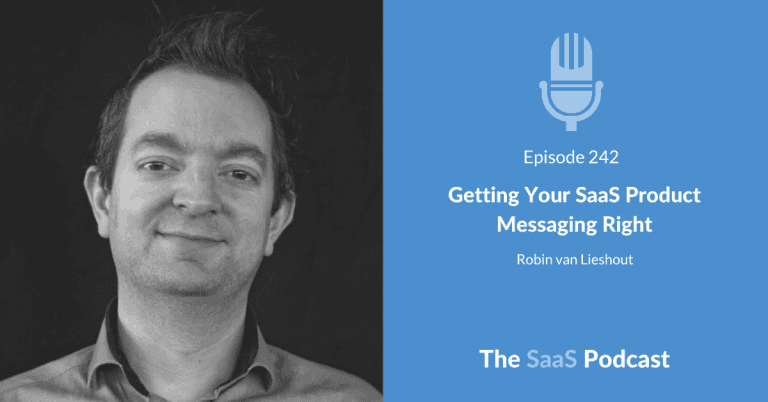
In this episode, I talk to Robin van Leichout, the co founder and CEO of Insided, a customer success community platform for SaaS companies.
So what do you do if you've built a great SaaS product but no one seems to care about it?
In 2010, Robin launched a SaaS company in the Netherlands.
He was able to pre sell the idea to T Mobile for a six figure annual contract.
It seemed like the perfect way to start his business.
And in the next couple of years, he grew the business to around 40 customers.
But he started seeing a worrying trend.
The majority of his customers weren't actually using the product.
And he knew that it was just a matter of time before those customers churned.
So he made the decision to refocus his business on a new customer segment, high growth SaaS companies.
But when he started reaching out to his prospective customers, no one seemed interested in his product.
His sales team couldn't get people to reply to their emails and they started to think, well, maybe we're trying to solve a problem that this target market just doesn't care about.
So Robin had to figure out what was going on and he had to do it quickly.
He spent a lot of time listening to recordings of sales calls, talked to a lot of prospective customers, and eventually realized that he didn't have a product market fit issue.
He had a messaging issue.
He and his team didn't understand their target customers well enough, and so their messaging was off.
And as a result, their sales efforts were failing miserably.
Once they eventually got their messaging right, things started to click.
They started making sales and growing the business again.
And today they're doing just under $10 million in annual recurring revenue.
In this interview, we talk about how Robin figured out the right messaging, how he optimized his pricing to increase the average contract value, and how he's generating 100% of his leads now through inbound marketing.
It's a great interview and I hope you enjoy it.
Robin, welcome to the show.
Robin van Lieshout (02:38.470)
Yeah, thanks for having me.
Omer (02:40.070)
So do you have a quote, something that inspires or motivates you or just gets you out of bed every day?
Robin van Lieshout (02:45.190)
Yeah, definitely, I got a couple.
But the one thing I wanted to mention is the main thing is to keep the main thing the main thing.
And it sounds obvious, you know, and, and, but I try to listen to it, you know, both at work as in my personal life, you know, at work, you know, where of course it's not only about being focused on the important stuff, but also more practically like, you know, canceling, you know, a lot of meetings which you don't want to attend or things like, you know, really structured one on one executive meetings.
But also my personal life, you know, really try to focus on a few things only and basically limit complexity.
Omer (03:17.810)
That's pretty hard for an entrepreneur to do because if you're like, you know, most other entrepreneurs, you've probably got too many ideas that you'd love to be doing something about.
Robin van Lieshout (03:28.370)
Definitely, yeah.
And I think I'm getting better at it.
In the early days, you know, I was super opportunistic.
You know, we basically did everything.
We sold to everybody.
But, you know, a little bit further in the journey I kind of realized that, you know, focus, focus is better.
And not only at work, but also personally because it's quite a tough job being a CEO.
So, you know, the more easy life gets, the more easier it will be for yourself.
Omer (03:52.300)
Yeah.
So for people who aren't familiar with insited, tell us, what does the product do, who's it for and what's the big problem that you're hoping to solve?
Robin van Lieshout (04:01.820)
Sure, yeah.
So insided is a customer success community platform which is used by SaaS, companies like Gainsight, Mixpanel, Nutanix to basically improve and scale customer success.
And the problems we solve for these companies are three things.
So first is increasing self service.
The second is increasing customer engagement, which we feel is a leading indicator for churn or renewals.
And the third thing is really improving product feedback by letting customers submit product IDs and where other customers then can vote on and engage on.
And yeah, we typically sell this to companies between let's say 50 employees and 1000 employees.
Mostly growing companies or looking to solve any of these challenges.
So yeah, that's inside it.
Omer (04:50.650)
And tell me a little bit about the company.
How big is the team?
What are you guys doing in revenue these days?
Robin van Lieshout (04:55.450)
Yeah, so we are spread out of our headquarter in Amsterdam and an office in New York where close to 100 people.
Let's say we do approximately close to 10 million in revenue.
Yeah, and growing.
Omer (05:07.620)
And you guys have raised about six and a half million euros so far?
Robin van Lieshout (05:12.180)
Yeah, that's correct.
We did a series a round of six and a half million by European investors, I think about two and a half years back.
Yeah.
Omer (05:19.620)
Cool.
So let's go back to 2010 or maybe a little early when you guys launched the business, where did the idea come from?
What were you doing at the time?
Robin van Lieshout (05:29.860)
Yes, it's quite funny because the idea actually came from actual customer demand.
So this is, this is my second company.
So out of university I founded my first company which was basically creating independent online portals communities.
And the business model then was based on advertising.
Right.
So bigger companies like T Mobile who wanted to advertise on our side because we have like millions and millions of visitors coming to our portals.
So that went pretty well.
You know, we had like 80 people or so working on these portals, creating content, creating reviews.
And then one of our advertisers, which was in fact T Mobile, they said, we are advertising on your website, spending all that money creating an audience on your site, but can you maybe also create a white label solution or a version which is branded in the T Mobile style so we can create our own engagement platform on our own website?
That was 2010 and I found that so intriguing, so decided actually to sell the other business, basically the advertising business, and started inside it, where I kind of moved into the world of software with T Mobile actually as our launching customer, which was awesome because they paid like 100k or so in AR.
So that was a quite big bang to start with.
Omer (06:49.170)
That's a nice break to get when your first customer is T Mobile and you've already, you can lock down a contract like that.
Robin van Lieshout (06:59.300)
Definitely.
Yeah, that really helped in the first year or two.
Omer (07:03.140)
Yeah, okay.
But as we'll find, not everything went as smoothly once you had launched and we're going to dig into that and learn kind of everything about your roller coaster ride.
But you've got enough there and you know, in terms of a big customer and they're willing to put the money up to give you enough confidence that there is something here that's worth really pursuing and this is the next business that you want to go into.
How long did it take you to sort of build this first version of the product and how sort of helpful was having a customer on board?
Because on the one hand I can see like it's great, like somebody saying, yeah, I'm putting up the money, there's clearly some demand and that kind of helps you with sort of the, sort of the validation piece.
But there's also a danger that you could just end up building something that nobody other than T Mobile wants.
Robin van Lieshout (07:56.870)
Definitely.
Yeah, no, that's true.
And I think, you know, in the early days, let's say it took like a couple of Months to actually build the product.
But in the early days we kind of used a lot of open source components and not all the software basically was, was created ourselves.
We just, you know, combined a couple of packages and put a layer on top of that, which was fine, you know, because we only had one customer and didn't really have to scale to like larger volumes.
But it did help in getting new customers acquired because, yeah, everybody knew T Mobile and you know, if we would go to a competitor and say we have T Mobile as a customer, at least everybody was willing to speak with us.
So that, that, that was easy.
But yeah, you know, building that business out, the BTC business as we call it now, so, you know, we are selling to these larger business, to consumer companies.
Yeah, in fact, in the end, indeed, yeah, was challenging because they had all these requests in terms of roadmap and features and all these things.
But as you grow, luckily you can spend less time per customer or every customer becomes less important.
So in the end we solved it.
But in the early days, yeah, we sometimes felt we were more like a consulting agency actually.
But luckily because of the large ar, we, you know, we grew really rapidly in the first two or three years.
Omer (09:09.630)
Okay, so you build this product and at what point did you start sort of looking for other customers?
Robin van Lieshout (09:16.380)
Yeah, pretty quick.
So, you know, we had T Mobile as a customer, so we first went to all the other telcos out there.
So.
And remember, we started in Europe.
Right.
So in the Netherlands.
So in the Netherlands we had like five or 10 telcos, which I think we all signed up in the first, well, maybe one or two years or so.
And then we expanded in terms of customer segments.
So we didn't only sell to telcos, but also to energy companies, banks, financial institutions, basically different segments and that worked out pretty well.
So I think in the first like two, three years or so, we grew to about 40 customers, all paying customers, which was really awesome.
Yeah, and we learned a lot.
Also what didn't work, to be honest, because in that journey we made quite a lot of mistakes actually.
Omer (10:01.540)
So yeah, tell me about just the sales process.
I mean, how did that work?
What sort of lessons did you learn?
And maybe I'd share a little bit about in terms of like, what were some, maybe the mistakes that you made when you were trying to go and sell the product to these types of customers.
Robin van Lieshout (10:16.920)
Yeah, yeah.
So the sales process basically looked like this.
We only had salespeople, so we didn't do well, we hardly did do any marketing.
So we had a website, we had some case studies, but we didn't do any lead generation or demand generation.
So basically it was just references and account executive outbound and basically a conversation look like this, hey, Mr. Sprint, we did this and this for T Mobile.
Would you like to talk to us?
Or hey, Spotify, you know, we did this for Sonos.
Could be awesome for you as well.
Do you want to see it?
And you know, most of, most of the people actually responded quite positively and we showed them the product and of course everybody had their feature request, which we said, you know, was on our roadmap in the next quarter or so.
And sometimes we incorporated that also in the contract in the agreement because they had to have it basically.
So, yeah, that also, as I mentioned in the beginning, blurred our roadmap, I guess in the early days quite a lot.
But hey, these were these larger customers paying 100k.
So every customer we got on board immediately meant that we could hire a new person in the company.
So, yeah, that's a big thing, of course, but the sales process was.
It was quite straightforward, actually.
Omer (11:27.610)
And then what was it?
You would just try to get them to a demo and then like, how long will be the typical sales cycle for these types of companies?
Robin van Lieshout (11:38.270)
Yeah, so large, large enterprises, 100k deals.
So we typically.
So we reached out saying that we had these other customers.
We tried to book a first meeting.
We came in, we created some mockups of how it could look like for them.
We created like an inspirational presentation with all these ideas.
You know, especially in the beginning, we came up with, you know, you could use it like this and like this and like this, and this is how you could connect other departments to our software.
And, and I think, you know, in the early days, people really bought us because of, you know, the energy, the inspiration, the opportunity they saw in us and in the platform.
Yeah, that really helped because, in fact, we couldn't show much in the product, but because of all the ideas, people really.
Yeah, that really built some trust basically for these guys.
Omer (12:23.560)
Okay, and how long did it typically take from like first contact to closing these types of deals?
Robin van Lieshout (12:30.530)
Yeah, I think average sales cycle would be like 12 months or so.
I mean, sometimes you were lucky and then maybe you could close something in four or five or six months.
But some of the deals, you know, they were on a pipeline for, you know, maybe two and a half years or so before they actually closed.
Omer (12:46.130)
Yeah, and did you raise any money at the time when you guys started, or was this purely funded from the.
These customers signing up like T Mobile?
Robin van Lieshout (12:56.700)
Yeah, so actually we grew the company to let's say 2 or 3 million in AR bootstrapped before we raised any funding.
So the first, the first 2 or 3 million I actually sold myself.
You know, just picking up the phone, sending out messages, doing all these inspiration sessions with customers.
You know, the Netherlands is a relatively small country so I could easily drive, you know, to each and individual company who had shown interest and they were all paying like 100k, some maybe a little bit more, some a little bit less.
But that really fueled our cash position and it was basically customer driven growth.
Omer (13:35.430)
Were there incumbents, like competitors that were already out there or was this some sort of new category at the time?
I'm trying to sort of figure out how did you sell the product and how did you sort of differentiate yourself from maybe the other alternatives they had at the time?
Robin van Lieshout (13:52.810)
Yeah, good question.
So we did had competitors, but to be honest, we didn't actually realize that, you know, we were just focused heads down on contacting companies, trying to figure out how we could, you know, use the T Mobile case and put that inspiration into other, into other customers mind.
And we were only focused on the Netherlands.
You know, we had like, you know, the first customers were only local customers.
In hindsight, you know, two or three years later, actually, you know, we realized that we should have scaled internationally, you know, far, far, far sooner because yeah, apparently there were competitors, but not in the Netherlands yet.
So yeah, once we did focus a little bit more towards other countries, we realized, oh, we're not the only one,
Omer (14:35.960)
you know, isn't that like almost kind
Robin van Lieshout (14:39.040)
of,
Omer (14:41.400)
what's the expression?
Like blissful ignorance.
When you can just go in and just focus on your product and not worry too much about competitors.
Sometimes it can come and bite you in the ass, I guess, but other times it can be a really good way to just keep focused on what you're trying to do.
Robin van Lieshout (15:00.240)
Yeah, definitely.
And maybe especially in those early days because building that company was already quite difficult.
Large sales processes, only a few customers, which you signed up in the first year or first two years or so.
So if I would be looking at competitors every day, especially larger competitors who maybe you've raised funding already way before we did, maybe, you know, I would already, you know, said to myself, oh, this is not going anywhere.
So actually not focusing on the competition in the, in the, in the first years actually saved me a lot of hassle, I guess.
Omer (15:30.190)
Yeah, yeah, absolutely.
Okay, great.
So initially when you started doing Outbound, you told me before we started recording that it had sort of Failed and it didn't work for you guys.
Can you tell us about that?
What were the problems initially and why do you think you were kind of dealing with them?
Robin van Lieshout (15:49.530)
Yeah, definitely.
So maybe before that.
So I mentioned we started off in working with B2C customers.
So that was our target segment.
And I think one of the mistakes we made also in hindsight, of course, is that we sold to the wrong customer.
And in hindsight you read that everywhere, but in fact, I didn't know.
Right.
So we basically sold to 10 different segments or so.
Right.
So not only telcos, but also energy associations, banking, insurance.
And in the end, from these 10 segments, actually six didn't work out.
We were able to sell, right?
We were able to sell like 100k, sometimes even 200k type of deals.
But deep in my heart I actually found that for most of these segments, we didn't actually delivered enough business value.
So that's why actually we decided to start focusing more.
So from the 10 segments, I said to my sales team, you know, to these six segments, we're not going to sell anymore and you're not getting any commission on that anymore.
So that was quite a tough message because up until then like 70% or so of our revenue came from these six segments, which from now on they didn't get any commission on anymore.
That was a tough conversation.
But I thought, you know, we need to, we need to refocus the company to segments where in the end, in the long term we could actually be super successful.
And in hindsight, I think that actually turned out pretty well because a lot of these customers in these segments which we didn't sell into anymore, we have quite some churn, let's say 10, 20% or so on an annual basis.
One of the segments which actually worked was a tiny segment which had like 200k or so in revenue.
And that's called B2B software.
You know, we had a great fit.
You know, we started thinking about the dynamics of this industry, what problems we could really solve.
So we really, really took a more intellectual approach basically of choosing, you know, who to who to sell to, instead of just me being opportunistic in the early days and just, you know, sold the platform to Everybody.
So for B2B software, we tried, you know, as you said, indeed, you know, we tried like inbound and outbound and you know, in the early days, outbound miserably failed basically.
I mean, we had like, I don't know, maybe three or four BDRs, SDRs, whatever you want to call it.
But in the end, you know, they couldn't book enough meetings.
They were failing.
They didn't get the response.
And it was quite a tough situation for the company because the BDRs were not successful.
But with that they didn't generate enough pipeline for the salespeople.
The rest of the company saw, hey, nobody's interested in this product because nobody is.
Nobody's actually replying to our emails.
Well, actually, in hindsight, we saw that it was too early to actually do outbound.
We were just starting out with this new segment.
We had a different buyer, we had slightly different problems we were solving.
Our messaging was not spot on, it was not ready.
We actually didn't understand the real buyer.
So these guys were just set up for failure because they were sending out all these messages, which didn't really resonate in the story.
Sorry.
Omer (18:51.960)
Okay, so let me just kind of understand this part.
Right, so you had about, you were selling to about 10 segments and sales was, was working.
And then you got to the point where you said, hey, there's like these six segments that, you know, I don't think is the right long term customer for us and we're seeing churn in that area anyway.
Robin van Lieshout (19:14.520)
Exactly.
Omer (19:15.640)
But those segments were generating more than two thirds of your revenue of new bookings.
Robin van Lieshout (19:23.200)
Yeah.
Omer (19:23.880)
Okay.
And so it's one, it's not easy when you're, you're sort of trying to grow the business to say, you know, hey, let's, you know, as you said, it's kind of, you're very opportunistic.
Right.
Because I'm, what I'm trying to understand is like, what pain did you feel that drove you to say we're going to stop selling to these segments?
Because on one hand you could say, well, I'm going to focus elsewhere, but I'm still going to keep selling to these kinds of customers because I can still bring in some revenue.
And you kind of said, no, actually salesforce, we're not going to do that.
You're not going to be comped for this.
What pain drove you to make that decision?
Robin van Lieshout (20:04.930)
For the most part, it was actually not even like a super, super short term pain.
But you know, we were, you know, as an example, we sold like, you know, a license of our platform to a European bank.
They are paying a hundred k in ar.
And we deployed the platform and it was hardly used.
Right.
And after a year there was like an automatic renewal and it just continued.
But I was like, okay, if I would run that company and I would be paying 180k you know, for my platform and if you would see the usage, you know, I wouldn't do it.
So, you know, churn is quite a lagging indicator of actual customer success.
Right?
I mean nowadays we look more at product usage and expansion, revenue and all these things.
But when we started, you know, we actually didn't do that.
You know, it was just a customer, he was paying, he was paying the bill.
So let's continue, let's try to get the next European bank on board basically.
But we saw that that's actually the usage was not enough basically.
And it didn't felt, it didn't felt right.
Omer (21:05.050)
Okay, and so was it also about.
Well, we managed to sell them for the next year, but based on this usage, is it just a matter of time before they realize they're not getting enough value from this?
And it's unlikely we're going to get a renewal.
Robin van Lieshout (21:23.210)
Exactly.
That was my long term thinking.
And these B2C customers, these larger customers, it takes ages for them to actually churn because they, you know, it's huge companies, it's lagging companies, you know, they have a lot of software which they're not using and paying for anyway.
So that, I mean it's good because, you know, there's a lot of stickiness.
But if it doesn't work then it's also, it takes quite some time to realize that.
Omer (21:47.130)
Okay, so you, you said, okay, we're not going to sell to these segments anymore, we're going to focus on B2B companies.
And was there a specific type of B2B business that you said you were going to focus on?
Robin van Lieshout (22:03.380)
So it's B2B software.
Right.
So SaaS companies basically and our main buyer is like the head of the VP whatever of customer success.
Right.
So the person who's leading the customer success team in an organization that's basically our main buyer.
And for that buyer we can actually solve great problems which they have unlike many of the other segments basically we focused on in the early days of the company.
Yeah.
And within B2B software it's like any company between 50 and let's say now, I think our biggest customers, maybe 1,000 or 2,000 employees or so.
So it's not like the IBM and Oracles yet, but anybody below that is a great customer fit.
Omer (22:43.290)
Okay, got it.
So you segment the market, you figure out the ones that are not the right long term customers.
You say, we're going to focus on B2B software and SaaS companies.
This is the way forward.
This is our future salesforce.
These Are the.
These are the businesses that you should be selling to, and then you realize that outbound isn't actually working with them.
Robin van Lieshout (23:04.500)
Exactly.
Yeah.
Omer (23:05.940)
And so let's talk a little bit more about, like, what was the process you went through?
Like you said, you know, they weren't able to get these meetings and get in front of these customers.
How did you sort of diagnose this problem and figure out how to solve it?
Robin van Lieshout (23:19.380)
Yeah.
So, you know, in hindsight, of course, again, you know, we, you know, we were already growing in the B2C site.
Maybe not as much as we would hoped.
And in the meantime, we started the B2B.
I was not doing sales myself anymore in, like, the early days, you know, I sold the first couple of million myself.
And then we had a sales team, and then we started that new B2B segment.
And, yeah, there was new messaging, new buyers.
So we hired like two or three reps for.
In.
In the sales team.
We had, like, two or three BDRs.
And because of the.
Yeah, because of the company size, I kind of thought.
Thought they would figure it out, but in fact, they didn't.
And everybody had, like, a different sales story, a different messaging.
There was no consensus on the actual problems we were solving, at least not on the exact words, basically, which we would need to use in order to explain the problem.
So I was listening to a lot of recordings in those days, just sales recordings.
Right.
So qualification calls, demo calls, and in fact, most of these calls were completely different from the others.
Right.
Every time there was a different story, and most of the calls, I was like, oh, man, you should have never put it like that.
Or maybe you should have said this.
Basically, there was no playbook, actually.
There was no repeatable, scalable sales process yet.
And when I realized that, I was like, this is not going to work, so we need to scale back because we scale too fast, basically.
And specifically for outbounds, if we don't know exactly what words we should use in order for them to understand what we do, it doesn't make sense to have three or four SDRs working on that.
First, we need to get back to our messaging, our words, understanding our buyer.
Try to do that in a smaller scale.
And once that works, then add more outbound reps to actually start generating more pipeline.
Omer (25:11.140)
Okay, and then, so how did you go through trying to figure out, you know, your buyer and the messaging, like, was.
Was this like, you know, you going out and starting to talk to more customers?
Like, what was the process you went through?
Robin van Lieshout (25:25.260)
Yeah, yeah.
So actually, two Things.
So first we indeed spoke with, let's say, hundred different B2B software companies, you know, with their head of Customer success, with our VP of customer success, and just listened, you know, what are you experiencing?
What are your issues?
What are your problems?
You know, if you would have a product like this, you know, what would you think about it?
How would you describe it?
All these things.
So that's one.
And the other one is that we actually, you know, started with like a trailblazer salesperson.
Right.
So somebody who's not like a typical salesperson only wanting to hit his target and, you know, it's like, can do that trick really well, but maybe is not really well suited on, you know, creating these feedback loops with the product organization, with the marketing organization, with the executive team.
So we hired one salesperson and yeah, that person kind of changed sales decks, you know, maybe, I don't know, maybe six times during one year period, basically.
But in the end, we kind of nailed it, right?
We.
We kind of knew, okay, if this is the story, if this is, if, if these are the words, if these are the slides, if, if we articulate the problems in this way, then it actually resonates.
And when that work, basically, yeah, then, then we were basically ready to scale to a next level in terms of organization again.
Omer (26:39.280)
And during that time.
And the feedback that you got from these prospective customers, did it significantly change the product?
Like, did the feedback tell you actually there's something not right with the product and we need to kind of fix that as well?
Or was this primarily, you know, a messaging issue?
Robin van Lieshout (27:02.650)
I would say both, but I'm leaning more towards the messaging issue.
So I think with better messaging, we would be able to scale much faster.
Of course, you know, doing a new segment, there are always things which are specific for the segment.
You know, different type of integrations.
For example, with, with Tech Stack they're using, but I would lean towards like 60, 70% is messaging, and then, you know, maybe 20, 30% or so is.
Is product.
Omer (27:27.130)
Yeah.
And the reason I'm getting to that is because I think as a founder, when you build a product, obviously you're very focused on the product, and when people aren't buying it, it's kind of tempting to sort of look at the product, right.
It's like, oh, I must not have the right feature set.
I should kind of go and add more stuff.
If I get that right, then people will start buying it.
And I think the lesson here is that, yeah, I mean, there might be some aspects of the product and I Think there will always be aspects of your product that you need to keep improving and doing a better job to serve your customers.
But a lot of the times it's that messaging and how are you communicating to them, how you articulating your value proposition, how are you showing them or helping them understand you solve that problem?
That's not always, but quite often is probably more important than the product.
Robin van Lieshout (28:17.020)
I totally agree with that and I see a lot of companies actually struggle with that also in my environment.
Actually one book I can definitely recommend is obviously awesome, which is a book around positioning.
And it really explains really well that you need to put your product in a certain context for people to understand and that you're also able to change the context.
And I think that's super important if you really want to scale your pipeline generation because then people really understand exactly what you're doing.
Omer (28:45.000)
Yeah, that's good recommendation.
Okay, so you sort of went through this process to figure out how to make that work, but you also transitioned more into content marketing.
And what was the reason to sort of move to inbound?
Because again, like if I'm trying to sort of put myself into that situation and you sort of outbound isn't working, needs to be fixed, moving to inbound seems like it's going to take even longer.
Right?
Robin van Lieshout (29:13.810)
Yeah.
Omer (29:14.490)
So what was the sort of the thought process, the sort of the rationale for saying, you know, we need to be doing more with inbound?
Robin van Lieshout (29:20.730)
Yeah, so indeed.
So we, you know, in our history we didn't do much marketing.
So when we were focused on the B2C customer customers only, you know, we just did some case studies and you know, we had somebody focusing on our website.
But when we started with B2B software, we, you know, we had a different total address on market, a larger one, different approach.
So we started implementing, you know, tools like HubSpot and all these other sales and marketing tech stack tools.
And the reason why we did it mainly focusing on content is because we first wanted to experiment.
You know, okay, if are people actually, you know, searching for tools like us now?
Can we actually see what people are looking for and can we maybe surface the market and see what's the low hanging fruit?
What are the companies who are already looking for such a solution and can we grab them with our content, with our paid advertising versus our outbound approach?
Because we can never target and contact like 100,000 companies or so, but we can put our ads out there specifically on the keywords to a specific buyer segment at scale to see, okay, let's see if there are at least 10, 20 customers who are in the market today who are able to buy our solution today and then learn from that, basically.
So that's why we decided to scale back basically to inbound marketing.
First and only.
Omer (30:37.040)
Okay, and what type of content were you creating?
Was this really kind of around customer success?
Robin van Lieshout (30:42.400)
Yeah, so we created a couple of guides, like pillar pages.
So one is around product feedback and ideation, one is about customer success, one is about community management.
So a couple of these larger pillar pages, and then we started generating a lot of blogs, a lot of ebooks, and we use that content basically for paid advertising.
So if you, you know, in LinkedIn, you can target, you know, really, really awesome.
So we, you know, we target every head of customer success trying to make sure that they see our thought leadership content.
We had a marketing team of five people or so and, and two of them were actually full time creating content.
That's quite a lot, especially in the early days.
But we really believe that we need to put our brand first, our thought leadership content first, and see what type of persons came inbound from that.
And that's actually worked out pretty well.
Omer (31:28.640)
Yeah, it has.
Because before we started recording, you told me that 100% of your leads are now inbound.
Robin van Lieshout (31:36.560)
Yeah, so at the moment we only do inbound, let's say 100% indeed of our leads are coming from inbound.
So we've been doing this for, you know, for a couple of quarters and now actually we're starting again, you know, thinking about, okay, you know, apparently this works.
Can we now get back to trying out outbound again?
Because now we know our buyers, we know, you know, what messaging, what words we need to use.
And now we also want to go a little bit more upmarket again, see if we can come to these larger enterprises and really create like a named account list and create a team of SDRs around that.
Omer (32:09.920)
Now one of the other things that I thought was pretty interesting was pricing and how, as you said, you didn't put a lot of focus onto pricing for a while.
And that was pretty interesting for me because in many ways, when you sort of start out as a founder, it sort of feels like I got to get the pricing right and there's this almost fear in terms of this is my one shot and I've got to get the right pricing and if I don't, then this could kind of all, you know, blow up in my face.
But you, you kind of had a very sort of simple view about pricing when you started Out.
Right.
Were you just charging everybody just 100k?
Robin van Lieshout (32:47.880)
ARR?
No.
Well, in the early, early days, so we had T Mobile as a launching customer, they're paying 100k.
So then for the second customer we said, okay, let's, let's first try out, see if we can get a few more logos.
So we started with 50k as an initial offer, so that's the second customer.
Then we went to 60k, that's the third customer.
Then we had a 70k, basically our fourth customer.
So in every deal we tried to increase the price with 10k which you know, actually worked.
And then you know, we hired like a senior VP of sales and then we started actually doing like 200k deals or 300k deals and you know, even customers are paying 500k.
So yeah, it's basically increasing price, trying to increase price.
You know, in every, in every next deal.
The thing we didn't do well I think in, you know, in our company history is that we didn't really had like a great expand component in our pricing.
So we had a few, but you know, we usually had to go through procurement departments and they negotiated these variable drivers so high that in fact, you know, you know, these customers would never go above, you know, that border.
And that's quite a pity, especially later on in the journey because you know, the first years of our, you know, the first customers in the first years, there's actually no, you know, great, awesome second order revenue.
So that's also something.
Yeah, we, we fixed basically when we were focusing on B2B software companies.
Omer (34:09.500)
So when you say expansion, you're saying there was just, there was no kind of upgrade path for them to get more, pay more, you know, drive more value or kind of increase the average sort of contract value with each customer.
Robin van Lieshout (34:25.340)
Exactly.
Yeah, we just sold them the platform.
It was, you know, let's say 100k.
You got all the feature functionality which we had and we would price on number of sessions, a number of end users actually using the platform.
But that threshold was already so high that they would never go above that.
So in fact they could use, you know, our software Solution Unlimited.
Omer (34:45.840)
And how did you figure out how to create that, that sort of expansion, that upgrade path?
Robin van Lieshout (34:51.680)
Yeah, so for, for B2B software we tried a couple of angles but in the end we reverted back to what's industry standard.
Right.
I mean if you look at, you know, the typical blogs out there, you see that there is a couple of access which you can use in terms of expansion.
So at the moment we were reverted back mainly in admin seats, which at least is something, you know, people understand.
So that's working for us at the moment.
Omer (35:16.340)
So I'm trying to kind of understand this.
So the.
If they have more admins that they want getting into the product, then they pay more, Is that it?
That's the main sort of value metric, yeah.
Robin van Lieshout (35:28.900)
So now we shift gears.
We first have like one package with one variable driver, which didn't really work.
Now we created three different packages.
So let's say package A, B and C. Every package has a certain feature set.
So, you know, package C has more features, more integrations than package A, basically.
And then within the package there are two variable drivers, which is admin seats and still sessions.
And that's basically how companies grow.
So they either go to a next package because they need more functionality.
They started with self servers, and now they also want to do product ideation, for example, and they grow in admin seats.
So first they start off with maybe one or two customer success managers or one or two product managers trying to see what IDs are coming into the platform and manage that.
And then they want to grow to multiple products and maybe the entire product team wants to be active on their customer community or the entire customer success team wants to be active on the community.
So then basically more of the organization is starting to use the platform, which then of course also delivers more value for them.
Right.
And then it also increases the price a bit.
Omer (36:37.700)
Okay.
And then in terms of the features, figuring out what features should, should only be in, you know, plan B or C. How did you figure that out?
Did you, did you run sort of surveys with customers?
Was it like, let's just try stuff and sort of a B test?
Like what, what was the way that helped you to, to figure that out?
Robin van Lieshout (36:56.940)
Yeah, it's, it's funny because, you know, you read a lot of stuff online about.
Yeah, just, you know, just survey your, your user base and, and then you'll get some data.
Well, in our case, we didn't have the volumes to actually survey people.
Right.
I mean, I could put a survey, but then I had like maybe 10 respondents or so.
And then, you know, I need to base my pricing strategy based on, on 10 feedback forms.
So what we did is, you know, we just created like a first version, you know, internally.
You know, we just grouped together people from cs, people from product, people from marketing, people from customer success, and we just use our own intellect basically to come up with like a V1.
Then we put that on the website.
But without any pricing.
Right.
So the, so the packages were there, the features were, you know, clearly mentioned on the website, but we didn't include what the exact price would be because we're not 100% sure yet.
And then it's just feedback from the market.
So just go speak with customers, right?
I mean, if you're doing a qualification call, then you go to a demo call and then they ask for pricing, then you just show, okay, these are the packages and then they will reply, they will give you feedback, say I want to have single sign on also in the first package because else it's not going to work for me.
And then if you hear that two or three times, well then probably that's definitely needed in the first package.
And then to start you can just negotiate that saying, okay, it's only included in the second package, but if you sign up this month, you will get it also in the first package.
Right.
So you can also use it for negotiation purposes.
But then in the end you will just change your packaging to create a more frictionless sales process.
Omer (38:31.510)
Yeah, that's good stuff.
And I think the lesson that you just sort of shared there, if you're selling to enterprise customers and you only have a small number of customers, then as you said, the survey probably isn't going to be that helpful because you don't have a big enough sample size to sort of work with.
And I guess the same probably also applies if you're in the early stages of trying to figure this out and you know, maybe you only have 30, 40, 50 customers or something.
Again, you might be in the same situation where survey might not give you enough information, but you're still probably early enough to be able to test these things and have one on one conversations with customers and get that direct feedback to try and figure this out that way.
Robin van Lieshout (39:17.510)
Exactly, yeah.
I mean, customer feedback, the feedback the sales team gets is so, so, so important, especially in the, in the early stages of your company because you can learn so much from that.
And I think a lot of people don't really realize that.
Also sometimes I have the discussion with our marketing people saying, come on, listen to more calls, listen to these qualification calls.
You will learn so much on, you know, what they like, what they don't like, what words they're using themselves.
And you can use that in campaigns and you know, in your own outreach.
So yeah, super helpful.
Omer (39:45.290)
So you're coming up to almost 10 years since you founded this business.
If you could kind of go back to that first year of being in business, what advice Would you love to have been able to give yourself?
Robin van Lieshout (39:59.050)
Yeah, I think it comes down to a lot of, you know, mistakes I've made, you know, over the years.
Yeah, I would do most of these things now.
Completely different.
The thing is, you know, you don't know.
Right.
And a lot of these things, you've, you've listened, you've heard about it, you've seen it in blogs, but you only, you only truly understand it when you're, you know, when you're experiencing it yourself.
So in hindsight, of course, you know, I would scale internationally, you know, way quicker.
I would set up a better land and expand strategy.
I wouldn't scale my sales team so fast if there's not any demand.
Maybe I would have raised money earlier because then I would have been further ahead, basically.
I would have made so many different changes also in the relationship with our board, for example.
So in hindsight, everything could be done much quicker, but in reality, everybody just needs to run the journey.
Omer (40:54.010)
Yeah, exactly.
And I guess with a bit of hindsight, you kind of know where you end up.
And then making some of those decisions with more confidence is easier when you look back.
Whereas once you were probably going through the journey, I guess there's still a lot of uncertainty in terms of where you're going to go with the business, how big it can potentially grow.
And I think probably that often also holds us back in terms of going all in with a particular strategy or decision.
Robin van Lieshout (41:27.170)
Definitely.
Yeah.
And I think nowadays at least, there's a ton more content available online.
Right.
So you can at least listen to stories of other founders.
And there are more SaaS founders and also more experienced SaaS founders.
You know, maybe 10 years ago it was different, but now, yeah, you know, make use of the ecosystem, I guess, you know, speak to other CEOs, because that would help you so much in your own thinking.
And also getting out of your business sometimes also really helps.
Omer (41:49.410)
Yeah, yeah, totally.
And that's, that's one of the reasons that I, you know, with this show, I, I often try to bring people on, I mean, bringing on people like you who kind of, you know, open to, to talking about your journey and, and the mistakes and the lessons is so valuable for people who are sort of earlier in the journey.
But I think also, sometimes it's also really useful to find people who are in, you know, completely different sort of businesses or industries to what you're in, because sometimes just that's where I think maybe you sort of identify these nuggets of ideas that maybe help you to think differently to what everybody else in your industry is doing.
So I think both of those kind of really valuable things.
But we should wrap up here.
So I'm going to move on to the lightning round and ask you seven quick fire questions.
Robin van Lieshout (42:39.100)
Cool.
Omer (42:39.460)
Are you ready?
Robin van Lieshout (42:39.980)
Yeah.
Omer (42:40.380)
Okay, go for it.
What's the best piece of business advice you've ever received?
Robin van Lieshout (42:44.300)
Ooh.
Oh, man, there are so many.
One thing which comes up is let the process do its work.
I mean, sometimes I'm already thinking too much on all the possible outcomes, scenarios, you know, what choices I need to make in the future.
And that advice was really just see what happens and think about it when the situation is there.
So that really eases my mind.
Omer (43:07.530)
Yeah, you already recommended one.
What book would you recommend to our audience and why?
Robin van Lieshout (43:11.610)
Yeah, also that I'm a big reader, so I think there, you know, maybe, maybe a few which come to mind.
Obviously, the hard things about hard things to really get you pumped up in tough times, scaling up if you think you can run your organization with better processes.
And maybe one less obvious one is a book called Silent, which explains the difference between introvert people and extrovert people.
And I really learned a lot about the differences in, you know, in employees, basically, and how you can approach them also better.
Omer (43:41.980)
I haven't heard of that one.
I have to check that out.
Okay, we'll include a link to the.
In the show notes to all those books.
What's one attribute or characteristic in your mind of a successful founder?
Robin van Lieshout (43:51.100)
I would go for perseverance and dedication.
I think, you know, sometimes you just.
You just had it right.
But then you still have to lead.
You still have to be in front of the troops.
You still have to work 60 hours a week.
You still have that jet lag.
But, you know, as soon as you give up, I think the ambition of a unicorn basically fades away.
So perseverance and dedication.
Omer (44:11.240)
What's your favorite personal productivity tool or habit?
Robin van Lieshout (44:14.360)
Yeah, people laugh at me, but I still use Inbox zero.
I have a Wunderlist to do list, basically which I put everything on.
I prepare my week in the weekend, so Sunday evening, I cancel a lot of meetings basically as much as possible.
If I think I.
If I don't like it or if I feel I cannot contribute enough, I just cancel it.
And I also try to work from home at least like a day a week or one day every two weeks, because then I can actually also work on strategy a bit without being distracted.
Omer (44:42.410)
Did you see the announcement yesterday that Microsoft are finally shutting down Wunderlist I know.
Robin van Lieshout (44:46.810)
Yeah.
I'm crying.
Omer (44:48.890)
That's a very sad day, I think, because it's such a great product and I think that.
What's Microsoft's replacement call?
Is it just Microsoft to do?
Robin van Lieshout (44:58.730)
It's to do and it doesn't work.
Omer (45:02.650)
Yeah.
Robin van Lieshout (45:03.610)
I heard rumors that the original founder is willing to buy it back, so I'm hoping that he's going to do that.
Omer (45:08.920)
I saw that.
Yeah.
I think it was Christian.
Right.
He was tweeting something about trying to get it back.
But yeah, here's an opportunity because now, literally the end is in sight.
But, yeah, I think that's a great product.
What's a new or crazy business idea you'd love to pursue if you had the extra time?
Robin van Lieshout (45:24.920)
Yeah, a lot of people actually asked me that, but to be honest, actually none.
And I also don't really believe in it because I actually don't want to think, you know, of new ideas because I want to keep me focused basically on inside it and trying, you know, to grow and build that business.
And I think, you know, the day or the week when I start thinking about all these other ideas, I kind of have the feeling that I'm gonna.
I'm gonna be, you know, losing sight of the main company, basically.
Omer (45:52.290)
Yeah.
Yeah, that's a good lesson.
What's an interesting or fun fact about you that most people don't know?
Robin van Lieshout (45:57.410)
Well, I think my girlfriend would say that I'm actually quite a shy guy.
Yeah, you wouldn't tell.
Maybe usually in a work environment or doing, you know, podcast.
But yeah, I'm quite shy.
Omer (46:09.110)
Where.
Kind of in a social environment.
Robin van Lieshout (46:11.750)
Yeah, definitely.
Yeah.
Omer (46:13.190)
Oh, yeah, me too.
It's kind of like, you know, happy to have these kinds of conversations, but put me in a room of people and kind of socially and it's not my favorite place to be.
Robin van Lieshout (46:22.950)
Definitely.
Omer (46:23.750)
Although having said that, I think, you know, you know, one to one conversations, I think are a lot of fun.
I think.
I think maybe it's just this thing about kind of feeling like you have to make small talk with a bunch of people that, you know, seems pointless.
Robin van Lieshout (46:36.220)
I totally agree.
I think, to be honest, a lot of people have that, but maybe they're afraid to mention that.
Omer (46:42.700)
Yeah.
And finally, what is one of your most important passions outside of your work?
Robin van Lieshout (46:47.260)
Yeah.
My personal opinion is that, you know, work is not something which is outside of me.
You know, it's just part of my whole life.
Right.
I don't really believe in the separation, you know, and for me personally, I think I have so many different aspects in my work, like different subject areas.
You know, sales, marketing, customer success, hr, finance, strategy, fundraising.
You know, all these things that, you know, I tried to focus, you know, on all these elements, you know, of course, plus my friends, my family, my two kids, you know, and doing, you know, crazy stuff with them, like, you know, going to Bali tomorrow.
But, you know, again, try to be focused.
Omer (47:21.880)
Yeah, cool.
Great.
Well, if people want to find out more about Insighted, they can go to insighted.com and if people want to get in touch with you, what's the best way for them to do that?
Robin van Lieshout (47:34.270)
Sure.
Yeah.
Find me on LinkedIn.
Robin Vanly sout or just drop me an email.
Robinsider.com awesome.
Omer (47:40.830)
Robin, I've really enjoyed this conversation.
You know, I really appreciate you kind of, you know, sharing your story and sort of the mistakes and lessons.
And I know, you know, when you've been on a journey for 10 years, a lot of that stuff sort of fades away.
And, you know, you have a lot of.
You probably have a whole bunch of issues that you're dealing with today and right now.
So I think, you know, I appreciate you kind of being willing to sort of talk about that and sort of take us through the journey.
And I know, you know, founders who are sort of at earlier stages, there's gonna.
There's a lot of stuff in here that's going to be really helpful for them, and I kind of lost track of time, and it just kind of shows you there's.
It was a good conversation.
So thank you for joining me and definitely, you know, I wish you all the best and have an awesome time in Bali.
Robin van Lieshout (48:27.700)
My pleasure.
Thanks for.
Thanks for having me.
Omer (48:29.700)
It's my pleasure.
All the best.
Cheers.