Omer (00:09.920)
Welcome to another episode of the SaaS Podcast.
I'm your host Omer Khan and this is the show where I interview proven founders and industry experts who share their stories, strategies and insights to help you build, launch and grow your SaaS business.
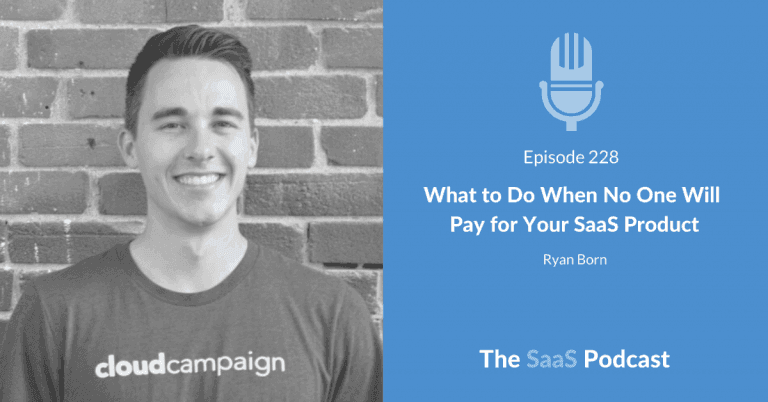
In this episode I talked to Ryan Bourne, the co founder and CEO of Cloud Campaign, a SaaS platform that helps agencies to manage multiple brands on social media at scale.
Ryan was working as a software engineer in the San Francisco area.
Like most developers, he loved building things and he was always tinkering on side projects.
His latest idea was a social media management tool.
He created a few mock ups for a product that didn't exist yet and published a landing page to see if anyone was interested.
The next day he turned up at work and heard a big announcement.
The company he worked for had been acquired.
His office was being shut down and he was going to be laid off.
As he's sitting in this meeting, his phone's going crazy.
It keeps buzzing every couple of minutes.
It turns out that he was getting notified every time someone signed up on his landing page.
He was blown away by how many people were interested in a product that he hadn't even built yet.
So Ryan started building the product and quickly launched the beta.
He listed it on sites like Product Hunt and Beta List and it wasn't long before he had 400 people signed up.
That got him even more excited about his product.
So next he added a paid plan and tried to get people to upgrade, but not even one person paid for the product.
He tried cold email outreach in the hopes of finding customers, but that didn't work.
He tried running paid ads, but that didn't work either.
His savings were running out fast and he had a very limited Runway to make this business work.
But where was he supposed to go from here?
It seemed like nothing was working.
Fast forward to today.
Ryan's business is generating around $25,000 in monthly recurring revenue and he's found a scalable marketing channel that's working really well for him.
In this interview, you'll learn exactly what Ryan did to turn things around.
We talk about all the things he tried that didn't work and the important lessons he learned.
And we deep dive into exactly how he found customers and how he's grown revenue.
If you're bootstrapping or still trying to find product market fit, I think you'll like this interview.
It's jam packed with great strategies, lessons and insights, so I hope you enjoy it.
Brian, welcome to the show.
Ryan Born (03:04.140)
Hey Omer, thanks so much for having
Omer (03:05.700)
me so do you have a favorite quote that you can share with us?
Something that inspires you or gets you out of bed?
Ryan Born (03:12.160)
I do.
I don't actually know where the quote came from in the first place, but the quote is, don't capture the opportunity, create it.
And I really like it, just because in most situations, opportunity is not going to come knocking at your door.
You need to go out there and put yourself in uncomfortable situations and really create serendipity.
And I think that's something that I had to learn through this process.
I'm more of an introvert and so just really forcing myself to go out there and create the opportunity was a learning experience for me.
Omer (03:40.640)
So your background is as a software engineer, right?
Ryan Born (03:43.910)
Yep.
Yeah, that's correct.
Omer (03:45.190)
And how long were you working as an engineer before you started Cloud Campaign?
Ryan Born (03:49.990)
So I had a couple different internships in college, but in terms of an actual full time position, I was working at a company for three years in a software engineering role before starting Cloud Campaign.
Got it.
Omer (04:01.670)
So for people who aren't familiar, what is Cloud Campaign, what does it do?
Who are your target customers and what's the problem that you're helping to solve?
Ryan Born (04:10.170)
Yeah, so Cloud Campaign is a digital platform that helps marketing agencies scale social media management.
And so most of the large brands that you're familiar with today actually outsource their social media to one of these agencies.
And then we're building the software that allows the agencies to more effectively manage a lot of brands at scale on social media.
And there's really two problems that we're solving.
So it's kind of front of the house and back of the house.
The first one is just making the agencies look better and smarter.
And that way they can charge a higher retainer to these customers that they're servicing.
And then the flip side of it is making the agencies more efficient.
So think a lot of automation built in, streamlined workflows, and this allows the account managers at the marketing agency to in some situations even double the number of brands they can work with.
And you know, for the agency owner, it's really compelling because it's a real business opportunity to increase their throughput, increase the number of brands they have without having to hire additional staff and increase their overhead.
Omer (05:13.100)
Got it.
Okay, so you graduated with a bachelor's in computer engineering and you worked for several years as a software engineer.
You've never worked for an agency.
So how did you come up with the idea for this product?
Ryan Born (05:32.740)
Yeah, that's a great question.
You just kind of saw a gap in the market, from the outside looking in.
And to be completely honest, we've gone through a couple pivots.
So the product that we have today and the industry that we're servicing is actually different than where we started initially.
One of my really good friends works at a clothing company, a very large clothing company, and he was on their email marketing team.
And what they realized is anytime they dynamically sent out an email based off the weather, they would double sales for the day.
So, for example, if it's raining up in Seattle, they're going to send you maybe a rain jacket and some boots in your email.
If it's sunny down in San Francisco, where I'm at, they might send me shorts and a T shirt in the email.
And so the thought was, okay, there's real business results from this.
How could we do this on social media?
That was the original idea.
Set up a landing page for that and launched it.
And we can kind of dive into that in a second.
But through that process, actually realized that no one was willing to pay for it.
It seemed like a, you know, a feature, not a product to most folks.
So eventually ended up going through a couple pivots, doing a lot more market research and realizing that the large brands that we want to go after actually outsourced the agencies.
And that was really the light bulb moment to then build a product for these marketing agencies and start going after that market.
Omer (06:53.710)
Okay, had you talked to any agencies at that point?
Ryan Born (06:57.660)
Not at that point.
So, yeah, it was about, I want to say it was six months in when I finally got to this realization that we had to go after marketing agencies, talk to a friend that was working at Intuit at the time, which is, you know, Mint, TurboTax, those companies, and they actually then connected us to the agency that they worked with.
And that was like the first conversation that I had with an agency.
So I think there's.
We can dive into this a bit more.
I think there's a lot of lessons here, and I think there's a lot of things that I did wrong in the early days.
Omer (07:28.900)
Yeah, yeah, let's dig into that.
So I want to kind of just uncover this because you started where a lot of entrepreneurs or SaaS founders do, which is very idea driven, very feature driven, where I've got this idea for a great product or feature.
And yeah, that's what I'm going to run with.
And you took that same approach, but you did some pretty important things along the way, which helped you guys go from, I mean, what are you guys doing now, like, in terms of MRR.
Ryan Born (08:04.810)
Yeah.
So we just crossed 25,000 last week.
Omer (08:07.930)
Right.
So that's awesome.
Right, so you guys have essentially bootstrapped the business for what, the first two years before you raised any money?
Ryan Born (08:17.230)
Yep, exactly right.
Omer (08:18.430)
And you've got to 25k mrr.
So I want to dig into that.
Like, what did you do and what lesson can other people learn from that who are currently sitting there thinking, I have this great product and I'm going to figure out how to start selling it?
Ryan Born (08:35.630)
Yeah, great question.
I think there's, you know, a couple of things that we did right and a couple of things that we did wrong, so I can kind of touch on both of those.
But in terms of what we did right, I think just doing whatever is like the least amount of work possible to then get the idea out there and kind of validate the market.
You know, clearly we.
We started in the wrong market, ended up shifting focus throughout that process.
But initially it was just standing up a landing page and just putting it out there and seeing if anyone is even interested in this product.
The nice thing is I've started multiple kind of side projects in the past, never wanting to really make them into businesses more just kind of, this is a cool project I want to work on.
You know, I'm an engineer, so I like building things.
I'm just going to build it and throw it out there.
And so having these previous projects that I put out there, it was a really good benchmark in terms of, like, what are people actually interested in with this product?
Just putting up the landing page.
I made some mockups, is really simple.
It was essentially just, hey, are you interested in this?
Put in an email, you'll get notified when it's ready.
But yeah, I mean, it was very clear that the desire for it was much larger than other products that I've tried launching in the past.
Just because all the number of signups that we had in the first day of people saying they're interested and they want to stay in contact.
And it's actually, it's a funny story.
So I set up the landing page when I was working at my previous company as a cloud security startup.
I was a software engineer there.
And the next day actually HR comes in the office and we had been acquired.
So it was kind of an interesting situation.
We're kind of operating like a satellite office and HR comes in, pulls everyone in the office into the meeting room and pretty much tells us that they're going to shut down the office and they were going to give us two months to migrate all the code over, move the project over to another office that they had in Vancouver.
And meanwhile, I'm sitting in this meeting, I have my phone in my pocket and it's just going crazy.
Like every two minutes it's buzzing.
And those are all notifications of people putting in their email address saying they want this new product that I promised them I'd make in some time period.
And so I think that was, it was a really exciting time, obviously a little bit scary, but there's no better motivation to get a product off the ground quickly and start selling it than knowing you have two months left on payroll and you're about to be on your own and for yourself and have to generate some revenue to get the company off the ground.
Yeah.
Omer (11:03.860)
Wow.
So this landing page that you're talking about, this wasn't the first one.
This was the.
After you went through with these different ideas and sort of mini pivots on the idea you arrived at.
Okay.
Agencies are kind of the market that we need to focus on or we're going to try to focus on next.
And then this was when you built that landing page.
So what was this?
Like, this wasn't the first landing page you built?
Ryan Born (11:32.290)
No.
So this, this actually was the first landing page and it wasn't targeted at agencies.
This was like the dynamic social media triggering product that later morphed into the tool for agencies.
I was just mentioning there have been other products that made in the past.
Like I created an IPO notification tool that would email you anytime a company IPOs or goes public or files that go public.
I guess I've made like a node app and a few other things and with those there wasn't much interest and it was really hard to get people to sign up for it.
So just seeing that contrast, I realized like this was a project that was worth pursuing.
But at the time it was still just the very, very first landing page.
The very first time, you know, cloud campaign was ever kind of introduced to the world.
Omer (12:16.630)
And then what kind of mockup did you do?
You said you created some kind of product mock up on the landing page.
Ryan Born (12:22.960)
Yeah.
So, you know, just using like the Sketch app to create some screenshots of what I thought the app might look like eventually.
And I think that's a great way to get people interested and, you know, make the product seem a bit more real.
Even though I hadn't written a single line of code, they're able to see like a dashboard of what it might look like and different Screenshots and stuff.
And so people thought it was further along than it really was.
Omer (12:47.800)
Interesting.
So I think a lot of us could create a landing page and probably come up with a mock up.
Maybe not as good as the one as you did, but something.
But I think most people would end up with a page that nobody visits apart from themselves.
So how are you getting people to find out about this landing page?
Ryan Born (13:09.890)
Yeah, that's a great question.
I mean, I think we're extremely lucky, you know, in our day and age that there are tons of different Internet communities, all with different focuses and niches.
And so, you know, in that first night, literally I put up the landing page and that first night I just broadcasted it to a few different forums.
So like Reddit, Indie hackers was pretty new at the time and it was pretty easy to kind of game the system and keep your post at the top of it.
So I just posted around to a few different places like that, and it was driving pretty significant traffic, even within the first day.
Omer (13:45.150)
Wow.
Okay, so you talked about the job situation.
You got two months left on payroll, you put this landing page up and suddenly all these people are signing up.
So where did you go next?
Ryan Born (14:00.350)
Yeah, I mean, so of course the first step was go out and buy a computer because you don't want to do any of the work on a company computer, otherwise they pretty own your startup.
So that was step one, you know, working after hours for those two months until I was full time on it, which was June 3, 2017, was when I really went full time.
And it was very liberating, you know, knowing that I could work 24 hours on this new startup idea that I had.
But it's also very scary knowing that I have a set Runway and at a certain point my savings is going to run out.
But yeah, the first step was really just getting that, that beta product, the mvp out there for people to start playing around with.
And the initial thought was, let's not charge any money, let's just get people on it, let's make them happy and then we can figure out some sort of pricing structure and make money off it.
And so launch the mvp, put it on product hunt and beta list, and all those different sites where you can get a ton of traffic really quickly had about 400 users.
And then the thought was, okay, now let's flip switch and let's start monetizing it.
Tried adding a payment plan and forcing everyone to go from the free model to the paid plan and zero people did.
Omer (15:11.260)
Okay, wait, so once you Got those people signing up on the landing page.
Did you talk to any of those people or do you just see that as a sign that the kind of the green light to go and start building the mvp?
Ryan Born (15:24.140)
Yeah, so I didn't talk to anyone, which is a huge mistake, obviously.
And it's something I learned after.
You know, it's the advice that you get all the time where folks are saying, you know, go talk to your target customer, get some feedback before you build anything.
Write a single line of code.
And my thought's like, well, maybe this will be different.
Maybe I'll just build it and I'll put it out there.
There's people that have expressed interest and maybe they'll just start paying, which is very naive.
You'll hear stories of it happening from time to time, but they're exceptions, and that's why you hear the stories.
It's really, really rare and generally just bad advice to just build something.
Yeah.
And I obviously learned that the hard way.
Omer (16:02.690)
Yeah.
Because also, just because people are signing up on a landing page doesn't mean you know enough about what they need or even if they're the right type of customer for you.
Ryan Born (16:14.690)
Exactly right.
So, yeah, I think it's a mistake that engineers make more often than others just because, you know, a skill that we have that we feel comfortable with is building programming, whatever it might be.
And it's hard to get pushed outside of your comfort zone, especially if you feel like you have a finite period of time.
Like, in my situation, you know, I only had so much money in my savings.
If I didn't get the company off the ground within that time period, it wasn't going to happen.
So my thought was, let's just get something out as quick as possible and let's start monetizing it very naively.
And so instead of getting on the phone or email and talking to customers, potential customers, I just started building.
Omer (16:54.210)
Okay, so you got the product.
You've got about 400 users.
Things look good.
You know, people are signing up for the product, then you start asking them to pay, and there are crickets.
And now suddenly the plan isn't looking as good as it was maybe the day before.
So what did you do next?
Ryan Born (17:14.850)
So the next step for me, and, you know, up until this point, it was just a solo venture.
It's just me.
And my thought was, you know, I'll build this nice lifestyle business.
I'm going to just program all day.
I'm going to throw something out there, People are going to love it and pay for it this very idealistic dream that was pretty unrealistic.
And so, you know, at this point, I start looking for a co founder, trying to find someone that has complementary skillset.
I'm very much a programmer, and I don't have some of those interpersonal skills and sales skills that are, of course, really important if you're going towards a B2B direction.
And so kind of in parallel then starting to talk to potential customers and realizing that I kind of went down the wrong path and they wanted a more complete solution.
I was also looking for a co founder and talking to some folks that I previously worked with, reaching out to friends to see if they had any connections that they thought might be a good fit, and kind of going through that whole.
The whole dating process.
Omer (18:13.360)
Okay, first of all, like, before we get into, like, how you found the right co founder, you know, quite often people give me feedback about the podcast and they say, talk about the tech stack, man.
And so you're a developer, let's just have a brief conversation on that.
Like, when you built the mvp, what was the tech stack you used for that?
Ryan Born (18:34.570)
Yeah, so the tech stack, which still exists today, the core stack of it, is still running in production with about 5,000 accounts that we manage today.
And it's just Java Spring boot in the back end, and then the front end is all Angular.
And I think it's important to not waste time learning some new sexy skill.
There's so many different frameworks that are out there today, and it's always evolving, and you can waste so much time just trying to learn the new framework that you never actually get your product to launch.
And so my piece of advice is just do what you're comfortable with.
Honestly, your technology doesn't really matter.
The consumer's never going to see it as long as it accomplishes the goal, the job that they.
They need done, and it's somewhat reliable.
I think you'll be fine.
Omer (19:20.580)
Do you like using Angular?
Ryan Born (19:22.420)
I think it's pretty good.
I mean, I don't have like a. I don't have a good judgment of, like, other frameworks or platforms, so it's.
It's the only one I'm really familiar with in terms of JavaScript frameworks, but I enjoy it.
Omer (19:36.200)
Yeah, I mean, I guess I've never used Angular myself, but whenever I hear, you know, negative things about it, I guess it always comes from people using Vue or React, Right?
Ryan Born (19:46.360)
Yeah, exactly.
There's definitely some biasness.
Omer (19:49.560)
Yeah, well, whatever you're comfortable with and whatever helps you build the product, as quickly as possible, I think is, as you said, is the most important thing.
Okay, so you started looking around for the co, your co founder and what sort of skills were you looking for?
Ryan Born (20:02.010)
Yeah, I mean so really just the skills that I didn't have.
To be completely honest, I was not super comfortable getting on the phone with random folks I didn't know and talking to people and trying to push the product, getting feedback and selling it.
So really looking for someone that had some business acumen and then also some sales experience to really complement my skill set that I had, which is being more of a developer and being more technical.
Omer (20:28.390)
Okay, how long did it take you to find your co founder?
Ryan Born (20:31.990)
It took about three months.
So to kind of give a timeline here.
The first six months was just me kind of flopping around trying to find product market fit and find folks to pay for the product.
Realized that it wasn't the right product, had to pivot, focus on marketing agencies.
That was right around the time I was like, okay, I need a co founder.
This is going to be more than just a solo venture.
Started talking to like I mentioned, people I've worked with before and friends and whatnot to try and find a co founder and it was about three months until I finally found my co founder and brought him on.
There was someone else that I started working with during that three month period and it just didn't really work out.
I think one thing that's really important is making sure that you have really similar risk adversity to your co founder.
They're a bit older, they're starting a family, they had a mortgage that they had to pay.
I'm just not in that situation and so I could be a bit scrappier and go a bit longer on my savings.
And so I think it's really important to find someone that is in a similar situation as you and I think it's also important to talk about that up front so you don't get to that situation, you know, six months down the road and if you haven't grown revenue quick enough and you have to figure out what to do with the business.
Omer (21:42.950)
Yeah, yeah.
I think three months was.
You were pretty lucky to find someone that quickly.
Ryan Born (21:47.590)
Yeah, no, absolutely.
And it's been great.
So my co founder Ross, he comes from a business background, he got a degree in marketing so it's kind of perfect complementary skill and especially for the product that we're selling.
And ran into him at a, like a cabin, like a ski trip that we went on and just started talking to him.
He was talking about other projects that he's worked on in the past and some big contracts that he sold.
And in the back of my mind, I was thinking, okay, maybe I'll do some more research on this guy and see if you'd want to work with me.
Because it seems like his skill set is perfect for what I need.
And funnily enough, like, two days after the trip, he gives me a call.
He's like, hey, I got your number from one of our mutual friends, tj.
You know, just curious if you're looking for a co founder or someone to work with.
And so are you serious?
Yeah, it was crazy.
It's super serendipitous.
And that really just kicked off the whole conversation.
We talked for about a month and everything kind of checked out.
And so we moved forward with it.
Omer (22:46.600)
Wow.
Did that get you off the hook in terms of talking to customers, or did you still have to get on the phone?
Ryan Born (22:54.040)
You know, I think for the first probably month of when he joined on maybe two months, it was still both of us talking to customers.
You know, a big thing for him was them trying to understand the market, understand the product.
And so we get on the calls together, and he'd be kind of more passive, passively listening initially.
And then once he had a better idea, then he really took over that part of the business and has been spearheading it ever since.
Omer (23:18.110)
So we talked about asking people to pay crickets.
You got to figure out a new game plan, what you're going to do.
You started doing a lot of cold outreach to people, and from what I understand, that didn't get you any customers, but you learned a lot from.
From that process.
So tell me a little bit about, like, how did you, like, figure out, okay, who am I going to talk to?
And what did that kind of conversation look like?
Ryan Born (23:48.680)
Yeah.
So, you know, at that point, we had settled on marketing agencies.
We realized that was really the target customer that we want to go after.
And fortunately, they're very easy to find online because, you know, they're trying to promote their business.
They are marketers, so they need to have some sort of online presence.
And so we found this massive list of, I think it was 12,000 marketing agencies online.
And initially it was trying to sell them, but also just trying to learn from those early conversations.
Over the next, I'd say about nine months, we called about 500 of those marketing agencies.
And by we, I mean I probably called 10, and Ross probably called 490 of them.
And yeah, I mean, as you mentioned, like we didn't really get any customers from them.
I think we got a few pilot customers, but they were paying us practically nothing.
But what we did learn through those calls is what features they needed.
So it informed our product and really helped us build out our product roadmap for the next three to four quarters.
And at the same time it also helped us figure out our marketing.
So, you know, after talking to them on the phone, you'll kind of throw different ideas and features out there and say, hey, we're working on this really cool product that does xyz.
And you know, you'll start to see patterns in terms of what customers get really excited about.
They'll say, oh, you do?
Why?
Oh man, we're doing that manually right now and it's costing us so much time.
And you know, it's one person's full time job because it's so time consuming.
We're like, oh yeah, yeah, we do that.
It's all built in automatically.
You know, at that point the feature is not built.
We're selling features that are built.
We're selling the dream, of course.
And we actually had one customer sign up during those early days and pay up front for the year and actually paid for some, some product development, which is amazing, right?
And that's great validation.
There's nothing better than someone actually putting money behind your product development.
So long story short, we get all this great feedback and now we start experimenting with different ads in more scalable ways to acquire customers.
Now that we know what's really motivating for them and what that carrot is that we can motivate them with.
Omer (25:58.370)
Okay, wait, so yeah, I want to talk about the ads, but there are a few things I want to clarify before we get there.
First of all, how are you?
Well, I guess it's not that hard to find agencies, right?
I mean, you can just search and build a list of these companies.
How are you figuring out who to contact in the agency and what were you asking them when you, you reach out to them to have a conversation and what worked and what didn't work?
Like how easy or difficult was it to get a conversation with somebody?
Ryan Born (26:33.500)
Yeah, and so I think that's kind of what helped us decide who to target and who to just kind of push off for the time being.
It was how easy it was to get to them.
So initially it's, you know, we have this massive list of agencies just on this website called Clutch Co, where agencies can like list their themselves to help them find customers.
And so we start down the top of the list, just going alphabetically and calling every single one.
Not really choosing who we call and who we don't.
And through that process, we're starting to realize, okay, if the agency has, you know, let's call it more than 20 employees, it's really hard to get to the decision maker.
Ultimately, we wanted to get to the agency owner because our product has kind of real business implications in terms of allowing them to make more money and save money.
And we wanted to get to the person that was actually going to put in the credit card.
And so we would call these agencies that had more than 20 employees and realize we're just kind of being pushed around the agency.
No one's really, like connecting us through to the owner.
And there's lots of gatekeepers.
And at this point, it just seemed like a waste of time.
And so once we realized that we had started to segment the list and we would go after these agencies that were much smaller, and we could actually get the phone number of the owner and talk to the owner.
And in terms of those conversations, like how we got them to put their guard down and actually tell us valuable information and not just hang up on us.
We had this thing called Agency Spotlight.
And so we actually write blog articles about all these different agencies.
And we'd get on the phone with them and say, hey, we do this great content marketing thing called Agency Spotlight.
We're going to feature your agency, we're going to talk about your story and how you got started, and, you know, what's your biggest problem today?
And that's the really important question that we wanted to find out was, you know, what's your biggest problem?
What's the most time consuming part that's challenging your marketing agency?
And of course they're happy to answer it because they want to get the publicity and they want to, you know, get their name and their business out there.
Obviously, they probably didn't know that we didn't have very many followers at the time.
And we're still a very, very small startup, but folks were really happy to spend that hour and get on the phone with us.
Omer (28:40.420)
Okay, so you were actually publishing this as content.
You weren't just telling them that and not actually giving them some kind of promotion, even if it was just you and Ross looking at the page?
Ryan Born (28:50.900)
Yeah, exactly.
So, yeah, we had, you know, we had a blog running of all these different conversations that we had, and we didn't publish every single one of them on there.
And that's something we were upfront about.
We'd say, you know, we're talking to a handful of different agencies every week, and we're going to publish the.
Our favorite story from the week.
So, you know, motivates them to.
To tell a more compelling story and be really thoughtful and take the time to really care about it.
And it's great for us because we didn't have to publish 500 articles over nine months.
We would just choose one a week.
And we linked them to it as well.
So it was good validation.
Like, yes, we're actually writing these articles.
We're not just making that up to get on the phone with you.
Omer (29:27.640)
Okay.
Ryan Born (29:28.080)
Yeah.
Omer (29:28.320)
I mean, that's a smart thing in terms of.
Okay.
It's not just you're giving them some kind of perceived value from getting on the phone with you.
And is the content still up there on your site?
Ryan Born (29:40.240)
Yeah, it's still up there.
Yeah, I can link you to it.
It's all still there.
And another great thing, too is once we publish the article, we would send it to the marketing agency and say, hey, thanks again for the conversation.
Here's the article.
And of course they're going to go share it because they want their audience to see it.
And so now we're getting in front of various marketers and whoever their audience is.
And so that really helped us build an initial following early on.
Omer (30:02.620)
Great.
And when you were doing this outreach, were you starting with cold email or were you just doing cold calling?
Ryan Born (30:11.340)
Just cold calling.
I mean, the nice thing is, since most of these marketing agencies were trying to get new customers, they'd have their phone number listed either on that list in that repository or just on their website.
Omer (30:22.440)
And then, like, how easy was it to start that conversation?
Because I'm assuming you call somebody in the middle of the day, they could have a bunch of things going on.
And if someone's saying, hey, can I interview you?
Were people like, yeah, sure, I'll do it now, or call me back or set up a time?
Ryan Born (30:37.640)
Yeah, I think it depends on the size of the agency.
So the larger agencies would typically try and schedule time.
The smaller agencies, you know, they're.
They're small business owners, so they are busy, but they typically carve out time for it right there on the spot.
And, you know, more credit to Ross because he's great at just making people feel comfortable and take down their guard.
And so he'd go on the phone and say, hey, I promise I'm not selling you anything.
We're doing this agency spotlight.
I found your agency on this list.
Do you have 30 minutes to tell me about your story real quick.
And most folks would say, yeah, sure, I'll, I'll tell you.
Omer (31:11.840)
Love it.
I think that's a great, great way to tackle it.
Okay, so you said, okay, we did this outreach.
We're cold calling all of these agencies.
You're figuring out a whole bunch of stuff about who the target customers are who probably aren't good prospects for you.
It's helping you figure out their pains and what you need to do with the product.
And then you said, that helped us to then sort of figure out how to set up ads.
And my instant reaction was, well, why ads?
Why not just go back to all these people you talk to and get them to buy the product?
Ryan Born (31:44.690)
Yeah, I guess, you know, two things.
So one, ads are of course more scalable, right?
We can reach a broader audience much quicker than kind of hand to hand combat of one off sales on cold calling.
But two, it just seemed disingenuous, you know, telling these people that we're, we're going to write an article and then maybe three months later we try and sell them.
I think we did.
We likely did follow up with email.
I can't remember exactly, but I'm sure we did follow up with email and say, hey, you know, we appreciate all the feedback.
We took all that feedback and built into our product.
Here it is if you want to try it.
But I don't think we had maybe three customers sign up through that, but it wasn't extremely successful.
Omer (32:22.530)
Okay, okay, fair enough.
So you decide that you want to go and test ads.
And from my experience talking to most founders at this stage, I almost get the same response every time.
Yeah, we tried ads and they didn't work.
So tell me about your experience and kind of what you learned along the way to get that first sale through an ad.
Ryan Born (32:50.110)
Yeah, I mean, so we had that same experience, right?
So we tried ads and they didn't work.
So we tried them again and it didn't work.
And we tried them again and eventually we found an ad that worked.
And so I think it just takes a lot of time and a lot, a lot of testing.
There's a reason why marketing agencies exist, and it's because it's very time consuming and strenuous work to create all these different ads and find one that finally works.
I mean, just to give you an idea, we tried Twitter ads, LinkedIn, Google AdWords, we tried Bing SEM, we tried Reddit, we tried a bunch of different marketing forums that were like so specific to our audience.
And all These were micro test, so we'd spend maybe 20 to $50 at most to just try and see if we can get some sort of traction.
If it didn't work, we wouldn't necessarily say this isn't the ad channel for us.
We'd say, you know, it didn't work with this test, let's try something else and then let's come back to it and let's try something different.
And so again, we tried a slew of different ads.
We tried some Facebook and Instagram ads that didn't work.
Probably three different ad objectives that didn't work.
And then finally, and this is, you know, also while we're doing all those cold calls, I think we finally got to a point where we realized what the carrot was, you know, what was so motivating that someone was actually going to respond to the ad.
And then also I think we realized how to better sell the product.
So initially we were just trying to drive traffic to the website and hope that people would sign up or request a demo or something.
Right.
And what we realized is there's 20 different ways to leave the website, but only one way to actually be successful and have them sign up.
And so we need to create a more defined funnel and be really deliberate about how we're capturing these different leads and actually then sending them through our whole sales process to get them to become a customer.
And so what we realized is there needs to be this education step.
And we switched the objective on our ads, we changed them to lead generation ads.
And I think it's important to note there's different ways to do it.
But what worked really well for us was native lead gen ads.
So essentially you're using the form that's on Facebook or Instagram or LinkedIn.
And that's great because it auto populates all the information.
So literally all they have to do is say yes, I'm interested and then confirm submit so they don't have to type anything in.
So it's really low friction.
And so that was the ad that honestly changed our business.
We were at the point where this was October of 2018.
We pretty much decided that if we didn't hit a certain revenue benchmark by the end of the year, we were going to shut it down.
Just because my savings was running out, the company wasn't really successful and yeah, it wasn't generating enough revenue to pay us anything.
And so that was perfect timing that we found this ad that then started delivering and pretty much overnight we started getting leads for about $10 of people expressing interest, saying, hey, I want to demo, I want to learn more about your product.
Omer (35:55.260)
Okay, so first it sounds like you were running ads and you were driving people to the homepage to sign up for the product or something like that.
And then when that wasn't working, well, even before that, you would, you were testing these different platforms, as you mentioned, Google, Twitter ads, Reddit, et cetera.
And then Facebook.
You had tried before, it hadn't worked, but you were trying some different iterations of it until you figured it out.
And then when you talked about this education component, what did the ad look like, what was the carrot that worked and what were they seeing when they got to a landing page?
I assume it was you were sending them to some sort of dedicated landing page with this example.
Ryan Born (36:41.330)
Yeah, so first we were just having them fill out the form on Facebook.
So what we realized is even sending them to the landing page.
So we had like a specific landing page that said, you know, request a demo, put in your information.
And we're still getting pretty significant drop off of people clicking on that link, going to that specific landing page and then not filling out the form.
And so Facebook and Instagram have this ad objective called lead generation, where it will just prompt them with a form directly within the Facebook or Instagram app and it pre populates it with their phone number, their name, and then we just ask them to fill out their, their company name, the business name.
And so that was what we eventually landed on.
And that's what has worked really, really well for us because it's really low friction.
And then in terms of know, what we were trying to get is we wanted them to schedule a demo.
We wanted inbound interest of them saying, yes, I'm ready to learn more about your product, but we need some sort of care to motivate them to say, okay, now's the time.
You know, I want to capture this deal while it's still hot and while it, you know, maybe it's ephemeral and it's going to disappear at the end of the month.
And so we would offer free white labeling, right?
So our product, we offer white labeling because it's really compelling for marketing agencies to have their branding on our product because it makes them look a lot better to their clients and they can actually charge significantly more if they say they built the product themselves.
And so that was the carrot that we finally discovered through all those cold calls.
And we put that into our ad saying, schedule demo, get free white labeling, offer ends soon.
I don't think we actually put a time period on it.
But we said offer end soon.
And that's what's been extremely successful for us.
And we've been running that ad even today.
So now it's about a year later, we're still running it and we're putting, you know, about $10,000 a month into the ad right now.
Omer (38:30.840)
You know, when you and I first talked about scheduling this interview, which I think maybe was.
Wasn't that long ago, maybe a couple of months ago.
Ryan Born (38:41.160)
Yeah, I think that's right.
Omer (38:42.360)
And you said, oh, we're doing about 10k mrr.
And then like today it was like, oh, no, we're doing 25K MRR.
I was like, wow, how did that happen so quickly?
And also you, you told me that not just Facebook, you were using Facebook and Instagram ads.
So tell me a little bit more about the Instagram piece because I think most people would think about, okay, I'm in a B2B SaaS product.
I'm going after agencies.
It's a business.
Facebook maybe, but I think most people would never even consider Instagram.
Ryan Born (39:20.830)
Yeah, I mean, so at the end of the day, you're, you're still targeting a person, right?
You're targeting an individual.
Our person just happens to be an agency owner.
So it is B2B sales.
We're selling to agencies, but we're trying to get that individual person.
And so the way Facebook works, and we've been fortunate enough to have an amazing account manager there that's helped us kind of scale up our ads and be more efficient with our spending.
But the way it works is they're going to first figure out who those people are that you're trying to get in front of via your targeting.
And then they're going to figure out, okay, now that we know this buyer Persona, how can we get in front of them for the cheapest or whatever different ad bid strategy you use?
But we use the cheapest result.
And so it's going to say, okay, can we get in front of them on Facebook?
Can we get in front of them on Instagram?
Can we get in front of them on maybe one of their audience networks, the third party audience networks?
And it's going to look at those different channels and say, what's going to be the cheapest result and where are we most likely to actually have success?
And it's going to be totally different depending on who you're targeting.
So for example, if I'm targeting, let's say you and myself, it might show me the ad on Instagram because I spend more time there.
And it might show you the ad on Facebook, but we're still the same buyer Persona.
I think there are a lot of people that assume, oh, it's B2B, you need to be on LinkedIn, or it's B2B, you can't use Instagram, you have to focus on Facebook.
But the reality is you're targeting a person and it's impossible to kind of lump people into these different categories based off what business they work in.
Omer (40:56.890)
And then how does the Instagram ad work?
Is that still some kind of native lead gen form that you have in there?
Ryan Born (41:03.620)
Yeah, exactly.
And so the nice thing about Facebook Ads Manager is you can create that one lead generation form and then you can use it on both Facebook and Instagram.
So on Instagram, we run a feed ad, so it shows up in your feed as you're scrolling through it.
And then we also run a Instagram stories ad.
So if you're clicking through the stories, you'll see our video play.
And if you swipe up, it just pulls up the lead generation form directly within Instagram.
Omer (41:29.940)
That's really interesting.
How much did you spend on all of these ad tests in total before you got to a point where you found an ad that was working?
Ryan Born (41:42.420)
Yeah, I would say it was probably three to four hundred dollars.
It wasn't very much at all.
You know, there's some platforms that have a minimum, some of like the more niche forms and that type of stuff.
And in most situations we would try just kind of the minimum test that we could do.
And if we noticed a little bit of traction, we'd bump up that, spend a little bit more and see if we continue to see in success.
And so for SEM, for example, like being in Google AdWords, we had some early success, but then it was very fickle, like we couldn't reproduce it.
And so we decided, okay, like, let's just shut this off for now and let's table it.
Like, we know this worked a little bit, but let's focus on something else.
And yeah, I mean, it was, it was really, really small tests, like just enough to kind of test the waters and see if we had any traction.
And I think it's really difficult because you have to have some sort of statistical significance to the test to actually have some sort of conclusive answer.
And I don't think we had that.
Like, I think there are a lot of platforms and channels that we could go back to.
And now that we have a bit more money, we could, we could try them Again, we might be successful.
So I don't think it's saying like definitively, no, this doesn't work.
I think if anything it's saying, yes, this did work with a really small test.
I think this will work with a much larger test.
Let's try and increase our ad spend and see if it continues to work.
And so once we found this ad that worked with I think it was like a $50 test.
We're like, okay, this seems promising.
Let's put $100 behind it and let's see what happens.
And it continued working.
We say, okay, let's do $300, so $10 per day for the month.
And it continued working.
And so we just slowly started ramping it up.
And fortunately our ROI is really, really good right now.
We can land a lead for about $15 and our customer lifetime value is a bit over $4,000.
And so the ROI is really solid.
And so we just keeping like slowly ramping it up to the point where we just can't service that many demos right now.
So we're at a point where we are actually hiring some more salespeople because we've increased the ads so much that we have so much inbound interest that we just can't give demos to everyone within the 24 hour period in the day.
Omer (44:02.360)
That's a high quality problem to have.
Ryan Born (44:04.920)
Oh, absolutely.
Omer (44:05.800)
Anyone would be happy with that problem.
Ryan Born (44:07.400)
Yeah, and it's, you know, it's great because there's no better time to raise money when you say, hey, we have this issue where we have too many people that want our product and we need to educate them so we don't have high churn and high turnover.
We want to raise money to pretty much hire more folks to then onboard more customers.
It's a very compelling story to tell an investor and it obviously helps a lot with getting a valuation that you're comfortable with.
Omer (44:32.220)
Yeah.
I think the interesting thing here is that the takeaway is not that Facebook and Instagram ads worked for Ryan and Ross and that everybody else should go out and do the same thing with some kind of free offer.
But I think it's more about the process that you went through to figure out, number one, doing these small tests on different platforms, ad platforms, to figure out where there might be an opportunity and then figuring out what your targeting was going to be like and how to focus on the right people, fine tuning your ad copy, having a good compelling offer and then the right call to action.
And even something as simple as you said, you know, hey, I can have a form on my website or I can have a native form on Facebook.
Which one converts better.
Right.
So I think it's the process that you went through to do all those things to figure out what worked for your product, your market.
And I think that's the lesson I think people should take away from this.
Would you agree?
Ryan Born (45:35.540)
Yeah, no, absolutely.
And I think it's difficult too if you're bootstrapped just because running ads, of course, costs money and there's so many different variations of what type of ad you can run because there are those different attributes that you're mentioning.
And so that's the hard part is how do you maximize your budget to then get those results with some sort of statistical significance?
Yeah.
Omer (46:00.830)
You know, the, the other day I bought a software product which I'm not going to name, and after I had bought it, I got kind of hounded by these retargeting ads everywhere that I went.
Ryan Born (46:17.070)
Yeah.
Omer (46:18.030)
And yeah, it was like going to these third party sites.
You're reading an article or a blog post and you see their display ad there, you go to another website, it's there.
And it kind of just kind of made me think like, you know, it doesn't take a lot to sort of, if you, if you're pixeling people to say, okay, exclude the people who go to my thank you page after they've purchased and exclude them because there's no value in showing that ad.
And many ways it kind of looks a little sloppy to me.
And I was kind of having a rant about that on Twitter and you said, actually we retarget people who've bought our product and it actually works well for us.
So tell me about that.
Why is that it's working for you?
Ryan Born (47:02.220)
Yeah.
And I think you brought up a great caveat on Twitter as well.
And you know, the reason it works well for us is because we are advertising on social media and there's this whole idea of social validation.
Right.
It's kind of herd mentality.
If you notice a bunch of other folks are doing something and having success doing it, you want to do it as well.
And so that's actually the reason why we retarget our existing customers is we'll put out this ad.
And many of our customers are just amazing people.
They are ambassadors of our product and they're really supportive and we work really closely with most of them.
And so they'll see our ad and they'll chime in saying, oh yeah, I use cloud campaign.
I've used it for a year.
Or two years or whatever it might be.
And it's helped me grow my agency.
It's been phenomenal.
You should try it.
And there's nothing more valuable and more convincing for a potential customer than seeing an existing customer that's having success with that product.
Omer (47:59.810)
Yeah, I mean, that's, that's beautiful.
That's a really smart way to use, retargeting with, with customers.
And I think in many ways, like, you know, you see these kinds of posts and it's like over time you can keep running them and, and it's like it's got more likes and more comments.
And if it's just basically the comments of testimonials, it's like, wow, that's something you definitely want to keep running.
Ryan Born (48:23.570)
Oh, absolutely.
I mean, at least I know I'm this way.
I'm sure there's lots of other people that are as well.
But if I see an ad on social media and I'm interested in the product, the first thing I do is I'll go to the comments and I'll say no.
What's everyone else saying?
Is there bad reviews?
Are people having bad experiences with it?
You know, are people enjoying the product?
And so just having those customers that are chiming in and saying great things about us and you know, these are unsolicited reviews.
We're not asking them to go comment on them, they just do it, which is phenomenal.
And yeah, it's been extremely effective for us even like.
So Facebook will show you your different ad sets that you're running.
And looking at the ads that have these positive comments versus the ones that don't, the ones that have the positive comments are performing significantly better.
Omer (49:09.640)
Yeah.
Yeah, makes sense.
Okay, I think it's time to wrap up.
So we're going to move on to the lightning round and I'm going to ask you seven quick fire questions.
You ready?
Ryan Born (49:19.240)
Yep.
Let's do it.
Omer (49:20.120)
Okay.
What's the best piece of business advice you ever received?
Ryan Born (49:24.120)
So it's Tim Ferriss advice from his four hour work week.
And it's just in time, not just in case.
Omer (49:29.560)
I love that.
I love that.
I think.
I mean, I've read the book many, many years ago, but a lot of us could just use that piece of advice in everyday life.
What book would you recommend to our audience and why?
Ryan Born (49:41.650)
I'm assuming most folks listening probably already read this, but Crossing the Chasm by Geoffrey Moore, I think it's just a great book to read and even reread throughout the journey of starting a company.
Because it's very relatable and I think it can give you a sense of where you're at today and also kind of what's coming in the next three to six months and you know, what potential pitfalls you're going to be encountering in the future.
Omer (50:05.180)
What's one attribute or characteristic in your mind of a successful founder?
Ryan Born (50:09.340)
Perseverance.
I mean, starting a company is hard.
It's really hard.
And you're going to be tried day in, day out.
And so I think most successful entrepreneurs will just persevere rather than tossing in the towel.
Omer (50:21.740)
What's your favorite personal productivity tool or habit?
Ryan Born (50:25.420)
So I actually have two.
I'm cheating.
But the first one is just planning the night before.
I think if you're deliberate about what goals you want to accomplish the next day, you'll actually get them done versus usually kind of enter the day not knowing what you're going to do.
You'll probably end up be on being on support requests and whatever else the rest of the day.
So one, plan your day.
Two, having a dog is honestly a great hack for being productive because the dog needs to go out and go on a walk every four hours.
And so getting outside, kind of taking a step back from the business and thinking about it and not being able to execute in the moment, I think is a great way to really approach it and get some clarity on what you're doing.
Omer (51:04.200)
What's a new or crazy business idea you'd love to pursue if you had the time?
Ryan Born (51:08.520)
An Asian fusion food truck.
Wow.
I love cooking.
I love, yeah, just making like Korean pork burgers or, you know, these really interesting fusions of Asian and American food.
Omer (51:20.760)
What's an interesting little fun fact about you that most people don't know?
Ryan Born (51:24.200)
So from the early days, I really wanted to be an inventor at the point where I was at my grandma's house when I was about 7 years old and there's this TV ad that came on.
You've probably seen it, it's been around forever.
It's like for a patent lawyer and there's this caveman that's chipping on a wheel of stone.
And my grandma, who's extremely supportive is like, oh, you should call in if you have an idea.
And so I call this patent lawyer at 7 years old and, and try and sell them on this idea of moon shoes, which I didn't realize already existed.
And yeah, I mean, sadly, patent lawyers don't do business with seven year olds.
Omer (51:59.990)
And finally, what's one of your most important passions outside of Your work?
Ryan Born (52:03.110)
Just getting outside.
I really like backpacking.
My girlfriend and I, we go quite a bit and bring our dog with us and just disconnecting from technology and everything else when we spend so much time in it every day.
Omer (52:14.150)
Love it.
Great answers.
So Ryan, thank you for joining me today.
It's been a pleasure.
Really enjoyed the chat.
If people want to find out more about cloud campaign, they can go to Cloud Campaign IO and if people want to get in touch with you, what's the best way for them to do that?
Ryan Born (52:30.680)
Yeah, so you can shoot me an email directly at rborn.
That's R B o r n cloudcampaign.IO I'm also on Twitter if you want to reach me there.
It's just underscore ryanbourne awesome.
Omer (52:43.100)
You know, congratulations on the success that you and Ross have had here.
Must be like day and night from the day you turn up to work and they tell you that you're about to be laid off and you know, revenue is growing well and I'm going to make a note to ping you in a couple of months and see where that number is because you're in a great trajectory.
So yeah, I'd love to see where that ends up.
And also we didn't mention that you also recently raised an angel round but 175k which money you haven't spent.
But again, that's part of the story and again, just more validation that you guys are onto a solid thing here and you're building the foundations of a great business.
So congratulations on that.
Ryan Born (53:28.940)
Yeah, I appreciate it.
And I guess to that point, a real quick plug.
We are hiring right now, so if anyone wants to join our team, we have an office up in Portland and you can find our open job listings at Jobs Cloud Campaign IO.
Omer (53:44.430)
Okay great.
I'll include a link in the show notes to that URL as well for folks.
Great.
Thanks man.
It's been a pleasure and wish you and Ross all the best.
Ryan Born (53:55.790)
I appreciate it.
Thanks so much.
Omer.
It's been really fun.
Omer (53:58.430)
Take care.
Cheers.