Omer (00:10.000)
Welcome to another episode of the SaaS Podcast.
I'm your host Omer Khan and this is a show where I interview proven founders and industry experts who share their stories, strategies and insights to help you build, launch and grow your SaaS business.
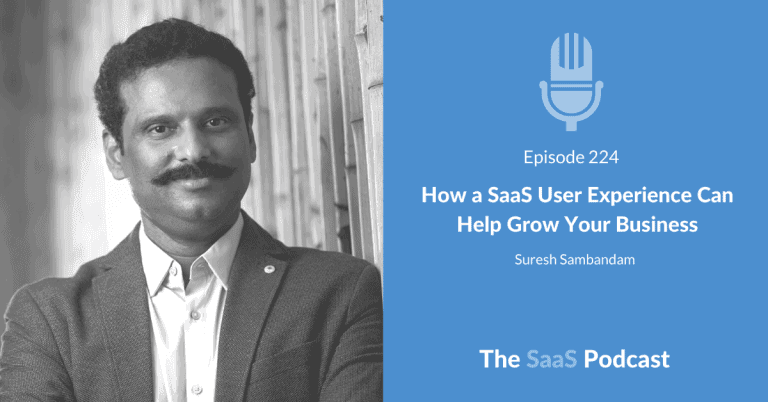
In this episode, I talked to Suresh Sambandham, the founder and CEO of OrangeScape, a leading B2B Indian tech company focused on SaaS solutions for workflow automation.
The company's flagship SaaS product, KissFlow, is a business process management, or BPM and workflow automation tool with over 10,000 customers, including 50 Fortune 500 companies.
Suresh was working as an engineer for a startup when he spotted an opportunity for a business idea.
He eventually quit his job to launch his startup in 2003 and things look promising at the start.
Before he knew it, he had a team of 40 people.
But the product just didn't get the traction he'd hoped for.
And eventually he had to pivot with his new idea.
He raised $1 million from angel investors, but his idea was too early to the market and by the following year he was running out of money and had to lay off most of his employees.
And then in 2013, a customer helped him see the potential of his product.
A UK based design company bought his product for $50,000 and then spent another $90,000 on building a great user interface for it.
That was when Suresh had his aha moment.
He realized that as a developer, he'd been focusing too much on features and technology.
Instead, he had to get his company building great user experiences as well.
And that's when things started to click with his third pivot, which became Kissflow.
Today his company is doing close to $10 million in ARR and has over 200 employees.
Their customers are global.
But what's really impressive is that his entire company, including sales, is run from Chennai in India.
We talk about his multiple pivots, the 10 years it took to find product market fit, his strategic approach to search engine optimization, and how that now drives over 50% of leads.
So I hope you enjoy it.
Suresh, welcome to the show.
Suresh Sambandam (02:40.030)
Hey, great meeting you Omar.
Omer (02:42.750)
So I always like to ask my guests what gets them out of bed, what inspires or motivates them?
Do you have a quote that maybe you can share with us?
Suresh Sambandam (02:51.790)
So the one that I honestly I don't have a quote, but one that really comes to my mind, if at all, is believe in yourself.
So the thing that really motivates me every single day is to believe that, you know, I can always do better and be better than what I did yesterday, can be a better version of myself today.
So that's the one thing that really keeps me going.
Omer (03:16.100)
Cool, Love that.
Okay, so let's talk about Orangescape, the business and Kiss Flow.
So for people who aren't familiar, tell us a little bit about the business and the product.
Suresh Sambandam (03:30.560)
Sure.
So Orangecape is the company name and kissflow is a brand which is a product brand.
We started orangecape in a 2004 time and then we pivoted three times from that time.
I was a very amateur entrepreneur, of course I was in India, in Chennai and there was literally no ecosystem, so to speak.
So I had to sort of learn everything from the scratch.
So we pivoted three times and kissflow is actually the third pivot.
The first two products that we built from orangecape were moderately successful but didn't become like a big success.
But kissflow is a super successful product.
We have few thousands of customers and we have these customers spread across 160 countries across the globe.
That's the short version of our story.
Omer (04:27.740)
Okay, so in a nutshell, tell us about kids Flow, like who's it for?
What problem are you trying to solve?
Suresh Sambandam (04:36.060)
KissFlow is actually a business process management workflow management software which helps non technical users, especially the line of business owners or line of business managers to be able to automate their business process without having to go to it.
That's really the problem.
And we ended up creating kissflow because most of the business process management software for big enterprises like the pegas of the world that easily cost quarter million to $1 million to get nearby them.
But most of these small businesses, especially the mid market businesses, can't afford that.
So we offered a self service, do it yourself platform where someone can come in contact, sign up and get started on a cloud based solution pretty quickly.
And that's exactly how we got started with kissflow.
Omer (05:30.360)
Okay, so can you give me a simple example of how one of your customers might be using kissflow?
Suresh Sambandam (05:36.080)
For example, in a finance function, for example, there could be a process for getting approvals for capital purchases.
It's called capex approval.
This is a very common process in all the mid market companies.
But mid market companies do not have approval cycle built in for this.
So when they come to kissflow they end up automating this.
It hardly takes 2 hours, 3 hours to build this in.
And there is a long tail of such processes they automate using our platform.
Omer (06:08.490)
Okay, so someone who is non technical but wants to create some kind of process like that can come in and use Kiss Flow, use a visual interface and in a matter of few hours implement that kind of process or workflow within their business.
Suresh Sambandam (06:28.280)
That's true.
In fact, most of the non technical users, if you ask them to draw a workflow, they'll be able to do like a Visio diagram.
So Kiss Flow has a visual diagramming tool which basically allows them to define like a flowchart and automatically that becomes an executable workflow without having to code for it.
And anybody should be able to do a flowchart.
So.
And hence it's easy to use kissflow.
Omer (06:56.960)
Got it.
Okay.
And in terms of, I know you don't talk about like specific revenue, but can you give us a ballpark number in terms of where you are with KissFlow?
Suresh Sambandam (07:05.120)
Oh yeah.
In terms of we are right now like less than 10 million sub 10 million in revenue and we are basically going after global customers from India.
Omer (07:17.180)
I don't know if you mentioned this earlier, you have over 10,000 customers using Kisflu.
Suresh Sambandam (07:22.300)
Actually the 10,000 came from a combination of free.
We had a freemium version which we have actually we stopped few years ago.
So we have only free trial option now.
So the 10,000 is a combination of the free users and the paying users.
So roughly we have around 15% of.
15 to 20% of our customer base is a paying customers.
Omer (07:46.550)
Got it.
Okay, so I want to go back to 2003 and when you launched Orangescape, the business was self funded and you mentioned earlier that you pivoted three times before you landed with kissflow and found some traction.
So tell me a little bit about like how did you go about like why did you start Orangescape?
What was the need or the opportunity that you saw?
Suresh Sambandam (08:14.900)
So before I started Orangecape, I used to work for a Valley based company called Selectica which is into rule based computing.
So there we ended up working on rule engines.
So what was surprising for me was the idea of rule engine is supposed to help non technical people write rules and the rules are supposed to be executed without having to do programming.
But unfortunately it was very surprising to see the rule engines required the most sophisticated programmers to actually use them.
And that was such a contradicting thing that I was able to see.
So we said, you know, there should be a way for non technical people to just express rules in a simple fashion and get it executed.
So we felt that people are familiar with spreadsheets.
So we said, okay, we will provide a spreadsheet front end where people will be able to define the Data attributes and the rules as spreadsheet formulas.
And in a click of a button we'll automatically translate that into a working business application.
And that was the core idea which motivated us and a bunch of my folks who work together in Selectica to spin off and create a company out of this core idea.
So the first version of the product, essentially spreadsheet to applications, that's really what we built.
And it was a fascinating product because the first time when we demonstrated to anyone, it was mind blowing for them because they have never seen anything as simple as that.
But it was only appealing to a very niche set of users who are innovators, sort of early adopters.
But it took a long time for us to understand what mainstream users would need.
And the excitement of innovators and early adopters are very different from the mainstream users.
And that's where we had to pivot from there.
So that's how we started and that's how we ended as well.
Omer (10:18.320)
Okay, and so like what was the second pivot?
Suresh Sambandam (10:20.720)
So the second time we basically said, you know what people, it's not really the spreadsheets to applications, but they should be need not have the spreadsheet front end, but they need be a way to build applications in a visual way, but not necessarily it needs to have a spreadsheet front end.
So we ended up building what is called as a Visual Pass.
Right.
It's a platform as a service.
It's like a Visual Basic on the cloud.
That's the pivot.
We went from spreadsheet to applications to something like building Visual Basic kind of platform on the cloud.
And that is the time when the platform as a service was taking off.
Google launched App Engine and we launched Visual Paths on top of Google App Engine.
And then that went for some time until the platform as a service market itself sort of crashed.
Right.
And Google itself had to reinvent and they had to launch compute engines because the platform did not take them very far.
And the platform market in many ways sort of evaporated.
So we were also positioning ourselves in the platform as a service space.
And along with that market, we going away, we got affected and we had to pivot out of that as well.
Omer (11:43.280)
Okay, so do you think the product was right, but it was just the external factors that sort of.
Suresh Sambandam (11:52.320)
Yeah, that is true, yeah.
Actually first time we didn't get the product right.
The second time we didn't.
I think the timing was not right.
The product was pretty much there.
Except that if I had to redo that part, I would probably say I would concentrate a lot more on the user experience and the UI and all of that.
We were focusing a lot more on the functionality, but not on the user experience and the ui.
But other than that, the timing was the one that killed us at that time.
But I can see we are meaning.
I'll probably talk about it a little bit later.
But the reason I'm saying the timing is wrong at the time is some of the functionalities which were part of the platform as a service.
We are now including part of our KissFlow product because now the market is mature and people are able to take it.
At the time it was little ahead of the market, I guess.
Omer (12:46.110)
Right.
So is it true that I read somewhere that by around 2013 you were kind of almost out of money?
Suresh Sambandam (12:54.190)
Yeah, correct.
So what happened is.
So we had.
Because we were riding the platform as a service hype curve, right.
And around 2011 we raised 1 million.
And then we thought we will launch ourselves from an India centric company to a US focused company.
Right.
And then we went to US and we spent two years, a year or so I would say actually not two years from whole of 2012.
And 1 million was so small and it just evaporated like so fast.
So around 2013, pretty much we ran out of money and we got closer to closing down the company.
So that was a very critical moment for us.
Omer (13:40.700)
Wow.
How big was the company at the time?
How many, how many employees did you have?
Suresh Sambandam (13:45.180)
So we probably had 30, 40 employees.
We had to downsize and we became 15 or so to survive that critical situation.
Yeah.
Omer (13:56.170)
Okay.
And so tell me about how it's a difficult period to be in.
There's more pressure, more stress.
What was it that helped you come up with the third pivot and the idea of KissFlow?
Suresh Sambandam (14:07.690)
So meaning the third pivot happened in parallel in some sense because the idea.
There are two things that were happening.
We were selling Visual Pass or platform as a service offering at the time.
And there was one customer who bought, it's a fortune type big customer in London.
They bought a product like I think it's 50, $50,000 or something like that.
And then they spent close to $90,000 and was building a UX front end which was only doing a specific use case, which is the workflow management part on top of our VisualPass platform.
When we went and saw that, we were very surprised because they only used 20% of functionality of the platform, but they built beautiful front end using the UX.
They engaged a design consulting company and spent like $90,000 on top of it and built this whole front end.
And they demonstrated what they've done with our platform.
It was so clear to us that that should be the same thing that we should be doing as a product rather than customers trying to build that, each one of them trying to get to that kind of quality on their own.
And that essentially was the trigger point for us to build kissflow.
And that's exactly how kissflow got started.
Omer (15:33.750)
Got it.
Okay, so that makes sense in terms of what you said earlier, where you said I was much more focused on the technology and the functionality rather than the user experience.
And so this was the kind of the wake up call.
Suresh Sambandam (15:50.100)
Yeah, exactly.
Because we said we thought we gave a lot of value to them and they only paid us $50,000, but they saw more value in the user experience and they spent $90,000 or something like that on top of our product.
That means we suddenly saw in real terms what it really means to end customers.
Where is the value?
And we were always under prioritizing user experience and ui.
But that's the time we said, you know what, we'll over invest in user experience and user interface.
Right.
And that actually completely changed our, what do you call our fortunes, I should say.
Omer (16:29.860)
And did you have to find that skill set?
Did you have to hire people to help you with that?
Suresh Sambandam (16:34.580)
We had to hire a little later.
But it is most of having that clarity and priority very clear in your mind.
Once you know what is more important than a feature is the user experience, then automatically you gravitate around that.
Sometimes you sort of build that skill even if you don't have it.
Right.
So one of our senior tech folks at that time had some good design skills.
His name is Dinesh and he went on to become a VP of Product Management the last seven years.
Now in 2011, he took on his own to build user experience.
Simple, easy to use, front end and UI for kissflow.
And that became the first version.
And we actually hit a breakthrough with that.
And continuously we built on top of that philosophy.
So internally we used to call it, simple things can be simple, but complex things should be possible.
Right.
This is the famous quote, Alan Kay's famous quote, if you know.
So that's the underlying product design philosophy that we use when we are designing kissflow.
Omer (17:48.030)
Okay, great.
So you've identified this opportunity, you've had this kind of aha moment that hey, we need to be putting a lot more effort into the user experience.
Marketing was also another area that, from what I understand, hadn't been a Huge focus for you up until now.
Suresh Sambandam (18:07.100)
Yeah.
So one of the things that I always believed, see, I actually come from a tech background, right.
So I'm a technology person.
I used to work on C, C, Java, that kind of hardcore system side, and then came into business applications little later.
And I always be in tech side, but I always thought we build tech and then have salespeople sell the product.
So intuitively sales came first and marketing as a discipline did not appear in the priority list.
So luckily for me, I've also as an individual, I've grown from 2004 till 2013, during that period I spent like 10 years as an entrepreneur and I started understanding the importance of marketing.
So a lot of things, in many ways I should say a lot of things came together.
One is we had the right product idea with Kissflow, which is just a workflow management and not just 20% of the entire platform.
Then we slapped a beautiful UI in front of it and then we invested in marketing to take the product to the market rather than simply believing magically some sales guy will sell and make numbers for us.
This is sort of a mistake that even many entrepreneurs make today.
Even today, right?
Omer (19:23.920)
Yeah, totally.
Suresh Sambandam (19:24.800)
So these three pieces coming together is really the central point for Kiss Flow's success or whatever growth we have achieved till now.
Omer (19:34.080)
Yeah.
And I think, what I think is really interesting about what you've done is that you have managed to build this customer base across the world, land some very large companies and brands.
Yet the entire sales and marketing process is run from your offices in Chennai in India.
So you know, there aren't salespeople going out there and trying to get meetings and do demos with customers and face to face or anything like that.
And I know that inbound marketing is a big part of how you get the word out and generate leads.
So maybe we can start there and tell me kind of a little bit more about what did your outbound marketing, how did it evolve?
How did you get started and get to the point where you are today with inbound marketing and what does that actually mean for your business?
Suresh Sambandam (20:28.980)
Yeah, so we actually call this desk marketing and selling.
Right.
Which is basically a combination of inbound marketing and inside sales.
Right.
So I wrote a guide along with a bunch of friends entrepreneurs in Chennai.
And the guide is published as Desk marketing and selling guide.
So that other entrepreneurs from the ecosystem can benefit from that methodology.
Right.
Omer (20:57.160)
Did you coin that term?
Suresh Sambandam (20:58.840)
Yeah.
Desk marketing and selling.
Yes.
So because you just sit out of the desk and do it.
Right.
So you don't have to get out anywhere so you don't have to travel, you don't have to do anything else.
The fundamental philosophy around this is you start with a great product.
That's the central point.
This model won't work if the product is not great and if people are not able to try and get hands on with the product.
And this model won't work if you need to just walk through a presentation and sell your product, this won't work.
Then you need to have also a published price on your website for your product.
So these are some of the fundamental essentials for this desk.
Marketing and selling to work on top of that fundamentals.
I personally started heavily investing in building our organic search marketing using SEO.
I personally learned what is SEO myself.
I didn't simply outsource.
See, most of the founders think that you can outsource SEO to some agency because it's some low level job.
But personally I feel SEO is such a strategic marketing tool or a marketing weapon that each SaaS company, especially the one that is trying to do best marketing selling, needs to invest heavily.
And I did that and I learned it and I built a strong team around SEO.
And we actually generate 50% of our leads through SEO even today.
And that is if a lead roughly cost like let's say $300 to generate a lead.
Just I'm saying some number, that's really a lot of money for us.
50% of our marketing cost is simply coming from a fixed deposit that we have put over a long period of time by investing in SEO.
And that's a lot of benefit for a company.
So that's the first thing that I did.
Sorry, go ahead.
Omer (23:01.530)
No, I was going to say tell me a little bit more about the SEO.
So there's sort of different components to this.
Like, you know, one is about making sure that the website that you build is optimized.
You have some key pages which are targeting some primary keywords that you think your potential customers are looking for.
But there's also maybe a side of, okay, let's start investing more heavily in a blog and I start creating more content regularly.
Or let's go out there and be very deliberate about link building and reaching out to people to try and generate backlinks for our site.
So which kind of parts of that SEO work were you doing and not doing?
Suresh Sambandam (23:47.100)
Actually, I would say all the things that you mentioned, we did all of that.
But more importantly, SEO is much more of a higher order science than just the things that you mentioned about like on page optimization or off Page optimization, those are the two, what you call official names for what you said, and then link building and then writing blogs, all of that.
These are all tactics.
But what is the strategic understanding about SEO is what most people miss.
If you need to understand SEO really well, you need to understand how Google works.
If you don't understand how Google works, then there is no point in doing all these tactics.
So Google works fundamentally classifies a search query because SEO is fundamentally about search engine optimization, which means you need to understand how the search engine works.
Search engine works in four ways.
There is basically a concept called intent.
So search engine thinks, what is the intent of the user who's searching?
Is he trying to make a transaction?
Is he trying to collect an information?
Is he trying to do some sort of comparison, or is he trying to navigate?
These are called four types of intents.
Now, if you understand things like that, then the way you would model your SEO strategy will be fundamentally different.
And you also need to understand that concepts like domain authority are no longer relevant.
You need to understand concepts like Google understands something called topic authority, like a website like Kids Flow.
What is the topics in which kitsflow is authority on?
Is it like workflow is a topic or a bpm, for example, Business process management is a topic.
And then you need to build a clustered content around these topics, because then only Google will think that kissflow is an authority in this topic.
Right.
Without having this kind of strategic clarity, simply building on page optimization, off page optimization, or link building or writing blogs is really not going to produce the results.
This was the fundamental learning that we got, and this is the foundation on which our organic strategy is actually built.
Omer (26:06.560)
Got it.
And that's a really important point I think you've made there.
So if I kind of replay that, it's kind of identifying the topics that you want to be associated with when it comes to, you know, from Google's perspective, and then really making sure that all the content that you're creating is going to help to kind of reinforce your authority around that particular topic.
And then sort of the intent piece, I think, is really important as well, because it's kind of like really sort of thinking about, okay, how do I map this to sort of the buyer's journey?
Right.
There are going to be some people who are.
They don't even know how they have a problem.
They're just trying to figure out just kind of how to do things better.
There might be others who are.
They're in the middle of a big problem right now and they're looking For a solution, others might have got further along the process and they're trying to compare different products.
And so if you think about it that way, then the type of content you create is also going to be a lot more strategic.
Suresh Sambandam (27:10.790)
Exactly.
One thing that you missed out in this is once you take a topic, you need to cluster your content around the topic.
You don't want to mix it up.
For example, most of the websites have something like domain name.com blog and they put all the content under blog, meaning it's not that Google is not going to find it, it's going to find it for sure.
But you're making it harder for Google to find it and classify it and try to somehow make meaning out of all the content that is there under blog and then see what is the topic that you are really good at.
Why are you making it so complicated for Google to find you?
If you can cluster all of the topic content around and cluster them together, it's going to be so much more easy for Google to determine the topic authority.
Omer (28:02.000)
Right, so give me an example of how you've done that for Kisflow.
Suresh Sambandam (28:05.840)
It's actually not rocket science.
For example, if you go to kissflow.com workflow, all our blogs and all our content related to workflow topic authority is under that.
We won't write anything about workflow outside of workflow cluster.
So under workflow is our cluster of content, which really talks about the workflow topic and it's as simple as that.
Omer (28:28.930)
Yeah.
And I think it makes you more deliberate and strategic about the type of content you create as well, rather than let's just churn out a new blog
Suresh Sambandam (28:40.490)
post and oh, that's a whole new topic altogether.
Right.
It's not just the volume of the content.
So one of the important things that we found out was Google is actually giving more credit to engagement of people inside a blog.
So we designed a new type of blog which we internally codenamed as visual blogs.
Most of the blogs are textual in nature, but because it's very textual in nature, people generally the only engagement that they will have in the blog is just scroll through and read.
But the visual blogs will have some sort of sections where there is some UI element where they have to make a click or make a click on a tab and then something else will change and then maybe they'll have to answer a few questions and then some chart will come.
So we build in a lot of interactivity in the visual blog so that when somebody reads that blog, they tend to engage a lot More.
And once they engage a lot more, you sort of send signals to Google saying that these guys are actually consuming more of this and then it directly increases topic authority for us.
Omer (29:57.140)
That's interesting.
Okay, so you've got the sort of the SEO engine piece going.
You said about 50% of your leads come through SEO.
What else are you doing outside of that for your inbound marketing efforts?
Suresh Sambandam (30:14.730)
So the next biggest thing that we do is actually search engine marketing, which is AdWords.
So we spend a lot of money, in fact a ton of money in Google AdWords every month.
The remaining 30% or so leads will come from Google AdWords, which is for paid marketing on Google.
And then there is a long tail of channels, the other channels from which the remaining 20% will come.
And for example, Quora or referral backlinks.
The guest posts that we write, PR articles that we do, we publish on listing sites, so on.
So there is a long list of marketing go to market activities we do.
All of them are digital in nature though, so all of them produce the remaining 20% but they also contribute indirectly to our organic story.
For example, if you do a primary campaign like PR activity, then somebody is writing about us and then they put a backlink to KissFlow that actually increases our domain authority.
Once it increases domain authority and for a particular search keyword, if there are two competitors who are bidding for that and hire my domain authority or other topic authority, my page is going to rank higher.
So sometimes some of these other go to market activities like PR or may not directly result in signups, but it might actually be a huge influence in your organic strategy.
Omer (31:44.780)
You know, one thing I noticed, I was just looking at the kissflow blog or I pulled up a blog post.
A lot of SaaS companies these days, they'll have a blog and then the call to action at the bottom of the page will be to, you know, sign up for our newsletter, get more content like this.
And I couldn't see anything like that on your site.
I just see two, two call to actions, one near the top and one sort of next to the content.
And both of them are about get started.
So is that just generally the what you.
The.
The intent here is that you're trying to get use this as a way to get people to sign up, try the product.
And that is the way that is more effective than getting them onto an email list and marketing to them that way.
Suresh Sambandam (32:37.020)
Yeah, I think this is where I would say there is a fundamental difference between content marketing and marketing content.
Right.
So we need to really Understand that users are very knowledgeable and they do not sign up for newsletters from product brands.
Like, meaning if you are writing a blog under a product brand, I would clearly not sign up for the newsletter.
But that's not really content marketing.
In our case, content marketing is something that people are writing about, something neutral, nothing to do with the product, and they are continuously churning related content.
Like for example, let's say SaaS pricing.
If there is a website which only talks about how do we do SaaS pricing.
And I would go and sign up in that website and for the newsletter.
But if a company which is, let's say doing billing for example, talks about SaaS pricing, I would still go and read the content, but I won't really sign up for the newsletter.
And we understood this is how users behave and we decided not to put that newsletter subscription as much because I don't think it's producing that much impact.
Omer (33:54.190)
Okay, so tell me about the, the sales process.
Once somebody has signed up and they sort of got started with the product, there's obviously the self serve model where somebody might just go in, start using it, they love the product, they sign up, you know, mission accomplished.
In other cases, you're using a sales team to help drive sales.
So tell me about that part.
Like how do you do that?
How do you qualify leads?
How do you make the sales process work remotely from a desk in Chennai?
Suresh Sambandam (34:28.379)
Sure.
We internally call this assisted buy process, which means that people sign up and experience a product.
But then our sales team is essentially assisting the customer or the prospect in this case.
Right.
Who signed up into a product and helping them achieve their first goal for which they came into our product.
For example, the finance person who signed up and came to automate a capex workflow.
So our sales team is technically qualified.
In most of the companies, the sales teams are not so very technically qualified to do a deep dive product engagement.
Right?
They may be able to do a quick sleek demo which is like a canned demo, but if it is very complex engagement, they often engage a pre sales team.
But in our case our sales team is technically qualified and deeply qualified to take a customer requirement and customize our workflow to build the workflow and get to the end outcome to them.
And end of this, the customer will have a wow feeling.
And then our sales team will simply ask them, okay, what's stopping you from putting the credit card right?
And that's really how our sales process works.
Omer (35:43.190)
Do you think of them as like customer success people as well or is
Suresh Sambandam (35:46.270)
that a different role yeah, we call them technical product specialists because the customer success people do not have a number mindset.
Right.
They still have a customer satisfaction mindset, but we need a combination of product knowledge, but also a sales mindset so that we don't have the shyness in asking the customer to say, when are you going to buy?
And that's where it's a little personality difference between a customer success person and a salesperson, although there is a skill overlap.
So that's how we differentiate that.
We do have customer success after sales, but we don't expect people to be very salesy there.
Omer (36:30.230)
Okay, got it.
So you mentioned earlier about how you used to have a freemium plan, and then now you switch to a free trial.
That's always an interesting topic to talk about.
Right.
In terms of which is the right way or the right solution for a different product or market.
So I'm curious, like, how did the freemium kind of approach work for you, and why did you decide to move to a free trial?
Suresh Sambandam (37:01.830)
See, if you look back, we launched Kislo in 2013, the paid version, so that we started billing customers, although we launched it a little bit earlier than 2013.
But actually, serious product was only available in 2013.
But at the time, everybody was doing freemium.
The free trial freemium debate was not fully settled, and most of them were just having a freemium model, and we just simply followed that trend.
And we also had a freemium model, and without seriously putting our thought into it.
And, you know, it took a year and a half for us to.
Year and a half or two or other, maybe even three years, I think, if I remember.
So we added for three years, if I.
If I know.
And then we realized, you know what, there are certain products where freemium doesn't make sense.
Those products are typically ready to use applications, which doesn't require a lot of customization before starting to use.
And it probably takes people to just 20 minutes to get started or 10 minutes to get started.
But KissFlow often takes a day or two for them to customize, setup, sometimes even a week for them to get the first process right and set up the complete workflow before they can go live.
So this is a fairly involved product, and they need to commit themselves to it.
This is not something like somebody going to buy impulsively.
Right.
So once we got that understanding, we said, you know what?
Freemium is not the right model for kissflow.
So we stopped freemium, and we went into a free trial after that.
Omer (38:40.790)
What was the experience?
Like?
How did that change work did you see any significant increase in sales?
Suresh Sambandam (38:48.980)
Yeah, of course.
Free trial simply helped us tremendously because previously, a lot of people who are supposed to pay for the product would simply go for the freemium and then lurking there and then not doing anything.
So many things will happen.
Now, when we went to free trial, pretty much after 14 days or 21 days, the trial expires and they need to make a call.
They are serious about changed the revenue dynamics for us completely.
In fact, we have even gone one step further from free trial.
We used to just give free trial and allow anybody to sign into the product.
Now we are also experimenting controlled exposure to the product rather than just allow anybody into the product.
And this actually worked even better.
For example, we used to have an average ticket size of around 2,000 to $3,000 before using Freetrail.
In the controlled product experience, our average ticket size is more to $10,000.
Omer (39:52.250)
Wow.
Suresh Sambandam (39:53.050)
Yeah.
So there is.
Because this is the kind of.
The product is of a certain nature where when we are able to showcase the product in a controlled experience, we are able to make a bigger impact.
I think we are most only moving towards that for the workflow piece alone, of course, we expanded KissFlow now.
So KissFlow started out as a workflow software.
Now KissFlow has bloomed into what we call as a digital workplace, which consists of four different modules.
It starts with collaboration, it has workflow, it has project management and case management.
Of course, it has supporting modules like integration for integrating with other products, and then analytics and reporting to make sense of all the data we are capturing.
But the four models that I first talked about are the key.
But here we are also marketing, project management, for example, and collaboration, for example, as independent modules and not just part of the digital workplace platform.
But these products are ready to use products, and they don't need to follow the free trial model.
People can sign up and start using the collaboration module, which looks very similar to Facebook's workplace.
So there we are reintroducing freemium again because we feel that freemium is relevant in those categories.
Omer (41:21.880)
Interesting.
Okay, so how big is the team now?
Suresh Sambandam (41:24.840)
We have 200 employees.
We start from 35, 40.
And then we went to 16 after the 2013 crisis.
And then now we are back ramping up very, very fast.
We are close to 200 now.
Omer (41:39.270)
And earlier when we talked about revenue, you said you were doing less than 10 million.
Are you close to 10 million?
Suresh Sambandam (41:45.110)
Yes.
Omer (41:46.390)
Okay, so it's on the radar.
Suresh Sambandam (41:48.630)
Yeah.
Correct.
Omer (41:49.910)
Great.
So, I mean, you have a really interesting story, Suresh, because If we sort of think about it, we play back and say, okay, well, OrangeScape founded 2003.
You raised a million dollars.
Things looked promising, but you had to pivot a couple of times along the way.
Got to a point where you've almost run out of money, you've got to let go of a number of people and significantly downsize the business.
And then it was the third pivot, which was like 10 years after you founded Orangescape, which really clicked and you found traction and you've been able to grow this into multimillion dollar business.
You now have 200 plus employees.
So looking back at that journey and that experience, what did you learn and what advice would you give to other founders who are maybe on that journey themselves right now?
Suresh Sambandam (42:46.750)
I think, I don't know.
I have a very complex experience.
I would actually say one of the first things.
For example, I didn't know things like product market fit until 2012, 2013.
Right.
So meaning it looks so dumb when I look back.
Omer (43:06.200)
Wait, you didn't have product market fit or you didn't know what product market fit was?
Suresh Sambandam (43:10.040)
I didn't even know.
Omer (43:12.360)
I love that.
Thank you for being so honest.
Suresh Sambandam (43:14.760)
Yeah, I really didn't know.
We were just saying we're building the product and trying to sell it and we didn't even know that that much.
One of the things I would say is early on today, I'm even advising a lot of founders to say, you know what, don't even build the product.
If you have a product idea and if it is a discoverable product on search or something like that, build a one page website and put $100 in the search advertisements.
Don't even invest in SEO right now because you don't have energy to do that.
And put $200 on AdWords and then see if people are willing to come and click and sign up for your product.
If you're able to see some traction, then there is a market.
Of course, there are only certain products that will fit into this category, which is the discoverable product through online search and SEM.
Right.
So if you're not seeing that, then what is the point in building the product?
So I would completely take a different approach in building the product if I have to start all over again.
Of course I would always start with product market.
Building a product which is very specific to the market and then worry about the rest of the stuff.
That's probably the number one thing that I would work on.
Omer (44:32.390)
Yeah.
And I think it's also a great lesson in patience and persistence because it would be very easy for many of us just to just give up and just say, okay, I'm just in the wrong space or should go and find a job or something.
Suresh Sambandam (44:52.880)
I know.
The reason I'm not saying that is one lesson that I recommend because I think it's hard to replicate the patience I had and I continue to have.
But the lessons should be somewhat doable.
Right.
So the lesson that I feel that people can replicate is like focusing on product market fit and not jumping.
Most of the technical people who start companies, they jump and build the product because they know how to code and how to build the product, because that's an easy and obvious thing.
The non easy and non obvious thing is how do we market it?
How do you get the first hundred customers, how do you price it?
None of these things they have absolutely any exposure to and they don't seem to work on that.
The first, there is a saying that they say, eat the dirty frog first.
We tend to not do that.
And those are the things.
That is something that people can take lessons and actually follow easily.
But being patient for 15 years is something I don't think people can follow easily.
Silly.
Omer (45:51.920)
Yeah, yeah.
I mean, when you look back at it, that's a long time.
And I guess when you're on the journey, it's often you don't see it like that.
You're just like, okay, I had a tough day.
I'm just going to think about, I'll get up tomorrow and try one more time.
It's just that one step and then you realize it's been 10, 15 years.
Suresh Sambandam (46:08.560)
Exactly.
So that's why I'm not recommending the patience part.
Yeah.
Omer (46:15.360)
All right, we should wrap up.
Let's get on to the lightning round.
So I'm going to ask you seven quick fire questions.
Just try to answer them as quickly as you can.
Are you ready?
Suresh Sambandam (46:25.040)
Sure.
Omer (46:26.160)
What's the best piece of business advice you've ever received?
Suresh Sambandam (46:29.440)
Cash is King.
Omer (46:31.200)
What book would you recommend to our audience and why?
Suresh Sambandam (46:33.920)
I would recommend Crossing the Chasm.
That's actually the book that I read like five times maybe.
Every time I read it, I get the meaning of how to do technology marketing and how people buy technology products.
So that's.
That's a book I would recommend.
Omer (46:50.780)
I've got to say, that book must be 25, 30 years old.
And it still amazes me how relevant that still is.
Suresh Sambandam (46:57.180)
Exactly.
Omer (46:59.260)
What's one attribute or characteristic in your mind of a successful entrepreneur?
Suresh Sambandam (47:03.820)
It's empathy.
Omer (47:05.660)
What's your favorite Personal productivity tool or habit.
Suresh Sambandam (47:09.260)
Of course, my current favorite productivity tool is Kiss Flow.
Other than, of course, other than Kislo, it is G Suite.
I like G Suite a lot and I use it very, very extensively.
Omer (47:19.870)
What's a new or crazy business idea you'd love to pursue if you had the time?
Suresh Sambandam (47:24.350)
I have an idea in starting a unique airline, which I won't detail it in this, but
Omer (47:34.350)
we'll have to keep a lookout for that.
What's an interesting or fun fact about you that most people don't know?
Suresh Sambandam (47:42.030)
It's not like so much.
Maybe the people who are listening to this podcast may not know.
For them, it may be a surprising thing.
I never went to college.
I finished just school and after that I didn't went to regular college at all.
Omer (47:54.530)
I think there are a lot of role models out there for a lot of people who did exactly that or didn't do that.
Suresh Sambandam (48:04.370)
Yeah, I know.
Omer (48:06.050)
I'm just in the suburbs of Seattle and we have a very famous college dropout called Bill Gates just a few miles down the road from here.
Suresh Sambandam (48:15.730)
Yeah.
Meaning I didn't have an chance to go to the college.
At least he went there and dropped out.
Omer (48:24.830)
And finally, what's one of your most important passions outside of your work?
Suresh Sambandam (48:28.990)
I have this dream, actually.
I'm from a small state within India, or rather I should say reasonably big state, called Tamil Nadu.
This is like, you know, like California within the United States.
In India we have many states.
And my passion is to see how to take my state to the next level in terms of economic growth.
And I'm working on educating young students and entrepreneurs on it.
So there is something called a trillion dollar vision for Tamil Nadu.
This is building Tamil Nadu's economy to a trillion dollar economy.
And I spend most of my time doing that outside of my work.
Omer (49:07.200)
Love it.
Love it.
That's a really worthwhile thing, I think, to find.
I'm sure you're a busy guy and to find time to.
To get involved in something like that is a very worthwhile thing.
Suresh Sambandam (49:20.820)
Yeah.
All right, thank you.
I think.
I hope you liked was great.
Omer (49:28.820)
No, thank you for sharing your experiences, your stories, and some really valuable insights along the way.
I think a lot of people are going to find this really, really valuable.
Now just to kind of wrap up, if people want to find out more about KissFlow, they can go to kissflow.com or orangescape.com as well.
And if people want to get in touch with you, what's the best way for them to do that?
Suresh Sambandam (49:54.180)
They can email me at Suresh.
S U R E s h@kissflow.com awesome, Suresh.
Omer (50:01.940)
Thank you.
It's been an absolute pleasure.
Suresh Sambandam (50:03.620)
Thank you.
Omar, it was great talking to you.
Loved it.
Thank you.
Omer (50:07.220)
Cheers.