Omer (00:11.840)
Welcome to another episode of the SaaS Podcast.
I'm your host, Omer Khan and this is the show where I interview proven founders and industry experts who share their stories, strategies and insights to help you build, launch and grow your SaaS business.
Okay.
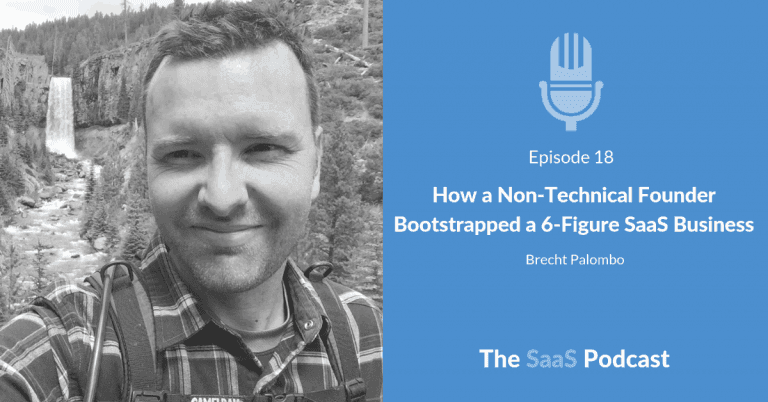
Today's interview is with Breck Palombo.
Breck is the founder of Distressed Pro, the home of Bank Prospector, a SaaS application that provides access to real time updates for real estate financials from some 14,000 banks and credit unions.
He founded this business in 2009 and today has built a six figure business which he runs from on the road while traveling full time with his wife and kids.
Breck, welcome to the show.
Brecht Palombo (00:56.870)
Thanks for having me.
Omer (00:58.550)
So I've told our audience just a little bit about you.
Tell us in your own words a little bit more about you personally and then give us an overview of your product and business.
Brecht Palombo (01:07.190)
Okay.
I'm from the Northeast, I'm from Massachusetts and grew up in New England.
And I am.
Your summary in the beginning is dead nuts.
You're exactly accurate with that.
That's what I'm doing.
I also run a podcast I have Bootstrapped with Kids, if anybody's ever listened to that, where I get on weekly and kind of curse and swear about my week and what I did and then.
Which I'll try not to do on your podcast and then, geez, what about me?
I guess we can get into some more of it.
I'm fiercely independent and haven' had a job per SE since 1999 or something like that.
And I guess we'll probably get into some of those details about how that all came about.
And as we get into the interview,
Omer (02:08.850)
maybe now before we dive into more details.
Excuse me.
We like to kick things off with a success quote to better understand what drives and motivates our guests.
What is one of your favorite success quotes?
Brecht Palombo (02:21.760)
Well, I don't know if it's a success quote as much as it.
Well, here's the quote.
It's up sluggard and waste not life and the grave will be sleeping enough.
And that's Ben Franklin.
And I think that especially when you're first starting off, the amount of output that's required to get something to orbit really is significant.
And I think that's kind of what he's speaking to, is just to, you know, to sort of pull yourself up and, you know, not lie around.
And so I like that quote.
Omer (02:57.860)
Cool.
Now, before we talk about Distress Pro, I want to just learn a little bit about life before that business started.
So tell me what you were doing before you launched that business?
Brecht Palombo (03:11.140)
I was in real estate for a long time.
Since, I guess.
Well, no, that would have been about a decade then.
And specifically I was working as a real estate auctioneer at that time.
I mean, I also did some brokerage work, but I did.
When I started Distress Pro, I was doing primarily commercial and construction real estate auctions.
So I worked for banks, liquidating assets as an auctioneer.
Omer (03:43.970)
Okay.
Not a traditional background for a software entrepreneur, I suppose.
Brecht Palombo (03:49.650)
Not.
Some things I did, I was on WordPress as soon as WordPress came up, I had that horrible version where it was just like this ugly blue blog platform.
And I had always grown up with.
I had a Commodore 128 and I had an IBM PC Junior and I wrote little choose your own adventure programs.
And I went HTML.
I think I still have the book somewhere, probably in my mother's attic, like HTML1 or something like that.
So it's not like.
And I'm definitely not a developer, but I always had an interest in it, so it wasn't completely foreign to me.
But I guess, no.
It's not your typical software business owner's background, probably.
No.
Omer (04:36.800)
Before we get into talking about the details of your current business and product, let's make sure that everybody understands what the product is and what it does.
Now, when I start each episode, I try to give a good overview of the guest and their product and business.
And I've got to say that yours was the one that I struggled the most with, um, just simply because I didn't know whether people would understand some of the terminology that I found.
So in.
In maybe layman's terms, tell me about who your target customers are and then what are the top pain points that you're trying to solve for them?
Brecht Palombo (05:15.740)
Sure, sure.
So this, this, that's.
I hear that a lot.
And it is.
I'm in a niche of a niche of a niche market, which is, I think, kind of why it works, because I, I start to pull people in there and then expand a little bit.
And so I think for your audience, the best way to describe the software would be to say that it's a sales intelligence software.
I think that that name has been getting out there a bit in terms of a classification of a type of software.
But basically what I do is I provide really deep insight into the financials and contacts for institutions that have assets that a certain set my customers want to buy or broker.
And so there's this trading of mortgages that happens.
People buy and sell mortgages and Then there's the, and there's all.
So there's the disposition side of that.
So you could represent a bank in the disposition of some of their, we call them notes, but some of them, their mortgages or in their reo, which is just means bank owned real estate.
It's an acronym that means bank owned real estate.
Or you could be a small hedge fund or a small private equity firm that wants to buy these things in an opportunistic sort of way.
And so ours is a sales intelligence software for brokers and investors who want to deal in or acquire or broker non performing assets, specifically non performing real estate assets and loans that banks have or credit unions.
Omer (06:56.190)
Okay.
So your target customers are investors and brokers.
And then you provide them deep insights on, as you said, the financial information and contact information for these banks and credit unions and give them, give them insights to help them decide which mortgages or real estate opportunities there are for them to go and buy or to sell.
Brecht Palombo (07:18.830)
Yeah.
And not to be.
I don't want to diminish your traditional real estate broker, but it's not my, that's not really my client, just to be clear about like broker.
So there's a lot of different sort of levels of broker and anyone who's, who's in the middle between the buyer and the seller is a broker.
So what I'm not talking about is people who are going to show you a home on Sunday.
That's not really my customer.
So if you're one of those and you're listening to this, probably don't come sign up.
I'm not going to help you with what you're doing, but it's sort of like a slight level above that, if you will, without getting too deep into it.
Omer (07:54.900)
A broker who's looking to work with investors maybe is a better way to think about it.
Brecht Palombo (08:01.540)
Yeah.
In buying and selling pools of assets and in this sort of thing.
So definitely it's definitely not a like direct to consumer in any way.
Yeah.
Yeah.
Omer (08:11.220)
Okay.
Where did you get the idea for this business?
Brecht Palombo (08:14.500)
Well, it's what I was doing.
So as an auctioneer, you know most of your work.
And the reason I, reason I became an auctioneer was I kind of saw the writing on the wall with the bubble.
And so I got myself positioned to be where the sales would be, which would be with the banks.
Because when there's a lot of leverage out there and things crash, the people who are in charge are the lenders because they're in the debt position.
So they're deeper in the stack and they take control.
And I thought, well, if this is going to happen, we're going to have a correction, then these are going to be the guys who are going to be calling the shots.
And that's where I'm going to have to be in order to transact, which is how I made my money at the time.
And so what I thought was that I'd go ahead and get positioned for that Now.
I did it a little too soon and I got started in late 2006.
And as we know, there's still another 15, 18 months after very late 2006, when things were still just going up and nobody believed that anything would go any other way.
And so in the beginning, identifying which lenders I should be working with or pursuing, when you've got 14,000 of them across the United States, and it can take many months to get a good relationship and a meeting and get in the room with decision makers at this level of institution, I thought I ought to have some insight into which would be my best prospects.
And so I learned about the data and about what they report and about what that means and how that all works.
And then kind of over time, that's how I came to develop a software around.
It was I was doing this stuff manually for my own business.
And then I decided, well, I can't be the only one.
So I did some tests and got some answers back from that, or at least I thought I did, and then decided to go ahead and build it.
Omer (10:24.770)
So let's talk about the first version of the product.
It was a lot simpler than maybe people would expect, right?
Brecht Palombo (10:32.610)
Oh yeah, it was PDF.
That was it.
So I went and I took this data.
It's publicly available data, but it's sort of difficult to work with.
And it's.
If you're just.
If you didn't know what you're doing and you just went and you found this information and you unzipped the files and you started unpacking spreadsheets.
It would be be a hot mess.
I mean, it wouldn't be anything that you would try to make use of.
And so what I did was I just took a couple of those and I did a merge into, just using Microsoft Word, I did a merge into a document and then I printed that document to a PDF.
And this was my first sort of report.
And on this PDF it was a report of like, I forget what it was.
It was a couple, I don't know if it was a couple hundred or a couple thousand banks.
And it was just A report specifically about their bank owned commercial property.
And that was it.
And so I put that out for sale and I sold it.
I don't remember the exact details now, but as I recall, I think it was a couple hundred dollars, like somewhere between 2 and $300.
And I sold a few and at the time it was, I took that as validation.
I was happy with that.
And then from there I decided to move forward.
Omer (11:54.310)
How did you go and sell it?
How did you find those customers?
Brecht Palombo (11:57.910)
Initially I spent a ridiculous amount of time putting together this Janky Joomla Website.
It was like, it was so stupid.
If I had to go back and do it again, I would, I'd be up for sale in about a day or less, probably an hour or two.
But instead I kind of, you know, went and futz around with this.
And it was very important to me that it look, you know, there's a lot of scamminess in the real estate space.
I didn't want to look scammy in any way and I didn't want to.
I wanted it to, to look like something you would want to, you'd want to pay for.
And so I spent a bunch of time doing that.
And then, and then I had a friend who had a list and, and he just sent this thing out, said hey, you might want to have a look at this.
It's got some really good information.
And that went out to a few thousand people and some people bought from there.
That's kind of how that worked.
Omer (12:54.830)
What did you think about the idea of charging a few hundred dollars for a pd?
Brecht Palombo (13:05.400)
You know, I don't have a lot of hang ups taking money like that.
So I guess I wanted to see if people would do it.
I was afraid that they would, I was afraid that they would want a refund, but I was prepared to give it to them.
I didn't want people to be angry at me, but I didn't want to price anything at like, I looked around, it didn't make any sense to price it any lower because you weren't buying any other similar data for less than that.
And so I thought if I priced it too low, then it would be not respectable or taken seriously.
So I felt okay about it.
Omer (13:48.380)
And these guys, presumably the opportunities there to go and invest for these investors, they were big deals, right?
I mean, it wasn't like they were buying, you know, a $5,000 piece of real estate or something?
Brecht Palombo (14:08.350)
Well, I mean this particular list went out to brokers and as a commercial real estate broker, I mean, I'VE mid five figure or low six figure commissions all day long.
I mean, that's not, that's just, that's a small million dollar deal or whatever.
So to be able to make up for that is, it's nothing.
I mean, you spend, I don't know, four or five times that putting a sign in the ground for commercial building.
So it's not, you know, it's not really a significant amount of money for the, for that market.
Omer (14:45.220)
Okay, so you sold the initial version of this report.
You had some buyers.
That was your validation.
And then I thought, so, okay, okay.
Brecht Palombo (14:58.880)
I think, I guess it kind of worked out that way.
But I guess the thing in times that I've been asked about this, if I had to do it again, I would not.
I mean, I think I gave myself a week with that, maybe a week, and said, oh, yep, I should definitely go build some software.
Which was dumb.
I mean, that's a dumb way to do it because what, what I know today is that I'd much rather just keep printing money with that PDF and figure out a better way to sell it and figure out other people to sell it to than figure out other variations of it and do that.
There's no reason why, just because you sell a few of these things in this niche of a niche with this one asset type.
Well, there's five or ten asset types like could and markets that I could have gone after in other lists and all kinds of stuff before I started and really got validation before I started going and, and building the software like I did.
So I guess it was validated, but it wasn't smart.
That wasn't the right thing to do at the time.
Omer (16:07.260)
Why?
Brecht Palombo (16:09.580)
Because it was a distraction and a setback and I would have had a bigger war chest and built faster and when it, when it was time to build and, and would have had a better first product had I just doubled down on that initial minimal product.
Omer (16:29.420)
When you launched this or released this first report, did you know you wanted to build a software product and this was your first step towards that, or did the idea of the software product come after you had buyers for this report?
Brecht Palombo (16:47.010)
Yeah, I totally had a hankering to build a software product.
That's the bottom line.
I mean, that's why I did it.
Which is not a reason to do a thing that's the wrong thing to do.
If I knew then what I know now, I would not have done it this way for sure.
I was listening to a lot of podcasts and paying attention to a lot of people who had a lot deeper technical knowledge than me and who were just starting to have some of the early success, you know, some of the, the big names that we know now, who now, however many years we are five years later, have even bigger businesses and more success.
But at the time I was listening to them and, you know, and reading about a lot of podcasts and reading about, you know, recurring revenue from SaaS, apps and this kind of thing.
And so that is really, you know, that's what I wanted.
Omer (17:44.720)
Now you don't have a technical background.
So how did you go about getting that first version of the product built?
Brecht Palombo (17:52.720)
Elance?
I mocked it up and kind of it was like a Franken app.
I found this thing called Amember, which I don't use anymore, and I use that as like an off the shelf membership management and billing software.
And then I found the team and I found a chart charting library.
And I said, I want to use this charting library and I want to use, you know, this is the data that I want to use and this is how I want it to look.
And I, so I mocked everything up as best I could and, and then I hired a, a team out of India over Elance.
And then I worked a lot of nights.
Omer (18:35.420)
And how long did it take you to get that product shipped?
Brecht Palombo (18:39.980)
I did my first validation, I think in June or, or July of that year.
And I have.
My user is the first user on the ni.
Cause I still have all the data anyway, even though it's not the same system.
And I'm August 31st of 2009, so took me about, I don't know, six or eight weeks.
Omer (19:04.460)
And so you got your first customer of the Software product on August 31st?
Brecht Palombo (19:10.230)
I was the first customer.
So no, I got my first paying customer in October 17th, something like that, Mid October.
Omer (19:23.590)
Okay, and how did you market the product?
I mean, one of the things that I did was I.
A while ago, and you came up on the radar for me when you spoke at microconf about 18 months ago.
I think it was even organized by Rob Walling and Mike Tabor.
And you know, I remember we chatted over a little bit over, you know, over Twitter and I signed up for your mini course and you must have the longest ever autoresponder sequence that I've come across.
I don't know how you come up with all this information.
Yeah, but was that around when you launched or.
Brecht Palombo (20:04.910)
No.
Omer (20:05.230)
What were you doing to acquire customers initially?
Brecht Palombo (20:08.620)
First customer is from public speaking.
So I started going around and talking at events.
So I'd go and I talked at, well, I talked at a variety of events, but real estate related events.
And that was kind of the beginning.
And then I took those talks and I put the slides up on, I think, you know, whatever it was then SlideShare, doc stock or something like that.
And that gave me a little, and then I blogged and that gave me a little more.
And.
But in the very beginning it was, I did some talks, the talks turned into sort of multi purpose content and then that drove a little bit of traffic and then, then I started doubling down on, on content.
Got it.
Omer (20:58.280)
So you, you would, you would go out and do a talk at some kind of related event, maybe pick up, you know, a few.
Brecht Palombo (21:05.960)
One.
Omer (21:06.840)
Okay, one customer.
Brecht Palombo (21:08.080)
Yeah.
Omer (21:08.480)
And then you would take that content and, and repurpose it through either SlideShare or blogging or whatever and then keep building up more and more content that way.
Brecht Palombo (21:19.240)
Yeah.
Omer (21:21.000)
So what was the, what did the growth look like in the first year with, with, with customer acquisition for you?
Brecht Palombo (21:28.360)
So I don't have, I didn't know you're going to ask me that specifically.
So I don't have it right here in front of me.
Omer (21:39.710)
Do you remember how many paying customers you had by the end of the first year by, let's say, October 2010?
Brecht Palombo (21:47.310)
I don't remember how many paying customers I had.
I think, you know, I remember I was in, I was over, you know, I was over $1,000 a month, but it wasn't, I don't think it was more than a couple thousand dollars a month.
And I tried all kinds of, all kinds of pricing, you know, $97 a month, $99 a month, $47 a month, $197 up front.
Then 47amonth after that, 150 a quarter, 300 a quarter.
You know, like all variations of things I tried.
So I don't know if anybody was paying the same at all or you know, how that, how that would have worked out.
But I had, I did have recurring revenue of.
It was.
I'd have to look at my charts and history, but I think it was a couple thousand dollars after, after a year.
Omer (22:42.360)
So before we got onto this call, you told me a couple of things.
You said, one, I haven't checked my email since last week and I haven't listened to any podcasts for the last six to eight weeks.
Yeah, and that reminded me of that microconf talk that you did where you shared your experience of the results you got when you were trying to juggle Lots of different things and maybe go in chasing some new shiny objects that would come along.
And the results you got when you stopped doing that and really started to focus on this one business.
Can you talk a little bit about that?
Brecht Palombo (23:32.470)
Sure.
When I threw my hat in the ring for the microconf talk there and then when I got selected, I wanted to be really real with the audience.
And I don't have a make money online thing or anything that I'm pitching, so there wasn't anything in that.
But I just wanted to be transparent, I guess, with the numbers.
And, and so what I decided to do is just really go back and get everything together because I also didn't want to overstate or misstate anything.
So I went through, and I went back to the very beginning and just like got together all of my info, like all of the data and I had a look at it and put it all in a chart and had some other dates around it.
Like some things really emerged which was, you can see in the chart when I'd register a frigging domain name that, that I go and pursue and, and, and you could see how my, my revenue just would level off, you know,
Omer (24:34.920)
when you would register a domain name for another idea.
Brecht Palombo (24:37.720)
Yeah.
For example, now I'm all.
I'm sure like most of your listeners here, I register, I'm buying domain names all the time.
You know, if I are a lot less so over the last year or so.
But, but at times I'd have a good idea and I just register the domain or whatever.
But when I went back and I looked at the things where I'll, for example, I decided, okay, well, this is going kind of slow.
You know what I think would be faster?
Easy money is I would all set up an affiliate site and I'll put up a bunch of content up there about, you know, because I really got to know the membership plugin space because I did a lot of analysis in order to determine what I was going to use.
And so I'll go ahead and I'll put up a site with that and I'll, I'll hire a writer and they'll write up a review for each one of these things.
And then I'll do that.
Well, you can see the day that I registered that domain name and then I'll say messed around with it because I'll be respectful of your podcast.
You can see for like the next month or two a flat line in my numbers.
And then you can see a little while later when I discovered Twilio and how awesome their service is.
And I registered a domain name and hired people to build a service for that, for local marketing, for local mobile marketing.
And you can see how everything just flatlines again.
And so it was a real eye opener for me when I was able to see graphically the mistakes and distractions that, that I had, you know, engaged myself in.
So yeah, I think that's, that was, that's what you're talking about.
Omer (26:27.490)
What was it that you were not doing when your numbers flatlined?
I mean, was it, you know, you were not blogging, you were not speaking at events?
What were the things that you were not doing that that resulted in this flatline?
Brecht Palombo (26:45.060)
Well, the speaking at events was really in the beginning.
So I didn't do that after the, as a source of like trying to drum up any business.
I didn't do that after the first few months.
I kind of just turned to the online but you know, I think it was probably sending well crafted one off emails and producing.
I have a real estate podcast over there and producing a real estate podcast and blogging.
And at the time my site didn't have the same draw that it does now in Google.
Like I'm fairly established on a few key things, at least I am for this week until they change something.
And so I don't have to worry.
I still have to be on top of it, but I don't have to worry as much.
If I go away and don't do anything for a month, is my traffic going to change that much?
Not, not really now, but at the time it would because I was only getting, you know, I don't know, a fraction of what it is now, maybe a quarter or something like that or less.
And so you got to, you got to write the articles, you record the interviews, you got to share those places and you know, converse with people and you know, all that kind of thing.
So that, all that I wasn't doing.
Omer (28:06.490)
Do you remember when, what happened when you stopped maybe pursuing these other things and decided, okay, this is the one thing that I'm going to focus on now.
Brecht Palombo (28:19.120)
Yeah, I mean things grew quite a, you know, quite a bit.
I went from, you know, a few, couple of few thousand a month to like low five figures pretty quickly after, you know, within a couple of like maybe 90 days of, of really deciding to do it.
So, so it happened.
Yeah, the folk, maybe it was more than that, maybe it was four months or five months.
But it, it, things ramped up pretty quickly after I decided that to just stop cutting, you know, stop letting all this other stuff in now at this time, that, and I'm telling you this, I'm still running at least one other business.
So I still own a real estate.
I don't now, but at the time that we're frame that we're talking about in my life, I still owned a real estate brokerage and, and I was still doing auctions and so I was still doing all that.
But then my other time was, was divided.
So.
Omer (29:21.210)
So what would you say to people who maybe today are in a similar situation?
I think it's very easy to,
Brecht Palombo (29:32.430)
you
Omer (29:32.550)
know, start pursuing a bunch of ideas because you're not really sure if the main idea that you have is really going to pay off.
And I guess the thinking is, well, if I do five of these things, then one of them is going to stick and I'll have a better chance than putting all my eggs in one basket.
And, you know, and I'm guilty of doing that just as much.
So when you've only got a couple of thousand dollars coming in from this business, you made a bet and you said, I'm going to stop screwing around with these other things and I'm going to focus on this business.
What advice would you give to somebody who's in that situation today?
Brecht Palombo (30:16.650)
You know, I hear from a lot of people from our, you know, my other podcast and all that.
And I hear from, I don't know, people email me for different things.
And I go, I still try to get in the mix, especially as I'm traveling, I'm in different cities, and I go to all the meetups, startup meetups, and the lean startup meetups and the developer meetups and all that kind of thing.
And I see people at the beginning doing a few different fatal things.
And one of them is that a lot of people just, they just want to build it.
They just freaking want to build it like it doesn't matter.
It doesn't matter that they haven't proven anything yet.
It doesn't matter that they haven't validated anything yet.
They just want to build it.
And in fact, they don't.
They don't want to validate it because if they try to validate it and they find out that it's not a good idea, then somebody's killed their idea.
And this is by far the biggest, like, most ubiquitous, I guess that everybody does this.
I don't know.
I don't say everybody does this.
I see this over and over again that they want to tinker and toy with something and talk about doing something.
But maybe they don't want everybody to know that they're doing it yet.
And they also don't really want to have anybody tell them that it's not good or, you know, this and this is like the wrong way to do this.
It is.
That is the most frustrating.
I mean, you go on, you go on forever and talk about being in the business and pretend like you're being in the business, but you're not.
You just messing around if you're not out there getting like, truly validating the thing.
And so at this point, I forget completely the question that you, you asked me, but I hope that I answered it.
Omer (32:15.140)
Yeah, yeah.
The question was really around what advice you'd give somebody who's having, having maybe challenges being able to focus on one thing.
Brecht Palombo (32:24.100)
You've got to invalidate this thing.
Like, you've got, you've got to prove it one way or another enough that you can go ahead and sink whole hog into it or else cut it out.
I mean, there's, there's, you need to, you need to get an answer upfront enough that.
And this means being bold and stepping out there and saying, this is what I'm doing and this is, you know, why I'm doing it, and starting to go talk to users and to get feedback and not to be.
I see a lot of people who hide, you know, who don't want, they don't want their employer to know, they don't want other, you know, other people to know like this.
And so they're, they're undercover or whatever.
And I think you need to, you need to step out of the shadows, take your thing, put it in front of people and get real feedback up front, however you choose to do that.
There's a lot of different opinions out there on how to do this, you know, whether you're just looking for a credit card or you're writing an ebook and you want to, you want to, you know, people to buy that first or you want to have, you want to sit down with users and do customer development, you know, properly, according to, you know, lean and all that.
Whatever.
I think that you've got to pick some way that you're going to go get an answer and then you're going to act boldly and just go all in on this thing.
So often I see so many people have just a couple of ideas or they have one really good idea they're just holding really close and they're not doing those things because they don't want it to go away and that it's Just prolonging the inevitable.
Omer (34:00.880)
I think, I think going out and trying to invalidate your idea is great advice.
I think it's very easy to find people who will agree with you and tell you what a great idea that you have until it it's time for them to open up their wallets.
But it's harder to find people who will tell you that it's a stupid idea.
Well, because most people want to try to, want to be nice and, and be supportive and so they think they're helping you by telling you, you know, go for it.
So I think that that on its own is great advice.
You know, go out and try to invalidate that idea.
Brecht Palombo (34:36.849)
And in my opinion the best way to validate or invalidate that thing is to do the absolute minimum thing that you can where someone gives you money and then you solve the problem.
Because until anyone's willing to do that, then it doesn't matter.
Omer (34:58.449)
Okay, so you started to focus on this business.
You got into low five figures.
What happened next?
What was the state of the product and what did you do next?
Brecht Palombo (35:16.690)
I guess it depends on what you consider to be next at some point, not long before that microconf talk.
So I guess.
Or how long ago is this?
Omer (35:30.130)
I think that was April, maybe last year.
2013, I think.
Something like that.
Brecht Palombo (35:34.710)
Yeah, something like that.
So I guess 2012 at some point anyway, maybe it was even.
I don't remember exactly when it was.
It was in the fall of one of these falls.
And so I had read a bit about patio 11, Patrick McKenzie and the bingo card creator and his SEO so strategy on that.
And so what I did was implement a similar version of that within my own market and with the kind of data and information that I had.
And then after that ranking and whatnot got a lot easier and I got, I started getting a lot more traffic without as much work.
And that allowed me to spend more of my time on and resources on other things.
And so that's really kind of when things took off a little bit more.
Omer (36:36.730)
And are you, have you hired people now to help build and maintain the product or what's your situation?
Brecht Palombo (36:47.210)
Yeah, I've always had people to build the product.
I'm not a developer, so I've never built the product.
I've been through a few.
I have right now one full time on salary developer.
He is overseas.
He's excellent computer science degree and Zend certified and actually I think he has a master's and so he's full time with the product.
And then I have an Assistant who's sort of like an executive assistant sales support who does a ton of stuff for me.
He does everything from my, he happens to do make music on the side.
So he does everything from my podcast editing to all of my Frontline support to like bug tracking and, and, and follow up to, I mean a great many things.
Does recovery calls, I do recovery calls for failed credit cards.
So all that kind of stuff which allows me to focus only on traffic and conversion and occasionally product when it's time to put out a new or augment a product.
Omer (38:11.960)
Now traditionally most software businesses or entrepreneurs who start those businesses are looking to, you know, build a big company, hire lots of employees, maybe looking to get acquired, but you've had more, more compelling, I guess, purpose around your freedom and your independence.
So let tell the audience a little bit about what you're doing with your family and the traveling.
Brecht Palombo (38:53.440)
Well, so this spring and summer we liquidated probably, I don't know, 80% of our possessions or more, something like that.
I mean every cars and most of the furniture and all kinds of stuff.
And so we got rid of everything and stored a little bit if it was valuable or sentimental and then bought an Airstream.
And we have been traveling the country for the last couple of months and plan is to continue to do that for we're saying a year, you know, so we'll see.
I guess we'll have to see what that looks like, but yeah, we'd like to see some things.
So that's what we're doing.
And yeah, it is fair to say that, you know, I haven't always been, I definitely could be accused of being lifestyle, having a lifestyle business or whatever right now.
Fine, you know, that's fine.
I don't see the point in doing a bunch of stuff I don't want to do with people I don't want to do it with in a place that I don't want to do it so that I can make more money and then die.
It's not, I have no, you know, I've made in the real estate business, especially as an auctioneer for commercial real estate and the size projects that we did and stuff.
I mean you can make a lot of money.
It's, it's, it can be really good and you know, if, if that's what you want to do.
For me, what I want to do is have control over my time so I can go anywhere and do anything that I want, whenever, without talking to anyone about it or asking anyone about it or wondering whether or not I can afford It.
And so that, to me, I mean, within a reason, obviously, I'm not in the low six figures.
I'm not in a yacht or anything like that, but I don't want for things.
And we're having a ton of experience and we're on our own schedule, so I've done corporate Thruster, red tie, blue suit, selling all the time, um, you know, at the gym at five and home at eight and.
And all that.
And it's just not where I'm at right now.
Which isn't to say that I won't want to taper this off at some point and refocus on building something bigger.
But right now, what I want is a business that supports the lifestyle that I'm trying to do and the things that I'm trying to do.
Because the idea that at some point I'll be able to do this later if I just do something else now, I think is.
See, I keep wanting to curse on your show Omer.
Omer (42:06.410)
Restrain yourself.
Brecht Palombo (42:07.370)
I'll just say BS And.
And so, you know, carpe diem, I think.
And, you know, will this be to my detriment later, maybe, but at.
You know, what's the.
What's the cost?
You know, I think.
I think it'll be.
I think it'll be all right.
You know, kind of what I'm thinking is maybe I'll be struck with an epiphany while I'm out here driving around.
I'll say, this is what I should do.
This is my.
This is my life's calling.
This is the.
That's the business that I should build.
You know, this is.
This is really what it should be.
Maybe that does.
Or maybe it doesn't happen.
But in the meantime, anyway, that's why I'm doing what I'm doing.
Omer (42:48.300)
Well, I think most people listening to this would say, hold on, you've already built that business, right?
You're already doing what.
What you know, millions of people probably wish they could be doing.
So.
How old are your kids, by the way?
Brecht Palombo (43:01.820)
They are 7.
5 and going to be 2 in December.
So, you know, I think there's different seasons in your life when you're doing different things that I don't.
I. I do like to work, and I do like to grow a thing.
And the.
The idea of, like, acquiring customers and building things is.
That is exciting to me, but not.
Not.
I mean, I'm not going to drive around indefinitely.
I'm gonna.
I'm gonna go somewhere.
I'm gonna go somewhere and stay there at.
At at least for most of the year, you know, at, at some point.
And whenever I do that, you can be pretty sure that I'll, I'll, you know, spend more time on growing, growing business or spinning up another one if, if, if I'm done with this one.
Omer (43:50.590)
Yeah.
You know, as I mentioned to you, I, I was at Microsoft for, for 14 years and you know, when I, when I thought about wanting to go and do something else, I struggled with that for, for many years actually.
And then one day I heard Jeff Bezos, the founder and CEO of Amazon, talk about his regret minimization framework.
Right.
I mean, he's a bit of a geeky guy, self confessed geek.
And that sounds like a pretty geeky kind of, you know, term.
But.
And so after I heard him say that, I asked myself, you know, when I'm 80 years old, will I regret leaving a comfortable six figure job?
And the answer was, you know, I'm not sure.
But when I asked myself, when I'm 80 years old, will I regret never even having tried to go out and just pursue building my own business and following my passions?
And the answer was like, absolutely.
And I think that for me was the, it made it, when I asked the question that way, it made it very easy for me that I don't want to look back, excuse me, and just have any regrets when it's too late.
Brecht Palombo (44:51.560)
Yeah, you know, I, I think that's a good question to ask yourself when you're, you know, when you're doing something.
I think that there's a lot of sort of stuff in place systemically and societally that is that we're just supposed to kind of plug into and operate with and around and more of that kind of stuff that you buy into and you latch onto yourself and your identity and all that.
The harder it becomes to not do that anymore.
And so, I mean, it was not an easy, I guess it was by the time we finally got here.
But you know, there's a lot that came to decision that we would, we would liquidate all that and go and, but I think most of the time these are things that, the things that are holding you back from, from going to do the thing that you want to do, they're not real things.
They, most of the time, for most of the people who are listening to this, not that everybody, you know, some people don't have real challenges just going to make it impossible, but most of the time these are just internal things that we've decided are going to prevent us from doing that or allowing these things to prevent us from doing that.
And a lot of times it has to do with what other people think and all that.
So good for you.
I agree.
For getting out of there.
Omer (46:21.050)
All right, it's time for our lightning round.
I'm going to ask you a series of questions and I'd just like you to answer them as quickly as possible.
Are you ready?
Brecht Palombo (46:28.090)
Okay.
Yeah.
Change for me.
Omer (46:32.490)
All right.
What's the best piece of business advice that you ever received?
Brecht Palombo (46:37.610)
I don't, I don't have anything verbatim but validate or test.
I mean, that's basically what we kind of got into it.
But yeah, validate or invalidate your idea and move on.
Omer (46:55.230)
What book would you recommend to our audience and why?
Brecht Palombo (46:58.990)
I tend to say the Ultimate Sales Letter by Dan Kennedy when I'm asked this question.
And the reason is because I think that a lot of people in this space are afraid to or don't know how to begin to sell.
And this is a good primer because you should, you should be selling in print.
Omer (47:18.890)
What's one attribute or characteristic in your mind of a successful entrepreneur?
Brecht Palombo (47:24.090)
Stamina.
Omer (47:26.330)
What's your favorite personal productivity tool or habit?
Brecht Palombo (47:31.850)
Ignore everything that isn't critical right now.
Omer (47:39.670)
If you had to start over tomorrow, how would you go about finding that next business idea?
Brecht Palombo (47:46.470)
I would, I would put up landing pages for a free email mini course and get people to opt in and I would have them reply to me and tell me how I could help them.
Omer (48:02.240)
What's an interesting or fun fact about you that most people don't know?
Brecht Palombo (48:07.680)
I started my bought my first business when I was 15.
It was the local bicycle store.
Omer (48:17.120)
And finally, what is one of your most important passions outside of your work?
Brecht Palombo (48:22.880)
Well, I have to be family.
But then next if you're looking for something else would be, uh, I'm a big outdoor sports enthusiast.
I'm mountain biking mostly and some number of snow sports.
Omer (48:39.870)
All right, great answers.
Brecht Palombo (48:41.950)
Brett.
Omer (48:42.470)
I want to thank you for joining me today and, and talking about your business.
I really appreciate you sharing your experiences and insights with our audience and, and thank you for letting us get to know you better personally as well.
If folks want to find out more about Distressed Pro or your podcast, where should they go?
Brecht Palombo (49:04.810)
Sure.
Well, if you want to find out more about the podcast, which is probably for this crowd, it's at bootstrappedwithkids.com if you want to talk to me for any reason, you can find me on Twitter.
Is the best way at rectify B R E C H T I F Y If you want to learn about non performing mortgages and bank owned real estate, then you can do that@distressedpro.com and Omer.
I appreciate you letting me come on here and yammer on for an hour.
Omer (49:40.720)
I really appreciate you joining me.
It's been a pleasure.
I mean, you know, we kind of.
As I said, I learned about you a year and a half ago and I'm glad we finally got the chance to chat.
So I appreciate you making the time for that.
Brecht Palombo (49:54.170)
My pleasure.
Omer (49:55.130)
Thanks a lot.
Take care.
Brecht Palombo (49:56.570)
Thanks, you too.