Omer (00:11.840)
Welcome to another episode of the SaaS Podcast.
I'm your host, Omer Khan, and this is the show where I interview proven founders and industry experts who share their stories, strategies and insights to help you build, launch and grow your SaaS business.
Okay.
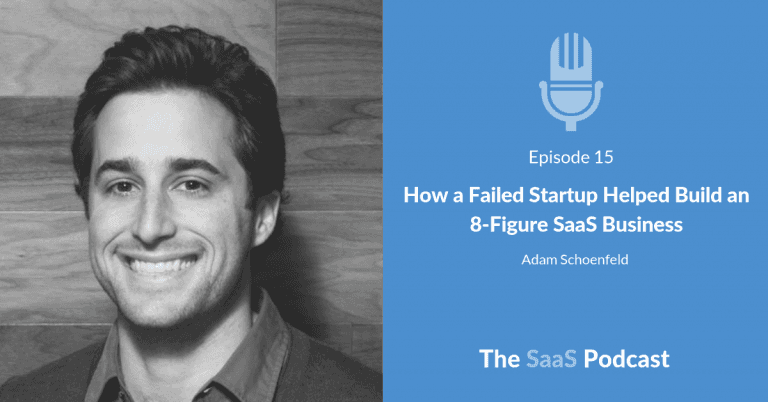
Today's interview is with Adam Schoenfeld.
Adam is the co founder and CEO of Simply Measured, a leading social media analytics and measurement platform used by brands such as Samsung, Microsoft, American Express, and Pepsi, to name a few.
Simply Measured was founded in 2010 and to date has raised $29 million in VC funding.
Adam, welcome to the show.
Adam Schoenfeld (00:55.810)
Thanks, Omer, Great to be here.
Thanks for having me.
Omer (00:59.330)
So I've told our audience just a little bit about you.
Tell us in your own words a little bit more about you personally and then give us an overview of your product and business.
Adam Schoenfeld (01:09.170)
Yeah, absolutely.
So I guess few headlines about me personally.
I'm a second time entrepreneur.
I shut down my first company, didn't really get product market fit there, learned a ton of lessons, kind of call it my mba, and then took another crack at it with Simply Measured and was able to sort of apply some of the lessons I learned there and get this thing going on a really good trajectory.
I think I'll be doing this forever.
I really like kind of creating things.
I like building organizations, I like kind of building a place that I want to come to work as well as building a product that I think helps people.
People do their best work.
So I've kind of caught the bug in terms of startups and being an entrepreneur.
Before I did this, I did some management consulting and kind of got some basic business training.
Got into data analytics at that time, I guess.
On the personal side, my big things are basically family, golf and breakfast foods.
So while work probably dominates the two halves, when I have time for golf, I'll get that in.
And I love a good piece of French toast or omelette.
Omer (02:21.060)
Awesome.
So before we dive into more details, we like to kick things off with a success quote to better understand what drives and motivates our guests.
What is one of your favorite success quotes?
Adam Schoenfeld (02:33.299)
So I really like some of the quotes from John Wooden.
I'll actually give you two I really like.
So one, it's the little details that are vital.
Little things make big things happen.
And then I also like if you're not making mistakes, then you're not doing anything.
I'm positive that a doer makes mistakes.
So those both really resonate for me.
And I really like a lot of the stuff John Wooden, the great ucla, basketball, Coach says.
Omer (03:00.790)
Is there an example that comes to mind on how either of those quotes have helped you in your business life?
Adam Schoenfeld (03:07.830)
Yeah, the little things being vital, I think you, you know, in the early days when we were building Simply Measured, well, what was Untitled Startup?
You know, we often kind of latched on to little pain points people had or little problems, and we were very focused on the details and how we delivered our solution.
And I think that really resonated for me that you sort of piece together a lot of little stuff and then eventually you can kind of come up with something big and of course, making mistakes.
I'm a big believer in sort of learning from failure.
You know, I think it's very much okay to fail and learn.
We have that as a value in our culture here.
So I like that idea of, you know, if you're.
If you're a doer, you're making mistakes along the way.
Omer (03:51.160)
Awesome.
Before we talk about Simply Measured, I want to talk a little bit about life before Simply Measured.
So you mentioned the startup Cheddar Media.
Tell me a little bit more about that business.
Adam Schoenfeld (04:08.430)
Yeah, absolutely.
It was a few different iterations.
We pivoted a couple of times, actually.
We started with this consumer sort of app where you could compete in these different types of contests, and we saw that that wasn't really working.
So then we pivoted to be a tool for marketers to run contests and promotions.
And that was the meat of the time was on the sort of tool for marketers, and we were basically sort of distributing it to bloggers.
And they could install this widget and then run like a photo contest or a Twitter contest.
There are a few different formats we had, and we never really got the business model right.
It wasn't something we could charge the users money for.
It wasn't something that we could sort of display ads on.
So I was kind of learned later in the in the life cycle that there wasn't a way to really monetize the solution.
It was kind of a cool but nice to have thing for the people that were using it.
And so that was a lesson I was able to apply very early on at Simply Measured in terms of, you know, focusing on a pain point people want to pay for upfront.
So anyway, going back to Cheddar, you know, we didn't achieve product market fit.
We had raised a little angel money, and the right decision at that point was to just shut the company down and sort of go on to the next thing.
Omer (05:32.160)
A key question that I think a lot of startups have is how long you should keep going with the business if you're not getting traction, when you should pivot, when you should close the doors, other than obviously when you run out of money and you have no choice.
I interviewed Chris Savage from Wistia the other day, and he told me how it took them one year to get their first paying customer.
And, you know, I think it takes a lot of determination and belief to keep going that long.
Where, you know, most people would have given up.
You know, based on your experience, what advice would you give to someone who's.
Who's struggling to get that traction or to generate revenue?
Adam Schoenfeld (06:15.580)
Yeah, it's a really tough question because you certainly see companies that they don't find their stride till 1, 2, 3, maybe even four years in, and then they find the thing that really works.
So there's this tough balance for you want to stick with it, and you want to be relentless as an entrepreneur, but you also want to be your own biggest critic and be really objective about what's the market doing.
Do we have something that has value here that we can grow?
So it's a really tough thing.
I think the biggest thing for me is just staying close to the customers and, and, you know, making sure there's some validation, even if it's not revenue.
So they're at least, they're saying, oh yeah, this has value, or you're on the right track.
And I think I'd be wanting that at least, you know, on a quarterly basis to, to hear from my customers and really sort of take a step back and say, is what I'm hearing are these positive signs that I can actually build something I can charge money for and grow?
Omer (07:11.720)
So let's start by giving our listeners a better understanding of Simply measured before we dive into the details.
Who are your target customers?
Adam Schoenfeld (07:22.730)
Yeah, so we target both large enterprises.
You know, you mentioned a couple like we work with Pepsi, Amex, Whole Foods, Microsoft, Clorox, companies like that, as well as, you know, we define as the mid market.
And then we have a pretty good group of a few hundred agencies that use our product as well.
So we have those sort of three classes of customers that we target.
And we're a software as a service company.
And so it's a subscription model, usually annual contracts and then kind of monthly licensing and the product.
Like you said up front, it's a social analytics solution that basically helps brands make sense about what is happening in social media, and that's both measuring their marketing efforts and tapping into that big sea of social data and Conversations so they can get insights about, you know, their audience, competitors, and trends happening around their brands.
So that's a bit of a summary.
And the customers we target.
Omer (08:26.480)
So what do you think?
What are their top pain points that you're trying to solve?
Because when I first looked at simply measured, you know, my initial reaction was, wow, there are a lot of social media analytics solutions out there.
So what are you guys trying to do to differentiate the offering or the problems that you're solving?
Adam Schoenfeld (08:52.089)
Yeah, it's a great question.
It's definitely been a messy space.
I think if you look at where we sit, we're on the sort of convergence point of a ton of big trends.
So there's a lot of companies kind of broadly in our area.
If you think about SaaS, if you think about big data, if you think about social media.
Right.
We're sort of, we're touching all those trends and those are all spaces that are extremely crowded with a lot of attention.
So the things that we've done that have been really unique.
I think first of all, we've really focused on the marketer.
I think there are a lot of bi and analytics and big data tools out there that are for data scientists or analysts, but nothing that's really designed for the marketer.
That's really about kind of making data more practical for the marketer.
Then I think the second thing is that we give them access to a lot of disparate data in one place.
So we do a good job as kind of an aggregator across Twitter, Facebook, Instagram, YouTube, Google Analytics, bit ly, we bring in all these other enrichments.
So we sort of make all that data accessible in one kind of central place and put into very usable, digestible formats.
And then I think the third thing we do that's really unique is we give the end user a lot of control, kind of end to end over their data and the presentation of that data.
So we've integrated really deeply with Microsoft Excel and PowerPoint, which was a little bit of a unique thing to do early on.
That was a big part of our early offering.
But giving users control in those tools has been a really big point of differentiation for us.
Omer (10:32.150)
Okay, Adam, let's talk about the early days of Simply measured and explore how you got started.
First of all, tell me, where did the idea for simply measured come from?
Adam Schoenfeld (10:43.750)
Well, it's a little bit of a non traditional founding, I'd say, because we didn't actually start with an idea.
We approached this, you know, team first, market second, and then idea or product third.
So we, we founded the company as Untitled startup.
That was January 2010.
My two co founders, Aviel Ginsberg and Damon Cortese came together.
I joined them just a bit later.
And the idea was, all right, we're going to be an untitled startup.
We're going to, we're going to experiment with a few things and then we're going to, you know, we're going to find one thing to pursue and scale.
And we were roughly interested in the social marketing and sort of digital PR space, but we didn't know exactly what, what that was going to look like.
So the, you know, the very starting point was a little bit unique in that it was an untitled Startup in terms of arriving at the actual idea.
It was through one of those experiments.
It was a tool that we really built over a weekend called Row Feeder.
And it was initially to scratch an itch that we had, which we were running this little sort of promotion.
And we wanted to get data around a hashtag.
And we were having a hard time figuring out, oh, what's an easy way we can just sort of do some analysis of this hashtag and said, oh, why don't we just write a little program to dump that into a spreadsheet?
It was a Google spreadsheet at the time, and that was it.
So we didn't even know that was going to be marketable.
And after sort of of, you know, trying that with a few people, we realized people were having problems, you know, getting access to social data and making sense of it.
And we realized that this idea of just really simple kind of tracking and analytics that used Excel spreadsheets to deliver reports was, was an idea that was interesting to people.
So I guess to wrap that up, you know, it was a, a bit of an organic process that we came up with the idea.
Omer (12:47.480)
So before I want to talk about Rofeeder, but before we do that, tell me, tell me a little bit about why you took this team market product approach.
You know, most people would have waited until they.
Most people do wait until they feel like they've got a good enough idea to be able to start a business.
But why did you guys take that, take a different approach?
Adam Schoenfeld (13:15.910)
Yeah, I think it was just where we were personally at that time.
We were all really ready to do something.
You know, I had to shut down my company.
Damon had been an entrepreneur in residence at Madrona.
Aviel had been working at another startup and wanted to kind of go out and do something.
So we were all really eager to do something and we thought the space was really interesting.
We just didn't know yet what.
What we would do.
And then we had a shared passion.
I mean, we were all really.
We got along really well.
We loved working together.
We thought we had the right balance of skills between the three of us.
So I guess we just, maybe naively, we had a lot of.
A lot of confidence that, hey, if we get together and put all of our time on this, you know, we're gonna.
We're gonna find something that's gonna be really special and that we're gonna want to, you know, scale and build into a company.
Omer (14:06.340)
Did you guys know that at that stage that you were.
You wanted to go after customers, you know, the big customers and brands like Microsoft and American Express?
Was that on your minds in the early days?
Adam Schoenfeld (14:22.820)
Absolutely not.
At that point, we didn't even know who our customer would be.
I mean, we were thinking in general terms.
We thought that marketers had a lot of problems when it came to data and analytics, but we hadn't segmented the market in any way.
It was, oh, let's just find somebody who wants to use this.
And, you know, the first customers that really loved us were agencies, PR agencies, digital marketing agencies.
Those were the guys that, you know, we made connections with, and they loved the product early on.
So we definitely have gotten more sophisticated in how we segment the market, the kinds of customers we go after.
It took us probably a good year before we had any legitimate enterprise brands using us.
Omer (15:09.300)
So tell me more about Rowfeeder and what it did.
Adam Schoenfeld (15:13.860)
It was really simple.
I mean, it did not do much in that first version.
It would basically track some data from Twitter based on a hashtag or a username.
And then a few weeks later, we built some simple reporting.
On top of that.
We could kind of chart things over time or analyze the users that were mentioning that hashtag.
It was really, really simple at first.
So, you know, the capabilities of simply measured are obviously a lot more mature, and we had to build all that out to serve the larger enterprises.
But that V1 was.
I mean, it was very basic, and we honestly, we didn't think very highly of it at the time.
I mean, we were.
We were trying to get something out quickly that we could go validate and talk to people about their pain points rather than getting a perfect solution to the problem.
Omer (16:07.410)
So at what point did you go out and show that product to potential customers?
Gosh.
Adam Schoenfeld (16:16.610)
I'm thinking back now.
We're going four years, four and a half years back.
So it was.
We had it out there a little Bit we kind of had the website and we were trying to drive a little traffic to a self serve model.
And we got a few people, you know, signing up free or at 9, 10 bucks a month, I think.
And then I said, okay, well let's, you know, let's call some of these people up and let's tap into our network and let's go to some events and let's, you know, try to cast a wider net and get some direct feedback from people that might be a good user of this product.
Omer (16:52.550)
So were you charging from the start for the product?
Adam Schoenfeld (16:56.140)
We were, but not very much.
That was actually a big initial turning point was when we started charging, we shifted the model from being a kind of lower end prosumer, maybe 10 bucks a month tool to focusing on, to introducing a tier that was around $500 a month.
And so that's when we really started building toward what we have today because that's now our lowest sku.
So we were charging but very little amounts.
I mean, we even had, I think you could get 48 hours of usage for $2.50 in the very first version.
So it was a little bit of a wonky pricing model in those days.
Omer (17:41.970)
So I think there's a really important lesson here where, you know, for many entrepreneurs it's tempting just to wait for months or even longer until you feel like you have a, you know, you may even want to, you may still be, you know, okay with the idea of a minimum viable product, but you know, you still feel like it has to have a certain amount of features or a certain amount of capability.
And from the sounds of it, what you guys started with was a pretty simple concept, but you got it out there pretty quickly and you started getting feedback.
Am I right about that?
Adam Schoenfeld (18:22.040)
Exactly.
Yeah.
And I think that was critical.
If we had tried to polish it too much, I don't think we would have got that feedback quickly enough.
So yeah, you're absolutely right.
I think we went out with something that was really rough and you know, it worked some of the time.
It was, you know, it was incomplete to say the least, but it was, you know, it was testing an idea that, hey, there's still a lot of pain around the way marketers do their social analytics and tracking and we can, you know, we can do something different here to, you know, solve that problem more effectively.
And, and so it did give us the opportunity to test and then iterate, you know, once we, once we had it out there.
So I think that is a good lesson.
And, and also the Charging money was important, right?
Because it, even if they were small amounts in the early days, it was a.
It was real validation that people were willing to pay for the problem.
Omer (19:15.320)
So you said that the first version of Rove Feeder didn't really do that much.
Did you guys have any.
I don't know.
How did you guys feel about charging for a product which you felt didn't do that much?
Adam Schoenfeld (19:38.900)
I mean, I felt good.
I felt good about it because even though it didn't do that much, it was solving a problem, right?
I mean, it was.
It's funny because between myself and my co founders, I'm the non technical co founder.
I'm the, you know, the business guy of the three and they're both engineers.
And so we had these debates early on where, you know, Damon would be saying, you know, I just don't know why people would pay for this.
You know, they can just go write a couple scripts and it would, you know, it wouldn't take them very long to do this kind of thing.
And I'm like, yeah, but our customers are marketers and PR people and they can't, you know, they don't.
They can't do that.
So this is actually solving a huge pain for them.
So we had a lot of those debates early on.
But, you know, ultimately I felt good about it because we were solving a problem.
And, you know, I think if people.
If people didn't think it was worth anything, they wouldn't pay.
Omer (20:25.450)
Do you remember what your customer acquisition looked like in the first year?
How fast were you growing and acquiring customers in that first year?
Adam Schoenfeld (20:35.150)
Oh, man.
You know, it took us.
I remember it took us a long.
It took us probably six months to get to 10,000 in monthly recurring revenue.
I mean, you know, then from there we started building much, much more quickly.
But those first, you know, those first handful of customers, it was slow.
It was a slow go.
And, you know, we had sort of two modes of it.
We had one mode was people signing up through the website for a free version and, you know, kind of a traditional freemium, and maybe we could get them to Upgrade to A.
A 10, 20 or $50 SKU.
And then we had another mode which was, you know, I would.
I would kind of call people that were on the.
Either free users or had, you know, fill out a form or something like that.
Some.
Some way that we had a contact and, and I talked to them about the, you know, the $500 skew.
And it was a slow go, you know, I mean, we had to, you know, work Hard to get those, those first handful of customers.
But you know, I think what, what I remember doing as the, the guy that was out talking about the product, you, you sort of, you don't sell efficiently, right?
You end up, you talk to the people that get it right away and are excited right away and you spend a lot of time with them.
And you, you know, if somebody's not sort of interested after the first 15 minute phone call, then you don't spend a lot of time with them versus, you know, when you get bigger, you're trying to kind of increase your conversion rate and scale and really, you know, have an efficient sales process.
In those early days, it's really just about finding the few people that the idea resonates with.
Omer (22:04.980)
How did you get to get from, you know, nine or $10 a month to a $500 product, $500 a month product in six months?
Adam Schoenfeld (22:16.020)
Yeah, it was, there were some very obvious things that we, we could do from a feature point of view to attract higher, higher ticket prices, largely with our agencies.
So, you know, if an agency had a large enterprise client, they had specific needs around higher volume tracking.
They also wanted to look at more than just Twitter.
They wanted to look at Facebook too, and other things.
So we had some really clear feedback where, okay, they like the core approach that we have.
They like that it's simple.
They like that we're integrating with Excel.
They like that we're kind of designing this for marketers instead of, you know, data scientists.
But they need a few other things and then they'll be willing to pay a, you know, a pretty solid price point.
And so we were able to add some of those things quickly and go out and get some of those slightly higher paying customers.
Omer (23:10.580)
Were you having to go out and sell the $500 a month plan or were, you know, I mean, do you remember the day when the first customer came and signed up for a $500 a month plan?
Adam Schoenfeld (23:24.040)
Trying to think the first $500 a month we had, we had a 200, I remember a 200 or 250$1.
That was really early on.
It was somebody that came in through us.
It was a market research company in Australia.
And they had come in and looked at the free tool and sent an email, right, and said, hey, do you have anything that's a little bit more robust in these areas?
And we said, you know, if you can give us a little time, we can probably deliver on some of those needs.
And we had already been working on some of that stuff.
And that was the first customer at that, hundreds of dollars a month versus a few dollars a month that we closed.
But then it was generating that demand.
In the early days was a lot of.
It was the same model we have now, actually, which is creating great content through our blog and social media, a series of free tools that have attracted a lot of usage, and then, you know, hopefully building relationships through those two channels and then having people come wanna try out the product.
Omer (24:26.390)
So looking back at those early days, what do you think was one of the biggest mistakes that you guys made?
Adam Schoenfeld (24:33.830)
Yeah, you know, one of the.
I'd say one of them was we didn't have enough.
We didn't sort of hit the gas hard enough in growing a sales team.
There was a point where I was trying to do too much closing deals, and we, you know, we had the validation that we were onto something.
And if we had, you know, hired one or two people onto the sales team, you know, we would have sort of paid for it right away.
So I think we were probably a little.
We were a little slow to hire salespeople, and that came and bit us.
Then kind of in the.
In, you know, year two, where then it was a lot of pain and we had way more leads than we could handle.
So then when maybe some of our sales hires didn't work out or we had some turnover in those roles, it became very painful.
So I think if we had been a little more intentional early on about, hey, let's hire one or two salespeople now and get them ramped up and make sure it works, we would have saved a lot of pain.
Omer (25:32.880)
Okay, so you guys have come together, you've come up with an idea for.
For Rofeeder, you know, pretty basic, you know, product to start with.
You went out there and you got some feedback, you started to iterate and improve on the product, and in six months, you were up to $10,000 in monthly recurring revenue.
So, you know, it looks like you guys are onto something.
Something that potentially could become, you know, an even bigger product and business.
But with growth often come growing pains.
So just looking back at those first few years, tell me about one challenge that you faced as your business started to grow, either on the business on the product side.
Adam Schoenfeld (26:22.020)
Yeah.
So in that sort of initial growth phase, one of the big challenges we faced was actually transitioning the products and the brand and all these experiments that we had to become simply measured.
We were growing the business and we were onto something, like you said.
But we couldn't be untitled startup anymore.
We had Rowfeeder and we actually had another product called Exportly that were both serving the social analytics space, but they were doing different things.
So there was a lot of confusion that we created around the different brands and the different products and what was simply measured and why should I pay more money for that and transitioning the old customers.
So I think that that phase of when you figure out what you want to be and you're sort of trying to clean up the, you know, the scrappy little startup that you were, is.
Is one that can be a bit challenging.
Omer (27:16.520)
So in many ways, when I, when I hear this story, seems like, you know, you guys made this look really easy.
Right.
You know, you know, you started out, you guys felt you had a good team together.
You get to, you know, decent recurring revenue in within six months and, and, you know, everything looked, you know, pretty smooth sailing from there.
But that's not.
That's.
I'm sure it was a bumpy ride along the way, though.
Adam Schoenfeld (27:54.050)
Oh, absolutely.
Yeah.
It's never easy.
You know, it's one of those things where it always looks better from the outside.
Right.
A nice, smooth revenue curve and a big growing market are definitely good, but there's always a lot of pain and challenges sort of behind the scenes.
I mean, I remember in the early days, those hard times of trying to get the first customers and we, we'd sort of take long walks, the three founders and say, man, you know, this product's not very good.
Are we ever going to get anybody to buy it?
Should we be thinking bigger rather than doing all these dinky experiments that, you know, we're not really sure if any of them are going to work.
And then as you kind of get to the next stage or, you know, we were trying to push prices up and, you know, sort of figure out our brand and where we wanted to go.
And we're like, you know, man, will this work?
So I think there were a lot of doubts there in those early days and later on.
Right.
I think then the challenges became a lot about building the organization and scaling the team and how do you bring people in and create the right kind of culture of a slightly larger organization.
Omer (29:04.420)
So again, looking at those early days, you talked about your experience with your first startup, Cheddar Media, and that business failing.
And as you went into this new business and you were, you know, in the early days, struggling to get customers or get them to pay for the product, was there a time that you felt like giving up?
Adam Schoenfeld (29:31.440)
Not really.
You know, I have to say I was really passionate about it and we didn't get to that point of, you know, wanting to give up.
We were hard on ourselves, for sure, and we were very objective about, you know, do we think the market's taking turns in different directions?
Do we think that competitors are doing things that we can't match?
Do we think that we're missing a turn in the road?
But I think we had a lot of passion, and the three of us, the founding team, we really loved working together.
And we were getting, like I said, some validation, even if they were small things each month, each week, that was encouraging to say, yeah, let's keep pushing, let's see what we can do.
Let's get to that next milestone and, you know, keep trying to climb the mountain.
Omer (30:18.210)
So at what point in the business did you, did you realize that these global brands were really your target customers and you could charge a lot more for this product than maybe you had been up until then?
When did that happen for you?
Adam Schoenfeld (30:35.730)
I'd say it was probably about a year and a half or two years in.
And, you know, sometime before we had raised our first VC money, when we were, you know, we were serving at that point all kinds of customers, right?
You're still in that mode of, like, we want to get anybody in who, who has this pain.
And.
And we got a few larger enterprises that came in and we were able to serve their need.
And through talking to them, we realized, man, these guys have really complex problems, right?
They've got hundreds of profiles, they've got global teams, they've got a lot of data they need to get access to and figure out.
They're sort of, they're working across channels and they're spending real money on social marketing.
And so we realized if we could, if we could serve that broader pain point for a larger number of users, you know, if we could have 100 people at a big company logging into the product, well, there's a lot more value there and that we could, we could move the price point up for those guys.
And so we had a way, we had a pricing structure that could scale with the number of profiles that they had and the size of their social media audience.
And so we started seeking out brands that had those higher numbers there and those more complex use cases.
And we realized that we were a very, very good fit for them.
Omer (31:56.480)
So one of the things that I've seen, you know, many businesses do to chase customers is to, is to, you know, take feedback from people who aren't paying for your product, go and build something, build a new feature or improve Something with the hope that these people are then going to come and pay for your product.
And, you know, more often than not, that doesn't work out right, just because of the whole customer development and just because somebody says that, you know, if you had XYZ feature, that I'd use your product or, you know, that feature sounds really cool, but when it comes to them opening up their wallets and taking out their credit cards, they're not really willing to do that.
Did you have any similar experiences?
You talked about this company in Australia that asked for some additional features and you guys were able to deliver on that, but did you have any experiences where you ended up building features that nobody wanted or nobody would pay for?
Adam Schoenfeld (33:00.890)
You know, we definitely took chances and built things that we thought where the market was going and weren't the most.
Either we didn't execute the feature very well or there wasn't as strong of a need.
But I guess we were asking the question a little bit differently.
So that's an interesting one because I think we were looking at people who were actually paying us and we were thinking about, how do we deliver more value to you?
So we have a product that you like to use and you're paying some money for.
Could we deliver, could we solve similar problems elsewhere?
What other data sources are you working with?
What other kinds of reporting are you doing?
Those were the kinds of questions we would ask.
And then we'd sort of go solve for that and figure we could then charge those customers higher prices and sell that broader package to other customers.
Omer (33:46.530)
Got it.
So if somebody who wasn't using your product or was using the free version gave you some feedback, you might, you guys might, you know, put that on your backlog and think about considering that in the future.
But most of your efforts were focused on existing paying customers and how you could deliver more value for them and ultimately get them to pay you more for the product.
Adam Schoenfeld (34:11.740)
Yeah, I would say that's generally true.
And also I think we weren't, you know, I think customers are a lot better at describing, like, problems than solutions.
And so I think we were more focused on identifying the problems we could solve rather than fielding a bunch of feature requests and prioritizing those.
So I think there's a lot of ways that we would figure out what the problems are.
You know, observing where the market was going, talking to our customers, talking to our free users, so collecting input from all these different queues.
But then ultimately it was up to us to figure out, well, what's the right features or packaging of features that are gonna have the best, that are gonna deliver that value to the end user.
Omer (34:54.139)
And at what point did you take on the CEO role?
So how long were the three of you kind of co running the business and sort of trying to make decisions as a threesome?
And, and at what point did you guys realize that you needed to have better defined roles?
Adam Schoenfeld (35:11.290)
Gosh, you know, I don't even remember.
I think it probably was a few months in where we actually, you know, gave ourselves titles.
But I think that it was, you know, we were all kind of playing the roles that we, you know, ended up titling on.
So that was not a big deal at that point.
We all had specific skills and, you know, that were very complementary.
And I think that's really important for a founding team.
You know, my skill set was on, you know, driving the business, you know, kind of talking to the market.
My co founder, Aviel, is just phenomenal when it comes to design and user experience and kind of product.
And then Damon is just a fantastic technologist who can build things very quickly and, you know, has a really good grasp for what the latest technologies are that we could leverage to solve customer problems.
Omer (36:03.470)
Okay, Adam, so we started this conversation by going back to where the idea for Simply Measured came from.
And then we've taken this journey together on how you turned that idea into a successful product.
Let's talk about the business today.
What's your current revenue?
Adam Schoenfeld (36:21.950)
So we don't, we don't typically share our, our revenue.
I mean, I guess I could just say it's sort of in the eight figure run rate and we're growing very quickly.
We've managed to establish a really good position in the market where we're seen as a leader in the social analytics category.
And I'll say where we want to take it too is we want to be a $100 million plus recurring revenue business that can be standalone.
And we think this is something that can last very long term.
So we're kind of in it for the long term here.
Omer (36:57.670)
How big is your company today?
How many people do you have working at Simply Measure today?
Adam Schoenfeld (37:02.790)
We're about 125 people now.
We've grown.
You know, we were 75 at the end of last year.
We were 35 at the end of the previous year.
So we've been roughly doubling the size of the team over the last few years.
So we've been growing in all areas, engineering, sales, marketing.
And we've been really trying to build out an organization that can take the business to the Next level.
Omer (37:29.520)
And do you see that continuing more hiring in the coming year?
Adam Schoenfeld (37:33.040)
Yeah, absolutely.
I think we'll probably add about 40 to 50 people next year.
We still see the market growing like crazy and you know, we did raise a venture round earlier this year and so we're, you know, investing that to continue growing the team.
Omer (37:53.610)
So give me one example of how the dynamics of the company have changed over the last couple of years as you've grown so quickly.
Adam Schoenfeld (38:03.050)
Yeah, it's, it doesn't have the feel of the little startup with, you know, we're sort of huddled around one desk in this, you know, little first floor office over on Eastlake Avenue in Seattle.
You know, now, you know, I think, you know, it's, it's a slightly larger feel.
It's still, I think we still have a very entrepreneurial, passionate culture here, but it feels a little different, you know, at this stage because we've, we've got some validation, there's a little more security.
You know, people, people feel like we're going to be around for a long time.
So I think the risk in people, when people sign up for the job, you know, the, the question of will you be here in six months?
As has sort of gone away and it's more about well, how big will this be?
You know, how far can you run?
And so I think that the thinking has shifted from can we exist, will people pay for our product?
To can we build something really big and meaningful?
Omer (39:00.270)
And how has the role of, for you as CEO changed with that growth?
Adam Schoenfeld (39:07.010)
It's changed in all aspects.
It's.
In the, in the early days I was, I was building the initial reports, I was, you know, selling, I was doing client services.
I was sort of wearing all of the hats of a, of the business side.
And now, you know, it's a lot of recruiting, it's a lot of, kind of setting the vision and the strategy and then sort of working through the executive team to make sure we're all aligned to deliver on that.
There's certainly some component of working with our investors and making sure we have alignment there.
So the role has changed a lot from jack of all trades to kind of a leadership position.
Omer (39:47.940)
How important do you think the lessons from Cheddar Media were for you in building the business that simply measured has become today?
Adam Schoenfeld (39:59.070)
They were very, I mean, very, very important, particularly in the early days.
Honestly, I wouldn't recommend it.
Like, I wouldn't say that the most, the funnest or the sort of best path to learn how to do it is to you know, spend a couple years effectively failing.
But it was a great education.
And, you know, I learned a lot of what not to do.
And also just, you know, got to learn by doing in a lot of ways.
And so I think probably the biggest thing for me that I took away, I think I was a bit too optimistic.
I had come from consulting.
I thought, oh, I can sell my ideas.
I can do anything.
And that was great.
But I think that the objective side and the critical side and really sort of asking yourself and your team the hard questions wasn't there for me at Cheddar Media.
And I brought that to simply measure it from the start.
Omer (40:53.960)
Okay, Adam, it's now time for our lightning round.
I'm going to ask you a series of questions, and I'd just like you to answer them as quickly as you can.
Are you ready?
Adam Schoenfeld (41:00.720)
Oh, boy, oh, boy.
All right, bring it.
Omer (41:02.840)
All right, here we go.
What's the best piece of business advice that you ever received?
Adam Schoenfeld (41:08.200)
Ah, okay.
Well, my grandfather has a lot of really good nuggets.
I just say he always says stuff like keep at it or be good.
So I'll go with that.
Keep at it.
Omer (41:19.640)
What book would you recommend to our audience and why?
Adam Schoenfeld (41:23.900)
You know, I was just some other guest of yours claimed probably my first and second one.
So I'll go with Tony Hsieh's Delivering Happiness, the CEO of Zappos.
Great story about entrepreneurship and building culture.
Omer (41:39.020)
That's a great book.
And a few years ago, I actually saw him on an Alaska Airlines flight sitting in a middle seat, and I was like, really?
It's like, you must be able to do better than that.
Adam Schoenfeld (41:51.320)
Wow, that is a shocker.
Omer (41:54.440)
What's one attribute or characteristic in your mind of a successful entrepreneur?
Adam Schoenfeld (42:00.280)
Passion.
Omer (42:02.760)
What's your favorite personal productivity tool or habit?
Adam Schoenfeld (42:07.240)
I'll combine the two.
Evernote plus the way I make my weekly to do list inside Evernote.
So I keep everything.
My whole life is in Evernote.
I'm always snapping pictures on my phone and putting those into Evernote, and I kind of store everything there because I realize my brain can't hold it all.
And then sort of every Sunday night, I kind of take a look back at the previous week and I think about the next week and make a two or three bullet list of the things I want to get done.
Omer (42:36.340)
If you sold simply measured and had to start over tomorrow, what type of business would you build?
Adam Schoenfeld (42:44.290)
Oh, man, I would do the same thing.
I love doing this.
I don't want to sell it.
So does that answer suffice or do I need to pick one?
Omer (42:52.130)
Well, tell me about how you would go looking for another opportunity.
Adam Schoenfeld (42:57.490)
I would probably spend a lot of time with other entrepreneurs that were really, really early on and that had found some customer pain, because that's what gets me exciting is solving problems.
I'd want to do something that sells to businesses and is software as a service.
Again, prob.
But I'm not sure what part of the company I think HR tools.
There's a lot of things in HR that would be interesting problems to solve.
Omer (43:25.310)
What's an interesting or fun fact about you that most people don't know?
Adam Schoenfeld (43:31.390)
Well, a fun fact is I can do a belly roll.
I won't do it for you, but I can.
Omer (43:37.310)
Okay.
And I think the last question you answered at the beginning anyway.
But what is one of your most important passions outside of your work?
Adam Schoenfeld (43:44.570)
Golf.
Absolutely.
All right.
Omer (43:47.490)
Great answers.
Adam, I want to thank you for joining me today and talking about Simply Measured.
I really appreciate you sharing your experiences and your insights with our audience, and thank you for letting us get to know you a little better personally as well.
Now, if folks want to find out about Simply Measured, they can go to simplymeasured.com and if they want to get in touch with you, what's the best way for them to do that?
Adam Schoenfeld (44:10.570)
Twitter is my preferred channel, so I'm honey on Twitter and that's S C H O E N Y.
Omer (44:17.290)
Awesome.
So, Adam, thanks again and I wish you continued success with Simply Measured.
Adam Schoenfeld (44:21.930)
Thanks, Omer.
Appreciate it.
Bye.