Omer (00:11.840)
Welcome to another episode of the SaaS Podcast.
I'm your host, Omer Khan, and this is the show where I interview proven founders and industry experts who share their stories, strategies and insights to help you build, launch, and grow your SaaS business.
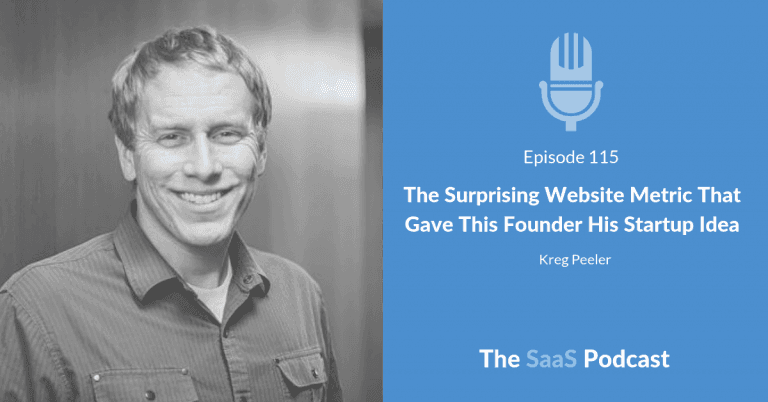
This Week's interview is with a founder of a SaaS business who, when he set out to create a business, had no intention of launching a SaaS product.
He had a website with a local events section and his wife was curating the web, finding events, and then manually entering this information into the website every week.
One day they realized that 80% of their website's traffic was going to this local event section.
So they started growing it, adding more content, allowing event organizers to run ads and sponsorships on the site.
And that turned out to be a pretty good business as they started building a community of over 200,000 event organizers from around the country.
But he kept hearing time and time again from these organizers about the challenges that they had in in managing all the logistics of each event that they put on.
And that's how the idea for his SaaS product was born.
And so in this episode, we talk about the journey that led my guest to discovering that idea.
And we explore how he's transforming his business and revenue now from a media business to a SaaS product business.
It's an interesting story, and interesting.
It all started from a very simple website with somebody's desire to collect some content from around the web and present it in a better way for other people.
So I hope you enjoy it.
All right.
Today's guest is the founder and CEO of Spingo, an integrated solution for event makers.
It has an event platform that combines content from 100,000 sources to produce a robust local event search engine.
And through its API, Spingo powers five and a half thousand entertainment apps delivering event content to almost 200 million viewers per month.
Prior to Spingo, my guest founded and ran Spin Media Marketing, a consultancy focused on product development, media production, integrated marketing, and technology solutions.
He began his production reputation with Academy Award winning sound design for the Brigham Young University animation department.
And while in college, he ran KRAP Radio, an indie station from his dorm room.
His first entrepreneurial venture was in California at the age of 12.
Avocados, a cardboard sign and a busy intersection.
And apparently he's been gathering fresh content and making guacamole ever since.
So today I'd like to welcome Craig Peeler.
Craig, welcome to the show.
Kreg Peeler (03:19.500)
Thank you, Omer.
It's good to be here.
Omer (03:21.180)
Now, before we get started and talk about the product Tell me a little bit about your name.
We kind of talked a little bit about this before we started, but where does that come from?
I haven't come across that before.
Kreg Peeler (03:32.780)
I believe it's got some German roots, but I think it was mostly a creation of my dad, who just wanted to come up with a unique name, something different.
Omer (03:43.180)
Yeah, I've done that with my son as well.
His name is Daniel, but we kind of spelled it D A N Y A L. And I don't know, maybe we were trying to be a little bit too smart, because now it's like you always have to kind of keep explaining to people.
And I'm sure.
I'm not sure he's going to appreciate it when he gets older, but we'll see.
Kreg Peeler (04:01.010)
It's good for SEO.
It's terrible for the dmv.
Omer (04:05.650)
Great way to think about it.
All right, so I like to start by asking my guests what drives and motivates them.
Is there a favorite success quote that you have that maybe will give us a better idea into, you know, what.
What kind of gets you out of bed every day?
Kreg Peeler (04:22.040)
There's a quote that I like to think about.
It was written by William Gibson, who's an author, and he said the future is already here.
It's just not evenly distributed.
And I have always found that quote to be very motivating for me because I feel like there's an opportunity there in that quote to find the pieces that are here that represent the future and help to bring them into the mainstream, help them get that distribution that they're.
They're lacking and really use the technology of the future and bring it into everyday lives for other people?
Omer (04:58.720)
That's quite a simple but deep quote.
I had to think about that for a minute.
That's a good one.
Okay, before we get into kind of sharing your story, can you tell the listeners maybe in your own words, a little bit more about Spin spinco?
Like, what is the problem that you're trying to solve for event makers?
Kreg Peeler (05:22.090)
Well, it's even broader than that.
At its core, we believe that experiences are greater than things.
And we're all about enabling the human experience, enabling live experiences in the community.
And as we saw that there was a lack of awareness by the general public of knowing what's going on around them, we dug deeper into that problem and realized the problem is pretty broad, and you have to solve a variety of problems in order to solve the kind of last mile of the problem.
And so we've worked our way upstream by working with distribution partnerships working with media companies and travel companies to give them an aggregation of event content, which has now led us into relationships with a lot of event producers and promoters that we collectively call event makers.
And as we work with those event makers, we have zeroed in on a wide variety of problems that they have.
Everything from how do they do their marketing before the event, to how do they manage ticketing at the event, to how do they manage their volunteers and the ad event app for the attendees.
And so we've now launched a platform and a product that we call Event Master.
And it helps to unify that whole otherwise fragmented solution into one SaaS product that really helps an event maker manage their event from beginning to end.
Omer (06:49.280)
So tell me a little bit more about how you came up with the idea for this product or this business.
Kreg Peeler (06:54.650)
Yeah.
So through my life and time in high school and college, I always loved being a part of live experiences.
I was usually the sound guy for the theater shows, the sporting events, the concerts, even prom.
I was running the sound for our high school prom, and it was always just a fascination for me to enable those live experiences, help people have that sense of excitement and just the thrill of being at a live situation where you're interacting with people.
And I like to think of it as, when you're at a live event, you're actually using, usually, all five senses, whereas when you're watching a movie, you're usually experiencing two senses.
But at an event, when you're eating food and feeling the temperature changes or feeling the heat as a.
As maybe a monster truck drives by, or the wind on your face as you're watching the hot air balloons take off, there's something there that is more profound than just watching something on a screen.
And I think in today's world, more than ever, there's a need for that.
And so that was really the founding premise for Spingo.
Again, going back to experiences being greater than things, I thought I'd go into film, and I was on that path where I wanted to be a sound designer for filming.
But over and over, my friends would put on events or there'd be other events I wanted to be associated with.
And when I would see that they didn't have a good solution or somebody they could trust to run their sound or their lighting or video or whatever it may be for their live event, I would usually jump in and volunteer and help bring those events to life.
And I just, over and over, just felt so fulfilled after doing that.
And I really became kind of quite addicted to that experience of wanting to be a connection in those, those life settings and be a part of that in a big way.
And so as I saw that, I also witnessed firsthand a lot of the, the pain and suffering that an event maker goes through as they try to produce an event.
There's just a lot of chaos, a lot of questions, a lot of frustration.
And I believe there was a better way.
And that's what Spingo is all about.
Omer (09:05.960)
Okay, so you, you, you kind of see this opportunity and this problem.
So what did you do?
I mean, I assume when you kind of started out around four years ago, you didn't try to solve this kind of broad spectrum of problems that these people have.
Was there like one specific problem that you focused on at the start?
Kreg Peeler (09:27.070)
Yeah, and we kind of wandered into it, I would say, in many senses.
It started with actually a DVD and a website.
So I had some media production experience.
And before YouTube was out there, there wasn't really a good way to get video distributed.
And so we, we aggregated a lot of student films and music videos from local bands and put all those together on dvd, combined with a directory of local businesses and some video ads promoting those businesses.
And we put it on this ridiculously menu filled dvd.
It was pretty easy to navigate, but all together it had more than 6,000 menus on this DVD.
It was like an interactive app, YouTube on a disc that we gave out at parties and distributed through the university bookstores.
And we moved 20,000 copies of this DVD and it got a lot of engagement and it led to a website ultimately called Spin Local, which had an event section on it.
And it also had that same directory of local businesses.
And you can watch the student films and things like that on the website as well.
But the event section got 80% of the traffic.
And we were kind of in awe that there was such a demand for this event content.
And so that coincided with my interest in these live experiences.
And I thought, you know, there really isn't a better place online to go and find what's happening around you.
And so we were going through this process and SpinLocal was getting more and more traffic when a couple different media companies in Utah approached us and said that they wanted to acquire Spin Local and make it part of their offering as a news media company.
And they wanted to be more relevant to the younger audiences.
And when I saw that I had an opportunity to work for a newspaper company the rest of my life or to do my own thing, I opted to do my own thing.
And I was very pleased with that decision.
Because ultimately, it led to a lot more innovation and, frankly, a lot more frustration and challenge that allowed me to grow and really made me expand what I wanted to accomplish in my life.
But instead of being acquired, we countered with a licensing deal.
We said, we'd absolutely like to work with you.
We're happy to provide value to your audience and help you grow your traffic.
So instead of selling Spin Local to you outright, why don't we license you the rights to a portion of SpinLocal?
And we then showed them the analytics that 80% of the traffic was going to the event section.
We said, we're going to break this off as a separate project and call it spingo, and you can be our first client.
And they pushed for exclusivity, and we went back and forth on that when we ultimately were able to distribute and license to a variety of media companies.
And that was the birth of Spingo.
So our initial model was to license event content and an event directory or event guide, a calendar module that they could put into their entertainment section of their website.
We licensed that to them, and they paid a monthly fee, and that was the beginning of the model.
Omer (12:30.110)
How did you go about aggregating all of these different content sources?
I remember looking when I was doing research, reading your profile, and I think the first three words I remember about you were, craig builds stuff.
And so I kind of almost had this vision of you kind of hunkering down and kind of building.
Building this product and, you know, the early hours and stuff.
But, like, how did you sort of.
How did this start?
Kreg Peeler (13:01.640)
So it was definitely that way with the dvd.
That was one of the mediums I knew.
Well, I knew how to author DVDs and do video editing and sound design, so I. I did a lot of that.
But I also had another individual on my team at the time that did a lot of the DVD authoring with me, and we would kind of tag team it.
In fact, funny story about that.
We were using a product made by Apple called DVD Studio Pro, and unfortunately, only really one person could work on a DVD master file at a time.
And we had a deadline, and in order to get maximum development time out of the DVD, we actually worked 24 hours a day for, like, two months.
And we would take turns doing the night shift versus the day shift so we could work on the same master file.
And then we were about 90% done, and the file crashed, and, like, it was corrupted.
And so we got on the phone with Apple, and it took me, like, two hours to get up the food chain at Apple until I was talking with the actual product owner of DVD Studio Pro at Apple.
And he had overseen the whole project from beginning to end when they first made DVD Studio Pro.
And he asked me, I think three different times, how many menus did you say you had on this dvd?
And he said, I don't think we ever designed DVD Studio Pro to support that many menus.
We've never heard of anybody going that crazy with it.
And ultimately he helped us work through it and we had a backup file we were able to restore and he helped us find some workarounds because there were some bugs that we actually helped them identify.
And he helped us make the file work and we got it back up and delivered the DVD on time.
But anyway, it wasn't just me.
There were definitely other developers and engineers working with me, including that product developer from Apple.
But in the end, when we started building the DVD or converting from the DVD to the website, one of our head engineers that's still here at Spingo, helped us build the first version of Spingo and helped find a system where we could input that content.
And it wasn't me aggregating the content.
That was actually my wife.
She was an expert at digging up content online and finding some really unique event listings that nobody else had.
And I think that's ultimately why we had 80% of our traffic going to our event guide is it was very comprehensive, very thorough and grammatically correct.
The typos were usually fixed from the, you know, where we'd find a listing online.
We were always surprised at how many typos were actually on the venue website.
And she would proofread them and correct them.
And so because of that, we were known for quality content.
And as we scaled, obviously my wife Amanda couldn't do all the content.
So we brought in some content managers and we ultimately grew a content team of more than 70 people across the country.
And it was really kind of crowd sourced.
We had people working from home, finding local venues, local websites, but a lot of the content didn't even exist online before they'd go out and find a flyer and enter it into Spingo.
And that has now led to a team now where most of that content comes to us.
The event makers add their event to Spingo voluntarily and our team simply reviews it and tags it accordingly and approves it.
Omer (16:17.320)
Wait, so you got.
So I guess Amanda at the time wasn't.
You weren't just taking feeds from other sites and sort of aggregating them.
It sounds like she was actually manually finding Events, curating the content, correcting the content, and then publishing it on your own site.
That's what she was doing.
Kreg Peeler (16:37.980)
That's exactly right.
And the reason is, because there wasn't a comprehensive source prior to spingo, it was really hard to find good event content.
And so there was a lot of stuff that just didn't exist online.
And so we saw it as one of our missions to really get that unidentified or undigital content, that offline content, get it online and get it listed so that other people could access it.
And so, yeah, we looked at a variety of sources, and anytime we saw a billboard for an event that wasn't somewhere online, we would make sure it would get there.
Omer (17:12.069)
So as Bingo started to become a separate business and you kind of started moving towards building it out as a SaaS product, how did you go about funding this?
Were you using the revenue that you were getting from your existing business to fund it, or did you go out and look for investors?
Kreg Peeler (17:36.810)
So at first, yeah, the first year, I was funding it with the other spin media marketing consulting business, and that's how we paid for the servers and some basic product development when we would hire our engineers to help us.
And some of the team just kind of spilled over from spin media marketing, so we had them wearing hats on kind of both sides.
And then as we grew, we were able to secure some seed funding from really just a great angel investor that believed in it, saw the opportunity, and believed in me as an entrepreneur.
And that's where our first million dollars came from and helped us get Spino off the ground.
Omer (18:17.860)
You've got this deal with this first distribution partner or this licensing deal.
Was that basically the business model that you guys were going after, that you were going to kind of generate revenue through licensing fees?
Was that the initial.
Kreg Peeler (18:36.110)
That was the first business model.
We've had several.
It keeps evolving.
But, yeah, we originally thought there'd be enough coming in from licensing fees that we could fund all of the content.
The challenge with that is we actually got a lot of media partnerships, but overall, media companies are not the fastest at paying their bills, and a lot of them just don't have enough budget to pay a high licensing fee.
And so we would have to kind of negotiate each one individually.
And usually the licensing fees were just not enough to really cash flow the business.
And so we continually branched out into finding ways to monetize the content by getting the actual event makers to pay for some premium placement, to be at the top of the list, or to get listed on other sites.
That they otherwise wouldn't be on.
That's how we started finding some new ways to capture some revenue.
Omer (19:30.670)
What's your business model today?
Kreg Peeler (19:32.830)
So there's still all three pieces in play.
We still make licensing revenue and we still have promotions, as we call them, where you come in.
They paid to promote so they can add their event for free and then they pay a premium to be featured at the top or be featured ahead of time.
They can also book a Facebook or a Google AdWords campaign through our system and it's all self serve and they can just do it all with on their own time and put in their credit card and manage their whole schedule around the promotion.
Which is great if you're on tour and wanting to promote an event with multiple stops.
And then the third business is what we call Event Master and that's what I described earlier.
That allows us to really get in to the meat of the event and help them manage the entire operation, the operational side, and help them tie the marketing into the ticketing and give visibility into the overall success of the event.
Omer (20:26.300)
Are you able to kind of talk about revenues or how, how kind of revenue split between those models?
Kreg Peeler (20:33.660)
Yeah, the, the first two years, the majority, 80% plus came from licensing fees.
So that's the media companies or the app developers paying us to use our API or using our embeddable JavaScript app.
So that's where the revenue came from those years.
And then last year for the first time, our promotional revenue actually exceeded our licensing revenue.
So that was in 2015.
Omer (21:02.850)
Got it.
And then the event maker, is that something that you guys started doing very recently?
Kreg Peeler (21:07.800)
So, yeah, the event makers are our clients and they pay for the Event Master platform.
Eventmaster is now forecasted to generate 80% of our revenue in 2016.
Omer (21:21.800)
So when you look back at sort of this journey that you've taken and the business models that you guys have tested, and I'm sure there were other things that you tried along the way.
Is there something that you kind of wish you had done differently or maybe if you kind of could go back and tell yourself something four years ago, what advice would that be?
Kreg Peeler (21:43.480)
Yeah, it's something I think about quite a bit actually.
And the challenge is you never know what you don't know until you try it.
And it's like looking back at a trail that you blazed and you look back like, oh, it was really easy to get here when you look backwards.
Wish I just took that shortcut and didn't wander around and take all these deviations.
But it's those deviations that actually give you insight and perspective on new ideas.
And so it's really hard to say.
Obviously, if I knew everything I know today, I could have done it in probably 1/4 of the time.
But I had to learn what I know today somehow.
And so I'm glad I made the journey.
I did.
Omer (22:24.790)
Yeah, I think that's really good.
I can't remember where I saw something like this, but it was basically that kind of idea of like point A, from idea to point B, let's say, of having a business which is generating revenue and is profitable and so on.
And often people think that it is that straight line from point A to point B.
And the reality is that it's kind of this zigzag that kind of goes all over the place.
And as you said, I think that's part of the learning process to figure out the market, the product, the business model until you get to something and you have enough of the insights and the ideas to be able to hone in on the thing that actually works.
Because I guess if it was that easy to get from point A to B, everybody would just be able to start a business today and be successful tomorrow.
Kreg Peeler (23:18.040)
Yeah, and I think there's hundreds of examples of this as well.
In the hard product world, if you look at the motorcycle and say, how did we not just start with this?
How was it so hard?
Why do we have so many years of horses pulling carts?
Was this really that difficult?
Or you look at the iPhone and you think, my kids look at the iPhone and say, why in the world did you have this big like rotary box that you had to pick up a handset?
Like, what, what's this cord for?
Why didn't you just make everything wireless, you know, or, you know, why did you bother with this big box tv?
Why didn't you just watch it on the iPad?
And it, you know, the iPad's just this flat, you know, almost two dimensional product that's like, it's so simple, it's just like a piece of glass.
How did we make everything so complicated with big box TVs and all the things that we had to get to that point?
And so even in our progress as a society, it's easy to look at today and say, why did it take us so long to get here?
And I think that's what I like about the quote I shared at the beginning.
The future is already here.
It's just not evenly distributed.
I think that really encompasses the same concept that there's pieces of the technology out There, but it's not mainstream, and it's not there for everybody to access.
And therefore, you kind of.
You miss it.
It can be right in front of you and you'll miss it until everybody else acknowledges it as mainstream.
Omer (24:44.580)
Yeah, totally.
Yeah.
I was explaining to my kids the other day what a video cassette recorder was, and they were just like.
They just couldn't get it right.
And also, what was the other thing?
And then I think I use the expression, you know, you're kind of like a broken record.
And they were like, what's that?
And I was like.
Then I had to explain a record player.
And.
And one, it makes you feel old, but two, you realize.
Yeah, exactly.
Like, there are so many things that, you know, kids today, we take for granted, which have had this journey to get to where they are today.
And I guess in hindsight, everybody's a genius, right?
So we look back and say, yeah, no problem.
I could have invented the iPhone.
Kreg Peeler (25:29.070)
The VCR is a.
Is a great example because it's like, why would you bother recording live tv?
Why wouldn't you just download the episod?
Omer (25:37.050)
Exactly.
It reminds me of somebody who.
I can't remember who it was.
He.
He was watching TV with his daughter, and she was like 4.
4 years old or something.
And after a while, she got bored and started, like, looking around behind the back of the tv.
And he was like, what are you doing?
And she was like, I'm looking for the mouse.
And it's like, just this is.
And, you know, my kids want to, like, touch every screen because they expect it to be, you know, a touch screen and stuff like that.
Anyway, we should get back.
Kreg Peeler (26:09.940)
Get back to the contract.
Omer (26:11.860)
Otherwise it'll just become me kind of complaining about getting old and all this stuff by kids.
Yeah.
Okay, so it's interesting because.
So you've got two sides of this business that you're building because you've kind of got like the audience site, which was how you said that, you know, the events part of your site was generating the majority of the traffic.
And so kind of going forward, I guess there was still some.
Some work that you were doing there to kind of grow that.
Or maybe you weren't.
If you were doing these licensing deals, and then the other side of it, you were kind of going out and finding these customers to do these licensing deals with.
So kind of thinking about growth, marketing, what were some of the things that you.
You were doing that.
That.
That proved to be particularly successful in.
In helping you to.
To grow the business and acquire customers,
Kreg Peeler (27:13.280)
trade Shows were actually very successful for us.
It was actually pretty easy to break into the newspaper industry because they would hold conferences, trade shows, gatherings around the country on a pretty regular basis.
And typically they were filled with people that were promoting some, you know, new supplier of paper spools or ink, or maybe, you know, at most, maybe some ad network.
But when we came in with Spingo, it was pretty easy to come in and dominate the show.
We tried to come in and really be front and center and help the event industry bring value to the publishing industry because they were struggling to find their place in the future, trying to figure out how they could be relevant.
And I'm actually a big advocate for local media because I do think even when you can get all your news online through Google or Flipboard or whatever it may be, having a local voice of authority actually is very valuable.
They're really kind of the brand of the community.
And so I would speak to that at these conferences and talk to them about how they should really own their greatest asset, which is local.
They are feet on the street, present in a particular city.
Don't try to be national news, be local news, and don't try to be everything going on from an event perspective.
Be the things that are going on down the street and talk about the events that are happening in their own backyard.
And so being at those and bringing Spingo in as a thought leader, doing some really fun booths, we did some pretty clever booth designs just based off my background in event production.
I would bring in event trust and light it up with stage lighting and bring in a 80 inch TV and show videos of live events happening.
It was definitely eye catching in a room filled with pop up banners and tablecloths.
And so we would, we would catch the attention of the people there and these newspapers would want to know more.
And they liked the visual interest and the excitement that was around Spingo.
And so when we could tell them that we wanted to enable them to really be the voice of authority and curators of community, they saw us as an ally.
And so we would team up with them.
And the word got out pretty quickly.
After we did half a dozen to a dozen trade shows, the momentum started to build.
Omer (29:49.000)
Okay, cool.
So trade shows sounds like they were, they were pretty effective in helping you guys.
Was there anything else or maybe kind of on the opposite side of that?
Was there something that you tried which turned out to be, you know, not that great or a waste of time?
Kreg Peeler (30:13.650)
We would always try to get referrals and those would come in usually when you didn't ask for them.
Referrals are a hard thing because if you ask for them, you don't typically get them.
But if you do a great job for a customer, then they'll typically endorse you and refer you to others.
So that would work.
We had tried some online advertising to try to target decision makers at publishing companies, and that generally was not effective, just because it didn't really speak to them, I guess, in the right way.
But just.
Yeah, I think just continually being there, being a voice of change and that there is a future in news publishing and trying to enable them, I think that was the most successful tactic.
But I think generally that if there's a failed model there, I think it was don't try to use mediums that don't really resonate with your audience.
I think that goes.
I mean, that's pretty obvious.
But we thought we could advertise on their website and they would notice us.
We'd actually buy ads on their newspaper and then they would pay attention.
So we would book ads on a major newspaper and we would get a quick conversation with their ad salesperson.
They were happy to talk with us, and we would hope that would translate over to the newsroom, but it didn't, because they have this kind of division of church and state inside of a news organization where you've got the editorial room and then you've got the ad sales team.
And they would kind of lump us into half and half.
They'd say, oh, you're editorial.
Oh, you're sales.
And they'd kind of kick us back and forth when we came in that way.
Whereas if they could both be there at a newspaper conference and they both get bought in, it was much more effective.
Omer (32:01.030)
And tell me a little bit about the kind of the SaaS product.
So how did that evolve?
Kreg Peeler (32:08.310)
So we looked at our numbers from 2015, and we saw that we had some really exciting KPIs, and we felt like there's a lot more revenue to be had.
And altogether, we had more than 200,000 event makers that had registered with Spingo on their own account and come to us without us having to really go knock on their door.
They came in through our media channels, and those 200,000 event makers were using Spingo on a pretty consistent basis.
And then we looked at the total value of the tickets those 200,000 event makers drove in the year 2015.
And so if you look at the actual projected attendance of the events that they added and then the ticket value for each attendee, it actually multiplied out to 8 billion in ticket sales revenue that was somehow affiliated with those event makers that had submitted to Spingo.
So Here we have 200,000 registered event makers that know Spingo.
They're our customers in one form or another.
They're either paying or not paying us.
But overall, they were using Spingo, and they were connected with 8 billion in ticketing revenue.
So we thought, okay, there's got to be something here.
Especially when we talked to these event makers and we heard time and time again about their frustrations and their agony around trying to grow their attendance or trying to manage the logistics at their event.
And so we were looking for ways to solve their bigger problem.
And how do you help them make their event successful?
Because one thing that's interesting about event makers, if you have a friend or if you ever worked on an event yourself, you learn pretty quickly that event makers are masters of chaos.
They're experts at juggling a lot of things, and they are used to putting in.
Putting out fires.
They're like, almost in perpetual firefighting mode.
And so to get them to sit down and really think about a problem and solve it from beginning to end is pretty tough.
They're doing what they have to do, right?
And so we thought, well, if we could simplify their life and give them a holistic solution where they can manage their staff, manage their scheduling, manage their app, event app, and tie all those pieces together, it would be pretty quick adoption, because that solves a lot of their pain.
And then, furthermore, we saw a continual problem where we would actually drive a lot of awareness, a lot of clicks and impressions from our advertising online, whether it be through our media channels or through Facebook or Google Ads, but they would continually.
We had a lot of event makers that come back and say, oh, you know, we don't really see results from your campaign.
And we're showing that we drove tens of thousands or hundreds of thousands of clicks that went their ticketing page and ended up not buying a ticket.
And we couldn't believe that many people were seeing the page and no one was buying a ticket.
But what was happening was they would look at the landing page, and then they'd go talk to their boyfriend or girlfriend or spouse and say, hey, do you want to go to the show?
And then they'd come back on a different device and they'd buy their tickets.
And so to get attribution for the ads we were driving was extremely difficult.
And the other problem we had was a lot of the ticketing pages, we were driving the traffic to the Ticketing pages were just not effective at converting people.
So people just decide, I'm not gonna deal with this.
I'm not even sure what I'm buying.
And it looks like this event's not gonna sell out, so I'll just buy at the gate.
And so even though they found out about the event through one of our marketing channels, they would typically not buy or not buy in that session where we could actually track it and attribute it back to us.
And so we thought if we tied this all together and we came in with a unified ticketing and marketing platform, we could prove that our model works.
And we can also solve a lot of the transparency issues that they have on their own end because they don't know what's working.
If you would survey an event maker and say, what's bringing people to your event?
They say, we don't know.
We think it was a billboard out front, and we would actually do some surveys on our own.
There's an event right now in Utah that I think has 40 billboards up and down the i15.
And yet we sent our team in and 78% of the people at the event hadn't even made the decision because of the billboard.
They'd already bought the tickets before they even saw a billboard.
Yet you look at the amount of money they spent on the billboards, they obviously thought that was a major contributor to their revenue.
And so it's just.
It's interesting where, you know, the perception is different from the reality.
And the nice thing with the Event Master is we can kind of close those loops and give full visibility through the whole process.
And because of that 8 billion in ticket value, we know there's.
There's capital there.
And if we can increase the attendance or increase the connection between marketing dollars spent and attendees that show up to an event, there's a very nice virtuous cycle there that we can accelerate.
So that's where we're very excited about Event Master is we feel like we finally have enough levers to really control the outcome of the success of an event.
And it's working.
So we have some very happy customers that, um, we're very pleased with us being able to grow their audience, be able to increase their line flow, increase the perception in the market of their event, and just help manage the logistics and the operations on site.
Omer (37:34.640)
So presumably, getting customers using the product was easier than if you had started out cold with, you know, you didn't have the history, you didn't have these people using your site already to list their events.
And so on.
So, yeah, I'm kind of curious.
Do you think that what was your experience in terms of being able to convert those people into customers of your product?
Kreg Peeler (38:06.470)
So to make sure I understand your question, you're saying of those that were submitting to spingo, how many of them are switching over to Event Master?
Omer (38:16.570)
Yeah, well, yeah, I mean, I think slightly.
It's a slightly broader question because I think there's like a.
You know, somebody else could have come up with a similar idea to build a product, but they wouldn't necessarily have had the.
The religious relationships there already with these event makers who were already using the site to.
To list their events or paid for, pay for, promote, you know, promotions on your site.
So they'd kind of had to basically say, okay, we've got a product.
Now we've got to go and tell the world about it.
For you, I think it was a little bit different because you already had all these people, you were already working with them.
They already knew who you were.
So then to sort of introduce a product, a software product to help them get their job done better, it seems like it would be pretty easy to sort of convert those people into users of your SaaS product.
Kreg Peeler (39:08.840)
Once you get their attention, it's actually a pretty smooth transition.
But again, going back to them being Masters of Chaos, it's.
Can you get them to hold still for a minute so you can actually show them what we can do for them?
Once you can get them on the phone and get the opportunity to give them a demo, it's been pretty successful.
And so we launched this product in February, and we've signed up 254 events on event Master, which is phenomenal.
We're thrilled with that.
And, you know, it represents a lot of ticketing revenue and represents just a high number of attendees to all these events.
And we are being selective as well.
You know, we're not going to every event that's submitted to Spingo, because a lot of them have 500 or 800 attendees.
We're specifically targeting events that have more than 5,000 attendees, and we now have five of these contracts with events that have more than 100,000 attendees at one event.
So we're definitely focusing on the bigger opportunity with Event Master, looking for those that have high quantity of shows and where we feel like we can make the biggest impact, because that's also where the biggest pain is and the most chaos is at the huge festivals, huge events.
Those are the ones that need us the most.
Omer (40:24.700)
When you started the website all those years back, and you created this local events section, and you talked about your wife Amanda, starting to curate this content and build that section out.
Did you guys kind of have.
Have a plan to kind of go and build a business like Spingo, or was it really totally kind of opportunistic that you were kind of just trying to build a website and then realize that, no, this is kind of an opportunity kind of knocking at our door that we weren't even kind of thinking about.
Kreg Peeler (41:08.040)
It was some of both.
At the beginning, we wanted to tie marketing and content together and use the Internet to do that.
We believe that the event content was valuable.
We believe that going to live experiences was valuable.
And we wanted to bring events into the 21st century by helping them advertise more effectively online.
That was the core of our business model.
But where I think we became a bit more opportunistic was when we saw that, okay, here's all this revenue, and there's all this confusion around what's actually contributing to the revenue, and we're probably better positioned better than anybody to identify the flow and understand what levers to pull.
And so if we can get integrated into their entire process, then we can actually solve a bigger problem.
And so it was a little bit opportunistic.
And on the other hand, it was, okay, we don't have all the pieces we need to really solve the problem, because as I described earlier, it was like we're driving traffic, but we couldn't really attribute it back to us.
And so we had to just get our hand on the other piece of the machine so that we could get it all under control and understand how to influence it to the benefit of the event.
Omer (42:22.500)
Yeah, I think it's really quite interesting the way that this is the journey you've taken in kind of evolving this product.
And I guess if I had to recap, I'd say it kind of started out with a website which had a local event section where the content was being curated.
That sort of then led you to scaling that up and giving event makers the opportunity to add their own event listings to your site and then start to pay for additional placements.
And then as you started to do that, it kind of gave you more insights into the need for a SaaS product and how you could help this kind of community of people in yet another way.
So I think it's kind of been a really interesting kind of way, sort of evolution, and I'm kind of intrigued, and I'd love to kind of, you know, stay in touch and sort of Figure out how the product evolves.
But it sounds like you've got some great, great traction and it just is already building on a lot of foundational stuff that you guys have already built on for many years now.
Kreg Peeler (43:40.340)
Absolutely.
And I won't say that it hasn't been without us wandering.
There's definitely been times where we felt like we were wandering.
But I will say that we've always been moving forward.
And by, you know, never holding still, I think you're in a really good position to solve problems.
Just one kind of idea that I keep telling myself and that I told myself early on in my business was you can't steer a parchment car.
And you know, it may not matter where you're going, but you're not going to steer it anyway.
If you're holding anywhere, if you're holding still, you've got to put the car in motion and then you can at least wander.
At least you give.
At least you're going to be seeing new things and at least you're going to be getting new ideas.
But if you just sit still, you're not going to advance at all.
Omer (44:27.080)
Yeah, that's good, good advice.
All right, well, let's get on to the lightning round and the first question I was going to ask you, what's the best piece of business advice that you ever received?
And you actually shared some really great business advice.
But is there anything else somebody shared
Kreg Peeler (44:43.990)
with me early on?
Just learn what you know and learn what you don't know.
And basically that's helped me surround myself with some very talented people.
You definitely can't do it alone.
There's never been a major successful company that was a one man show.
It requires a lot of other talent around the table and there's people that come and go in a company.
But I've learned a lot from everybody who's worked with me.
And just knowing that there's skills and talents that I don't have and not trying to do things that I'm not good at and deferring to other people, I think is really freed me up to do what I'm best at.
Omer (45:26.280)
What book would you recommend to our audience and why?
Kreg Peeler (45:30.360)
Zero to One by Peter Thiel.
I love how he lays out the contrast between innovation and globalization.
And I think we have a deficit right now where we continually rehash old business models.
I think there's a lot of really revolutionary inventions yet to be founded.
And I think we need to, as a society just embrace big changes, big invention, and look for truly new technology.
Not Just a repackaging of the old.
Omer (46:03.840)
What's one attribute or characteristic in your mind of a successful entrepreneur?
Kreg Peeler (46:09.200)
There's one that I think has two sides.
I'd say it's stubborn grit, basically sticking to whatever it is you're convinced you're right at, right about, stick to it.
But at the same time you have to open yourself to some wild curiosity.
You have to continually be inquisitive, asking people for help, asking people for their ideas, but you have to be really stubborn about the things that you believe.
Omer (46:34.260)
What's your favorite personal productivity tool or habit?
Kreg Peeler (46:39.540)
If I ever start to lose perspective or just kind of get bogged down in the day to day I love to drive in Utah.
We're fortunate.
We have a lot of beautiful canyons and I love driving and I love driving mountain roads.
And so that's always been a therapy for me.
Unfortunately, it does come with the cost of some speeding tickets once in a while.
But I love driving the canyons.
Omer (47:00.510)
What's a new or crazy business idea you'd love to pursue if you had the extra time?
Kreg Peeler (47:05.870)
I have some pretty crazy ideas about transportation.
I think there's an opportunity to really transform the way we move from point A to B, especially as self driving cars come into the mainstream.
And yeah, that's a whole different podcast, but I can tell you all kinds of ideas around how you could revolutionize transportation.
But I guess one thought is think about the amount of times you have to touch your suitcase when you leave your house and end up in Hawaii.
Think how many times you actually have to touch your suitcase.
Unless you have like a hired assistant who carries your baggage for you.
You put it in your car, put it in the airport shuttle, put it on the plane.
It's pretty ridiculous.
And I think there's some pretty exciting ways around how to revolutionize that.
Omer (47:52.460)
Yeah, totally.
All right, what's interesting or fun fact about you that most people don't know?
Kreg Peeler (47:59.580)
I eat a peanut butter and jelly sandwich every morning for breakfast.
Omer (48:04.620)
And finally, what is one of your most important passions outside of your work?
Kreg Peeler (48:09.580)
I really enjoy working with the youth.
Teenagers that are struggling to identify who they are, where they're going.
I volunteer a lot with Junior Achievement Boys and Girls Clubs United Way.
There's a group here in Utah called Kids on the Move.
I just love working with the children and the youth and really helping them identify who they are and helping them to unlock a bigger future for themselves.
Omer (48:37.140)
Sweet Craig, thank you.
It's been a pleasure.
I enjoyed this conversation.
Kreg Peeler (48:41.370)
Well, thank you, Omer.
I appreciate what you do with this podcast.
It's a great, great series.
Omer (48:46.410)
Thank you.
Now, if folks want to find out more about Spingo, they can go to spingo.com and if they want to get in touch with you, what's the best way for them to do that?
Kreg Peeler (48:57.450)
Probably email just craig kregpingo.com Great.
Cool.
Omer (49:02.890)
Thanks again, and I wish you all the best.
Kreg Peeler (49:05.530)
Well, very good.
Well, thank you.
Omer (49:06.970)
Cheers.